Why Do Dogs Howl? What This Vocal Behavior Means
Learn what a dog's howl may mean by reading the trigger, body language, duration, and change from normal, plus the signs that warrant a veterinary call.

This article contains affiliate links. Webvet may earn a commission when you buy through them, at no extra cost to you.
Why do dogs howl? A howl is a long-distance communication signal. Dogs may howl in response to a sound, to make contact, during social excitement, or when something feels wrong. The sound alone does not reveal the reason. Its trigger, duration, body language, and change from normal do.
Most brief, context-specific howling is normal. A new, persistent, or escalating howl deserves closer attention, especially when it comes with pain, disorientation, appetite changes, breathing trouble, or unusual withdrawal. Those added signs can shift the meaning from ordinary communication to a veterinary concern.

 Sponsored
Want a vet's help with your dog's anxiety or behavior?
Talk to a licensed vet at Dutch over video, often the same day. They can recommend treatment and prescribe it when it's appropriate.
Use code Pets60
Plans start at $12/month · covers up to 5 pets
- Licensed vets in most states
- Rx for 150+ conditions
- 4.7 on Trustpilot
Why do dogs howl? A context-first answer
- 1Howling is communication, not proof that a dog is happy, sad, frightened, or in pain.
- 2First identify what happened immediately before the howl.
- 3Read the dog's whole body, including posture, face, movement, and ability to settle.
- 4Compare the episode with that dog's normal vocal behavior.
- 5Call a veterinarian when howling is new, unexplained, persistent, or paired with illness or pain signs.
Why do dogs howl? Dogs use howling as a long-distance vocal signal, but the sound has no single meaning. Compare the trigger, body language, duration, and change from the dog's normal baseline. Those clues help separate normal communication from distress-linked howling, pain, illness, or a new behavior that deserves closer attention.
What does it mean if a dog is howling? It usually means the dog is broadcasting a message or responding to a meaningful sound. The message might be social contact, alerting, excitement, location signaling, or distress. According to VCA Animal Hospitals, dogs also may howl because of separation distress or a medical problem.
If a veterinarian or qualified behavior professional identifies occasional stress as part of a broader pattern, Purina Calming Care and Greenies Calming chews are two dog-specific options to discuss. They do not explain a howl or replace a behavioral and medical assessment.

Probiotic supplement formulated to help dogs maintain calm behavior, with the BL999 strain. Liver-flavored powder in 30 daily sachets.
Webvet may earn a commission when you click through to Chewy, at no extra cost to you.
No single translation fits every howl. The Merck Veterinary Manual explains that canine communication includes vocal, visual, and scent signals. That is why a sound should be interpreted with the dog's posture, environment, relationships, and individual history.
Four clues to record
- Trigger: Did a siren, instrument, person leaving, another dog, or sudden movement come first?
- Body language: Is the dog loose and engaged, tense and pacing, or guarded and painful?
- Duration: Is this one short response or repeated howling that continues after the trigger ends?
- Baseline: Is this typical for this dog, or is it a clear change?
What different howl contexts can mean
The same sound can point to different needs. This trigger and body language context matrix gives a practical first read, not a diagnosis. When two columns conflict, treat the dog's physical condition and change from baseline as more important than the trigger alone.
| Trigger | Body language and pattern | Likely meaning | Next action |
|---|---|---|---|
| Siren, music, whistle, or squeaky toy | Alert ears, loose body, brief response that stops with the sound | Sound-triggered social response | Observe whether the dog remains comfortable |
| Another dog or a familiar person howling | Oriented toward the sound, relaxed face, social engagement | Contact calling or joining a group signal | Let the exchange end naturally if everyone stays calm |
| Owner comes home or play begins | Loose movement, wagging, play bow, easy recovery | Excitement or social connection | Note the context and avoid assuming distress |
| Person leaves | Pacing, drooling, destruction, escape attempts, inability to settle | Possible separation distress | Record the pattern and use the dedicated anxiety guidance |
| Night or sleep | Brief episode, normal waking, normal movement afterward | Environmental response or sleep vocalization | Check the surroundings and watch for a new pattern |
| No clear trigger, especially in an older dog | Restlessness, confusion, pain, weakness, or other health change | Possible medical or age-related concern | Contact a veterinarian promptly |
The matrix works best as a sequence. Identify the trigger, read the whole dog, then decide whether the episode ended normally. A dog who howls once at a passing ambulance and returns to sleep presents a different decision from a dog who roams the house howling without an obvious cue.
Why dogs howl at sirens, music, other dogs, and people

Sound-triggered howling is common. A siren, train horn, alarm, musical instrument, high note, or squeaky toy may prompt a response. Some dogs answer immediately while others listen without joining in. The trigger shows that sound matters, but it does not prove the sound hurts or that the dog mistakes it for another animal.
Other optional comfort products include Zesty Paws calming bites and a FurHaven calming bed. A supplement or bed should never be used to mask sudden howling, pain, or separation distress.
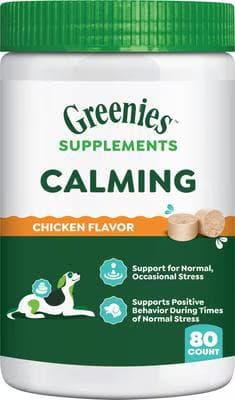
Chicken-flavored soft chew that supports normal, occasional stress and positive behavior during times of normal stress.
Webvet may earn a commission when you click through to Chewy, at no extra cost to you.
Why do dogs howl at sirens?
Dogs may treat a siren as a distant social signal and answer it. The response does not automatically mean the sound hurts. Watch for discomfort such as cowering, frantic escape, trembling, flattened ears, or continued distress after the siren fades. A relaxed dog who stops quickly is giving a different signal.
VCA notes that some dogs howl in response to high-pitched sounds, including sirens and music. The response may continue because howling itself can gain attention. That does not make every sound-triggered howl a behavior problem. Context and the dog's recovery remain the useful clues.
If you are considering a whistle as a training cue, see how dog training whistles work. A learned cue is different from using a sound to provoke or interrupt howling; stop if the dog shows distress.
Why do dogs howl when you howl?
When a person howls, a dog may answer as though joining a social exchange. Some dogs approach, make eye contact, wag, or repeat the call. Others bark, leave, or show no interest. The difference reflects individual temperament, learning history, and how that dog interprets the interaction.
If the sound you are trying to understand is barking, see why a dog may bark at apparently nothing and the cause-based barking plan.
Use dog body language to separate engagement from discomfort. A loose body, soft face, and easy stop suggest social participation. Lip licking, turning away, a tucked tail, or repeated attempts to leave suggest the game is not enjoyable for that dog.
Signs a howl may mean excitement or connection
Are dogs happy when they howl? They can howl during happy excitement or social connection, but the howl itself is not a reliable happiness signal.
Look for a loose body, soft eyes, playful movement, and normal recovery after the moment passes. If the dog is tense, frantic, withdrawn, or unable to settle, the same vocalization points away from simple enjoyment.

Peanut-butter-flavored soft chew that supports relaxation and helps reduce hyperactivity, with L-theanine, chamomile, and ashwagandha.
Webvet may earn a commission when you click through to Chewy, at no extra cost to you.
Signs a howl may mean distress
Do dogs howl when they are sad? Some dogs vocalize during isolation, fear, frustration, or loss of social contact, but a howl cannot prove sadness by itself.
Distress is more likely when the sound appears with pacing, panting when the room is not hot, drooling, escape attempts, destruction near exits, trembling, or failure to settle.
Other clues that deserve attention include:
- Howling that begins only when a particular person leaves
- Repeated vocalizing that continues for much of the absence
- Scratching or chewing at doors, windows, or barriers
- Indoor accidents despite reliable housetraining
- Refusing food that the dog normally eats when relaxed
- Frantic greeting behavior followed by slow recovery
 Sponsored
Vet care that's always there
Unlimited video calls and messaging with licensed vets for less than a typical vet visit. One membership covers up to five pets.
Use code Pets60
Plans start at $12/month · covers up to 5 pets
- Licensed vets in most states
- Rx for 150+ conditions
- 4.7 on Trustpilot
When howling may signal separation distress
Why do dogs howl when you leave? Departure-linked howling with pacing, drooling, destruction, escape attempts, or inability to settle belongs to WebVet’s separate anxiety guidance. This article identifies the context and hands treatment ownership to that established guide rather than diagnosing or treating separation distress here.
Howling that begins only when a dog is left alone may be one part of a separation-distress pattern. The meaning becomes more concerning when the dog also paces, drools, damages exit areas, eliminates indoors, refuses food, or remains unable to settle throughout the absence.
These observations identify a pattern, not a treatment plan. If howling happens during absences, use WebVet's guide to anxiety relief for dogs for the separate assessment and management decisions. Here, the useful question is what the vocal behavior may mean.
Why dogs howl at night or in their sleep
Dogs may howl in their sleep during a brief vocal episode, and dogs may howl at night because distant sounds are easier to notice. Check whether the dog wakes normally, returns to easy breathing and movement, and follows a stable pattern. New sleep disruption, confusion, or pain calls for veterinary advice.
Night can make ordinary sounds more noticeable, and a quiet house makes a single howl feel dramatic. Wildlife, neighbors, distant vehicles, household alarms, a change in sleeping location, or another dog's call may be the trigger. Write down the time and what happened immediately before the episode.

A dedicated bed can offer a familiar place to settle during ordinary rest. It does not explain howling or replace assessment for sudden, painful, or distress-linked vocalization.
Webvet may earn a commission when you click through to Chewy, at no extra cost to you.
How to observe a sleep vocalization
VCA describes vocalizing, rapid breathing, and leg movement during dreams. A brief sleep vocal episode followed by ordinary waking and behavior can fit that context. Avoid grabbing or shaking a sleeping dog. Ask your veterinarian about a new, frequent, or otherwise concerning sleep pattern.
Cornell lists nighttime wandering, staring, getting stuck, changed sleep, house soiling, and recognition changes among signs seen with canine cognitive dysfunction. In an older dog, those signs are not diagnostic at home, but a new nighttime howl with them needs veterinary evaluation.
WebVet’s senior dog health guide explains the broader age-related changes to discuss with a veterinarian.
Why some breeds and individual dogs howl more
Why do husky dogs howl, and why does a puppy howl? Vocal tendency varies, while puppies may howl after separation. Compare eating, breathing, movement, trigger, and ability to settle. In an older dog, a new pattern matters more than a familiar breed tendency because a veterinarian may need to evaluate a health change.
Individual vocal tendency varies. A breed label may describe a familiar tendency, but it does not identify the reason for a particular howl. Compare the dog’s baseline, trigger, body language, duration, and recovery instead of assigning meaning from breed alone.
VCA lists vocalizing, including howling, among possible signs of puppy separation distress. Note whether it occurs during departures and whether pacing, drooling, elimination, destruction, escape behavior, or inability to settle accompanies it. These observations support a veterinary discussion; they do not establish a diagnosis.

Consider the individual baseline:
- How often has this dog howled before?
- Which sounds or situations reliably trigger it?
- Does the dog stop when the trigger ends?
- Is the dog able to eat, sleep, move, and interact normally afterward?
- Has age, health, medication, environment, or household routine changed?
A dog who never howls can be completely normal. A dog who howls often can also be normal when the pattern is stable, brief, and connected to clear social or sound triggers.
Is it okay to let a dog howl?
Context-specific howling can be normal when the dog remains comfortable and the episode ends with its trigger. New persistent behavior, inability to settle, escape attempts, pain signs, or distress changes the decision. Consider the dog, nearby people, local noise rules, and whether the pattern represents a meaningful change from normal.
Is it good to let dogs howl? Brief howling is usually acceptable when the dog is relaxed, the trigger is clear, and the behavior stops without distress. There is no need to interrupt every normal vocal response.
The important question is whether the dog remains comfortable and whether the sound reflects a new physical or emotional problem.
When to pause and investigate
Pause the situation and investigate when howling is prolonged, escalating, or paired with fearful, painful, or disoriented behavior. Also consider nearby people and animals. A normal behavior can still disrupt sleep or provoke another dog, so change the environment without punishing a dog for communicating.
When sudden howling needs a veterinarian
New or escalating howling changes the action threshold. Contact your veterinarian when the pattern is unexplained, persistent, or paired with pain, weakness, breathing trouble, appetite change, confusion, or withdrawal. A video and notes about the trigger, duration, body language, and recovery can help describe the change without diagnosing it at home.
Why is my dog howling all of a sudden? A sudden change can reflect pain, illness, sensory loss, disorientation, or another medical problem, especially when no familiar trigger explains it. VCA specifically advises seeking veterinary help when howling may be caused by injury or illness.
Breathing difficulty changes the decision. Cornell lists rapid open-mouth breathing, visible abdominal effort, blue gums, increased breathing sounds, weakness, and collapse as respiratory-distress signs. Keep the dog calm and contact an emergency veterinary service immediately.
Record what the veterinarian will need:
- A short video or audio clip, captured without provoking the dog
- The time, duration, and apparent trigger
- Whether the dog was awake, asleep, alone, eating, moving, or resting
- Changes in appetite, drinking, elimination, breathing, movement, or sleep
- Recent injuries, medications, household changes, or stressful events
Do not assume that a normally vocal dog cannot be ill. Baseline matters most. A new howl during movement or touch, or vocalizing with altered sleep, confusion, breathing, appetite, or mobility, deserves veterinary assessment because the change, not the breed label, guides the decision.
Frequently Asked Questions
Why do dogs howl at night?
Why do dogs howl at night? Quiet surroundings can make distant dogs, wildlife, alarms, and household movement easier to notice. A stable nighttime trigger with relaxed body language is less concerning than new sleep disruption. Contact a veterinarian when howling starts suddenly or comes with pacing, confusion, pain, house soiling, weakness, or difficulty settling.
Why do dogs howl in their sleep?
Why do dogs howl in their sleep? A brief sleep vocal episode can occur while a dog dreams. VCA notes that dreaming dogs may vocalize, breathe rapidly, and move their legs. Check for ordinary waking, movement, breathing, and behavior. Ask a veterinarian if episodes change, repeat frequently, or occur with breathing difficulty or confusion.
Why do dogs howl at the moon?
Why do dogs howl at the moon? Dogs do not need a full moon to howl. Check for a nighttime trigger, such as wildlife, another dog, a siren, or household movement. A stable response that ends with the trigger differs from new or prolonged nighttime howling. The moon itself does not explain the behavior.
Why does a puppy howl?
Why does a puppy howl? Separation can be the context. VCA lists howling among possible signs of puppy separation distress, especially with pacing, drooling, elimination, destruction, or escape behavior. Note when it starts and whether the puppy settles. Persistent distress, inability to settle, or any accompanying health change warrants veterinary advice.

Editor
The Webvet Editorial Team is the in-house group of pet-care editors and writers behind Webvet, operated by Smart Pet Collective. The team researches, writes, and maintains Webvet's pet health, behavior, and medication content. Every article follows a defined editorial process: research from reputable veterinary and scientific sources, careful drafting, mandatory review of medical content by a credentialed veterinarian, and dated publication. Health and medication articles are medically reviewed by a licensed veterinary professional before they go live and are kept current over time.


