Best Cat Shampoo: Picks by Coat, Skin, and What to Avoid
Most healthy cats never need a bath, but when they do, the shampoo ends up swallowed. Here are the ingredient families that disqualify a bottle, the four label checks that settle it, and picks matched to everyday cleaning, itchy skin, dander, and no-rinse cleaning.

This article contains affiliate links. Webvet may earn a commission when you buy through them, at no extra cost to you.
Most healthy cats rarely need a bath. When cleaning is necessary, use a cat-labeled product and follow directions, because cats may lick residue afterward.
That single fact should drive the whole decision. A cat shampoo is not a cosmetic you rinse away and forget about. It is a product that ends up in your cat's mouth, so the ingredient panel and the rinse are safety steps rather than housekeeping.
This guide gives you four checks you can run on any bottle in a shop aisle, the ingredient families that disqualify a product outright, and picks grouped by the problem you walked in with: everyday cleaning, an unscented wash, itchy skin, a bottle shared with the dog, a no-rinse clean, loose dander, and a dirty coat when a bath is off the table. It also explains when grease, dander, and tangles need more than a shampoo, with separate guidance for kittens, long coats, and hairless cats.
 Sponsored
Want a vet's help with your cat's anxiety or behavior?
Talk to a licensed vet at Dutch over video, often the same day. They can recommend treatment and prescribe it when it's appropriate.
Use code Pets30
Plans start at $11/month · covers up to 5 pets
- Licensed vets in most states
- Rx for 150+ conditions
- 4.7 on Trustpilot
What makes a shampoo safe for a cat

- 1Choose a cat-labeled formula appropriate for your cat's age and health.
- 2Never substitute dog-only flea products or homemade essential-oil washes.
- 3Medicated products need diagnosis-specific veterinary guidance.
- 4Rinse rinse-off products thoroughly and follow separate instructions for no-rinse products.
Start with the species statement: the exact shampoo must name cats and be suitable for your cat's age. Check the ingredients and directions, avoid dog-only flea products and homemade essential-oil mixtures, and rinse rinse-off products thoroughly because cats may lick residue while grooming. No-rinse formulas have their own application instructions.
Cats may groom after cleaning, so residue can be swallowed. Rinse rinse-off products thoroughly and follow separate directions for no-rinse products.
That is also why cats react badly to products dogs tolerate. Cats process several common compounds far more slowly, which turns a dog shampoo from merely unsuitable into genuinely risky. The toxin lists at the ASPCA Animal Poison Control Center are worth checking a panel against, and four checks settle almost every bottle:
- Species statement. The exact product must name cats. A dogs-and-cats label still requires its age, health, dilution, and application checks; a dogs-only label is not permission to use it on a cat.
- Avoid concentrated essential oils, tea tree oil, phenolic cleaners, and coal-tar products. Medicated and flea shampoos need their own label checks and veterinary guidance; concentration and formulation matter.
- Youngest age allowed. Most cat shampoos carry a minimum age, commonly six or twelve weeks. A kitten below that line is not covered by the label.
- Dilution and rinse instructions. Some products are concentrates that must be mixed before they touch the coat, and every rinse-off product has to come out completely.
Run those four in order and most of the aisle sorts itself out. The table below decodes the terms you will actually find printed on a cat shampoo bottle.
| Label term | What it means on a cat | Verdict |
|---|---|---|
| For dogs and cats | The manufacturer labels it for both species. It still has to pass the age, ingredient, and directions checks. | Safe to consider |
| For dogs only | May contain actives cats clear slowly, at a concentration never set for a cat. | Put it back |
| Hypoallergenic | An unregulated marketing term. It usually signals no added fragrance or dye, which helps, but it is not a safety claim. | Helpful, not proof |
| Fragrance free or unscented | No added perfume, so less to irritate skin and less to taste. Unscented sometimes means a masking fragrance. | Prefer fragrance free |
| Natural or plant based | Says nothing about feline safety. Tea tree oil is natural and is among the ingredients most often involved in cat poisoning reports. | Ignore the word, read the panel |
| Tearless | Milder surfactants around the eyes. A comfort claim, not a toxicity claim. | Nice to have |
| Soap free | Detergent-based cleansers rather than true soap, which is gentler on the skin barrier. | Nice to have |
| Safe for cats and kittens over 6 weeks | The youngest age the manufacturer will stand behind. Younger kittens sit outside the label. | Check against your cat's age |
| Medicated or antiseborrheic | Contains a keratolytic or antimicrobial active. Whether a cat should have it is a veterinary decision. | Ask your vet first |
| Concentrate, dilute before use | Full strength on skin is the wrong dose, not a stronger wash. | Follow the ratio exactly |
Two of those rows do most of the work. The species statement tells you whether the bottle was ever meant for a cat, and the ingredient panel tells you whether the marketing on the front is honest.
Choose the exact formula rather than the brand name. For Arm & Hammer, Burt's Bees, or any other brand, check that the bottle names cats, that your cat meets its age limit, and that you can follow its rinse or no-rinse directions. A company may also sell dog-only or medicated products. Advice about another bottle cannot establish whether the one in your hand suits your cat.
Vet recommended cat shampoo deserves a word too. No shampoo carries an official veterinary endorsement, so the phrase usually means a formula clinics stock or a brand vets see often. It is a reasonable first filter, and it still does not replace reading the panel.
Why human shampoo, baby shampoo, and Dawn do not belong on a cat
Do not use human shampoo, baby shampoo, or dish soap on a cat unless a vet has told you to. All three are built for a species that rinses in a shower and does not lick itself dry afterwards, and all three strip more oil out of a cat's coat than the coat can spare.
| Pick | Selection value and limit |
|---|---|
| Burt's Bees Hypoallergenic Cat Shampoo, 10-fl oz bottle | A rinse-off cat shampoo with shea butter and honey; follow the bottle age limits and directions. |
| Hyponic Hypoallergenic Unscented Cat Shampoo, 10.1-fl oz bottle | An unscented cat shampoo for owners seeking cleansing and coat conditioning without added fragrance. |
| TropiClean Gentle Coconut Hypoallergenic Cat Shampoo, 12-fl oz bottle | A cat-specific oatmeal-and-aloe cleansing formula. Check its 12-week minimum age. |
| Veterinary Formula Clinical Care Hypoallergenic Shampoo, 16-fl oz bottle | A fragrance-free dog-and-cat cleansing formula labeled for pets 12 weeks and older. |
| Burt's Bees Waterless Shampoo for Cats, 10-fl oz bottle | A no-rinse cat spray for ordinary dirt when a full bath is unnecessary. Follow the label. |
| TropiClean Dry No Rinse Waterless Dander Reducing Cat Shampoo, 7.4-fl oz bottle | A no-rinse cat formula for cleaning loose dander. Persistent flaking needs veterinary assessment. |
| TropiClean Dry No Rinse Waterless Deep Cleaning Cat Shampoo, Berry Fresh Scent, 7.4-fl oz bottle | A no-rinse cat shampoo for ordinary dirt and odor; check the exact bottle instructions. |
Each of the three fails for its own reason:
- Human shampoo is formulated for human skin and human hair. On a cat it leaves the coat dry and the skin itchy, and the residue goes exactly where every other residue goes.
- Baby shampoo is milder, which is why owners reach for it, but mild is not the same as species appropriate. It is designed for skin that will never be groomed clean by a tongue, and most versions still carry fragrance.
- Dish soap is a degreaser, which is why wildlife rescuers use Dawn and its equivalents on oiled birds. On normal cat skin it strips out the sebum keeping the coat weatherproof, and a cat left dry and flaky will often over-groom the area.
There is one narrow exception worth knowing. If your cat has walked through motor oil, paint, or another greasy contaminant, a vet may specifically direct you to use a little plain dish soap, because getting the substance off before the cat swallows it outranks everything else.
That is an emergency instruction, not a bathing routine. Everything else living in a human bathroom belongs there: conditioner, dry shampoo, medicated dandruff shampoo, and body wash are all built around the same wrong assumption about who is being washed.
The best cat shampoos, by what your cat actually needs
The best thing to wash your cat with is a shampoo that names cats on the label, carries nothing from the avoid list, and matches the specific problem in front of you. The picks below are grouped that way, by problem rather than by rank.

These are researched, vet-informed editorial selections made by reading manufacturer labels and matching each formula to a real coat or skin situation. Every age minimum quoted here came from the manufacturer's own product page.
One product covers most households. Buy a second only when your cat genuinely has a second problem.
- Problem is the situation a formula suits, not a medical claim.
- Format is whether the product needs water and a rinse, or is worked in and towelled or brushed out.
- Youngest age is what the manufacturer states on its own product page. Where a page states nothing, the entry says so.
| Pick | Selection value | Format | Age check |
|---|---|---|---|
| Burt's Bees Hypoallergenic Cat Shampoo | Shea butter and honey | Rinse off | Check exact bottle |
| Hyponic Hypoallergenic Unscented Cat Shampoo | Cleansing and conditioning without added fragrance | Rinse off | Check exact bottle |
| TropiClean Hypoallergenic Cat Shampoo | Oatmeal and aloe with coconut scent | Rinse off | 12 weeks and older |
| Veterinary Formula Hypoallergenic Shampoo | Fragrance-free dog-and-cat formula | Rinse off | 12 weeks and older |
| Burt's Bees Waterless Shampoo for Cats | Ordinary localized dirt | No-rinse spray | Check exact bottle |
| TropiClean Dander Reducing No Rinse Cat Shampoo | Cleaning loose dander | No rinse | 12 weeks and older |
| TropiClean Deep Cleansing Waterless Cat Shampoo | Ordinary dirt and odor | No rinse | Check exact bottle |
Everyday cleansing option: Burt's Bees Hypoallergenic Cat Shampoo
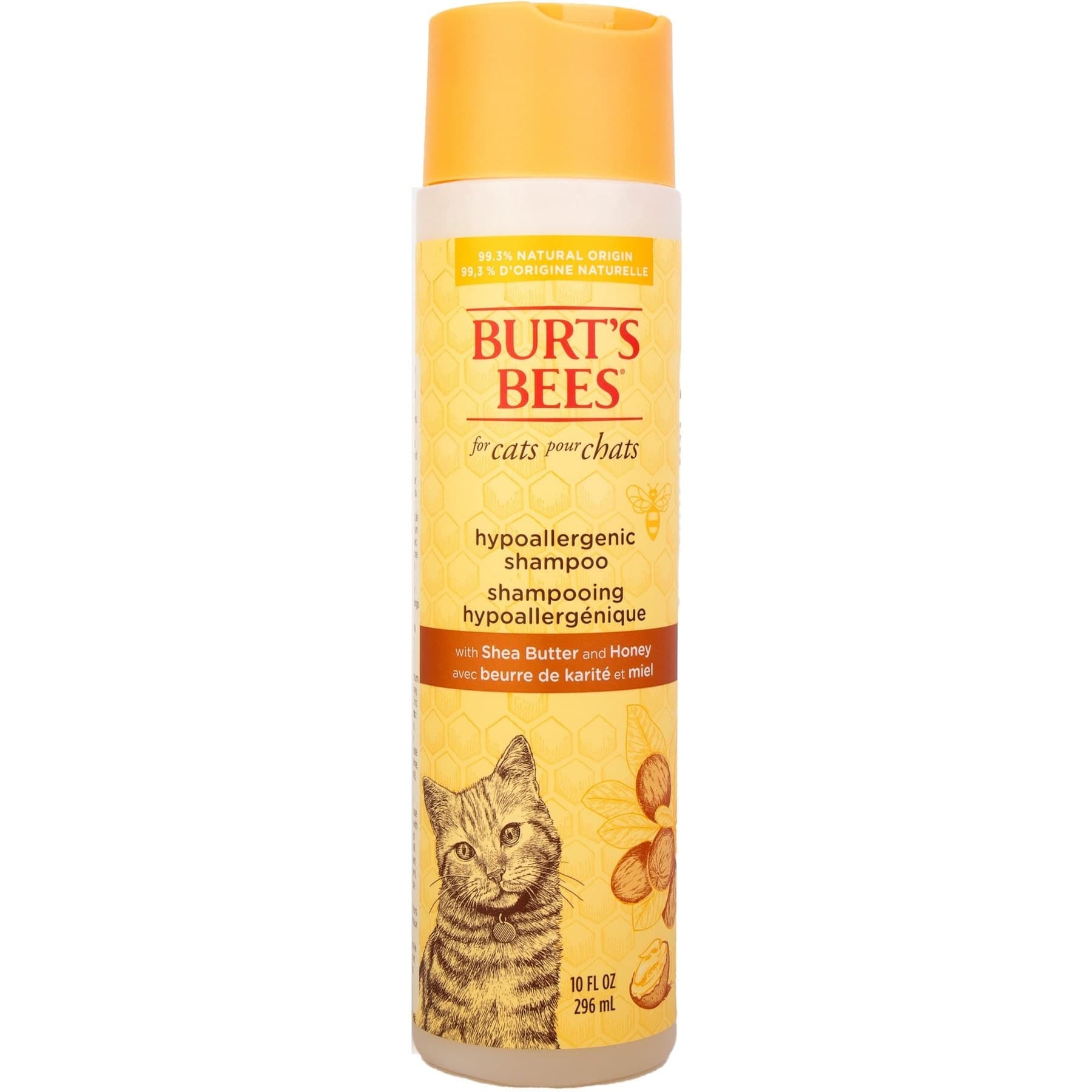
A rinse-off cat shampoo with shea butter and honey; follow the bottle age limits and directions.
Webvet may earn a commission when you click through to Chewy, at no extra cost to you.
This rinse-off cat formula contains shea butter and honey. The product listing identifies it as free of sulfates, colorants, and essential oils.
Read the exact bottle's age limits and directions. Do not carry a six-week age claim over from a different formula.
Hypoallergenic does not mean no cat can react. Stop if irritation develops and do not delay assessment of persistent skin symptoms.
Unscented conditioning option: Hyponic Hypoallergenic Unscented Cat Shampoo
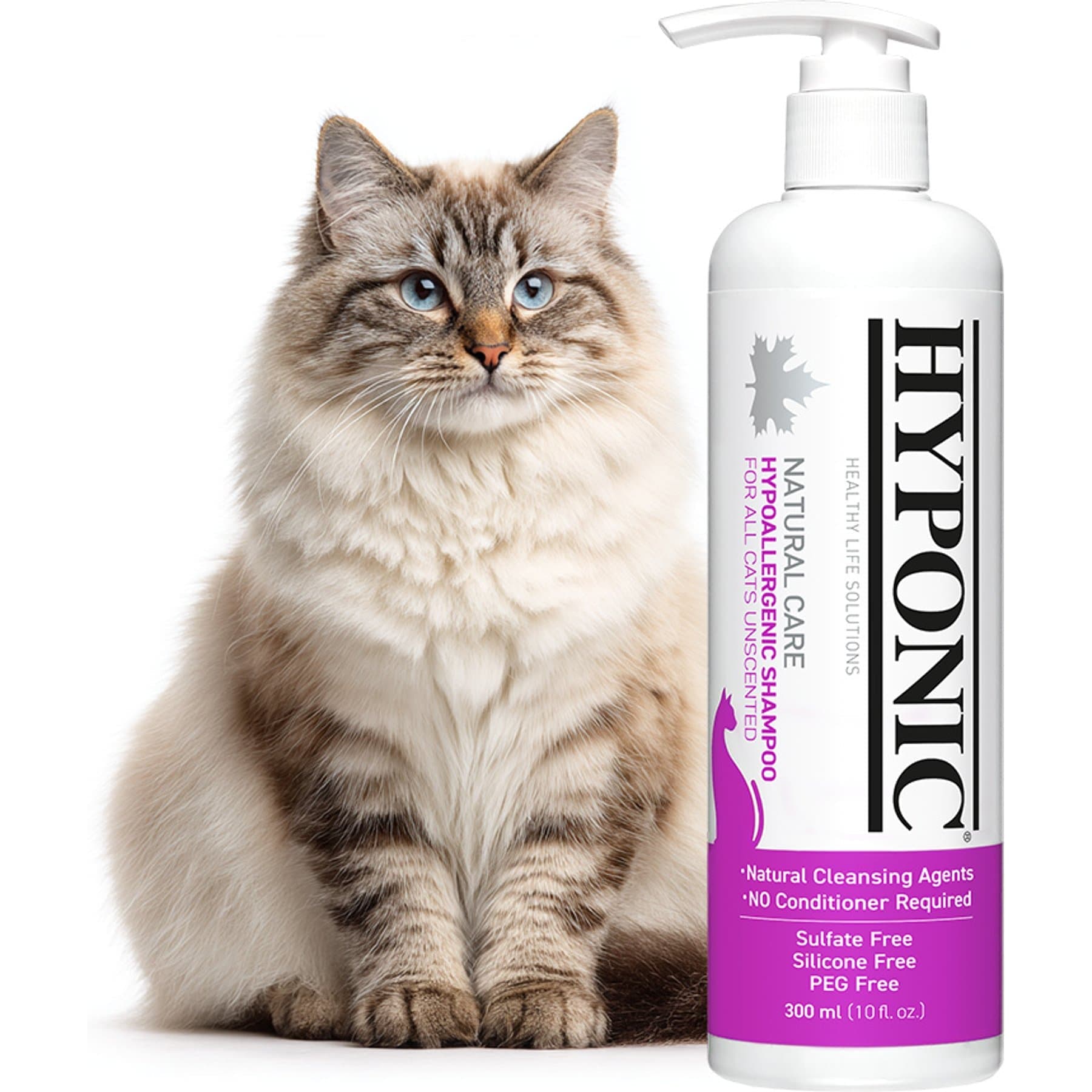
An unscented cat shampoo for owners seeking cleansing and coat conditioning without added fragrance.
Webvet may earn a commission when you click through to Chewy, at no extra cost to you.
For a cat that needs a wash, an unscented conditioning formula can be useful when added fragrance is unwanted. Comb loose tangles out first; shampoo cannot make a tight mat safe to remove.
Hyponic markets this cat-specific formula for cleansing and conditioning without a separate conditioner. The linked bottle is 10.1 fluid ounces. Check the exact directions before kitten use rather than transferring an age limit from another shampoo.
This is the unscented cat formula, not the scented version or a dog formula. Rinse thoroughly and stop if irritation develops. Hypoallergenic is not a guarantee against a reaction.
Best cat shampoo for itchy skin: TropiClean Hypoallergenic Cat Shampoo
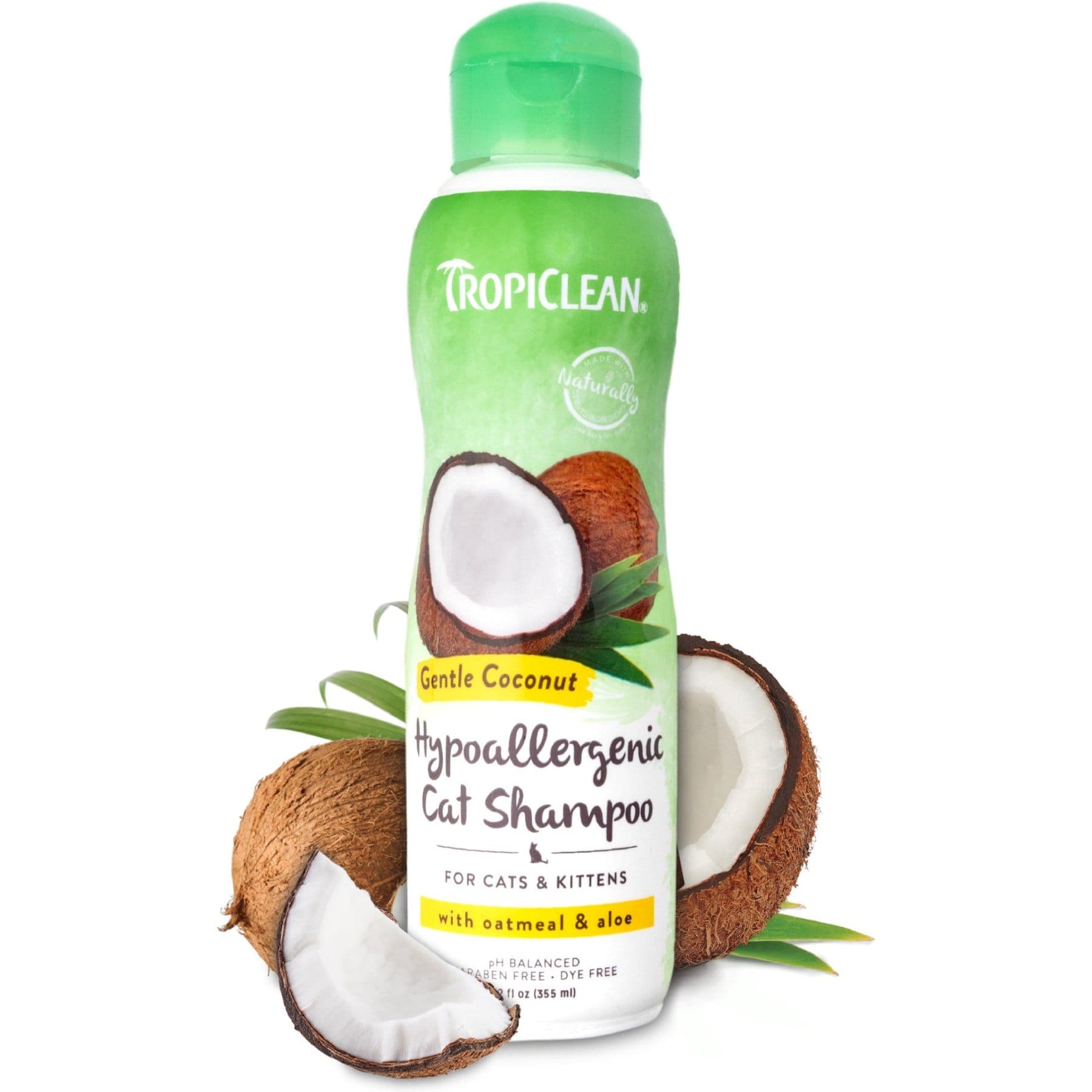
A cat-specific oatmeal-and-aloe cleansing formula. Check its 12-week minimum age.
Webvet may earn a commission when you click through to Chewy, at no extra cost to you.
For a cat that needs cleaning, this cat-labeled oatmeal-and-aloe formula is an option. Persistent itching, flakes, redness, or hair loss needs veterinary assessment.
TropiClean's hypoallergenic cat shampoo is labelled safe for kittens twelve weeks and older, carries a light coconut scent rather than being fragrance free, and its own directions ask for three to five minutes of massage before rinsing completely.
If your cat struggles, stop applying shampoo and rinse it off as safely as you can. Ask for help if you cannot complete the rinse. A no-rinse product is only an alternative for an appropriate cleaning need, not a replacement for a prescribed treatment or removal of a harmful contaminant.
Best cat shampoo for a multi-pet household: Veterinary Formula Clinical Care Hypoallergenic Shampoo
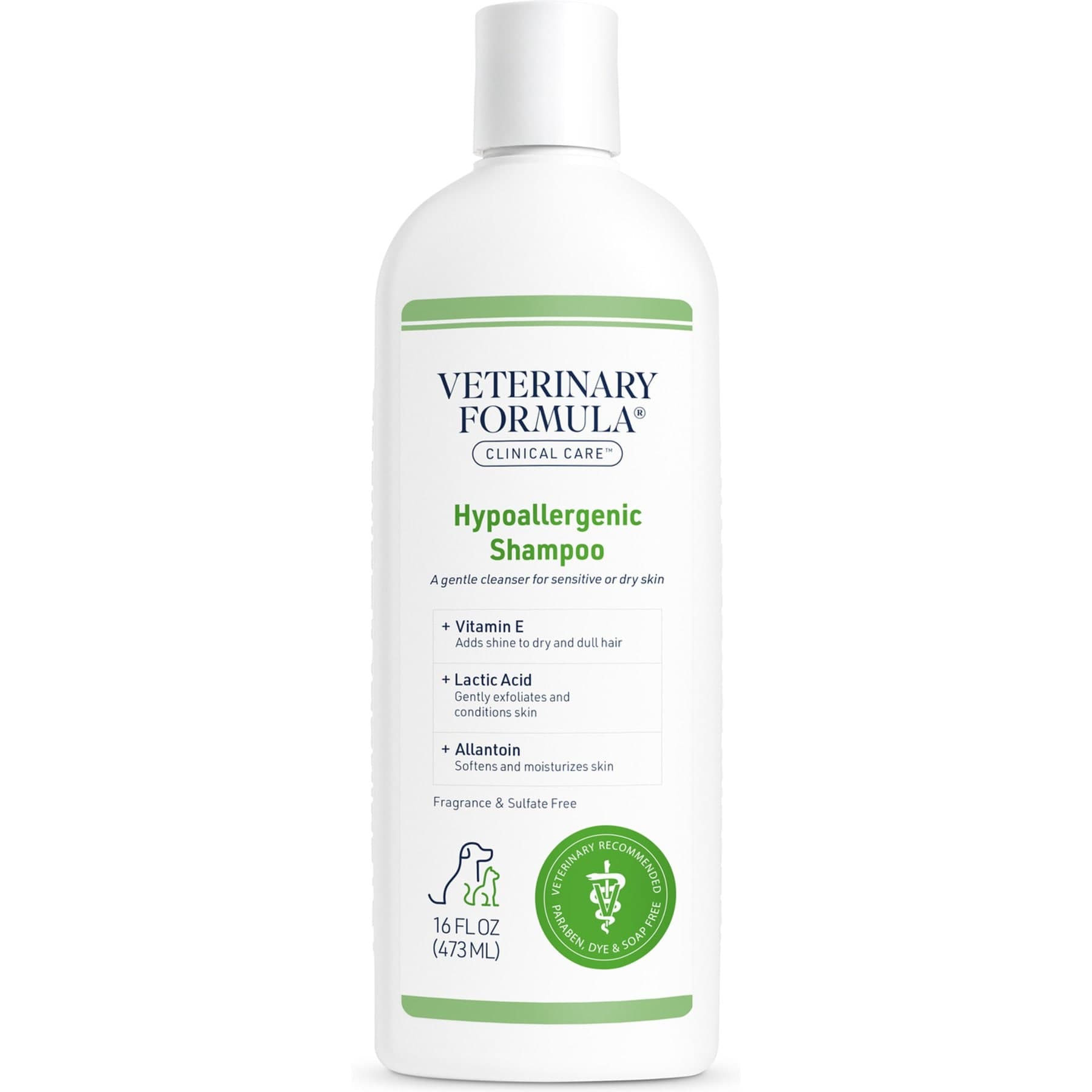
A fragrance-free dog-and-cat cleansing formula labeled for pets 12 weeks and older.
Webvet may earn a commission when you click through to Chewy, at no extra cost to you.
This fragrance-free, dye-free formula is labeled for dogs and cats 12 weeks or older. Wet the coat, apply as directed, lather, and rinse well.
Check the exact bottle before use. Some shampoos permit dilution, while others specify how they must be mixed.
It is a cleansing product, not a treatment for an undiagnosed skin condition. Even fragrance-free formulas can irritate an individual cat.
Waterless option: Burt's Bees Waterless Shampoo for Cats
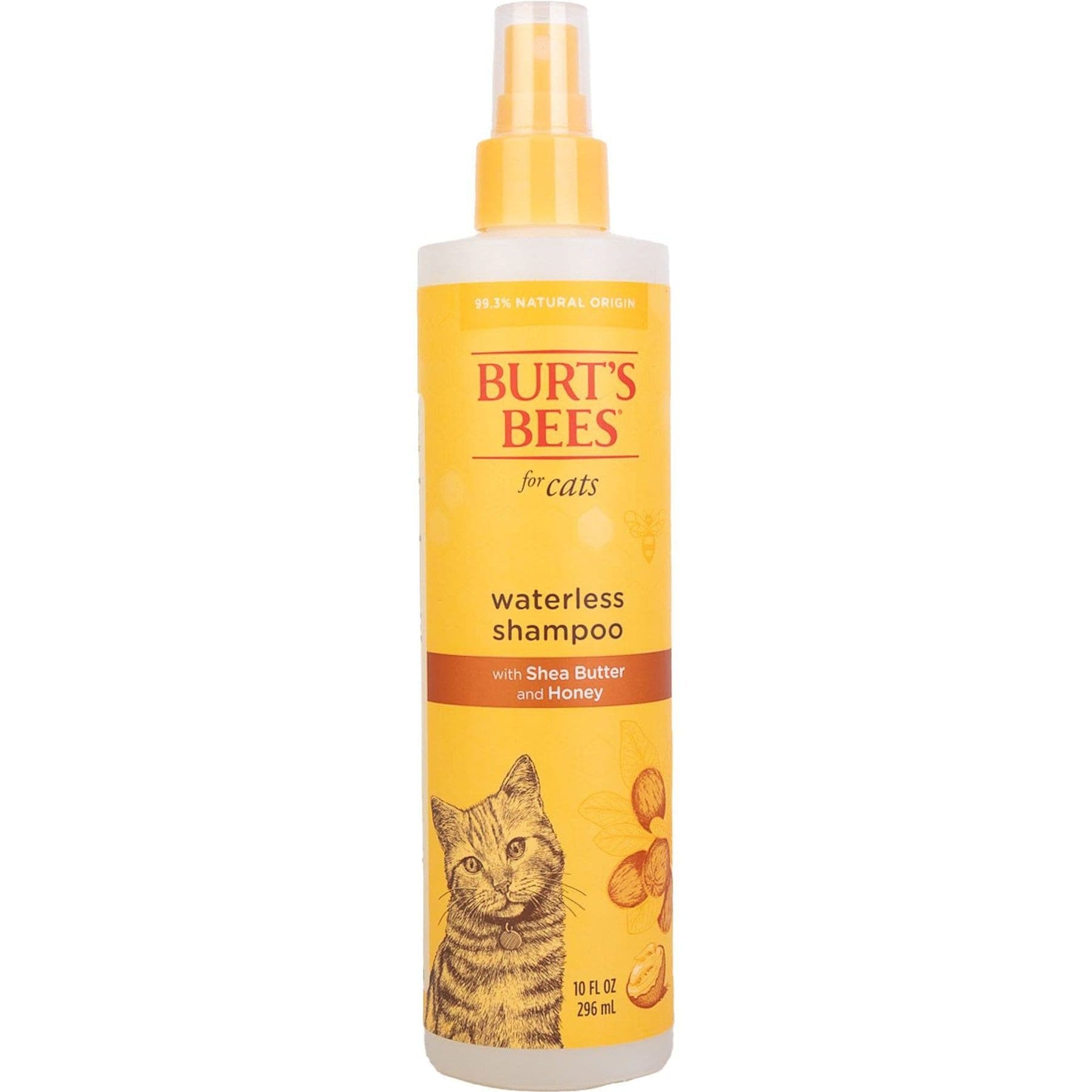
A no-rinse cat spray for ordinary dirt when a full bath is unnecessary. Follow the label.
Webvet may earn a commission when you click through to Chewy, at no extra cost to you.
This no-rinse cat shampoo is a spray rather than a foam. It offers an option for ordinary coat dirt that does not justify a full bath.
The listing names shea butter and honey. Follow this bottle's application and age instructions; another waterless shampoo's directions may differ.
No-rinse products can leave residue a cat may lick. Use only as directed and stop if irritation develops.
Best cat shampoo for dander: TropiClean Dander Reducing No Rinse Cat Shampoo
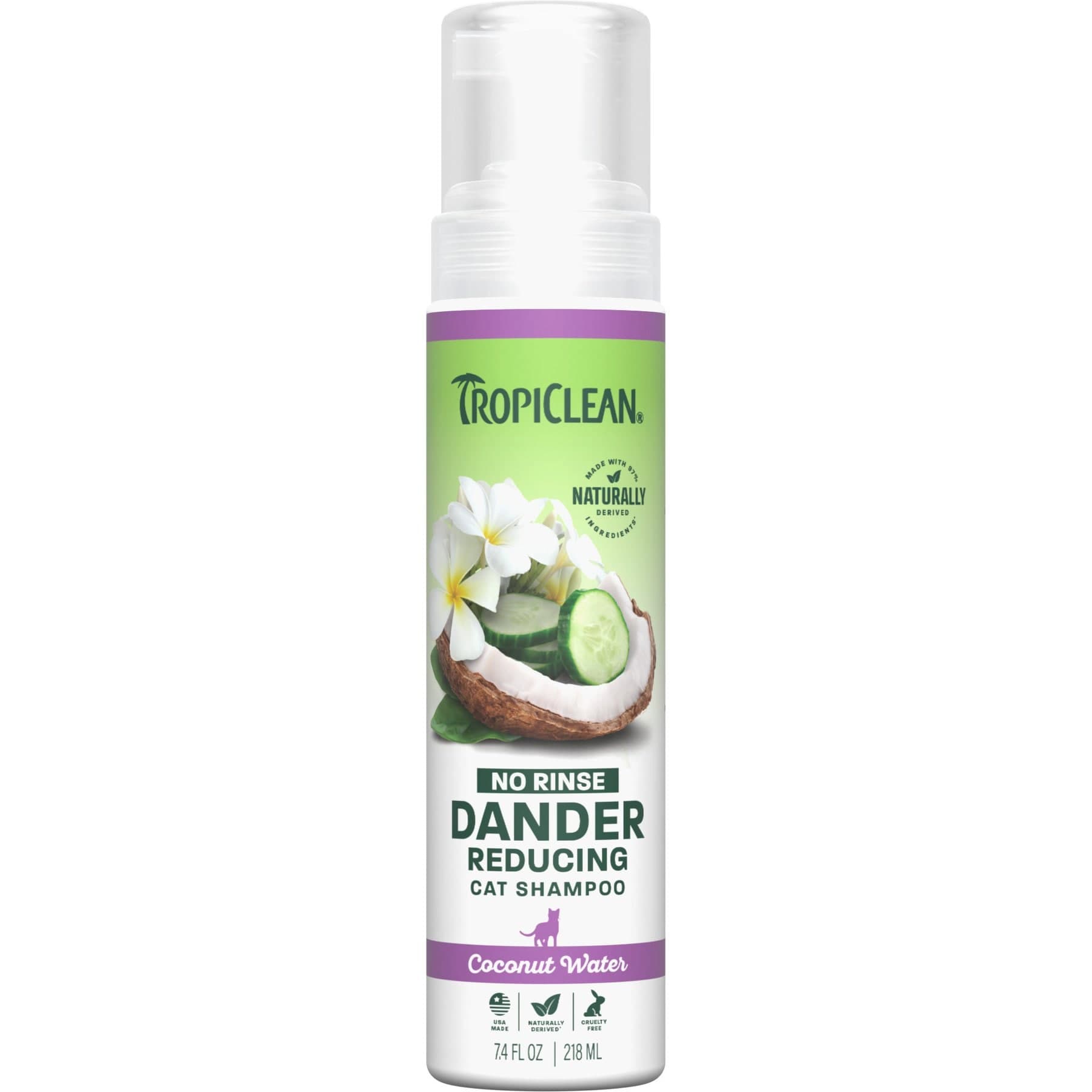
A no-rinse cat formula for cleaning loose dander. Persistent flaking needs veterinary assessment.
Webvet may earn a commission when you click through to Chewy, at no extra cost to you.
This one is aimed squarely at flakes and at the people who react to them. It is a no-rinse formula you massage in and brush out, built on coconut water with oat and cucumber extracts, and TropiClean lists it as safe for cats twelve weeks and older.
TropiClean directs gentle massage, with brushing optional. Cleaning does not identify or treat the cause of flaking.
Treat any dander claim as cosmetic. It manages what is already on the coat and does nothing about why the skin is flaking, which is a separate question handled further down this page.
Best cat shampoo for a dirty coat when a bath is impossible: TropiClean Deep Cleansing Waterless Cat Shampoo
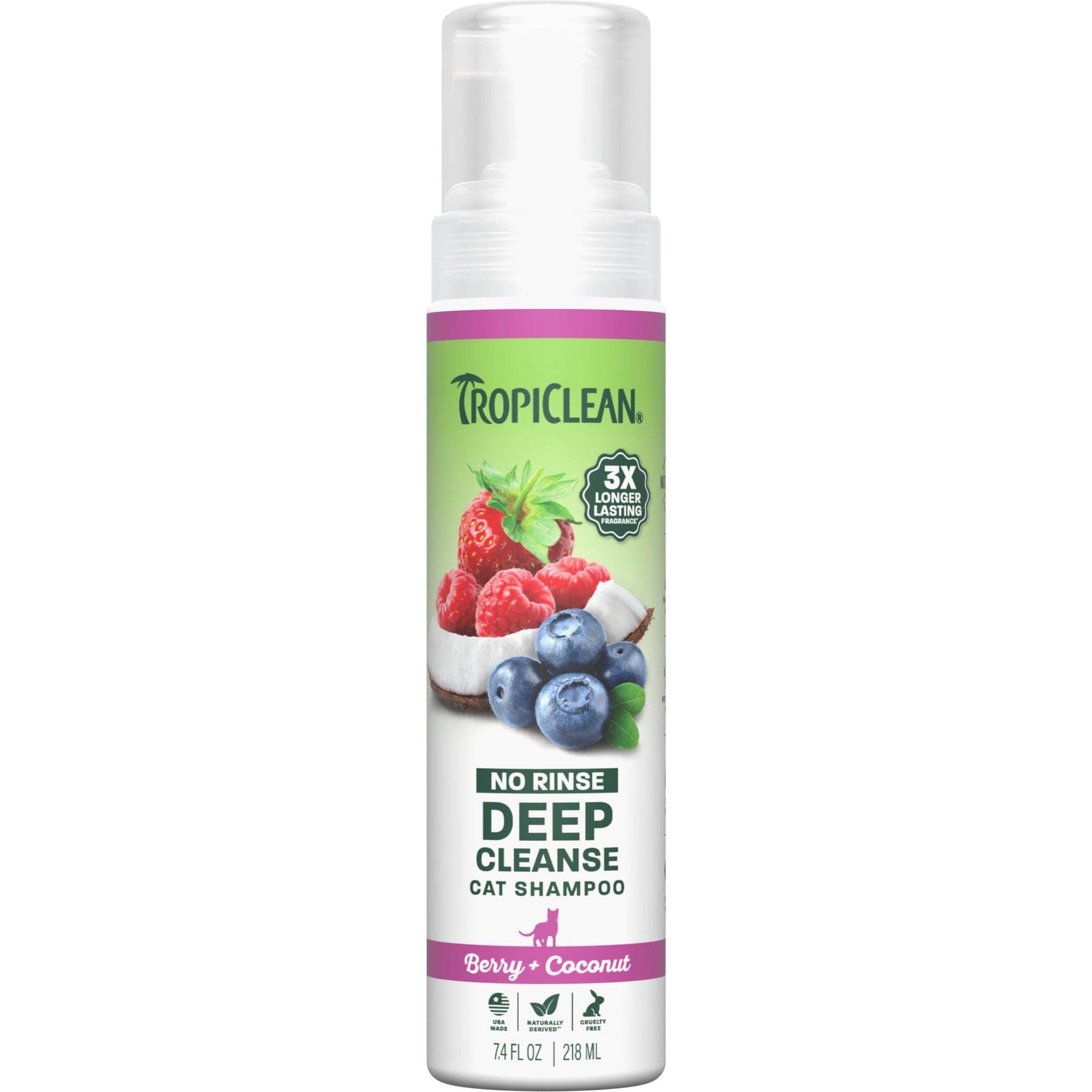
A no-rinse cat shampoo for ordinary dirt and odor; check the exact bottle instructions.
Webvet may earn a commission when you click through to Chewy, at no extra cost to you.
A cat-labeled no-rinse formula may suit ordinary dirt when a full bath is unnecessary or poorly tolerated. Check the contaminant and the product directions first; some substances require veterinary advice and removal by another method.
TropiClean's deep cleansing waterless cat shampoo is a berry and coconut scented no-rinse formula built to lift dirt and odour, worked into the coat and brushed through. Its product page states no minimum age, so check the bottle in your hand before using it on a kitten.
Scent is a consideration, but we have not compared these products' cleaning strength. Choose from the exact ingredient list and your cat's tolerance.
Comparing other formulas and reviews
Arm & Hammer offers cat shampoos and separate grooming sprays. Compare the exact format with the rinse-out and waterless choices here. A deodorizing or dander claim does not establish treatment for itchy skin or prevention of a person's cat-allergy symptoms.
Earthbath Conditioning Cat Shampoo is a scented rinse-out alternative whose manufacturer says it is for cats and kittens over six weeks old. It is a different formula from Earthbath's waterless cat foam. When reading Reddit recommendations, check the exact bottle, cleaning need, age limit, and rinse instructions rather than applying one formula's review to another.
SponsoredVet care that's always there
Unlimited video calls and messaging with licensed vets for less than a typical vet visit. One membership covers up to five pets.
Use code Pets30
Plans start at $11/month · covers up to 5 pets
- Licensed vets in most states
- Rx for 150+ conditions
- 4.7 on Trustpilot
Waterless and no-rinse shampoos, and when they beat a bath
A cat-labeled no-rinse product may help with ordinary localized dirt when a full bath is unnecessary or poorly tolerated. It is not suitable for every contaminant or skin problem.

No-rinse products vary in format and directions. Follow the exact bottle, including any toweling, drying, or brushing step.
Reach for one when any of these is true:
- The dirt is on one area: a muddy tail, a greasy patch behind the ears, a litter tray accident.
- Your cat is old, arthritic, or unwell, and standing in water would be genuinely hard.
- Your cat has a history of panicking in the sink or the tub.
- You want to knock loose dander down between grooming sessions.
- A vet has asked you to keep the coat clean without wetting a healing area, and has cleared the product.
Use the amount and application method on the exact waterless-shampoo label. Work in manageable areas if the directions permit, and stop if your cat becomes uncomfortable.
- Brush the coat through first. Loose hair and flakes come out dry far more easily than wet.
- Apply as the label directs. If spraying startles your cat, stop and ask about a suitable application method.
- Apply only to the areas and coat depth specified by the label. Avoid the eyes, ears, face, and any other excluded areas.
- Complete the drying, toweling, or brushing steps stated on the label.
- Stop while your cat is still comfortable. Two short sessions beat one long argument.
If the coat still smells or feels greasy afterwards, that is a signal to book a bath or a vet visit, not to apply a second round of product.
Shampoos for dandruff, dander, and itchy skin
A soothing shampoo helps with mild, uncomplicated flaking and with the dander already sitting in the coat. It does not fix the reason a cat is flaking, and that distinction decides whether you should be shopping at all.

Flakes on the coat are a sign to assess, not a shampoo diagnosis. Cleaning may remove loose scale, but persistent flaking, itching, redness, hair loss, or a new greasy coat needs veterinary attention. A cat that has difficulty reaching its lower back may also need help with grooming and the condition limiting its movement.
Here is the honest split of what an over-the-counter wash can and cannot do:
- Can soften and lift scale that is already on the skin.
- Can add moisture with colloidal oatmeal, aloe vera, or a conditioning rinse.
- Can reduce the loose dander that spreads around the house.
- Cannot treat an allergy, a parasite, a fungal infection, or an endocrine disease.
- Cannot replace an antiseborrheic or antimicrobial product a vet has prescribed.
- Cannot fix flaking caused by a cat that has stopped grooming because moving hurts.
Seborrhea is the clinical term for disordered skin cell turnover and oil production, and it comes in a dry, scaly form and a greasy one. Owner-facing references such as the Merck Veterinary Manual's cat owner section describe the secondary form as the usual finding in cats.
That is why an antiseborrheic shampoo for cats is a product your vet chooses rather than one you pick off a shelf. The keratolytic actives in those formulas are not interchangeable between species, and one of the commonest, coal tar, is a dog ingredient rather than a cat one.
The best cat shampoo for human allergies
This is a slightly different question, because the target is not the cat's skin. The major cat allergen, Fel d 1, is produced in saliva and skin glands and spread across the coat every time the cat grooms, then shed on dander.
Washing may temporarily lower coat allergens, but a dander product does not replace an allergy-management plan. A person with symptoms should discuss measures with their clinician.
Sphynx, Persian, and the coats that change the answer
Two coats break the general advice. A hairless cat needs washing on a schedule, and a long-coated cat needs the shampoo to help with combing rather than simply cleaning.

A Sphynx has no coat to wick sebum away from the skin, so oil, dust, and skin cells build up on the surface and collect in the neck folds, the armpits, and between the toes. Sphynx cat shampoo searches are really asking about a schedule.
The honest answer is that most hairless cats are washed regularly while most coated cats are not washed at all. Use a plain, fragrance-free, cat-labelled shampoo, rinse thoroughly, and dry the cat somewhere warm, because bare skin loses heat fast. Coat type changes the answer like this:
- Hairless cats: agree on washing frequency and a suitable formula with your vet. Check folds gently, rinse rinse-off products thoroughly, and dry comfortably without overheating.
- Long-coated cats: a conditioning shampoo, or a cat shampoo and conditioner pairing, so the coat combs out afterwards.
- Dense double coats: brushing beats bathing every time, because a wet undercoat takes hours to dry and traps moisture against the skin.
- Kittens: check the label age first, keep the session short, and keep the room warm.
Persian cat shampoo questions usually arrive with mats attached, and a mat cannot be washed out. Water tightens it, and a wet mat pulls on the skin underneath, so anything felted has to be dealt with before the cat goes near a sink.
If you find mats you cannot separate with your fingers, that is a groomer or a vet job rather than a shampoo one. Cutting at a mat with scissors is how cats end up with wounds, because the skin lifts up into the mat.
What to use when you have no cat shampoo in the house
For ordinary dirt on a small area, try a soft cloth dampened with warm water. For an unknown or possibly toxic substance, prevent licking and call your veterinarian before cleaning.

Work through the options in order, and stop as soon as the problem is solved.
- Plain warm water and a soft cloth. Wipe the soiled area, rinse the cloth, repeat. Good for litter tray accidents, food on the chin, and dirty paws.
- Unscented pet grooming wipes, if a packet is already in the house and the label names cats.
- A cat-labelled no-rinse foam or spray, if you happen to have one for another purpose.
- A suitable comb may remove loose dried debris, but stop if it catches or pulls. Soften ordinary stuck dirt with an appropriate cleaning method rather than combing forcefully.
- A small amount of harmless surface dirt may not need a full wash. Do not leave feces, irritating material, or an unknown substance for your cat to lick away.
Homemade recipes are where this goes wrong. A DIY natural shampoo mixed at the kitchen counter has no species testing behind it, no known concentration, and no way to check what it does to an animal that will swallow the result.
Skip these, whatever the recipe promises:
- Dish soap, unless a vet has told you to use it for a greasy contaminant.
- Baking soda and vinegar mixes, which irritate skin and do nothing useful once dry.
- Anything containing essential oils, including recipes that describe them as gentle or natural.
- Coconut oil as a wash. It is an oil, so it makes a greasy coat greasier and hands your cat a large amount to swallow.
- Human shampoo watered down, which is still human shampoo.
One case calls for no improvising at all. If your cat is covered in something you cannot identify, or in a chemical such as antifreeze, paint, or fuel, call your vet or animal poison control before washing anything, and stop your cat grooming in the meantime.
Flea shampoo is a different product
Flea shampoo is a pesticide rather than a general-purpose wash, and it belongs in a separate conversation. If fleas are the reason you are shopping, read our guide to flea shampoo for cats, which covers the products, the kitten age limits, and where a bath fits alongside real flea treatment.
Never use a dog-only flea product on a cat. Permethrin exposure can cause severe poisoning. Pyrethrin products have their own species, age, and application restrictions; follow the exact cat-labeled product rather than treating all flea shampoos as interchangeable.
Two things make the aisle confusing:
- A shampoo that kills fleas is a pesticide and is labelled as one, and its stated age minimum is usually higher than a plain shampoo's.
- Brand ranges can contain both ordinary cleansers and flea products. Check the exact product name, species label, and active ingredients rather than assuming every waterless bath from one brand is a flea treatment.
The reverse mistake is quieter and just as unhelpful. A general-purpose cat shampoo will drown some fleas during a wash and will not touch an infestation, so nothing in the pick list above should be read as flea control.
- Looking for the best flea shampoo for kittens under 12 weeks, or under 8 weeks, is really an age-label question. Many flea shampoos are not labeled for young kittens at all. For a very young kitten, use a fine flea comb, wash the bedding, and ask your vet which product is safe at that age and weight.
- Branded flea and tick lines such as Vet's Best and TropiClean sell cat-labeled and dog-only products side by side, and reviews cannot settle the age or species question for you. Read the label for the active ingredients and minimum age. If the actives are plant essential oils, the essential-oil caution above applies, so ask your vet first. A shampoo kills fleas on contact only, with no lasting protection.
- When people ask for the vet's best flea and tick option for cats, the answer is usually a prescription or vet-recommended topical or oral product rather than a shampoo, because those keep working between baths and break the flea life cycle in the home.
Medicated shampoos your vet has to choose
Select medicated shampoo with your veterinarian for the diagnosed condition, even if it is sold without prescription. Active ingredient, dilution, contact time, and frequency all matter.
These are the actives you will hear named:
- Chlorhexidine, an antiseptic used against bacterial skin infection.
- Miconazole, an antifungal, often paired with chlorhexidine.
- Keratolytics such as sulfur, which lift scale in seborrheic skin.
- Coal tar, used in some dog products and not appropriate for cats.
Ringworm is the version most owners meet, and it is a treatment protocol rather than a wash. Our guide to ringworm in cats covers what the antifungal shampoos and dips are for and how long a course runs.
Contact time is the detail that gets lost at home. A medicated shampoo generally has to sit on the coat for several minutes to do anything, which is a long time on a cat, and that practical reality is worth raising with your vet before you commit to a course.
When flaky skin means a vet visit, not a new shampoo
Stop shopping and book an appointment when the skin itself looks wrong, when the cat is losing hair, or when the itching is bad enough to change its behaviour. A shampoo bought at that point mostly buys delay.

The workup matters more than the wash. Our guide to how vets diagnose cat skin problems walks through the tests, and it is worth reading before you spend another month cycling through bottles.
Temporary relief after washing does not distinguish allergy from infection, parasites, or another skin condition. Recurring itching needs veterinary assessment.
Mild cat dandruff can come from dry indoor air, diet, or a cat that struggles to reach its back, often because of weight or joint pain. Dandruff that keeps returning, spreads, or comes with itching or hair loss is a reason to have your vet look for parasites, infection, allergy, or an underlying illness.
Where a bath fits in a cat's grooming routine
For most cats, it barely fits at all. Healthy cats with normal coats groom themselves effectively, and owner-facing veterinary libraries such as VCA's know your pet section make the same point: a bath is an occasional response to a specific mess, not scheduled care.
Brushing is the routine that actually pays. It removes far more loose hair and dander than any shampoo does, spreads the coat's own oils, and gives you a regular look at the skin, which is how most skin problems get caught early.
A workable at-home routine looks like this:
- Regular brushing, matched to the coat length.
- Check whether the claws need trimming, but do not force an extra task before a bath. Nail trimming does not make restraint safe. Our guide to cat nail clippers covers suitable tools and technique.
- Checking ears, eyes, and skin while you brush.
- A wash only when something has genuinely got onto the coat.
If you are brushing to control hairballs, the brushing is the intervention and the bath is not. Our guide to preventing hairballs in cats covers what works, and why cats get hairballs explains the mechanism behind them.
Handling stress is the last thing to plan for and the easiest to get wrong. Keep sessions short, work in a room your cat already likes, and stop while it is still calm rather than pushing through to finish.
A cat that is struggling, growling, flattening its ears, or trying to leave is telling you the session is over. Continuing costs you the next session too, and a cat that learns the sink means a fight is much harder to wash the following time. For the full method and its limits, see the complete cat grooming routine.
Brushing first, bathing rarely
Put simply, cat grooming at home is mostly brushing and checking, with a bath as the rare exception. A coat that stays clean between brushing sessions is a sign the routine is working, not that a wash is overdue.
Cat shampoo questions
Frequently Asked Questions
Can kittens use the same shampoo as an adult cat?
Use shampoo on a kitten only when its exact age instructions permit it. TropiClean hypoallergenic and Veterinary Formula state 12 weeks or older; check the bottle for other formulas instead of transferring an age limit.
Below the stated age the manufacturer is not standing behind the product. Kittens also chill much faster than adult cats, so keep the room warm, keep the wash short, and dry them properly afterwards. For a very young or orphaned kitten, ask your vet before washing at all.
Does cat shampoo have to be rinsed out completely?
Rinse rinse-off shampoo thoroughly according to its directions, including areas where product can collect. Clear runoff or a particular coat texture does not prove all residue is gone. No-rinse products require their separate label instructions.
Cats may lick remaining product while grooming. Residue can also irritate skin, so complete the rinse.
Is a natural or essential-oil cat shampoo safer for a cat?
No. Natural is a marketing word with no safety meaning, and essential oils are one of the few categories where reaching for a natural product actively raises the risk. Cats metabolise many essential oil compounds slowly, and a cat is exposed twice: through the skin, and again through grooming.
Tea tree oil, also listed as melaleuca, is the one to watch for, and it turns up in products sold as gentle and plant based. Read the ingredient panel rather than the front of the bottle, and treat any essential oil in a cat product as a reason to choose something else.
Can I use dog shampoo on a cat?
Use only if the exact product labels cats and suits your cat's age and health. Follow every instruction; never substitute a dog-only product.
Permethrin in dog flea products can cause severe poisoning in cats. Other dog-only shampoos also should not be substituted. A product labeled for both dogs and cats may be suitable when its age, health, and use instructions are followed.
Does a cat need conditioner after a shampoo?
Usually not. A shorthaired cat's coat dries fine on its own, and an extra product simply means extra residue to rinse out. A long-coated cat is the exception, because a conditioning rinse makes the coat far easier to comb out afterwards, which matters if you are staying ahead of mats.
A combined cat shampoo and conditioner may simplify cleaning when it suits the coat. If using a separate conditioner, follow its exact application and rinse instructions rather than assuming every conditioner is rinsed out.

Editor
The Webvet Editorial Team is the in-house group of pet-care editors and writers behind Webvet, operated by Smart Pet Collective. The team researches, writes, and maintains Webvet's pet health, behavior, and medication content. Every article follows a defined editorial process: research from reputable veterinary and scientific sources, careful drafting, mandatory review of medical content by a credentialed veterinarian, and dated publication. Health and medication articles are medically reviewed by a licensed veterinary professional before they go live and are kept current over time.


