How to Prevent Hairballs in Cats: A Vet-Informed Guide
Prevent hairballs at the source with four levers: a brushing routine matched to your cat's coat type, a hairball-control diet that actually works, hydration tactics, and catching stress overgrooming early.

BVMS MRCVS
Medically reviewed by Dr. Pippa Elliott, BVMS MRCVS · Last reviewed

This article contains affiliate links. Webvet may earn a commission when you buy through them, at no extra cost to you.
Learning how to prevent hairballs in cats comes down to four levers: brush out loose fur before your cat swallows it, feed a diet with enough fiber to move swallowed hair through, keep your cat well hydrated, and catch stress-driven overgrooming early. Work all four and most cats go from regular hairballs to rare ones.
None of the four levers is exotic, and none requires a prescription. What they require is consistency, because hair sheds every day and prevention only works at the same daily rhythm. The good news: the whole routine fits in about ten minutes a day once it becomes habit.
Prevention matters because every hairball starts the same way: grooming pulls loose hair onto the tongue's backward-facing barbs, the hair gets swallowed, and most of it normally passes in the stool. Hairballs form when more hair goes in than the gut can move out.
Our main guide to hairballs in cats covers that mechanism and how many hairballs count as normal; this guide is about tilting the math in your cat's favor.
- 1Brushing is the highest-value prevention step: hair on the brush is hair that never gets swallowed.
- 2Match frequency to coat type: weekly for short coats, daily for long coats, near-daily during spring and fall shedding.
- 3Hairball-control foods work through fiber that binds hair and keeps the gut moving; you can evaluate any label yourself.
- 4Moisture moves hair: wet food, fountains, and multiple water stations all reduce hairball formation.
- 5A sudden jump in hairballs can mean stress overgrooming or a skin, gut, or parasite problem, so mention it to your vet.
 Sponsored
Have a health question about your cat?
Talk to a licensed vet at Dutch over video or message, including nights and weekends.
Use code Pets30
Plans start at $11/month · covers up to 5 pets
- Licensed vets in most states
- Rx for 150+ conditions
- 4.7 on Trustpilot
Brushing routine by coat type
The single most effective way to prevent hairballs is regular brushing, because it removes loose hair before your cat's tongue does. The Cornell Feline Health Center's hairball guidance puts grooming, ideally daily for hairball-prone cats, at the top of its prevention list. The right frequency and tool depend on the coat you are working with.
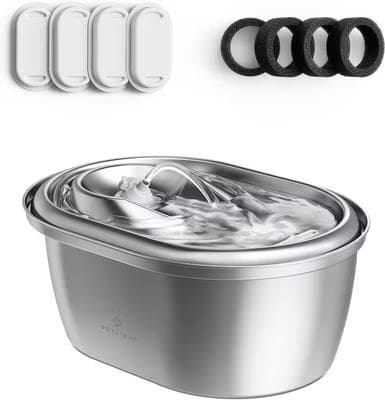
304 food-grade stainless steel pet water fountain, 101 oz. The circulating, filtered water encourages cats to drink more, which supports urinary tract and kidney health.
Webvet may earn a commission when you click through to Chewy, at no extra cost to you.

Here is the brushing schedule vets wish every owner had, broken down by coat type instead of the usual 'brush regularly' hand-wave:
| Coat type | Brushing frequency | Best tools | Notes |
|---|---|---|---|
| Short, single coat (e.g., Siamese, most domestic shorthairs) | 1 to 2 times per week | Rubber curry brush or soft slicker | Shorthairs still shed plenty; a quick five-minute pass captures most loose hair. |
| Dense or double coat (e.g., British Shorthair, Russian Blue) | 2 to 3 times per week | Slicker brush plus a deshedding tool used gently | The undercoat traps shed hair; work in layers and keep deshedding-tool sessions short to protect the topcoat. |
| Long coat (e.g., Maine Coon, Persian, ragdoll types) | Daily | Wide-tooth steel comb first, then slicker | Comb to the skin, not just over the surface; pay extra attention to britches, belly, and behind the ears where mats start. |
| Any coat during spring and fall shedding season | Daily | Add a deshedding tool 1 to 2 times per week | Shedding season is when hairball counts spike; upgrading frequency for a few weeks heads it off. |
| Seniors and overweight cats | Daily, gently | Soft slicker and comb | These cats groom themselves less effectively, so your brush has to do the work their tongue no longer does. |

Two technique points make brushing dramatically more effective. First, brush in the direction of hair growth with light pressure, and finish long-haired cats with a comb to the skin; surface-only brushing leaves the loose undercoat behind, and that undercoat is exactly what gets swallowed.
Second, keep sessions short and end them with a treat so your cat volunteers for the next one. Five pleasant minutes daily beats a monthly wrestling match every time.
After brushing, wipe your cat down with a barely damp cloth or a grooming wipe. It picks up the fine surface hair the brush loosened but did not capture, which would otherwise be the first thing your cat licks off.
For cats that have never been brushed, start with two-minute sessions on the cheeks and back only, pair the brush with treats, and expand territory over a week or two; forcing the belly on day one teaches a cat to flee the brush for life.
Hands-on technique by coat
For short single coats, a rubber curry brush used in small circles lifts dead hair to the surface; follow with a few smoothing strokes to collect it. Most shorthairs read the curry brush as petting, which makes it the easiest habit to build, and five minutes genuinely covers the whole cat.
Double coats need line brushing: part the fur with one hand and work the slicker through one layer at a time, moving section by section along the flank. Surface strokes on a double coat polish the guard hairs and leave the shedding undercoat, the hairball fuel, exactly where it was.
Long coats get the comb first, always. Start at the shoulders, work toward the tail, and let the wide teeth find snags before they become mats; then finish with the slicker for the loose hair the comb raised.
If the comb catches, hold the fur at the base with your fingers and work the tangle from its tip downward so you are not pulling skin.

Pure USDA-organic pumpkin puree, no fillers or additives. Adds gentle soluble fiber to firm up loose stool and settle a mildly upset stomach. A simple vet-favorite topper.
Webvet may earn a commission when you click through to Chewy, at no extra cost to you.
Wherever you find a mat you cannot ease apart with your fingers, stop. Mats mean that patch of coat has been swallowing its own shed hair for weeks, which makes them a hairball warning sign as well as a comfort problem, and they are a groomer's or vet's job to remove.
Reducing shedding at the source
Brushing removes hair that has already shed; a smaller set of habits reduces how much sheds in the first place. A complete, quality diet with adequate omega-3 fatty acids keeps the coat anchored and the skin calm.
Year-round flea prevention matters more than most owners realize, because even a light flea burden triggers itch-licking that doubles swallowed hair. Very dry indoor air in winter can also flake skin and loosen coat, so a humidifier in your cat's favorite room helps some households.
For long-haired cats that mat faster than you can comb, a professional groomer every few months is a legitimate prevention tool, and in extreme cases a sanitary trim or lion cut resets a matted coat safely.
Never cut mats out yourself with scissors; cat skin is thin, tents up into mats, and gets sliced with depressing regularity.
In multi-cat homes, remember that cats groom each other. A dedicated over-groomer can swallow a housemate's fur as well as its own, so if one cat produces hairballs while another does the licking, the brushing routine needs to cover both cats.
Start with a comfortable grooming routine and a brush suited to the coat. Dense long coats need their own regular checks; firm mats need a different approach from loose hair.
Compare cat deshedding tools by coat fit and handling limits, not the size of the hair pile.
SponsoredVet care that's always there
Unlimited video calls and messaging with licensed vets for less than a typical vet visit. One membership covers up to five pets.
Use code Pets30
Plans start at $11/month · covers up to 5 pets
- Licensed vets in most states
- Rx for 150+ conditions
- 4.7 on Trustpilot
How hairball-control diets actually work
Hairball-control foods work mechanically, not chemically: they raise the diet's fiber content, and that fiber does two jobs. Insoluble fiber acts like a broom, binding swallowed hair into the stool and physically sweeping it through the intestines.
The added bulk also stimulates gut motility, so hair spends less time sitting in the stomach where it can felt together into a mass. No food dissolves hair; it just keeps hair moving.
That mechanism means you can evaluate any bag yourself instead of trusting the front-label banner. Look for:
- A named fiber source in the ingredient list, such as powdered cellulose, beet pulp, pea fiber, or psyllium, rather than vague 'plant material.'
- Crude fiber meaningfully higher than the maker's standard formula (hairball formulas typically run several percentage points higher). Compare the two guaranteed analyses side by side.
- Omega-3 and omega-6 fatty acids on the label. Skin and coat support reduces shedding at the source, which is prevention working one step earlier.
The soluble-versus-insoluble distinction matters more than the marketing suggests. Insoluble fiber (cellulose is the classic) provides the sweeping bulk that carries hair out. Soluble fiber (from pumpkin, psyllium, beet pulp) absorbs water, softens stool, and feeds gut bacteria that keep motility healthy.
Good hairball formulas blend both, which is why a food listing two or three fiber sources is a better sign than one leaning entirely on cellulose.
Hairball-control wet foods exist too, and they are arguably the best of both worlds for prone cats: the fiber payload plus the moisture that dry formulas cannot deliver. If your cat is dry-food-committed, a fiber-forward kibble plus the hydration tactics below gets you most of the way there.
Does dry cat food cause hairballs? Not directly: hairballs are made of hair, not kibble. But an all-dry diet contributes indirectly, because it provides almost no moisture, and a drier gut moves hair more slowly.
Dry hairball formulas still help through their fiber, and VCA's page on hairball prevention and remedies endorses specialized hairball diets and fiber supplementation as core prevention tools. The strongest combination is a fiber-forward food plus real moisture, whether from wet food or the water tactics below.
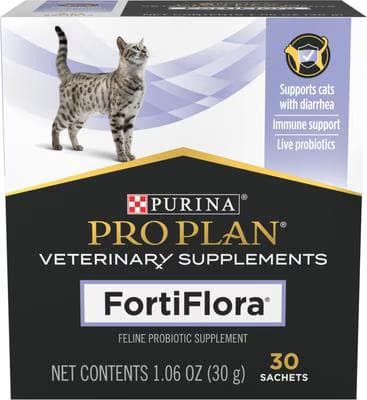
The #1 vet-recommended probiotic for cats. Daily powder sachets support healthy digestion and firmer stools, and can help cats coping with diarrhea or GI upset.
Webvet may earn a commission when you click through to Chewy, at no extra cost to you.
Transition to any new food over 7 to 10 days, mixing increasing amounts into the old diet. Fast switches cause the stomach upset owners then misread as the new food failing.
Give a hairball formula four to six weeks before judging it; you are waiting for the whole coat-to-litter-box pipeline to change.
And if your cat has kidney disease, diabetes, or any condition with its own therapeutic diet, ask your vet before switching; the medical diet wins, and fiber can be added separately.
Hydration, cat grass, and stress overgrooming
Water is the quiet half of hairball prevention: a well-hydrated gut moves swallowed hair through before it can felt into a mass. Cats descend from desert animals and have a famously weak thirst drive, so they rarely drink enough voluntarily. You have to engineer it.
If your goal is to prevent hairballs in cats naturally, this is the lever set: more water, a pot of cat grass, and calming an overgroomer, with no products required.
As a rough target, a healthy adult cat needs about 50 milliliters of water per kilogram of body weight per day, roughly a cup for a 10-pound cat, counting the moisture in food.
A cat on wet food gets most of that at mealtime; a kibble-only cat has to drink nearly all of it, and most simply do not. These tactics close the gap:

- Feed wet food daily. Canned food is roughly three-quarters water; replacing even one dry meal adds more hydration than most cats will ever drink from a bowl.
- Run a water fountain. Moving water attracts many cats that ignore still bowls. Keep it clean; a slimy fountain suppresses drinking.
- Add water stations. One bowl per floor, away from litter boxes and food. Wide, shallow bowls avoid whisker contact that puts some cats off.
- Offer cat grass. A home-grown pot of wheatgrass adds moisture and roughage in one bite and gives grazers a safe outlet.
Bowl placement and hygiene do quiet work here. Cats often refuse water that sits next to food or a litter box, an instinct against contamination, so separating the three stations can raise drinking on its own.
Wash bowls and fountain parts with soap every few days; the slick biofilm that builds on standing water is a common, invisible reason a cat stops using a bowl.
During shedding season, when the hairball math is at its worst, you can add moisture meal by meal: a tablespoon of warm water stirred into wet food, or a splash of unsalted, onion-free broth as an occasional topper. Small additions repeated daily beat any single heroic effort.
The hidden driver: stress overgrooming
Here is the prevention angle almost nobody covers: some cats do not have a shedding problem, they have a licking problem. Anxious or bored cats self-soothe by grooming, sometimes to the point of a condition called psychogenic alopecia.
All that extra licking swallows dramatically more hair, and the first visible symptom is often a jump in hairballs, not bald patches.
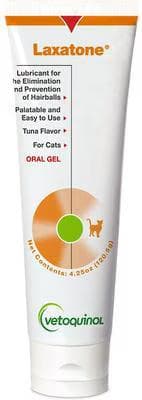
A palatable tuna-flavored oral gel that gently lubricates the digestive tract to ease hairballs and mild constipation in cats.
Webvet may earn a commission when you click through to Chewy, at no extra cost to you.
Watch for grooming that interrupts play or feeding, licking concentrated on the belly, inner thighs, or forelegs, thinning fur or stubble in those spots, and a timeline that tracks a household change: a move, a new pet or baby, construction noise, or a schedule shift.
Itchy skin, fleas, and food allergies cause the same picture, so a vet visit to rule those out comes first.
If stress is the driver, treat the stress and the hairballs fix themselves: predictable feeding and play times, more vertical territory and hiding spots, scratching posts and window perches, daily interactive play, and pheromone diffusers in multi-cat homes. Persistent cases deserve a veterinary behavior consult.
Give environmental changes two to four weeks to show up in the hairball count, since the hair already swallowed still has to work through. If licking stays intense despite a calmer household and a clean vet workup, ask about a referral; compulsive grooming responds far better to early intervention than to years of habit.
Which cats need a prevention plan most
Kittens almost never get hairballs; their coats are short and their grooming is amateur. Hairballs typically start appearing as cats mature into adulthood and become dedicated groomers, usually from around one year on, and the risk climbs with coat length and age.
If your kitten is repeatedly gagging or vomiting, do not write it off as hairballs; have a vet take a look.
The cats that need the full four-lever plan are long-haired breeds, heavy seasonal shedders, fastidious over-groomers, multi-cat-household cats that groom each other, and seniors, whose slower digestion makes hair linger; our guide to senior cat digestive problems explains why older guts need the extra help. For everyone else, weekly brushing and decent hydration are usually plenty.
One wrinkle for indoor cats: artificial light and steady indoor temperatures blur the seasonal shedding signal, so many indoor cats shed moderately all year instead of dumping coat twice a year. For them, a consistent year-round routine beats a seasonal push, and the tally trick below tells you whether your cat is a year-round shedder.
Prevention tools worth having
You do not need a drawer full of gadgets.
A short kit covers every coat: a slicker brush for everyday passes, a wide-tooth steel comb for long coats and mat checks, a deshedding tool used gently and sparingly for undercoat season, a rubber curry brush that shorthaired cats often enjoy, grooming wipes for the post-brush pickup, and a water fountain.
Round the kit out with a pot of cat grass and, for chronic hairball producers, a tube of petroleum-based hairball gel (a Laxatone-type product) kept as an occasional maintenance backstop. The gel supplements the routine; it never replaces the brushing, fiber, and water doing the real prevention work.
Maintain the tools and they maintain the routine: pull the collected fur out of brushes after every session (a matted brush stops grabbing hair), wash combs and slickers with soap monthly, and replace a slicker when its pins bend, because bent pins scratch skin and teach your cat to dread the sight of the brush.
Track results so you know it's working
Prevention is easy to abandon because success is invisible: the payoff is hairballs that never happen. Keep a simple tally, on your phone or the fridge, of every hairball for a month before you start and a month after.
Most owners who work the four levers see the count drop by half or more within six to eight weeks, and having the numbers keeps the routine honest. It also gives your vet real data if the count refuses to fall.
While you track, note the pattern as well as the count. Hairballs clustered in spring and fall point at shedding season and argue for more brushing. Hairballs that track stressful weeks point at overgrooming.
Hairballs paired with diarrhea, weight loss, or vomiting food point at a digestive problem wearing a hairball disguise, and that combination moves the conversation from prevention to diagnosis.
Two companion guides go deeper on the shopping side: hairball remedy products compared side by side and the best cat food for hairballs.
When your cat already has a hairball
Prevention will not help the hairball your cat is working on today. For an active episode, the safe playbook is a cat-formulated lubricant gel, extra fiber, and pushed hydration, plus a clear list of what never to give (oils, butter, human laxatives).
Our guide on how to help a cat pass a hairball walks through it step by step, including dosing cadence.
A vet recommended remedy, the same lubricant gel plus fiber approach, is the best first treatment for most cats working on an ordinary hairball.
When prevention isn't enough: warning signs
Some hairball situations are beyond prevention and beyond remedies. Repeated retching that never produces a hairball, refusing food, lethargy, and constipation together suggest a hairball lodged in the digestive tract, which is an emergency.
Learn the pattern in our guide to cat hairball blockage symptoms and call your vet the same day if you see it.
Frequently Asked Questions
How can I prevent hairballs in my cat naturally?
The most natural prevention is mechanical: brush daily to weekly depending on coat type, feed wet food for moisture, add a teaspoon of plain canned pumpkin for fiber, offer cat grass, and keep water stations fresh. These steps address the causes (swallowed hair and slow transit) without any product beyond a brush.
Does hairball-control cat food really work?
Yes, for most cats, because the mechanism is simple: extra insoluble fiber binds swallowed hair into the stool and keeps the gut moving. It is not magic and it will not overcome zero brushing in a long-haired cat, but as one lever among four it measurably reduces hairball frequency. Judge results after four to six weeks on the new food.
How often should I brush my cat to prevent hairballs?
Once or twice a week for short single coats, two to three times a week for dense double coats, and daily for long-haired cats, seniors, and any cat during spring and fall shedding season. Short, pleasant sessions your cat tolerates beat long ones it fights.
Why is my cat suddenly getting more hairballs?
A sudden increase usually means more hair is going in or the gut is moving it out more slowly. Common causes include seasonal shedding, stress overgrooming after a household change, itchy skin from fleas or allergies, and age-related digestive slowdown. Because several of those are medical, a vet check is the right first step when the change is sharp.
The bottom line
Hairball prevention in cats is a routine, not a product: brush on a schedule that matches the coat, feed fiber that keeps hair moving, engineer more water into the day, and take a sudden hairball increase seriously as a possible stress or health signal.
Ten minutes a day covers all four levers, and the payoff shows up as an empty carpet and a more comfortable cat.

Editor
The Webvet Editorial Team is the in-house group of pet-care editors and writers behind Webvet, operated by Smart Pet Collective. The team researches, writes, and maintains Webvet's pet health, behavior, and medication content. Every article follows a defined editorial process: research from reputable veterinary and scientific sources, careful drafting, mandatory review of medical content by a credentialed veterinarian, and dated publication. Health and medication articles are medically reviewed by a licensed veterinary professional before they go live and are kept current over time.
Veterinarian · BVMS MRCVS
Dr. Pippa Elliott, BVMS, MRCVS, is a veterinarian with nearly 30 years of experience in companion animal practice. Dr. Elliott earned her Bachelor of Veterinary Medicine and Surgery from the University of Glasgow. She was also designated a Member of the Royal College of Veterinary Surgeons. Married with 2 grown-up kids, Dr. Elliott has a naughty Puggle named Poggle, 3 cats and a bearded dragon.
Related reading

Cat Cremation Cost: Private, Communal, and Additional Charges

Cat Euthanasia Cost: Clinic, At-Home Care, and Aftercare

Dog Microchip Cost: Implantation, Registration, and Ongoing Fees
