Cat Hairball Remedy: What Works and What to Avoid
The cat hairball remedies vets actually recommend come down to three things: petroleum-based lubricant gel, added fiber, and hydration. Here is how to use each one safely, what never to give, and when a hairball stops being a hairball problem.

BVMS MRCVS
Medically reviewed by Dr. Pippa Elliott, BVMS MRCVS · Last reviewed

This article contains affiliate links. Webvet may earn a commission when you buy through them, at no extra cost to you.
The best cat hairball remedy is not one product but a short list of three approaches vets consistently recommend: a petroleum-based lubricant gel, extra fiber in the diet, and better hydration.
Each helps swallowed hair slide through the gut and pass in the stool instead of collecting in the stomach. Everything else you have heard of, from butter to olive oil to human laxatives, is somewhere between useless and dangerous.
This guide covers how to use each safe remedy correctly, exactly what to avoid and why, and the signs that mean the problem has outgrown home care. For the background on why cats get hairballs at all and how often is normal, start with our main guide to hairballs in cats.
- 1Three remedies genuinely help: petroleum-based hairball gel (such as Laxatone), added fiber, and more water intake.
- 2Nothing dissolves a hairball. Hair is keratin; remedies work by lubricating it so it passes in the stool.
- 3Never give cooking oils, butter, mineral oil, or human laxatives. Each one is ineffective, risky, or both.
- 4Give lubricant gels between meals, not with food, and follow the label's dose cadence.
- 5Retching that repeats without producing a hairball, plus appetite loss or lethargy, means vet now, not more remedies.
 Sponsored
Have a health question about your cat?
Talk to a licensed vet at Dutch over video or message, including nights and weekends.
Use code Pets60
Plans start at $12/month · covers up to 5 pets
- Licensed vets in most states
- Rx for 150+ conditions
- 4.7 on Trustpilot
Hairball remedies that actually work
The remedies that work are the ones that help hair move through the intestines: a petroleum-based lubricant gel given a few times a week, fiber added to the diet to sweep hair along with stool, and enough water intake to keep gut contents moving.
Used together, they resolve the large majority of routine hairball trouble within a few days.

1. Petroleum-based lubricant gel
Flavored petroleum-based gels, sold under names like Laxatone and Tomlyn Laxatone, are the closest thing to a vet-standard hairball remedy. The Cornell Feline Health Center's hairball guidance specifically endorses mild petroleum-based laxatives made for cats.
The gel coats the hair mass and the gut lining so the wad slides through and exits in the litter box instead of coming up on your rug.
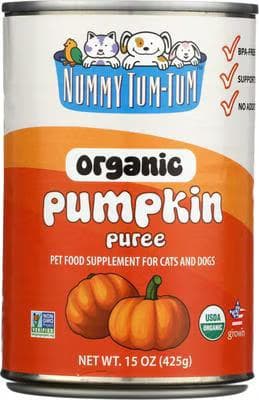
Pure USDA-organic pumpkin puree, no fillers or additives. Adds gentle soluble fiber to firm up loose stool and settle a mildly upset stomach. A simple vet-favorite topper.
Webvet may earn a commission when you click through to Chewy, at no extra cost to you.
These products are formulated for cats: flavored so cats accept them, and built to stay slippery through the digestive tract. They are not the same thing as a scoop of plain Vaseline. More on that distinction below.
The mechanism is worth understanding, because it explains why so many folk remedies fail. Petroleum jelly is indigestible: the cat's gut cannot break it down or absorb it, so it travels the full length of the intestine still slippery, carrying the hair mass along with it. That indigestibility is the entire trick.
Food fats like butter and olive oil fail the same test in reverse: the small intestine digests and absorbs them within the first stretch of gut, long before they could coat hair sitting farther along. The cat gets the calories; the hairball gets nothing.
Keep that one distinction in mind and the safe/unsafe table below almost writes itself.
2. Added fiber
Fiber gives the gut something to grip. A teaspoon of plain canned pumpkin (not pie filling) mixed into wet food, a pinch of psyllium, or a hairball-control formula food all add fiber that binds loose hair and carries it out with stool.
Fiber is the slow-and-steady remedy: it helps the current hairball a little and the next one a lot.
Start small and go slow with fiber. A sudden fiber jump causes gas and soft stool, which owners then blame on the remedy. Half a teaspoon of pumpkin daily for the first few days, then a full teaspoon, lets the gut adapt. If stools turn loose, drop back to the smaller amount.
3. Hydration
A dry gut is a sticky gut. Cats on all-dry diets often run mildly underhydrated, which slows everything moving through the intestines, hair included. Adding wet food, a water fountain, or extra water bowls raises total water intake and keeps swallowed hair moving.
Cat grass also helps some cats by adding moisture and roughage in one bite.
These three pillars match the categories in VCA's clinical page on hairball remedies for cats: lubricants, fiber and diet, and moisture, plus grooming to reduce the hair going in. If a remedy you are considering does not fit one of those categories, be skeptical.
Set expectations correctly, too. None of these remedies produces a dramatic on-command result. What success looks like is quieter: the retching stops within a day or two, your cat keeps eating, and either a hairball appears on the floor or the hair exits unseen in the litter box.
The remedies stack, so using gel, fiber, and moisture together is both safe and more effective than any one alone.
Frequently Asked Questions
What is the best home remedy for hairballs in cats?
The best home remedy is added fiber plus moisture: a teaspoon of plain canned pumpkin (not pie filling) mixed into wet food, alongside deliberately pushed water intake. It is the one kitchen approach with a real mechanism, binding swallowed hair and sweeping it out with stool.
What is the best hairball relief for cats?
A cat-formulated petroleum-based lubricant gel, such as a Laxatone-type product, is the most reliable relief. It coats the hair mass so it slides through the gut, and the Cornell Feline Health Center specifically endorses this category of mild petroleum-based laxatives made for cats.
SponsoredVet care that's always there
Unlimited video calls and messaging with licensed vets for less than a typical vet visit. One membership covers up to five pets.
Use code Pets60
Plans start at $12/month · covers up to 5 pets
- Licensed vets in most states
- Rx for 150+ conditions
- 4.7 on Trustpilot
How to help your cat pass a hairball, step by step
To help a cat throw up or pass a hairball that is already bothering it, you mostly help it pass downward: give a cat-formulated lubricant gel between meals, boost water intake, and let the gut do the work over one to two days.
There is no safe way to make a cat vomit a hairball on demand, and you should never try to induce vomiting at home.
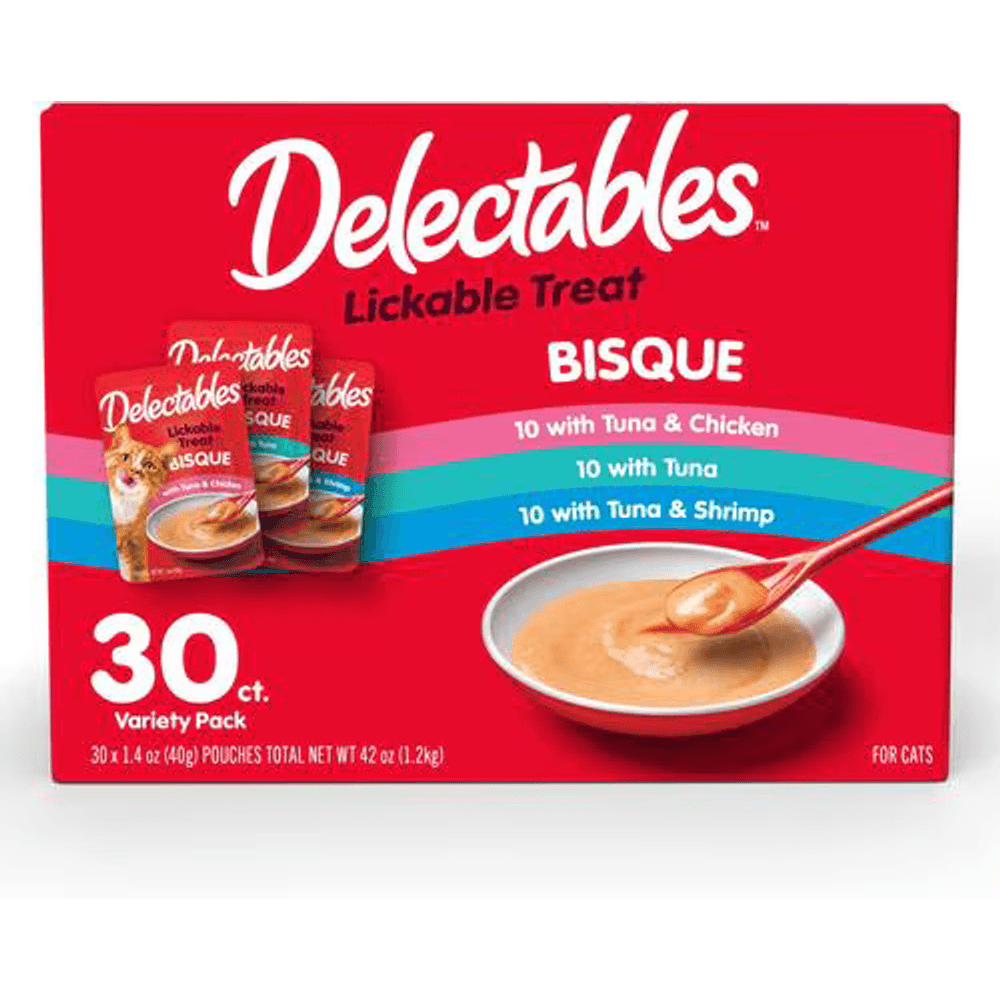
A soupy, lickable bisque treat that tempts a cat who has gone off solid food. The high-moisture, aromatic texture is easy to lap up and hard for a picky or recovering cat to resist, and it sneaks in extra hydration.
Webvet may earn a commission when you click through to Chewy, at no extra cost to you.
Run the steps in order, and run them together rather than trying one per week. The plan below assumes a cat that is otherwise eating, drinking, and behaving normally; anything less than that belongs at the vet, not on this checklist.
- Step 1: Confirm it's hairball behavior. Occasional gagging or a retch that produces a tube of hair, in a cat that then eats and plays normally, is the pattern home care can handle.
- Step 2: Give a lubricant gel between meals. Offer the labeled dose (typically a half to one teaspoon) on an empty stomach, since giving it with food blunts the lubricating effect and petroleum gels given constantly with meals can interfere with fat-soluble vitamin absorption. Most labels suggest daily use for two to three days during an active episode, then one to two times a week.
- Step 3: Use the paw trick if your cat refuses it. Dab the dose on a front paw or the fur of a foreleg. Cats groom compulsively, so the gel gets licked off and swallowed. Offering it from your finger works for cats that like the flavor.
- Step 4: Push water for 48 hours. Swap a dry meal for wet food, add a splash of water or unsalted tuna water to meals, and refresh bowls. Moisture is the cheapest hairball remedy there is.
- Step 5: Brush the hair out. A ten-minute brushing session removes the loose hair your cat would otherwise swallow tomorrow, which stops the cycle from restarting while the current hairball clears.
- Step 6: Watch the 48-hour clock. If the retching continues past a day or two without a hairball appearing, or your cat stops eating, hides, or strains in the litter box, stop the remedies and call your vet.
Getting a dose into a reluctant cat
Some cats treat any offered gel as a personal insult, so have a fallback order. First, offer it on your finger; cats that like the flavor make this effortless.
Second, the paw dab: press a thin smear onto the top of a front paw, low enough that the cat cannot simply shake it off, and grooming does the rest.
Use a thin smear rather than a blob for paw dosing. A large glob gets flung onto the floor with one paw shake, which wastes the dose and redecorates your baseboard.
If your cat licks off most of a smeared dose, count it as given; precision to the fraction of a teaspoon does not matter here.
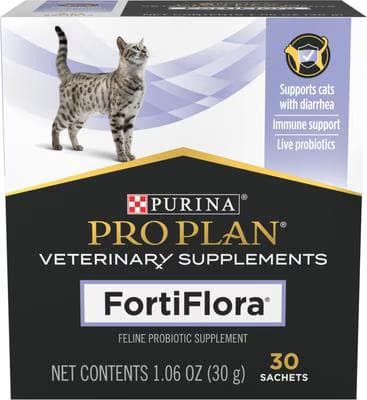
The #1 vet-recommended probiotic for cats. Daily powder sachets support healthy digestion and firmer stools, and can help cats coping with diarrhea or GI upset.
Webvet may earn a commission when you click through to Chewy, at no extra cost to you.
What you should not do is force the issue: never pry the mouth open and push gel in, and never mix a refused gel into the main meal of a cat that is already eating poorly, because flavoring the food with something the cat dislikes can put it off eating entirely.
A cat that refuses every route simply gets the fiber-and-water plan instead.
Natural options: fiber, hydration, and cat grass
The most effective natural hairball remedy for cats is the combination of added fiber and more moisture, because it works with the gut's own motility rather than against it. Natural does not have to mean homemade concoctions; it means food-based help.

- Plain canned pumpkin. About one teaspoon mixed into wet food once daily. It adds soluble and insoluble fiber that helps hair ride out with stool. Use pure pumpkin, never spiced pie filling.
- Wet food and water stations. Canned food is roughly three-quarters water, so shifting even one meal a day from kibble to wet food meaningfully raises hydration. Fountains encourage cats that ignore still bowls.
- Cat grass. A pot of wheatgrass gives cats safe roughage. Some cats vomit shortly after eating grass, which occasionally brings a stomach hairball up with it; either way it is a safer outlet than houseplants.
If you use psyllium instead of pumpkin, keep the amount tiny, an eighth to a quarter teaspoon mixed thoroughly into wet food, and always with plenty of moisture, because psyllium swells as it absorbs water. That swelling is what makes it effective, and also why dosing it dry or heavy is a bad idea.
One caution on the tuna-water trick: use water-packed tuna, unsalted, and treat it as an occasional lure rather than a daily topper. The goal is to make the water bowl interesting during an episode, not to add a salty fish course to every meal.
A note on older cats: senior digestion is slower, which makes hairballs both more likely and more stubborn.
If your older cat's hairballs come with weight loss, vomiting, or appetite changes, read our guide to senior cat digestive problems and loop in your vet, because frequent hairballs in a senior often point to an underlying issue.
What NOT to give your cat for a hairball
Do not give cooking oils, butter, mineral oil, or any human laxative for a hairball. And to answer the most-searched myth directly: nothing dissolves a hairball. Hair is keratin, the same protein as fingernails, and no oil, gel, enzyme, or food breaks it down inside a cat.
Every legitimate remedy works by lubricating the hair or bulking stool so the mass passes intact.

Here is the verdict table for every remedy owners commonly ask about, with the reason behind each verdict:
| Remedy | Safe or unsafe? | Why |
|---|---|---|
| Cat hairball gel (Laxatone-type) | Safe, vet-recommended | Formulated petroleum lubricant made for cats; helps hair pass in stool. Use per label, between meals. |
| Plain canned pumpkin | Safe | Adds fiber that binds hair and moves it out with stool. One teaspoon daily in food. |
| Wet food / extra water | Safe | Moisture keeps gut contents moving; the simplest remedy of all. |
| Cat grass | Safe in moderation | Adds roughage and moisture; grow it yourself so it is pesticide-free. |
| Plain Vaseline | Vet-preferred form is the formulated gel | Petroleum jelly is the active idea behind hairball gels, but formulated products are flavored, dosed, and designed for regular use. Don't make plain Vaseline a routine shortcut or give it in excess. |
| Olive, fish, or other cooking oils | Unsafe / ineffective | Digested and absorbed as fat before reaching the hair; adds calories and can cause diarrhea or pancreatitis risk. |
| Butter | Unsafe / ineffective | It is just fat: digested, calorie-dense, and useless against keratin. Many cats are also lactose-intolerant. |
| Mineral oil | Unsafe | Thin and tasteless, so cats can inhale it while swallowing; aspirated mineral oil causes severe lipid pneumonia. |
| Human laxatives (e.g., stimulant or stool-softener pills) | Never | Dosed for humans, toxic to cats; can cause dangerous dehydration and electrolyte crashes. Only a vet should prescribe a laxative. |
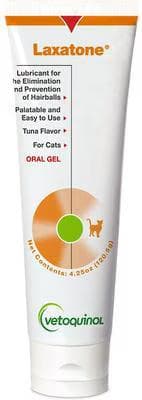
A palatable tuna-flavored oral gel that gently lubricates the digestive tract to ease hairballs and mild constipation in cats.
Webvet may earn a commission when you click through to Chewy, at no extra cost to you.
The Vaseline nuance deserves one more sentence, because the internet flattens it badly. Veterinarians recommend petroleum-based lubricants in their formulated form: products built for cats with a defined dose and flavoring that makes proper dosing possible.
Scooping plain petroleum jelly onto a spoon skips all of that, makes overdosing easy, and given in excess or with every meal it can interfere with absorption of fat-soluble vitamins. If the petroleum approach makes sense for your cat, buy the cat product.
Mineral oil deserves its own warning: it is so bland and slippery that a cat can inhale it while swallowing, and that aspiration risk means oil in the lungs and pneumonia. Nothing dissolves the hairball anyway; a proper gel simply helps it pass.
Milk and cream belong on the avoid list for the same reasons plus one: most adult cats are lactose-intolerant, so dairy tends to produce cramping and diarrhea rather than a passed hairball. Loose stool from dairy can even mimic the around-the-blockage diarrhea described in obstruction cases, muddying the picture your vet needs to read.
Choosing a hairball gel or paste
Choose a gel or paste that lists a petroleum or mineral-oil-based lubricant as the working ingredient, carries clear cat-specific dosing, and comes in a flavor your cat will actually take. Laxatone, the Tomlyn version of it, and similar pastes all follow the same template; the differences are mostly flavor (malt, tuna, catnip) and texture.
A few buying and using pointers: pick one product rather than stacking several, check the label for daily versus weekly cadence, and treat 'natural' non-petroleum pastes (usually oil-and-fiber blends) as gentler but less proven for an active episode.
If your cat refuses every flavor, skip the fight and lean on the fiber and hydration pillars instead; they reach the same goal a little more slowly. Acceptance matters more than brand: the best gel on the market does nothing from an unopened tube in the drawer.
Treats, chews, and special cases
What about hairball-control treats and chews? They occupy a middle ground: most are fiber-and-oil formulas dosed as a couple of treats a day, and they are a reasonable maintenance option for cats that reject gels.
For an active, uncomfortable hairball episode, though, a proper lubricant gel remains the stronger tool because its dose of working ingredient is meaningfully higher.
Two groups need a vet conversation before any hairball product: kittens, whose gagging is more likely to be a swallowed object, infection, or parasites than a hairball, and cats with diabetes, kidney disease, or chronic GI conditions, where even an over-the-counter gel should be cleared first. When in doubt, one phone call settles it.
For a side-by-side look at the products themselves, including which format suits a cat that refuses a gel, see our comparison of the best hairball remedies for cats.
When it's no longer a hairball problem
Remedies are for cats that feel fine. The moment your cat retches repeatedly without producing anything, refuses food, turns lethargic, or stops passing stool, you may be looking at a hairball lodged in the intestine, and no gel will fix that.
Stop home care and read our guide to cat hairball blockage symptoms, then call your vet the same day.
Likewise, repeated vomiting of food or bile with no hair in it usually is not a hairball issue at all; our guide to why cats throw up covers those causes. Chronic coughing or gagging with never a hairball produced can even be feline asthma wearing a hairball costume.
The frequency question matters too. Even in a long-haired cat, more than roughly one hairball a month is worth raising with your vet, because chronic hairballs can be the visible tip of overgrooming, skin disease, or a motility problem.
A remedy that has become a weekly ritual is no longer a remedy; it is a symptom being managed instead of investigated.
Stopping the next hairball before it forms
Remedies treat the hairball you have; prevention stops the one coming. A brushing routine matched to your cat's coat, a hairball-control diet, steady hydration, and a check for stress overgrooming will cut hairball frequency dramatically. Our full guide to hairball prevention in cats builds that routine step by step.
Frequently Asked Questions
What is the best home remedy for hairballs in cats?
The best vet-supported home remedy is a cat-formulated petroleum-based hairball gel, given between meals per the label. Close behind are a teaspoon of plain canned pumpkin in wet food and simply raising water intake with wet food or a fountain. The three work well together and cover the large majority of routine hairball episodes.
What will help a cat throw up a hairball?
Nothing safe makes a cat vomit a hairball on demand, and you should never induce vomiting at home. The safe strategy is downward: lubricant gel, fiber, and hydration help the hairball pass in the stool instead. If your cat keeps retching without results, that is a vet visit, not a bigger dose.
How long does it take a hairball remedy to work?
Most cats pass the offending hair within one to three days of starting a lubricant gel plus extra moisture. You may see the hairball come up, or nothing dramatic at all as the hair exits in the litter box. Symptoms that persist beyond 48 hours, or worsen at any point, mean the remedy window has closed and your vet should take over.
Can I give my cat olive oil for a hairball?
No. Olive oil is digested and absorbed as fat long before it can lubricate hair in the intestine, so it mostly adds calories and loose stool. Cat-formulated petroleum gels resist digestion, which is exactly why they work and food oils do not.
The bottom line
Skip the folk remedies and keep it to three tools: a formulated hairball gel between meals, fiber in the bowl, and more water. Give the plan 48 hours.
A comfortable cat that produces the hairball or quietly passes it has been helped; a cat that keeps retching, stops eating, or fades needs a veterinarian, because at that point it was never a remedy problem.

Editor
The Webvet Editorial Team is the in-house group of pet-care editors and writers behind Webvet, operated by Smart Pet Collective. The team researches, writes, and maintains Webvet's pet health, behavior, and medication content. Every article follows a defined editorial process: research from reputable veterinary and scientific sources, careful drafting, mandatory review of medical content by a credentialed veterinarian, and dated publication. Health and medication articles are medically reviewed by a licensed veterinary professional before they go live and are kept current over time.
Veterinarian · BVMS MRCVS
Dr. Pippa Elliott, BVMS, MRCVS, is a veterinarian with nearly 30 years of experience in companion animal practice. Dr. Elliott earned her Bachelor of Veterinary Medicine and Surgery from the University of Glasgow. She was also designated a Member of the Royal College of Veterinary Surgeons. Married with 2 grown-up kids, Dr. Elliott has a naughty Puggle named Poggle, 3 cats and a bearded dragon.
Related reading

Cat Cremation Cost: Private, Communal, and Additional Charges

Cat Euthanasia Cost: Clinic, At-Home Care, and Aftercare

Dog Microchip Cost: Implantation, Registration, and Ongoing Fees
