Cat Throwing Up? Causes, Colors & When to Worry
Is your cat throwing up hairballs, food, bile, or white foam? This vet-reviewed guide explains the real causes, what vomit colors mean, the emergency red flags to never ignore, and what you can safely do at home before you call your vet.

BVMS MRCVS
Medically reviewed by Dr. Pippa Elliott, BVMS MRCVS · Last reviewed

This article contains affiliate links. Webvet may earn a commission when you buy through them, at no extra cost to you.
A cat throwing up is one of the most common reasons owners call a vet, but occasional vomiting is a symptom, not a diagnosis, and it is never truly "normal." Most single episodes trace back to hairballs, eating too fast, or a mild stomach upset.
Repeated or forceful vomiting is a different matter, and it can signal serious problems like intestinal blockage, kidney disease, or hyperthyroidism. The key is knowing which pattern you are seeing and when to act.
This vet-reviewed guide walks through why cats vomit, how to tell vomiting apart from regurgitation and hairballs, what different vomit colors mean, the emergency red flags you should never ignore, and what you can safely do at home while you wait to see your veterinarian.
- 1Vomiting is a symptom of an underlying issue, not a disease itself, and it deserves attention when it is frequent, forceful, or paired with other signs.
- 2One isolated hairball or a single vomit in an otherwise bright, eating, playful cat is usually low-concern; daily or repeated vomiting is not.
- 3Vomit color offers clues (white foam, yellow bile, clear liquid, or blood) but color alone never confirms a diagnosis.
- 4Emergency signs include repeated vomiting with no keep-down of water, blood, extreme lethargy, a painful or bloated belly, or a cat that is not eating.
- 5Chronic vomiting in older cats often points to kidney disease, hyperthyroidism, IBD, or intestinal lymphoma and needs bloodwork.
- 6Home care is supportive only. When in doubt, call your veterinarian.
 Sponsored
Have a health question about your cat?
Talk to a licensed vet at Dutch over video or message, including nights and weekends.
Use code Pets30
Plans start at $11/month · covers up to 5 pets
- Licensed vets in most states
- Rx for 150+ conditions
- 4.7 on Trustpilot
Why Is My Cat Throwing Up? (Vomiting Is a Symptom, Not a Diagnosis)
When your cat is throwing up, the vomiting itself is only the visible sign of something happening inside. Vomiting is the active ejection of stomach or upper intestinal contents, driven by heaving abdominal contractions, and it can be triggered by dozens of different causes, from trivial to life-threatening.
That is why the same symptom can mean a harmless hairball in one cat and a surgical emergency in another. The visible episode tells you something is wrong, but rarely tells you how worried to be. The pattern around it, and any other signs, is what points toward the cause.
According to the Merck Veterinary Manual, vomiting is one of the most common presenting complaints in small-animal medicine and always reflects an underlying process rather than being a disease on its own. The most common triggers in cats include:
- Hairballs from normal grooming and swallowed fur.
- Eating too fast or overeating, which triggers a quick bring-up.
- Dietary upset from a sudden food change, spoiled food, or table scraps.
- Food sensitivities or intolerances to specific ingredients.
- Intestinal parasites such as roundworms.
- Foreign bodies like string, thread, hair ties, or toy parts.
- Toxins and plants including lilies, which are highly toxic to cats.
- Systemic and organ disease such as kidney disease, hyperthyroidism, pancreatitis, inflammatory bowel disease (IBD), and cancer.

The #1 vet-recommended probiotic for cats. Daily powder sachets support healthy digestion and firmer stools, and can help cats coping with diarrhea or GI upset.
Webvet may earn a commission when you click through to Chewy, at no extra cost to you.
So What Is the Most Common Reason for a Cat to Throw Up?
In otherwise healthy adult cats, the most common reasons for an occasional throw-up are hairballs, eating too quickly, and mild dietary indiscretion. These are usually one-off events. The important word is occasional. Frequent or daily vomiting is a different story and points toward a medical cause that needs a workup, which we cover below.

Vomiting vs. Regurgitation vs. Hairballs (and How to Tell Them Apart)
Not everything that comes back up is true vomiting, and the distinction matters because it points to different problems. Vomiting is an active, effortful process with abdominal heaving and often bile.
Regurgitation is passive: food or liquid simply slides back out with little effort, usually undigested and tube-shaped, coming from the esophagus rather than the stomach. Hairballs are a specific type of vomiting up matted fur.
Cat Throwing Up Undigested Food
Throwing up undigested food shortly after eating, with little heaving, is often regurgitation from eating too fast. With abdominal effort, it is vomiting of food that never left the stomach. An older cat throwing up undigested food repeatedly should be examined, because chronic esophageal or motility issues and other diseases become more likely with age.
We cover this pattern in depth in our guide to a cat throwing up undigested food, including how to slow down a fast eater and when the timing points to something more serious.
Distinguishing vomiting from regurgitation is one of the first things a veterinarian does, because it narrows the list of possible causes and changes which tests are useful. When you call your vet, describing the effort, timing, and appearance is genuinely helpful.
Acute vs. Chronic Vomiting: How Often Is Too Often
A single vomit in a cat that is otherwise bright, eating, and playful is usually low-concern. Vomiting becomes a medical problem when it is frequent, keeps recurring, or comes with other signs.
If your cat is throwing up every day, throwing up daily for more than a week, or will not stop throwing up in a single day, that is chronic or severe and needs veterinary evaluation, not more waiting.
A cat that is constantly throwing up, throwing up frequently, or throwing up a lot over days to weeks has, by definition, chronic vomiting. It is not normal even if your cat bounces back each time, and it is one of the most common early clues to conditions like IBD, hyperthyroidism, and kidney disease.
Senior Cat Vomiting Daily but Acting Normal
A senior cat vomiting daily but acting normal is a common, misleading scenario. "Acting normal" does not rule out disease, because cats mask illness until it is advanced. Daily vomiting in an older cat warrants bloodwork even if appetite looks fine. See our guide on an old cat throwing up for the age-specific workup.

A soupy, lickable bisque treat that tempts a cat who has gone off solid food. The high-moisture, aromatic texture is easy to lap up and hard for a picky or recovering cat to resist, and it sneaks in extra hydration.
Webvet may earn a commission when you click through to Chewy, at no extra cost to you.
What the Color of Cat Vomit Means (White Foam, Yellow Bile, Clear Liquid, Blood)
The color and content of cat vomit offer clues about where it came from and how urgent it is, but color alone never confirms a diagnosis. Content matters as much as color: fresh food, foam, fur, or bile each point in a different direction.
Use the guide below as a starting point for what to tell your vet, not as a reason to skip a visit when other warning signs are present. A cat vomit color chart is a triage tool, not a substitute for an exam.

| Vomit Type / Color | What It Often Means | How Concerned to Be |
|---|---|---|
| White foam | Empty stomach, acid, or early nausea; can accompany hairballs or reflux | Low if once and cat is fine; concerning if repeated |
| Clear liquid | Water or saliva brought up on an empty stomach | Low once; concerning if frequent or with lethargy |
| Yellow or green (bile) | Bile from an empty stomach or bilious vomiting syndrome; green can mean bile | Moderate; frequent bile vomiting needs a vet |
| Undigested food | Ate too fast, ate too much, or regurgitation | Low if occasional; recurring needs evaluation |
| Hairball (tube of matted fur) | Normal grooming and swallowed fur; frequent hairballs can mean over-grooming or gut motility issues | Low if rare; frequent or dry retching needs a vet |
| Foam with visible fur | A hairball working its way up, often with stomach acid | Low once; concerning if the cat retches repeatedly without producing |
| Pink or streaked red | Fresh blood, often from irritation or forceful retching | See a vet promptly |
| Bright red blood | Active bleeding in the mouth, esophagus, or stomach | Emergency, see a vet now |
| Brown, coffee-ground | Digested (older) blood or, sometimes, ingested material | Urgent, see a vet |
White Foam, Clear Liquid, and Foam
A cat throwing up white foam or clear liquid is often bringing up stomach acid or saliva on an empty stomach. A single episode in a happy cat is usually minor, but repeated foam can signal nausea, reflux, or early illness.
For the full picture, read our spoke on a cat throwing up white foam.
Yellow Bile, Green, and Brown Liquid
A cat throwing up yellow liquid or bile, or occasionally green, is usually vomiting on an empty stomach, often early morning. Brown liquid can be digested food or digested blood and deserves a closer look. Our guide on a cat throwing up yellow bile explains bilious vomiting and when it crosses into worrying territory.
Blood: Pink, Red, or Coffee-Ground
A cat throwing up blood, whether pink-tinged, bright red, or brown coffee-ground material, should always be taken seriously. Blood can come from forceful retching, ulcers, toxins, or clotting problems. Do not wait to see if it resolves. See our guide on a cat vomiting blood and call your vet the same day.
SponsoredVet care that's always there
Unlimited video calls and messaging with licensed vets for less than a typical vet visit. One membership covers up to five pets.
Use code Pets30
Plans start at $11/month · covers up to 5 pets
- Licensed vets in most states
- Rx for 150+ conditions
- 4.7 on Trustpilot
When to Worry: Emergency Red Flags and When to Call the Vet
You should be concerned when the vomiting is repeated, forceful, or paired with any other sign of illness. A single vomit in a cat that then eats, drinks, and plays normally is usually fine to monitor. Vomiting plus lethargy, not eating, diarrhea, blood, or a painful belly is not something to watch and wait on.
Contact your veterinarian promptly if you notice any of these:
- Repeated vomiting over a few hours, or an inability to keep water down.
- Cat throwing up and not eating for more than about a day (sooner in kittens and overweight cats).
- Cat lethargic and throwing up, weak, hiding, or collapsed.
- Cat throwing up and diarrhea together, which speeds up dehydration.
- Blood in the vomit or stool, or a bloated, painful abdomen.
- Unproductive retching or possible ingestion of string, a toy, a plant, or a toxin.
A cat that is both lethargic and not eating alongside vomiting needs to be seen quickly, and vomiting combined with diarrhea raises the dehydration risk even faster.
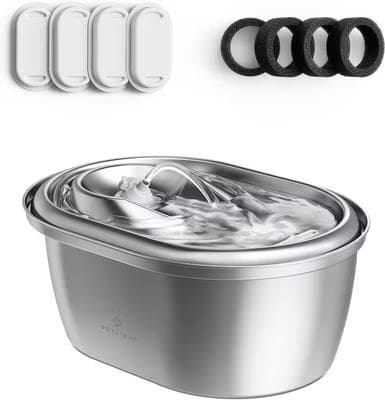
304 food-grade stainless steel pet water fountain, 101 oz. The circulating, filtered water encourages cats to drink more, which supports urinary tract and kidney health.
Webvet may earn a commission when you click through to Chewy, at no extra cost to you.
What Is the Silent Killer of Cats?
"The silent killer" is a nickname often used for chronic kidney disease in cats, because it progresses quietly over months to years and cats hide the early signs. The term is also applied to other slow, subtle diseases like hyperthyroidism and high blood pressure.
The common thread is that these conditions can be well advanced before obvious symptoms appear. That is exactly why unexplained or chronic vomiting, increased thirst, and weight loss deserve bloodwork rather than a wait-and-see approach.
Early bloodwork and a urine test can catch kidney disease and thyroid changes long before a cat looks sick, and earlier detection usually means more treatment options and a better quality of life.
My Cat Keeps Throwing Up but Seems Fine: What That Really Means
If your cat keeps throwing up but seems fine, it is reassuring that they are still bright and eating, but repeated vomiting is still abnormal and worth investigating. "Seems fine" tells you the cat is not in a crisis right now.
It does not tell you the cause is harmless. Cats instinctively hide illness, so normal behavior can coexist with an early disease process that is easiest to treat when it is caught early.
A cat throwing up but acting normal, throwing up food but acting normal, or throwing up at night but acting normal falls into the same bucket: monitor a single episode, investigate a pattern. Our guide on a cat vomiting but acting normal breaks down when the "acting normal" reassurance holds and when it does not.
A practical rule: if vomiting happens more than about once or twice a month on a recurring basis, mention it to your vet even if your cat is otherwise happy. Frequency and trend matter more than any single episode.
Serious Underlying Causes (Kidney Disease, Hyperthyroidism, IBD, Lymphoma, Parasites)
Chronic vomiting in cats often traces back to a handful of underlying diseases that a veterinarian can diagnose with bloodwork, urine testing, imaging, and sometimes biopsy. Recognizing these does not mean self-diagnosing; it means understanding why your vet may recommend testing rather than just an anti-nausea shot.
- Chronic kidney disease: very common in older cats; nausea and vomiting come from toxin buildup, often with increased thirst and weight loss.
- Hyperthyroidism: an overactive thyroid in middle-aged and senior cats causing vomiting, weight loss despite a big appetite, and hyperactivity.
- Inflammatory bowel disease (IBD): chronic inflammation of the gut causing recurrent vomiting, diarrhea, or weight loss.
- Intestinal lymphoma: a common feline cancer that can look a lot like IBD and often needs biopsy to tell them apart.
- Pancreatitis and liver disease: inflammation that commonly causes nausea and vomiting.
- Parasites: heavy roundworm burdens can cause a cat to vomit, sometimes with visible worms.
Cat Throwing Up Worms or Tapeworm
Occasionally a cat throws up worms. Spaghetti-like roundworms are the ones most likely to appear in vomit, while tapeworm segments (small, rice-like) usually show up around the tail or in stool. Either way, seeing worms means your cat needs a vet-prescribed dewormer and a fecal test, because over-the-counter products miss some parasites.
VCA Animal Hospitals and Cornell both emphasize that chronic vomiting is a diagnostic puzzle: the same symptom can stem from many of the conditions above, so testing is how a vet narrows it down. That is a feature of good medicine, not overkill.

360-degree Wi-Fi pet camera so you can watch your cat's resting breathing rate and behavior from your phone and catch worrying changes early.
Webvet may earn a commission when you click through to Chewy, at no extra cost to you.
Cat Throwing Up After Eating (Eating Too Fast, Food Sensitivities, Diet Changes)
A cat throwing up after eating, especially immediately or right after eating, is very often eating too fast. When a hungry cat gulps food, the stomach stretches quickly and the meal comes straight back up, frequently as recognizable, barely-digested food. This scenario, sometimes called "scarf and barf," is common in multi-cat homes and fast eaters.
Other causes include an abrupt diet change, a food sensitivity, or dry food that expands in the stomach. If your cat keeps throwing up after dry food, ask your vet about slower feeding and diet trials. Our spoke on a cat throwing up after eating covers slow-feeder bowls, portioning, and when after-meal vomiting signals disease.
Simple, vet-endorsed steps that often help a fast eater:
- Feed smaller portions more frequently through the day.
- Use a slow-feeder bowl or a food puzzle to pace eating.
- Separate cats at mealtime so competition does not drive gulping.
- Transition to any new food gradually over 7 to 10 days.
Home Care and What You Can Safely Give a Vomiting Cat
For a single, mild episode in a cat that is otherwise bright and hydrated, supportive home care is reasonable while you monitor. There is no safe over-the-counter "cat throwing up medicine" to give without veterinary guidance. If vomiting continues, worsens, or any red flag appears, stop home care and call your vet.
What you can safely do at home for a mild, isolated episode:
- Remove food for a short rest (a few hours, not longer), then offer a small amount of a bland, easily digestible food.
- Keep water available in small amounts so your cat stays hydrated but does not gulp and vomit again.
- Offer a vet-recommended bland or GI diet in small, frequent meals as your cat recovers; ask your vet which is the best cat food for a cat prone to throwing up.
- Reduce stress and keep the environment calm and quiet.
Do not withhold food from a cat for long. Unlike dogs, cats can develop a serious liver problem (hepatic lipidosis) when they stop eating. If your cat refuses food, see our guide on a cat not eating, and contact your vet rather than waiting it out.
How Vets Diagnose and Treat Cat Vomiting
Treatment for a cat throwing up depends entirely on the cause, which is why diagnosis comes first. Your veterinarian starts with a history and physical exam, then may recommend bloodwork, urinalysis, a fecal test, X-rays or ultrasound, and sometimes endoscopy or biopsy. The goal is to find the underlying issue, not just silence the symptom.
Treatment may include anti-nausea and anti-vomiting medications, fluids to correct dehydration, a prescription diet, deworming, or specific therapy for the diagnosed disease (for example, treatment for hyperthyroidism or management of kidney disease and IBD). Many vomiting cats improve quickly once the right cause is addressed.
As the Cornell Feline Health Center explains, the workup a vet chooses is guided by whether the vomiting is acute or chronic and by any accompanying signs, so the more detail you can provide about frequency, timing, and appearance, the faster the path to a diagnosis.
What Your Vet Will Ask (and How to Prepare)
Because vomiting has so many possible causes, the story you bring to the appointment often shapes the workup as much as the exam itself. A short log on your phone beats trying to recall details in the exam room. Note the timing, the appearance, and anything that changed recently in food, environment, or routine.
- How often and for how long: a single episode, daily for a week, or on and off for months.
- What it looks like: color, whether food is digested, and if you saw foam, bile, blood, or fur.
- The effort involved: active heaving (vomiting) versus food sliding out passively (regurgitation).
- Other signs: appetite, energy, thirst, litter-box changes, weight loss, or diarrhea.
- Recent changes: a new food, treats, plants, medications, or possible access to string or toxins.
A quick phone photo or video of the vomit and of an episode itself can settle the vomiting-versus-regurgitation question in seconds. If you can safely collect a fresh stool sample, bring it, since a fecal test is one of the simplest and most useful early steps for a vomiting cat.
Kittens and Cat Hairballs (Brief Summaries)
Cat Throwing Up Hairballs
An occasional hairball, where a cat throws up a cylindrical wad of matted fur, is common in cats that groom heavily. But frequent hairballs are not normal and can point to over-grooming, skin problems, or a gut motility issue. If your cat repeatedly retches hairballs, or retches without producing one, tell your vet.
Kitten Throwing Up
A kitten throwing up deserves a lower threshold for concern than an adult cat. Kittens dehydrate quickly, are prone to parasites, and can pick up infectious diseases, so vomiting in a kitten, especially with lethargy, diarrhea, or a poor appetite, warrants a prompt vet visit rather than home monitoring.
What Kind of Cat Vomit Is Normal?
Strictly speaking, no vomiting is truly "normal," but a rare, isolated hairball or single bring-up in a cat that immediately returns to normal is generally low-concern. What is not normal is frequent, recurring, forceful, or bloody vomiting, or vomiting paired with any other symptom. When the pattern changes, call your vet.
Frequently Asked Questions
When should I be concerned about my cat throwing up?
Be concerned when vomiting is repeated over hours, happens daily or frequently, contains blood, or comes with lethargy, not eating, diarrhea, or a painful belly. A single vomit in a cat that then eats, drinks, and plays normally is usually fine to monitor. When it recurs or pairs with any other sign, call your veterinarian.
What is the most common reason for a cat to throw up?
In otherwise healthy adult cats, the most common reasons for occasional vomiting are hairballs, eating too fast, and mild dietary upset. These are usually one-off events. Frequent or chronic vomiting is different and more often points to an underlying medical cause such as IBD, kidney disease, or hyperthyroidism, which needs a veterinary workup.
What can I give my cat for throwing up?
For a single mild episode, offer a short food rest of a few hours, keep water available in small amounts, then reintroduce a small bland or vet-recommended GI meal. Do not give any human medications, as several are toxic to cats. There is no safe over-the-counter anti-vomiting product to give without veterinary guidance.
What is the silent killer of cats?
"The silent killer" is a common nickname for chronic kidney disease in cats because it develops slowly and cats hide the early signs. It is sometimes also used for hyperthyroidism and high blood pressure. All three can be advanced before symptoms are obvious, so unexplained chronic vomiting, increased thirst, or weight loss should prompt bloodwork.
What kind of cat vomit is normal?
No vomiting is truly normal, but a rare isolated hairball or single bring-up in a cat that quickly returns to normal eating, drinking, and behavior is generally low-concern. Frequent, recurring, forceful, or bloody vomiting, or vomiting with any other symptom, is not normal and should be evaluated by a veterinarian.
When to worry if a cat throws up?
Worry and seek care when vomiting is repeated over a few hours, the cat cannot keep water down, there is blood, or the cat is lethargic, not eating, or has diarrhea or a painful belly. Kittens, senior cats, and cats with known illness warrant a lower threshold. If unsure, call a vet.
What is the silent killer in cats?
The silent killer in cats most often refers to chronic kidney disease, a slow, progressive condition that cats mask until it is advanced. Hyperthyroidism and high blood pressure are sometimes described the same way. Because these diseases hide early, chronic vomiting with increased thirst or weight loss should prompt bloodwork, not watchful waiting.

Editor
The Webvet Editorial Team is the in-house group of pet-care editors and writers behind Webvet, operated by Smart Pet Collective. The team researches, writes, and maintains Webvet's pet health, behavior, and medication content. Every article follows a defined editorial process: research from reputable veterinary and scientific sources, careful drafting, mandatory review of medical content by a credentialed veterinarian, and dated publication. Health and medication articles are medically reviewed by a licensed veterinary professional before they go live and are kept current over time.
Veterinarian · BVMS MRCVS
Dr. Pippa Elliott, BVMS, MRCVS, is a veterinarian with nearly 30 years of experience in companion animal practice. Dr. Elliott earned her Bachelor of Veterinary Medicine and Surgery from the University of Glasgow. She was also designated a Member of the Royal College of Veterinary Surgeons. Married with 2 grown-up kids, Dr. Elliott has a naughty Puggle named Poggle, 3 cats and a bearded dragon.
Related reading

In Home Pet Euthanasia: Cost, What Happens, and How to Choose a Provider

Dog Dementia: Signs, Stages, Treatment, and When to Say Goodbye

Dog Cold Symptoms: Treatment and How to Tell It From Kennel Cough
