Cat Vomiting but Acting Normal: Should You Worry?
A cat vomiting but acting normal is usually a mild, isolated event, but recurring throwing up is never truly normal. A vet explains the frequency thresholds, what vomit color means, and the red flags you should never wait on.

BVMS MRCVS
Medically reviewed by Dr. Pippa Elliott, BVMS MRCVS · Last reviewed

This article contains affiliate links. Webvet may earn a commission when you buy through them, at no extra cost to you.
A cat vomiting but acting normal is usually a mild, isolated event, and a single throw-up in a cat that is still eating, playing, and using the litter box is rarely an emergency. But recurring vomiting, even in a cat that seems completely fine, is never truly normal and always deserves attention.
The rule most veterinarians use is simple: it is not one episode that matters most, it is the pattern.
This guide walks through when occasional vomiting is harmless, the frequency that signals trouble, what the color of the vomit tells you, and the exact red flags that mean you should stop monitoring and call a vet.
The facts here are drawn from primary veterinary sources including the Merck Veterinary Manual, VCA Animal Hospitals, and the Cornell Feline Health Center.
- 1One isolated vomit in a cat that is otherwise eating, drinking, playing, and using the litter box is usually not an emergency.
- 2Recurring vomiting is never normal, even when your cat acts fine. More than about once a month warrants a vet call.
- 3Vomit color is a clue, not a diagnosis. Clear or yellow liquid is often mild, but fresh or digested blood is not.
- 4Blood in the vomit, repeated vomiting in a day, hiding, and refusal to eat are the signs not to wait on.
- 5Kidney disease and other silent illnesses can cause vomiting long before a cat looks sick, so a workup matters.
 Sponsored
Have a health question about your cat?
Talk to a licensed vet at Dutch over video or message, including nights and weekends.
Use code Pets30
Plans start at $11/month · covers up to 5 pets
- Licensed vets in most states
- Rx for 150+ conditions
- 4.7 on Trustpilot
Cat vomiting but acting normal: should you worry?
If your cat vomits once and then goes right back to normal, the odds are in your favor. A cat vomiting but acting normal, meaning it is still bright, alert, eating, and behaving like itself, most often had a minor, self-limiting upset such as a hairball or eating too quickly. Watchful waiting is reasonable.
The worry begins when the vomiting repeats. Owners often search why is my cat vomiting but acting normal or cat keeps vomiting but acting normal precisely because the cat looks fine, so the throwing up feels harmless.
The trap is that many serious feline illnesses, including kidney disease, hyperthyroidism, and inflammatory bowel disease, cause vomiting weeks or months before a cat ever looks sick.
So the honest answer to "should you worry?" is: not about a single episode, but yes about a pattern. A normal-acting cat that vomits repeatedly is not a healthy cat that happens to throw up. It is a cat whose body is telling you something before the rest of the symptoms arrive.
You will find plenty of cat vomiting but acting normal Reddit threads full of owners reassuring each other that it is "just a hairball." Some of the time they are right. But anecdotes are not a diagnosis, and the frequency thresholds below are what actually separate a shrug from a phone call.
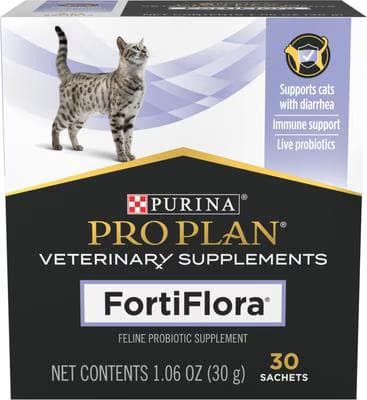
The #1 vet-recommended probiotic for cats. Daily powder sachets support healthy digestion and firmer stools, and can help cats coping with diarrhea or GI upset.
Webvet may earn a commission when you click through to Chewy, at no extra cost to you.
When occasional vomiting is normal (and when it isn't)
Genuinely occasional vomiting can be within the range of normal for a cat. According to VCA Animal Hospitals, occasional vomiting of less than once a month in an otherwise healthy cat, especially if it is mostly hair, may not indicate anything abnormal, though hairballs more than once a month warrant a call.
What kind of cat vomit is normal usually looks like an expelled hairball or a small amount of recently eaten food, followed by a cat that is immediately back to itself.
Where owners get misled is timing. A cat can vomit at predictable moments and still be fine, or it can vomit on a schedule that quietly signals disease. Here is how to read the common patterns:
- Cat vomiting once a day but acting normal: Once a day, every day, is not normal, even in a happy cat. Daily vomiting is a pattern, and it warrants a vet visit rather than continued monitoring.
- Cat vomiting every day but acting normal: Same answer. The Merck Manual flags vomiting more often than once or twice daily as a sign requiring examination. Daily vomiting in an otherwise well cat is a classic early presentation of inflammatory bowel disease and food sensitivity.
- Cat vomiting at night but acting normal: Nighttime or early-morning vomiting of yellow or foamy liquid on an empty stomach is common and often related to a long gap between meals. If it happens regularly, a smaller late-night meal sometimes helps, but frequent recurrence still deserves a check.
- Cat vomiting frequently but acting normal: "Frequently" is the word that changes everything. Frequent vomiting is the opposite of occasional and is one of the most common reasons cats need a workup, regardless of how normal they act between episodes.
The simplest way to hold the line: occasional (under once a month) plus a normal cat is usually fine to monitor. Anything that is daily, weekly, or clearly increasing in frequency is no longer occasional, and "acting normal" does not cancel that out.
How often is too often: frequency thresholds that mean call the vet
As a practical threshold, a cat that vomits more than about once a month, or several times in a week, has crossed from occasional into a pattern that needs a vet, even if it is acting normal.
Frequency is the most useful number you can give your vet, so keep a simple log of dates and what came up.
Owners frequently ask how many times can a cat throw up before going to vet. There is no single magic number, but these tiers reflect how veterinarians think about it:
| Pattern | What it usually means | Action |
|---|---|---|
| Once, then completely normal | Likely a minor, isolated upset (hairball, ate too fast) | Monitor at home; note the date |
| More than once a month, on and off | No longer "occasional"; possible diet, hairball, or GI issue | Schedule a routine vet visit |
| Several times a week or daily | Consistent with IBD, food sensitivity, or organ disease | Book a vet appointment soon, even if the cat seems fine |
| Multiple times in a single day | Acute problem; risk of dehydration and obstruction | Call the vet the same day |
| Repeated retching with nothing coming up | Possible obstruction or nausea; can be urgent | Contact the vet promptly |
A cat that keeps vomiting but is acting normal still fits one of these rows. The "acting normal" part is reassuring for now, but it does not move the threshold. If the frequency lands in the bottom three rows, the cat needs to be seen.

Pure USDA-organic pumpkin puree, no fillers or additives. Adds gentle soluble fiber to firm up loose stool and settle a mildly upset stomach. A simple vet-favorite topper.
Webvet may earn a commission when you click through to Chewy, at no extra cost to you.
Common non-urgent causes when your cat seems fine
When a cat vomits but acts normal, the cause is often one of a handful of everyday, low-drama culprits. These are the causes most likely behind a single episode in a bright, playful cat, though any of them can become a real problem if they happen over and over.

Cat vomiting undigested food but acting normal
When a cat brings up whole, undigested food shortly after eating, the usual reason is eating too fast. The food is regurgitated before the stomach can process it, often in a tube-like shape.
This is one of the most common benign patterns, and it typically responds to slowing the cat down with a puzzle feeder or a slow-feed bowl and smaller, more frequent meals.
That said, repeated vomiting of undigested food is still worth a vet's attention, since chronic regurgitation can point to esophageal or motility issues. We cover this pattern in depth in our guide to a cat throwing up undigested food.
Cat vomiting after eating but acting normal
Vomiting right after a meal is often the eating-too-fast problem again, or a reaction to a recent diet change. Cats have sensitive digestive systems, and switching foods abruptly can trigger a short-lived upset.
If your cat vomits soon after eating but is otherwise thriving, try slowing meals and transitioning any new food gradually over a week or more. Persistent post-meal vomiting is detailed in our cat throwing up after eating article.
Cat vomiting saliva or clear foam but acting normal
Bringing up clear or foamy saliva can happen when the stomach is empty and the cat is a little nauseated, or before a hairball comes up. A single episode in a normal cat is usually minor.
White foam that keeps recurring, though, is its own topic worth reading about in our guide to a cat throwing up white foam.
Hairballs and dietary indiscretion
Hairballs are the classic "my cat is fine, it just coughed one up" cause. Cats groom constantly and swallow hair, which sometimes comes back up. Per VCA, occasional hairballs may be normal, but hairballs more than once a month warrant a call to your vet.
Dietary indiscretion, meaning eating something it should not have such as a houseplant, string, or table scraps, is another frequent trigger. Some plants and human foods are toxic, so if you suspect a specific ingestion, contact your vet or a pet poison line right away.
SponsoredVet care that's always there
Unlimited video calls and messaging with licensed vets for less than a typical vet visit. One membership covers up to five pets.
Use code Pets30
Plans start at $11/month · covers up to 5 pets
- Licensed vets in most states
- Rx for 150+ conditions
- 4.7 on Trustpilot
What the color of the vomit tells you
The color of cat vomit is a useful clue about what is going on, but it is not a diagnosis on its own. Clear or foamy liquid usually points to an empty, slightly irritated stomach, yellow is bile, and pink, red, or coffee-ground colors mean blood and are the ones to take seriously.
Use color to decide how urgently to act, then let a vet confirm the actual cause.

| Vomit color | What it often means | How urgent |
|---|---|---|
| Clear liquid | Empty stomach, water brought back up, mild irritation | Usually mild if isolated |
| White foam | Empty-stomach nausea, pre-hairball | Usually mild if isolated |
| Yellow or green (bile) | Bile on an empty stomach; common with long gaps between meals | Mild once; recurring needs a vet |
| Brown, gritty, or food-colored | Digested food or possible digested blood | Vet if it recurs or smells foul |
| Pink, red, or streaked | Fresh blood | Do not wait; call the vet |
| Coffee-ground / dark specks | Older, digested blood | Do not wait; call the vet |
Cat vomiting clear liquid but acting normal is one of the most common searches, and an isolated episode of clear liquid in a bright, playful cat is often nothing more than an empty, mildly irritated stomach.
Because it is such a frequent question, we break it down fully in our dedicated guide, so this article keeps it brief.
Cat vomiting yellow liquid but acting normal, also called bile vomiting, tends to show up when the stomach has been empty too long. The yellow is bile. A one-off is usually minor, but a recurring pattern needs a vet's input, which we cover in the cat throwing up yellow article rather than duplicating it here.
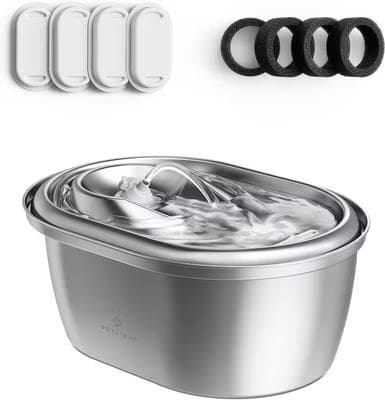
304 food-grade stainless steel pet water fountain, 101 oz. The circulating, filtered water encourages cats to drink more, which supports urinary tract and kidney health.
Webvet may earn a commission when you click through to Chewy, at no extra cost to you.
Blood in the vomit: the one 'acting normal' sign not to wait on
Blood in the vomit is the one finding where "but my cat is acting normal" should not slow you down. Contact your veterinarian promptly if you see fresh red blood, pink-tinged liquid, or dark coffee-ground material, because these can signal ulcers, bleeding disorders, toxin ingestion, or other serious problems, even in a cat that still seems fine.
There is a nuance worth knowing. VCA notes that a few specks of fresh blood may not be abnormal, since forceful vomiting can cause tiny tears, but more copious or persistent bleeding is significant. That is a distinction for your vet to make on the phone, not a reason to wait and watch at home.
Cat vomiting blood but acting normal treatment always begins with a veterinary exam, not a home remedy.
Depending on the cause, a vet may run bloodwork, check for toxins, or prescribe medication such as an anti-nausea drug or a stomach protectant. The treatment is driven by the diagnosis, which is exactly why blood is a see-the-vet sign rather than a monitor-at-home one.
When vomiting comes with other symptoms
Vomiting rarely travels alone in a truly sick cat, so any companion symptom raises the priority. A cat vomiting with diarrhea, lethargy, hiding, or loss of appetite has moved beyond "acting normal," and the combination usually means a vet visit rather than continued watching.
Cat vomiting and diarrhea but acting normal
When vomiting and diarrhea happen together, the digestive tract is irritated at both ends, and the biggest risk is dehydration, which can develop faster than a cat looks unwell.
A single soft stool with one vomit in an otherwise bright cat can be monitored for a day, but if either continues, or the cat stops drinking, it needs to be seen. We go deeper on this combination in our cat throwing up and diarrhea article.
Cat throwing up and hiding but acting normal
Here is the contradiction to catch: a cat that is hiding is not, by definition, acting normal. Cats instinctively hide pain and illness, so a normally social cat that starts retreating under the bed after vomiting is showing a subtle sign that something is wrong.
Hiding paired with vomiting warrants a vet call, not reassurance. If your cat is also refusing food, read our guides on a cat not eating and a cat that is not eating and lethargic.
Senior cats and daily vomiting
In older cats, daily vomiting should never be written off as "just what happens with age." A senior cat vomiting daily but acting normal is a classic early sign of the diseases that quietly affect aging cats: chronic kidney disease, hyperthyroidism, inflammatory bowel disease, and gastrointestinal lymphoma.
These conditions often cause vomiting long before a cat looks visibly ill.

Because these illnesses are common and treatable when caught early, a senior cat that vomits regularly deserves a full workup: a physical exam, bloodwork, urinalysis, and often blood pressure and thyroid testing. Catching kidney disease or hyperthyroidism early can add good years to a cat's life.
Our dedicated guide to an old cat throwing up covers the senior-specific picture in more detail.
The takeaway for older cats is stricter than for young ones: what might be borderline-acceptable monitoring in a healthy two-year-old is a reason to book an appointment in a twelve-year-old. Age lowers the threshold for concern.

360-degree Wi-Fi pet camera so you can watch your cat's resting breathing rate and behavior from your phone and catch worrying changes early.
Webvet may earn a commission when you click through to Chewy, at no extra cost to you.
Red flags: when to see a vet or go to the ER
Some signs mean stop monitoring and get help now, regardless of how normal your cat seemed an hour ago. The most dangerous scenario is a cat that vomits repeatedly and then crashes, so knowing the emergency list ahead of time is what protects your cat.
A note on "the silent killer": chronic kidney disease is often called the silent killer of cats because it advances quietly, and intermittent vomiting is one of its earliest and most overlooked signs.
That is the deeper reason recurring vomiting in a normal-seeming cat is worth a workup: you may be catching a silent disease at the only stage where you can still change its course.
What to do at home to settle your cat's stomach
For a single vomit in a cat that is otherwise normal, supportive home care is reasonable while you monitor. The standard approach is to rest the stomach briefly, keep water available, and reintroduce food gently, then watch the frequency. Home care is supportive only, and it never replaces a vet visit if the vomiting repeats.

What soothes a cat's stomach after vomiting, in practice, looks like this:
- Briefly rest the stomach. Withhold food for a few hours (many vets suggest a short 2 to 4 hour rest for a single episode) while leaving fresh water available. Never withhold water.
- Reintroduce a small, bland meal. Offer a small amount of a vet-recommended bland or easily digestible food, then feed small, frequent portions rather than one large meal.
- Keep water accessible. A pet water fountain or a few water bowls around the home can encourage drinking and help prevent dehydration.
- Slow down fast eaters. Use a slow-feed bowl or puzzle feeder if your cat gulps its food and brings it back up.
- Log every episode. Write down the date, time, what came up, and the color. That log is the most valuable thing you can bring to a vet visit.
How to track the pattern: keeping a vomiting diary
Because frequency is the most useful information you can give your vet, a short vomiting diary turns a vague worry into data. Both the Merck Veterinary Manual and VCA emphasize that timing, frequency, and appearance help distinguish a minor upset from disease, so a written record beats memory.
For each episode, jot down five things: the date and time, what came up (hairball, food, clear or yellow liquid, foam), the color, whether it happened before or after eating, and how your cat acted afterward. A note on your phone is enough.
Over a week or two, a pattern usually surfaces: vomiting only on an empty stomach points one direction, vomiting right after every meal points another, and a slow rise in frequency is itself a red flag. That timeline lets your vet target testing rather than guess, and it can spare your cat unnecessary procedures.

Related reading
This article covers the big-picture question of a normal-acting cat that vomits. For the specific patterns, these companion guides go deeper:
- The overview of why a cat is throwing up in general.
- Vomiting clear or white foam, and yellow bile, broken down by color.
- When vomiting pairs with diarrhea, or when it happens in a senior cat.
- If appetite is the real concern, see a cat not eating but acting normal.
Frequently asked questions
How many times can a cat throw up before going to vet?
There is no single magic number, but the practical rules are clear. A cat that vomits multiple times in one day, or cannot keep water down, should be seen the same day. A cat that vomits more than about once a month on an ongoing basis, or several times a week, needs a vet visit even if it seems fine.
A single vomit followed by completely normal behavior can usually be monitored at home.
What is the silent killer of cats?
Chronic kidney disease is commonly called the silent killer of cats because it progresses quietly over months to years with few obvious symptoms early on. Intermittent vomiting, increased thirst and urination, and gradual weight loss are among its earliest signs.
This is a major reason recurring vomiting in an otherwise normal cat should be evaluated, since early detection through bloodwork and urinalysis can meaningfully slow the disease.
What if my cat is throwing up and hiding but acting normal?
Hiding is not normal behavior, so a cat that vomits and then retreats to hide is showing you a subtle sign of illness or pain. Cats instinctively mask discomfort, and withdrawing from the household is one of the ways that discomfort shows.
Vomiting combined with hiding warrants a call to your veterinarian rather than continued watchful waiting, especially if the cat is also skipping meals.
What kind of cat vomit is normal?
The closest thing to normal is an occasional hairball or a small amount of recently eaten food, brought up by a cat that immediately returns to acting like itself, no more than about once a month.
Per VCA Animal Hospitals, occasional vomiting in an otherwise healthy cat may not be abnormal, but hairballs more than once a month should prompt a vet call, and Merck notes that vomiting more than once or twice a day warrants examination.
Frequent vomiting of any kind is not normal.
What soothes a cat's stomach after vomiting?
For a single episode in an otherwise well cat, rest the stomach for a few hours with fresh water always available, then offer a small amount of a bland, easily digestible food and feed small, frequent meals.
Keep water accessible and slow down fast eaters. This is supportive care only. Never give human medications, and if vomiting continues or recurs, contact your veterinarian for a diagnosis and any prescription anti-nausea treatment.
Is vomiting the same as regurgitation in cats?
No, and the difference matters to your vet. Vomiting is an active process with heaving and abdominal effort that brings up partly digested food or bile, often with yellow color. Regurgitation is passive: undigested food comes back up with little effort, sometimes in a tube shape, usually soon after eating.
The Merck Veterinary Manual notes that regurgitation points more toward the esophagus, while vomiting points to the stomach or intestines. Telling your vet which one you saw helps narrow the cause, so note whether there was heaving.
Can stress make a cat vomit?
Stress and sudden changes can upset a cat's digestive system, and a cat that is anxious may eat too fast or too little, both of which can trigger an occasional vomit. Common stressors include a move, new pets or people, or a diet change made too quickly.
That said, stress should be a diagnosis of exclusion, not a first assumption. Recurring vomiting deserves a vet workup to rule out medical causes such as inflammatory bowel disease, kidney disease, or hyperthyroidism before it is blamed on nerves.
What do cats do right before they pass away?
Cats nearing the end of life often hide or withdraw, stop eating and drinking, become very weak or unable to stand, breathe with difficulty, and drop in body temperature. Vomiting alone in a cat that is still eating, drinking, and behaving normally is not a sign that a cat is dying.
If your cat is showing these serious decline signs, contact your veterinarian right away to discuss its comfort and care.
What is the one smell cats hate?
Citrus is the smell most cats strongly dislike, along with strong scents like vinegar and certain essential oils. This is often used to deter cats from specific areas, but it has nothing to do with why a cat vomits.
Note that many essential oils are actually toxic to cats, so never use them on or near your cat as a repellent. If your cat is vomiting, focus on frequency and other symptoms rather than smells.
Sources: Merck Veterinary Manual, Vomiting in Cats; VCA Animal Hospitals, Vomiting in Cats; Cornell Feline Health Center. This article is for general education and does not replace an examination by your own veterinarian.

Editor
The Webvet Editorial Team is the in-house group of pet-care editors and writers behind Webvet, operated by Smart Pet Collective. The team researches, writes, and maintains Webvet's pet health, behavior, and medication content. Every article follows a defined editorial process: research from reputable veterinary and scientific sources, careful drafting, mandatory review of medical content by a credentialed veterinarian, and dated publication. Health and medication articles are medically reviewed by a licensed veterinary professional before they go live and are kept current over time.
Veterinarian · BVMS MRCVS
Dr. Pippa Elliott, BVMS, MRCVS, is a veterinarian with nearly 30 years of experience in companion animal practice. Dr. Elliott earned her Bachelor of Veterinary Medicine and Surgery from the University of Glasgow. She was also designated a Member of the Royal College of Veterinary Surgeons. Married with 2 grown-up kids, Dr. Elliott has a naughty Puggle named Poggle, 3 cats and a bearded dragon.
Related reading

In Home Pet Euthanasia: Cost, What Happens, and How to Choose a Provider

Dog Dementia: Signs, Stages, Treatment, and When to Say Goodbye

Dog Cold Symptoms: Treatment and How to Tell It From Kennel Cough
