Cat Vomiting Blood: Causes, Colors & When to Call the Vet
A cat vomiting blood is never normal and always signals a serious problem that needs prompt veterinary care. Learn what fresh red versus coffee-grounds blood means, the top causes, and the red flags that make it a true emergency.

BVMS MRCVS
Medically reviewed by Dr. Pippa Elliott, BVMS MRCVS · Last reviewed

This article contains affiliate links. Webvet may earn a commission when you buy through them, at no extra cost to you.
A cat vomiting blood is never normal and should always be treated as a potential emergency. Blood in the vomit is a sign vets call hematemesis. It means there is bleeding somewhere in the mouth, esophagus, stomach, or upper intestine.
The bleeding can point to problems ranging from a gastric ulcer or swallowed foreign object to poisoning, trauma, a clotting disorder, or serious systemic disease. Even if your cat seems otherwise fine, this symptom warrants a prompt call to your veterinarian.
- 1Blood in a cat's vomit is always abnormal and needs veterinary attention, not a wait-and-see approach.
- 2Bright red blood suggests fresh bleeding higher up; dark coffee-grounds material is older, partly digested blood.
- 3Repeated vomiting of blood, weakness, pale gums, a swollen belly, black tarry stool, or suspected poisoning are true emergencies. Go now.
- 4Common causes include GI ulcers, foreign bodies, toxins, clotting disorders, and systemic disease like kidney or liver failure.
- 5Never give human medications or home remedies. Many are toxic to cats and can worsen bleeding.
- 6Even a cat that is vomiting blood but acting normal still needs to be seen. Cats hide illness until it is advanced.

 Sponsored
Have a health question about your cat?
Talk to a licensed vet at Dutch over video or message, including nights and weekends.
Use code Pets30
Plans start at $11/month · covers up to 5 pets
- Licensed vets in most states
- Rx for 150+ conditions
- 4.7 on Trustpilot
Is a cat vomiting blood an emergency? (start here)
Yes, treat a cat vomiting blood as an emergency until a veterinarian tells you otherwise. A single fleck of blood from a mild throat irritation is less alarming than repeated red vomiting, but you cannot reliably tell the difference at home.
The safest move is always to call your vet or an emergency clinic the same day. They can help you decide whether to bring your cat in immediately or watch for specific signs.

A soupy, lickable bisque treat that tempts a cat who has gone off solid food. The high-moisture, aromatic texture is easy to lap up and hard for a picky or recovering cat to resist, and it sneaks in extra hydration.
Webvet may earn a commission when you click through to Chewy, at no extra cost to you.
Can a cat survive vomiting blood?
Many cats survive and recover fully, especially when the cause is caught early and treated. Outcomes depend entirely on the underlying reason. A treatable ulcer or a passing irritation carries a very different prognosis than a bleeding tumor, severe poisoning, or a clotting disorder. Early veterinary care gives your cat the best possible chance.
Searches like cat threw up blood and died or cat vomiting blood before dying reflect how frightening this symptom is.
Sudden, heavy internal bleeding can be fatal, which is exactly why speed matters. If your cat is bleeding, weak, or has pale gums, do not delay. The sooner a vet can stabilize blood loss and find the source, the better the odds.
According to the Merck Veterinary Manual, vomiting that contains blood signals disease of the stomach or intestines and should be evaluated promptly rather than managed at home.
What blood in cat vomit looks like: fresh red vs coffee-grounds
Blood in cat vomit generally appears in one of two forms: bright red (fresh) or dark, grainy, coffee-grounds-colored (older, partly digested). The color gives a clue about where and how recently the bleeding happened, but both are abnormal and both warrant a vet visit.

Bright red blood
A cat vomiting bright red blood usually means fresh, active bleeding from the mouth, throat, esophagus, or upper stomach. You might see it as streaks, clots, or cat vomit red liquid. Fresh red blood or visible clots suggests the bleeding is happening right now, which is more urgent.
Coffee-grounds material
Dark brown or black, grainy vomit that looks like coffee grounds is blood that has been partly digested by stomach acid. It points to slower or older bleeding lower in the stomach, often from an ulcer. It looks less dramatic than red blood but is just as serious.
Tinges, specks, foam, and watery blood
Owners also report cat vomiting blood tinged fluid, tiny specks of blood in cat vomit, cat vomiting foamy blood or cat vomiting watery blood.
Small specks can come from the force of retching irritating the throat, while pink, watery, or foamy blood may reflect diluted bleeding. None of these should be dismissed. Note the color, amount, and how often it happens so you can describe it to your vet.
| What you see | What it may mean | Urgency |
|---|---|---|
| Bright red streaks or clots | Fresh bleeding in mouth, throat, esophagus, or upper stomach | See a vet the same day; emergency if heavy or repeated |
| Dark, grainy, coffee-grounds material | Older, partly digested blood, often a stomach ulcer | See a vet promptly, even though it looks less alarming |
| Pink or watery blood-tinged fluid | Diluted or small-volume bleeding, or irritation from retching | Call your vet the same day for guidance |
| Foamy vomit with blood | Bleeding mixed with mucus and saliva; irritated GI tract | Vet evaluation needed to find the source |
| Blood plus black, tarry stool | Significant bleeding in the stomach or upper intestine | Emergency: go now |
| Blood with collapse or pale gums | Possible shock or major blood loss | Emergency: go now, call the clinic on the way |

The #1 vet-recommended probiotic for cats. Daily powder sachets support healthy digestion and firmer stools, and can help cats coping with diarrhea or GI upset.
Webvet may earn a commission when you click through to Chewy, at no extra cost to you.
Why is my cat vomiting blood? Common causes
Cats vomit blood because something is bleeding in the upper digestive tract, or because a body-wide problem is affecting the stomach lining or the blood's ability to clot. Common causes include ulcers, swallowed objects, toxins, gastritis, parasites, tumors, and clotting disorders. Only a vet can pinpoint which one applies to your cat.
Frequent causes veterinarians see include:
- Gastric or intestinal ulcers, often linked to chronic disease or certain medications, which erode the stomach lining until it bleeds.
- Foreign bodies, such as string, bone fragments, or plastic, that scratch or perforate the GI tract.
- Toxins and poisons, including rodenticides, lilies, antifreeze, and human medications, some of which cause bleeding or interfere with clotting.
- Severe gastritis or inflammatory disease that inflames and erodes the stomach lining.
- Clotting disorders, including rodenticide poisoning and low platelets, that prevent normal clotting.
- Tumors of the stomach or intestines, more common in older cats.
- Parasites, which can cause cat vomiting worms and blood in heavy infestations.
After a hairball, grass, or a meal
A cat vomiting blood after hairball or after eating grass may have irritated its throat or esophagus from the effort of retching, producing a small amount of blood.
That said, you should not assume a hairball is the whole story. Repeated vomiting, more than a fleck of blood, or a cat that seems unwell all mean it is time to call the vet. If your cat vomits often, our guide to cats throwing up covers when frequent vomiting itself is a problem.
Mucus and blood, or after a vaccination
A cat vomiting mucus and blood often has an irritated, inflamed GI tract. Mild, short-lived digestive upset can occasionally follow a vaccination, but blood in the vomit is not a normal vaccine reaction and should be reported to your vet right away.
SponsoredVet care that's always there
Unlimited video calls and messaging with licensed vets for less than a typical vet visit. One membership covers up to five pets.
Use code Pets30
Plans start at $11/month · covers up to 5 pets
- Licensed vets in most states
- Rx for 150+ conditions
- 4.7 on Trustpilot
Cat vomiting blood but acting normal: does it still need a vet?
Yes. A cat vomiting blood but acting normal still needs to be seen by a veterinarian. Cats are experts at masking illness, and a cat can appear bright, eat, and behave normally while a serious problem is developing internally. Normal behavior is reassuring, but it does not rule out ulcers, toxins, or early systemic disease.
Owners often search cat vomiting blood but acting normal reddit hoping for reassurance, but forum anecdotes are not a diagnosis. What looks like a one-off can be the first sign of a bleeding ulcer.
Call your vet, describe exactly what you saw (color, amount, frequency), and let them decide whether your cat needs to be examined today or monitored with specific instructions. A cat vomiting watery blood but acting normal still deserves that phone call.
If your cat is behaving normally in general but vomiting more than usual, our companion article on when a cat is vomiting but acting normal explains how to judge severity and when watchful waiting is safe. The short version: blood changes the calculus.
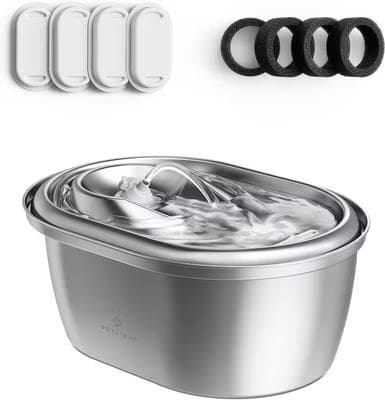
304 food-grade stainless steel pet water fountain, 101 oz. The circulating, filtered water encourages cats to drink more, which supports urinary tract and kidney health.
Webvet may earn a commission when you click through to Chewy, at no extra cost to you.
When it comes with other red-flag signs (diarrhea, blood in stool or urine, not eating)
Blood in the vomit combined with other symptoms raises the urgency significantly. When vomiting blood appears alongside diarrhea, blood in the stool or urine, refusal to eat, or lethargy, it usually means the problem is more widespread or more severe, and your cat needs to be seen promptly.
Vomiting and blood in the stool or diarrhea
A cat vomiting and pooping blood, or a cat vomiting and diarrhea with blood, suggests bleeding along more of the digestive tract, or an illness such as infection, inflammation, or a toxin affecting the whole gut.
Black, tarry stool is a red flag for bleeding higher up in the stomach or small intestine. This combination warrants prompt veterinary care. For the vomiting-plus-loose-stool picture more broadly, see our guide on cats with vomiting and diarrhea.
Blood in the urine, and not eating
A cat peeing blood and vomiting may have a urinary or kidney problem on top of the GI bleeding. That is an urgent combination, especially in male cats, where a urinary blockage can be life-threatening within hours.
A cat vomiting blood and not eating is also concerning, because refusing food for more than a day is a warning sign in any cat. Read more about the risks of a cat not eating and what it can signal, plus when a cat that is not eating and lethargic needs same-day care.

Higher-risk cats: senior, cancer, kidney disease, diabetes, hyperthyroid
Some cats are at higher risk when they vomit blood because of their age or an existing illness. Senior cats and those with cancer, kidney disease, diabetes, hyperthyroidism, or pancreatitis have a lower reserve and often a more serious underlying cause, so blood in the vomit should always be reported to your vet quickly.
- Senior and old cats: an old cat vomiting blood is more likely to have a tumor, chronic organ disease, or an ulcer, and older cats tolerate blood loss less well.
- Cats with cancer: GI tumors can bleed directly, and some cancer treatments can irritate the stomach lining.
- Kidney disease: advanced kidney failure raises stomach acid and toxin levels, which can cause ulcers and bleeding. This is common in cats with chronic kidney disease.
- Diabetes: a diabetic cat vomiting blood may be developing a dangerous complication and needs urgent evaluation, as vomiting can quickly destabilize blood sugar and hydration.
- Hyperthyroidism: this common senior-cat condition frequently causes vomiting, and the underlying disease can affect the GI tract.
- Pancreatitis: inflammation of the pancreas causes significant vomiting and abdominal pain and can occur alongside GI bleeding.
If your cat is a senior or has any diagnosed condition, mention it when you call. It changes how urgently your vet will want to see your cat. Our article on the older cat that keeps throwing up goes deeper on age-related causes.

360-degree Wi-Fi pet camera so you can watch your cat's resting breathing rate and behavior from your phone and catch worrying changes early.
Webvet may earn a commission when you click through to Chewy, at no extra cost to you.
What the vet will do: diagnosis and treatment
The vet's first job is to stabilize your cat and then find the source of the bleeding. Treatment for a cat vomiting blood depends on the cause, so diagnosis comes first. Expect a physical exam, questions about what your cat may have eaten, and diagnostic tests to look inside the body.
Typical diagnostic steps include:
- A thorough physical exam, including checking gum color and hydration.
- Blood work to check red blood cell counts, organ function, and clotting.
- X-rays or ultrasound to look for foreign objects, masses, or organ changes.
- Sometimes endoscopy to look directly at the stomach lining and take biopsies.
Treatment may include IV fluids, anti-nausea and stomach-protecting medications, a blood transfusion for severe blood loss, an antidote for certain poisonings, or surgery to remove a foreign body or tumor. The VCA Hospitals guide to vomiting in cats is a helpful primer on how vets approach the workup.
First aid: what to do while you get to the vet
First aid at home is limited, and the single most useful thing you can do is get to a clinic. While you arrange the visit, stop offering food, and offer only small amounts of water if your cat is not actively vomiting.
Keep your cat calm, quiet, and warm, since stress and cold worsen shock. If you can do it safely, save a sample of the vomit, or take a clear photo, so the veterinary team can see the color and volume. Note the time it started and how many episodes you have counted.
Gather anything your cat may have eaten or chewed, such as plant leaves, string, or a medication package, and bring it with you. Call the clinic before you leave so staff can prepare, and drive carefully with your cat secured in a carrier.
What NOT to do at home (why home remedies are dangerous here)
Do not attempt home remedies when your cat is vomiting blood. There is no safe home remedy for a cat vomiting blood, and searching for an Indian home remedy for cat vomiting blood or any other DIY fix wastes time your cat may not have.
Blood means internal bleeding, and only a vet can find and treat the source. Specifically, avoid these mistakes:
- Never give human medications. Painkillers like ibuprofen, aspirin, and acetaminophen (Tylenol) are toxic to cats and can cause fatal bleeding or organ failure.
- Do not induce vomiting unless a veterinarian or poison control specifically tells you to. It can cause serious harm.
- Do not force food or water on a cat that is actively vomiting.
- Do not use leftover prescriptions from another pet or a previous illness.
If you suspect poisoning, the AVMA's pet-owner resources and your local emergency vet or an animal poison control line are the right first calls. When in doubt, phone your vet and describe what you are seeing rather than treating at home.
Related cat-vomiting guides
Blood is not the only clue in a cat's vomit. Color and texture help point toward different problems, and we cover the common variations in dedicated guides so you can compare what you are seeing:
- White foam: a cat vomiting white foam (sometimes streaked with a little blood) often points to an empty, irritated stomach. See our guide to cats throwing up white foam.
- Yellow liquid: yellow vomit is usually bile from an empty stomach. Learn what it means in our article on a cat throwing up yellow.
- Undigested food or right after eating: see our guides on a cat throwing up undigested food and a cat throwing up right after eating.
Whatever the color, blood is the one sign that should always move you to call a veterinarian rather than wait and watch.
Frequently Asked Questions
Why would a cat vomit blood but acting normal?
A cat can vomit blood while acting normal because cats instinctively hide illness and often appear fine until a problem is advanced. The blood may come from a small ulcer, mild GI irritation, or the early stage of a more serious condition.
Even a cat that seems bright and is eating should be seen by a vet, because normal behavior does not rule out internal bleeding.
Can a cat survive vomiting blood?
Yes, many cats survive vomiting blood, especially when the cause is found and treated early. The prognosis depends entirely on the underlying reason, from a treatable ulcer to a bleeding tumor or severe poisoning. Prompt veterinary care gives your cat the best chance, so do not delay if you see blood, weakness, or pale gums.
How do I fix my cat throwing up blood?
You cannot fix a cat throwing up blood at home, and you should not try. Blood means bleeding somewhere in the digestive tract, and only a veterinarian can diagnose and treat the cause.
Withhold food, keep your cat calm, save a sample of the vomit if you can, and contact your vet or an emergency clinic the same day. Never give human medications or home remedies.
Is a little bit of blood in vomit bad?
Any blood in vomit is abnormal and should be reported to your vet, even a small amount. A single fleck can come from the strain of retching irritating the throat, but you cannot reliably tell that apart from early ulcer bleeding at home.
Call your vet, describe the color and amount, and let them decide whether your cat needs to be seen.
What are four signs your cat is suffering?
Four common signs a cat is suffering or seriously ill are: hiding or a marked change in behavior, refusing to eat or drink, lethargy and weakness, and physical warning signs such as pale gums, labored breathing, or vomiting blood.
Any of these, especially in combination, warrants prompt veterinary attention. Cats hide pain well, so subtle changes can signal a real problem.
What color is blood in cat vomit and what does it mean?
Blood in cat vomit is usually either bright red or dark and grainy like coffee grounds. Bright red blood is fresh and points to active bleeding in the mouth, throat, esophagus, or upper stomach.
Dark, coffee-grounds material is older blood that has been partly digested by stomach acid, often from a stomach ulcer. Both are abnormal, so note the color and amount and have your cat seen by a vet.

Editor
The Webvet Editorial Team is the in-house group of pet-care editors and writers behind Webvet, operated by Smart Pet Collective. The team researches, writes, and maintains Webvet's pet health, behavior, and medication content. Every article follows a defined editorial process: research from reputable veterinary and scientific sources, careful drafting, mandatory review of medical content by a credentialed veterinarian, and dated publication. Health and medication articles are medically reviewed by a licensed veterinary professional before they go live and are kept current over time.
Veterinarian · BVMS MRCVS
Dr. Pippa Elliott, BVMS, MRCVS, is a veterinarian with nearly 30 years of experience in companion animal practice. Dr. Elliott earned her Bachelor of Veterinary Medicine and Surgery from the University of Glasgow. She was also designated a Member of the Royal College of Veterinary Surgeons. Married with 2 grown-up kids, Dr. Elliott has a naughty Puggle named Poggle, 3 cats and a bearded dragon.
Related reading

In Home Pet Euthanasia: Cost, What Happens, and How to Choose a Provider

Dog Dementia: Signs, Stages, Treatment, and When to Say Goodbye

Dog Cold Symptoms: Treatment and How to Tell It From Kennel Cough
