Cat Throwing Up Yellow? Causes and When to Worry
Yellow vomit in cats is almost always bile, often from an empty stomach. Learn the common causes, how to read the texture and color, safe home care, and the red flags that mean it is time to call your vet.

BVMS MRCVS
Medically reviewed by Dr. Pippa Elliott, BVMS MRCVS · Last reviewed

This article contains affiliate links. Webvet may earn a commission when you buy through them, at no extra cost to you.
A cat throwing up yellow is almost always vomiting bile, a digestive fluid that turns the vomit yellow when the stomach is empty or mildly irritated. A single episode in a cat who is otherwise bright, eating, and acting normal is usually not an emergency.
But repeated yellow vomiting, or yellow vomit paired with lethargy, appetite loss, or blood, can signal a more serious problem and warrants a call to your vet.
Below, our vet-reviewed guide walks through exactly what the yellow color means, how to read the texture (foam versus liquid versus mucus), the most common causes, the red flags that mean it is time to see a vet, and what you can safely do at home.
- 1Yellow vomit is bile: a fluid made by the liver that colors vomit yellow, most often when the stomach is empty.
- 2One episode in a cat who is eating and acting normal is usually low-risk. Monitor and note the time and appearance.
- 3Morning yellow vomit on an empty stomach is a classic pattern called bilious vomiting syndrome, often eased by smaller, more frequent meals.
- 4See a vet for vomiting that repeats, lasts 24 hours or more, or comes with lethargy, not eating, weight loss, diarrhea, or blood.
- 5Never give human medications, leftover prescriptions, or milk. Home care is supportive only and does not replace a vet exam.
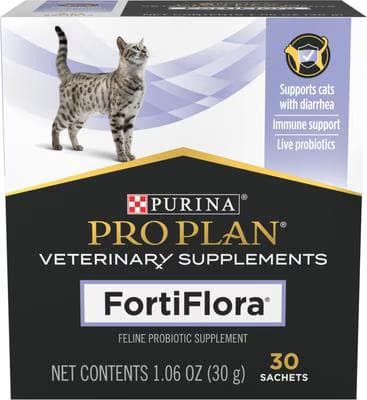
The #1 vet-recommended probiotic for cats. Daily powder sachets support healthy digestion and firmer stools, and can help cats coping with diarrhea or GI upset.
Webvet may earn a commission when you click through to Chewy, at no extra cost to you.
What the yellow means: it's bile
When a cat is throwing up yellow, the yellow color comes from bile. Bile is a yellow-green digestive fluid produced by the liver and stored in the gallbladder. It normally flows into the small intestine to help break down fat.
When bile washes back into an empty or irritated stomach and is then vomited up, it tints the vomit yellow.
So whether you are seeing yellow liquid, yellow foam, or thicker yellow stuff, the underlying substance is the same: bile mixed with stomach fluid. The shade can vary and does not usually change the diagnosis on its own:
- Bright yellow or pale yellow liquid usually means fresh bile with little food present, common on an empty stomach.
- Dark yellow liquid can mean bile that has been sitting longer or is more concentrated, or bile mixed with a small amount of partially digested food.
- Yellow-green tints simply reflect the natural color of bile, which is yellow-green before it mixes with anything else.
Vomiting itself is a reflex, not a disease. The Merck Veterinary Manual describes vomiting in cats as a coordinated event with many possible triggers, ranging from a simple empty stomach to gastrointestinal, metabolic, and systemic disease.
That is why the color is a useful clue but not a full answer: the yellow tells you bile is involved, and the pattern and other symptoms tell you how worried to be.

Yellow foam vs. yellow liquid vs. mucus: reading the texture
The texture of the vomit tells you how much air, saliva, and mucus is mixed with the bile, but on its own it rarely changes whether the situation is serious. What matters more is how often it happens and how your cat is acting. Here is how to read the common textures.
Yellow foam or foamy liquid
Yellow foam is bile whipped together with air and saliva, which happens when the stomach is empty and the cat is retching. It is one of the most common patterns and is often the classic empty-stomach morning vomit. White foam mixed with yellow liquid is the same thing: frothy stomach fluid plus bile.
Clear or thin yellow liquid
Thin, clear-to-yellow liquid is watery stomach fluid mixed with bile. A one-time episode in an otherwise normal cat is usually minor. Repeated watery yellow vomiting can lead to dehydration, so frequency is the thing to watch.
Yellow mucus
Slimy or stringy yellow mucus points to more irritation of the stomach or upper digestive tract lining. Occasional mucus is common, but persistent mucus with vomiting is worth a vet visit.
Yellow-brown, yellow-green, or vomit with hair
Yellow-brown vomit can mean bile mixed with food, and sometimes signals material moving the wrong way from farther down the digestive tract. Yellow vomit with hair usually means bile plus a hairball. If you regularly see hair, read our sibling guide below on undigested-food and hairball vomiting.
| Texture / color | Most likely meaning | How concerned to be |
|---|---|---|
| Yellow foam | Bile plus air and saliva on an empty stomach | Low if one-time and cat is normal |
| Thin yellow liquid | Watery stomach fluid plus bile | Low once, watch if repeated (dehydration) |
| Yellow mucus | Irritation of stomach or throat lining | Low once, vet visit if persistent |
| Dark yellow | Concentrated or older bile, or bile plus food | Depends on frequency and other signs |
| Yellow-green | Normal color of bile | Same as yellow, not extra alarming alone |
| Yellow-brown | Bile plus food, possible lower-GI content | Vet if repeated or with other symptoms |
| Yellow with blood (red or coffee-ground) | Bleeding in stomach or upper GI tract | Call the vet promptly |
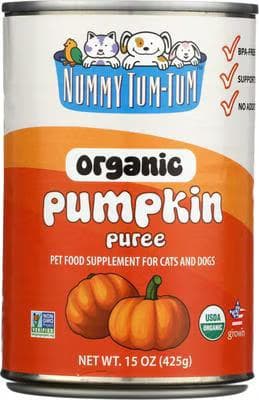
Pure USDA-organic pumpkin puree, no fillers or additives. Adds gentle soluble fiber to firm up loose stool and settle a mildly upset stomach. A simple vet-favorite topper.
Webvet may earn a commission when you click through to Chewy, at no extra cost to you.
Why is my cat throwing up yellow? Common causes
Why is my cat throwing up yellow liquid? Most often it is an empty or irritated stomach, but there are several common causes, ranging from harmless to serious. The list below moves roughly from the most benign toward the ones that need a vet.
- Empty stomach (bilious vomiting syndrome). When too long passes between meals, bile pools and irritates the empty stomach, triggering a yellow-bile vomit. This is the classic early-morning or before-a-meal episode.
- Hairballs. Cats groom constantly and swallow hair. When they bring up a hairball, it often comes with bile and stomach fluid, so you see yellow around the hair.
- Dietary indiscretion. Eating too fast, a diet change, spoiled food, plants, or something they should not have can irritate the stomach and cause a bile vomit.
- Acid reflux and gastritis. Inflammation of the stomach lining or reflux of bile and acid can produce recurring yellow vomit.
- Hyperthyroidism. An overactive thyroid, common in older cats, can cause vomiting along with weight loss and increased appetite. This needs veterinary diagnosis and treatment.
- Inflammatory bowel disease, pancreatitis, kidney disease, or liver disease. These systemic conditions can all cause vomiting, sometimes bile-colored, and usually come with other signs like appetite change, weight loss, or lethargy.
- Gastrointestinal obstruction. A swallowed object, string, or a mass can block the gut. This is a true emergency and often causes repeated vomiting, no appetite, and abdominal pain.
As VCA Animal Hospitals notes, vomiting in cats has a long list of possible causes, and distinguishing a minor upset from serious disease depends on the frequency, duration, and other symptoms rather than the color alone.
If your cat also is not eating, our guide on a cat not eating walks through why appetite loss matters.
 $65 · no membership
Have a health question about your cat?
A licensed vet can assess your cat over video and prescribe online when it's appropriate.
 Talk to a vet
- Licensed vets
- All 50 states
- same-day Rx
Webvet may earn a commission if you book.
Bilious vomiting syndrome: the empty-stomach morning vomit
If your cat is throwing up yellow in the morning or right before a meal, the most likely explanation is bilious vomiting syndrome. This is when bile builds up in an empty stomach overnight, irritates the lining, and gets brought up as yellow liquid or foam, often just once before the cat happily eats breakfast.
The tell-tale pattern is timing plus normal behavior: the vomit happens after a long gap without food (typically overnight), and the cat is otherwise bright, active, and hungry. Because the trigger is the empty stomach, the most effective home change is usually to shorten the gap between meals.
Practical steps that often help empty-stomach yellow vomiting:
- Feed smaller meals more frequently rather than one or two large meals.
- Offer a small snack right before bedtime to shorten the overnight fasting window.
- Consider a timed automatic feeder to deliver a small early-morning portion.
If simple feeding changes do not resolve a recurring morning bile vomit, or if the pattern changes, have your vet examine your cat. Persistent bilious vomiting can occasionally point to an underlying condition that needs treatment.


A soupy, lickable bisque treat that tempts a cat who has gone off solid food. The high-moisture, aromatic texture is easy to lap up and hard for a picky or recovering cat to resist, and it sneaks in extra hydration.
Webvet may earn a commission when you click through to Chewy, at no extra cost to you.
Throwing up yellow but acting normal: when it's probably okay
A cat throwing up yellow but acting normal is usually the lower-risk scenario. If your cat vomits a small amount of yellow liquid once, then goes right back to eating, drinking, playing, and using the litter box normally, a single episode is often just an empty or briefly irritated stomach.
In that case it can reasonably be monitored at home. Why does my cat throw up yellow liquid but seems fine? Because the bile itself is not harmful, and a healthy cat can have an occasional upset stomach the same way a person can.
The key word is occasional. What you are checking for is whether the vomiting stays a one-off or starts to repeat.
Keep a simple log: the time, what the vomit looked like, and whether your cat ate afterward. If the vomiting stays isolated and behavior stays normal, monitoring is reasonable. For the fuller picture on this pattern, see our sibling guide on a cat vomiting but acting normal.

Yellow vomit plus other symptoms: red flags
Yellow vomit becomes far more concerning the moment it is paired with other symptoms. When a cat is throwing up yellow and not eating, that combination is a warning sign.
Cats that stop eating for more than a day or two can develop a dangerous liver condition called hepatic lipidosis, so appetite loss with vomiting should not wait.
Take these combinations seriously and call your vet:
- Vomiting yellow and not eating. Appetite loss with vomiting can escalate quickly in cats.
- Yellow vomit and diarrhea. Vomiting plus diarrhea raises the risk of dehydration and can point to a GI infection, dietary problem, or systemic illness.
- Repeated vomiting of yellow liquid with food. Bringing food back up along with bile more than occasionally warrants a workup.
- Vomiting bile for 3 days. Anything that persists past 24 to 48 hours is no longer a passing upset and needs a vet.
- Lethargy, hiding, or a painful belly. These suggest the cat feels genuinely unwell, not just a fleeting upset.
If your cat is vomiting yellow and also lethargic, read our guide on a cat not eating and lethargic for what that pairing can mean and how urgently to act.
When to worry and see a vet (is it an emergency?)
Is a cat vomiting bile an emergency? A single episode in a normal, eating cat usually is not. It becomes an emergency when the vomiting repeats, will not stop, or comes with other signs of illness.
The rule of thumb: color tells you it is bile, but frequency, duration, and behavior tell you whether to worry. Get veterinary care promptly if your cat is doing any of the following:
- Vomiting repeatedly in a single day, or continuing past 24 hours.
- Not eating or drinking, or refusing all food for more than a day.
- Lethargic, weak, hiding, or clearly painful.
- Blood in the vomit, a swollen or painful abdomen, or unproductive retching.
- Losing weight, drinking or urinating more, or a known kitten, senior, or chronically ill cat.
People often ask what the silent killer of cats is. The phrase usually refers to chronic kidney disease, a common condition in older cats that develops quietly.
Its early signs, including intermittent vomiting, increased thirst, and weight loss, are easy to miss. That is one reason repeated vomiting in a middle-aged or senior cat deserves a vet exam and bloodwork rather than watchful waiting.
Feline health resources like the Cornell Feline Health Center emphasize that persistent or recurrent vomiting in cats is not normal and deserves a diagnostic look, because it can be an early window into kidney, thyroid, GI, or other systemic disease.

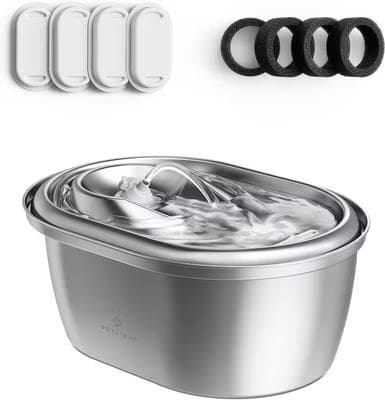
304 food-grade stainless steel pet water fountain, 101 oz. The circulating, filtered water encourages cats to drink more, which supports urinary tract and kidney health.
Webvet may earn a commission when you click through to Chewy, at no extra cost to you.
What you can do at home (and what NOT to give)
My cat is vomiting yellow liquid, what should I do? For a single episode in a cat who is otherwise well, home care is supportive only: give the stomach a short rest, keep water available, then reintroduce food gently.
Home care is never a substitute for a vet visit when red flags are present.
Supportive steps that are generally safe
- Withhold food for a short period. A brief rest of a few hours can let an irritated stomach settle, but do not fast a cat for long: cats should not go without food for more than about a day, because prolonged fasting risks liver problems.
- Keep fresh water available. Do not force water, but make sure it is easy to reach so your cat can stay hydrated.
- Reintroduce food small and bland. After the stomach rest, offer a small amount of a bland, easily digestible food, then return to the normal diet gradually. Your vet can recommend a suitable option.
- Address the empty-stomach pattern. If the vomit is a morning bile episode, smaller more frequent meals and a bedtime snack often help (see the bilious vomiting section above).
Should I feed my cat after vomiting bile? Usually yes, once the stomach has had a short rest. Because empty-stomach bile vomiting is driven by an empty belly, offering a small meal often stops the cycle. If your cat vomits the food back up, or refuses to eat, call your vet.

For general guidance on caring for a sick pet and when home monitoring is appropriate, the American Veterinary Medical Association maintains pet-owner resources, and your own veterinarian remains the best source for advice specific to your cat.
Related reading: cat vomit colors and when vomiting is serious
Yellow is only one color of cat vomit, and the wider pattern of your cat's vomiting matters. If you are trying to decode different colors and textures, or figure out whether your cat's vomiting is serious, these sibling guides go deeper on each pattern so you do not have to guess.
- Cat throwing up: the full overview covers every common cause and color in one place.
- Cat throwing up white foam explains the frothy white pattern and how it differs from yellow bile.
- Cat throwing up undigested food covers eating too fast, hairballs, and food coming back up whole.
- Cat throwing up and diarrhea walks through the vomiting-plus-diarrhea combination and dehydration risk.
- Cat vomiting blood explains what red or coffee-ground vomit means and why it is urgent.
- Old cat throwing up focuses on senior-cat vomiting and the diseases behind it.
Frequently asked questions
Is cat vomiting bile an emergency?
A single episode of yellow bile in a cat who is bright, eating, and acting normal is usually not an emergency and can be monitored at home. It becomes an emergency when vomiting repeats several times, continues past 24 hours, or comes with lethargy, appetite loss, blood, diarrhea, or a painful belly.
When in doubt, call your vet, because repeated vomiting can signal a blockage or systemic illness.
What to give a cat that's throwing up bile?
After a short stomach rest of a few hours, offer fresh water and a small amount of bland, easily digestible food, then return to the normal diet gradually. Because bile vomiting is often driven by an empty stomach, a small meal frequently settles it.
Do not give human medications, leftover prescriptions, or milk, and check with your vet before giving anything else.
How to treat cat vomiting yellow home remedy?
Home care is supportive only: a brief food rest, easy access to water, then small bland meals, and smaller more frequent feedings if it is an empty-stomach morning vomit. There is no safe over-the-counter human remedy for cats.
If the vomiting repeats, lasts more than a day, or comes with other symptoms, a vet exam is the real treatment, not a home remedy.
Should I feed my cat after vomiting bile?
Usually yes. Give the stomach a short rest, then offer a small meal, because empty-stomach bile vomiting is caused by the stomach being empty and food often stops the cycle. Do not fast a cat for long, since cats should not go without eating for more than about a day.
If your cat refuses food or vomits it back up, call your vet.
Why is my cat throwing up yellow puke?
Yellow puke is bile, a digestive fluid that colors vomit yellow when the stomach is empty or irritated. The most common reasons are an empty stomach (bilious vomiting syndrome), hairballs, or minor dietary upset. Less commonly it reflects gastritis, hyperthyroidism, kidney disease, pancreatitis, or a blockage, which is why persistent or symptomatic yellow vomiting should be checked by a vet.
What is the silent killer of cats?
The phrase usually refers to chronic kidney disease, a common condition in older cats that progresses quietly. Its early signs, including intermittent vomiting, increased thirst and urination, and gradual weight loss, are easy to overlook.
Because of this, recurrent vomiting in a middle-aged or senior cat is a reason to have your vet run an exam and bloodwork rather than simply waiting.
Why does my cat throw up yellow liquid but seems fine?
Because bile itself is not harmful, and a healthy cat can have an occasional empty-stomach or mildly irritated-stomach upset while otherwise feeling well. A one-time yellow vomit in a cat who eats, drinks, and behaves normally is usually low-risk.
The thing to watch is whether it stays occasional. If it starts to repeat or new symptoms appear, see your vet.
What is the silent killer in cats?
This is the same idea as the silent killer of cats: chronic kidney disease is the condition most often described this way because it develops slowly and its early signs are subtle. Heart disease is sometimes given the same label for similar reasons.
Regular veterinary checkups and bloodwork, especially for senior cats, are the best way to catch these before they advance.
$65 · no membershipHave a health question about your cat?
A licensed vet can assess your cat over video and prescribe online when it's appropriate.
Talk to a vet- Licensed vets
- All 50 states
- same-day Rx
Webvet may earn a commission if you book.

Editor
The Webvet Editorial Team is the in-house group of pet-care editors and writers behind Webvet, operated by Smart Pet Collective. The team researches, writes, and maintains Webvet's pet health, behavior, and medication content. Every article follows a defined editorial process: research from reputable veterinary and scientific sources, careful drafting, mandatory review of medical content by a credentialed veterinarian, and dated publication. Health and medication articles are medically reviewed by a licensed veterinary professional before they go live and are kept current over time.
Veterinarian · BVMS MRCVS
Dr. Pippa Elliott, BVMS, MRCVS, is a veterinarian with nearly 30 years of experience in companion animal practice. Dr. Elliott earned her Bachelor of Veterinary Medicine and Surgery from the University of Glasgow. She was also designated a Member of the Royal College of Veterinary Surgeons. Married with 2 grown-up kids, Dr. Elliott has a naughty Puggle named Poggle, 3 cats and a bearded dragon.
Related reading

In Home Pet Euthanasia: Cost, What Happens, and How to Choose a Provider

Dog Dementia: Signs, Stages, Treatment, and When to Say Goodbye

Dog Cold Symptoms: Treatment and How to Tell It From Kennel Cough
