Hypoallergenic Cats: Breed Claims, Allergens, and Choices
No cat breed guarantees freedom from allergy symptoms. Compare common hypoallergenic claims, distinguish shedding from allergens, and plan a responsible adoption decision with an allergist.

BVMS MRCVS
Medically reviewed by Dr. Pippa Elliott, BVMS MRCVS · Last reviewed

This article contains affiliate links. Webvet may earn a commission when you buy through them, at no extra cost to you.
Hypoallergenic cats are often marketed as a solution for people with cat allergies, but no breed is guaranteed not to trigger a reaction. A short coat, a hairless appearance, or a breeder's claim about low allergens does not establish that a particular cat is safe for you.
The useful decision is more personal: confirm what triggers your symptoms, discuss the risks with an allergist, and consider whether a cat can fit into a workable household plan. Breed descriptions can help you learn about appearance and care needs. They cannot replace that assessment.

 Sponsored
Want a vet's take on your pet's skin or coat?
Talk to a licensed vet at Dutch over video, often the same day. They can recommend treatment and prescribe it when it's appropriate.
Use code Pets60
Plans start at $12/month · covers up to 5 pets
- Licensed vets in most states
- Rx for 150+ conditions
- 4.7 on Trustpilot
Are any cats truly hypoallergenic?
All cats produce allergens, which are proteins that can trigger an allergic response. The American College of Allergy, Asthma & Immunology notes that research has not demonstrated cats that do not cause allergy. Allergens are associated with skin, fur, and saliva; the hair itself is not the entire explanation.
Low shedding is not the same as low allergen exposure, and neither provides a guarantee that you will be symptom-free. Choose an allergist-guided plan before choosing a breed based on an allergy claim.
There is no defensible universal answer to “What is the most hypoallergenic type of cat?” Ranking breeds as if they offer fixed levels of protection can make the evidence sound stronger than it is. Individual cats and human sensitivities differ, and a claimed breed average would still not prove that one cat will be tolerated in one home.
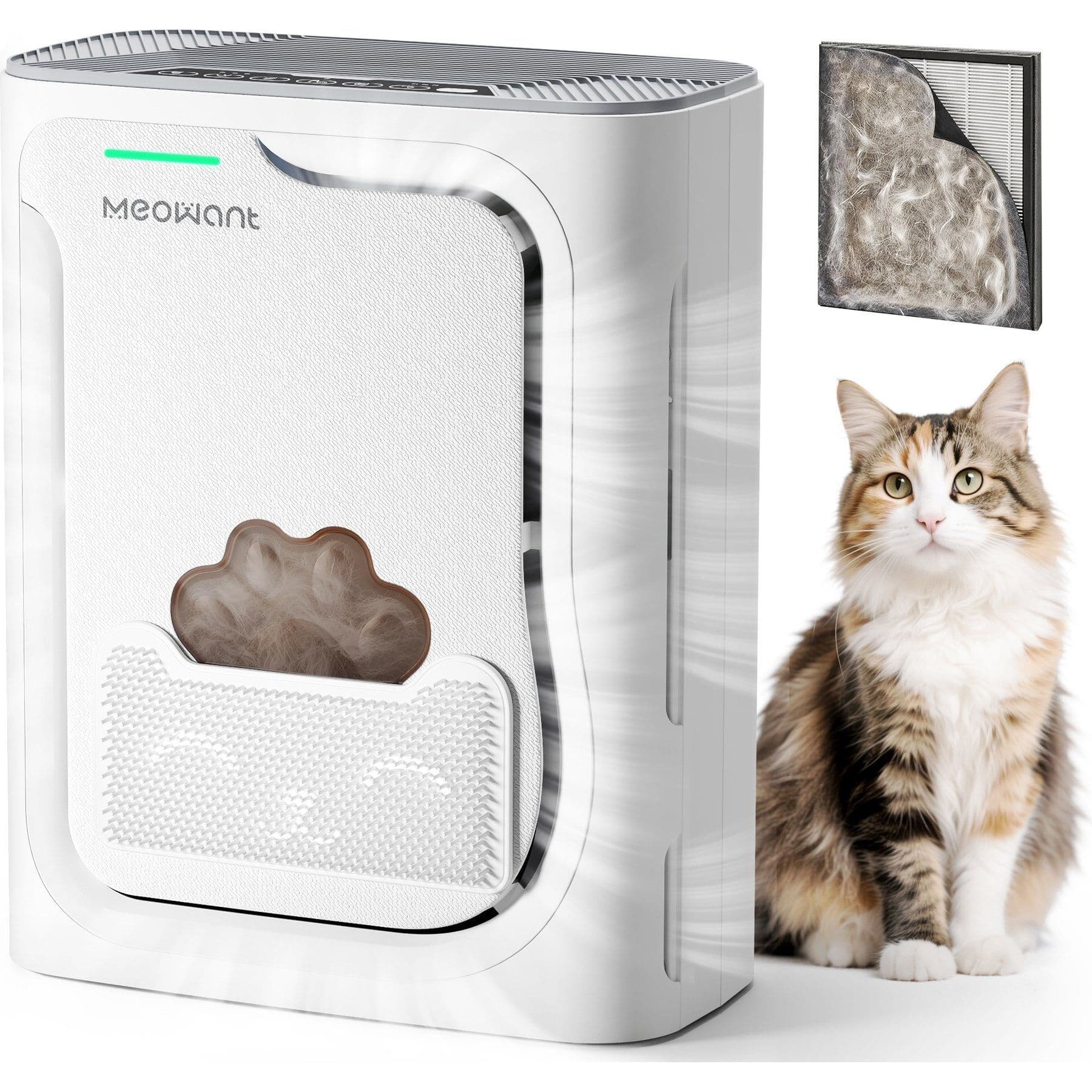
A HEPA air purifier for the rooms where the cat spends time; part of a cleaning routine the household can keep up, not proof of protection.
Webvet may earn a commission when you click through to Chewy, at no extra cost to you.
What cat is best if you have allergies? Start with whether living with a cat is medically reasonable for you, particularly if you have asthma or have had breathing symptoms around animals. If your allergist thinks a plan is feasible, consider the individual cat's needs and the practical arrangements. If it is not feasible, a supposedly allergy-friendly breed does not remove the concern.
| Claim you may encounter | What it describes | What it cannot guarantee | Useful next question |
|---|---|---|---|
| Low shedding | Less visible loose hair | Low exposure to every cat allergen | What evidence concerns allergens rather than hair? |
| Hairless | A coat characteristic | Absence of saliva or skin allergens | What care does this cat need? |
| Lower Fel d 1 | A measurement involving one important cat allergen | Freedom from symptoms in a particular person | What was measured, under which conditions? |
| Hypoallergenic breed | A broad marketing or descriptive label | A medically safe match for your household | What does your allergist recommend? |
| Allergen-reducing food | A product designed to reduce a specific allergen measure | A cure for human allergy or feline food allergy | Is the exact formula appropriate for the cat? |
Compare the evidence behind each claim: breed marketing describes a group of cats, whereas human allergy organizations address the risk of reactions. The ACAAI and AAAAI do not identify a breed that reliably prevents allergy symptoms.
Cat breeds often called hypoallergenic
The following breeds frequently appear in hypoallergenic-cat lists. They are examples of common claims, not a ranking of allergy safety. When you read a profile, separate the visible coat description from a claim that requires clinical or laboratory evidence.
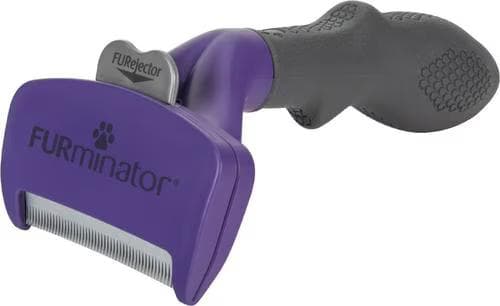
Webvet may earn a commission when you click through to Chewy, at no extra cost to you.
Siberian
Siberian cats are often mentioned in discussions of lower Fel d 1. Their long coat also illustrates why “short hair equals allergy-safe” is an oversimplification. If someone offers a Siberian specifically because of an allergen claim, ask what was tested and whether the result concerns that cat, its relatives, or a general breed assertion.

Balinese
Balinese cats are another longhaired type frequently described as hypoallergenic. Their silky coat is a visible characteristic; an assurance that you will tolerate the cat is a different claim. Ask for the evidence behind the latter rather than assuming that a repeated breed-list description has been clinically established.

Russian Blue
The Russian Blue's short blue-gray coat makes it visually distinct, but coat color does not demonstrate a low risk of human allergy. Claims that Russian Blue cats are hypoallergenic need the same scrutiny as claims about other breeds. Neither a beautiful coat nor limited visible hair around a room predicts your reaction.

Siamese
Siamese cats have short coats and are often included in lists of cats for allergy sufferers. A short coat does not remove allergens from saliva or skin. If you are allergic around a Siamese cat, that experience does not mean you have misunderstood the breed; the label never promised universal tolerance.

Devon Rex and Cornish Rex
Devon Rex and Cornish Rex cats have distinctive wavy or curly coats. Their appearance can lead people to expect a fundamentally different allergy experience. Yet a coat structure is not proof of an allergen-free animal. Ask separately about skin care, grooming, and the evidence for any human-allergy claim.


Ragdoll, Persian, Norwegian Forest, and tabby cats
None of these labels establishes allergy safety. Ragdoll, Persian, and Norwegian Forest are breed names. Tabby is a pattern description that can occur in many backgrounds. Searching “Are tabby cats hypoallergenic?” therefore starts with a category that does not identify one uniform type of cat.
The same is true of other coat patterns. A calico cat or tortoiseshell cat is not an allergy category. Whether a Persian has shorter-looking or longer fur in a photograph also does not answer a question about the proteins affecting you.
 Sponsored
Vet care that's always there
Unlimited video calls and messaging with licensed vets for less than a typical vet visit. One membership covers up to five pets.
Use code Pets60
Plans start at $12/month · covers up to 5 pets
- Licensed vets in most states
- Rx for 150+ conditions
- 4.7 on Trustpilot
Shedding, hairless cats, and allergen exposure
Visible shedding can be frustrating, but it is not a reliable home test for allergy risk. Hair can carry material through the environment, while allergens also come from sources you do not see as loose fur. The American Academy of Allergy, Asthma & Immunology states that truly hypoallergenic cat breeds do not exist.
A Sphynx illustrates the distinction. A nearly hairless cat still has skin and saliva. Choosing that appearance does not eliminate the relevant biology, and it introduces its own care questions. Talk with the breeder or rescue and the veterinarian about routine skin care rather than improvising frequent bathing to try to solve a person's allergy.

Questions to ask about a “non-shedding” claim
- Is the claim about visible hair, measured allergen, or human symptoms?
- Does it concern the breed generally or the individual cat?
- Is the result supported by a published study, or only by owner testimonials?
- Does the seller explain the limitations, or promise that no one will react?
These are different outcomes. A cleaning observation can be useful for housekeeping without proving medical protection. Likewise, a reduced laboratory measurement may be encouraging without establishing how you will feel after months of living with that cat.
Do not try to rank the “worst cats for allergies” from coat length alone. A longhaired cat is not automatically the worst choice and a shorthaired cat is not automatically safe. The relevant assessment concerns the person, the exposures, and the feasibility of a plan, rather than a photograph of fur.
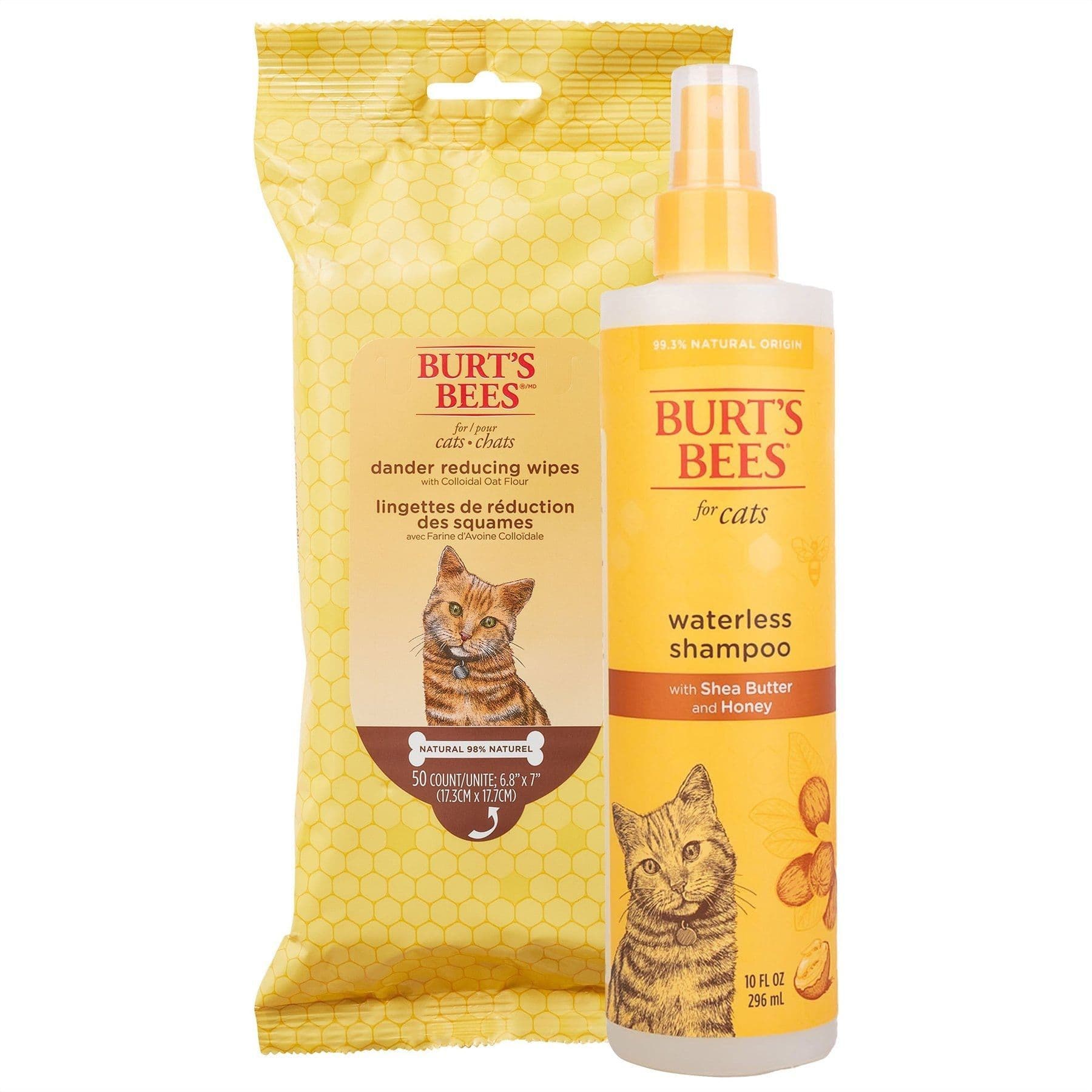
Dander-reducing wipes with a waterless shampoo for a cat that tolerates handling; a housekeeping aid, not a substitute for the allergist's plan.
Webvet may earn a commission when you click through to Chewy, at no extra cost to you.
Choosing a cat when you have allergies
Begin before committing to a purchase or adoption. A conversation with an allergist can help distinguish cat allergy from other possible triggers and clarify the role of symptoms such as wheezing or shortness of breath. Do not deliberately provoke a reaction by kissing a cat, rubbing your face into its fur, or extending contact after symptoms start.
Build a decision plan in this order
- Clarify the health question. Describe your past reactions, asthma history, and other relevant exposures to your clinician.
- Discuss whether cat ownership is reasonable. Ask which precautions, treatment, and follow-up would be needed for your situation.
- Assess your home honestly. Consider sleeping arrangements, cleaning responsibilities, available space, and everyone who lives there.
- Learn about the individual cat. Request health records and information about behavior and care needs.
- Agree on a welfare plan before adoption. Understand the organization's policies if the placement cannot work safely.
A brief symptom-free visit is useful information, but it is not a lifetime guarantee. The setting, duration, other exposures, and any medication can differ from ordinary home life. Ask your clinician how to interpret an encounter instead of treating it as a pass/fail test that overrides the wider history.
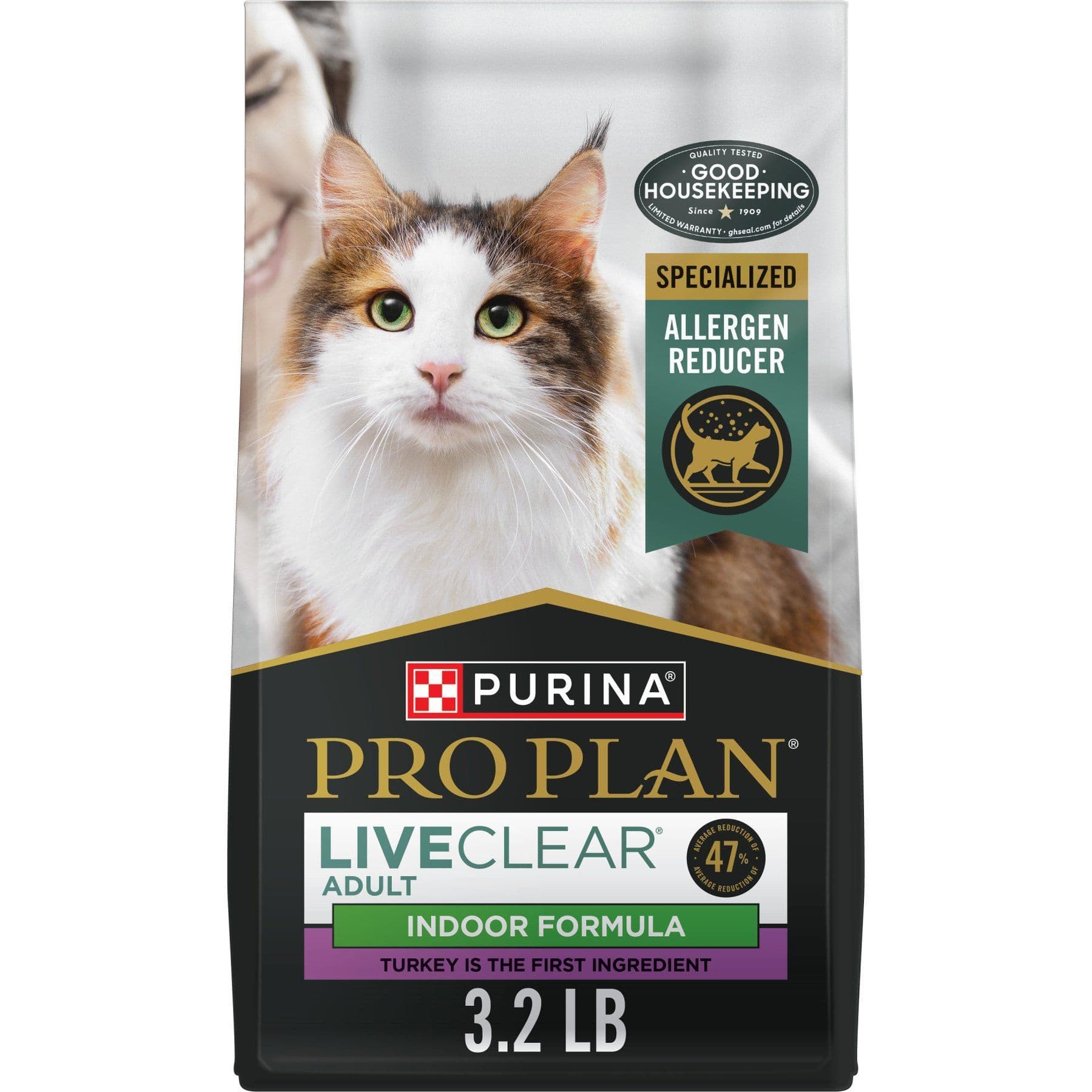
Purina's LiveClear line is formulated to reduce active Fel d 1 on the coat with daily feeding; this adult indoor formula is one version to discuss with your veterinarian. It is not an allergy cure.
Webvet may earn a commission when you click through to Chewy, at no extra cost to you.
Adoption policies should be discussed plainly and in advance. Ask who to contact if symptoms develop and what the organization expects. A clear plan protects the person and the cat; it is more responsible than relying on the idea that everyone will inevitably “get used to” the allergens.
Compare the whole commitment, not a breed premium
A hypoallergenic-cat price tells you little about your eventual symptoms. Compare the actual adoption or sale terms, records, and ongoing needs. Budget for routine veterinary care, food, supplies, grooming where needed, and any household measures your clinician recommends. Do not let a high purchase price become evidence that the allergy claim must be true.
Use the same care when a listing advertises hypoallergenic cats for adoption or for sale. Ask what the organization means by the label. It may be repeating a common breed description, reporting one prior owner's experience, or making a claim it cannot substantiate. Those are not equivalent types of evidence.
Reducing cat allergens at home
For people who already live with a cat, ask an allergist which measures are appropriate rather than changing everything without a plan. Options discussed by allergy organizations include bedroom exclusion, high-efficiency cleaning, and HEPA air filtration. These approaches aim to reduce exposure; they do not turn the cat into an allergen-free animal.
If you are wondering why you are allergic to Siamese cats, or searching for Persian cat allergy symptoms, describe your own reaction rather than looking for a breed-specific diagnosis. Record where you were, what contact occurred, when symptoms began, and whether similar symptoms happen elsewhere. Those observations help your clinician evaluate the situation without assuming that the coat label identifies the cause.

Choose routines that the household can consistently maintain. Decide who will clean, which sleeping areas will remain cat-free, and how you will evaluate whether the plan is working. Your clinician should guide treatment decisions; a food, purifier, or cleaning product should not be treated as a reason to discontinue prescribed care.
Separate the human and veterinary questions
Two professionals may have different roles in this plan. Your allergist evaluates your symptoms and treatment. Your veterinarian evaluates the cat's health, nutritional needs, and suitable care. A recommendation that is appropriate for one side of the household is not automatically appropriate for the other, so explain the complete situation when asking for advice.
For example, if a cat already eats a prescribed diet, ask the veterinarian before substituting an allergen-reducing food. If you are considering a change to your own allergy medication, ask the human clinician. Keeping the questions separate avoids making a nutritional decision on the assumption that it will replace medical treatment.
Useful questions for the discussion include:
- Which symptoms should make me seek prompt medical help rather than adjusting the household routine?
- What should I track while we assess whether this arrangement is workable?
- Which proposed changes are most relevant to my situation?
- When should we review the plan again?
You do not need to buy every product advertised for pet allergies before having this conversation. Start with the health decision and the measures you can realistically maintain. A manageable plan with clear follow-up is more useful than an expensive collection of products whose individual effects you cannot evaluate.
Where allergen-reducing cat food fits
Purina Pro Plan LiveClear is intended to reduce a specific cat-allergen measure. The manufacturer says its egg-derived ingredient helps neutralize active Fel d 1 in saliva and reports an average reduction in active allergen on hair and dander with daily feeding. That is different from promising that an allergic person will have no symptoms.
The LiveClear product pages identify each exact formula and its feeding purpose. Check the life-stage statement and discuss suitability with your veterinarian, especially if the cat has a medical diet or another nutritional restriction. An adult formula should not be assumed appropriate for every kitten or pregnant cat.
This product category is also different from a hypoallergenic diet prescribed for a cat's own food allergy. One concerns human exposure to a cat allergen; the other concerns what the cat reacts to when eating. Similar wording can hide very different purposes, so check the intended user and outcome before choosing a food.
Keep observations useful
If you and your clinician are evaluating a household plan, record changes in a simple, consistent way. Note what changed and when, rather than attributing every good or bad day to the most recent purchase. Follow the medical plan for worsening symptoms instead of waiting for a household adjustment to work.
Questions about choosing a cat with allergies
Frequently Asked Questions
Are the cheapest hypoallergenic cats a safer choice?
Neither a low nor a high purchase price establishes allergy risk. The cheapest listing may still use an unsupported label, while an expensive pedigree cannot guarantee tolerance. Judge the placement on health records, responsible care, and your allergist's advice. Ask what the quoted price includes and avoid paying a premium solely for a promise that you will not react.
Can an adopted cat be guaranteed allergy-safe?
No organization can guarantee how every person will respond to a cat over time. Ask the rescue what it knows about the individual and what its allergy-related placement policy means. An allergist-guided plan should come before adoption; the fact that a previous owner tolerated the cat is useful history, but it is not proof that your experience will be the same.
Can a cat that barely sheds still trigger allergies?
Yes. Saliva and skin are relevant sources of cat allergens, and small airborne particles are not measured by counting visible hairs on furniture. Low shedding may affect housekeeping without removing allergy risk. If symptoms continue around a supposedly non-shedding cat, discuss the exposure with an allergist instead of assuming that the short or sparse coat rules out cat allergy.
Veterinarian · BVMS MRCVS
Dr. Pippa Elliott, BVMS, MRCVS, is a veterinarian with nearly 30 years of experience in companion animal practice. Dr. Elliott earned her Bachelor of Veterinary Medicine and Surgery from the University of Glasgow. She was also designated a Member of the Royal College of Veterinary Surgeons. Married with 2 grown-up kids, Dr. Elliott has a naughty Puggle named Poggle, 3 cats and a bearded dragon.


