Ringworm in Cats Treatment: Dips, Pills & Timeline
How ringworm in cats is treated: lime sulfur dips and antifungal shampoos, oral itraconazole and terbinafine, what at-home care actually works, and the recovery timeline.

BVMS MRCVS
Medically reviewed by Dr. Pippa Elliott, BVMS MRCVS · Last reviewed

This article contains affiliate links. Webvet may earn a commission when you buy through them, at no extra cost to you.
Ringworm in cats treatment works best when it combines two things at once: topical antifungal care on the coat and oral antifungal medication from your vet, backed by cleaning the home.
Ringworm is a fungal infection, not a worm, so the goal is to kill the fungus on the skin and hair while stopping spores from reinfecting the cat. Below we cover the dips and shampoos, the oral pills, what at-home care actually helps, and how long recovery takes.
- 1The fastest, most reliable approach pairs topical treatment (lime sulfur dips or antifungal shampoo) with oral antifungal medication.
- 2Oral drugs like itraconazole and terbinafine are prescription-only; your vet sets the drug, dose, and length of the course.
- 3At-home care supports treatment but rarely cures a full-coat infection on its own.
- 4Most cats need about three to six weeks or more of treatment, and lesions heal before the fungus is fully gone.
- 5Cleaning the environment is essential, because spores can reinfect the cat and spread to people and other pets.
 Sponsored
Have a health question about your cat?
Talk to a licensed vet at Dutch over video or message, including nights and weekends.
Use code Pets60
Plans start at $12/month · covers up to 5 pets
- Licensed vets in most states
- Rx for 150+ conditions
- 4.7 on Trustpilot
What kills ringworm on cats fast: topical + oral together
What kills ringworm in cats fast is topical and oral antifungal treatment used together, not any single product.
Topical care, such as a lime sulfur dip or a medicated shampoo, kills fungus and spores on the surface of the skin and coat and cuts down how much the cat sheds into the home.
Oral antifungal medication attacks the infection from the inside, reaching the hair follicles where the fungus lives. Used alone, either one is slower and less reliable; used together, they clear most cases in the shortest realistic time.
There is no single ringworm medicine for cats that works alone; combining topical and oral care is how you treat and finally get rid of the infection.

There is no true overnight cure. Anyone promising to kill ringworm in a day is overselling it, because the fungus is embedded in the hair shafts and the environment holds infectious spores.
A realistic plan is: get a veterinary diagnosis, start topical plus oral treatment, isolate and clean, and keep going for the full course your vet prescribes even after the skin looks normal.
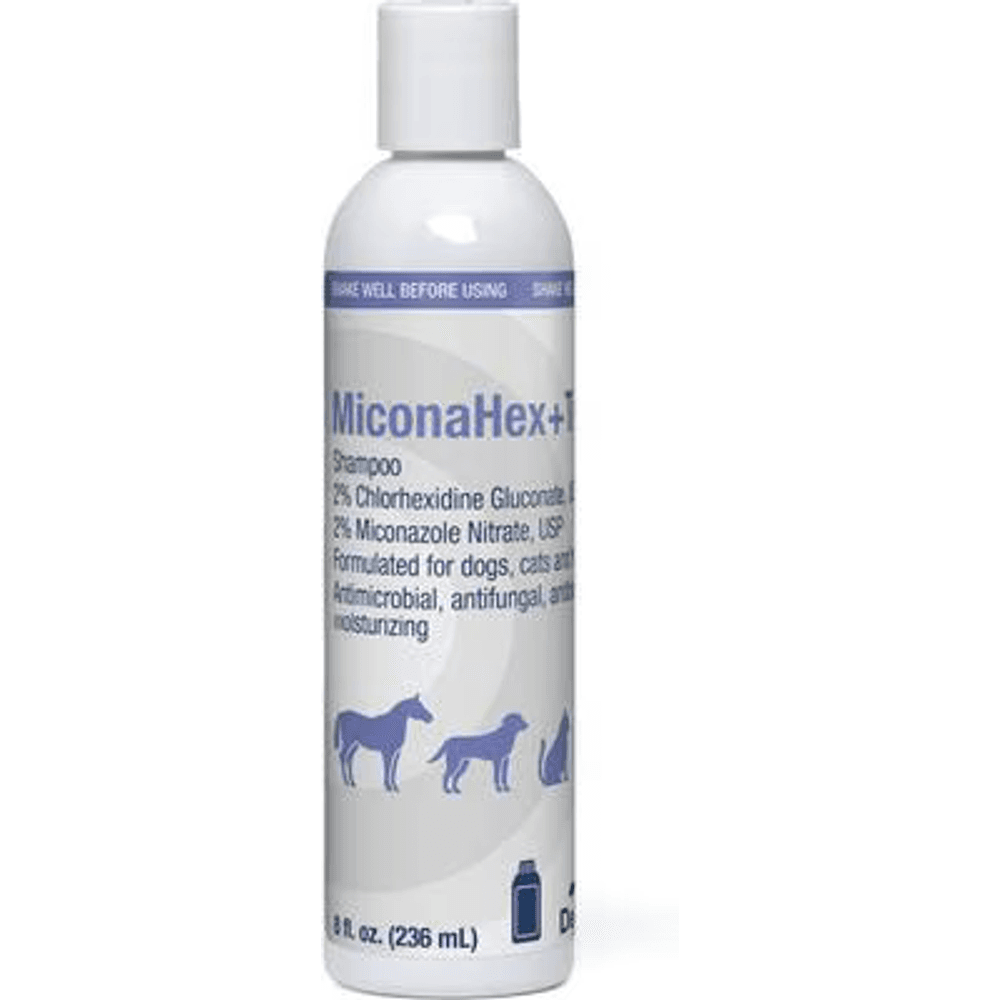
A vet-strength medicated shampoo pairing 2% chlorhexidine and 2% miconazole, a potent antifungal and antibacterial combination widely used to help clear ringworm and yeast or bacterial skin infections.
Webvet may earn a commission when you click through to Chewy, at no extra cost to you.
Think of the three prongs as a single plan rather than a menu to pick from.
Topical treatment lowers the spore load on the coat quickly and protects your family; oral medication cures the follicular infection topical care cannot reach; and environmental cleaning removes the reservoir that would otherwise reinfect a cat that is responding well.
Drop any one of the three and treatment tends to drag on or relapse, which is why the cases that clear fastest are the ones where all three run in parallel from day one.
The word fast also needs a reality check. Even the best combined protocol works over weeks, not hours, because the fungus lives inside the hair shafts and keeps shedding until the treated hair grows out.
What you can speed up is the start: an early diagnosis and a same-week start on treatment and cleaning shorten the whole course far more than any single stronger product ever could.
If you have not confirmed the diagnosis yet, start with our full guide to ringworm in cats, which covers symptoms, causes, and how vets test for it. Treatment is most effective once ringworm is actually confirmed rather than assumed.
Topical treatment: lime sulfur dip and antifungal shampoos
Topical treatment is applied to the whole coat, not just the visible lesions, because spores spread well beyond the obvious bald patches. It reduces contamination fast, which protects the rest of the household while the oral medication does its deeper work.
Most cats need topical treatment once or twice a week for several weeks. It is the part of the plan that most reduces how contagious the cat is to people and other pets, so even owners who dread bath day should not skip it.
The two mainstays are the lime sulfur dip and the medicated antifungal shampoo, covered next.

Lime sulfur dip
A lime sulfur dip is one of the most effective topical antifungals for ringworm and is widely considered a gold-standard rinse. The diluted solution is sponged over the whole coat and left to air-dry, usually once or twice a week.
It has downsides: a strong rotten-egg smell, a temporary yellow tinge to light fur, and the need to stop the cat from licking it off while it dries. An Elizabethan collar during drying helps. Because the concentration and frequency matter, follow your vet's mixing and timing instructions exactly.
To dip safely at home, wear gloves and old clothing, work in a warm, draft-free room, and mix the solution to the exact dilution your vet specifies.
Sponge or pour it over the entire coat down to the skin, including the legs and tail, avoid the eyes and inside the ears, and do not rinse it out. Let the cat air-dry with a collar on rather than towel-drying vigorously, which removes the medication.
Keep the cat warm until fully dry, since a wet cat chills quickly.
The smell and the yellow staining put many owners off, but neither reflects how well the dip works, and both fade. If your cat finds the dip very stressful, tell your vet: sometimes the schedule can be adjusted, or a shampoo used on alternating treatments.
The goal is a routine you can actually keep up for the full course, because a dip skipped is a dip that does nothing.
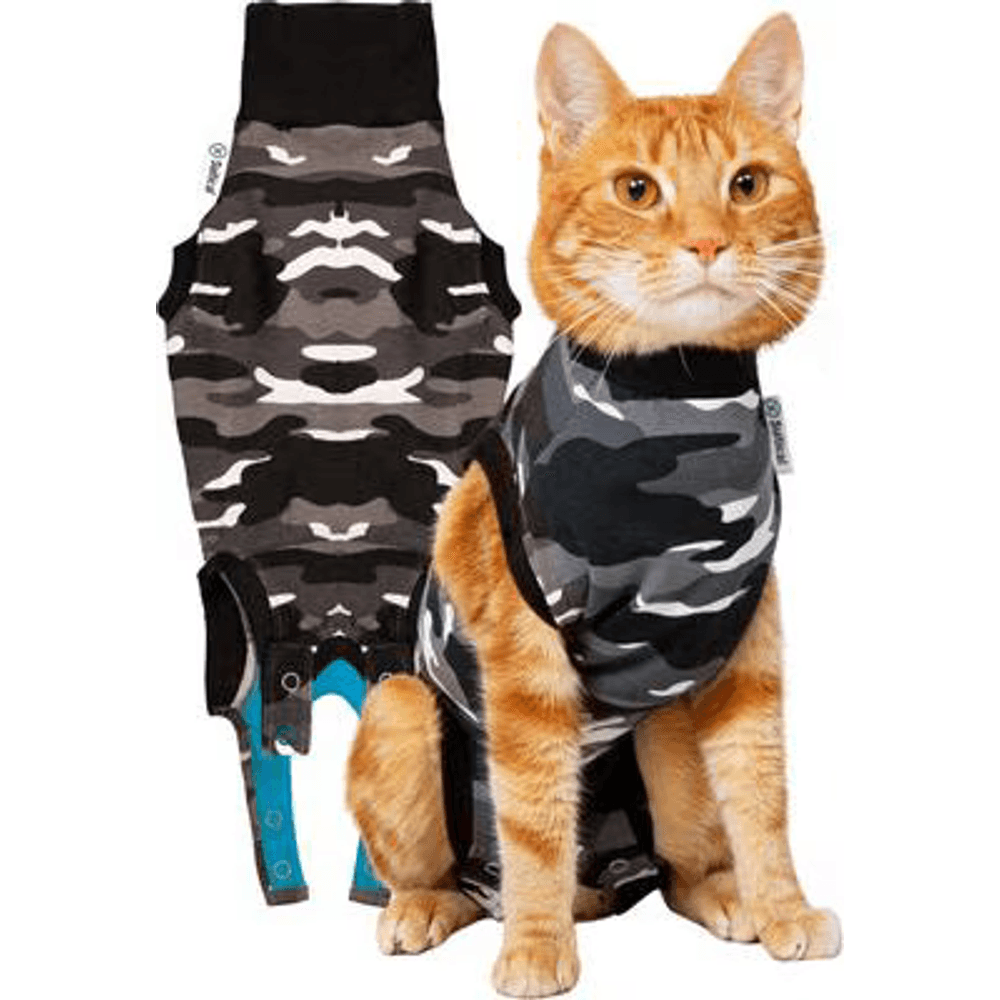
A breathable full-body recovery suit made for cats, the vet-recommended cone alternative that covers a spay or abdominal incision so a cat cannot lick or scratch the wound while she still moves, uses the litter box, and rests in comfort.
Webvet may earn a commission when you click through to Chewy, at no extra cost to you.
Antifungal shampoos
Medicated shampoos that combine chlorhexidine and miconazole are another effective topical option, sometimes alternated with dips. The lather has to stay on the coat for the full contact time on the label, often around ten minutes, before rinsing, so it is more involved than a quick wash.
Products in this class, such as a chlorhexidine-miconazole antifungal shampoo, are a reasonable at-home tool when your vet recommends them. Plain human or cosmetic cat shampoos do not treat ringworm.
Whichever topical you use, the details decide whether it works. Set the lather timer and actually wait it out, cover the whole cat rather than just the visible spots, and repeat on the exact schedule your vet gives you instead of stopping once the coat looks better.
Between baths, medicated wipes can spot-treat small lesions. Bathing a cat is rarely anyone's idea of fun, so go slowly, keep the water warm, reward calm behavior, and enlist a second person if you can; a stressed cat that fights every bath makes consistent treatment far harder.
A common mistake is treating the shampoo like a quick rinse. If it does not sit on the coat for the full contact time, it barely works, so build in those minutes and keep the cat occupied while you wait.
Shampoos and dips are tools that support the oral medication; on a widespread infection, neither replaces the pills your vet prescribes.
SponsoredVet care that's always there
Unlimited video calls and messaging with licensed vets for less than a typical vet visit. One membership covers up to five pets.
Use code Pets60
Plans start at $12/month · covers up to 5 pets
- Licensed vets in most states
- Rx for 150+ conditions
- 4.7 on Trustpilot
Oral antifungals: itraconazole and terbinafine
Oral antifungal medication is the systemic half of treatment and is prescription-only. It reaches the fungus inside the hair follicles that topical products cannot fully penetrate. The two drugs vets reach for most often in cats are itraconazole and terbinafine. These oral meds are the prescription ringworm medicine that reaches fungus the topical products miss.
Itraconazole is commonly considered a first-choice oral antifungal for feline ringworm. It is often given in cycles, such as a week on and a week off, because it concentrates in the skin and keeps working during the off weeks.
Terbinafine is another effective option that vets use, sometimes when itraconazole is not suitable. An older drug, griseofulvin, was used for decades but has largely been replaced by these newer, better-tolerated options.
Why bother with pills when topical care is right there on the coat? Because the fungus lives down in the hair follicles, where dips and shampoos reach only partly.
Oral medication circulates through the body and gets into the growing hair, which is what clears a widespread or stubborn infection that topical treatment alone leaves smoldering.
What to expect from oral treatment
Which drug and schedule your cat gets depends on its health, age, and any other medications, and that decision belongs with your vet. The pulse dosing used with itraconazole can be confusing, so write down the on and off weeks and keep to them.
Expect the full course to run weeks, and do not stop just because the coat looks better.
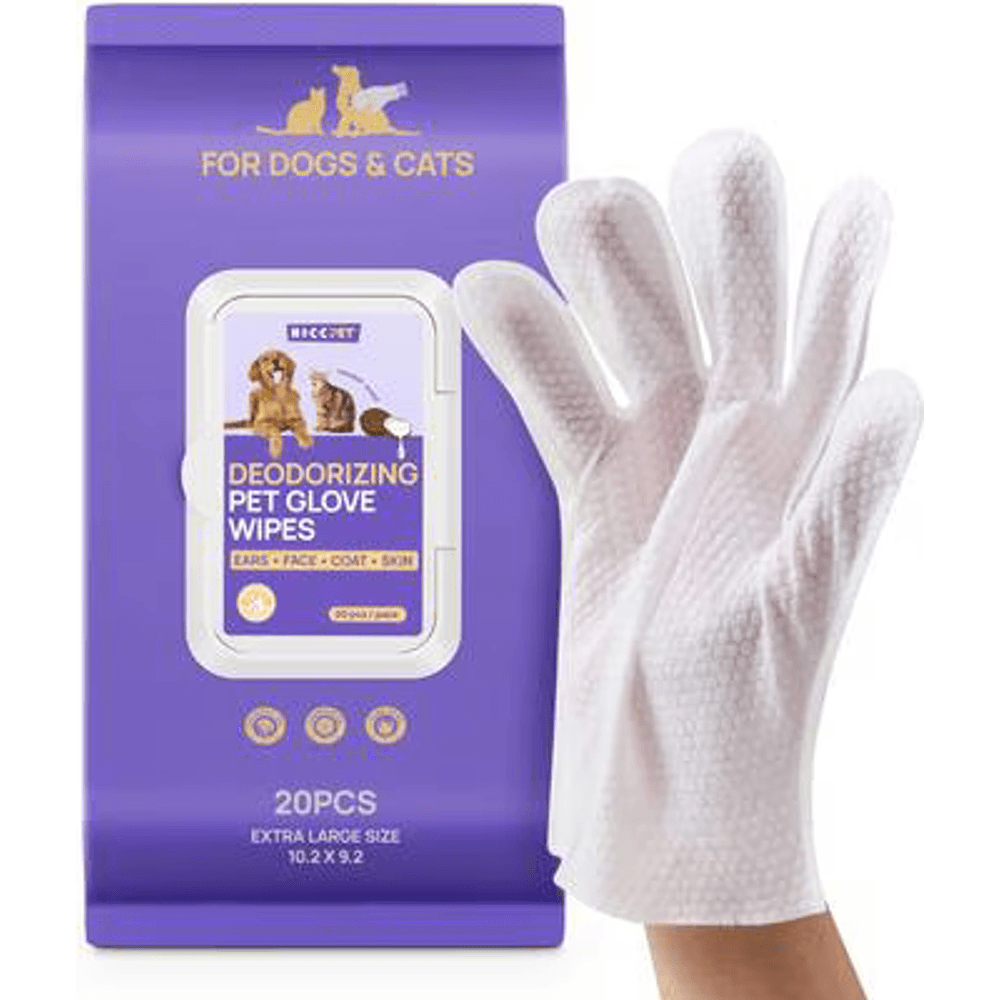
Wearable glove wipes that let you freshen and wipe down a dog's or cat's coat and skin without a full bath, while a fabric layer stays between your hand and the pet.
Webvet may earn a commission when you click through to Chewy, at no extra cost to you.
Oral antifungals are generally well tolerated, but they are not without side effects. The most common are digestive upset such as reduced appetite or vomiting, and because these drugs are processed by the liver, your vet may check liver values before or during a longer course.
Report any lethargy, yellowing of the gums or eyes, or a cat that stops eating, and never double up a missed dose. This monitoring is exactly why oral treatment is a partnership with your vet rather than something to run on your own.
Giving pills to a cat is its own challenge.
Ask your vet or a technician to show you the technique, use a pill popper or hide the medication in a small amount of a strongly flavored treat if your vet approves, and always follow with a little water or food so the pill does not lodge in the esophagus.
Consistency matters more than perfection: the drug only works if the cat actually receives the full course on schedule.
At-home treatment: what works vs myths
Can you treat ringworm in cats without going to the vet? Partly, but not fully. At-home care matters: gentle topical antifungals, isolating the cat, and diligent cleaning all speed recovery and limit spread.
What at-home care cannot do is replace the veterinary diagnosis and the prescription oral medication that clears stubborn or widespread cases. So how do you treat ringworm in cats without going to the vet?
The honest answer is that you can support treatment at home, but a true, reliable cure of anything beyond a tiny single spot still needs a vet.
There is a cost to going it alone that owners underestimate. Because ringworm is contagious and mimics other conditions, weeks of home remedies on the wrong diagnosis let the fungus spread to people and other pets and seed the home with spores.
A vet visit up front is usually the cheaper and faster path once you account for the cleanup a prolonged infection creates.
The reason home remedies get so much attention is understandable: dips smell bad, pills are a hassle, and the internet is full of gentle-sounding natural fixes.
Unfortunately, most of the popular ones either do nothing against the fungus or actively harm the cat, and the time spent on them is time the infection keeps spreading through your home.
A small handful of at-home measures genuinely help, and they are the unglamorous ones: vet-recommended topicals used correctly, strict isolation, and relentless cleaning. Here is how the common approaches stack up:
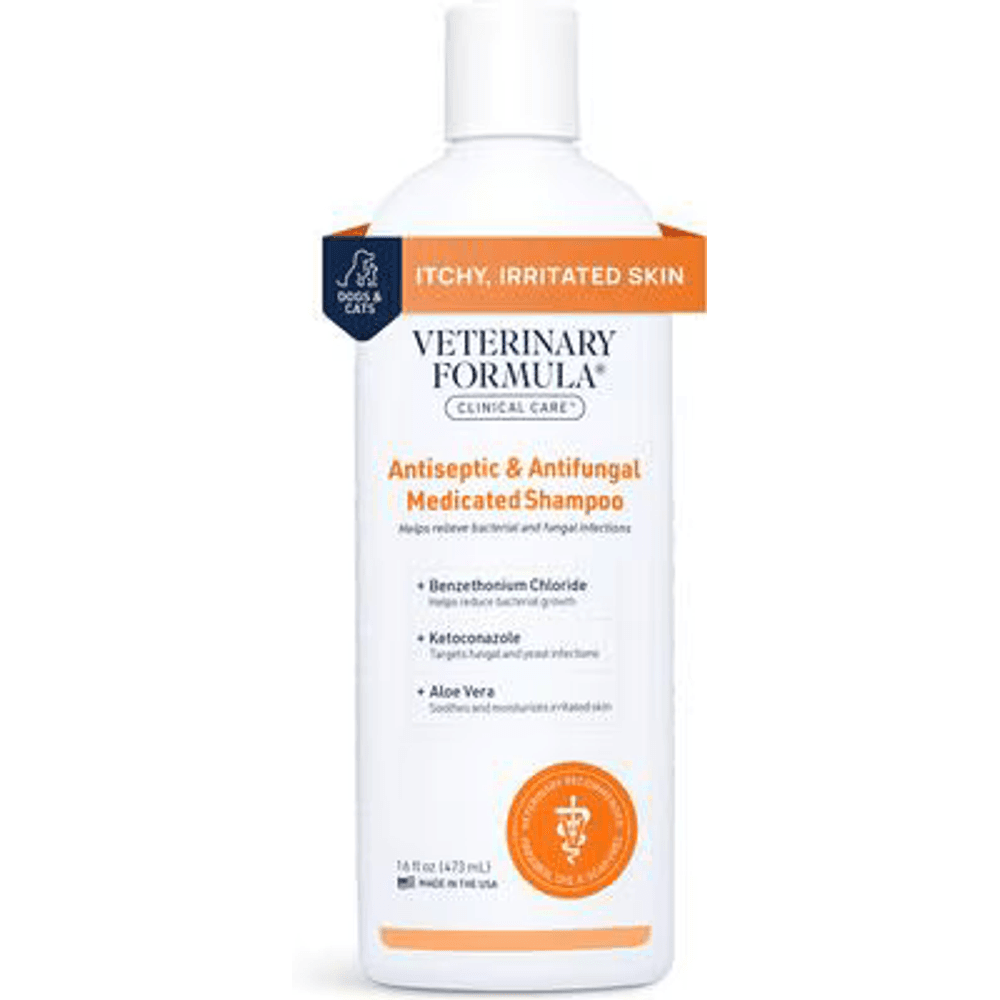
A budget-friendly medicated shampoo with ketoconazole and benzethonium chloride that helps control the fungal and bacterial skin infections behind ringworm, with aloe to soothe irritated skin.
Webvet may earn a commission when you click through to Chewy, at no extra cost to you.
| At-home approach | Works or myth | Why |
|---|---|---|
| Vet-recommended antifungal shampoo or wipes | Works | Chlorhexidine-miconazole topicals genuinely kill surface fungus when used as directed |
| Isolating the cat to one cleanable room | Works | Limits spread to people and other pets and makes decontamination manageable |
| Frequent vacuuming and washing bedding | Works | Physically removes spore-laden hair and skin flakes from the environment |
| Apple cider vinegar | Myth | No proven antifungal effect on ringworm and can sting broken skin |
| Tea tree oil and many essential oils | Myth and risky | Not proven to cure ringworm and can be toxic to cats, especially if licked |
| Bleach applied to the cat's skin | Myth and dangerous | Bleach is for surfaces only, never on the cat; it burns skin and is harmful if ingested |
| Skipping oral meds once lesions fade | Myth | The fungus outlasts the visible lesions; stopping early causes relapse |
One reason self-treatment fails is misidentification. Several conditions are mistaken for ringworm, including flea allergy dermatitis, mange, and miliary dermatitis, and each needs different care. Our ringworm pictures and lookalikes guide shows how to tell them apart so you do not treat the wrong problem.
Treating kittens, pregnant cats, and multi-cat homes
Some cats need extra care. Kittens are both the most commonly infected and the most delicate to treat, because their small size and immature systems change which drugs and dip concentrations are appropriate.
Never assume an adult protocol is safe for a kitten; our guide to ringworm in kittens covers the gentler approach. Pregnant and nursing cats are another special case, since several oral antifungals are not considered safe during pregnancy, so the vet may lean more heavily on topical treatment.
In a multi-cat home, treat the whole household as exposed. Your vet will usually want to examine and often treat every cat at once, because an untreated carrier keeps reinfecting the others in a frustrating loop.
Isolate the confirmed cases to one easy-to-clean room, use separate bedding and bowls, and handle the isolated cats last in your daily routine so you are not carrying spores from room to room. Coordinating treatment across all the animals is often what finally breaks a stubborn, recurring case.
Dogs in the home count too, since the same fungus crosses species. If a resident dog develops scaly or bald patches, it needs its own veterinary treatment rather than the cat's leftover medication.
Treating every affected animal on the same timeline, plus cleaning the shared spaces, is what stops the household bouncing the infection back and forth.
Treatment timeline and the contagion window
How long does ringworm go away in cats? With combined topical and oral treatment, most cats need roughly three to six weeks, and some cases run longer.
The lesions and hair regrowth usually improve well before the fungus is fully eliminated, which is the single most important thing to understand about the timeline: looking better is not the same as being cured.
Owners often ask how long ringworm can last and whether it clears on its own; with treatment it rarely resolves on its own quickly.
A rough sense of the arc helps you stay the course. In the first week or two the spread slows and new lesions stop appearing. Over the following weeks the bald patches fill in and the scaling settles.
Only near the end, often confirmed by a test, is the fungus actually cleared. Progress that stalls at any of these points is worth a call to your vet.
When your cat stops being contagious
The contagion window lasts as long as the cat is shedding live spores. A cat generally becomes much less contagious after a few weeks of consistent treatment, but the only reliable way to confirm a true cure is a follow-up.
Many vets stop treatment only after one or two negative fungal cultures taken a week or two apart, because culture detects live, growing fungus. Ending treatment based on appearance alone is a common cause of relapse.
Several things stretch the timeline out: longhaired coats that trap spores, skipped or inconsistent dosing, treating only one cat in a multi-cat home, and neglecting the environment.
If your cat is weeks into treatment with no improvement, that is a reason to check back with your vet rather than to quit. The diagnosis may need revisiting, the drug or dose may need adjusting, or the home may need a more thorough clean.
Patience plus consistency, not a stronger single product, is what carries most cases across the finish line.
Keep these timeline principles in mind:
- Finish the entire course your vet prescribes, even after the skin looks healed
- Keep the cat isolated and keep cleaning throughout the contagious period
- Ask your vet whether a follow-up culture is needed to confirm the cure
- Treat all pets the vet identifies as infected at the same time to avoid ping-pong reinfection
Cleaning your home during treatment
Environmental cleaning is part of the cure, not optional. Ringworm spores shed on hairs can survive in a home for many months and reinfect a cat that is otherwise responding well, so decontamination runs alongside medical treatment.
The core routine is frequent vacuuming, laundering bedding on the hottest safe setting, and disinfecting hard surfaces with a product proven to kill fungal spores. For the full step-by-step method, including which disinfectants actually work, see our guide to cleaning your house after cat ringworm.
One important caution: reach for a true sporicidal disinfectant on surfaces, not enzymatic stain-and-odor cleaners. Enzymatic pet-mess cleaners are made to break down organic stains and smells, and they are not designed to kill ringworm spores, so they give a false sense of security. The dedicated cleaning guide covers the right products in detail.
Two habits make cleaning far more effective:
- Contain the cat to one easy-to-clean room so you are not chasing spores across the whole house.
- Clean often and mechanically: daily vacuuming and frequent hot-water laundry physically remove spore-laden hair, which matters as much as any disinfectant.
Keep both up until your vet confirms the cat has stopped shedding.
Do not let cleaning fatigue tempt you into harsh shortcuts on the cat itself. Surface disinfectants belong on floors and hard surfaces, never on your cat's skin, and the pet stays on the gentle antifungal products your vet prescribed.
Pairing thorough environmental cleaning with the cat's medical treatment, and keeping the two separate, is what finally clears the home. The dedicated cleaning guide walks through the full room-by-room routine.
Frequently Asked Questions
What causes ringworm in cats?
Ringworm is caused by dermatophyte fungi, most often Microsporum canis, spread by contact with an infected animal or with spores in the environment. Causes and transmission are covered fully in our ringworm in cats pillar guide.
Will ringworm in cats go away without treatment?
A mild case in a healthy adult cat may eventually resolve on its own over several months, but the cat stays contagious to people and pets that whole time. Treatment shortens the course, limits spread, and is strongly recommended over waiting it out.
Can I use human antifungal cream on my cat's ringworm?
Only under veterinary direction. Some human topical antifungals can help a single small spot, but cats groom and may swallow the product, and creams do not treat a coat full of spores. Ask your vet before using any human medication on your cat.

Editor
The Webvet Editorial Team is the in-house group of pet-care editors and writers behind Webvet, operated by Smart Pet Collective. The team researches, writes, and maintains Webvet's pet health, behavior, and medication content. Every article follows a defined editorial process: research from reputable veterinary and scientific sources, careful drafting, mandatory review of medical content by a credentialed veterinarian, and dated publication. Health and medication articles are medically reviewed by a licensed veterinary professional before they go live and are kept current over time.
Veterinarian · BVMS MRCVS
Dr. Pippa Elliott, BVMS, MRCVS, is a veterinarian with nearly 30 years of experience in companion animal practice. Dr. Elliott earned her Bachelor of Veterinary Medicine and Surgery from the University of Glasgow. She was also designated a Member of the Royal College of Veterinary Surgeons. Married with 2 grown-up kids, Dr. Elliott has a naughty Puggle named Poggle, 3 cats and a bearded dragon.
Related reading

Cat Cremation Cost: Private, Communal, and Additional Charges

Cat Euthanasia Cost: Clinic, At-Home Care, and Aftercare

Dog Microchip Cost: Implantation, Registration, and Ongoing Fees
