Ringworm in Kittens: Signs, Safe Treatment & Isolation
Kittens are the highest-risk group for ringworm. Learn how to spot it, why it spreads so fast, how it is treated safely at small body weights, and how to isolate an infected kitten.

BVMS MRCVS
Medically reviewed by Dr. Pippa Elliott, BVMS MRCVS · Last reviewed

This article contains affiliate links. Webvet may earn a commission when you buy through them, at no extra cost to you.
Ringworm in kittens is a common, highly contagious fungal skin infection, and kittens are the single highest-risk group of cats for catching it.
Despite the name, no worm is involved: the culprit is usually a fungus called Microsporum canis that feeds on the keratin in skin, hair, and claws.
Kittens are so susceptible because their immune systems are still developing, they groom themselves poorly, and many come from crowded shelter or foster settings where fungal spores spread easily.
The good news is that ringworm is treatable and, in an otherwise healthy kitten, it eventually resolves with consistent care.
This guide focuses on what ringworm looks like on a kitten, why kittens catch it so readily, how it is treated safely at small body weights, and how to isolate and handle an infected kitten.
For the broader picture of diagnosis and how the infection behaves in adult cats, see our overview of ringworm in cats. Every treatment and dosing decision described here belongs to your veterinarian; this article explains the landscape so you can be a confident partner in your kitten's care.
- 1Kittens are the highest-risk group for ringworm because of immature immune systems, poor self-grooming, and crowded shelter or foster housing.
- 2Classic signs are circular patches of hair loss with broken hairs, gray scale, and mild crusting, though kittens can carry it with almost no visible lesions.
- 3Treatment usually combines a topical antifungal (often lime sulfur dips) with an oral antifungal and takes several weeks, guided by repeat fungal cultures.
- 4Drug and dose choices at a kitten's small body weight are decisions for your veterinarian, not for over-the-counter guesswork.
- 5Ringworm is zoonotic, so isolation, gloves, hand-washing, and diligent cleaning protect the rest of your household while the kitten heals.
 Sponsored
Have a health question about your cat?
Talk to a licensed vet at Dutch over video or message, including nights and weekends.
Use code Pets60
Plans start at $12/month · covers up to 5 pets
- Licensed vets in most states
- Rx for 150+ conditions
- 4.7 on Trustpilot
What ringworm looks like on a kitten
The classic sign of ringworm on a kitten is a round or oval patch of hair loss, often with broken, stubbly hairs at the edge, flaky gray scale in the center, and a faint reddened rim.
Lesions show up most often on the face, ears, and paws, exactly the spots a kitten cannot groom well. Some patches itch, but many do not, which is why a kitten can look almost normal and still be infected.
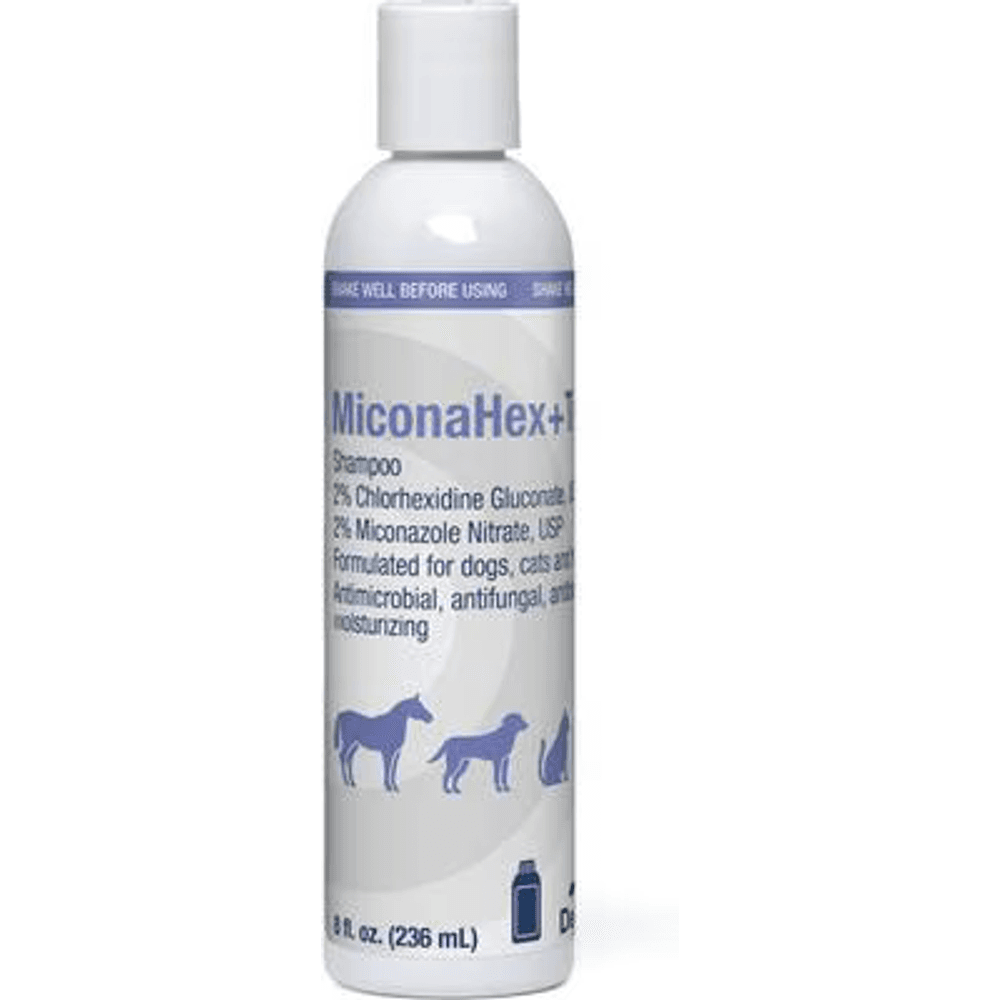
A vet-strength medicated shampoo pairing 2% chlorhexidine and 2% miconazole, a potent antifungal and antibacterial combination widely used to help clear ringworm and yeast or bacterial skin infections.
Webvet may earn a commission when you click through to Chewy, at no extra cost to you.

Presentation varies a lot from kitten to kitten. You might see a single small spot, several scattered patches, or diffuse thinning with dandruff-like scale rather than a tidy circle. Broken whiskers, crusty ear margins, and rough, brittle claws can all be ringworm.
Because these signs overlap with mites, allergies, and other skin problems, appearance alone is not a diagnosis.
If you want to compare what you are seeing against real examples across different coat colors and lesion stages, our gallery of what ringworm looks like on cats lays out the visual range.
Use photos to raise your suspicion, not to rule ringworm out, and let your veterinarian confirm it with a Wood's lamp exam and a fungal culture.
Where kitten lesions tend to show up first
On a kitten, the earliest patches usually appear on the face, the ear margins, and the front paws, the very spots a young cat cannot groom and where it rubs against littermates. From there, lesions often spread down the back and tail base as the kitten scratches and self-seeds new areas across its own coat.
Timing matters as much as location. Signs typically surface one to three weeks after exposure, so a kitten can look healthy on adoption day and then break out once it is home. If littermates arrived together, expect them to show patches within a similar window, and watch every one of them closely.
How kitten lesions change over time
The lesions themselves evolve. An early spot may be a subtle thinning with fine scale, then widen into the classic ring as the center begins to heal. Do not wait for a textbook circle: a small, spreading, scaly patch on a young kitten is reason enough to book a veterinary visit.
One more reason appearance is unreliable: kittens can be affected in patches you rarely inspect, like between the toes, inside the ear flap, or along the tail base.
A rough, unthrifty coat or a kitten that simply is not thriving can be the first hint before any obvious ring forms. Trust changes over time more than any single photo, and get anything suspicious checked promptly rather than waiting to see whether it grows.
How ringworm in kittens is diagnosed
Because ringworm mimics mites, allergies, and other skin conditions, a real diagnosis comes from your veterinarian, not from a photo comparison. Vets use three tools that build on each other.
A Wood's lamp, an ultraviolet light, makes many strains of Microsporum canis glow apple-green on infected hairs, which is a quick screening clue but not a final answer because not every strain fluoresces and some ointments glow too.
The gold standard is a fungal culture, in which plucked hairs are grown on a special medium over one to three weeks to confirm the fungus and, later, to prove it is gone. Some clinics add a PCR test for faster results.
This same culture is what your vet repeats near the end of treatment to decide whether your kitten is truly cured, which is why diagnosis and the eventual all-clear are two ends of the same process.
A plush, waterproof sherpa blanket that gives a cold or shivering dog a warm, cozy layer to curl into. The hidden waterproof lining protects the bed, couch, or car seat, and the whole thing is machine washable.
Webvet may earn a commission when you click through to Chewy, at no extra cost to you.
Why a real diagnosis is worth the wait
It is tempting to start treating on suspicion, but a culture protects your kitten in two ways. It confirms ringworm rather than mites or an allergy that would need a completely different plan, and it gives your vet a baseline to measure the eventual cure against later.
A confirmed diagnosis also tells you how seriously to take household cleaning and isolation. Guessing wrong in either direction wastes weeks: under-treating lets the infection smolder and spread, while chasing a non-fungal rash with antifungals delays the care your kitten actually needs. The test simply removes the guesswork.
SponsoredVet care that's always there
Unlimited video calls and messaging with licensed vets for less than a typical vet visit. One membership covers up to five pets.
Use code Pets60
Plans start at $12/month · covers up to 5 pets
- Licensed vets in most states
- Rx for 150+ conditions
- 4.7 on Trustpilot
Why kittens are the highest-risk group and how they catch it
Kittens are the highest-risk group because three things stack against them at once:
- their immune systems are still developing,
- they are inefficient self-groomers that cannot clear spores off their coat, and
- they are frequently housed in dense shelter, rescue, or foster environments where the fungus is already circulating.
Add the fine, easily-broken hair of a young coat and you have the ideal host for a highly contagious fungal infection.
How did my kitten get ringworm? Almost always through contact with fungal spores, either directly from an infected animal or indirectly from a contaminated environment.
Spores cling to shed hairs and skin flakes and can survive in the environment for many months, so a kitten does not need to meet a sick cat to be exposed.
Shared bedding, grooming tools, a foster carrier, a cat tree, or even a well-meaning person's clothing can move spores from one kitten to the next. Littermates commonly infect each other before anyone notices a lesion.
Can a dirty litter box cause ringworm? Not directly. Ringworm is a fungal infection spread by spores from infected hair and skin, not a germ that breeds in urine or feces, so a soiled litter box does not create ringworm on its own.
That said, a shared or contaminated litter box in a multi-kitten home can act as one more surface that carries spores between animals, which is why cleaning and, ideally, giving an infected kitten its own box still matters.
Why age is the deciding factor
Age is the thread running through all of this. A young kitten's immune system simply has not met many pathogens yet, so it mounts a slower, weaker response to the fungus than an adult cat would.
Kittens also lack the grooming discipline and dense adult coat that help older cats clear spores. Stress from weaning, rehoming, transport, or a shelter environment further dampens immunity, which is why ringworm so often flares in the first weeks after a kitten changes hands.
As a kitten grows and its immune system matures, its natural resistance improves, but during these early months it needs your help to fight the infection off.
The foster and shelter math
In a shelter or foster home, ringworm rarely stays with one kitten. Spores shed onto shared bedding, carriers, and hands, and a single undiagnosed carrier can seed an entire room before anyone spots a lesion. That is exactly why rescues treat outbreaks at the group level rather than one kitten at a time.
Practically, this means a whole litter is often treated together once one kitten is confirmed, instead of waiting to see who breaks out next. Fosters are usually asked to keep the group in one washable room, log any new lesions, and pause adoptions until cultures come back clear.

Wearable glove wipes that let you freshen and wipe down a dog's or cat's coat and skin without a full bath, while a fabric layer stays between your hand and the pet.
Webvet may earn a commission when you click through to Chewy, at no extra cost to you.
None of this signals a dirty home or poor care. Ringworm thrives on the crowding, stress, and immature immune systems that define kitten season. Treating it methodically, and not blaming yourself, is what gets a foster litter cleared, healthy, and ready for their new homes.
Treating ringworm safely in a kitten
Kitten ringworm is almost always treated with a combination of a topical antifungal applied to the coat and an oral antifungal given by mouth, continued until repeat fungal cultures come back negative.
Topical therapy reduces spores shed into the home, while the oral drug clears the fungus from within the hair follicles. Neither half works well alone, which is why vets typically use both.

On the topical side, twice-weekly lime sulfur dips are a long-standing, effective option that is considered safe for young kittens when done correctly; a chlorhexidine and miconazole antifungal shampoo is another common choice. Oral options a veterinarian may reach for include itraconazole and, less often now, griseofulvin.
The important point for a kitten owner is that drug choice, dose, and duration all hinge on the kitten's small body weight, age, and overall health.
Topical therapy matters more than owners expect. Even when an oral drug is clearing the fungus from inside the follicles, a kitten keeps shedding infectious spores from its coat, and dips and medicated shampoos are what cut that shedding down.
That is why vets rarely rely on pills alone for a kitten in a home with children or other pets.
Applying dips can be fiddly on a squirming kitten, so ask your clinic to demonstrate the technique, and always work in a warm room and dry the kitten gently afterward to avoid a chill.
How long do kittens need to be treated for ringworm? Plan on several weeks, and often six weeks or more.
The infection is not considered cured when the patches look better; it is cured when the kitten passes repeat fungal cultures, usually two negative cultures taken a week or two apart.
Stopping early because the coat looks normal is the most common reason ringworm rebounds and re-infects the household. The table below shows a typical cadence, though your vet will tailor it.
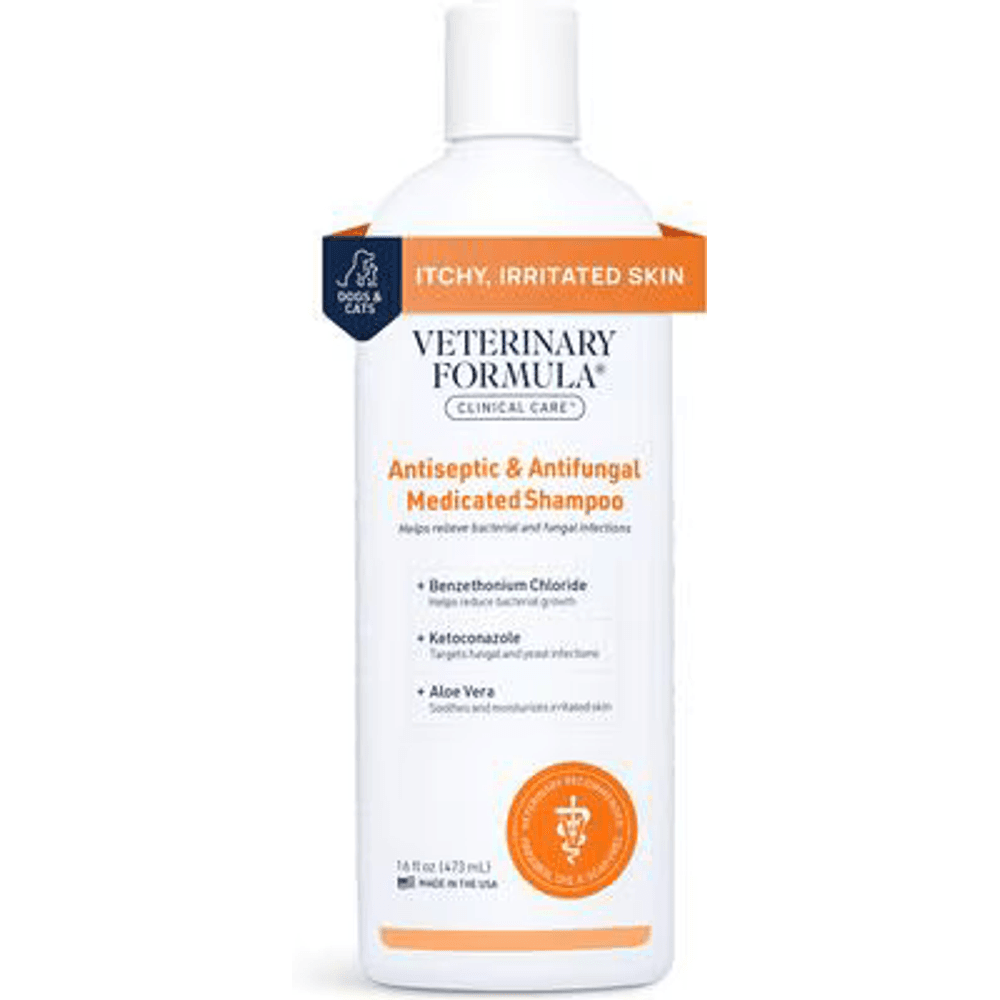
A budget-friendly medicated shampoo with ketoconazole and benzethonium chloride that helps control the fungal and bacterial skin infections behind ringworm, with aloe to soothe irritated skin.
Webvet may earn a commission when you click through to Chewy, at no extra cost to you.
| Stage | Roughly when | What happens |
|---|---|---|
| Diagnosis | Week 0 | Wood's lamp exam and fungal culture; topical plus oral antifungal started |
| Active treatment | Weeks 1 to 4 | Twice-weekly topical dips continue; oral antifungal given daily as prescribed |
| First re-culture | Around week 4 to 5 | Vet re-cultures to check whether the fungus is clearing |
| Confirming cure | Weeks 5 to 8+ | Treatment continues until two consecutive cultures are negative |
For a fuller breakdown of antifungal options, how each drug works, and what recovery looks like across all ages of cat, see our detailed guide to how ringworm in cats is treated. Bring any questions from it to your kitten's appointment so the plan stays vet-directed.
What the treatment weeks feel like
Expect a rhythm rather than a quick fix. Most weeks involve two topical treatments plus a daily oral dose, and your kitten may look worse before better as brittle, infected hairs break and fall out. A few new spots can even appear early on as hidden lesions declare themselves.
Keep every recheck and culture appointment, because those results, not the mirror, drive the plan. If your vet adjusts the oral dose as the kitten gains weight, or switches the topical, that is routine fine-tuning rather than a setback. Steady consistency across the full course is what prevents a relapse.
Little comforts help you both get through it. Warm the room before a dip, reward the kitten after each treatment, and keep sessions short and calm. A kitten that does not dread handling is far easier to treat over the six or more weeks the infection can take to fully clear.
Isolation and safe handling of an infected kitten
Because ringworm spreads through spores that survive on surfaces, isolating an infected kitten protects your other pets, your family, and your home while treatment does its work. The goal is a small, easy-to-clean space and a consistent handling routine that keeps spores from riding out on your hands and clothes.

Set the isolation room up like this:
- Choose a room with hard, non-porous surfaces such as a bathroom or laundry room; avoid carpet and upholstered furniture that trap spores.
- Give the kitten its own bedding, bowls, litter box, and toys that stay in the room and get cleaned or laundered on a hot wash.
- Keep gloves, a lint roller, and a lined trash bin at the door so cleanup is quick and spores stay contained.
- Visit the kitten after your other pets have been cared for, not before, so you are not carrying spores to them.
- Wear a dedicated shirt or smock and wash your hands and forearms thoroughly every time you leave the room.
Can you touch a kitten with ringworm? Yes, you can, and you should still handle and comfort it. Ringworm is treatable and the risk to a healthy adult is manageable with sensible hygiene.
Wear disposable gloves or a long-sleeved layer for close handling, keep the kitten off your face and bare skin when you can, and wash well afterward. Ringworm is zoonotic, meaning it can pass to people, so hygiene is about lowering risk, not avoiding your kitten.
Can I still cuddle my cat with ringworm? Cuddling is where the most spores transfer, so scale it back during active treatment rather than stopping contact entirely. Short, gentle sessions in old clothes you can launder immediately are far safer than long face-to-face snuggling.
Children, older adults, and anyone with a weakened immune system should keep contact brief and always wash up afterward.
For exactly how the fungus jumps to people, who in your home is most at risk, and what a human lesion looks like, read our guide on whether cat ringworm can spread to humans. You can also review the CDC's ringworm guidance for household prevention basics.
A safe daily handling routine
Build a simple habit around each visit. Put on old clothes or a smock and gloves, give medications and any dip, then bag the waste and wash your hands and forearms before you leave. Change out of the smock between the isolation room and the rest of your home.
Handle the infected kitten last, after your other pets are fed and settled, so you never carry spores toward them. Keep grooming tools, bowls, and toys inside the room, and wipe hard surfaces daily so the space itself is not quietly re-dosing your kitten with its own spores.
How long should you quarantine a kitten with ringworm? Keep the isolation routine going through active treatment and until your vet confirms the infection is clearing on culture, which usually means several weeks rather than a few days.
Lifting isolation the moment the coat looks normal is a common misstep, because a kitten can keep shedding spores after the visible patches fade. Let culture results, not appearance, tell you when to relax the setup.
Keeping your home clean while a kitten heals
Treating the kitten only solves half the problem, because ringworm spores collect in bedding, carpet, and on surfaces and can survive for months. Vacuum the isolation room daily with a HEPA vacuum, wipe hard surfaces with an appropriate disinfectant, and hot-wash the kitten's fabrics on their own load.
Avoid enzymatic stain and odor cleaners for this job, because they are not designed to kill fungal spores.
Our full guide to cleaning your home after cat ringworm covers exactly what kills spores, how long they last, and a room-by-room routine so the kitten does not simply re-infect itself.
Keep the rest of your household on your radar too. Watch your other cats and dogs for new patches, and keep an eye on your own skin, especially on the arms and hands you use to handle the kitten.
Ringworm is treatable in people and pets alike, but catching a new case early keeps the whole situation small and short.
Kittens, puppies, and cross-species spread
Microsporum canis does not respect species lines, so an infected kitten can pass ringworm to a puppy or dog in the same home, and vice versa.
If you have young animals of both kinds, treat and isolate them with the same care and loop in your vet about the whole group.
Our companion guide on ringworm in puppies walks through the dog side of the same infection so you can protect every young pet under your roof.
Frequently Asked Questions
How do you know if your cat carries ringworm without obvious patches?
Some cats are asymptomatic carriers that shed spores with no visible lesions, so the only reliable way to know is a fungal culture from your veterinarian. A Wood's lamp can help but misses many cases. Our ringworm in cats overview explains how diagnosis and carrier confirmation work.
What kills ringworm fast on cats and kittens?
There is no true overnight fix; the fastest reliable path is the combined topical-plus-oral antifungal course your vet prescribes, run to negative cultures. For the full antifungal breakdown, see how ringworm in cats is treated.
How contagious is ringworm from a kitten to a human?
It is genuinely contagious, and young kittens shed a lot of spores, so households with children or immunocompromised members should be especially careful. Our guide on whether cat ringworm is contagious to humans covers risk and prevention in detail.
Ringworm in kittens looks alarming and spreads fast, but it is one of the most treatable things a young cat can catch. Spot it early, get a real diagnosis, follow a vet-directed treatment plan all the way to negative cultures, and keep up isolation and cleaning in between.
Do those four things and your kitten will almost certainly come through it with a healthy coat and a clean bill of health.

Editor
The Webvet Editorial Team is the in-house group of pet-care editors and writers behind Webvet, operated by Smart Pet Collective. The team researches, writes, and maintains Webvet's pet health, behavior, and medication content. Every article follows a defined editorial process: research from reputable veterinary and scientific sources, careful drafting, mandatory review of medical content by a credentialed veterinarian, and dated publication. Health and medication articles are medically reviewed by a licensed veterinary professional before they go live and are kept current over time.
Veterinarian · BVMS MRCVS
Dr. Pippa Elliott, BVMS, MRCVS, is a veterinarian with nearly 30 years of experience in companion animal practice. Dr. Elliott earned her Bachelor of Veterinary Medicine and Surgery from the University of Glasgow. She was also designated a Member of the Royal College of Veterinary Surgeons. Married with 2 grown-up kids, Dr. Elliott has a naughty Puggle named Poggle, 3 cats and a bearded dragon.
Related reading

Cat Cremation Cost: Private, Communal, and Additional Charges

Cat Euthanasia Cost: Clinic, At-Home Care, and Aftercare

Dog Microchip Cost: Implantation, Registration, and Ongoing Fees
