Ringworm in Cats: Symptoms, Diagnosis & Vet Care
Ringworm in cats is a contagious fungal skin infection, not a worm. Learn the symptoms, how vets diagnose it with a Wood's lamp, culture, and PCR, and why it can spread to people.

BVMS MRCVS
Medically reviewed by Dr. Pippa Elliott, BVMS MRCVS · Last reviewed

This article contains affiliate links. Webvet may earn a commission when you buy through them, at no extra cost to you.
Ringworm in cats is a contagious fungal skin infection, not a worm at all. Despite the name, no parasite is involved. The culprit is a group of fungi called dermatophytes, and in cats roughly 98 percent of cases are caused by a single species, Microsporum canis.
The fungus feeds on keratin in the skin, hair, and claws, which is why it shows up as patchy hair loss and scaly, crusty skin. It matters because ringworm is zoonotic: it spreads readily to people and to other pets.
- 1Ringworm is a fungal infection (dermatophytosis), not a worm; about 98 percent of feline cases are Microsporum canis.
- 2The classic sign is a round patch of hair loss with scaly, crusty, sometimes reddened skin, often on the head, ears, or legs.
- 3Vets confirm it with a Wood's lamp, a fungal culture, or a PCR test, because no single method is reliable alone.
- 4It is contagious to humans and other animals, so early diagnosis and hygiene matter.
- 5Most healthy cats recover fully with treatment, but the environment must be cleaned to prevent reinfection.
 Sponsored
Have a health question about your cat?
Talk to a licensed vet at Dutch over video or message, including nights and weekends.
Use code Pets60
Plans start at $12/month · covers up to 5 pets
- Licensed vets in most states
- Rx for 150+ conditions
- 4.7 on Trustpilot
What is ringworm in cats? (It is a fungus, not a worm)
Ringworm is a superficial fungal infection of the skin, hair, and nails, known medically as dermatophytosis. The name comes from the ring-shaped lesion it can create in people, not from any worm. In cats, the infection is driven by dermatophyte fungi that digest keratin, the structural protein in hair and the outer skin layer.
The dominant organism is Microsporum canis, responsible for the large majority of feline cases. Less commonly, Microsporum gypseum (from soil) or Trichophyton species are involved. The fungus survives as tiny spores that cling to hair shafts and skin flakes.
When an infected cat sheds those hairs, the spores can persist in the environment for many months, which is a big reason ringworm is hard to fully clear without cleaning the home.
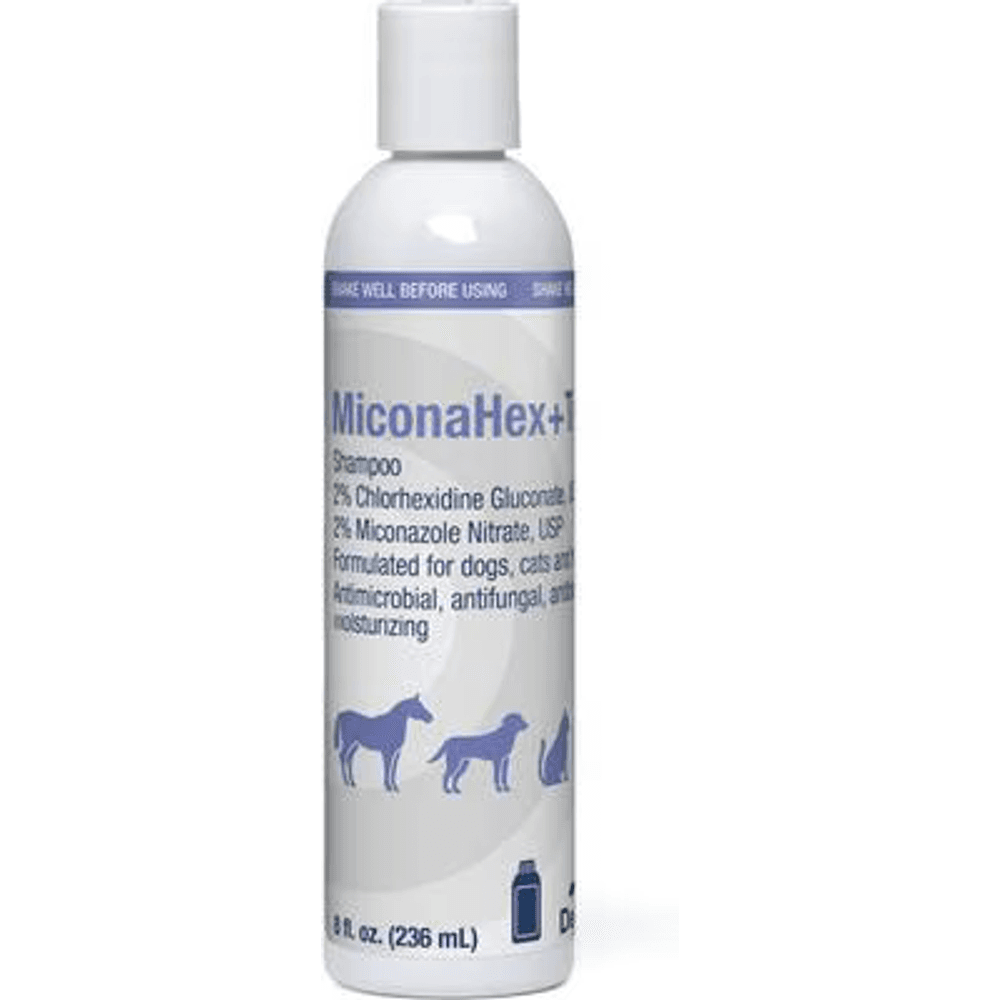
A vet-strength medicated shampoo pairing 2% chlorhexidine and 2% miconazole, a potent antifungal and antibacterial combination widely used to help clear ringworm and yeast or bacterial skin infections.
Webvet may earn a commission when you click through to Chewy, at no extra cost to you.
It helps to picture the fungus as a plant that grows on the hair. It sends out branching filaments and produces spores that break off and spread, feeding on keratin the whole time.
That is why the infection tends to sit in the outer skin and coat rather than invading deeper tissue, and why it responds to treatments aimed at the surface and the hair follicles.

Kittens, longhaired cats, and cats in crowded or stressful settings such as shelters and catteries are at higher risk, because a developing or taxed immune system is less able to hold the fungus in check.
A healthy adult cat can sometimes carry the fungus with few visible signs while still being contagious, which is exactly why a name-only diagnosis is not enough.
Ringworm is one of the most common infectious skin diseases in cats, and it is important to keep the reassuring part in view alongside the warning: it is highly treatable.
The reason it gets a fearsome reputation is not that it is dangerous to a healthy cat, but that it is stubborn to fully clear and easy to pass around a household.
Understanding what it actually is, a surface fungus that lives on hair and skin, takes the mystery out of both the treatment and the cleanup.
Symptoms of ringworm in cats
You can suspect ringworm when a cat develops circular patches of hair loss with flaky, scaly, or crusty skin, most often on the face, ear tips, and forelimbs.
The classic lesion is a round area of thinning or missing fur with a scaly rim, and the skin underneath may look reddened or slightly raised. Some cats itch, but many do not, so an absence of scratching does not rule it out.
The presentation is genuinely variable, which is part of what makes ringworm tricky. In one cat it is a single tidy ring; in another it is scattered scaling with no clear ring at all, or a dull, patchy, unkempt-looking coat.
Signs often start small and expand over days, so a spot that looked like a fleck of dandruff last week can become an obvious bald patch.
Any new area of hair loss, scaling, or crusting that is spreading is worth a closer look, especially in kittens and newly adopted cats.

Where the lesions land is a useful clue. Ringworm favors the head, ears, and forelimbs because those are the areas a cat cannot easily groom clean, and they are also the parts most likely to make face-to-face contact with another infected animal.
Widespread scaling across the trunk points more toward an advanced or heavily contaminated case.
Common signs to watch for include:
- Round or irregular patches of hair loss, often expanding at the edges
- Broken, stubbly hairs around a bald spot
- Scaling, dandruff-like flakes, and crusting on the skin
- Reddened or darkened skin in and around the lesion
- Brittle, deformed, or crumbling claws when the nail beds are involved
- Occasional mild itching, though many cats show none
How do you know if a stray cat has ringworm? Look for the same round, scaly bald patches, especially on the face and ears, and assume any thin, crusty, or moth-eaten coat could be infectious until a vet says otherwise.
Because a healthy-looking stray can still carry spores, handle unfamiliar cats with care, wash your hands afterward, and keep a new arrival away from resident pets until it has been checked.
The visual picture varies a lot from cat to cat, so a side-by-side photo comparison helps you separate ringworm from other skin problems.
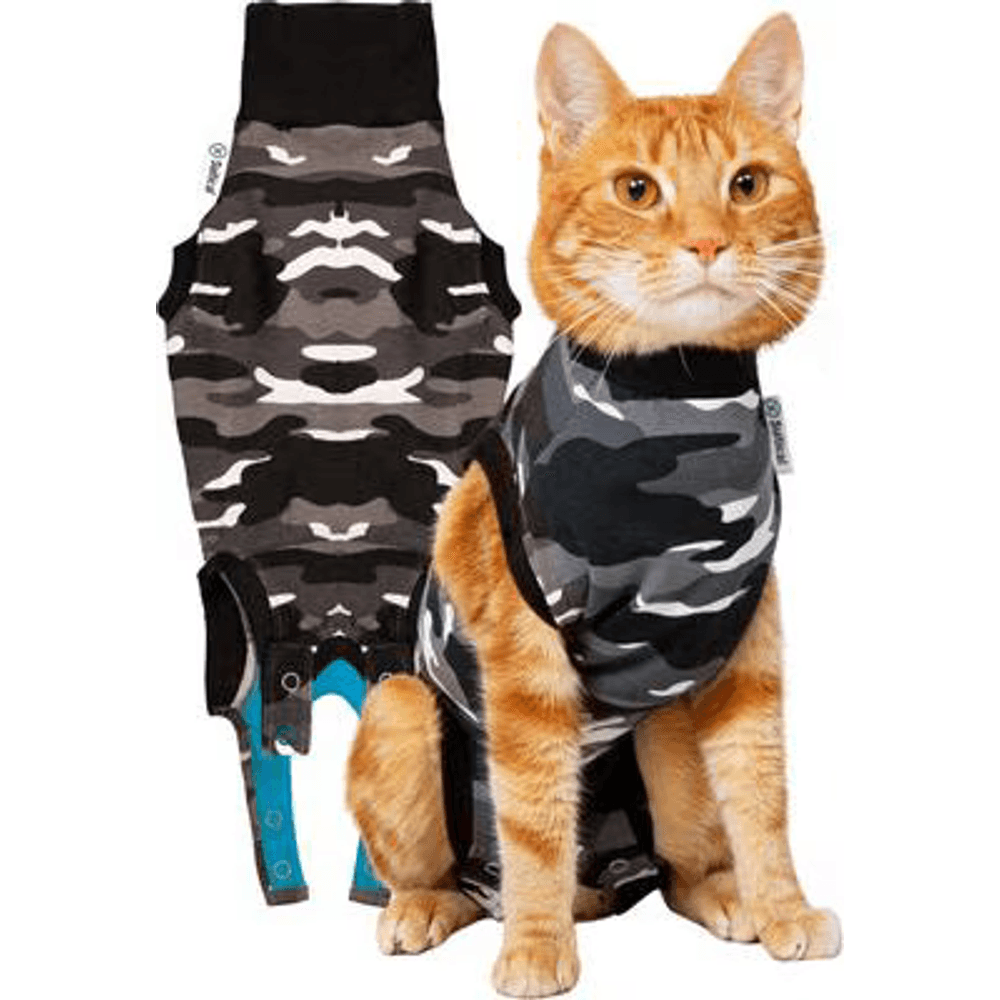
A breathable full-body recovery suit made for cats, the vet-recommended cone alternative that covers a spay or abdominal incision so a cat cannot lick or scratch the wound while she still moves, uses the litter box, and rests in comfort.
Webvet may earn a commission when you click through to Chewy, at no extra cost to you.
For a stage-by-stage and location-by-location look, see our guide to what ringworm looks like on cats, which lays out early lesions, advanced lesions, and the conditions most often mistaken for it.
How do cats get ringworm?
Cats get ringworm by contact with fungal spores, either directly from an infected animal or indirectly from a contaminated environment.
- Direct spread happens when a cat touches an infected cat, dog, or person.
- Indirect spread happens through spores left on bedding, grooming tools, furniture, carpet, and even airborne skin flakes.
Spores are the reason ringworm is so persistent. Shed hairs carrying spores can remain infectious in a home for up to 18 months if they are not cleaned up. That is why a cat can seem cured, then relapse: the source was the environment, not a treatment failure.
Contributing factors include a young or weakened immune system, overcrowding, poor nutrition, warm humid conditions, and skin already damaged by grooming, fleas, or other disease.
After exposure, there is an incubation period before any signs appear, typically one to three weeks. During that window the cat can already be shedding spores without an obvious lesion, which is how ringworm quietly spreads through a multi-cat home before anyone notices a bald patch.
This lag is another reason vets test rather than wait for classic lesions, and why a new cat should be kept separate for a couple of weeks even if it looks perfectly healthy on arrival.
The same fungus infects other species, so a household dog can catch it from the cat or the other way around; our guide to ringworm in dogs covers the canine side. Kittens are the most commonly affected group of all, and they need a gentler approach, which we cover in ringworm in kittens.
SponsoredVet care that's always there
Unlimited video calls and messaging with licensed vets for less than a typical vet visit. One membership covers up to five pets.
Use code Pets60
Plans start at $12/month · covers up to 5 pets
- Licensed vets in most states
- Rx for 150+ conditions
- 4.7 on Trustpilot
Which cats are most at risk for ringworm?
Any cat can catch ringworm, but some are far more susceptible than others. The single biggest risk factor is a young or immature immune system, which is why kittens under a year old are the most commonly affected group.
A robust adult immune system often keeps the fungus in check, so the same exposure that overwhelms a kitten may barely register in a healthy older cat.
Stress plays a bigger role than many owners expect. A move, a new pet, illness, or a crowded shelter can all lower a cat's defenses just enough for the fungus to take hold.
That is why outbreaks cluster in high-turnover settings and why a stressed newcomer deserves extra vigilance for the first few weeks at home.
Higher-risk cats and situations include:
- Kittens and elderly cats, whose immune defenses are weaker
- Longhaired breeds, where spores hide in dense fur and are harder to clear
- Cats in shelters, catteries, or multi-cat homes, where crowding and stress raise exposure

Wearable glove wipes that let you freshen and wipe down a dog's or cat's coat and skin without a full bath, while a fabric layer stays between your hand and the pet.
Webvet may earn a commission when you click through to Chewy, at no extra cost to you.
- Cats that are malnourished, chronically ill, or on immune-suppressing medication
- Outdoor cats and strays with more contact with infected animals and contaminated soil
Knowing your cat's risk profile helps you act early. If you bring home a kitten or adopt from a shelter and notice any scaly, thinning patches, treat it as a possible ringworm case and keep the newcomer separated from resident pets until a vet has taken a look.
Being in a high-risk group is not a guarantee of infection, and a low-risk cat is not immune. Think of these factors as a dial that raises or lowers the odds.
The practical response is the same either way: check new or scratchy patches early, and get testing done rather than guessing, because early treatment is easier and limits spread.
How vets diagnose ringworm in cats
Vets diagnose ringworm using a combination of tests rather than a single one, because no method is reliable on its own.
The three main tools are a Wood's lamp examination, a fungal culture, and a PCR test, and a vet chooses among them based on the cat, the lesions, and how fast an answer is needed.
The appointment usually starts with a hands-on exam and a careful history: the cat's age, whether other pets or people have skin lesions, and any recent adoption or boarding.
The vet then chooses tests to match the situation, often combining a quick in-clinic screen with a lab test that gives a firmer answer a few days or weeks later.

Wood's lamp examination
A Wood's lamp is a handheld ultraviolet light. Certain strains of Microsporum canis produce an apple-green glow along infected hair shafts under this light.
It is a fast, in-clinic screen, but it is far from perfect: only about half of M. canis strains fluoresce, and false positives come from scale, ointments, and lint. A negative lamp does not rule out ringworm, and a positive result still needs confirmation.
Technique matters with the lamp. The true positive is a bright green glow that follows the hair shaft itself, not flecks of glowing crust or lint sitting loose on the surface.
Vets warm the lamp up first and examine in a fully darkened room, because a rushed check in ambient light misses faint fluorescence and produces both false reassurance and false alarms.
Fungal culture
A fungal culture grows the organism from plucked hairs on a special medium. It is the long-standing reference test and can identify the exact species, but it is slow: results often take one to three weeks.
Culture is also useful for monitoring, because a vet can repeat it to confirm the cat is no longer shedding live fungus before ending treatment.
The waiting period is the frustrating part for owners who want an answer now. Because the fungus grows slowly, a plate may need up to two or three weeks before it is called negative, and a vet often starts treatment on strong suspicion rather than losing that time. The culture then confirms the diagnosis and, later, confirms the cure.
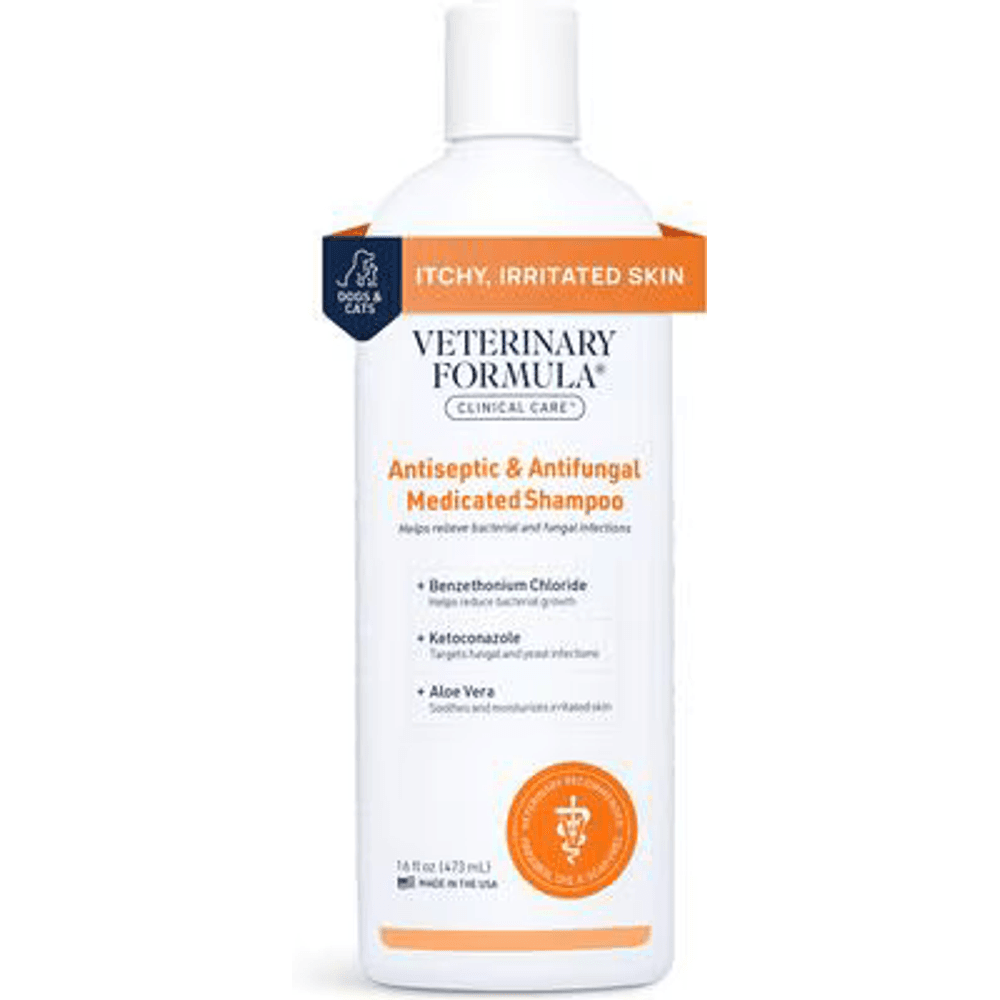
A budget-friendly medicated shampoo with ketoconazole and benzethonium chloride that helps control the fungal and bacterial skin infections behind ringworm, with aloe to soothe irritated skin.
Webvet may earn a commission when you click through to Chewy, at no extra cost to you.
PCR test
PCR detects fungal DNA from a hair and skin sample and returns results in a few days, much faster than culture.
It is very sensitive, which is its strength and its catch: PCR can detect dead fungal DNA, so a positive result does not always mean live, contagious infection. That is why vets often pair PCR with culture when they need to confirm a true cure.
A vet may also examine plucked hairs directly under a microscope to look for spores and fungal filaments.
In practice, PCR has become a popular first test because of its speed and sensitivity, and it is well suited to screening a household of cats quickly.
Its main limitation is that it cannot tell live fungus from residue, so for the final all-clear at the end of treatment many vets still lean on a negative culture as the more definitive proof.
| Diagnostic method | Speed | Key limitation |
|---|---|---|
| Wood's lamp | Instant, in clinic | Only about half of M. canis strains glow; false positives are common, so it is a screen, not proof |
| Fungal culture | 1 to 3 weeks | Slow, but identifies the species and can confirm a true cure |
| PCR test | A few days | Very sensitive, but can detect dead fungal DNA, so a positive is not always a live infection |
How is ringworm in cats treated?
What kills ringworm fast on cats is a combination of topical and oral antifungal treatment used together, along with cleaning the environment, not any single quick fix. Topical care means medicated baths or dips such as lime sulfur, or an antifungal shampoo, to kill spores on the coat.
Oral antifungal medication such as itraconazole or terbinafine treats the infection from the inside. Most cats need several weeks of treatment, and a vet decides the drug, dose, and duration. For the full step-by-step approach, see our ringworm in cats treatment deep-dive.
Expect the full course to run several weeks, sometimes longer in longhaired cats or busy households. Consistency matters more than intensity: the cats that clear fastest are the ones treated on schedule from day one, with the home cleaned in parallel.
The treatment guide breaks down each therapy, the realistic timeline, and how to tell genuine progress from a temporary lull.
Wondering how to treat ringworm in cats without going to the vet? True cure still needs veterinary guidance, because oral antifungals are prescription-only and dosing is not a guessing game.
Over-the-counter creams may help a single small spot, but they rarely clear a coat full of spores on their own. The at-home what-works-versus-myths section in the treatment guide separates the approaches worth trying from the ones that waste time.
What ringworm looks like on a cat
How does ringworm look like on a cat depends on the stage and location: an early lesion may be just a faint scaly patch, while an advanced one is an obvious circular bald spot with a crusty rim, and ear-tip crusting is common.
Several other skin conditions mimic it. What is mistaken for ringworm in cats most often includes flea allergy dermatitis, mange, and miliary dermatitis, which is why appearance alone is never a diagnosis.
Our ringworm pictures guide shows each stage and body location plus labeled lookalikes so you can compare before you call the vet.
Is ringworm in cats contagious? The zoonotic warning
Yes, ringworm in cats is contagious. It is zoonotic, meaning it spreads between animals and people, and it also spreads to other pets in the home. In humans it usually appears as an itchy, red, ring-shaped rash on the skin.
Children, older adults, and anyone with a weakened immune system are more susceptible, so this is a genuine household health issue, not just a cosmetic problem for the cat.
The spores travel on shed hairs, so the danger is not only from touching the cat but from the environment it contaminates. Bedding, sofas, carpets, and clothing can all pass the fungus along, which is why treating the cat and cleaning the home go hand in hand.
Other cats and dogs in the household are at real risk and should be watched closely for lesions.
None of this means you should fear your cat. With basic hygiene and prompt treatment, most households clear ringworm without anyone else catching it.
The goal is sensible precaution, not panic: wash your hands, keep the cat's area contained and clean, and loop in your own doctor promptly if a suspicious rash appears on a person.
Can you still pet your cat if it has ringworm? You can, but do it carefully.
Petting is not forbidden, yet every contact can move spores to your skin, clothing, and the rest of the house, so keep handling to what is needed, wash up afterward, and change clothes if you have been holding the cat closely.
Exactly how contagious ringworm is from cats to humans, and how to protect your family, is covered in depth in our guide to whether cat ringworm is contagious to humans.
Because spores linger in the environment, cleaning the home is part of beating the infection, not an afterthought. Vacuum often, wash bedding, and disinfect hard surfaces throughout treatment; our step-by-step guide to cleaning your house after cat ringworm walks through what actually kills spores and what does not.
Frequently Asked Questions
Is ringworm in cats an emergency?
It is not usually an emergency, but it should be seen by a vet promptly because it is contagious to people and other pets and can spread throughout the home if left untreated. Book a regular appointment rather than an emergency visit, and start hygiene precautions right away.
Can ringworm in cats go away on its own?
In some healthy adult cats a mild case may eventually self-resolve over several months, but during that time the cat keeps shedding contagious spores into the home. Treatment shortens the course, reduces spread to people and pets, and is strongly recommended rather than waiting it out.
How long is a cat with ringworm contagious?
A cat can remain contagious for as long as it is shedding live fungal spores, which is often around three weeks or more into treatment and sometimes longer without it. Your vet may use repeat fungal cultures to confirm the cat is no longer contagious before you relax isolation.

Editor
The Webvet Editorial Team is the in-house group of pet-care editors and writers behind Webvet, operated by Smart Pet Collective. The team researches, writes, and maintains Webvet's pet health, behavior, and medication content. Every article follows a defined editorial process: research from reputable veterinary and scientific sources, careful drafting, mandatory review of medical content by a credentialed veterinarian, and dated publication. Health and medication articles are medically reviewed by a licensed veterinary professional before they go live and are kept current over time.
Veterinarian · BVMS MRCVS
Dr. Pippa Elliott, BVMS, MRCVS, is a veterinarian with nearly 30 years of experience in companion animal practice. Dr. Elliott earned her Bachelor of Veterinary Medicine and Surgery from the University of Glasgow. She was also designated a Member of the Royal College of Veterinary Surgeons. Married with 2 grown-up kids, Dr. Elliott has a naughty Puggle named Poggle, 3 cats and a bearded dragon.
Related reading

Cat Cremation Cost: Private, Communal, and Additional Charges

Cat Euthanasia Cost: Clinic, At-Home Care, and Aftercare

Dog Microchip Cost: Implantation, Registration, and Ongoing Fees
