Ringworm on Cats Pictures: What Each Stage Looks Like
See what ringworm looks like on cats with pictures of early and advanced lesions on the ears, face, and paws, plus how to tell it apart from mange, fleas, and other lookalikes.

BVMS MRCVS
Medically reviewed by Dr. Pippa Elliott, BVMS MRCVS · Last reviewed

This article contains affiliate links. Webvet may earn a commission when you buy through them, at no extra cost to you.
Ringworm on cats pictures are the fastest way to tell whether a bald, scaly patch on your cat is really ringworm, a fungal skin infection, and not something else. Remember that ringworm is a fungus, not a worm.
Below you will see what it looks like at each stage, from a faint early patch to a classic ring and a healing lesion, plus how it appears on the ears, face, and paws, and side-by-side lookalikes so you can compare before you call the vet.
- 1The hallmark is a round patch of hair loss with a scaly, crusty rim, often on the face, ears, and legs.
- 2Early lesions are subtle, just faint scaling and slight thinning, so they are easy to miss.
- 3Ears, face, and paws are common sites; kittens are the most affected group.
- 4Mange, flea allergy dermatitis, and miliary dermatitis all mimic ringworm, so a photo is a starting point, not a diagnosis.
- 5Only a vet can confirm ringworm with a Wood's lamp, culture, or PCR test.
 Sponsored
Have a health question about your cat?
Talk to a licensed vet at Dutch over video or message, including nights and weekends.
Use code Pets60
Plans start at $12/month · covers up to 5 pets
- Licensed vets in most states
- Rx for 150+ conditions
- 4.7 on Trustpilot
What ringworm looks like on a cat: the classic ring
How does ringworm look like on a cat at its most recognizable? It is a roughly circular patch of hair loss with a scaly, sometimes reddened rim and short, broken hairs, most often the size of a coin.
The center may look like it is starting to heal while the edge keeps expanding outward, giving the ring-like shape the infection is named for. Comparing several pictures and images of ringworm in cats side by side makes this classic ring easier to recognize.
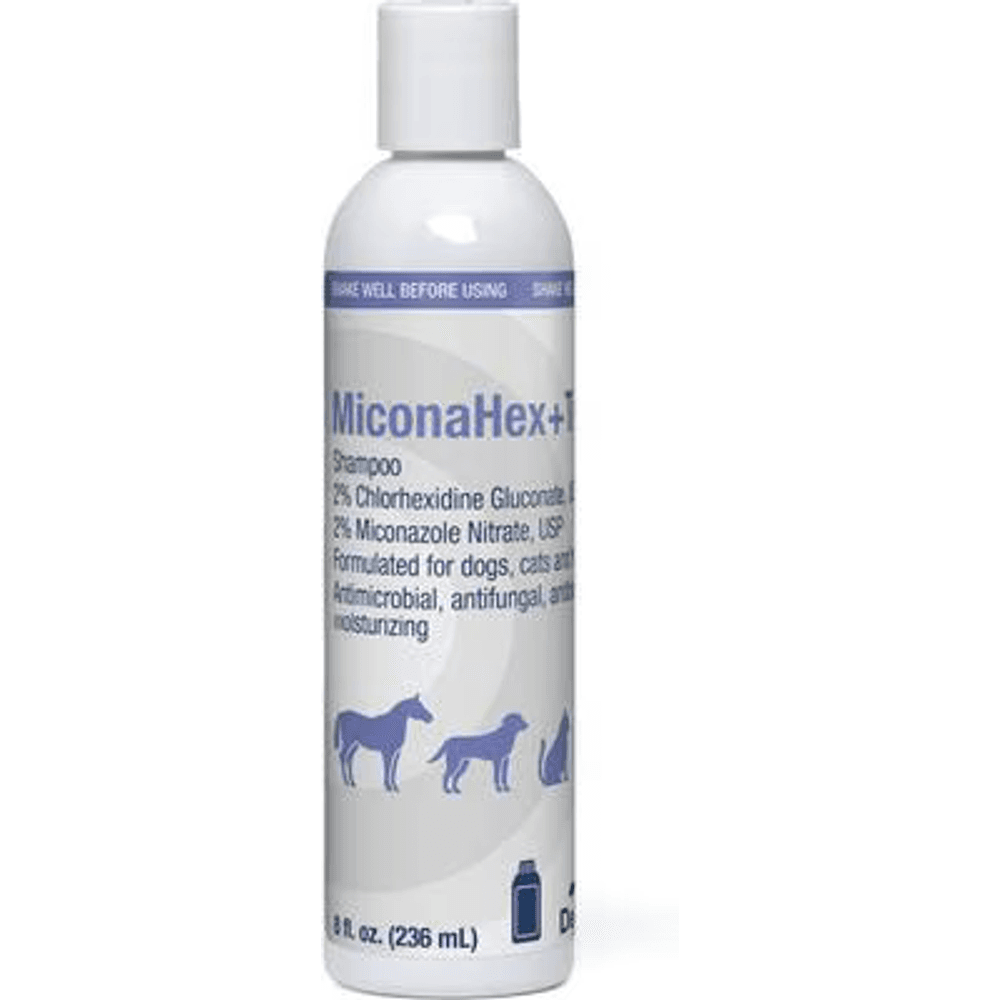
A vet-strength medicated shampoo pairing 2% chlorhexidine and 2% miconazole, a potent antifungal and antibacterial combination widely used to help clear ringworm and yeast or bacterial skin infections.
Webvet may earn a commission when you click through to Chewy, at no extra cost to you.
The photo below shows the textbook version on a cat's flank. Notice the clean round outline, the flaky raised rim, and the stubbly broken hairs where the coat has thinned.
Real cases rarely look this tidy, but the round shape with a scaly edge is the pattern to hold in your mind as a reference point.

Not every case is a neat circle. Lesions can be irregular, patchy, or spread across the coat, and some cats just look moth-eaten. One clue vets use is fluorescence: under a Wood's lamp in a dark room, some ringworm strains make infected hairs glow apple-green.
That glow is only a screening clue, not proof, because roughly half of infections do not fluoresce and lint or ointment can glow too, so it never replaces a culture or PCR test.

In this image the fur glows a distinctive apple-green under ultraviolet light, tracing the infected hair shafts. When it appears, that color is a strong clue, but remember it shows up in only about half of cases.
A cat with obvious lesions and no glow can still absolutely have ringworm, so the lamp never rules it out.
Early-stage ringworm vs advanced lesions
How do you know if your cat has got ringworm in the early stage? The first sign is usually subtle: a small area of faint scaling or dandruff-like flakes with only slight thinning of the fur, and no obvious bald ring yet.
It is easy to mistake for dry skin, which is why early cases are so often missed. Early pictures of ringworm in cats, viewed against later stages of ringworm in cats pictures, show how a faint patch becomes an obvious lesion.
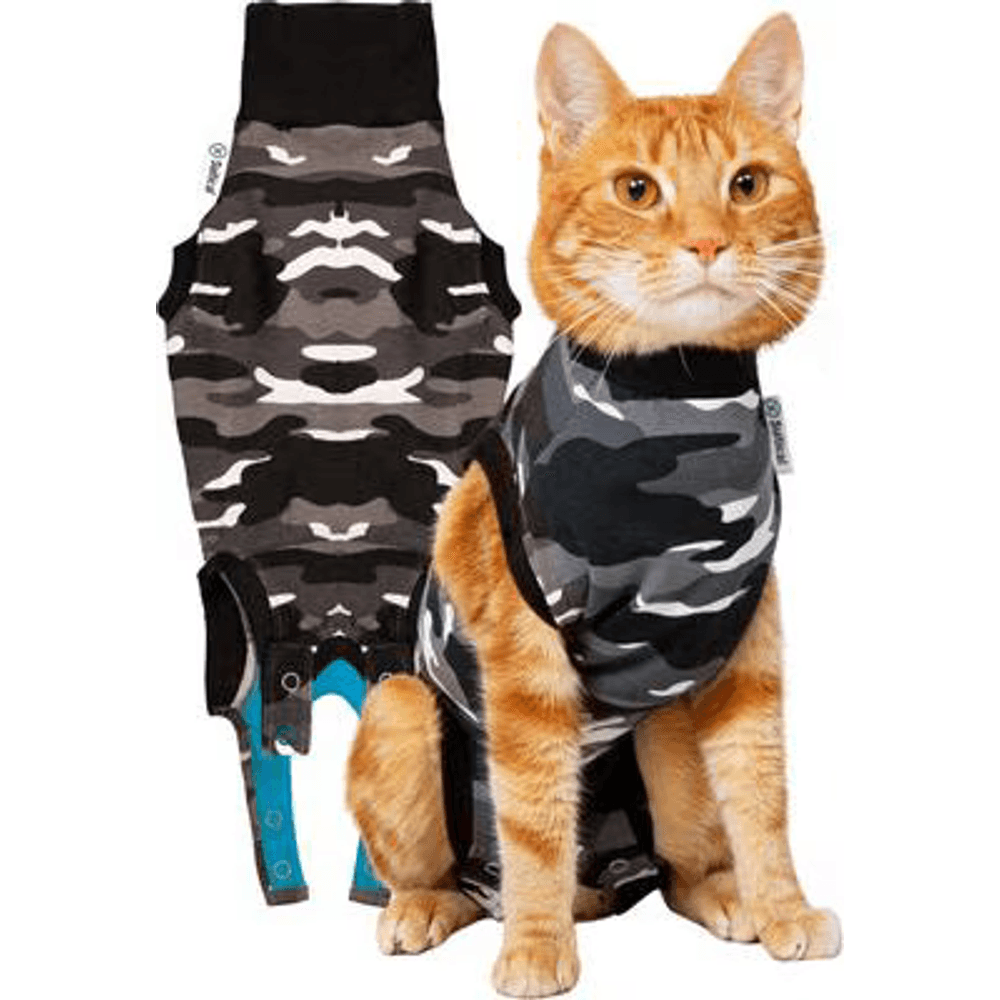
A breathable full-body recovery suit made for cats, the vet-recommended cone alternative that covers a spay or abdominal incision so a cat cannot lick or scratch the wound while she still moves, uses the litter box, and rests in comfort.
Webvet may earn a commission when you click through to Chewy, at no extra cost to you.

Compare this early patch with the crisp ring above. Here there is only faint flaking and a barely thinned coat, with no bald center yet.
This is the stage owners most often dismiss as dandruff or a scratch, and it is also the easiest to treat, so catching a spot that looks like this is genuinely worth a vet check.
As the infection advances, the patch enlarges, the fur falls out in a more defined shape, and crusting builds up. With treatment, a healing lesion looks different again: the bald patch fills in with soft new fur from the center outward, and the scaling fades.
Seeing regrowth is a reassuring sign, though only a vet can confirm the fungus is truly cleared.
A single cat can show several stages at once, an old healing patch on one flank and a fresh expanding lesion on the face, which is why matching your cat to a single photo can be misleading.
Photograph any suspicious spots and note whether they are growing, shrinking, or spreading to new areas over a few days. That timeline is genuinely useful information for your vet, and it captures things a single snapshot cannot.

A healing lesion, like the one shown here, fills back in with soft, short new fur from the center out while the scaly edge fades. It is a hopeful sight, but do not stop treatment on the strength of it.
Regrowth means the skin is recovering, not that the fungus is gone, and only a follow-up test confirms a true cure.
SponsoredVet care that's always there
Unlimited video calls and messaging with licensed vets for less than a typical vet visit. One membership covers up to five pets.
Use code Pets60
Plans start at $12/month · covers up to 5 pets
- Licensed vets in most states
- Rx for 150+ conditions
- 4.7 on Trustpilot
Ringworm on the ears, face, and paws
Ringworm favors the head and limbs. On the face, it often shows up as scaly bald patches on the muzzle, around the eyes, and on the bridge of the nose. Kittens are affected more than any other group, so a young cat with facial crusting deserves a close look.

Wearable glove wipes that let you freshen and wipe down a dog's or cat's coat and skin without a full bath, while a fabric layer stays between your hand and the pet.
Webvet may earn a commission when you click through to Chewy, at no extra cost to you.

This kitten shows the pattern to expect on a young face: scaly, hairless patches above the eye and across the muzzle. Kittens are the group most likely to be infected, and facial lesions like these are a common first sign in a newly adopted or shelter kitten. Any such crusting on a young cat warrants a prompt exam.
- The ears are another classic site, where ringworm causes crusty, flaky scaling and hair loss along the ear margins.
- On the paws and around the claws, the infection can leave the nails brittle, misshapen, or crumbling, with scaling of the surrounding skin.
Face, ears, and paws are the areas a cat cannot easily groom clean, which is part of why lesions concentrate there.
Coat color changes how obvious the lesions look. On a pale or white cat, the reddened rim and scaling stand out clearly, while on a black cat the same lesion can be much harder to spot until the fur is gone.
That is one reason black cats sometimes go undiagnosed longer, and why running your hands over the coat to feel for scaly or bald patches matters as much as looking.
Nail-bed involvement, called onychomycosis, is easy to overlook because there is no ring to see. Watch for claws that split, thicken, or grow in deformed, along with scaling of the toes. If only the paws are affected, owners often assume an injury rather than a fungal infection, which delays treatment.
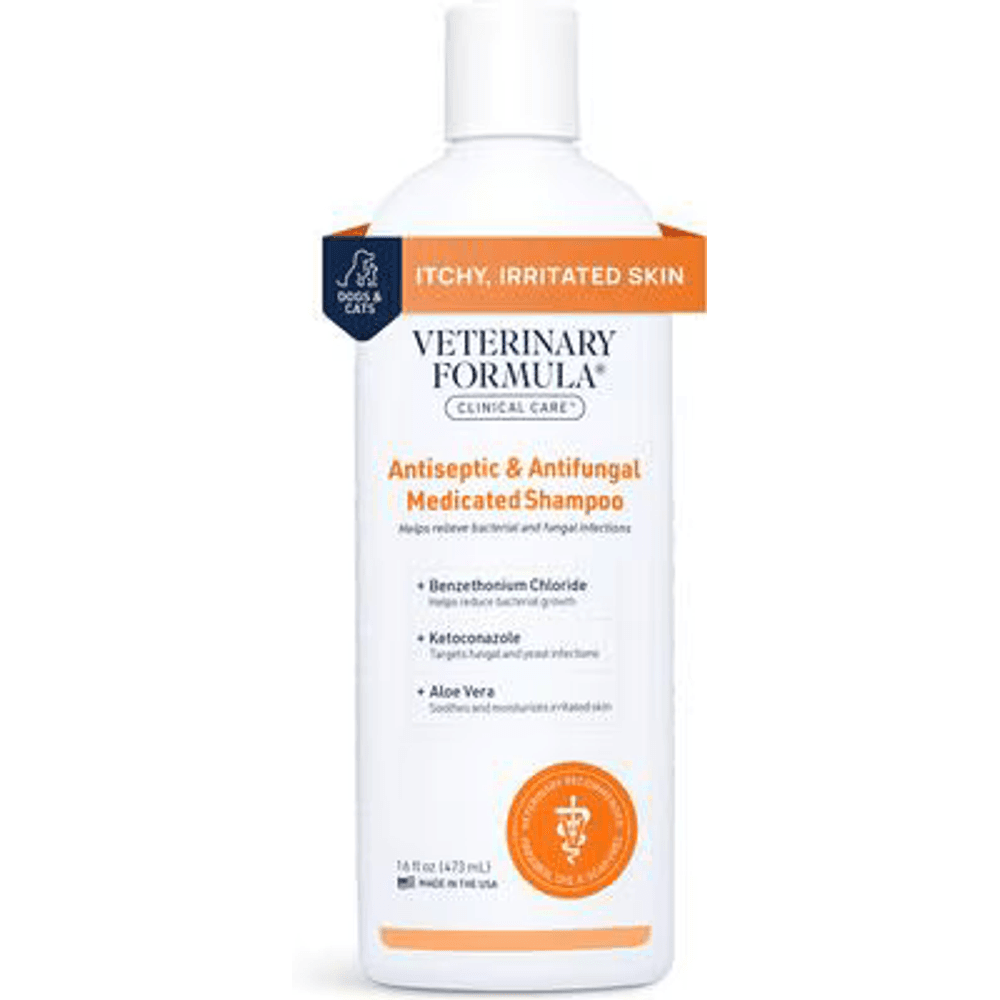
A budget-friendly medicated shampoo with ketoconazole and benzethonium chloride that helps control the fungal and bacterial skin infections behind ringworm, with aloe to soothe irritated skin.
Webvet may earn a commission when you click through to Chewy, at no extra cost to you.

The ear-margin close-up here shows the dry, crusty flaking that builds up along the edge of the ear. Ear lesions are easy to miss because owners tend to look at the body, not the ear rims. Gently checking both ear tips is worth doing whenever you are inspecting a cat for scaly patches.
Ringworm lookalikes: what else it could be
What is mistaken for ringworm in cats? Several skin conditions produce hair loss, scaling, and crusting that look almost identical in a photo. The three most common lookalikes are flea allergy dermatitis, mange, and miliary dermatitis. Because they overlap so much, appearance alone can point you in the wrong direction, and each is managed differently.
Beyond those three, bald or scaly patches can also come from overgrooming due to stress or pain, a healing bite wound or abscess, or an allergic reaction to food or the environment. Even acne on the chin can look like a crusty ringworm spot.
The practical takeaway is that no home comparison can safely distinguish these, since some are contagious and some are not, and the treatments range from antifungals to flea control to allergy management.
Matching your cat to the closest photo is a starting point for the conversation with your vet, never the final word.
One quick differentiator is the itch. Ringworm is often only mildly itchy or not itchy at all, while flea allergy and mange usually drive intense scratching.
A cat tearing at its skin is more suggestive of parasites or allergy, whereas a calm cat with a neat scaly patch fits ringworm. Even so, the overlap is real, so the table below is a guide, not a verdict.
| Condition | How it looks | How to tell it apart from ringworm |
|---|---|---|
| Ringworm | Round patches of hair loss with a scaly, crusty rim, often on face, ears, and legs | Confirmed by a Wood's lamp, fungal culture, or PCR test; may glow green under UV light |
| Flea allergy dermatitis | Itchy bumps and hair loss, especially over the lower back and base of the tail | Intense itching plus flea dirt in the coat; not circular; responds to flea control |
| Mange (mites) | Crusting, scaling, and hair loss, often with severe itching and skin thickening | Diagnosed by a skin scraping that finds mites; itch is usually more intense than ringworm |
| Miliary dermatitis | Many tiny crusty bumps scattered over the body, often an allergic reaction | Widespread millet-like crusts rather than a defined ring; tied to allergies or fleas |
What to do if it is ringworm
If the pictures match your cat, the next steps are a vet visit and treatment. Our full guide to ringworm in cats covers the symptoms, causes, and diagnosis in depth, and the ringworm in cats treatment guide explains the topical dips, antifungal shampoos, and oral medication that actually clear it, plus how long recovery takes.
Ringworm is contagious to people and other pets, so start basic hygiene right away: wear gloves, wash your hands after handling the cat, and keep it isolated until a vet weighs in.
Just how contagious cat ringworm is to humans, and how to protect your household, is covered in our dedicated is cat ringworm contagious to humans guide.
Frequently Asked Questions
Can I diagnose ringworm on my cat from a picture?
No. Pictures help you recognize the pattern and decide to get help, but flea allergy, mange, and miliary dermatitis look nearly identical. A vet needs a Wood's lamp, fungal culture, or PCR test to confirm ringworm and rule out lookalikes.
What does early ringworm look like on a cat?
Early ringworm is subtle: a small area of faint scaling or flaky skin with only slight thinning of the fur, and no obvious bald ring yet. It is easy to mistake for dry skin, so any spreading scaly patch is worth having checked.

Editor
The Webvet Editorial Team is the in-house group of pet-care editors and writers behind Webvet, operated by Smart Pet Collective. The team researches, writes, and maintains Webvet's pet health, behavior, and medication content. Every article follows a defined editorial process: research from reputable veterinary and scientific sources, careful drafting, mandatory review of medical content by a credentialed veterinarian, and dated publication. Health and medication articles are medically reviewed by a licensed veterinary professional before they go live and are kept current over time.
Veterinarian · BVMS MRCVS
Dr. Pippa Elliott, BVMS, MRCVS, is a veterinarian with nearly 30 years of experience in companion animal practice. Dr. Elliott earned her Bachelor of Veterinary Medicine and Surgery from the University of Glasgow. She was also designated a Member of the Royal College of Veterinary Surgeons. Married with 2 grown-up kids, Dr. Elliott has a naughty Puggle named Poggle, 3 cats and a bearded dragon.
Related reading

Cat Cremation Cost: Private, Communal, and Additional Charges

Cat Euthanasia Cost: Clinic, At-Home Care, and Aftercare

Dog Microchip Cost: Implantation, Registration, and Ongoing Fees
