Ringworm From Cats to Humans: Yes, and How to Stay Safe
Yes, ringworm spreads from cats to humans. Learn how it transmits, who is most at risk, what it looks like on skin, and how to protect your family while treating your cat.

BVMS MRCVS
Medically reviewed by Dr. Pippa Elliott, BVMS MRCVS · Last reviewed

This article contains affiliate links. Webvet may earn a commission when you buy through them, at no extra cost to you.
Yes. Ringworm from cats to humans is not only possible, it is common: ringworm is a zoonotic fungal infection, which means it passes readily between animals and people.
If your cat has been diagnosed with ringworm, or you suspect it, assume the fungus can spread to your family and take sensible precautions.
The reassuring part is that ringworm on human skin is usually mild, easy to recognize, and straightforward to treat, and a few simple hygiene habits sharply reduce the chance anyone catches it.
This guide answers the practical questions: how the fungus actually moves from cat to person, who in your household is most at risk, what a ringworm patch looks like on human skin, how to stay clean while your cat is being treated, and when to see your own doctor.
For the cat side of the story, from diagnosis to what the infection does to your pet, start with our overview of ringworm in cats.
- 1Ringworm is zoonotic: it spreads from cats to humans through direct contact and through spores on shared fabric and surfaces.
- 2Children, seniors, and people with weakened immune systems are the most likely to catch it and to develop more stubborn infections.
- 3On people it appears as a round, red, scaly patch with a raised border and a clearing center, often mildly itchy.
- 4Handwashing, gloves for close handling, and prompt laundering while your cat is treated dramatically lower household risk.
- 5See your own doctor if a patch spreads, involves the scalp or nails, does not improve with over-the-counter antifungals, or if you are immunocompromised.

 Sponsored
Have a health question about your cat?
Talk to a licensed vet at Dutch over video or message, including nights and weekends.
Use code Pets60
Plans start at $12/month · covers up to 5 pets
- Licensed vets in most states
- Rx for 150+ conditions
- 4.7 on Trustpilot
How ringworm passes from cats to people
Ringworm passes from cats to people mainly through direct contact with an infected cat and through indirect contact with spores the cat sheds into the environment. The fungus, usually Microsporum canis, lives on hair and skin and releases microscopic spores onto everything the cat touches.
You can pick those spores up by petting, holding, or being licked by an infected cat, or by handling contaminated bedding, brushes, carpet, and furniture.

Certified True HEPA air purifier that captures 99.97% of airborne dust, dander, pollen, and smoke, reducing the airborne triggers behind feline asthma and respiratory irritation.
Webvet may earn a commission when you click through to Chewy, at no extra cost to you.
The spores need to reach your skin and take hold in the outer layer, and small breaks in the skin, from scratches, shaving, or dryness, make that easier.
This is why the rings so often appear where a cat is held against a forearm or where a child cuddles a kitten against the neck and cheek.
It also explains why simply washing your hands and skin after contact is so effective: it physically removes spores before they can settle in.
You do not catch ringworm from a single glance or from being in the same room; you catch it from spores landing on and staying on your skin.

Direct contact versus contaminated surfaces
Spores reach you two ways:
- Direct contact is the most obvious route. Petting, holding, or being licked by an infected cat transfers spores straight onto your skin, and the more time you spend in close contact, the more spores you collect. This is why the people who groom, medicate, and cuddle the cat tend to break out first.
- Indirect contact is quieter but just as real. Spores drop off the cat onto bedding, sofas, carpet, grooming brushes, and clothing, where they can wait for weeks. You then pick them up by sitting, sleeping, or handling those items, often without ever touching the cat at that moment.
Both routes point to the same defenses. Reducing direct contact during treatment, washing after handling, and cleaning the surfaces the cat frequents all attack the spore supply. You are not trying to sterilize your life, just to interrupt the handful of pathways spores use to reach your skin.
How likely is it to get ringworm from a cat? Likelihood rises with close contact and with how susceptible you are. A brief encounter with a treated cat carries low risk, while sharing a bed with a heavily infected, untreated kitten carries high risk.
Some people in the same household catch it while others never do, largely because of differences in immune strength and skin contact. The people most likely to get ringworm from a cat are:
- Young children, who handle pets closely, press their faces into fur, and have thinner skin and developing immune systems.
- Older adults, whose immune defenses and skin barrier weaken with age.
- People with weakened immune systems, including those on chemotherapy, taking immune-suppressing drugs, or living with conditions that lower immunity.
How did I suddenly get ringworm? Because spores can sit on fabric and surfaces for months and the rash takes one to three weeks to appear after exposure, an infection often seems to come out of nowhere.
You may have picked up spores from your cat, its bedding, or a shared blanket well before the patch showed up, which is why a new pet, a foster kitten, or a recently diagnosed cat is the usual explanation for a sudden ring on your skin.
How likely is it, really?
There is no single percentage, because risk depends on the cat, the contact, and the person. A briefly handled, already-treated cat poses little threat to a healthy adult. A heavily infected, untreated kitten sharing a child's bed is a very different situation with a high chance of transmission.
The honest summary is that ringworm is genuinely catching but rarely dangerous. Most people who get it end up with one or two rings that clear with a cream.
The point of caution is to spare the vulnerable and to shorten the whole episode, not to imply a health emergency. Treat it seriously enough to act, but calmly enough to keep enjoying your cat.
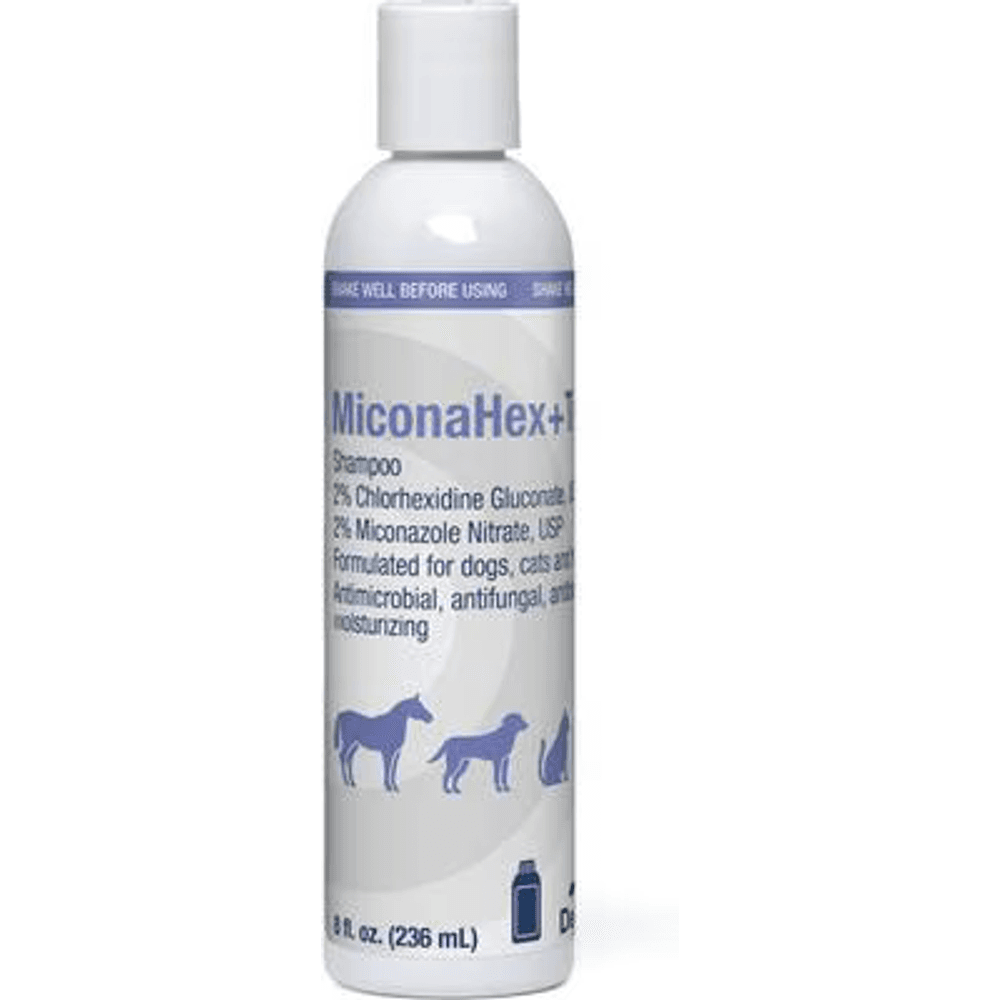
A vet-strength medicated shampoo pairing 2% chlorhexidine and 2% miconazole, a potent antifungal and antibacterial combination widely used to help clear ringworm and yeast or bacterial skin infections.
Webvet may earn a commission when you click through to Chewy, at no extra cost to you.
| Group | Why higher risk | Extra precaution |
|---|---|---|
| Young children | Developing immunity, thin skin, very close contact with pets | Supervise handling, wash hands after, keep the cat off faces and beds |
| Older adults | Slower immune response and a thinner skin barrier | Wear long sleeves for handling, wash promptly, treat any patch early |
| Immunocompromised people | Fewer defenses, so infections take hold and spread more easily | Limit close contact during treatment, see a doctor at the first sign |
| Healthy adults | Often fight off small exposures before a lesion forms | Basic handwashing and laundry usually suffice |
Why are these groups more vulnerable? A healthy adult immune system often fends off small exposures before a lesion ever forms. Young children lose that edge because their immunity is still maturing and they press bare skin into fur constantly.
Older adults have a thinner skin barrier and slower immune responses. People on immune-suppressing treatment simply have fewer defenses at the skin surface, so the same exposure that a healthy adult shrugs off can take hold and spread.
For these groups, ringworm can also be slower to clear and more likely to need a doctor's help.
It is worth stressing that the fungus does not distinguish between species. The same Microsporum canis on your cat can infect your dog, a foster kitten, or a visiting pet, and any of those animals can then pass spores to people.
In a multi-pet home, assume the whole animal population needs watching once one pet is diagnosed, and mention every pet to your veterinarian.
Kittens deserve a special mention here.
Because young kittens shed heavily and are handled so closely, they are the most common animal source of ringworm in people, and a new foster or shelter kitten is a classic reason a whole family develops rings within a few weeks of adoption.
If everyone in the house came down with ringworm at once, a recently adopted kitten is usually the missing link, and treating that kitten is the fastest way to stop the human cases.
SponsoredVet care that's always there
Unlimited video calls and messaging with licensed vets for less than a typical vet visit. One membership covers up to five pets.
Use code Pets60
Plans start at $12/month · covers up to 5 pets
- Licensed vets in most states
- Rx for 150+ conditions
- 4.7 on Trustpilot
What cat-transmitted ringworm looks like on people
On people, ringworm looks like a round or oval red patch with a raised, scaly border and a clearer center, the classic ring that gives the infection its name. It is often mildly itchy and slowly grows outward.
Despite the name, there is no worm involved; the medical term for ringworm on the body is tinea corporis, and it is the same fungus your cat carries.
The symptoms of ringworm from cats to humans look the same on adults and children, and cat ringworm symptoms in humans usually center on that scaly ring.

Patches from a cat usually show up first on the areas that touch the animal: hands, forearms, neck, face, and torso. You may have one ring or several. On the scalp, ringworm can cause scaly bald patches, and it more often affects children.
A ring that is expanding, multiplying, or intensely itchy is a signal to start treatment and, if it does not settle, to see a doctor.

Wearable glove wipes that let you freshen and wipe down a dog's or cat's coat and skin without a full bath, while a fabric layer stays between your hand and the pet.
Webvet may earn a commission when you click through to Chewy, at no extra cost to you.
Not every case looks like the textbook ring. Early or partly treated infections can be faint pink scaly areas without a clear border, and on darker skin the redness may read as brown or gray rather than bright red.
Ringworm on the scalp (tinea capitis) and in the nails is easy to mistake for dandruff or a nail injury, yet these forms usually need prescription oral antifungals, so do not try to ride them out with a cream.
When you are unsure whether a patch is ringworm at all, that uncertainty is itself a good reason to have it looked at.
How a ringworm patch changes over days
A ringworm patch is not static, and watching how it changes helps you tell it from a passing irritation. It usually starts as a small red, slightly scaly spot, then expands outward over days into a ring as the center begins to clear and the active border stays raised and flaky.
A bug bite or contact rash tends to stay put and fade within a few days. Ringworm does the opposite: it slowly enlarges, may spawn a second or third ring nearby, and does not resolve on its own. That expanding, ring-shaped pattern is the clearest signal to start an antifungal.
Keep track with a quick phone photo every couple of days. If the patch is shrinking on an over-the-counter cream, you are on track. If it keeps widening, multiplies, or moves to the scalp or nails after two weeks of treatment, that is your cue to involve a doctor.
Hygiene protocol while your cat is being treated
You do not have to give up your cat or stop caring for it while it recovers. A consistent hygiene routine lets you handle and treat your cat while keeping spores off your skin and out of your household.
The single biggest risk reducer is treating the cat itself, because a cat on effective therapy sheds fewer and fewer spores each week; hygiene simply covers the gap until the infection is gone.
Think of the steps below as a temporary routine for the treatment period, not a permanent change to how you live with your pet.
A common question is how long is ringworm contagious from cats to humans: your cat can pass spores until treatment clears the infection, so keep the routine up throughout.

- Wash your hands and forearms with soap and water after every contact with your cat, its bedding, or its litter box.
- Wear disposable gloves and a long-sleeved layer when applying dips, shampoos, or medication, and wash up afterward.
- Keep the cat off your bed, pillows, and face during active treatment, and cover shared seating with washable throws.
- Wash your own clothes and any bedding the cat contacts on the hottest cycle the fabric allows, and dry on high heat.
Can I still cuddle my cat with ringworm? You can, but keep cuddling brief and low-contact during active treatment, wear clothes you can launder immediately, and always wash afterward. High-risk household members should limit close contact until the cat is well into treatment.
Does ringworm live on bed sheets? Yes: spores survive on sheets, blankets, and towels, so keep the cat off bedding and launder fabrics on hot heat regularly.
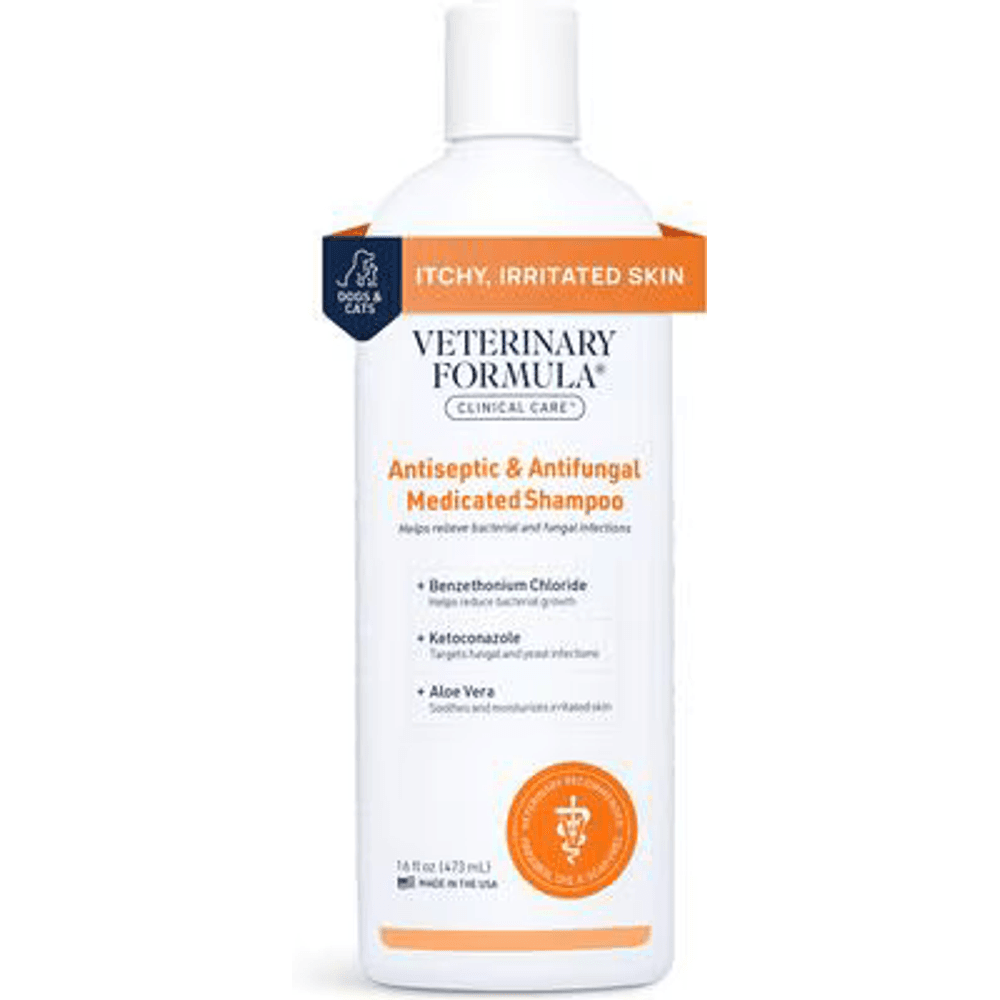
A budget-friendly medicated shampoo with ketoconazole and benzethonium chloride that helps control the fungal and bacterial skin infections behind ringworm, with aloe to soothe irritated skin.
Webvet may earn a commission when you click through to Chewy, at no extra cost to you.
Hand hygiene and laundry are only part of the picture. Ringworm spores linger on carpet, furniture, and hard surfaces, so full recovery also means decontaminating your home. Our step-by-step guide to cleaning your home after cat ringworm covers what actually kills spores, how long they survive, and a room-by-room plan.
Two habits do most of the protective work: wash your hands after every contact, and stop the cat sleeping in beds and on pillows until it is well into treatment.
Hand hygiene interrupts the most common route onto your own skin, and keeping the cat off bedding starves the fabric reservoir that quietly re-exposes everyone at night. Neither step requires banishing your cat; they just move the risk from constant to occasional while the infection clears.
A realistic day-to-day routine
In practice, the routine is light once it becomes habit. Keep a bottle of soap by the sink, wash after handling the cat or its things, and change into clothes you can wash hot after doing dips. Cover a favorite chair with a throw you launder every few days.
You do not need to scrub the whole house daily. Focus your effort where the cat spends time and where your skin makes contact: your hands, your clothing, the bedding, and the seating it uses. Consistency on those few points does far more than sporadic deep cleans everywhere else.
One more small habit pays off: keep the cat's grooming and medicating supplies together in one spot, ideally near the isolation area, so you are not carrying spore-covered brushes and towels through the house. Contain the mess, and you contain the risk to everyone else.
Protecting the other pets in your home
Humans are not the only ones at risk. If your ringworm-positive cat lives with other cats or dogs, those animals can catch it and become new sources of spores for your family, which is why isolating the infected cat protects people indirectly.
Watch every pet for new patches of hair loss or scaly skin, keep the affected cat separated during active treatment, and ask your veterinarian whether in-contact pets should be screened or treated as a group.
Breaking the animal-to-animal cycle is often what finally stops the human cases in a household.
Screening the whole household
When one pet is diagnosed, treat the household as a unit rather than chasing cases one at a time. Ask your veterinarian whether your other cats and dogs should be cultured or treated preemptively, since asymptomatic carriers can quietly re-infect a cat you have just cleared.
Do the same for people. Have everyone check their skin, especially children and any immunocompromised member, and treat new rings early. Coordinating the pets and the people at once is what finally breaks a stubborn cycle where the infection keeps bouncing between them for months.
Keep this vigilance up until your vet confirms the cat is culture-negative. Relaxing household and personal precautions the moment the visible rashes fade is the classic way a family ends up treating the very same ringworm outbreak twice over several months.
When to see your own doctor
What kills ringworm on skin fast? Most mild cases on the body respond to an over-the-counter antifungal cream such as clotrimazole or terbinafine, applied as directed and continued for the full course even after the rash fades.
There is no true instant cure; consistency over one to a few weeks is what clears it. For general guidance on human ringworm and prevention, the CDC's ringworm resource is a reliable reference. Some situations, though, need a doctor rather than a drugstore cream.
When you do treat a simple patch at home, apply the antifungal cream a little beyond the visible edge of the ring, keep the area clean and dry, and do not cover it tightly.
Wash your hands before and after so you do not spread it to a new spot on your own body.
Keep going for the full time on the label, often a week or two past the point the rash disappears, because stopping early is the usual reason it comes back. Do not share towels, and launder anything that touched the rash.
What treatment on people involves
For most body patches, an over-the-counter antifungal cream with clotrimazole or terbinafine is the first step, used once or twice daily exactly as the label says. Improvement usually shows within a week, but the fungus outlasts the visible rash, so you keep applying well past the point it looks gone.
Stubborn, widespread, scalp, or nail infections are a different matter and often need prescription oral antifungals from a doctor. Do not try to clear scalp or nail ringworm with cream alone, and do not double up random products; if a straightforward cream is not winning in two weeks, get it assessed.
Ringworm from dogs, and the same rules
The same fungus spreads from dogs, so if you have both pets, the transmission routes, high-risk people, and hygiene steps are identical.
If a dog in your home is affected too, see our companion guide on whether dog ringworm is contagious to humans and apply the same protections across every pet and person in the household.
Frequently Asked Questions
What kills ringworm in laundry?
Wash affected fabrics on the hottest water the material tolerates and dry on high heat; washing twice helps mechanically remove spores. For the full laundry and surface protocol, see our guide to cleaning your home after cat ringworm.
How long does cat ringworm live on surfaces in my home?
Ringworm spores can stay infectious on surfaces and in fabric for many months if they are not cleaned away, which is why environmental decontamination matters as much as treating the cat. Our home decontamination guide explains spore persistence and how to clean each room.
How long is ringworm contagious from cats to humans?
A cat can spread ringworm for as long as it is actively infected and shedding spores, which is until treatment brings it to negative fungal cultures. Contaminated fabric and surfaces stay infectious until they are cleaned, so contagion is tied to both the cat's cure and household decontamination, not a fixed number of days.
How did I suddenly get ringworm if my cat looks fine?
Cats can be asymptomatic carriers, shedding spores with no visible lesions, so a cat that looks perfectly healthy can still be your source. Spores also survive on fabric for months, so the exposure may predate any signs. If you have ringworm and no clear cause, ask your vet to check the cat with a fungal culture; our ringworm in cats overview explains carrier testing.
One reassurance worth holding onto: in a healthy household, cat-to-human ringworm is usually a minor, self-limited skin problem, not a serious illness.
The people who need to be most careful are children, seniors, and the immunocompromised, and even for them, early treatment and basic hygiene resolve the great majority of cases without complications.
The goal is not to panic or rehome a beloved cat, but to treat the animal, protect the vulnerable, and clean sensibly until it is over.
So, is ringworm contagious from cats to humans? Yes, but it is manageable. Treat your cat under veterinary care, use straightforward hygiene while the infection clears, decontaminate your home, and watch high-risk family members closely.
Recognize a ring on your own skin early, treat it, and see your doctor if it does not behave. With those steps, cat-to-human ringworm is a nuisance you clear up, not a reason to fear your pet.

Editor
The Webvet Editorial Team is the in-house group of pet-care editors and writers behind Webvet, operated by Smart Pet Collective. The team researches, writes, and maintains Webvet's pet health, behavior, and medication content. Every article follows a defined editorial process: research from reputable veterinary and scientific sources, careful drafting, mandatory review of medical content by a credentialed veterinarian, and dated publication. Health and medication articles are medically reviewed by a licensed veterinary professional before they go live and are kept current over time.
Veterinarian · BVMS MRCVS
Dr. Pippa Elliott, BVMS, MRCVS, is a veterinarian with nearly 30 years of experience in companion animal practice. Dr. Elliott earned her Bachelor of Veterinary Medicine and Surgery from the University of Glasgow. She was also designated a Member of the Royal College of Veterinary Surgeons. Married with 2 grown-up kids, Dr. Elliott has a naughty Puggle named Poggle, 3 cats and a bearded dragon.
Related reading

Cat Cremation Cost: Private, Communal, and Additional Charges

Cat Euthanasia Cost: Clinic, At-Home Care, and Aftercare

Dog Microchip Cost: Implantation, Registration, and Ongoing Fees
