How to Bathe a Cat Without Getting Scratched
Most healthy cats need no routine baths. For cats that need cleaning, learn how to prepare, handle gently, rinse and dry safely, and choose suitable no-water options.

This article contains affiliate links. Webvet may earn a commission when you buy through them, at no extra cost to you.
Before you work out how to bathe a cat, it is worth knowing that most cats never need one. A healthy cat with a normal coat spends a large share of its waking day grooming, and that barbed tongue lifts loose hair, dust, and dirt out of the coat better than your sink ever will.
Some cats are the exception: a hairless breed with no coat to absorb its own skin oil, an overweight or arthritic cat that cannot reach its back, or a cat on a vet's medicated plan. For those cats, how to bathe a cat safely is a real skill.
Washing a cat is not the same job as washing a dog. This guide covers whether your cat is one of the few that needs it, how often, what the water should feel like, how to hold a cat that wants to leave, how to dry it safely, and the no-water options.
 Sponsored
Want a vet's help with your cat's anxiety or behavior?
Talk to a licensed vet at Dutch over video, often the same day. They can recommend treatment and prescribe it when it's appropriate.
Use code Pets30
Plans start at $11/month · covers up to 5 pets
- Licensed vets in most states
- Rx for 150+ conditions
- 4.7 on Trustpilot
Do cats actually need a bath?
You do not need to give most healthy cats with a normal coat scheduled baths. Their own grooming usually keeps ordinary dirt under control, while brushing helps remove loose hair and tangles.

Those oils are why over-bathing backfires. Sebaceous glands in the skin produce sebum, which coats each hair and keeps the skin barrier intact and water-resistant. Wash it away too often and you get the opposite of a clean cat: dry, flaky skin, a dull coat, and sometimes more oil as the skin compensates.
So the useful question is not how to get your cat clean. It is whether this particular cat has stopped being able to keep itself clean, or has got into something its tongue should never touch.
- 1Most healthy cats need no routine bath schedule.
- 2Clean ordinary soiling when needed; medical bathing follows veterinary instructions.
- 3A sudden neglected or greasy coat needs a health check.
- 4Potentially toxic contamination needs immediate veterinary or poison-control advice.
These are the cats that genuinely do need washing:
- Hairless and near-hairless breeds. A Sphynx has no coat to wick sebum away from the skin, so oil builds up on the body, in the skin folds, and around the nail beds. Thin-coated breeds such as the Devon Rex sit partway along the same scale.
- Cats that can no longer groom themselves. Obesity, osteoarthritis, dental pain, and simple old age all shorten a cat's reach. The coat over the lower back and tail base turns greasy, clumped, and flaky while the shoulders and chest still look immaculate.
- If oil, paint, a household chemical, or another potentially toxic substance gets on the coat, prevent licking if safe and contact your veterinarian or animal poison control immediately. Identify the product and follow their decontamination instructions. An ordinary cat-shampoo bath is not the right response to every exposure.
- Cats on a medicated bathing plan. Antifungal or antibacterial shampoos for yeast overgrowth, allergic skin disease, or medicated bathing for ringworm, also called dermatophytosis, work only on the schedule and contact time a vet sets.
- Long-coated cats that get soiled. Persians, Maine Coons, and Ragdolls carry enough coat that a mess stays in it, and litter and feces cling around the back end.
A suddenly greasy, smelly, or flaky coat, or unexplained hair loss, needs assessment rather than repeated washing. A bath cannot establish the underlying cause.
General cat care guidance from the Merck Veterinary Manual pet owner section treats coat condition as a health indicator for exactly that reason.
- Bathing at night is fine as long as the room stays warm and your cat is dry to the skin before the house cools down or you go to bed. For the cat, warmth and drying time matter far more than the hour.
How often should you bathe a cat?
Healthy indoor cats that keep themselves clean do not need scheduled baths. Ordinary soiling may need cleaning, while a diagnosed skin condition may require a veterinary bathing plan.
For a cat that needs help, bathing frequency depends on actual soiling, skin condition, and response to cleaning. Coat length or age alone cannot justify a fixed number of weeks between baths.
Unnecessary washing can irritate the skin or make handling stressful. There is no universal safe interval: use the cat's actual cleaning need, skin condition, product directions, and veterinary advice.
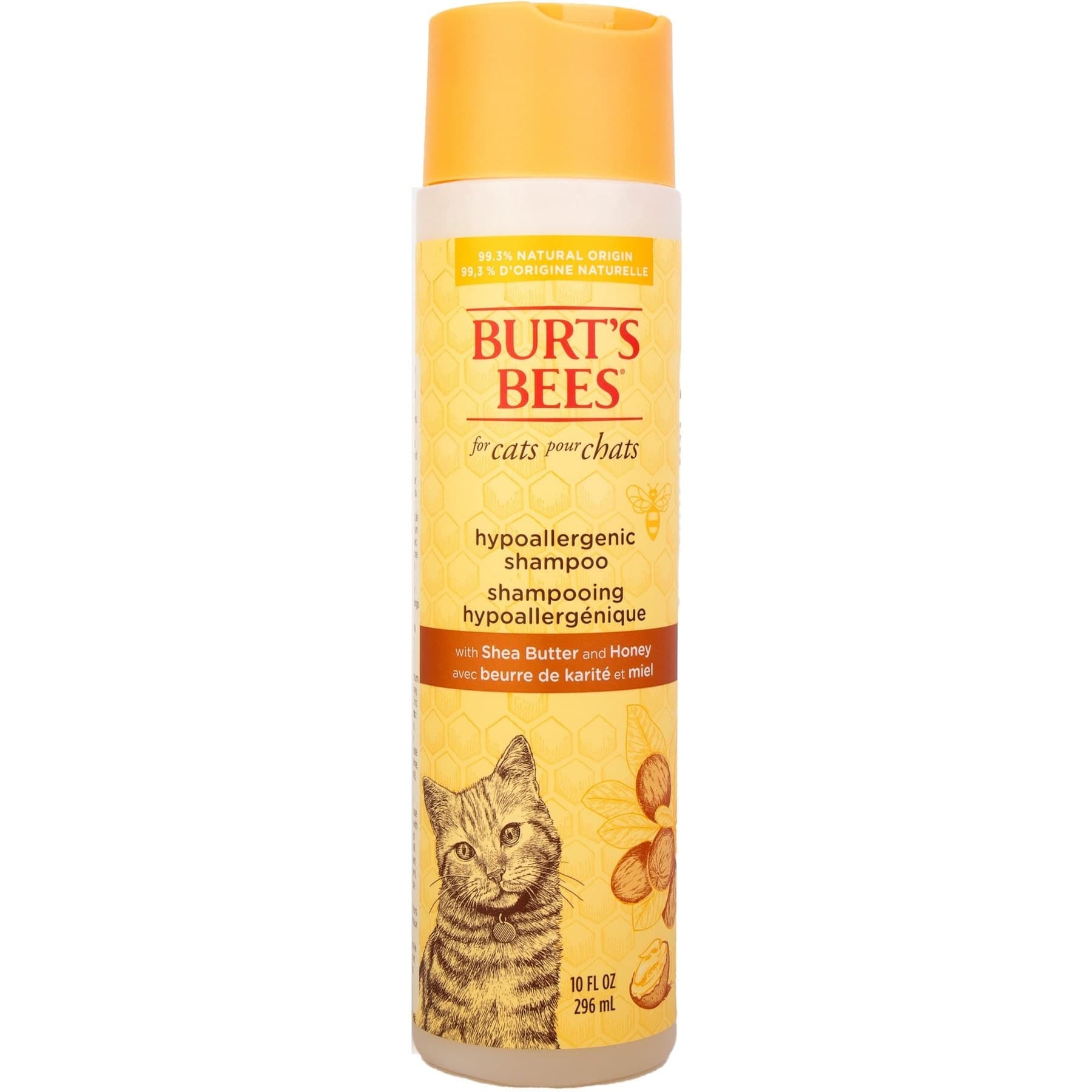
A rinse-off cat shampoo with shea butter and honey; follow the bottle age limits and directions.
Webvet may earn a commission when you click through to Chewy, at no extra cost to you.
| Cat | Bathing decision | What to check |
|---|---|---|
| Healthy short-haired cat | No routine schedule | Would brushing or a damp cloth remove ordinary dirt? |
| Long-haired cat | Clean when soiled | Check for tangles before wetting |
| Hairless cat | Individual skin-care routine | Oil buildup and irritation |
| Cat with outdoor access | Clean ordinary soiling when needed | Unknown contamination needs veterinary advice |
| Overweight or arthritic cat | Use the least stressful cleaning | Address mobility, pain, and repeated soiling |
| Senior cat with a new coat change | Arrange a health check | Reduced self-care can indicate illness |
| Medicated bathing plan | Follow prescribed timing | Exact product, contact time, and frequency |
| Young kitten | Avoid unnecessary immersion | Prevent chilling; dry immediately |
Two things justify a bath sooner: a vet's instruction, and a mess your cat cannot clean off itself.
If you find yourself bathing a cat more often than the table suggests because the coat keeps turning greasy again within days, the coat is telling you about the cat's health rather than its hygiene. A sudden greasy or unkempt coat in an older cat can point to hyperthyroidism, arthritis, or dental pain.
- No number of baths per day, week, month, or year suits every cat. Wash a healthy cat only when its coat is soiled or greasy, whether that happens once a year or never, or when a vet prescribes medicated baths. A monthly bath for a clean cat only risks dry skin.
- Breed rarely changes that. A Maine Coon or Russian Blue keeps its coat clean with brushing. Hairless cats such as the Sphynx are the exception, because oil builds up on bare skin, so most need a regular skin-care routine on an interval your vet helps set.
The brush-out before the bath
For a planned grooming bath, check the coat for mats and gently remove loose hair and easy tangles before wetting it. Leave tight mats to a professional. Nail trimming is a separate task, only if due and comfortably tolerated. Do not delay urgent decontamination instructions to finish grooming preparation.
Water turns loose shed hair into felted clumps, so a coat full of dead undercoat comes out of the sink worse than it went in. Brushing first also removes most of the loose hair that would otherwise be swallowed, which is why a regular brushing habit is central to hairball prevention in cats.
Which brush suits your cat depends on the coat:
- A slicker brush for a dense undercoat that traps shed hair.
- A fine-toothed comb for a long coat, worked all the way down to the skin.
- A rubber curry brush or a grooming glove for a short coat that dislikes bristles.
Check comfortable sections for loose hair and tangles before a planned bath. Stop if a comb catches; do not force a complete brush-out.
If a nail trim is due, do it separately and only if your cat accepts it comfortably. Shorter claws do not make a struggling bath safe. Our guide to trimming a cat's claws covers the technique; choosing a cat brush covers coat-appropriate tools.
- Bathing does not reduce shedding. A bath can rinse out some hair that brushing has already loosened, but how much a cat sheds depends on the season, its coat type, and its health, and regular brushing is what keeps loose hair under control.
Mats, and why water makes them worse
Do not use a routine bath to loosen mats. Arrange appropriate mat removal first, then decide whether bathing is needed. If the coat has potentially toxic contamination, contact your veterinarian or poison control immediately and follow their instructions.
A mat is felted hair packed against the skin. Wet it and the fibers tighten as they dry, so the mat shrinks, pulls harder on the skin underneath, and traps moisture against a patch that is already inflamed. Large mats hide sores, and a bath can turn an uncomfortable mat into an infected one.
Do not attack a mat with scissors either. Cat skin is thin and tents up into the base of a mat, which is how well-meaning owners cut through it.
- A small, loose tangle may separate gently with fingers and a wide-tooth comb. Stop if it pulls the skin, has a dense core, or causes discomfort.
- Tight, widespread, painful, or skin-adjacent mats need a cat-experienced groomer or veterinarian. Only the veterinary team decides whether medication or sedation is appropriate.
For the full method and its limits, see handling matted cat fur safely.
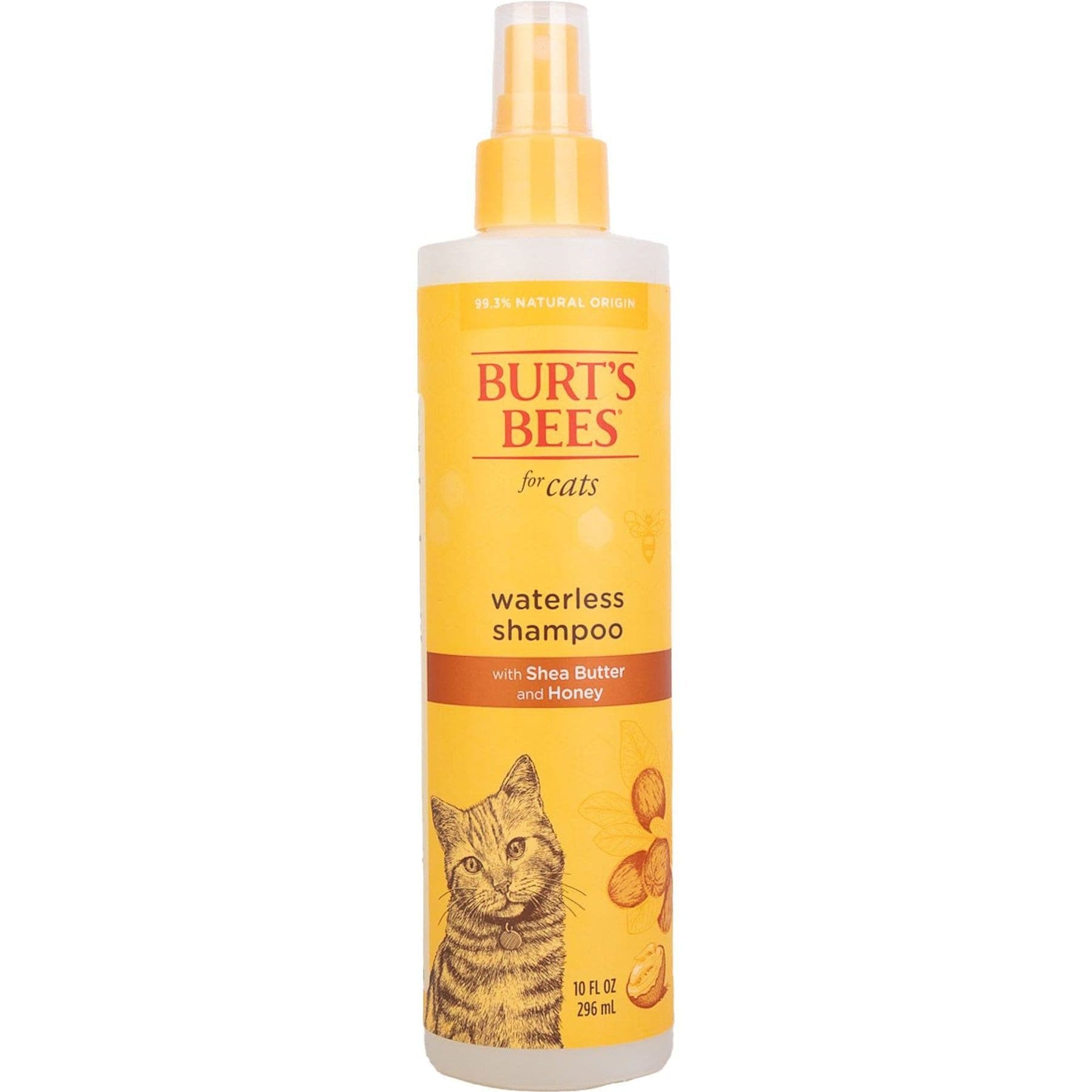
A no-rinse cat spray for ordinary dirt when a full bath is unnecessary. Follow the label.
Webvet may earn a commission when you click through to Chewy, at no extra cost to you.
What to wash a cat with, and what to never use
Use a shampoo formulated for cats. Nothing else, unless a vet has specifically told you otherwise. That rules out every substitute already in your house, including the ones that feel gentle.
Two facts drive the rule. Feline skin is thinner than ours and sits at a different pH, so products balanced for human skin are wrong for a cat before you even reach the fragrance and the actives.
The second fact matters more. A cat grooms itself dry, so whatever you fail to rinse out gets eaten, which turns a skin question into a swallowing question.
| Product | Verdict | Why |
|---|---|---|
| Cat shampoo, unscented or hypoallergenic | If appropriate for the individual cat | Check species, minimum age, skin, and directions; the label does not guarantee tolerance |
| Kitten shampoo | Only within exact label restrictions | A kitten label does not make a bath appropriate at every age or health status |
| Dish soap such as Dawn | Never for grooming | It is a degreaser. It strips sebum down to bare skin, damages the skin barrier, and does nothing about flea eggs or larvae. |
| Human shampoo or conditioner | Never | Wrong pH for feline skin, plus fragrance and actives never intended to be swallowed. |
| Baby shampoo | Never | Gentle enough for a human infant is not the same as correct for a cat. Same pH mismatch, same ingestion problem. |
| Dog shampoo | Never without a vet's approval | Cats are not small dogs. Several ingredients that are routine on dogs are not safe for feline metabolism. |
| Dog flea shampoo, dip, or spot-on | Never, under any circumstances | Permethrin and related pyrethroids are severely toxic to cats even in small amounts. |
| Anything containing tea tree oil or essential oils | Never | Concentrated essential oils, tea tree in particular, are toxic to cats through the skin and by ingestion. |
| Waterless cat foam and grooming wipes | Use only as directed for the cleaning need | Check age and application restrictions; not a substitute for toxic-exposure advice |
| Medicated shampoo with chlorhexidine or miconazole | Only on a vet's instruction | Effectiveness depends on contact time and repetition that a vet sets for the specific condition. |
Choosing a cat shampoo
For a plain, non-medicated bath the shortlist is simple: a shampoo labeled for cats, unscented or lightly scented, soap-free, with no tea tree or essential oils on the ingredient list, and no insecticide unless you have deliberately chosen a flea product.
Choose a cat-labeled formula suited to the reason for washing, and follow its directions. Oatmeal, aloe, or a hypoallergenic label does not guarantee that a product will suit a cat with irritated skin. Persistent itch needs veterinary advice.
Degreasing formulas exist for hairless breeds and for stud tail, the waxy buildup at the base of the tail. Anything medicated, such as a chlorhexidine or miconazole shampoo, is a treatment rather than a grooming choice, and it belongs to whoever diagnosed the skin problem. For the full method and its limits, see choosing a cat shampoo.
- Without cat shampoo, wash off ordinary dirt with plain warm water and save the full bath until you have some; human shampoo is no stand-in. Indoor cats and sensitive skin need no special formula: a mild, unscented cat shampoo suits most, and a nice-smelling one is no better, since cats lick it off.
How to bathe a cat that hates water
Do not force an unwilling cat through a bath. Stop and use spot cleaning for ordinary dirt if that can be done comfortably. When washing is medically necessary or shampoo cannot be safely rinsed away, contact your veterinary team for a handling plan. Breathing difficulty requires immediate emergency care.
Water, unfamiliar noise, slippery footing, and restraint can all distress a cat. Identify what your cat tolerates rather than assuming a single cause.
A stable surface and gradual exposure may help, but they do not guarantee that a cat will accept bathing. Our guide to reducing handling stress in cats explains how to respond to discomfort.
For the cat that genuinely will not accept water after all that, stop trying. A permanently frightened cat is a worse outcome than a slightly greasy one, and the waterless options below clean well enough for most real situations.
If bathing is medically necessary and handling is difficult, ask your veterinarian about a clinic visit or a prescribed handling plan. Medication such as gabapentin is a veterinary decision, with individual risks and instructions. Do not give it on your own.
- Getting a water-shy cat used to the sink in stages, as in the callout above, is called desensitization. It can take weeks. End every session before your cat gets scared, and if it starts to freak out at any stage, go back a step rather than pushing on to a full wash.
- Fear can make a cat suddenly smell bad, often like poop, because a frightened cat may empty its anal glands. The smell usually passes once the cat calms down and the area is cleaned. If it lingers, or your cat starts scooting, see your vet.
SponsoredVet care that's always there
Unlimited video calls and messaging with licensed vets for less than a typical vet visit. One membership covers up to five pets.
Use code Pets30
Plans start at $11/month · covers up to 5 pets
- Licensed vets in most states
- Rx for 150+ conditions
- 4.7 on Trustpilot
How to bathe a cat, step by step

Prepare shallow lukewarm water, a secure non-slip surface, suitable cat shampoo, and dry towels. Wet the body from the shoulders back, keeping the head dry, then wash, rinse thoroughly, and dry promptly. A medicated product's contact time comes from its label and your veterinarian, not a general bath-time target.

- Check for mats before bathing and gently prepare only the coat your cat comfortably allows. Do not force a claw trim as part of bath preparation.
- Prepare a secure non-slip surface and only shallow, comfortably warm water that stays below your cat's chest. Keep the head well clear and never leave the cat unattended.
- Put everything else within reach first. A plastic jug of the same water, two thick dry towels, cat shampoo already diluted per the label, and a damp cloth for the face. Once the cat is in the sink you have one free hand at most.
- Check the water on the inside of your wrist before it touches your cat. It should feel warm rather than hot. Keep the temperature comfortable and consistent while rinsing.
- Support your cat's body gently while helping it onto the non-slip surface. Do not press a forearm across the chest or continue if the cat struggles.
- Wet the body from the shoulders back with a cup or a gentle flow your cat tolerates. Keep water away from the ears, eyes, and nose. Clean the head separately with a damp cloth rather than putting cotton into the ears.
- Work the shampoo in with the lie of the coat, neck to tail. Diluted shampoo spreads far more easily than neat product. Do the back, sides, belly, legs, and tail, and skip the head completely.
- Rinse thoroughly according to the shampoo's directions, checking beneath the surface coat for remaining product. Do not use a squeaking coat as the endpoint. If safe rinsing becomes impossible, contact your veterinary team.
- Do the face and ears last, with a damp cloth and no soap. Wipe with the direction of the fur, clean the ear flaps only, and dry them straight away.
- Lift the cat into an open towel and start drying immediately. Do not put a wet cat down to shake off first.
- If your cat struggles, stop adding shampoo. Rinse remaining product if you can do so safely, then dry the cat. If safe rinsing is impossible, contact your veterinarian for help rather than leaving product in the coat.
- 1Prepare towels, suitable shampoo, shallow lukewarm water, and a non-slip surface.
- 2For a planned grooming bath, check the coat first and leave firm mats to a professional. Do not force a claw trim.
- 3Keep water and shampoo away from eyes, ears, and nose.
- 4Rinse as directed, removing shampoo thoroughly without forcing a struggling cat.
- 5Dry promptly. Safe handling, rinsing, and prescribed contact time matter more than a fixed total bath length.
Partial baths and what stays out of the water
- The easiest way to clean a cat is often a partial bath. Wash and rinse only the dirty hindquarters or paws, or give a sponge bath with a cloth dampened in diluted cat shampoo, wiping it off with clean, damp cloths until no shampoo remains. Then towel dry.
- Keep Epsom salt, table salt, baking soda, essential oils, and homemade remedies out of the water; warm water and a cat-labeled shampoo are the only things that belong in the bath. For itchy skin, have your vet look first, and use oatmeal only in a cat-labeled oatmeal shampoo, never as kitchen oats in the water.
- Swallowed Epsom salt can cause vomiting and diarrhea. If your cat drinks bath water containing it or falls into an Epsom salt bath, stop it licking its coat if you safely can and call your vet or animal poison control.
When to wait or skip a home bath
- After a spay, neuter, or other surgery, keep the incision dry until your vet clears it, often 10 to 14 days. A pregnant cat, a mother after giving birth or while nursing, and a cat in heat are better spared the stress of a bath; spot clean unless your vet says a bath is needed.
- Vaccines and oral dewormers do not change bath timing, but give a cat that seems sore or tired afterward a day or two before any bath. Spot-on parasite treatments and flea collars follow the bathing guidance on their label.
- Do not try to bathe a feral, semi-feral, or newly found stray cat at home. A frightened, unfamiliar cat can bite hard and may need checks for injuries, parasites, and a microchip, so take it to a vet clinic or a rescue group.
Bath risks and what is normal afterward
- A needed, well-run bath is not bad for a healthy adult cat, and deaths linked to bathing are rare. They usually involve a chilled kitten or frail senior, a cat with heart or breathing disease under heavy stress, a dog flea product containing permethrin, or a cat left alone in water.
- Shivering means your cat is cold and at risk of hypothermia, so keep towel-drying in a warm, draft-free room until it is dry and warm. A few sneezes usually mean water reached the nose; sneezing that continues or comes with discharge needs a vet.
- Panting, open-mouth breathing, or labored breathing after a bath is an emergency: stop handling and call a vet or emergency clinic right away. A cat that is still lethargic, weak, or refusing food the next day also needs a vet.
- Hiding, extra licking, or unusual affection for a few hours is a normal stress response, and giving a treat and a warm, quiet spot helps. A housemate may hiss at the bathed cat because it smells unfamiliar, so keep them apart until it is dry and reintroduce them calmly.
Safe restraint: how to hold a cat without getting scratched
Do not try to immobilize a cat for a bath; use gentle support only while your cat remains comfortable. A calm helper or a loosely folded towel outside the water may help, but neither should immobilize a struggling cat. Do not put a cat into a bathing bag or mesh restraint to force the bath; ask your veterinary team for a handling plan if ordinary support is not enough.
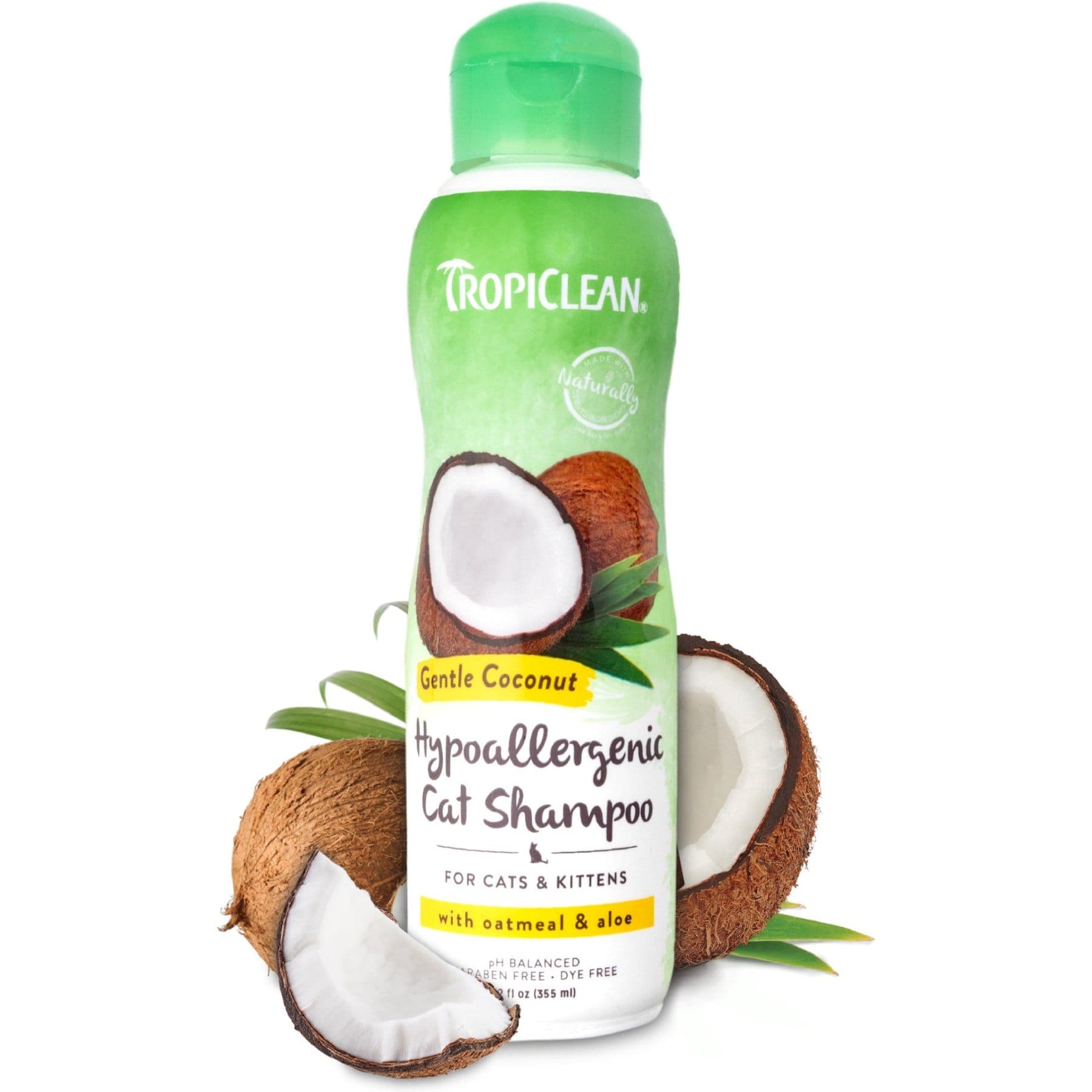
A cat-specific oatmeal-and-aloe cleansing formula. Check its 12-week minimum age.
Webvet may earn a commission when you click through to Chewy, at no extra cost to you.

- A cat that bites, scratches, or turns aggressive, even on its first bath, is too frightened for any hold, muzzle, or restraint to make bathing safe. Stop, let it go, and spot clean instead. If it needs washing, a cat-experienced groomer or your vet can plan the handling, and the vet may discuss sedation.
- If you do get scratched, wash the wound right away with soap and running water. See a doctor for a bite, a deep wound, spreading redness, swelling, or fever, because cat bites infect easily and scratches can pass on cat scratch disease.
The two-person hold
A calm helper can offer gentle support while the other person washes. Two people should not be used to overpower a cat that is struggling.
The holder stands beside the cat rather than in front of it, lays one flat hand across the shoulders with the cat facing away, and rests the other hand lightly against the chest behind the front legs. Steady contact, no squeezing, no lifting.
The towel wrap hold
For dry handling, a loosely folded towel may provide support if your cat already accepts it. It is not appropriate for every cat or a way to complete a resisted task.
For dry handling, a loosely folded towel may help a cat that already accepts it. Keep the head clear and avoid pressure on the chest. Unwrap and stop if the cat strains, struggles, or becomes more frightened.
Grips that make things worse, and that low-stress handling guidance from groups such as the American Association of Feline Practitioners has been steering people away from for years:
- Scruffing and lifting. Holding an adult cat by the scruff does not calm it, it takes away its ability to balance and raises panic.
- Holding a leg. A trapped limb is the one thing a cat fights hardest to free, and it is how claws find you.
- Pinning the cat flat. Pressure across the body escalates a struggle instead of ending it.
- Holding the cat against your chest or face. Everything a frightened cat does next lands on you.
How to dry a cat after a bath
Begin gentle drying promptly and keep your cat in a comfortably warm, draft-free room. Chilling is one hazard; distress, water inhalation, and overheating from drying equipment also require care.

A wet coat loses heat fast because the sebum that normally repels water is gone. Kittens, seniors, thin cats, hairless breeds, and cats with medical conditions can slide toward hypothermia far quicker than a healthy adult, and a shivering cat is already behind.
- Blot, do not rub. Press a thick dry towel against the coat and lift. Rubbing tangles a long coat into knots and irritates skin that has just been stripped of oil.
- Use a second dry towel. The first is soaked within a minute, and two or three dry towels beat one wet one.
- Shut the door and keep the room warm. No open windows, no fans, no cold hallway. The cat stays in that room until it is dry at the skin, not just at the surface.
- Blot a long coat gently with a towel and keep your cat warm. Avoid rubbing the hair into tangles. Once comfortable, check for loose snags with a suitable comb, stopping at any resistance. Never pull through wet mats.
- Air drying suits only a healthy short-coated adult cat in a warm room. Kittens, seniors, hairless breeds, long coats, and any cat that feels cold need active drying.
Hairdryers are the part people get wrong. Never a hot setting, never a standing or cage dryer, and never a cat left unattended with a dryer running.
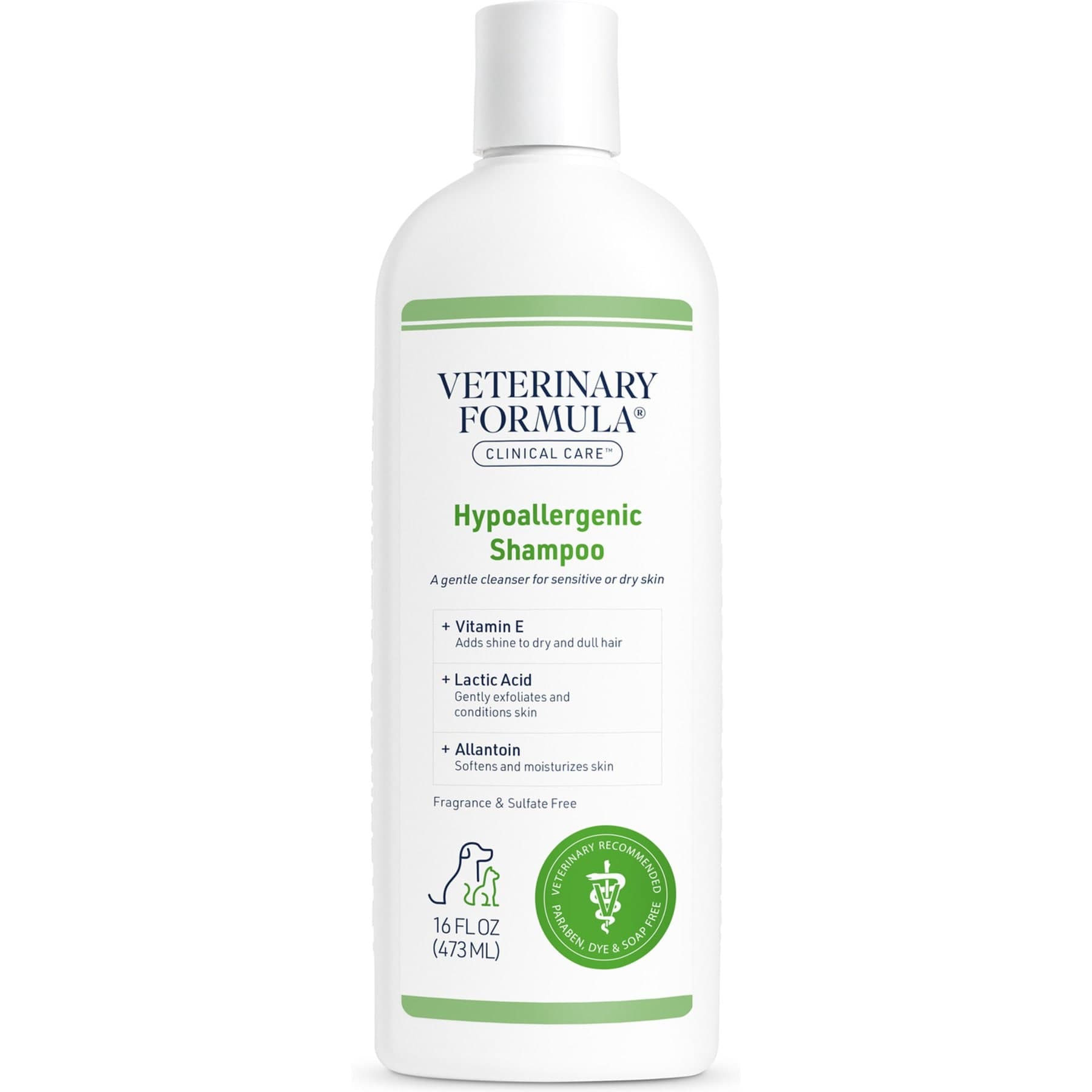
A fragrance-free dog-and-cat cleansing formula labeled for pets 12 weeks and older.
Webvet may earn a commission when you click through to Chewy, at no extra cost to you.
If your cat calmly accepts a dryer, use gentle unheated airflow, keep it moving, and avoid the face. Stop at discomfort. Towels are often the less stressful option, and a particular distance does not guarantee safe temperature.
If your cat seems cold, weak, unusually quiet, or continues shivering after the bath, contact your veterinarian promptly. Gently dry and keep the cat warm while arranging help. Collapse, limpness, or difficulty breathing needs emergency care.
- If your cat will not let you towel it, do not hold it down. Leave it in the warm, closed room with dry towels to lie on, blot it when it allows, and keep checking for shivering until its coat is dry.
Waterless shampoo, wipes, and other no-bath options
You can clean a cat without a bath or bathtub when the problem is a small patch of ordinary dirt. A warm damp cloth or a suitable cat-labeled wipe may be enough. Waterless products still have application instructions and limits; they are not substitutes for poison-control advice or prescribed rinsing.

What they do not do is degrease a whole coat or shift anything sticky, and that is the honest limit. Knowing which one fails where is what stops you wasting a stressful hour on the wrong tool.
| No-water method | What it lifts | What it leaves behind | When it fails |
|---|---|---|---|
| Waterless foam or mousse | Surface oil, dust, litter film, and light odor across the whole coat | Product residue if you do not work it in and towel it off properly | Heavy grease, thick mud, tree sap, or anything the cat must not swallow |
| Grooming wipes for cats | Localized dirt, dander, drool, paw marks, and rear-end tidying | Whole-coat oil, because a wipe dries out long before it covers a cat | Anything larger than a patch, or a coat that needs actual rinsing |
| Dry shampoo powder | Some surface oil, by absorption | Powder in the undercoat if it is not brushed out completely | Cats that resent brushing, cats with airway problems, and dark coats that go dusty |
| Warm damp cloth | Fresh wet or sticky messes on a small area, and litter on paws | Nothing chemical, but it does not remove grease of any kind | Dried-on material, whole-coat cleaning, and anything oily |
| Rinse-out bath | Ordinary soiling or prescribed treatment | Needs safe handling, rinsing, and drying | Toxic contamination needs immediate product-specific veterinary or poison advice |
Apply waterless foam only as its label directs. Products differ in the amount needed and whether they should be massaged through the coat, wiped away, or left to dry.
Do not saturate the coat or assume every product must reach the skin. Follow its directions and stop if the skin becomes irritated or your cat objects.
Two products to leave alone:
- Human dry shampoo, which is not formulated for an animal that will eat it off its own coat.
- Baby wipes, which commonly carry fragrance and preservatives never intended for feline skin or feline ingestion. Buy wipes labeled for cats instead.
A medicated bath follows your veterinarian's instructions. Toxic contamination needs immediate poison-control or veterinary advice, including which cleaning method to use. For ordinary dirt, use the least stressful method that removes the mess.
- A wipe sold as natural or homemade is not automatically safer, because plant extracts and essential oils get licked off the coat. Unscented, cat-labeled wipes used as directed suit most jobs, the simplest DIY version is a soft cloth dampened with warm water, and your vet can recommend a product for a skin problem.
- A wipe or a bath lowers the allergen on a cat's coat only briefly, because the cat keeps spreading more from its skin and saliva, so neither is a practical fix for allergies in your home.
- A cat dragging its bottom along the floor or carpet is scooting, a sign of anal gland trouble, stool stuck in the fur, worms, or itchy skin. Poop on floors or walls is a different problem, often diarrhea, a long coat trapping stool, or litter box trouble. Either one that keeps happening needs a vet.
Bathing kittens: when it is safe and when it is not
A kitten's first bath should be based on a genuine cleaning need and its health, not a birthday. Young kittens chill easily, particularly before four weeks when temperature regulation is immature. Use gentle spot cleaning for ordinary soiling and ask your veterinary team before a full bath.

Young kittens are especially vulnerable to chilling. Water inhalation and distress are also hazards, so never leave a kitten unattended in water. Keep necessary cleaning limited, dry the kitten promptly, and contact a veterinarian if it becomes cold, weak, unusually quiet, or has breathing difficulty.
- Under about four weeks, avoid unnecessary immersion. For ordinary soiling, gently spot clean and dry promptly; ask a veterinarian for instructions if a very young kitten is heavily soiled or contaminated.
- From about four to eight weeks, cleaning still depends on health and actual need. Seek veterinary advice before a full bath, prevent chilling, and begin drying promptly.
- Eight weeks is not a universal clearance for bathing or shampoo. Check the kitten's health, the product's exact minimum age, and the reason cleaning is needed.
- Fleas on a young kitten: never reach for a flea shampoo without veterinary direction. Flea products are dosed by weight and age, and young kittens are the group most often harmed when that goes wrong.
- Kittens start grooming themselves at about three to four weeks old and soon groom many times a day, with their mother doing much of the cleaning before that, so most kittens need no bath at any time in their first months.
- At about one month old, stick to spot cleaning unless your vet advises otherwise. Around two months old, a full bath is still a last resort, so ask your vet first. Chilling is the main way a bath can kill a young kitten, so keep any wetting brief and dry the kitten right away.
- A poop smell around a kitten's rear usually means stool is stuck in the fur, so clean it with a warm, damp cloth and dry the area. Diarrhea in a kitten needs a prompt vet call, since young kittens dehydrate quickly and parasites are a common cause.
Long-haired cats and Persians
A long coat changes three parts of the job. The pre-bath comb-out has to reach the skin rather than the surface, because a brush that glides over the top of a Persian's coat leaves a felted layer underneath that water will tighten.
Rinse thoroughly because shampoo can remain beneath longer hair. Blot gently with towels and keep your cat in a warm room until dry. Avoid pulling through damp tangles or forcing a frightened cat to tolerate a dryer.
Flat-faced breeds also need daily eye-area cleaning that a bath does not replace, because tear staining in the facial folds is a maintenance job rather than an occasional one. For the full method and its limits, see the long-haired cat grooming routine.
- Maine Coons and Norwegian Forest Cats have water-resistant double coats that are slow to soak through and slow to dry, so expect wetting, rinsing, and towel-drying to take longer. Ragdolls and Himalayans follow the same method, and like any long-haired cat they need a bath only when the coat is soiled.
Flea baths are a different job
Bathing a cat for fleas is a separate task with its own product rules, and it is not covered by the method on this page.
The short version: never a dog flea product, never a homemade remedy, and a bath alone will not clear an infestation, because the eggs and larvae are in your house rather than on your cat.
Our guide to flea shampoo for cats covers which products are safe, how they fit alongside a vet-recommended preventive, and what a flea bath can and cannot achieve.
- A bath drowns and washes off many adult fleas but leaves no lasting protection against the fleas still hatching in your home, so a vet-recommended flea treatment does the real work. Time any bath around a spot-on by its label, often about 48 hours before or after unless the label says otherwise.
- For a newborn or young kitten with fleas, call your vet first, comb fleas out dry with a fine flea comb, keep it warm, and bathe only on your vet's direction. Dish soap such as Dawn is no flea treatment; a vet or poison control may direct it only for washing off a toxic substance.
Bathing a cat that smells, and when the smell means something else
Before bathing a stinky cat, identify the source of the smell. Ordinary dirt may respond to gentle spot cleaning or a cat-shampoo bath. A sudden foul odor, painful swelling, discharge, or smell that returns quickly needs veterinary assessment instead of repeated washing.
Observe where the odor seems to come from without putting your face near a painful or frightened cat. Do not force an examination; an unclear or persistent odor warrants veterinary assessment.
- Mouth: the single most common source. Bad breath in a cat usually means dental disease, and the fix is a dental exam plus a home routine, which our guide to cat teeth cleaning covers.
- If your cat smells of poop, check for fresh soiling around the rear without pulling on attached waste. Gently clean a small fresh mess and dry the fur. Repeated soiling, diarrhea, painful skin, or material stuck tightly to the coat needs veterinary advice.
- Ears: a sweet, musty, or yeasty smell with head shaking, scratching, or dark discharge points to an ear infection or mites.
- Skin and coat: a greasy, musty odor across the body often means yeast overgrowth, commonly Malassezia, or another skin condition. This is where how vets diagnose cat skin problems is the useful next step, not the sink.
- A sudden foul smell with a warm, swollen, or painful patch could be an abscess or another infected lesion. Arrange a veterinary examination the same day rather than trying to wash or squeeze it.
- Greasy, waxy buildup at the tail base can have several causes, including an overactive tail gland sometimes called stud tail. Your veterinarian can identify the cause and advise on cleaning or treatment.
Cleaning can remove ordinary dirt and its odor. If the smell persists or returns quickly, investigate the source rather than repeatedly bathing the cat.
Reference material from VCA's pet owner library treats a persistent odor as a diagnostic sign rather than a grooming failure, and that is the right way to read it. Stubborn skin cases often end up with a veterinary dermatologist rather than a groomer.
- A smell like fish or poop from the rear end, with no mess in the fur, often comes from the anal glands. A cat that also scoots, licks under its tail, or keeps smelling that way needs a vet, who can empty or treat the glands.
- A sudden smell of rot or death is a same-day vet problem, not a bath problem. It can come from an infected wound, a rotten tooth, or maggots in soiled fur, and a stray with that smell needs a vet or rescue group rather than a bath at home.
- To make a cat smell better, fix the source rather than masking it. Brushing and a damp cloth lift ordinary dirt and litter dust, while perfume, scented sprays, and essential oils do not belong on a cat, which licks off whatever goes on its coat.
Where a bath fits in your cat grooming routine
At the very bottom of it, and rarely. The routine that keeps a cat clean is brushing on a schedule, claw trims every few weeks, a weekly look at the ears and skin, and a dental habit. A bath is the exception for when something has gone wrong.

Brushing does most of the work a bath gets credit for. It lifts dead hair, spreads sebum evenly down the coat, catches mats while they are still small, and cuts down how much hair the cat swallows, which is the connection to hairballs in cats that owners most often miss.
For many healthy cats, routine baths are unnecessary. Soiling, coat type, mobility, and diagnosed skin conditions can change that answer. For the full method and its limits, see the complete cat grooming routine.
- Healthy cats groom themselves several times a day, and a cat that settles down to groom in front of you is usually relaxed in your company. Cats also groom when stressed, but grooming that leaves bald patches, scabs, or sore skin is overgrooming, and a vet should rule out itch, parasites, or pain first.
Cat bathing questions
Frequently Asked Questions
Can I wash my cat with Dawn dish soap?
No, not as a grooming shampoo. Dish soap is engineered to strip grease, so it strips the coat's natural oils down to bare skin and leaves the skin barrier compromised, which shows up afterward as dry, flaky, itchy skin.
It also does nothing useful against fleas, because it does not kill flea eggs or larvae and leaves no residual protection. The one exception is decontamination after a toxic substance, where a vet or a poison control center may tell you to use liquid dish soap. That is treatment on veterinary instruction, not grooming.
Can I use human shampoo or baby shampoo on a cat?
No. Human skin is more acidic than feline skin, so shampoos balanced for us are the wrong skin pH for a cat, and they carry fragrances, preservatives, and actives never designed to be swallowed.
Baby shampoo trips people up, because gentle enough for a human infant reads as safe for anything small. The pH mismatch is identical, and a cat will groom the residue off its coat and eat it. Use a cat-formulated shampoo, unscented, with no tea tree or essential oils on the label.
Is it cruel to bathe a cat?
Necessary cleaning can be appropriate when it is done safely. Toxic contamination needs immediate veterinary or poison-control instructions; medical washing follows the prescribed plan. Difficulty reaching the coat may be managed with spot cleaning or professional help rather than automatically requiring a bath.
Do not push through flattened ears, growling, struggling, or attempts to escape. Stop and seek a handling plan if washing is necessary. Open-mouth or labored breathing requires immediate veterinary attention.
Can I blow dry my cat after a bath?
Only if your cat calmly accepts it. Use gentle unheated airflow, keep the dryer moving and away from the face, and stop at distress. Towels in a comfortably warm room are often a better choice.
Never use a hot setting, never use a standing or cage dryer, and never leave a cat unattended with a dryer running, because cats overheat quickly and cannot move away from the source. For most cats, two or three thick towels in a warm closed room is the faster and calmer option.
Can a vet sedate my cat for a bath?
Sometimes, and that conversation belongs with your vet rather than your medicine cabinet. Prescription gabapentin is commonly dispensed before stressful handling in cats and is dosed by the vet for the individual animal, and our article on gabapentin for cats explains how it is used.
Do not give a human sedative, sleep aid, or antihistamine for bathing unless your veterinarian specifically prescribes or directs it for your cat. Ask whether spot cleaning, a clinic visit, or another approach can meet the cleaning need safely.
Why does my cat still smell after a bath?
Because the smell is not coming from dirt. Check the mouth first, since dental disease is the most common source of odor in cats, then the ears, the rear end, and the skin itself.
A returning coat odor may reflect a skin condition, and a foul-smelling swelling could be an abscess. A second bath cannot establish the cause. Book a veterinary assessment, especially with pain, discharge, appetite change, or reduced grooming.

Editor
The Webvet Editorial Team is the in-house group of pet-care editors and writers behind Webvet, operated by Smart Pet Collective. The team researches, writes, and maintains Webvet's pet health, behavior, and medication content. Every article follows a defined editorial process: research from reputable veterinary and scientific sources, careful drafting, mandatory review of medical content by a credentialed veterinarian, and dated publication. Health and medication articles are medically reviewed by a licensed veterinary professional before they go live and are kept current over time.


