Gabapentin for Dogs: Uses, Dosage by Weight, and Side Effects
Gabapentin treats pain, seizures, and anxiety in dogs. Get the dosage chart by weight and indication, expected side effects, and the liquid-formulation warning.

BVMS MRCVS
Medically reviewed by Dr. Pippa Elliott, BVMS MRCVS · Last reviewed

Drug facts
Gabapentin
Gabapentin is an anticonvulsant and neuropathic pain medication used in dogs and cats for anxiety, behavioral problems, and chronic pain management.
Treats
 $65 · no membership
Need a prescription for Gabapentin?
A licensed vet can assess your pet over video and prescribe Gabapentin online when it's appropriate.
 Talk to a vet
- Licensed vets
- All 50 states
- same-day Rx
Webvet may earn a commission if you book.
Gabapentin for dogs is a prescription medication veterinarians use for neuropathic and chronic pain, seizure support, and situational anxiety. The dose changes substantially with the reason it was prescribed, so a by-weight chart can explain a prescription but cannot safely create one. Confirm the indication, milligrams per dose, frequency, formulation, and stopping plan with your veterinarian.
Gabapentin Dosage for Dogs by Weight
When considering gabapentin for dogs, use the veterinarian-confirmed product and plan for that animal. Cited veterinary guidance reports 5 to 15 mg/kg every 12 hours for chronic or neuropathic pain and 10 to 30 mg/kg for behavioral or anxiety support. These are broad reference ranges, not interchangeable instructions. Seizure dosing varies and must be set by the veterinarian managing the anticonvulsant plan.
| Dog's weight | Pain reference range at 5 to 15 mg/kg | Anxiety reference range at 10 to 30 mg/kg | Seizure support |
|---|---|---|---|
| 10 lb, about 4.5 kg | About 23 to 68 mg per dose | About 45 to 136 mg per dose | Veterinarian-specific; no universal chart dose |
| 20 lb, about 9.1 kg | About 45 to 136 mg per dose | About 91 to 273 mg per dose | Veterinarian-specific; no universal chart dose |
| 30 lb, about 13.6 kg | About 68 to 204 mg per dose | About 136 to 409 mg per dose | Veterinarian-specific; no universal chart dose |
| 40 lb, about 18.1 kg | About 91 to 272 mg per dose | About 181 to 544 mg per dose | Veterinarian-specific; no universal chart dose |
| 50 lb, about 22.7 kg | About 114 to 341 mg per dose | About 227 to 681 mg per dose | Veterinarian-specific; no universal chart dose |
| 60 lb, about 27.2 kg | About 136 to 408 mg per dose | About 272 to 816 mg per dose | Veterinarian-specific; no universal chart dose |
| 80 lb, about 36.3 kg | About 182 to 545 mg per dose | About 363 to 1,089 mg per dose | Veterinarian-specific; no universal chart dose |
| 100 lb, about 45.4 kg | About 227 to 681 mg per dose | About 454 to 1,362 mg per dose | Veterinarian-specific; no universal chart dose |
The totals are direct calculations from the supported mg/kg ranges and are deliberately shown as ranges. They do not account for kidney function, age, other sedating drugs, previous response, formulation, or the event being treated. Never round a calculated number to a 100 mg, 300 mg, or 400 mg capsule on your own.

Dose by indication matters
Pain, anxiety, and seizure support are different treatment decisions. For pain, veterinarians often start conservatively and adjust based on comfort, sedation, gait, and kidney function. Gabapentin may be added to an NSAID or another analgesic because it targets a different part of the pain pathway.
For a stressful event, the veterinarian may prescribe a dose timed before travel, grooming, a veterinary visit, fireworks, or another predictable trigger. The trial dose is often given on a calm day so the owner can observe sleepiness, wobbliness, stomach effects, and how long the response lasts before the actual event.
For seizure support, gabapentin is generally an adjunct rather than a replacement for an established anticonvulsant without specialist direction. The schedule matters because abrupt changes can destabilize control. This is why the seizure row does not pretend one by-weight range fits every patient.
Capsules, tablets, and compounded liquid
Gabapentin is available in capsules, tablets, and oral liquids. Common capsule strengths include 100 mg, 300 mg, and 400 mg, while compounded liquids can provide smaller measured doses. Extended-release human products should not be substituted for the immediate-release product a veterinarian prescribed.
Milligrams and milliliters are not interchangeable. A liquid dose requires the concentration on the label and a pharmacy syringe. If the pharmacy changes the concentration between refills, the volume can change even when the milligrams stay the same. Confirm both numbers before the first dose from a new bottle.
Do not open a capsule, crush a tablet, or mix the full dose into a meal unless the veterinarian or pharmacist confirms that the formulation can be altered. If the dog refuses the meal, it becomes impossible to know how much medicine was swallowed.
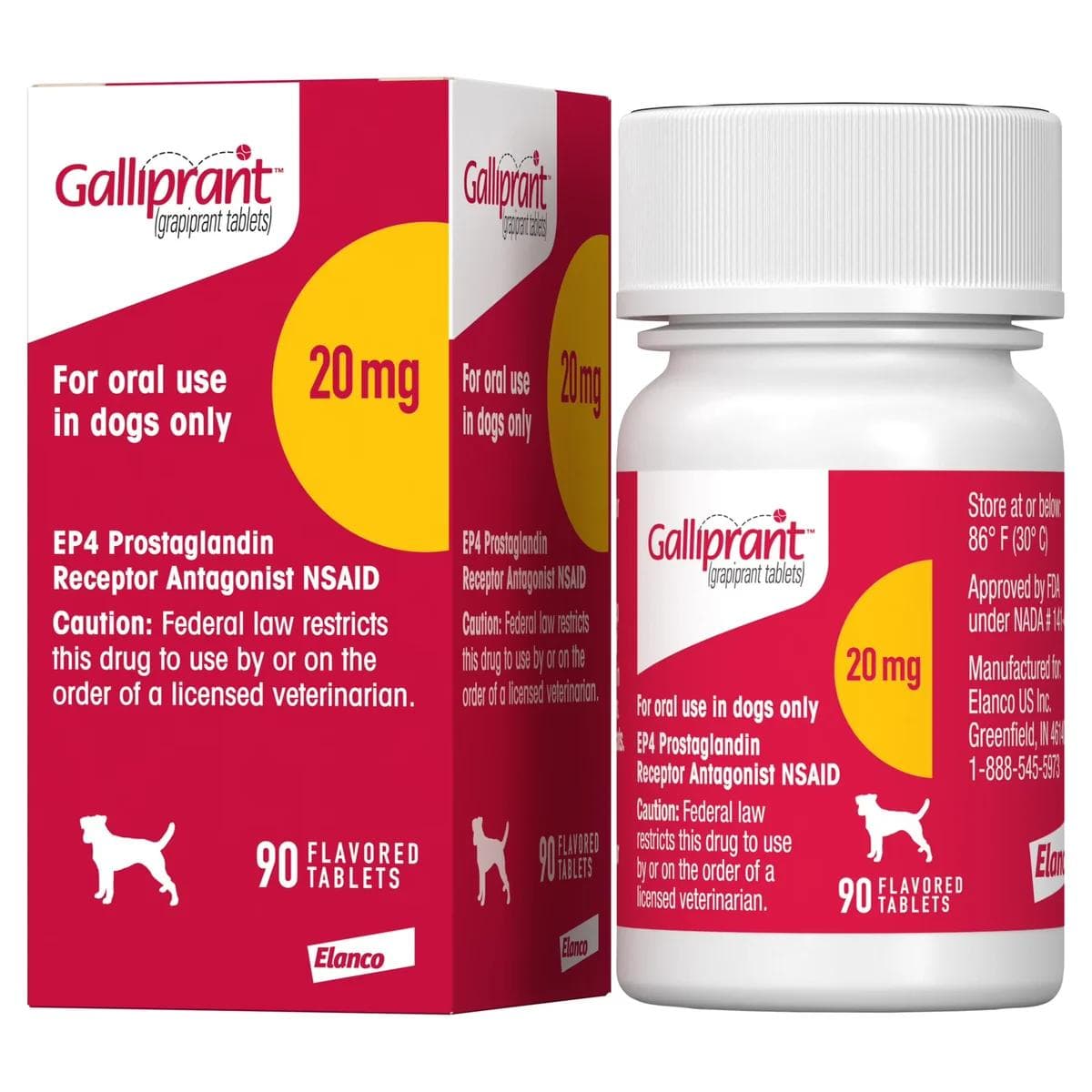
A prescription anti-inflammatory made specifically for arthritis pain in dogs. It needs a vet's diagnosis and script, and it is precisely why you never reach into your own medicine cabinet: human pain relievers are toxic to dogs.
Webvet may earn a commission when you click through to Chewy, at no extra cost to you.
What Gabapentin Does for Dogs
Gabapentin was developed as a chemical relative of gamma-aminobutyric acid, or GABA, but it does not work by directly activating GABA receptors. It binds to the alpha-2-delta subunit of voltage-gated calcium channels in the nervous system. That action reduces the release of excitatory neurotransmitters involved in pain signaling and nervous-system arousal.
In practical terms, gabapentin can dampen abnormal nerve pain, lower reactivity during a stressful event, and contribute to seizure control. It is not an NSAID, so it does not directly reduce joint inflammation. It is not an opioid, and it does not create the same form of analgesia or legal controls. It can be sedating, but sedation is an effect rather than proof that anxiety or pain has been treated well.
The three main veterinary uses are:
- Neuropathic and chronic pain: pain involving irritated or damaged nerves, cancer discomfort, osteoarthritis plans, and persistent pain after surgery.
- Situational anxiety and fear: travel, handling, veterinary visits, grooming, noise events, and other predictable stressors.
- Seizure support: an add-on medicine in selected dogs whose primary anticonvulsant plan needs another mechanism.
Gabapentin is prescription only. The veterinarian should connect the drug to a specific goal, such as easier movement, less allodynia, safer handling, or fewer breakthrough seizures. Without a measurable goal, sleepiness can be mistaken for success.
Gabapentin for pain
Neuropathic pain can feel burning, shooting, electric, or abnormally sensitive in people, but dogs cannot describe those sensations. Veterinarians infer it from the diagnosis and behavior, including flinching from light touch, guarding, persistent pain after tissue healing, spinal disease, nerve injury, or cancer.
For osteoarthritis, gabapentin is usually part of a multimodal plan rather than a substitute for weight management, controlled exercise, rehabilitation, or an anti-inflammatory medicine when one is safe. If your veterinarian recommends a joint supplement, Nutramax Cosequin Joint Health is one product to discuss; it does not replace pain treatment. A dog that sleeps more but still struggles to stand has not necessarily achieved useful pain control.
Look for functional improvement:
- rising and lying down with less hesitation
- walking with a steadier, more comfortable stride
- tolerating gentle touch around a previously painful area
- sleeping without repeated repositioning from discomfort
- returning to veterinarian-approved activity
- needing fewer interruption behaviors such as pacing, panting, or guarding
Pain relief can be noticed after early doses, but chronic pain plans often require gradual adjustment. Do not increase the dose because the first capsule did not transform mobility. The veterinarian needs to distinguish inadequate dose, wrong pain mechanism, disease progression, and dose-limiting sedation.

The number-one veterinarian-recommended joint supplement brand. Glucosamine, chondroitin, and MSM support cartilage and cushion the joints, easing the stiffness and hind-end weakness that can leave an older or arthritic dog trembling.
Webvet may earn a commission when you click through to Chewy, at no extra cost to you.
Gabapentin after surgery
Some surgical plans use gabapentin before or after a procedure to reduce nervous-system pain signaling and complement other analgesics. It should be given exactly as listed on the discharge instructions. Other prescribed medicines may deliberately add sedation, so the combined effect needs monitoring.
A recovering dog should be comfortable enough to rest, eat, eliminate, and complete controlled movement. Call the surgical team for uncontrolled panting, crying, guarding, refusal to move, repeated vomiting, inability to urinate, incision problems, or profound sedation. An extra gabapentin dose is not a general rescue plan.
Gabapentin for Anxiety, Vet Visits, and Sleep
Gabapentin can reduce fear and arousal for predictable events, particularly when pain or handling sensitivity contributes to distress. Veterinarians may use it before a clinic visit, travel, grooming, a procedure, or a known noise event. It may be prescribed alone or with another behavior medication after considering the dog's health and previous response.

The goal is not to make a dog unconscious or unable to respond. A useful event plan lowers panic enough for safer transport, examination, or recovery while preserving breathing, circulation, and reasonable coordination. A dog that is extremely weak, cannot stand, or is difficult to wake has exceeded the intended effect and needs veterinary advice.
Use a trial dose before the event
When a veterinarian prescribes event-based gabapentin, ask whether to test the dose on a quiet day. A trial reveals how quickly sleepiness begins, whether the dog becomes wobbly, how long the effect lasts, and whether excitement overcomes the calming effect. Record the dose time, meal time, behavior change, gait, and recovery.
Cited veterinary guidance reports that effects commonly begin within 30 to 90 minutes and can last about 7 to 8 hours. Individual response varies, so the clinic's event timing outranks a general clock. Do not redose early because the dog still looks alert while adrenaline is high.
Helpful preparation still matters:
- use a secure, familiar carrier or restraint setup
- reduce rushing and last-minute handling
- keep the environment quiet before departure
- tell the clinic exactly when the medicine was given
- prevent stairs, jumping, and slippery-floor falls if wobbliness appears
- ask the clinic what level of sedation should trigger a call
Gabapentin can be part of a fear-free plan, but medication does not replace behavior modification for recurring anxiety. Predictable routines, desensitization, environmental changes, and treatment of pain may determine whether the long-term result improves.
Is gabapentin a sedative?
Gabapentin is not classified solely as a sedative, yet sleepiness is one of its most common effects. For an anxious dog, that can be useful when paired with reduced fear. For a dog taking it for pain, excessive sleepiness can limit activity and hide whether mobility actually improved.
Judge the response by both arousal and function. A calmer dog that can walk safely, recognize family, eat, and recover on the expected timeline is different from a dog that falls, seems confused, or cannot stay awake. The second pattern needs a call before another dose.
Gabapentin Side Effects and Safe Stopping

Sedation and ataxia are the most familiar gabapentin side effects in dogs. Ataxia means poor coordination and may look like swaying, crossing the feet, stumbling, slipping, or walking as if intoxicated. Mild effects can improve as the dog adapts or after the veterinarian adjusts the dose, but owners should not assume every degree of wobbliness is acceptable.
- 1Expected effects can include sleepiness and mild wobbliness, especially after starting or increasing the dose.
- 2Call the veterinarian for repeated falls, inability to walk safely, agitation, persistent vomiting, marked diarrhea, or a major behavior change.
- 3Seek urgent care for collapse, trouble breathing, seizures, extreme weakness, or inability to wake normally.
- 4Never stop long-term gabapentin abruptly, especially when it supports seizure control.
- 5Ask for a tapering schedule before reducing or ending regular treatment.

Wobbly or worrying?
| What you observe | How to interpret it | What to do |
|---|---|---|
| Mild sleepiness but normal breathing, eating, and safe walking | Common early effect | Restrict stairs and jumping; report if persistent or troublesome |
| Slight unsteadiness that resolves on the expected timeline | Possible dose-related ataxia | Use nonslip footing and call before the next dose if it is more than mild |
| Repeated falling, inability to stand, or severe disorientation | More than expected wobbliness | Contact a veterinarian urgently and do not give another dose until advised |
| Vomiting, diarrhea, refusal to eat, or unusual agitation | Possible adverse effect or another illness | Call the prescribing clinic the same day |
| Seizure, collapse, breathing difficulty, or extreme unresponsiveness | Emergency | Seek emergency veterinary care now |
Older dogs and dogs with mobility disease can be injured by even modest ataxia. Place rugs on slick floors, block stairs, use a harness for necessary trips outside, and keep the dog away from pools or elevated furniture. These precautions reduce fall risk while the veterinary team evaluates the dose.
Can gabapentin kill a dog?
Gabapentin is generally considered to have a wide safety margin when prescribed appropriately, but no medicine is harmless. A large overdose, a xylitol-containing liquid, severe kidney impairment, or combined sedation from other drugs can create a serious situation. A dog that eats a bottle or receives the wrong liquid concentration needs immediate professional triage even if it looks normal.
Call with the exact product, formulation, strength, amount missing, time, body weight, kidney history, and all other medicines. Do not induce vomiting or give a home antidote unless a veterinarian or poison professional directs it. Extended-release products and combination human prescriptions require special attention because the label may not represent ordinary veterinary gabapentin exposure.
Kidney disease and older dogs
Gabapentin is cleared largely through the kidneys. Reduced kidney function can prolong its effects and increase sedation or ataxia at a dose another dog tolerates. Veterinarians may reduce the amount, extend the interval, or monitor more closely in a dog with kidney disease.
Age itself does not ban gabapentin, and many senior dogs benefit from it. The challenge is separating pain relief from medication-related weakness. Tracking gait, appetite, alertness, elimination, and one repeatable mobility task gives the clinic better information than reporting only that the dog seems "better" or "sleepier."
Do not stop gabapentin abruptly
Dogs taking gabapentin regularly, particularly for seizure support, should not stop suddenly unless an emergency veterinarian directs it. Abrupt withdrawal can allow pain to rebound and can increase seizure risk in susceptible patients. A gradual taper lets the nervous system and treatment plan adjust.
Ask for a written taper showing which dose changes occur on which days. Do not improvise by skipping random doses, opening capsules to estimate fractions, or alternating strengths without pharmacy guidance. If adverse effects force an urgent change, call so the veterinarian can balance withdrawal risk against continued exposure.

Third-party-tested omega-3 softgels (EPA and DHA) that support skin, coat, and joint health in dogs. Fish oil is one of the first things many vets suggest for a dull, dry, or flaky coat.
Webvet may earn a commission when you click through to Chewy, at no extra cost to you.
Giving Gabapentin Safely at Home
Gabapentin can usually be given with or without food. A small meal may help if the dog develops stomach upset, but the prescription instructions should control. If the dog vomits after a dose, do not automatically repeat it.
Use a medication log when more than one person shares care. Write the date, time, milligrams, formulation, and initials of the person who gave it. This simple record prevents duplicate doses and helps the veterinarian connect effects to timing.
Storage matters because capsules and flavored compounds can be attractive or accessible to pets. Keep the original labeled container in a closed cabinet, and store compounded liquid exactly as the pharmacy directs. Do not transfer capsules into an unlabeled jar where strength and expiration information can be lost.
What to ask at the pharmacy
- Is this immediate-release or extended-release gabapentin?
- What is the strength of each capsule or tablet?
- For liquid, how many milligrams are in each milliliter?
- Does the liquid contain xylitol or another sweetener?
- Can this capsule be opened or this tablet be divided?
- How should the product be stored, and when does it expire?
- What measuring device matches the prescribed volume?
When a refill looks, smells, or measures differently, compare the new label with the old one before dosing. A changed manufacturer may look different without changing strength, while a changed compounded concentration can change the volume dramatically. The pharmacist can resolve the difference before an error occurs.
The First Week on Gabapentin
The beginning of treatment is an observation period, not a race to the top of a dose range. The veterinarian may intentionally start below the eventual target to learn how the dog handles sedation and coordination. Changing the dose too quickly can make it hard to separate a useful response from a transient side effect.
Before the first dose, record a short baseline. For pain, note how the dog rises, walks, settles, sleeps, and reacts to gentle touch. For anxiety, note panting, pacing, escape behavior, ability to take food, and recovery after the trigger. For seizure support, keep the existing seizure log and do not change another anticonvulsant unless directed.
| Time point | What to record | What the record helps answer |
|---|---|---|
| Before the first dose | Appetite, alertness, gait, pain behavior, current medicines | What was already present before gabapentin |
| After the first dose | Dose time, food, onset of sleepiness, gait, vomiting, behavior | How quickly effects begin and whether the formulation is tolerated |
| At each scheduled dose | Milligrams, time, caregiver initials, missed or vomited dose | Whether an unexpected effect could reflect a duplicate or timing error |
| After several comparable days | Functional benefit, sedation pattern, falls, appetite, stool | Whether the dose produces more useful benefit than burden |
| Before a recheck | Refill history, videos, log summary, remaining questions | Whether to continue, adjust, taper, or investigate another cause |
What early adaptation can look like
Some dogs are sleepier or mildly less coordinated after early doses and become less affected as their bodies adapt. That possibility does not make severe wobbliness acceptable. The veterinarian needs to know whether the dog can stand, walk, eat, eliminate, and respond normally.
Use plain descriptions instead of labels. "Sleepy" might mean resting but easy to wake, or it might mean unable to hold the head up. "Wobbly" might mean one slip on a smooth floor, or it might mean repeated falls. Video taken safely at home can help the clinic judge the difference.
Call before the next dose when the effect interferes with basic function. A dose reduction, longer interval, formulation change, or review of other sedating medicines may be appropriate, but each option changes the treatment plan and should be directed.
Why the calculated chart can differ from the prescription
A veterinarian may prescribe a number that does not sit at the center of the chart. Reasons can include a conservative first dose, reduced kidney clearance, another sedating drug, a previous response, the exact capsule strengths available, or an indication whose protocol differs from the general reference range.
The safe response to a mismatch is a question, not self-correction. Ask:
- Which indication is this dose treating?
- Is the prescription a starting dose, a target dose, or an event-only dose?
- How often should it be given, and how exact must the spacing be?
- Which effects are expected, and which should delay the next dose?
- When should the dose be reviewed?
- If treatment ends, what taper is required?
Those questions turn the chart into a verification tool. They also catch common misunderstandings, such as reading the total daily amount as the amount per dose or confusing liquid milliliters with milligrams.
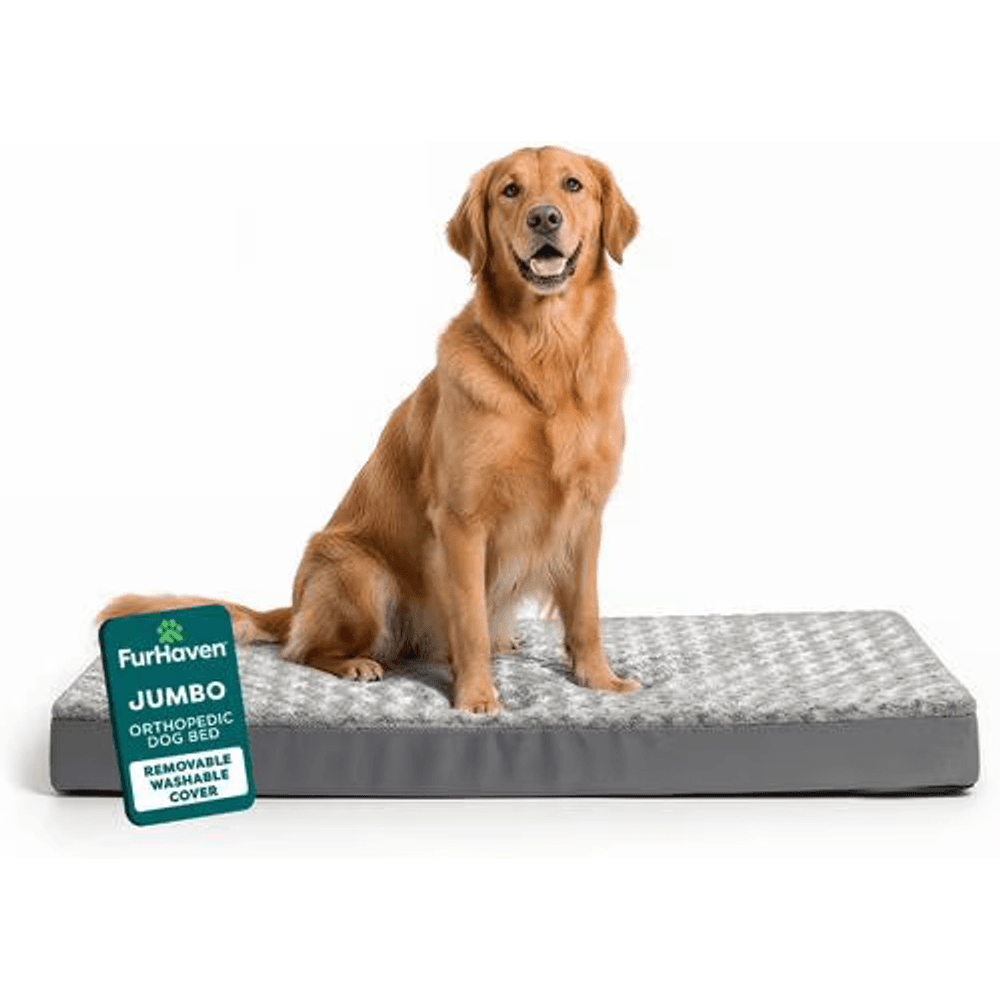
A plush orthopedic foam mattress that cushions aging joints and pressure points, giving a stiff or trembling senior dog warm, supportive rest.
Webvet may earn a commission when you click through to Chewy, at no extra cost to you.
When Gabapentin Does Not Seem to Work
An apparent treatment failure can have several explanations. The pain may not be primarily neuropathic, the anxiety trigger may overwhelm the event plan, the dose may be limited by sedation, the timing may miss the event, or the underlying disease may have changed. Simply giving more medicine can worsen coordination without solving the problem.
For pain, review function rather than only vocalization. Dogs can be quiet while still avoiding movement, and some vocalize from anxiety rather than pain. A useful reassessment considers gait, range of motion, neurologic findings, joint disease, spine disease, cancer, incision healing, and whether anti-inflammatory or disease-specific treatment is also needed.
For anxiety, the veterinarian asks whether fear actually decreased or whether the dog was only more tired. A dog that lies still but remains hypervigilant, refuses food, startles intensely, or takes hours to recover may need a different timing plan, another medicine, or behavior work rather than a higher gabapentin dose.
- no measurable functional pain improvement after the agreed trial
- sedation that prevents safe movement or normal daily activity
- anxiety that remains intense despite correct event timing
- a shorter effect window than the veterinarian expected
- new pain, weakness, behavior change, or neurologic signs
- repeated need for an unscheduled extra dose
The veterinarian may choose to adjust gabapentin, investigate the diagnosis, change another drug, add rehabilitation or behavior treatment, or taper it. A structured recheck avoids turning a broad reference range into trial-and-error dosing at home.
Special Safety Situations
A dog taking several sedating medicines
Gabapentin is often one piece of a larger plan. Trazodone, opioid-class pain medicines, anticonvulsants, anesthesia drugs, and other agents can add to sleepiness and poor coordination. The combined plan may be appropriate, but the observation threshold changes.
Ask the veterinarian which medicine is scheduled, which is given only as needed, and what to do if the dog is already very sleepy when the next dose is due. Keep one complete medication list and use one log rather than separate notes for each drug.
A dog with poor balance before treatment
Spinal disease, arthritis, vestibular disease, weakness, and neurologic disorders can cause an abnormal gait before gabapentin begins. Record or video the baseline safely so a later change is easier to recognize. Use nonslip footing and a support harness when the veterinarian recommends it.
If the dog suddenly cannot stand, develops a head tilt, has rapid abnormal eye movements, or shows another new neurologic sign, do not assume it is ordinary gabapentin wobbliness. Urgent examination may be needed to distinguish medication effect from progression of the original disease or a separate emergency.
A dog that will not eat
Gabapentin can usually be given without food, but refusal to eat may signal pain, nausea, sedation, or another illness. A dog that skips one meal but remains alert and hydrated is different from one that repeatedly refuses food, vomits, or becomes weak.
Call the clinic when appetite loss persists or accompanies another sign. Do not hide repeated doses in large meals the dog may not finish, and do not force oral medicine into an animal that is weak or swallowing poorly.
A possible dosing error
If two caregivers may have given the same dose, the wrong capsule strength was used, or liquid concentration was misread, call immediately with the facts. Do not wait for sleepiness before asking. The clinic or poison service needs the maximum possible amount, times, formulation, body weight, kidney history, and concurrent drugs.
Keep the packaging and measuring device. A clear account is more useful than trying to estimate risk from an online calculator, especially when extended-release formulations, xylitol, or other ingredients may be involved.
Gabapentin With Trazodone and Other Pain Options
Veterinarians sometimes prescribe gabapentin with trazodone for situational fear, confinement, recovery, or another behavior plan. Both can cause sedation and impaired coordination, so the doses and timing must be designed together. Do not combine leftover prescriptions or use another dog's instructions.
For pain, gabapentin may be combined with carprofen or another veterinary NSAID because the medicines address different mechanisms. It may also be used with other analgesics in a multimodal plan. The fact that a combination is common in veterinary medicine does not make a universal dose combination safe.
| Decision | What gabapentin contributes | Why the other medicine still needs separate review |
|---|---|---|
| Neuropathic pain | Dampens abnormal nerve signaling | Anti-inflammatory or disease-specific treatment may still be needed |
| Arthritis plan | Can support chronic multimodal comfort | NSAID safety depends on GI, kidney, liver, and interaction risks |
| Vet-visit anxiety | Can lower arousal and handling sensitivity | Trazodone or another agent can add sedation and interaction effects |
| Post-surgical recovery | Adds another pain-control mechanism | Discharge drugs may already create combined sedation |
| Seizure support | May provide adjunct anticonvulsant activity | The primary seizure plan and taper must remain stable |
The broad question of gabapentin versus carprofen, tramadol, or another drug belongs to WebVet's guide to dog pain medication options compared. Drug choice depends on the pain mechanism and patient, not a ranking of which medicine is strongest.
Gabapentin versus trazodone for anxiety
Gabapentin and trazodone have different pharmacology, and either may fit a behavior plan. The veterinarian considers the trigger, timing, previous response, heart and kidney health, other serotonin-active or sedating drugs, and how much coordination the dog needs during the event.
An owner should not decide between them by choosing the drug that made another dog sleep more. Sedation is not the same as anxiolysis. The useful outcome is reduced fear and safer participation with tolerable side effects.
Honest Gabapentin Cost Expectations
Generic gabapentin capsules are often inexpensive, especially at common human-pharmacy strengths. The real monthly cost depends on milligrams per dose, doses per day, capsule strength, quantity, pharmacy, and whether the dog needs a compounded liquid or custom capsule.
The lowest price per capsule can be misleading. A large strength that cannot be divided accurately may not fit a small dog's prescription. Compounding costs more per dose, but it can reduce measurement error and make administration realistic. Ask for the total monthly cost of the exact strength and schedule rather than comparing bottle prices alone.
Other costs can include the examination that identifies the pain or anxiety problem, blood or urine testing for an older dog, rechecks during dose adjustment, rehabilitation, or behavior treatment. Those are part of the care plan, not hidden extras created by the medication.
- Is a generic capsule suitable for this exact dose?
- Would a different capsule strength reduce waste without forcing unsafe rounding?
- Does the dog truly need compounding, and what concentration will be supplied?
- How long is the trial before response and side effects are reviewed?
- What monitoring or recheck cost should be budgeted with the medicine?
Do not buy gabapentin without a veterinary prescription or from a source that cannot verify the product. Price does not compensate for the wrong strength, an unsuitable extended-release form, or an unsafe liquid sweetener.
Gabapentin for Cats
Veterinarians also use gabapentin in cats, particularly for fear surrounding transport and veterinary visits, and for selected pain conditions. Cited veterinary guidance reports 100 to 150 mg per cat before travel or a visit and 5 to 10 mg/kg every 12 hours for neuropathic pain, but feline dosing must be prescribed for the individual cat.
Cats often need small, accurately measured doses and may be sensitive to bitter medication or handling. A veterinarian may choose a capsule or compounded liquid based on the cat's size and the goal. Do not divide a dog's dose by guesswork or use a human liquid without checking for unsuitable ingredients.
Sedation and ataxia also occur in cats. A cat that cannot walk safely, is difficult to wake, stops eating, repeatedly vomits, or has a major behavior change needs veterinary advice. Prolonged poor intake is especially important in cats because it can lead to serious metabolic complications.
Monitoring Whether Gabapentin Is Working
The response should be tied to the indication. For pain, choose repeatable measures of movement and comfort. For anxiety, record trigger intensity, ability to eat or respond, recovery time, and adverse effects. For seizure support, use the seizure log and instructions from the managing veterinarian.
| Indication | Useful benefit measures | Safety measures |
|---|---|---|
| Chronic pain | Rising, walking, sleep, touch tolerance, approved activity | Sedation, falls, appetite, vomiting, stool, kidney status |
| Situational anxiety | Panic behaviors, handling tolerance, transport, recovery | Arousal level, gait, breathing, vomiting, paradoxical agitation |
| Post-surgical pain | Rest, appetite, controlled movement, incision guarding | Combined sedation, falls, elimination, vomiting, uncontrolled pain |
| Seizure support | Seizure frequency, duration, clusters, rescue-plan use | Missed doses, abrupt changes, sedation, ataxia, new neurologic signs |
Review the log after the trial period rather than changing the dose daily. A pattern over several comparable days helps distinguish true benefit from natural fluctuation. Contact the veterinarian sooner for a safety concern or uncontrolled pain.
Bring the medication container to rechecks so the team can verify the exact manufacturer, formulation, and strength. If the prescription is helping, ask what improvement should be maintained and when another review is due. If it is not helping, ask whether the diagnosis, timing, or treatment goal should change before the dose changes.
For long-term use, keep the stopping plan current. A taper written months earlier may no longer fit after the dose, frequency, kidney function, seizure history, or companion medicines have changed. Request updated instructions instead of reusing an old schedule.
Gabapentin for Dogs FAQs
Frequently Asked Questions
How quickly does gabapentin make dogs sleepy?
Gabapentin can make a dog sleepy within roughly one to two hours, but the peak sedation window varies with the dog, prescribed amount, formulation, food, and other medicines. Follow the veterinarian's event-timing instructions and do not redose early because the dog still looks alert. Call if sleepiness is unexpectedly profound or comes with marked unsteadiness or another concerning change.
Should I give my dog gabapentin in the morning or at night?
Morning or night can fit a dog's gabapentin plan, but the veterinarian's prescribed timing controls the decision. Regular treatment may use evenly spaced doses, while an event dose is timed before the known trigger. Gabapentin can generally be given with or without food. Keep the schedule consistent, and ask before shifting, combining, or replacing a missed amount.
Does gabapentin work the first night?
Gabapentin can have an effect on the first night, and first dose sedation may be the most obvious early change. That does not prove full pain control because pain relief builds gradually in some treatment plans. Track comfort, sleepiness, balance, and function, follow the prescribed schedule, and let the veterinarian judge whether the response or amount needs adjustment.
The Bottom Line
Gabapentin can support pain, seizure, and anxiety treatment in dogs, but the dose is indication-specific. A pain prescription can look very different from an event-anxiety prescription for the same body weight. Use the chart only to understand the mg/kg math, then follow the exact pharmacy label and veterinary plan.
The central safety rules are simple: verify the formulation, never use a xylitol-containing human liquid, prevent falls when wobbliness appears, call for effects beyond mild sedation or ataxia, and do not stop long-term treatment abruptly. If another medicine is added, let the veterinarian design the combination and timing.
Keep the prescription goal visible at every refill. A dog taking gabapentin for pain should show useful functional change, while an event-anxiety plan should reduce fear without unsafe impairment. If the only consistent effect is sleepiness, ask for reassessment instead of assuming the medicine is doing its intended job.
$65 · no membershipNeed a prescription for Gabapentin?
A licensed vet can assess your pet over video and prescribe Gabapentin online when it's appropriate.
Talk to a vet- Licensed vets
- All 50 states
- same-day Rx
Webvet may earn a commission if you book.

Editor
The Webvet Editorial Team is the in-house group of pet-care editors and writers behind Webvet, operated by Smart Pet Collective. The team researches, writes, and maintains Webvet's pet health, behavior, and medication content. Every article follows a defined editorial process: research from reputable veterinary and scientific sources, careful drafting, mandatory review of medical content by a credentialed veterinarian, and dated publication. Health and medication articles are medically reviewed by a licensed veterinary professional before they go live and are kept current over time.
Veterinarian · BVMS MRCVS
Dr. Pippa Elliott, BVMS, MRCVS, is a veterinarian with nearly 30 years of experience in companion animal practice. Dr. Elliott earned her Bachelor of Veterinary Medicine and Surgery from the University of Glasgow. She was also designated a Member of the Royal College of Veterinary Surgeons. Married with 2 grown-up kids, Dr. Elliott has a naughty Puggle named Poggle, 3 cats and a bearded dragon.


