How Do Cats Walk? Subtle Clues About Joint Health
Cats are beautifully graceful. The way they glide into the room silently, not disturbing anything around them, like they’re walking on a cloud. You probably know your cat’s walk, as it’s unique to them, but what if their walk changes? A cat’s gait isn’t just elegant; it’s a good indicator of their joint health and comfort levels.

BVetMed MRCVS
Medically reviewed by Dr. Hannah Godfrey, BVetMed MRCVS · Last reviewed

This article contains affiliate links. Webvet may earn a commission when you buy through them, at no extra cost to you.
Cats are beautifully graceful. The way they glide into the room silently, not disturbing anything around them, like they’re walking on a cloud. You probably know your cat’s walk, as it’s unique to them, but what if their walk changes? A cat’s gait isn’t just elegant; it’s a good indicator of their joint health and comfort levels. So, how do cats walk, and what does their walk say about their well-being? In this article, we’ll explore cat walking patterns, what’s normal and what’s not, and the subtle changes that might suggest they’re in pain.
Fast Facts on Cats’ Gait
- Cats walk on their tiptoes, known as a digitigrade stance.
- A smooth gait with an even, balanced stride length indicates good feline joint health.
- A cat in pain may show stiffness, hesitation, or a shortened or unbalanced stride length.
- Cats are stoic, and they rarely show obvious signs of pain, so subtle changes in their walking pattern can be the first sign of arthritis or discomfort.
How Do Cats Walk? (The Basics of Feline Gait)
A cat’s grace comes from their digitigrade gait, meaning they walk on their tiptoes. The cat walking pattern is called direct registering, where the hind legs follow almost exactly the same track as the front legs, which is more obvious when they walk in the snow! Direct registering is an ideal walking pattern for hunting because it is so quiet and conserves energy.

An orthopedic sofa bed with three bolstered sides for dogs who like to rest their head and joints against a cushion. The supportive foam base cradles hips and elbows, a comforting spot for an older or shaky dog to settle.
Webvet may earn a commission when you click through to Chewy, at no extra cost to you.
When a cat walks, their gait should be smooth and balanced, with an even stride, and their tail should be held level to their body or slightly raised. Although every cat has a gait that’s unique to them, and what’s normal can vary with age, your cat’s gait should always look symmetrical.
Why a Cat’s Walk Reveals So Much About Their Health
A cat’s walk uses multiple body systems and tissues, including their muscles, bones, joints, and nerves. A small problem within any of these tissues can disrupt their overall gait, and because cats don’t show overt signs they are in pain, like vocalizing, tiny changes in how they walk could be a significant clue that something is wrong.
 $65 · no membership
Is your cat slowing down or seeming sore?
A licensed vet can examine your cat over video and prescribe treatment online when it's appropriate.
 Talk to a vet
- Licensed vets
- All 50 states
- same-day Rx
Webvet may earn a commission if you book.
Subtle Clues in Your Cat’s Walk That May Signal Pain
1. Stiff or Slow Movements
If you notice that your cat is a little stiff and slow to get going when they’ve been lying down or resting, it could be an early sign of arthritis, even if their gait quickly returns to normal.
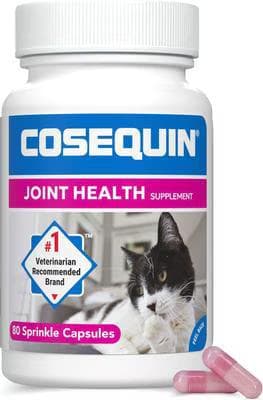
The #1 vet-recommended joint supplement brand. Glucosamine and chondroitin sprinkle capsules support cartilage and comfortable mobility in stiff or senior cats.
Webvet may earn a commission when you click through to Chewy, at no extra cost to you.
2. A Shortened Stride or Being Heavy on Their Feet
If your car takes shorter steps or seems heavy-footed rather than that typical ‘floating’ gait, it could be a sign of pain or reduced range of movement in their hips or shoulders.
3. Head Bobbing, Swaying, or Asymmetry
You’re unlikely to miss it if your cat has an obvious limp or is holding one paw up, but early feline joint problems cause much more subtle signs, like a slight head bob when one foot is placed down, or an uneven gait where the ‘good’ side takes more of the load to reduce pain on the ‘bad’ side.
4. Back or Tail Posture Changes
Have you ever noticed your older cat has a slightly arched back? Or that their tail carriage is lower? These are common early signs of joint pain.
5. Reluctance to Jump or Climb
Young and healthy cats have quick reflexes and don’t think twice about running, jumping, or climbing – they’re up their cat tree in the blink of an eye! But if your older cat has joint pain, you might notice them hesitating before jumping, even if they’ve previously performed the same jump with ease.
Compare coverage choices for your pet, then request a quote directly on Lemonade.
- Check a price for your pet
- Review available coverage choices
- See the terms before you decide
Eligibility, waiting periods, limits and exclusions apply.
Webvet may earn a commission when you click through to Lemonade, at no extra cost to you.
6. Changes in Grooming
There’s nothing better than watching your cat grooming – the cute way they use their paws to wash their face and the way they contort to groom hard-to-reach areas. But as your cat gets older, you might notice that you see them grooming less often, or they start to look a little scruffy around their rump because it causes them pain to twist and turn.
Common Joint and Mobility Issues That Affect Gait
Arthritis
Also known as degenerative joint disease, this refers to inflammation of the cartilage, bone, and soft tissues of the joints due to wear and tear. It’s the most common cause of gait changes in cats and usually occurs in middle-aged and older cats.
Hip dysplasia
This is more common in dogs than in cats, but can occur in some pedigree breeds, like Maine Coons.
Webvet may earn a commission when you click through to Chewy, at no extra cost to you.
Trauma
Soft tissue injuries, fractures, and nerve damage caused by trauma can cause drastic changes to gait.
Neurological problems
Nerve damage or neurological problems can lead to wobbliness and incoordination, or paralysis or loss of limb function.
Muscle loss
Cats may lose muscle as a consequence of an injury or pain, a change in diet, weight loss, or an underlying health condition. Reduced muscle mass can cause weakness and poor balance.
Obesity
If your cat is overweight, this can affect the mechanics of their gait because they may not be as flexible. However, being overweight also puts more pressure on their joints, meaning arthritis signs may show sooner.
When to See Your Vet
Cats are stoic and don’t tend to show obvious signs of pain like vocalization, so if you notice your cat yowling, dragging one or more of their legs, or being reluctant or unable to stand or move, this is an emergency, and you should contact your vet right away.
It’s also worth getting your cat checked by a vet if they have stiffness, limping, or if you’ve noticed they’re grooming or are showing other gait changes that persist for longer than a couple of days.
It’s really common to chalk up gait changes and stiffness to older age, but ‘getting old’ or ‘slowing down’ can actually be a subtle sign of pain, so it’s really important that your cat has a check-up at the vet clinic in case they need medication to make them comfortable.
FAQs
What does it mean if my cat walks weirdly?
A cat’s gait and walking pattern can be a really good indicator of their joint health. See your vet for a mobility exam if you notice changes to their gait, stiffness, or limping.
Do older cats walk differently?
Although older and younger cat walking patterns can vary from the ‘norm’, their gait should still be symmetrical with an even stride. If you notice stiffness, limping, or an uneven gait, see your vet for an examination.
Summary
A cat’s gait can be a great indicator of their joint health and comfort levels, and no one knows your cat better than you. If you notice any changes in your cat’s walking pattern, let your vet know so they can help make sure their senior years are comfortable.
Dr. Hannah Godfrey BVetMed MRCVS
Hannah graduated in 2011 and works as a small animal vet in Cardiff, UK. She loves meeting people and their special pets and has a particular interest in diagnostic imaging, soft tissue surgery, and dentistry.
Photo: Istockphoto
$65 · no membershipIs your cat slowing down or seeming sore?
A licensed vet can examine your cat over video and prescribe treatment online when it's appropriate.
Talk to a vet- Licensed vets
- All 50 states
- same-day Rx
Webvet may earn a commission if you book.

Veterinarian · BVetMed MRCVS
Hannah graduated in 2011 and works as a small animal vet in Cardiff, UK. She loves meeting people and their special pets and has a particular interest in diagnostic imaging, soft tissue surgery, and dentistry.


