Best Cat Brush for Every Coat Type and Temperament
The best cat brush depends on three things: what your cat's coat is made of, what its skin will tolerate, and whether it will sit still. Here are the five tool families, a coat-structure table, a skin-safety test, and eight researched picks.

This article contains affiliate links. Webvet may earn a commission when you buy through them, at no extra cost to you.
The right cat brush is the one that matches three things: what your cat's coat is actually made of, how much its skin will tolerate, and whether your cat will sit still long enough for you to finish. Get those three right and grooming stops being a fight.
Start with your cat's coat and handling tolerance. This guide explains the main brush families, how to inspect a tool before use, and eight researched picks with different grooming jobs.
Those picks are editorial selections built from published product specifications and from veterinary and grooming guidance on coat care. They are not a tested ranking. Every pick below names the coat it is wrong for as well as the coat it suits.
 Sponsored
Want a vet's help with your cat's anxiety or behavior?
Talk to a licensed vet at Dutch over video, often the same day. They can recommend treatment and prescribe it when it's appropriate.
Use code Pets30
Plans start at $11/month · covers up to 5 pets
- Licensed vets in most states
- Rx for 150+ conditions
- 4.7 on Trustpilot
How to choose a cat brush

- 1Choose tools for the individual coat and handling tolerance.
- 2Inspect pins and tips for damage; a forearm check cannot prove feline safety.
- 3A suitable comb helps remove loose hair and check snags.
- 4Keep sessions comfortable and stop at resistance.
What type of brush is best for my cat? For most cats it is a soft slicker or a fine pin brush for the body, plus a metal comb to check the work. Short single coats usually do better with a rubber curry brush or a grooming glove.
Dense double coats need a slicker that can reach past the guard hair into the undercoat, because a tool that only skims the top layer leaves the mat-forming layer sitting untouched underneath it.
There are only five families of tool sold as a cat grooming brush. Once you can name them, a page of listings stops being a wall and becomes four or five real options.
| Brush family | Main job | Potential fit | Important limit | Skin consideration |
|---|---|---|---|---|
| Wire slicker | Loose hair and minor tangles | Coats that tolerate pins | Never force through tight mats | Light contact; inspect pins |
| Pin brush | Separating longer hair | Suitable longer coats | May leave undercoat untouched | Smooth intact tips |
| Bristle brush | Surface grooming and finishing | Short or detangled coats | Not for resistant tangles | Pressure can still irritate |
| Rubber brush | Collecting loose hair | Cats that prefer flexible projections | Can drag on long hair | Stop at discomfort |
| Grooming glove | Gentle surface grooming | Cats accepting hand contact | Does not remove mats | Avoid sore skin |
| Metal comb | Loose hair, debris, minor tangles, and snag checks | Coats suited to tooth spacing | Not for forcing through mats | Stop when teeth catch |
Read that table by column rather than by row. Pick the coat first, then the family, then a specific product. Working the other way round, from a listing to a cat, is how people end up with a drawer of brushes and a cat that still mats.
A few specialty tools come up often when people shop for a cat brush. Judge each one by the same three questions: coat, skin tolerance, and what your cat will sit for.
- Anti-static cat brush: an anti-static label describes the material or coating, not how well the brush reaches the undercoat. In dry winter air, a lightly dampened hand or brush can calm static, but choose the brush family by coat first.
- Brushing a cat with a wet toothbrush: a clean, soft, damp toothbrush stroked gently over the cheeks and head mimics the short strokes of a mother cat's tongue, and some cats accept it. Keep it separate from any toothbrush used for teeth, and treat it as a handling tool, not a coat tool.
- PDX Pet Design Licki cat brush: a tongue-shaped silicone brush you hold in your mouth so grooming resembles being licked. It is a bonding and surface tool for cats that enjoy face contact; it does not reach undercoat or work on tangles.
- Jackson Galaxy cat brush: judge a celebrity-branded brush exactly like any other, by its contact surface and your cat's coat, using the table above, not the name on the handle.
- Cat blackhead removal brush: black specks on the chin are often feline acne, which is a skin condition rather than a grooming job. Do not scrub or squeeze them with a brush; ask your vet, especially if the chin looks swollen, red, or crusted.
The three questions that settle the purchase
Before you look at a single product, answer these in order.
- What is the coat made of? A single coat is one layer of hair. A double coat has coarse guard hairs over a soft, dense undercoat, and it is the undercoat that sheds, clumps, and mats. This decides the family.
- What will the skin and body tolerate? Check for soreness, fragile skin, mats, and difficulty moving. Age alone does not choose the tool. A kitten or senior cat may need shorter sessions or a different approach, and painful or irritated areas need veterinary advice.
- What will the cat sit for? A perfect slicker your cat runs from is worth less than a glove your cat leans into. This decides whether you buy the ideal tool or the one that gets used.
Most homes end up with two tools, not one: a primary brush chosen by coat structure, and a metal comb to check it. A third, softer tool for the days your cat is not in the mood is a genuinely useful addition rather than an upsell.
Shopping at Dollar Tree, Dollar General, or another budget retailer? Inspect the exact brush for loose or bent pins, rough edges, a secure handle, and a head you can control around your cat. Price alone does not establish comfort or suitability. Check local stock and the return policy before buying.
Cleaning a cat brush and knowing when to retire it
A worn brush is a sharper brush. Pins bend, tip caps come off, rubber cracks, and bristles splay, and every one of those changes turns a tool that was safe into one that scratches. Nobody tells you this at the point of sale, so check yours on a schedule.
Retire the brush when you find any of the following.
- A bent pin, or a row of pins leaning at a different angle from the rest.
- A missing tip cap. The bare wire underneath is a cut end, and it will dig into skin at pressure you would not think twice about.
- A cracked or hardened rubber pad, which stops flexing and starts dragging.
- Splayed, flattened, or shedding bristles that no longer stand up straight.
- Loose or torn nubs on a grooming glove, or a glove whose backing has stiffened.
Cleaning is quicker than most people expect, and it matters more on natural bristle and rubber than on wire.
- Pull the hair mat off the head after every session, or press the retract button on a self-cleaning slicker.
- Work a comb through the base of the pins once a week to lift the fine hair that packs down around them.
- Use only the washing method and cleaner permitted for the exact brush. Wooden bodies, pads, adhesives, and electrical components may need different care.
- If washing is permitted, rinse away cleaner and let the tool dry fully as directed before storage.
Do not share one brush between cats if any of them has a skin problem, and never move a brush between a cat and a dog without cleaning it. If a cat in the house is being treated for anything contagious, that brush stays with that cat.
Matching the brush to your cat's coat type
What brush should you use on a cat? Work from the coat structure you can see and feel, not from the breed name on the paperwork. Two cats described as long-haired can need completely different tools if one has a dense undercoat and the other does not.
For a senior cat, combine coat type with comfort. A soft bristle brush or gentle glove may suit surface grooming, but neither will clear a tangled long coat. Keep sessions comfortable and seek veterinary help if reduced grooming is new, movement seems painful, or mats have formed.

A cat's coat is made of guard hairs, the longer, coarser outer hairs that shed water and set the colour, and in many cats an undercoat of soft, fine, tightly packed hairs underneath. General feline coat and skin care is described in the cat sections of the Merck Veterinary Manual and by International Cat Care.
Coat structure varies. Cats with little undercoat need different tools from cats with a dense undercoat beneath longer guard hairs. Matting can also reflect friction, moisture, pain, or reduced self-grooming, so coat structure alone does not explain every problem.
How to tell a single coat from a double coat
Stand over your cat, put your fingers into the fur over the shoulder blades, and push the hair back against the direction it grows. You are looking at what is underneath, not on top.
- Double coat: a second, shorter, denser, often paler layer sits below the long hairs, and the fur springs back when you let go. It feels like pushing into a duvet.
- Single coat: you go straight to skin. The hair parts cleanly and lies back down flat. It feels thin between your fingers.
- Cottony coat: the fur feels soft and slightly grabby rather than slippery, and it clings to itself when you release it. This is the coat that mats fastest.
Once you know which of those you have, the tool choice follows directly.
| Coat structure | Cats it describes | Tool that works | Tool that is wrong |
|---|---|---|---|
| Short single coat | Siamese, Burmese, Oriental Shorthair, Bengal, many domestic shorthairs | Rubber curry brush, grooming glove, soft bristle brush | Long-pinned wire slicker, undercoat rake |
| Short double coat | British Shorthair, Russian Blue, Manx, American Shorthair | Soft slicker, then a fine metal comb | A rubber brush alone, which never reaches the undercoat |
| Long dense double coat | Maine Coon, Norwegian Forest Cat, Siberian | Slicker with capped or fine wire pins, then a coarse-to-fine comb | Bristle brush alone, glove alone |
| Long silky coat, light undercoat | Ragdoll, Turkish Angora, Balinese, Turkish Van | Fine pin brush, then a metal comb | Dense-nub rubber brush, which drags on long hair |
| Long cottony coat | Persian, Himalayan, and Persian crosses | Fine pin brush plus a coarse-to-fine comb, worked in sections, daily | Anything used once a week. Frequency matters more than the tool here |
| Curly or rex coat | Density and fragility vary by cat | Individual soft care or suitable gentle combing | Do not assume every curly coat is sparse or needs only a wipe |
| Hairless or nearly hairless | Skin condition and any fine hair | Skin-care plan agreed with your vet | Do not brush bare or sore skin |
| Pick | Selection value and limit |
|---|---|
| Frisco Self-Cleaning Slicker Cat Brush | Retracting pins make it easier to clear collected hair after light slicker grooming. |
| Safari Self-Cleaning Slicker Brush for Cats | Coated pins and push-button cleanup for cats that tolerate gentle slicker grooming. |
| JW Pet Gripsoft Cat Slicker Brush | A cat-sized slicker for suitable coats; use light pressure and stop at resistance. |
| KONG Cat ZoomGroom Multi-Use Brush | Flexible projections offer an alternative to wire pins for gentle surface grooming. |
| Andis Steel Pet Comb, 7.5-in | Two tooth spacings help check loose coat and minor tangles without pulling through snags. |
| Kenchii Boar & Nylon Bristle Dog & Cat Brush, Small | Boar and nylon bristles finish a coat that is already free of tangles. |
| HandsOn All-In-One Pet Bathing & Grooming Gloves, Black, Medium | A pair of textured gloves for supervised, gentle surface grooming. Choose the size for your hands. |
| Catit Senses 2.0 Self Groomer Cat Brush, 1 count | A wall-mounted groomer for cats that choose to rub against it, alongside your own coat checks. |
A cat brush for long hair
A cat brush for long hair has to reach the layer underneath, and it has to do it in sections. Working the whole cat in long sweeping strokes leaves the fur near the skin untouched, which is exactly where mats start.
Part the coat with your free hand so you can see skin, brush the exposed strip from the skin outward, then move the parting a finger's width along and repeat. Groomers call this line brushing, and it is the difference between a coat that looks tidy and one that is actually clear.
- Start where the cat is most tolerant, usually the shoulders and the back of the neck.
- Do the armpits, the collar line, behind the ears, and the trousers at the back of the thighs on purpose, because those four spots mat first.
- Finish each area with a comb. If the comb glides, that section is done.
- Split a long coat across two sessions rather than pushing one cat through fifteen unbroken minutes.
A cat brush for short hair
Do short-haired cats need brushing? Yes, though not for the same reason. A short single coat rarely mats, so brushing is about removing loose hair before your cat swallows it, spreading skin oils, and lifting the dander that settles on furniture.
A rubber curry brush or a grooming glove does most of that work, and most short-haired cats enjoy both because the sensation is closer to being stroked than being groomed. A soft bristle brush afterwards smooths the coat and picks up what the rubber lifted.
The exception is the short double coat. A British Shorthair or a Russian Blue looks like a short-haired cat and sheds like a long-haired one, and a rubber brush alone will never get into that undercoat. Those cats need a soft slicker and a comb.
Slicker brushes: what they do and who they suit
A cat slicker brush is a flat or slightly curved pad set with rows of fine, bent wire pins. The bend is the point: it catches loose undercoat that a straight pin or a bristle would slide straight past.
That is why a slicker is the most useful single tool for a medium or long coat, and also why it is the family most often recommended with no warning attached to it.
A self-cleaning slicker has a mechanism that helps release collected hair, such as retracting pins or a moving cleaning plate. Check how the exact model works. Easier cleanup does not change the pressure or handling precautions needed during brushing.
- A pop out cat brush is another name for a self-cleaning slicker: press the button, the pins retract, and the collected hair comes away as one sheet.
- It is the same slicker underneath, so the same light-pressure rules apply.
Check the exact slicker model
For a Whisker City soft slicker or any similarly named model, check the listed bristle material and design. A soft-bristle brush and a wire-pin slicker are different contact surfaces. The word soft does not mean you can press harder or work through a resistant mat.
How to use a slicker without hurting your cat
Pressure, rough pins, and repeated strokes can irritate skin. Use light contact and stop if the tool catches or your cat shows discomfort.
- Hold the brush comfortably with a light grip and follow its directions. Grip position alone cannot prevent excessive pressure.
- Brush in the direction the hair grows, from head towards tail and from the spine outward.
- Lift the brush away at the end of each stroke instead of dragging it back through the coat.
- Use a few light strokes, check the area, and move on. A fixed number of passes does not guarantee safety.
- Keep the pins off bony areas: the spine ridge, the hips, the shoulder points, and the front of the legs.
Brush burn is skin irritation caused by grooming. Stop if an area becomes red, tender, or persistently licked. Seek veterinary advice if irritation persists or skin is broken.
Who a slicker is not for
A slicker may be unsuitable when the coat is sparse, skin is fragile or painful, or your cat finds the pins uncomfortable. Choose a gentler tool and get help with coat care that still needs doing.
It is also the wrong tool for a coat that is already matted. Dragging a slicker into a felted mat pulls on the skin underneath, and cats remember that for a long time.
Rubber and silicone brushes
A rubber cat brush, sometimes sold as a curry brush, a silicone brush, or a cat tongue brush, is a moulded pad of soft, blunt nubs. It lifts loose hair out of a short coat by friction rather than by combing through it, and most cats read the sensation as being petted firmly.

KONG makes a cat-specific ZoomGroom with flexible projections. Judge similar tools by their condition, suitability for the coat, and your cat's response.
What a rubber brush is genuinely good at
- Short single coats, where it pulls out a surprising volume of loose hair in a couple of minutes.
- Cats that refuse pins, because there is nothing sharp to object to.
- Kittens and seniors that tolerate gentle surface grooming, provided the tool suits their coat and skin.
- Desensitisation work, because it is the tool most likely to be tolerated on day one.
- Massage. Cats that like it really like it, and the lean-in is the clearest signal you will get that a session is going well.
What it will not do
A rubber brush is a top-layer tool. It will not reach a dense undercoat, it will not separate a tangle, and on a long coat the nubs grab and drag rather than passing through. If your cat has a double coat, this is a supporting tool and not the main one.
It also makes a mess. The hair clings to the rubber and to everything else through static, so peel the sheet of hair off every few strokes and work somewhere you can vacuum.
Wash it properly. Rubber holds skin oils, and a greasy brush stops gripping hair. Warm water, a little dish soap, a rinse, and a full dry is all it needs.
Bristle brushes, pin brushes, and combs
These three get lumped together on retail pages and they do completely different jobs. Buying the wrong one of the three is the most common reason an owner concludes that brushing does not work on their cat.

- Bristle brush: dense, soft natural or synthetic filaments. A finishing tool. It lifts surface dander and shed hair, spreads skin oils along the shaft, and leaves a short coat smooth. It does not detangle.
- Pin brush: widely spaced straight metal pins with rounded, capped tips on a cushioned pad. Gentler than a slicker and better suited to long, silky coats. It separates hair; it does not strip undercoat.
- Comb: metal teeth on a spine, no pad. It is the inspection tool, and it is the only one of the three that tells you the truth about whether you are finished.
Soft bristle brushes and boar bristle
A soft bristle brush can be useful for gentle surface grooming and finishing. It is not a solution for mats or irritated skin.
Finishing brushes and trimming tools
With Mars Coat King products, check whether the exact model is a finishing brush or a trimming tool. Those jobs are not interchangeable. Follow the species and coat instructions for that model; a surface brush is not a tool for cutting through mats.
It suits short single coats, older cats who want the contact more than the grooming, and the last thirty seconds of any session on any coat. It does nothing for a mat and very little for a dense undercoat.
Remove collected hair after each session and clean the brush according to its manufacturer's directions. Let it dry fully before storage. Replace damaged pins, cracked handles, or worn surfaces rather than continuing to use a tool that snags.
The comb pass that proves you are done
This is the single most useful habit in cat grooming and the one most often left out of brushing advice. After you have brushed an area, run a metal comb through it. If the comb glides from skin to tip without catching, that area is genuinely clear.
If the comb catches, stop and inspect the area. A small loose tangle may separate gently with your fingers, but do not keep brushing or combing a resistant spot. Tight mats or painful areas need professional help.
A two-spacing comb offers coarse and fine teeth. Start with the wider section where it passes comfortably, and use finer teeth only when they do not catch. Neither spacing guarantees a pull-free pass.
- Comb behind the ears, under the chin, and down the collar line, which is where owners most often think they are finished and are not.
- Comb the armpits and the back of the thighs last, because they are sensitive and they mat first.
- If the comb stops against something solid that moves with the skin, that is a mat. Stop combing and read the matting section below.
Double-sided brushes
A double-sided cat brush puts pins on one face and bristles on the other. On a long silky coat this is a genuinely efficient pairing: the pin side lifts and separates, then you flip it and the bristle side smooths and spreads oils.
Look for smooth, intact pin tips. Bent, rough, damaged, or missing tips matter more than whether the design uses caps.
Grooming gloves and mitts
A cat grooming glove is a fabric or rubber glove with silicone nubs across the palm and fingers. It removes surface loose hair while you do nothing more alarming than stroke your cat, which makes it the best first tool for a cat that will not tolerate an object held in a hand.

Introduce the glove briefly and let the cat move away. Acceptance of your bare hand does not guarantee acceptance of a textured glove.
Where a glove earns its place
- Cats that bolt, swipe, or hide when a brush appears.
- Kittens learning that being handled is normal and boring.
- Senior and arthritic cats, where a hand can feel for sore spots at the same time.
- The belly, the legs, and the chest, which many cats will allow a hand to touch but not a brush.
- Brief surface grooming during a separate, comfortable session. If your cat has ended a session, stop rather than switching tools to continue.
The honest limits of a glove
A glove is a surface tool. It takes the loose hair sitting on top of the coat and almost nothing else. It will not reach an undercoat, it will not separate a tangle, and it will not stop a long coat matting.
On a long or dense coat, a glove may leave lower layers unchecked. Use a suitable comb only where it passes comfortably, and stop at a snag rather than treating it as a reason to brush harder.
Choose a size that fits your hand, inspect the projections for damage, and follow the glove's own washing and drying instructions.
SponsoredVet care that's always there
Unlimited video calls and messaging with licensed vets for less than a typical vet visit. One membership covers up to five pets.
Use code Pets30
Plans start at $11/month · covers up to 5 pets
- Licensed vets in most states
- Rx for 150+ conditions
- 4.7 on Trustpilot
Steam brushes, electric brushes, and self-groomers
Teazys Cloud Care Brush combines silicone bristles with a mist feature and detachable head. That describes its mechanism, not proof that it detangles better or that every cat tolerates it. Check a misting brush's exact instructions, keep additives out unless your veterinarian has approved them, and stop if the cat avoids the spray. If a steamy cat brush listing cites Consumer Reports, look for the actual test on the organization's own site before treating it as a rating.
Steam brushes, electric brushes, and wall-mounted self-groomers are convenience formats, not upgrades. None of them does anything that a slicker, a comb, and a rubber brush cannot do, and the steam models in particular promise considerably more than the format can deliver.
- A cat scratching post with a brush attached works like a wall-mounted self-groomer: the cat rubs its cheeks on the bristles when it chooses.
- Pick one with a stable base and secure, intact bristles, and keep brushing the areas the post cannot reach.
Steam brushes
Products sold as steam brushes vary, and some produce a cool water mist rather than steam. Check the exact device's instructions.
What it does not do is the part the marketing leans on.
- It does not deep-clean the coat, and it is not a substitute for a bath.
- It does not kill fleas. Nothing about a warm mist treats a parasite problem.
- It does not reach a dense undercoat, because silicone teeth are a surface tool whether or not they are wet.
- It does not remove a mat, and damp actually makes an existing mat tighter.
Avoid hot vapour or a heated brush head on your cat. Keep mist away from the face and ears, and stop if the noise, moisture, or contact causes distress.
Electric and vacuum brushes
Electric brushes and vacuum grooming attachments solve the hair-everywhere problem and create a noise problem. Most cats will not accept a motor running against their body, and the ones that will usually needed weeks of gradual introduction to get there.
If your cat is genuinely unbothered by the vacuum already, it is worth a slow trial. If your cat leaves the room when the vacuum starts, this is not the category for you.
Self-groomers and wall-mounted brushes
A self-grooming cat brush is an arch, a corner mount, or a wall unit with bristle inserts that the cat rubs against on its own terms, often with a catnip compartment to make the first introduction easier.
These are good enrichment and genuinely useful for the cheeks, the chin, and the sides of the face, which are the areas cats most enjoy having worked. They are also entirely self-selected, which is their charm and their limit.
A self-groomer only reaches the areas your cat chooses to rub against it. Secure a purpose-made brush according to its instructions, inspect it for damage, and continue checking the rest of the coat. A homemade scratcher should not introduce exposed fasteners, sharp bristles, or loose pieces that can catch fur.
Our picks: the best cat brushes
Other named brushes deserve the same coat-based comparison. Pet Teezer, sold by Tangle Teezer, has two lengths of teeth and is intended for short to medium fur. Chris Christensen offers several designs: its Mark slickers have short pins for short coats. Compare the actual contact surface and head size with the options below; neither brand name establishes suitability for a tight mat.
When considering a Burt's Bees or Whisker City cat brush, identify the exact model first. A soft-bristle brush, slicker, and undercoat tool perform different jobs. Reddit and retailer reviews are most useful when they name both the model and the cat's coat type, and describe snagging, cleanup, and handling tolerance. A large pile of collected fur is not evidence that a brush is safe.
The best cat brush depends on coat type, skin tolerance, and how your cat responds to handling. A flexible rubber brush or glove may suit gentle surface grooming; a longer or denser coat may need a pin brush, slicker, or suitable metal comb.

Choose the grooming job first, then the product below. A self-cleaning button simplifies clearing hair from a slicker, a bristle brush finishes the surface, and a comb helps find remaining snags. None of those features makes a tool suitable for every cat.
These are researched selections based on product specifications and published coat-care guidance. We have not measured comparative comfort, speed, or hair removal in a hands-on trial.
A top rated cat brush in retailer listings is rated by many different cats with many different coats. Use star ratings only after you have matched the brush family to your own cat's coat, and read reviews that describe a coat like yours.
Frisco Self-Cleaning Slicker Cat Brush
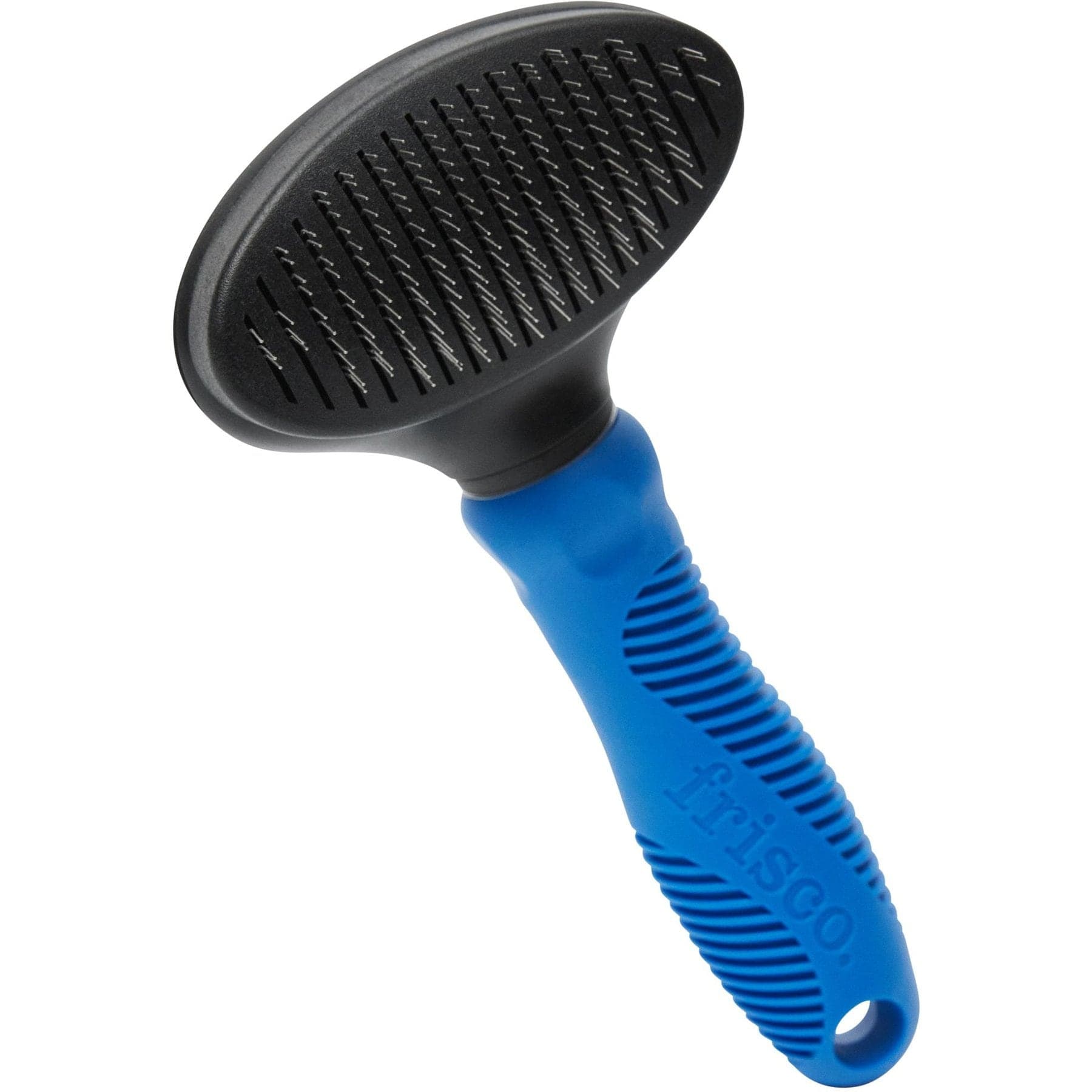
Retracting pins make it easier to clear collected hair after light slicker grooming.
Webvet may earn a commission when you click through to Chewy, at no extra cost to you.
Frisco's cat-specific slicker has stainless-steel pins that retract with a push button, making collected hair easier to remove. The cleaning mechanism is its practical distinction.
- Suits: a cat whose medium or long coat benefits from gentle slicker grooming and an owner who wants push-button cleanup.
- Wrong for: sore skin, tight mats, or a cat that finds pins uncomfortable.
- Watch out for: pressing pins into skin. Use light strokes in the direction of growth and stop if the brush drags.
Pair it with a suitable comb to check for remaining snags. If a tangle will not release gently, stop rather than brushing harder.
Safari Cat Self-Cleaning Slicker Brush
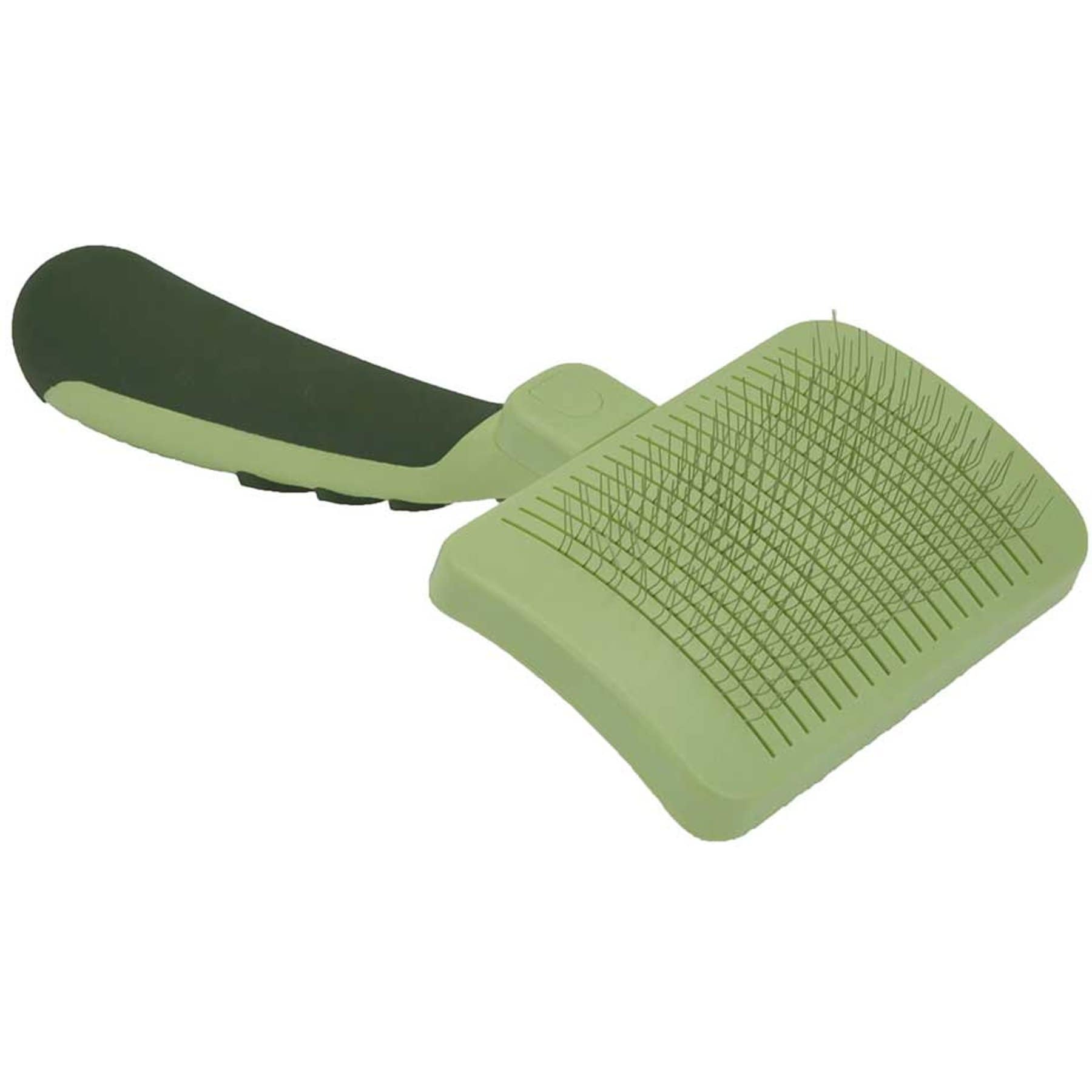
Coated pins and push-button cleanup for cats that tolerate gentle slicker grooming.
Webvet may earn a commission when you click through to Chewy, at no extra cost to you.
Safari's cat slicker has coated stainless-steel pins and a push-button cleaning mechanism. Coastal lists one size, 7 inches long by 3.25 inches wide.
- Suits: small and medium cats, first-time slicker users, and cats that will only give you two or three minutes.
- Wrong for: a cat that dislikes wire pins, sore skin, or tight mats.
- Watch out for: rough or damaged pins. Coated tips do not make excessive pressure or repeated strokes safe.
The button simplifies cleanup compared with clearing a brush by hand. We have not measured whether this head is faster or more comfortable than the other slickers.
JW Pet GripSoft Cat Slicker Brush
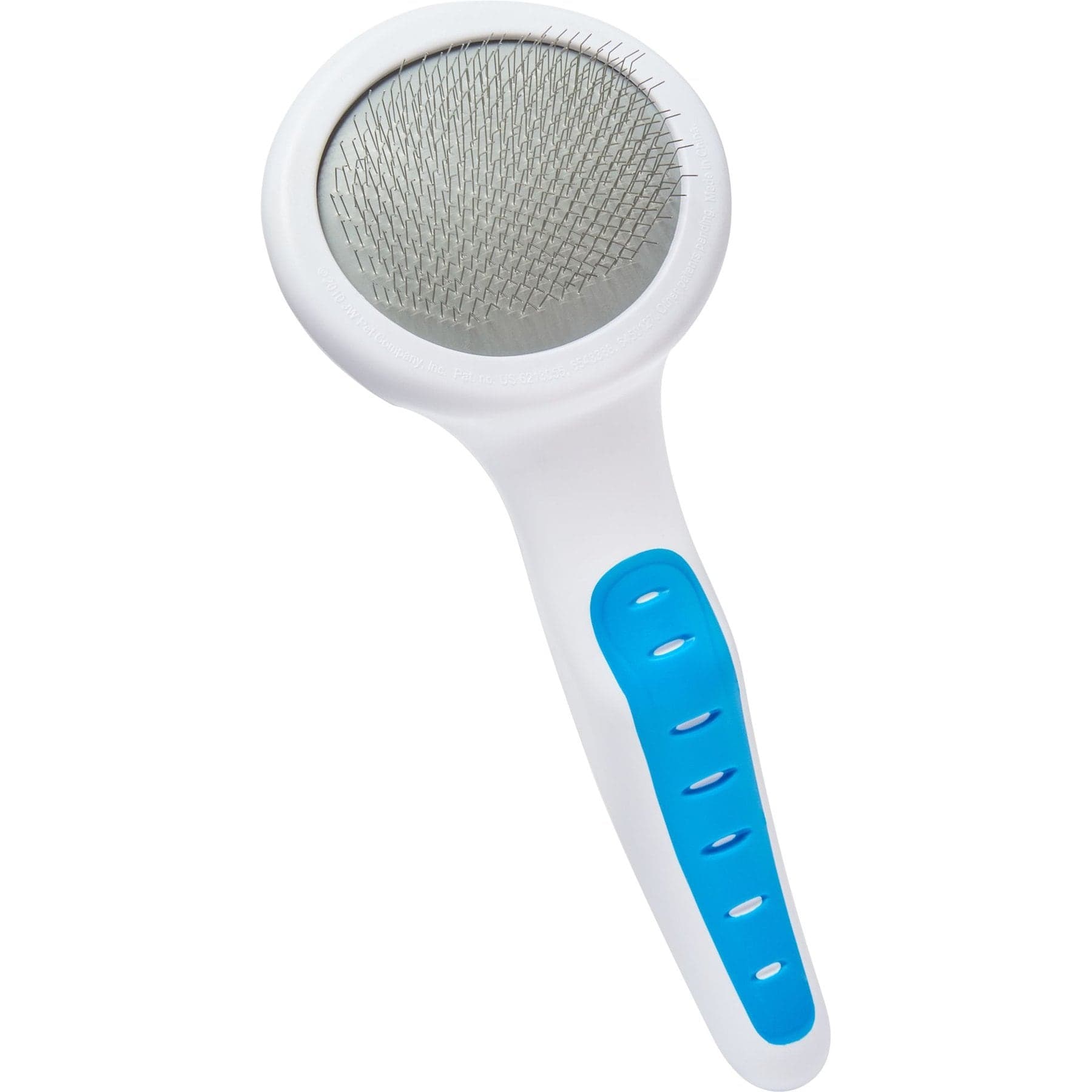
A cat-sized slicker for suitable coats; use light pressure and stop at resistance.
Webvet may earn a commission when you click through to Chewy, at no extra cost to you.
A cat-specific slicker with soft pins, a cushioned pad, and a non-slip rubber handle. It sits at the gentler end of the slicker family and is the one to reach for when you want undercoat reach without the bite of a firm, dog-scale brush.
- Suits: sensitive cats, short double coats, and anyone stepping up from a rubber brush to something with reach.
- Wrong for: heavy matting, and coats so dense that a soft pad flexes away rather than working through.
- Watch out for: resistance. Do not compensate for poor coat penetration with extra pressure or repeated strokes.
There is no self-cleaning button here, so you will be picking hair off the pins by hand. That is a genuine ergonomic downgrade and a fair trade for the gentler action.
KONG ZoomGroom Cat Brush
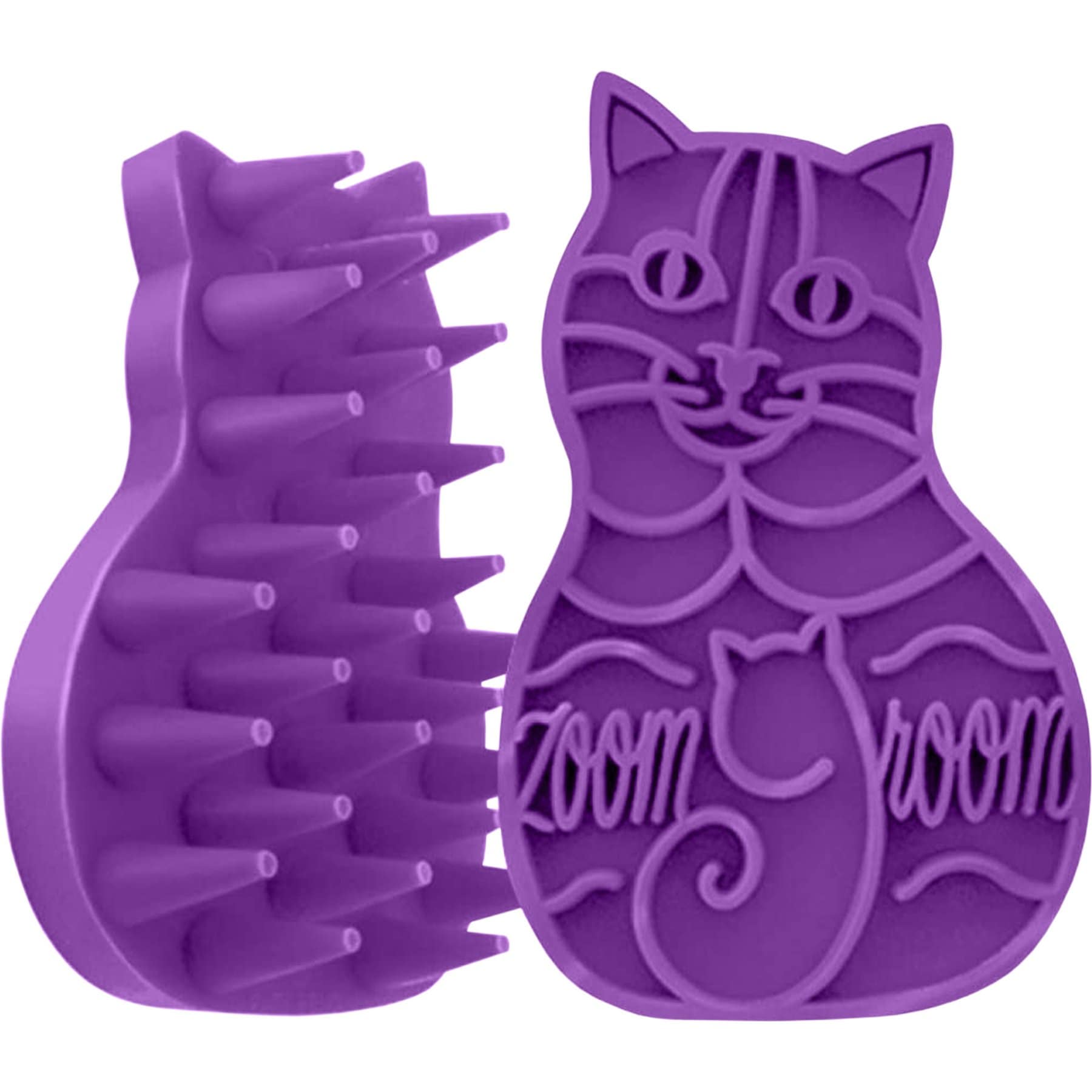
Flexible projections offer an alternative to wire pins for gentle surface grooming.
Webvet may earn a commission when you click through to Chewy, at no extra cost to you.
KONG's cat-specific ZoomGroom is a flexible brush with broad soft projections. The manufacturer lists thermoplastic elastomer as its material and offers one cat size.
- Suits: short single coats, brush-averse cats, kittens, seniors, and any cat you are slowly teaching to accept grooming.
- Wrong for: long coats, dense undercoats, and anything approaching a tangle.
- Watch out for: hair clings to it. Peel the sheet off every few strokes, and wash it in warm soapy water regularly because rubber holds skin oils and a greasy brush stops gripping.
It also works as a massage tool, which is the real reason it earns a place. A cat that leans into a ZoomGroom will often accept a comb afterwards that it would never have accepted cold.
Andis Steel Pet Comb
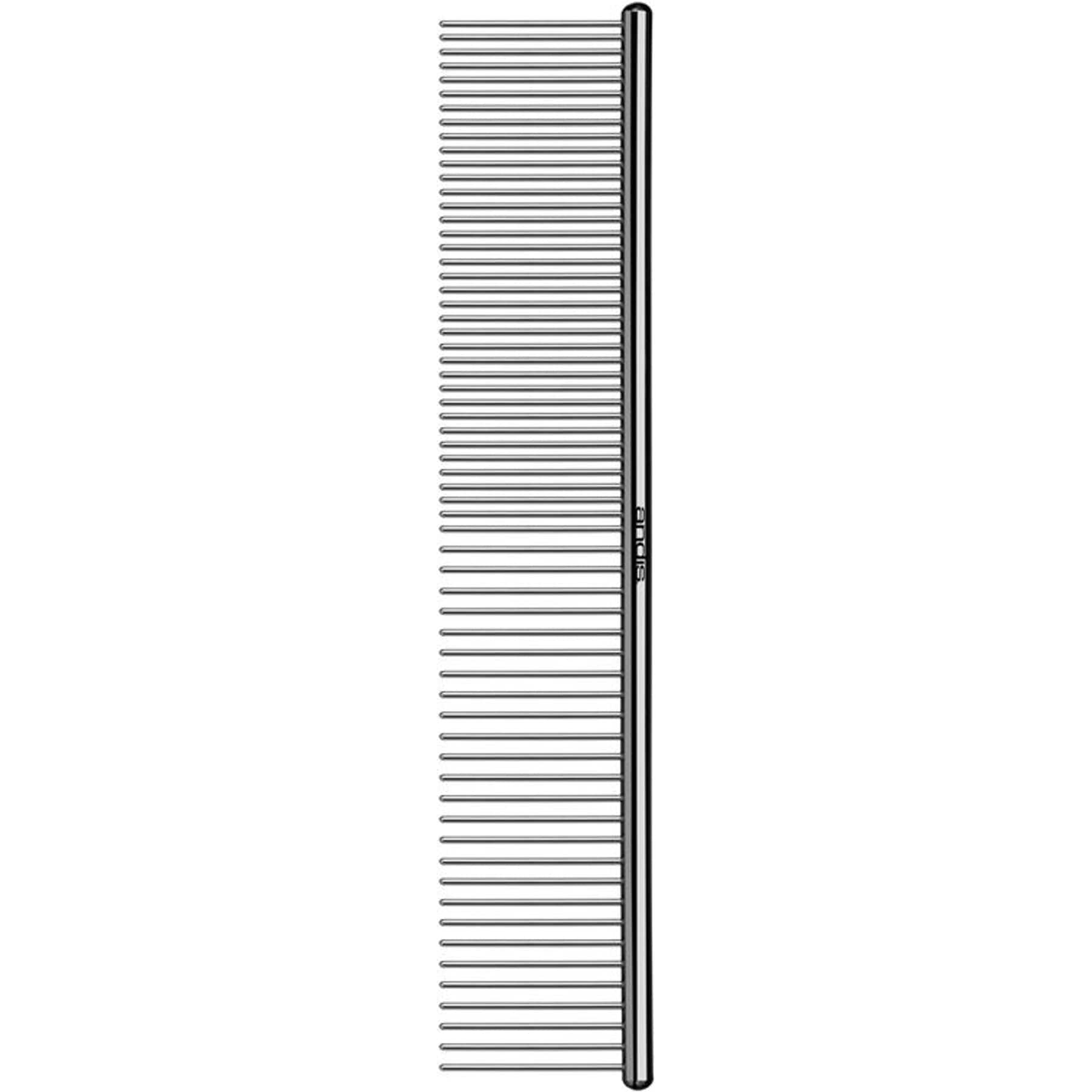
Two tooth spacings help check loose coat and minor tangles without pulling through snags.
Webvet may earn a commission when you click through to Chewy, at no extra cost to you.
A plain stainless steel comb with coarse teeth across one half and fine teeth across the other, which is the classic two-spacing layout groomers work from. This is the tool that tells you whether the brushing actually worked.
- Suits: coats where the teeth pass comfortably through the hair, plus checking suitable areas after brushing.
- Wrong for: bare or injured skin, resistant mats, or a coat needing gentler or differently spaced teeth.
- Watch out for: a comb finds tangles by stopping in them. When it stops, do not pull. Work the spot with fingers or a brush and come back to it.
The useful distinction is two tooth spacings. Start with the wider section where it passes comfortably; use the finer section only where it does not catch.
Kenchii Boar & Nylon Bristle Dog & Cat Brush, Small
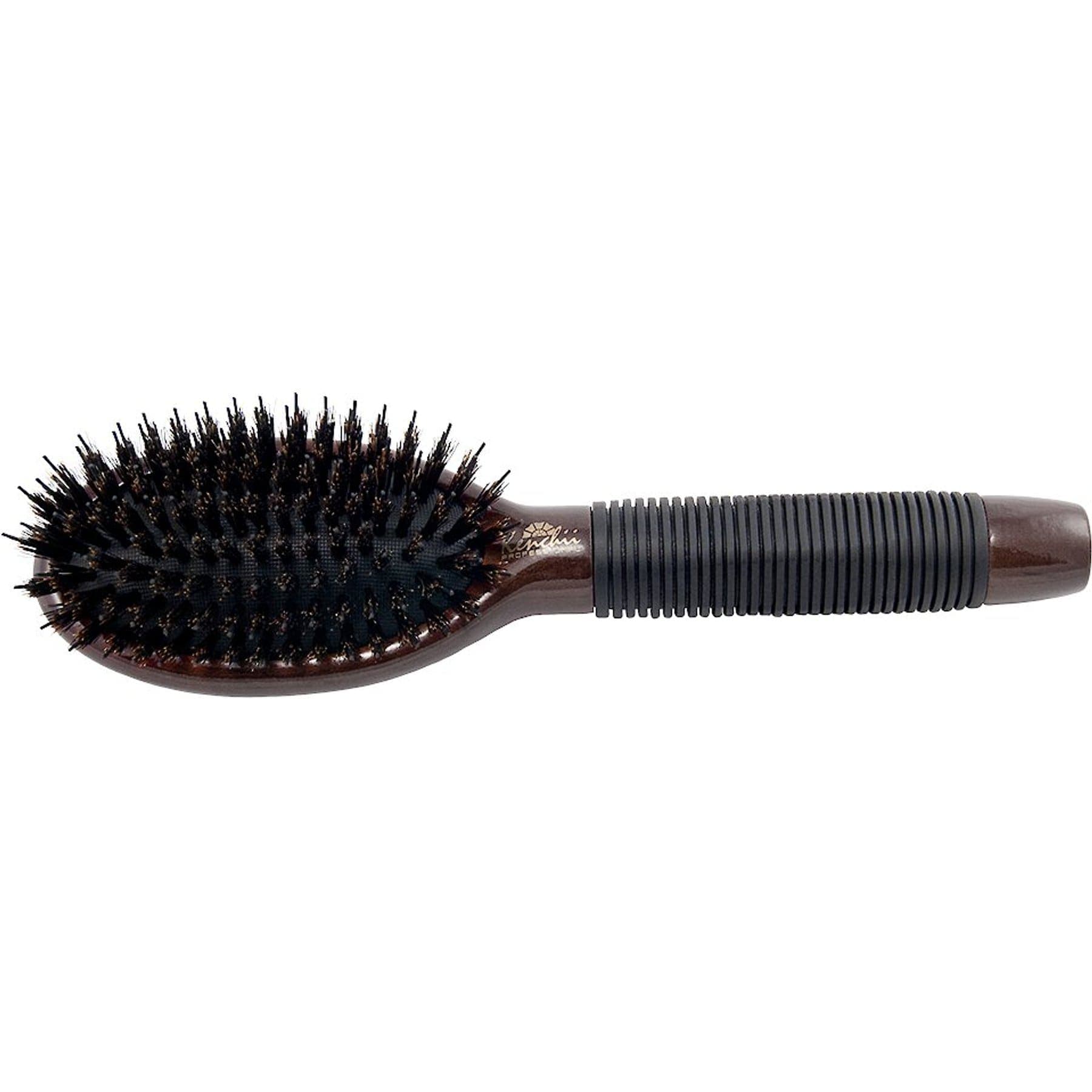
Boar and nylon bristles finish a coat that is already free of tangles.
Webvet may earn a commission when you click through to Chewy, at no extra cost to you.
This finishing brush combines boar and nylon bristles in a maple body. Kenchii lists a 3.75-by-2.25-inch head and a faceted grip on the small model.
- Suits: gentle surface grooming or finishing an already tangle-free coat.
- Wrong for: tight mats, deep tangles, or sore skin.
- Watch out for: assuming natural bristles are automatically safe. Inspect their condition, use light strokes, and follow care directions for the wooden body.
Choose it for its bristle-and-nylon finishing surface. It does not replace a suitable comb when lower coat layers need checking.
HandsOn Grooming Gloves
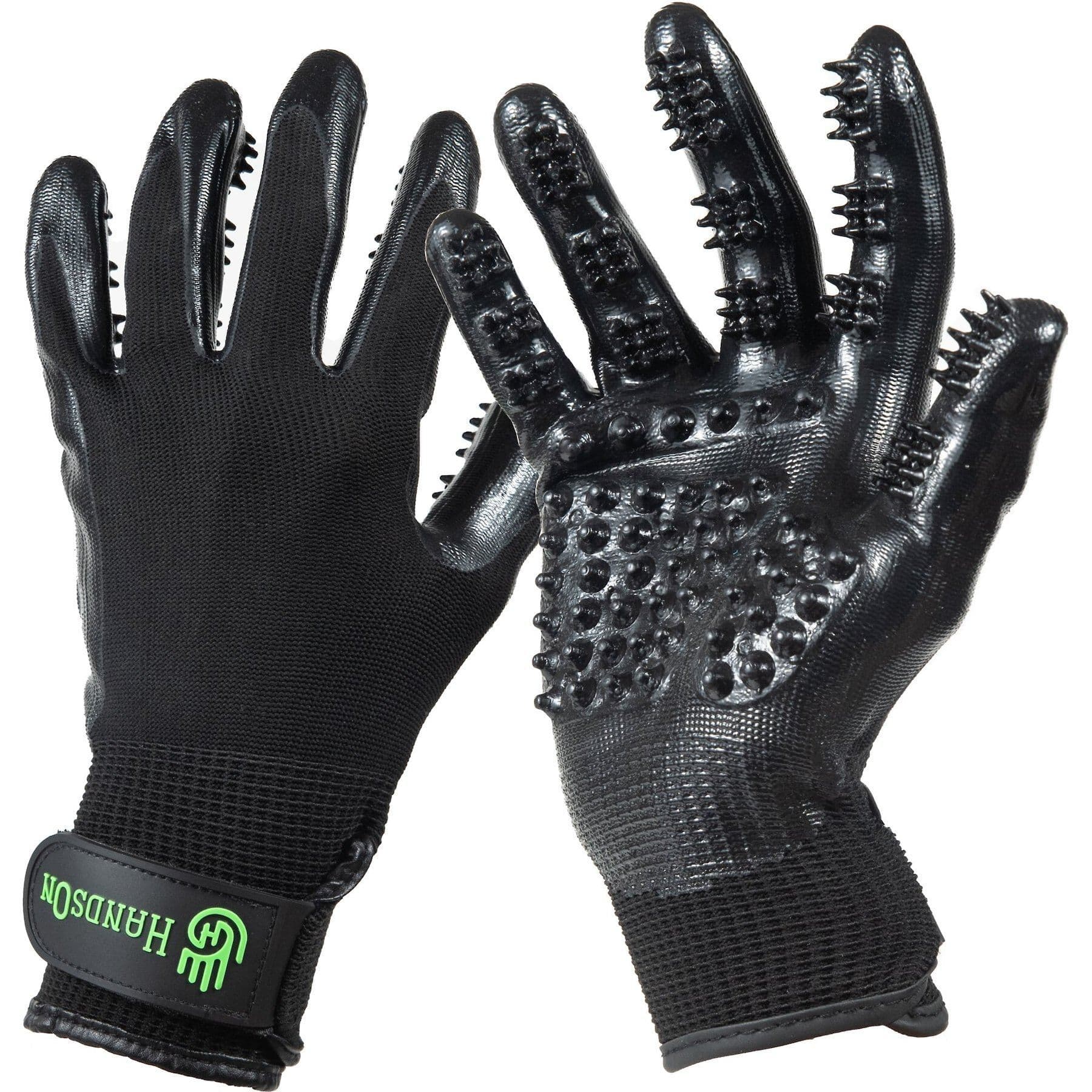
A pair of textured gloves for supervised, gentle surface grooming. Choose the size for your hands.
Webvet may earn a commission when you click through to Chewy, at no extra cost to you.
Grooming gloves with nitrile nodules across the palm and fingers, sold in sizes and worn as a pair, so you can groom with both hands and read the cat's body under them at the same time.
- Suits: cats that refuse anything held in a hand, kittens, seniors, and the belly and legs that most cats guard from a brush.
- Wrong for: undercoat, mats, and long coats, where a glove is barely more than a hand.
- Watch out for: a glove is a surface tool. Follow it with a comb if your cat has any length of coat, and treat a snagging comb as proof the glove did not finish.
Grooming with your hands may help you notice an unfamiliar lump or sensitive area, but cannot replace a skin inspection or veterinary examination.
Catit Senses 2.0 Self Groomer
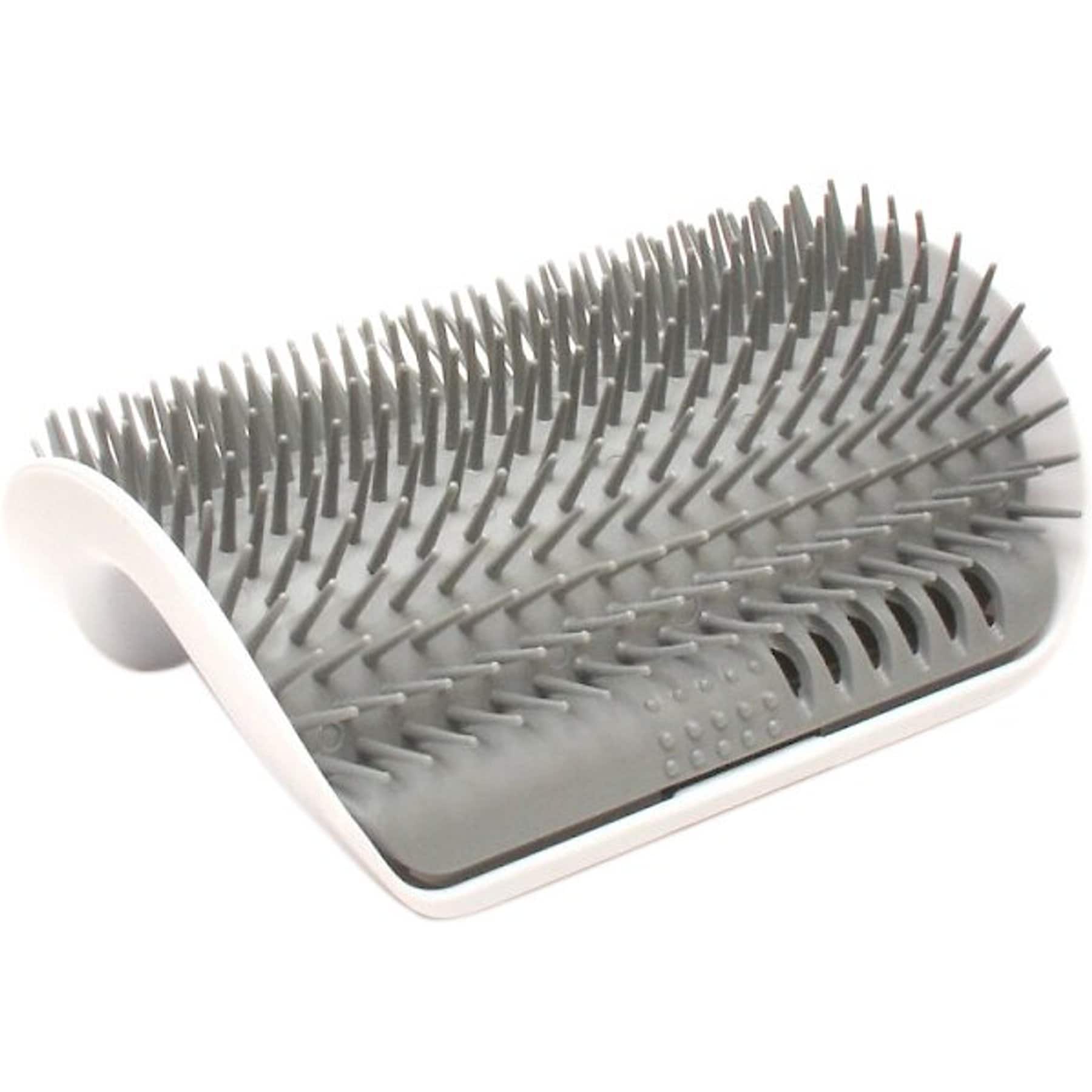
A wall-mounted groomer for cats that choose to rub against it, alongside your own coat checks.
Webvet may earn a commission when you click through to Chewy, at no extra cost to you.
A mounted self-groomer with bristle inserts and a catnip compartment, fixed to a wall or a corner so the cat can work its own cheeks, chin, and flanks whenever it feels like it.
- Suits: cheeks, chin, jawline, and the sides of the body, plus enrichment in multi-cat homes and for cats left alone during the day.
- Wrong for: hips, belly, tail base, and every other area a cat cannot reach, which is the half that actually needs your help.
- Watch out for: it collects hair and skin oils and needs the bristle inserts cleaned, or it becomes a grubby scratching post.
Treat it as a supplement. A cat that uses one daily still needs the same brushing schedule its coat structure demands.
How often should you brush your cat?
Long coats commonly need daily attention to prevent tangles, while short coats may need less frequent grooming. That does not mean every tool should be used daily. Match the routine to the coat, follow each tool's directions, and split the work into comfortable sessions.
How often should I brush my cat is really two questions: how often the coat needs it, and how much your cat will tolerate in one go. The table below answers the first. The second always wins.
| Coat or situation | Routine starting point | Session limit | During heavier shedding |
|---|---|---|---|
| Short coat | Regular checks; brushing once or twice weekly may suffice | Stop before discomfort | Adjust to loose hair and skin condition |
| Dense short coat | Check beneath the surface with a suitable tool | Light contact; stop at resistance | Keep undercoat-tool use within directions |
| Long silky coat | Daily checks and commonly daily gentle brushing | Split work when needed | Check mat-prone areas |
| Dense or cottony long coat | Daily attention commonly helps prevent tangles | Do not force completion | Get help if comfortable care cannot keep up |
| Long cottony coat | Daily checks and suitable gentle brushing | Comfort determines each sitting | Professional help for resistant tangles |
| Curly or rex coat | Match care to density and fragility | Stop if hair pulls or skin is uncomfortable | Avoid a universal weekly-wipe rule |
| Hairless | Skin care rather than brushing | Follow the agreed skin-care plan | Not an undercoat-tool task |
Is it okay to brush my cat everyday? Yes, for most cats, as long as each session is short, the tool is gentle for that coat, and you stop at the first sign of discomfort. Daily brushing should not mean daily use of an undercoat or deshedding tool.
Why session length matters more than frequency
Five good minutes every day beats twenty resented minutes on a Sunday, and it is not close. Frequent short sessions keep the coat ahead of matting and keep the association neutral, which is what makes the next session easy.
Stop before your cat asks you to. Ending on a calm moment is what builds tolerance; ending because the cat swore at you is what destroys it. If you can only finish half the cat today, finish half the cat.
- Kittens: seconds, not minutes, several times a week, purely so handling becomes unremarkable.
- Adults: work to the table above, and add a session either side of the spring and autumn moult.
- Seniors: adjust sessions to comfort and mobility. A new decline in self-grooming needs veterinary assessment; do not automatically increase brushing frequency.
- Long coats: two short sessions beat one long one, and there is no prize for doing the whole cat at once.
Shedding seasons
Cats with outdoor access typically shed heaviest in spring, when the winter undercoat comes out, and again more moderately in autumn. Indoor cats living under artificial light often shed more evenly across the whole year instead.
During heavier shedding, check the coat more often and adjust gentle grooming to what it needs. Do not increase pressure or exceed an undercoat tool's directions.
What regular brushing actually does for a cat
Are you supposed to brush your cat's hair, given that cats groom themselves? Yes. A cat's tongue is an excellent surface tool and a poor deep one: it lifts loose hair but swallows most of it, and there are parts of the body an adult cat simply cannot reach well.
Regular brushing does five things a cat cannot do for itself.
- It removes loose hair before your cat swallows it, which is the most direct hairball control an owner has.
- It catches tangles while they are still tangles, before they felt into mats that need a groomer.
- It spreads skin oils along the hair shaft and lifts dead scale, which is why a brushed coat looks better within a week.
- It gives you a weekly physical check of the whole body: lumps, scabs, fleas, ticks, wounds, and sore spots found early.
- It reduces the hair and dander landing on your furniture, which matters if anyone in the house reacts to cats.
The handling benefit is worth naming separately. A cat that is used to being touched all over is a cat that is easier to medicate, easier to examine, and far less stressed at the vet. Routine grooming is quiet practice for all of it.
Brushing, dandruff, and dander
White flakes appearing when you brush are dry scale coming loose from the skin. A cat dandruff brush does not exist as a special category: brushing lifts the flakes that are already there, and that is a cosmetic improvement rather than a fix.
Persistent flaking usually has a cause worth finding. Low household humidity, obesity or arthritis preventing self-grooming, an inadequate diet, and skin conditions all produce it, and the last three need a vet rather than a brush.
- Light flaking on an otherwise healthy, comfortable cat: brush gently and keep an eye on it.
- Heavy, greasy, or yellowish scale, especially along the back: book a vet appointment.
- Flaking with scratching, redness, broken hair, scabs, or bald patches: that is a skin problem, and our guide to ringworm in cats covers one of the common causes and when to get it checked.
Dander, the microscopic skin flakes that carry the protein most people react to, is a separate matter. Brushing removes some of it before it becomes airborne. Do it somewhere easy to clean, and ideally not with the allergic member of the household holding the brush.
What to do when your cat hates the brush
Do cats feel better after a brush? Many clearly do, and you can see it: the slow blink, the lean into the stroke, the roll onto one hip. But a cat that flattens its ears, lashes its tail, or bites the brush is not being difficult.

If your cat will not let you brush it, stop the session rather than holding it more firmly. Try a brief introduction to a gentler tool when the cat is relaxed. A new objection to grooming, especially over one area, can also mean discomfort and deserves a veterinary check.
Why does my cat purr when I brush her? Usually because the strokes feel like social grooming from another cat, which is pleasant. Purring can also happen when a cat is uneasy, so read the rest of the body: a soft, leaning cat is enjoying it; a stiff one is not.
If your cat attacks you when you brush her, the session went past her limit, often at a sensitive zone or after too many strokes. End it calmly, start the next one at the cheeks with fewer strokes, and see a vet if the reaction is new, since pain is a common cause.
Where to brush, and where to stop
Almost every cat has zones it accepts and zones that end a session, and they are remarkably consistent. Starting in the wrong place is why plenty of first attempts fail with a perfectly good brush.
Zones most cats accept, roughly in order of tolerance:
- The cheeks and under the chin, where cats scent-mark and genuinely enjoy pressure.
Purring or licking your hand is not a reason to keep brushing after your cat tries to leave. Pause and watch whether it chooses to remain for another gentle stroke. Pulling away, stiffening, turning toward the tool, or trying to bite means the session should stop.
- The top of the head and behind the ears.
- The neck and the shoulders.
- Along the spine from the shoulder blades back towards the middle of the back.
Zones that end sessions, in order of how quickly they do it:
- The belly, which is defended by almost every cat regardless of how relaxed it looked a second earlier.
- The hips and the backs of the thighs.
- The base of the tail, which is intensely sensitive in many cats.
- The tail itself.
- The armpits and the insides of the legs.
The awkward truth is that the mat-prone areas and the intolerable areas are largely the same list. That is exactly why those areas need short, frequent, unhurried attention rather than one determined effort.
Brush in the direction the hair grows, head towards tail and spine outward. Going against the grain drags on the coat, feels wrong to the cat, and does not remove any more hair.
Building tolerance in short sessions
This is desensitisation and counter-conditioning, which sounds clinical and is really just going slowly while good things happen. Behaviour guidance from the ASPCA and VCA Animal Hospitals follows the same shape for any handling a cat finds unpleasant.
- Leave the brush out where your cat lives for a few days until it becomes furniture rather than an event.
- Touch, do not brush. One hand stroke where the brush will go, a treat, then stop while your cat still wants more.
- One stroke with the back of the brush, a treat, stop. Repeat over several days.
- One real stroke on the shoulder, a treat, stop. This is the whole session, and it is meant to be.
- Add strokes, not minutes. Three strokes today, five next week, and the cat sets the pace.
Deliver the food during or immediately after the stroke rather than afterwards as a reward for surviving. The point is to change how the brush feels, not to pay compensation.
- Use something your cat genuinely wants: a lickable treat, a scrap of chicken, whatever it will cross a room for.
- Groom where the cat already chooses to settle, not on a table it associates with carriers and pills.
- Do not scruff, pin down, or wrap a cat to force a grooming session. Stop and seek help if essential coat care cannot be completed comfortably.
- Never follow a cat that has left. Leaving is the polite version of the message, and honouring it makes the next session easier.
If your cat bites the brush
Plenty of cats bite the brush without any aggression involved. A brush is a moving object at face height, and a cat with any play drive will treat it exactly like a toy that has come to visit.
- Keep the brush behind the line of the head rather than passing it in front of the face.
- Slow the strokes down. Fast movement reads as prey.
- Shorten the session before the arousal builds, because a wound-up cat does not settle mid-session.
- Give the cat something else to hold, such as a kicker toy, if it wants to grab something.
A cat that growls, hisses, swipes with claws out, or bites your hands rather than the brush has moved from play into stress. End the session, and if that reaction is new, mention it to your vet, because pain is a common reason a previously tolerant cat stops accepting handling.
Deshedding tools versus everyday brushes
A deshedding tool is not a brush, and treating them as interchangeable is the most common mistake in this category. A brush works through the coat. A deshedding tool carries a fine blade edge that strips loose undercoat out, and used too often it takes hair the cat had not finished with.
FURminator-style tools are the best-known version. They are genuinely effective on a heavy seasonal moult and genuinely capable of thinning a coat and irritating skin if they become the weekly default.
- Use an undercoat tool only on a suitable coat and at the frequency its directions recommend. Keep that separate from ordinary brushing or combing.
- Never use one on a short single coat, a curly coat, or a hairless cat.
- Never use one on matted fur, where the blade catches the mat and pulls on skin.
- Stop when the coat has been comfortably groomed or your cat needs a break. Do not keep working to produce more hair; the amount collected does not prove whether a tool is cutting.
Our separate guide to cat deshedding tools covers which one suits which coat and how often each can safely be used, and it is the right place to settle that purchase rather than this one.
One more thing worth saying plainly: brushing does not reduce how much your cat sheds. Shedding is driven by daylight, health, and coat cycle. What brushing changes is where the hair ends up, which is in the brush rather than on the sofa. For the full method and its limits, see comparing cat deshedding tools.
When the coat is already matted
A brush is not a dematting tool. Once fur has felted into a solid mat that moves with the skin when you push it, brushing into it is painful and can tear skin that is thinner than most owners expect.
Mats form where fur rubs: the armpits, behind the ears, along the collar line, the trousers at the back of the thighs, and the base of the tail. They also form fastest on the cats least willing to let you work there.
- Small, loose tangles can be teased apart with fingers from the outside edge inward, never pulled from the base.
- Never cut a mat out with scissors. Skin tents up into a tight mat, and the most common cause of a grooming laceration is exactly that cut.
- Tight mats, large mats, multiple mats, or any mat on a cat that will not be handled need a professional groomer or a vet, sometimes with sedation for a hygiene clip.
- Skin under a mat is often inflamed, and occasionally infected or infested. It needs looking at once the mat is off.
Our separate guide to matted cat fur covers safe removal and the point at which a professional groomer or a vet has to take over.
If the coat has changed suddenly, or you are finding broken hair, scaly patches, or bald areas, read our guide to ringworm in cats and book a vet appointment rather than buying a firmer brush. For the full method and its limits, see handling matted cat fur safely.
The best cat brush for knots is the one used before knots tighten: a gentle slicker plus a metal comb on mat-prone areas. Once a knot is felted against the skin, no brush is the right tool, and fingers, a groomer, or your vet take over.
Brushing and hairballs
Brushing is the single most effective hairball intervention you actually control. Every gram of loose hair that ends up in the brush is hair that does not end up in your cat's stomach, and that is the entire mechanism.

It matters most for long-coated cats, for cats in a heavy moult, and for cats that groom compulsively. Our guide to hairball prevention in cats covers the full plan, and our explainer on cat hairballs covers what is normal and what is not.
Occasional hairballs are ordinary. Retching repeatedly without producing anything, vomiting more than about once a month, refusing food, straining, constipation, or lethargy are not, and our guide to hairball blockage in cats explains why those signs need a vet rather than another dose of paste.
Flea combs and what they are for
A flea comb is a metal comb with teeth set close enough together to trap fleas and flea dirt as they pass through the coat. It is a detection tool, not a treatment, and it is not the comb you finish a grooming session with.
- Comb slowly through the base of the tail, the neck ruff, and the belly, which is where fleas concentrate.
- Wipe what you collect onto damp white paper. Black grit that smears rust-red is flea dirt, which is digested blood.
- Dunk the comb in soapy water between passes so anything you catch cannot jump back.
Finding flea dirt means the household needs treating, not that the coat needs more combing. No brush, comb, or steam tool kills fleas, and a steam brush certainly does not. Our guide to flea shampoo for cats covers what actually works and what to use it alongside.
Brushing before and after a bath
Is it better to brush a cat wet or dry? Dry, and before the bath. Water tightens existing tangles into far harder mats, so anything that can be combed out beforehand should come out beforehand.
- Brush and comb the whole cat first, and deal with any tangle you find before water is involved.
- Do not brush a soaking coat. Wet hair stretches and breaks, and a wet double coat pulls badly.
- Let the coat dry completely, then finish with a light comb pass to lift the coat back up.
Most cats never need a routine bath at all. Healthy cats manage their own coat cleanliness perfectly well, and washing a cat that does not need it strips the oils its coat depends on.
A bath is usually reserved for a specific reason: a medicated wash prescribed by your vet, a contaminant that cannot safely be left on the fur, or a cat that has stopped grooming itself. Our separate guide to bathing a cat covers the full sequence. For the full method and its limits, see safe cat bathing and drying.
If you are learning how to bathe a cat, use only a shampoo labeled for cats or one your vet recommends, never a dog or human product. A FURminator cat shampoo is a cat-labeled shampoo marketed to help with shedding; it does not replace brushing out the coat before the bath.
Brushing teeth is a different job
Brushing a cat's teeth has nothing in common with brushing its coat beyond the word. Different tool, different frequency, different technique, and never the same brush.
- Use a soft cat toothbrush or a finger brush, never a coat brush and never a stiff human toothbrush.
- Use enzymatic toothpaste made for cats. Human toothpaste is not safe for them to swallow.
- Daily is the goal, and even a few days a week is far better than nothing.
- Build it the same way you build brush tolerance: seconds at a time, one tooth, stop early.
Our guides to cat teeth cleaning and cat dental treats cover the home routine and the products worth using alongside it. We also have a separate step-by-step guide to brushing a cat's teeth. For the full method and its limits, see introducing cat tooth brushing.
Where brushing fits in the full grooming routine
What do groomers use to groom cats? The same tool families described above, plus clippers, curved nail scissors, and, for a cat that will not tolerate handling, sedation arranged with a veterinarian. There is no secret professional brush.
What professionals do differently is order and pace, and both are easy to copy at home.
- Brush first, working by section and by coat structure.
- Comb second, as the check, and deal with anything the comb finds before moving on.
- Nails third, while the cat is already settled and being handled.
- Ears and eyes only if they need it, with a damp cloth or a product your vet recommends.
- Teeth on a different day entirely, because stacking them onto a grooming session is how you lose both.
Our guide to cat nail clippers covers the claw half of that session, including how to avoid the quick and what to do if you catch it. Our separate pillar guide covers the whole at-home grooming routine end to end.
Keep the whole thing boring. Same room, same surface, same time of day, same order. Predictability is the single biggest lever you have on how much your cat will accept, and it costs nothing. For the full method and its limits, see the complete cat grooming routine.
Cat brush questions
Frequently Asked Questions
What is a good cat brush that actually works?
A brush is working if two things are true after a session: there is a real amount of loose hair on the pins or nubs, and a metal comb then glides through the coat without snagging. Those are the only two proofs worth trusting.
If the brush comes away almost clean, it is usually the wrong family for that coat rather than a bad product. A rubber brush on a dense double coat, or a bristle brush on a long cottony coat, will always underperform because neither reaches the layer that is actually shedding.
How do I clean a cat brush, and when should I replace it?
Remove collected hair after use and follow the exact brush's cleaning instructions. Do not assume wooden bodies, natural bristles, pads, and electrical tools can all be washed the same way. Dry permitted washable parts fully before storage.
Replace it when a pin is bent, a tip cap has come off and left bare wire, the rubber pad has cracked or hardened, the bristles have splayed, or a glove's nubs have torn. Each of those turns a safe tool into a sharp one, and none of them is worth saving money on.
Can you brush a cat too much?
Yes. The failure mode is not the number of sessions but the number of passes over one patch of skin. Repeated strokes over the same spot, especially with a wire slicker, cause brush burn: red, irritated skin under the fur, followed a day later by a cat licking that exact area.
Watch for broken hairs, new thinning, irritated skin, or reduced tolerance. Use light strokes and follow the tool's directions. No fixed number of passes or sessions guarantees safety.
What brush should I use on a senior or arthritic cat that has stopped grooming itself?
Use the softest tool that still removes hair: a rubber curry brush, a grooming glove, or a soft bristle brush, with a fine comb only where the coat needs checking. Skin thins with age, and a stiff cat cannot move away from pressure the way it used to.
The coat over the hips, the lower back, and the base of the tail usually fails first, because that is exactly what a stiff or heavy cat can no longer reach.
Keep sessions to a couple of minutes, support the cat rather than asking it to hold an awkward position, and treat the coat change itself as a reason to see your vet. Arthritis, weight, and dental pain are all treatable causes.
Do hairless and curly-coated cats need a brush?
Hairless and curly-coated cats need different approaches. Bare skin does not need brushing. Curly coats vary in density and length, so choose care for the actual coat rather than treating all rex breeds alike.
That means a soft damp cloth, regular attention to the folds and the ears, and a plan agreed with your vet, because the oils a coat would normally absorb sit directly on bare skin.
Sparse, delicate coats may need very light care, while a denser curly coat can need regular gentle combing to prevent tangles. Ask a cat-experienced groomer or your veterinarian which tools suit the coat. A weekly wipe is not a complete routine for every curly-coated cat.
Further reading: KONG cat brush specifications

Editor
The Webvet Editorial Team is the in-house group of pet-care editors and writers behind Webvet, operated by Smart Pet Collective. The team researches, writes, and maintains Webvet's pet health, behavior, and medication content. Every article follows a defined editorial process: research from reputable veterinary and scientific sources, careful drafting, mandatory review of medical content by a credentialed veterinarian, and dated publication. Health and medication articles are medically reviewed by a licensed veterinary professional before they go live and are kept current over time.


