How to Brush Cat Teeth: A Calm, Step-by-Step Routine
Introduce cat toothbrushing at your cat's pace with an example staged plan, suitable tools, gentle technique, and clear signs to stop and call your veterinarian.

This article contains affiliate links. Webvet may earn a commission when you buy through them, at no extra cost to you.
Learning how to brush cat teeth starts with a comfortable mouth and a pace your cat accepts. Before beginning with an adult or senior cat, arrange a veterinary mouth check. Red gums, bad breath, deposits, broken teeth, or pain need attention before brushing.
This guide gives an example progression for introducing brushing, the tools and technique to consider, and the mouth signs that mean stop and call a veterinarian. Your cat's comfort determines the pace.
If your cat fights the brush, that is information rather than failure. A cat who is struggling, growling, or trying to leave is telling you the session is over, and the routine that lasts is the one that ends a few seconds early every time.

 Sponsored
Want a vet's help with your cat's anxiety or behavior?
Talk to a licensed vet at Dutch over video, often the same day. They can recommend treatment and prescribe it when it's appropriate.
Use code Pets30
Plans start at $11/month · covers up to 5 pets
- Licensed vets in most states
- Rx for 150+ conditions
- 4.7 on Trustpilot
Do you really need to brush your cat's teeth?
Brushing mechanically removes plaque where the brush reaches. VOHC-accepted dental products can offer additional plaque or tartar control when used as directed; they do not replace treatment for existing dental disease.

- 1Aim for daily brushing once comfortably accepted; ask your vet about a practical plan if that is not possible.
- 2Focus on outer tooth surfaces without forcing the mouth open or holding the jaw shut.
- 3Use a small soft brush with light pressure near the gumline and gradually include upper and lower teeth.
- 4Brushing controls new plaque. It does not remove hardened tartar or treat dental disease.
- 5Drooling, bleeding, pawing at the mouth, or dropping food means stop and contact your veterinarian.
Dental plaque is a soft film of bacteria that starts rebuilding on a clean tooth within hours of the last brush. Left alone, it mineralizes into dental calculus, the hard brown deposit most owners call tartar, within days rather than weeks.
Once that happens, no amount of brushing shifts it. Tartar comes off at a veterinary clinic under general anesthesia, which is why the honest goal of home brushing is to keep the next layer soft rather than to clean up the last one.
Underneath, the sequence is what matters. Bacteria at the gumline cause gingivitis, gingivitis becomes periodontal disease, and periodontal disease destroys the attachment holding a tooth in place. The Merck Veterinary Manual pet-owner section describes dental disease as one of the most commonly diagnosed problems in adult cats.
Why does my cat scrape his teeth on me?
If your cat scrapes his teeth on you, it is usually a friendly scent-marking rub or a gentle mouthing habit rather than a sign the teeth need cleaning. A cat that suddenly rubs or scrapes its mouth on things more than usual may have oral discomfort worth a vet check.
What happens if you never brush your cat's teeth
Skipping tooth brushing leaves fewer opportunities to remove new plaque from your cat's teeth. If brushing is not possible, ask your veterinarian about cat-specific VOHC-accepted alternatives and regular dental checks. Existing tartar, inflamed gums, or pain needs treatment; adding treats cannot resolve it.
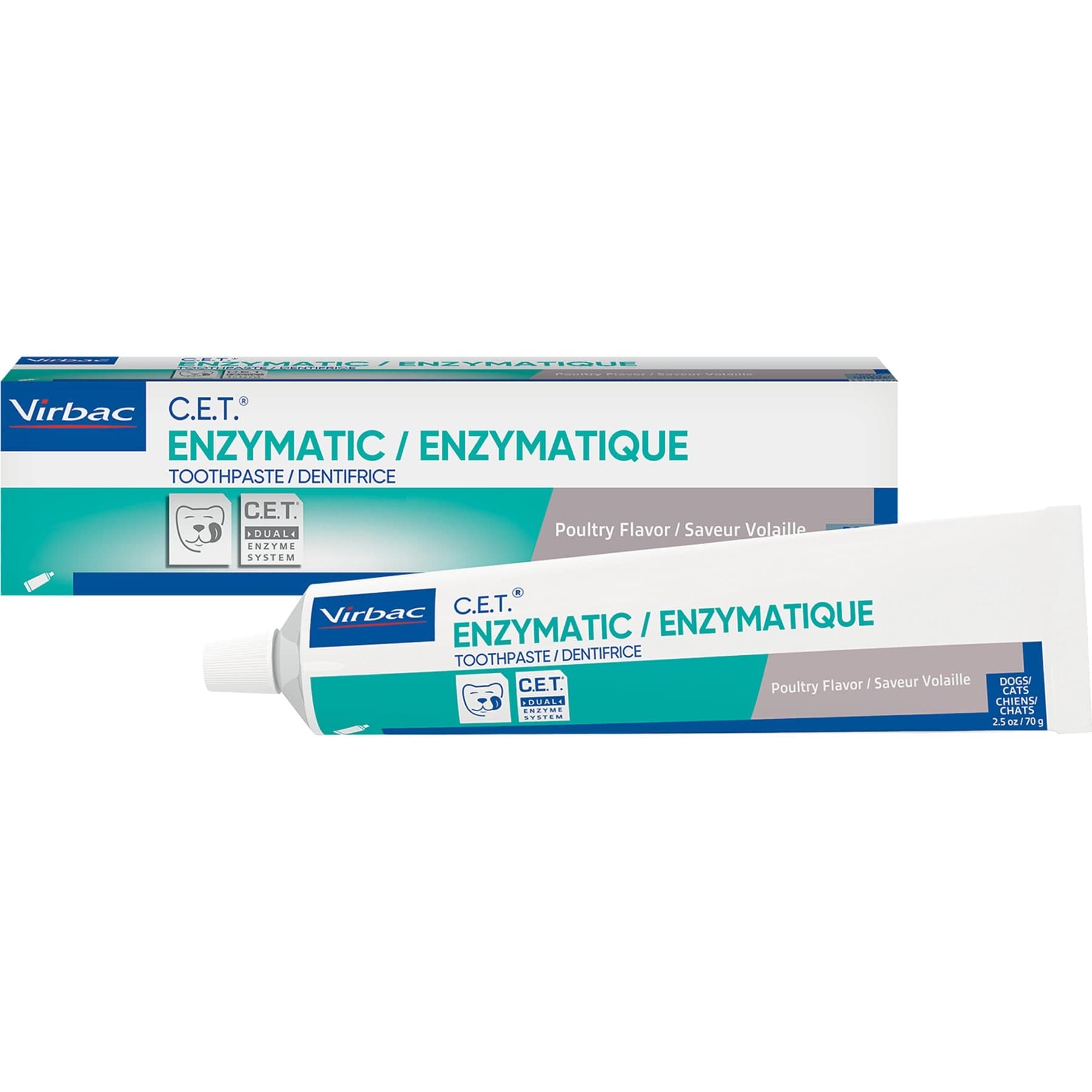
Poultry-flavored enzymatic pet toothpaste for gradual introduction to brushing.
Webvet may earn a commission when you click through to Chewy, at no extra cost to you.
Dental disease can progress through the following changes, although the timing and extent differ between cats.
- Plaque builds on the tooth surface and along the gumline within hours of the last clean.
- It mineralizes into tartar, which gives new plaque a rough surface to grip and pushes the problem under the gumline.
- The gum margin reddens and swells. This is gingivitis, and at this stage it is still reversible.
- If inflammation progresses into the supporting tissues and bone, it can cause irreversible periodontal damage.
- Advanced disease can loosen teeth and make extraction necessary. A veterinary examination determines the treatment.
The cost lands on both sides. There is the mouth itself, and there is the bill for fixing it under anesthesia once it has gone far enough.
If you cannot brush your cat's teeth, do not force it or assume dental care can wait until eating becomes difficult. Ask your veterinarian about cat-specific products with evidence for plaque or tartar control and an oral-examination plan. Brushing remains the preferred home routine when the mouth is comfortable and the cat accepts it.
If you want to read further on how plaque, gingivitis, and periodontal disease follow on from one another, VCA's pet health library covers the sequence in more depth.
- Untreated disease can lead to a tooth root abscess, which may show as swelling along the jaw or below the eye. When a cat tooth abscess bursts, it can drain pus through the skin or into the mouth.
- Can a tooth abscess kill a cat? An untreated infection can spread and make a cat seriously ill, so swelling or a draining wound needs a prompt vet visit rather than comparing pictures online.
- A black spot on a cat's tooth may be staining, tartar, or tooth damage, and only a veterinary exam tells which.
- What to feed a cat with bad teeth is a question for your vet, because food cannot treat dental disease.
- While a mouth is sore, soft canned food or softened kibble is often easier to eat than regular dry food for cats with bad teeth. Any cat food for bad teeth is a comfort measure until the mouth is treated.
Which teeth actually need the brush
The outer surfaces of the upper back teeth and the four canines. Those are where plaque accumulates fastest and where periodontal disease shows up first, so they get the brush before anything else does.
The large cheek teeth near the back of the mouth deserve attention because plaque and tartar can accumulate there. Choose a small brush head that reaches them without pressing into the gums, and gradually include the other upper and lower teeth.
Priority order when a cat gives you ten seconds:
- The upper fourth premolars and the molars behind them, on both sides.
- The upper canines, which are long, easy to reach, and collect plaque along the gumline.
- The rest of the upper arcade, working forward toward the incisors.
- The lower teeth last, and only if the cat is still relaxed.
Concentrate on the outer surfaces and do not force the mouth open to reach the inside. Ask your veterinarian about any additional areas that need attention. For the adult set and where each tooth sits, see our guide to how many teeth cats have.
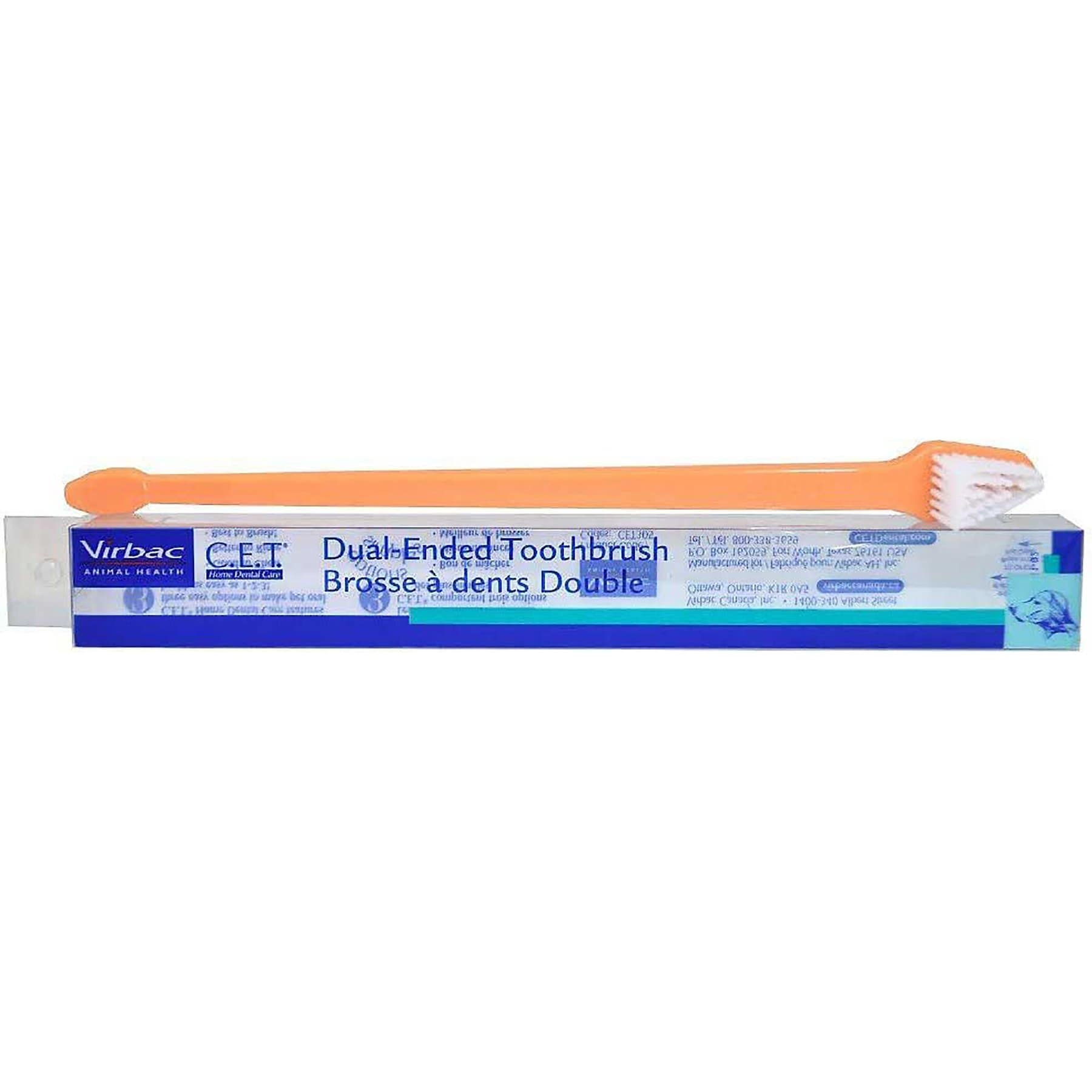
A dual-ended toothbrush lets you choose the head that fits comfortably.
Webvet may earn a commission when you click through to Chewy, at no extra cost to you.
Kitten teeth follow a predictable eruption timeline: feline deciduous teeth usually appear from about two to six weeks of age, and permanent teeth replace them from about three to six months. Cat teeth stop growing once the adult set is in, typically by about six to seven months.
That timeline is how vets estimate a kitten's age by its teeth. In adult cats, tooth wear and tartar give only a rough guess at how old a cat is.
What you need: cat toothbrush and cat toothpaste
Use a small soft brush and, if used, a toothpaste made for pets labeled for cats. Do not improvise with human toothpaste or baking soda.
If you do not have cat toothpaste, do not substitute a household paste. Gentle brushing with a moistened soft brush can still provide mechanical cleaning if your cat tolerates it; ask your veterinarian about the best routine for your cat. Give each pet its own brush, rinse it after use, and let it dry. Follow the toothpaste's storage and expiry instructions, and replace a damaged or worn brush.

Choose toothpaste labeled for cats or for dogs and cats, and follow its directions. Pet formulas are designed for brushing without rinsing, but ingredients and recommended amounts differ. Human toothpaste is unsuitable. Flavor may help acceptance; it does not replace gentle mechanical brushing.
| Tool | Best for | What it does well | The drawback |
|---|---|---|---|
| Finger brush | Cats accepting mouth handling without mouthing or biting | May ease transition from touch | Fingers near teeth; size and bristles may limit access |
| Dual-ended cat toothbrush | Any cat who tolerates a handle | The small angled head reaches the upper back teeth a finger cannot | Needs a cat who is already calm about being handled |
| Ultra-soft child's brush | Large cats, or as a stopgap tonight | Soft bristles, easy to find, costs almost nothing | The head is usually too wide for the back teeth of a small cat |
| Gauze on a fingertip | Selected cats accepting contact without biting | May introduce contact with tooth surfaces | Less reach than bristles; exposes finger to bites |
The Veterinary Oral Health Council accepts individual products for specified plaque-control or tartar-control claims. Check the feline product and its exact claim on the council's current list.
Choosing a branded cat toothpaste or brush
Petsmile, Arm and Hammer, and HealthyMouth all sell cat toothpaste, and some sell a matching toothbrush or a toothpaste and brush kit; whichever brand you pick, the same selection rule applies.
Pick a paste labeled for cats and meant to be swallowed, with no xylitol and no human fluoride toothpaste, and a brush small and soft enough for your cat's mouth.
Virbac C.E.T. Enzymatic Toothpaste, Poultry Flavor
Virbac C.E.T. Enzymatic Toothpaste is one cat-labeled option to discuss with your veterinarian. Flavor acceptance varies, and the label controls the amount and method of use.
It is a researched, vet-informed selection based on published formulation and veterinary home-care guidance rather than on testing of our own.
A two-week example for introducing toothbrushing
The two-week table is an example progression, not a deadline. Some cats need several weeks or longer. Repeat a comfortable stage and move back if your cat becomes tense or tries to leave.

| Days | What you do | Session length | Ready to move on when |
|---|---|---|---|
| Example days 1 to 3; repeat as needed | Brief cheek contact and accepted lip lift, then reward | Only while comfortable | Willing acceptance without tension or avoidance |
| Example days 4 to 5; repeat as needed | Offer cat toothpaste in the labeled amount | Brief taste introduction | Comfortable acceptance |
| Example days 6 to 7; repeat as needed | Gentle contact with a few outer surfaces | Stop before resistance | No pain, tension, mouthing, or attempts to leave |
| Example days 8 to 10; repeat as needed | Try a soft suitable tool on accepted areas; keep fingers away from a biting cat | A few comfortable contacts may be enough | Accepted without distress |
| Example days 11 to 14 or later | Gradually include other upper and lower outer surfaces | Build only while comfortable | Do not require the whole mouth in one sitting |
Every stage ends the same way: a treat, a meal, or whatever your cat likes most, delivered within a couple of seconds. This is straightforward desensitization paired with positive reinforcement, and the timing of the reward is what does the work.
Repeat each stage until it is comfortably accepted. A calendar date or a fixed number of successful sessions does not establish readiness. Move back or stop whenever your cat becomes tense, mouths your hand, or tries to leave.
Three things make the ladder work:
- Pick the same time of day, ideally just before a meal, so the session reliably predicts food.
- Work where the cat already relaxes, on a lap or a favorite chair, rather than on a countertop.
- Keep the session brief and end on a comfortable interaction. Stop sooner if your cat shows discomfort; there is no fixed number of final seconds that determines what it learns.
Start brushing your cat's teeth once a vet has confirmed the mouth is healthy and comfortable; for an adult cat that has never been brushed, book that mouth check first. Then follow the stages above at your cat's pace, so your cat gets used to teeth brushing before the brush itself appears.
Virbac C.E.T. Fingerbrush
A rubber sleeve that fits over your index finger, and the lowest-threshold tool for the first week or so of the ladder. It keeps the sensation close to the finger your cat has already accepted, which is why it belongs at this stage rather than at the end.
A finger brush places your finger close to the teeth and is unsuitable for a cat that mouths or bites. Its size and bristles may make some areas difficult to reach; a small handled brush may work better once accepted.
SponsoredVet care that's always there
Unlimited video calls and messaging with licensed vets for less than a typical vet visit. One membership covers up to five pets.
Use code Pets30
Plans start at $11/month · covers up to 5 pets
- Licensed vets in most states
- Rx for 150+ conditions
- 4.7 on Trustpilot
How to brush your cat's teeth, step by step
Gently lift the lip and brush the outer tooth surfaces with a small soft brush angled toward the gumline. The mouth can stay naturally closed. Start with accepted areas and gradually include the other upper and lower teeth.
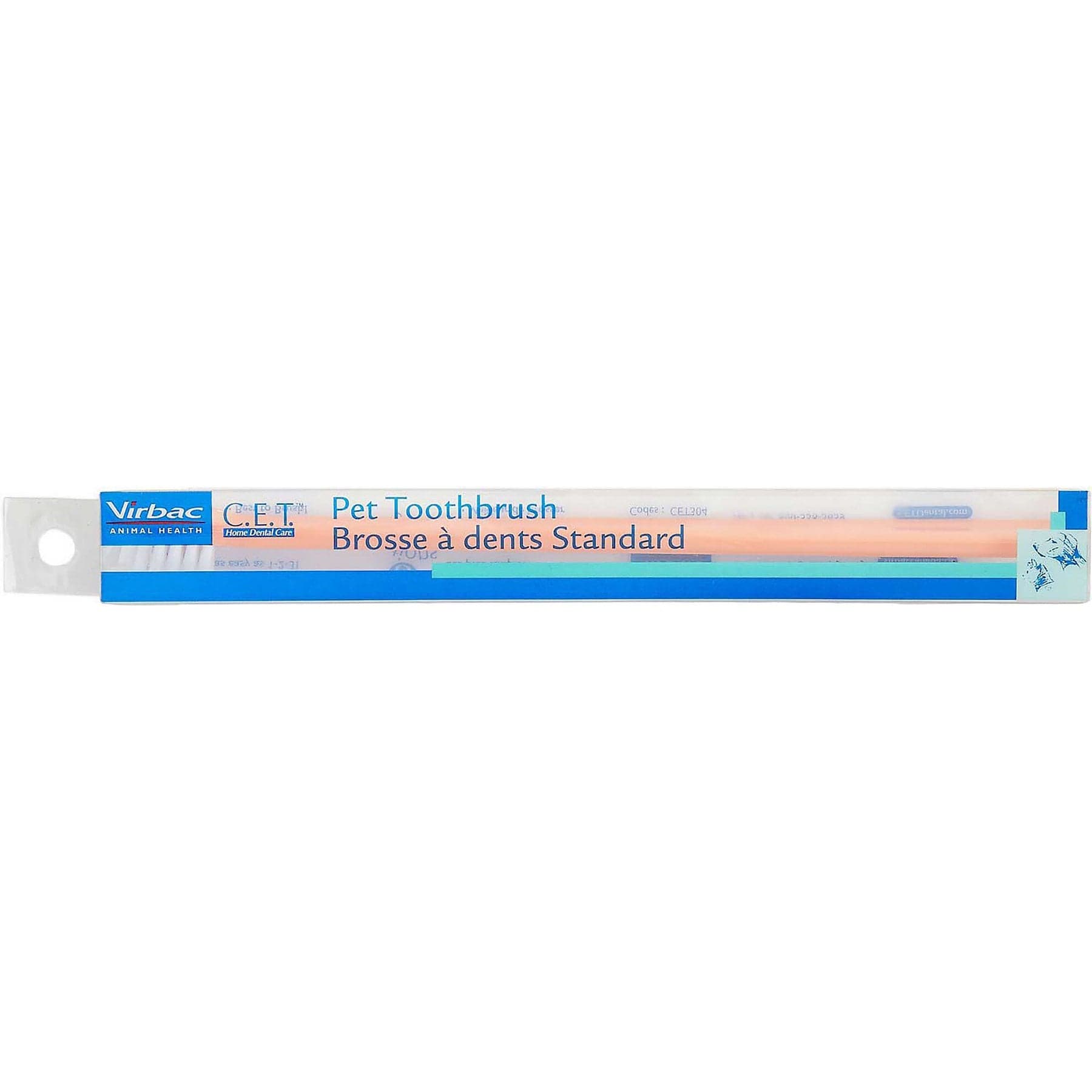
A small cat toothbrush for gentle access to outer tooth surfaces.
Webvet may earn a commission when you click through to Chewy, at no extra cost to you.
Build toward brief brushing on both sides as your cat becomes comfortable. Do not continue to meet a time target or force access to a tooth. The aim is gentle plaque removal where the brush can safely reach.
- Settle the cat where they already relax, facing away from you, with your body behind them rather than looming over them.
- Use the amount of pet toothpaste directed on the label. Let your cat taste a small amount first, and proceed only if your cat accepts it comfortably.
- Gently lift the lip without squeezing the head or holding the jaw shut. Stop if your cat resists or the area appears painful.
- Slide the brush along the outside of the upper back teeth, bristles tilted about 45 degrees toward the gumline.
- Use small circles or short back-and-forth strokes, a few seconds per section, working forward toward the canines.
- Switch sides. If the cat is still settled, do the lower outer surfaces the same way.
- Stop and reward, whether you covered the whole mouth or reached two teeth.
Pressure should be light enough that the bristles bend rather than the gum. If the gumline bleeds, note where it happened, stop for the day, and read the section on when to stop below. Bleeding in the first few sessions often means gums that already need looking at.
- Brushing is the core of cat dental care at home. The best dental care for cats combines daily or near-daily brushing, a pet toothpaste, and regular veterinary oral exams.
- That routine is the core of caring for your cat's teeth: brushing most days plus regular vet checks keeps teeth healthy and catches feline dental problems early.
- It is also the most affordable dental care for cats: a brush and paste cost far less than treating advanced dental disease.
- How do cats clean their teeth in the wild? They do not brush, and chewing alone does not reliably keep the gumline clean, so improving cat teeth health depends on your help.
Virbac C.E.T. Dual-Ended Toothbrush
A small angled head may help reach the cheek teeth once your cat accepts a handled brush. Choose the end that fits without pressing into the gums.
The larger head covers the rest of the arcade in fewer strokes, which shortens the session. It is a researched, vet-informed pick based on head geometry and published design, not on any testing we carried out.
How often to brush a cat's teeth
Daily. That is the standard in veterinary dental home-care guidance, including the home care recommendations published by the American Veterinary Dental College, and it exists because plaque starts rebuilding within hours of a clean tooth.
VCA suggests brushing at least three times a week when daily care is not realistic. Treat that as a practical target rather than a rule, and never force a session just to hit it.
What the frequency actually buys you:
- Daily brushing can reduce plaque accumulation, but does not guarantee freedom from dental disease. Continue veterinary oral examinations.
- If daily brushing is difficult, discuss a realistic schedule and suitable adjuncts with your veterinarian.
- Use each comfortable session to clean the surfaces you can safely reach, while gradually building consistency.
- Occasional brushing and handling practice should not be treated as a complete dental-care plan.
Frequent gentle care is preferable to occasional prolonged scrubbing. Comfort and coverage matter as well as frequency, and veterinary examinations remain necessary.
What to do when your cat hates having their teeth brushed
If your cat hates having their teeth brushed, stop the session and return to a comfortable earlier step. Let your cat accept lip touching and pet toothpaste before trying a small soft brush. Do not hold the cat down. Persistent resistance or mouth pain needs veterinary advice.

Almost every abandoned brushing routine failed the same way. It moved too fast, and the cat learned to leave the room when the tube came out. Rebuilding from an earlier stage of the ladder is slower on paper and much faster in practice.
Things that genuinely help:
- A loosely folded towel may help a cat that already accepts it. Keep the head clear, avoid chest pressure, and unwrap immediately if the cat strains or struggles. Do not use wrapping to finish a resisted brushing session.
- A calm helper may offer gentle support while you brush, but two people should not overpower the cat or immobilize its head. Stop at resistance.
- A softer or smaller tool may be easier to accept. Do not place a finger brush or gauze-wrapped finger near the teeth of a cat that mouths or bites.
- One side per session. Upper right tonight, upper left tomorrow. Nothing says the whole mouth has to happen in one sitting.
Do not scruff a cat for this. Scruffing an adult cat is uncomfortable, it raises the stress of a task you need the cat to accept for years, and it makes the next session harder rather than easier.
If your cat is generally hard to handle rather than specifically difficult about the mouth, the handling is the thing to work on first. Our guide to cat nail clippers covers the same restraint problem on a task most cats find easier to accept.
If progress stalls, ask your veterinarian to reassess pain, handling, and alternatives. There is no fixed month-long trial that proves brushing will never be possible.
Kittens: when to start brushing
Once a kitten is settled and comfortable with gentle handling, introduce brief positive contact around the lips. Ask your veterinarian when to introduce brushing for that kitten. Do not brush a painful or actively teething mouth, and stop if handling causes distress. Early practice can help, but does not guarantee adult tolerance.
Pleasant early handling can make later dental care easier, but cannot guarantee adult tolerance. Respect your cat's response.
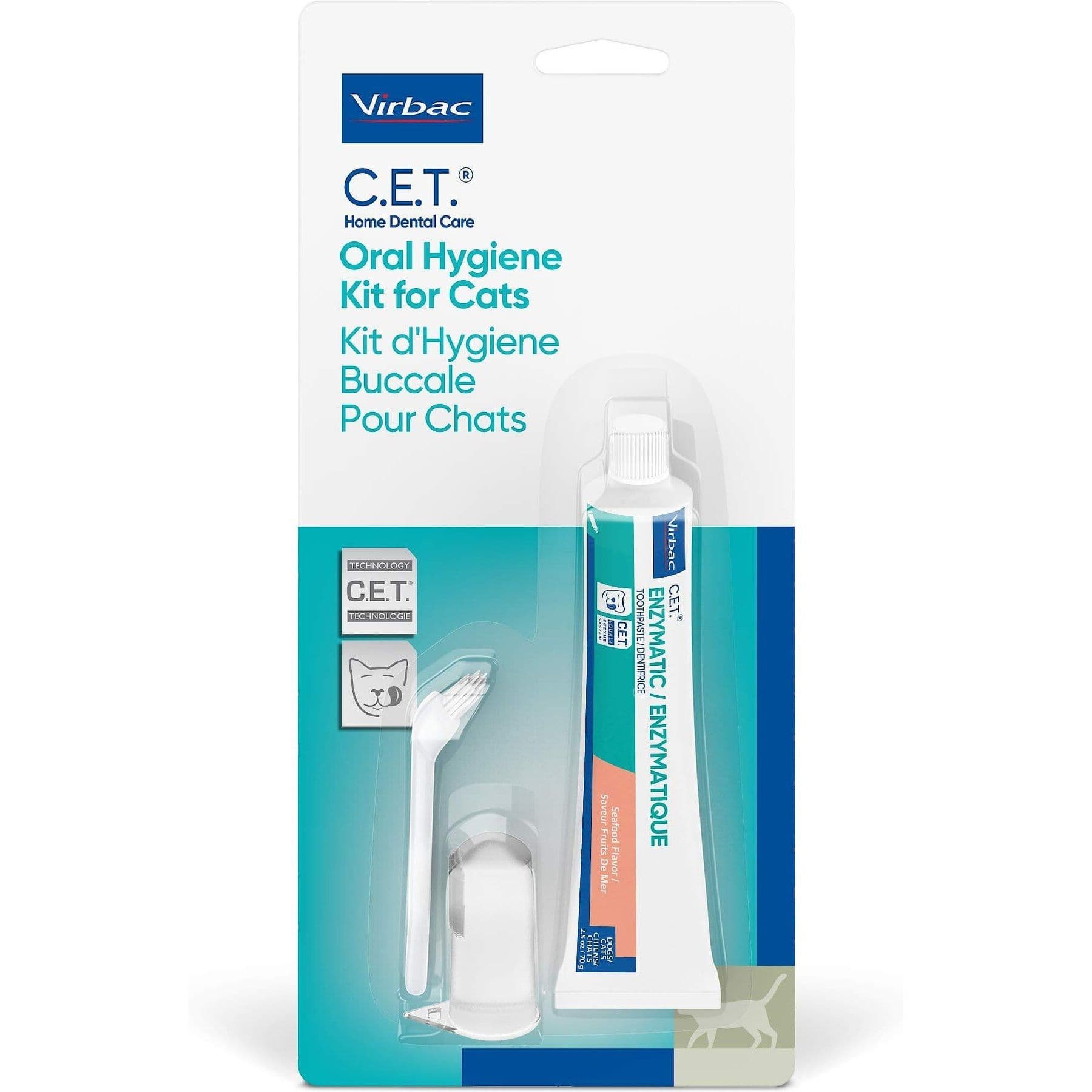
A cat dental starter kit with seafood-flavored toothpaste and brushing tools for gradual introduction.
Webvet may earn a commission when you click through to Chewy, at no extra cost to you.
What the kitten version looks like:
- Touch the muzzle and lift the lip for a second or two, several times a week, always followed by something good.
- If appropriate for the kitten and comfortably accepted, offer only the amount of cat-labeled toothpaste directed on its label.
- Introduce a suitable soft brush when your veterinarian advises that the mouth is comfortable and the kitten accepts the preceding handling steps.
- Keep it to seconds. A kitten's attention runs out long before yours does.
The exception is teething. Between roughly three and six months a kitten has sore gums around loose teeth, and brushing a mouth that already hurts teaches exactly the wrong lesson. Keep the handling, pause the brush, and pick it up once the adult teeth have settled.
A kitten toothbrush should be very small with ultra-soft bristles, or a soft finger brush if the kitten does not mouth your hand.
Is it too late to start with an adult or senior cat?
It is not automatically too late to start brushing an adult or senior cat's teeth. First have a veterinarian check for painful dental disease and treat it. Once the mouth is comfortable, introduce handling gradually. Brushing prevents new plaque buildup but does not remove existing tartar.
The order of operations is different from a kitten's, though, and getting it wrong is how people end up brushing a painful mouth.
- If you have never brushed your cat's teeth, arrange a veterinary mouth check first. A gentle lip lift may reveal deposits or damage, but it cannot rule out painful disease below the gumline. Do not press or wiggle teeth to test them.
- Book a vet look if you see red or swollen gums, brown deposits, a broken tooth, a bad smell, or a sharp objection to one specific spot.
- Let the vet deal with what is already there. Brushing on top of established periodontal disease or a painful lesion is uncomfortable for the cat and does not fix the underlying problem.
- Use a gradual introduction once the mouth is comfortable, allowing each stage to take as long as your cat needs.
Progress may take weeks or longer. Repeat comfortable steps and stop at fear or discomfort.
Signs to stop brushing and call your vet
Stop brushing when you notice pain, bleeding, a damaged tooth, or a sudden change in how your cat eats. Arrange a veterinary examination before trying again. Brushing cannot diagnose or treat the reason a mouth hurts.

None of these mean you did something wrong. They mean there is something in the mouth a toothbrush was never going to fix, and that a veterinarian needs to look under the gumline, usually with dental radiographs, to find it.
Cats hide oral pain well. A cat can eat almost normally with a tooth that would have a person in an emergency room, so the behavioral signs above are often the only warning you get. Treat a sudden change in how a cat eats as a dental question until a vet says otherwise.
Restart brushing only once your vet says the mouth is comfortable. Then go back to an earlier stage of the ladder, because a cat who has associated the brush with pain needs that association overwritten before the routine will hold.
Cat dental issue symptoms worth a vet visit
Toothache, tooth infection, and rotten teeth symptoms in cats are often subtle. Watch for these changes, and book an exam rather than brushing over them:
- A red line along the gumline of a cat tooth is usually gingivitis, inflamed gum tissue that needs assessment.
- Black spots on cat teeth, or black lines, brown lines, and brown streaks on cat teeth, can be surface stain or tartar. Discoloration can also signal a damaged or dead tooth, so a vet needs to look, often with dental radiographs.
- Facial or jaw swelling, worsening bad breath, or a draining sore can be signs of a tooth abscess.
- Teeth grinding can be a sign of oral pain. If your cat grinds his or her teeth, even while seeming relaxed or happy, mention it to your vet instead of assuming it is contentment.
When brushing hurts: resorptive lesions
If a cat accepts the brush everywhere except one tooth, and reacts sharply or chatters their jaw when you touch it, feline tooth resorption is one of the common explanations. It is a process in which the tooth structure itself breaks down, often right at the gumline, and it is painful.
This is not a technique problem and there is no home fix for it. Brushing the spot harder or more gently changes nothing about the lesion underneath. Our guide to tooth resorption in cats covers how it is diagnosed and what treatment involves.
A cracked or loose tooth is a vet visit, not a brushing problem
A chipped, broken, missing, or apparently loose adult tooth needs veterinary examination. Do not press or wiggle a tooth to test it.
Do not brush a broken tooth, and do not wait to see whether the cat stops using that side. Our guide to a broken cat tooth covers how urgent it is and what the repair options look like.
If an adult cat's tooth fell out, including a canine or front tooth, book a vet visit even if your cat seems fine. When an older cat loses a canine tooth, the usual causes are periodontal disease or tooth resorption, and neighboring teeth or retained root fragments may also need treatment.
If you cannot brush, what actually helps
Brushing is the most effective home routine, but it is not the only one, and a cat who will genuinely never accept a brush is better served by something consistent than by a plan that never happens.
Dental wipes, gels, water additives, and dental diets differ in their evidence and intended claims. Do not assume a whole category is equivalent to brushing or rank every product without supporting data. Our guide to keeping a cat's teeth clean without brushing covers the options.
One rule carries across all of them. Check the product against the Veterinary Oral Health Council list before you buy on the strength of a claim on the package.
- Powders mixed into food, such as ProDen PlaqueOff dental powder for cats, are one of these categories. Check whether the specific cat product carries a current VOHC acceptance and follow the label amount. Check with your vet first if your cat has a thyroid condition, because the kelp in it contains iodine.
- Coconut oil for cat teeth, or a homemade coconut oil cat toothpaste, is not a substitute for brushing or for a cat-labeled toothpaste. There is no good evidence it controls plaque, and it adds fat and calories.
Where dental treats and chews fit
If brushing is not tolerated, discuss VOHC-accepted options with your veterinarian. Choose products labeled for cats and the specific plaque or tartar claim rather than assuming every treat cleans the gumline.
They also carry calories, which matters for an indoor cat on a fixed ration. Our guide to cat dental treats covers which products have real chewing mechanics behind them and how to fit them into a day's food.
- Dental diets such as Royal Canin dental care cat food, and treats such as Dentalife for cats, work through kibble or chew texture. Check the exact feline product and its claim on the VOHC list.
- Silvervine dental sticks for cats are mainly an enrichment chew; do not count them as dental care unless the product has evidence behind a plaque claim.
- Senior and older cats with bad teeth often find hard kibble painful. The best cat food for senior cats with bad teeth is usually what they eat comfortably, such as wet food or softened dry cat food.
- That food choice manages comfort; the teeth still need a vet exam.
Professional cleanings and what they cost
Home brushing does not replace a veterinary cleaning, and a veterinary cleaning does not replace home brushing. The clinic removes what has already hardened, above and below the gumline, under general anesthesia. You keep the next layer from hardening in between.
How often a cat needs one depends on the mouth in front of the vet rather than on a fixed schedule. Our guide to professional cat teeth cleaning and what it costs covers the procedure, the anesthesia question, and current price bands.
If you want the clinical version of feline dental care, the American Association of Feline Practitioners publishes its feline practice guidelines, which cover oral health alongside the rest of routine care.
What happens when a cat gets teeth cleaned
A cat getting teeth cleaned at the clinic is fully anesthetized so the vet can scale below the gumline and take radiographs. No natural cat teeth cleaner, chew, or additive can remove tartar that has already hardened.
Kitten teething and the teeth that fall out
Chewing and losing baby teeth can accompany normal teething, but bleeding, difficulty eating, swelling, or marked discomfort should not automatically be dismissed as normal. Ask your veterinarian if you are unsure.
That overlap is why the plan pauses. Keep touching the muzzle, keep the toothpaste on your finger if the kitten likes it, and leave the brush until the mouth settles. Our guide to why kittens lose their teeth covers the timeline and what is worth a vet call.
- Feline deciduous teeth normally fall out as adult teeth push through, roughly between three and six months.
- A retained or persistent deciduous tooth in a cat is a baby tooth still in place beside its adult replacement. Your vet may recommend removing it so the adult tooth sits correctly.
- Soft rubber cat chew toys for teething give a kitten something appropriate to chew; supervise and remove damaged toys.
- Older cat tooth loss is not normal teething. An adult or senior cat losing teeth usually has dental disease or resorption and needs an exam.
Cat tooth brushing questions
Frequently Asked Questions
Can I use a human toothbrush on my cat?
A very small, soft baby toothbrush may be suitable if it fits comfortably. Do not use a stiff or oversized brush. Human toothpaste remains unsuitable; a moistened soft brush avoids improvising a paste.
The brush must reach accepted areas without pressing into the gums. A purpose-made small cat toothbrush may fit better. A finger brush is an option only when the cat does not mouth or bite.
Can I brush my cat's teeth with coconut oil?
Coconut oil is not an established substitute for cat toothpaste or a proven plaque-control product. Any mechanical cleaning comes from the brushing action; do not infer dental efficacy from the oil itself.
Avoid adding oil as a home dental treatment. Use a comfortable moistened soft brush or a cat-labeled dental product recommended for your cat, and seek advice if brushing is not accepted.
Will brushing remove tartar that is already on my cat's teeth?
No. Once plaque has already hardened into tartar it is bonded to the tooth, and only a veterinary cleaning removes it. A toothbrush will not shift the brown deposits you can see, and scraping at them at home risks damaging enamel and hurting the cat.
Brushing helps control new plaque. It does not remove hardened tartar or treat disease below the gumline. Existing dental disease needs veterinary assessment and treatment.
Should I brush my kitten's teeth while they are teething?
Pause the brush and keep the handling. Between roughly three and six months a kitten has sore gums around loose teeth, and running bristles over that is a fast way to teach a kitten that a toothbrush hurts.
Continue only gentle contact the kitten enjoys, without touching sore areas or forcing a lip lift. Resume brushing when the mouth is comfortable and your veterinarian advises it is appropriate.
Further reading: Cornell feline dental guidance

Editor
The Webvet Editorial Team is the in-house group of pet-care editors and writers behind Webvet, operated by Smart Pet Collective. The team researches, writes, and maintains Webvet's pet health, behavior, and medication content. Every article follows a defined editorial process: research from reputable veterinary and scientific sources, careful drafting, mandatory review of medical content by a credentialed veterinarian, and dated publication. Health and medication articles are medically reviewed by a licensed veterinary professional before they go live and are kept current over time.


