How Many Teeth Do Cats Have? 30 Adult, 26 Kitten
Adult cats have 30 teeth and kittens have 26 baby teeth. Here is the full breakdown by tooth type, the teething timeline, and how to keep those teeth healthy.

BVMS MRCVS
Medically reviewed by Dr. Pippa Elliott, BVMS MRCVS · Last reviewed

This article contains affiliate links. Webvet may earn a commission when you buy through them, at no extra cost to you.
How many teeth do cats have? Adult cats have 30 permanent teeth, while kittens have 26 baby (deciduous) teeth. That short answer holds true for every healthy domestic cat, from a tiny kitten to a large Maine Coon.
Cats are born toothless. They grow a set of 26 baby teeth, lose those, and finish with 30 adult teeth by around 6 to 7 months of age.
Below you will find the full breakdown by tooth type, a cat teeth diagram and dental formula, the complete teething timeline, how cats compare with dogs and humans, and the dental care that keeps those 30 teeth healthy for life.
- 1Adult cats have 30 permanent teeth; kittens have 26 baby teeth.
- 2Adult teeth split into 12 incisors, 4 canines, 10 premolars, and 4 molars.
- 3The upper jaw holds 16 teeth and the lower jaw holds 14.
- 4Kittens get all 30 adult teeth by about 6 to 7 months of age.
- 5A healthy adult cat should never lose a tooth; a lost or wobbly tooth usually means dental disease and a vet visit.
How many teeth do cats have? (quick answer: 30 adult, 26 kitten)
A healthy adult cat has 30 teeth, and a kitten has 26 baby teeth. Unlike people, cats do not add extra molars as they mature, so 30 is the most any normal domestic cat will have.
Breed and size do not change the number. A 4-pound Singapura and a 20-pound Maine Coon both carry the same 30 permanent teeth.
Those numbers are your baseline. If you ever count fewer than 30 teeth in an adult cat, one has been lost or was never present, and that is worth a look from your veterinarian.
Adult cat teeth: the 30-tooth breakdown
So how many teeth do adult cats have of each kind? The 30 permanent teeth divide into four types, and each one is shaped for a specific job in a small obligate carnivore built to catch and eat prey.

12 incisors and what they do
Cats have 12 incisors, the tiny teeth lined up at the very front, 6 on top and 6 on the bottom. They are small and not very strong.
Because of that, incisors handle delicate work: nibbling meat off bone, picking up small objects, and grooming. Those little tug-of-war nibbles you feel when a cat grooms your finger come from the incisors.

Crunchy dental treats with a texture that helps fight tartar. Oven roasted chicken flavor, veterinarian recommended.
Webvet may earn a commission when you click through to Chewy, at no extra cost to you.
4 canines (the fangs)
The 4 canines are the long, pointed fangs, one on each side of the upper and lower jaw. These are the most recognizable cat teeth and the workhorses of hunting.
Canines grip and hold prey, deliver the killing bite, and help a cat tear food. They are also the teeth most often chipped or fractured in falls and fights.

10 premolars
Behind the canines sit 10 premolars, 6 on the upper jaw and 4 on the lower. These blade-like teeth shear and slice food into pieces small enough to swallow.
The large upper premolar and lower molar together form the carnassial pair, the scissor-like teeth cats use to cut through meat. It is the closest thing a cat has to a pair of shears.
This is why a cat tips its head to the side when it chews something tough. It lines up the carnassials on one side to slice, then swallows the chunk whole. Cats have almost no side-to-side jaw motion, so they cannot grind the way we do.
4 molars
Finally, cats have just 4 molars, one on each side of the upper and lower jaw, at the very back of the mouth.
Cats have far fewer molars than humans because they do not grind or chew plant matter. A cat swallows meat in small sheared chunks rather than chewing it into a paste, so it simply does not need a large grinding surface.
Upper jaw vs. lower jaw (16 top, 14 bottom)
The 30 teeth are not split evenly between the jaws. The upper jaw holds 16 teeth and the lower jaw holds 14 teeth.
The difference comes from the premolars: cats have 6 upper premolars but only 4 lower premolars. Here is the full count by tooth type and jaw.
| Tooth type | Upper jaw | Lower jaw | Total |
|---|---|---|---|
| Incisors | 6 | 6 | 12 |
| Canines | 2 | 2 | 4 |
| Premolars | 6 | 4 | 10 |
| Molars | 2 | 2 | 4 |
| Total | 16 | 14 | 30 |
Cat teeth diagram and dental formula
Veterinarians describe teeth using a shorthand called a dental formula. It counts the teeth on one side of the mouth (upper over lower), then doubles the total for both sides. For the adult cat, the permanent dental formula is:
2 x (I 3/3, C 1/1, P 3/2, M 1/1) = 30
Read that as: on each side a cat has 3 incisors, 1 canine, 3 premolars, and 1 molar on top, plus 3 incisors, 1 canine, 2 premolars, and 1 molar on the bottom. Multiply by two sides and you get 30.
The kitten (deciduous) formula is different because baby cats have no molars at all:
2 x (I 3/3, C 1/1, P 3/2) = 26
Want to check the count in your own cat? Use the labeled cat teeth diagram above. Start at the incisors in the center, move out to the fangs, then count the premolars and the single back molar on each side.
What a cat's tooth is made of (and why the roots matter)
Counting teeth is the easy part. Understanding how each tooth is built explains why some feline dental problems hide until they are painful and why the vet takes X-rays during a cleaning.
Every tooth has a crown (the part you see above the gumline) and one or more roots anchored in the jawbone. The crown is coated in enamel, the hardest substance in the body, over a softer layer called dentin. At the center sits the pulp, the living tissue that carries nerves and blood vessels.
The number of roots varies by tooth. The canines and most incisors have a single root, while the big carnassial teeth have two or three roots each. That matters at extraction time: a three-rooted tooth is a bigger surgical job than a single-rooted one, which is part of why extraction costs vary.
Cat enamel is also strikingly thin, often under a millimeter thick, far thinner than human enamel. It is hard, but there is little of it, so a fractured fang can expose the sensitive pulp fast. A broken tooth with a pink or dark spot at the tip is a dental emergency, not cosmetic.
Because so much of each tooth lives below the gumline, a mouth that looks fine on the surface can hide root disease, resorption, or an abscess. Dental X-rays are the only way to see it. That is why a proper cleaning is done under anesthesia with imaging, not an awake scrape.

The vet-favorite enzymatic toothpaste. Its dual-enzyme system keeps working between brushings to control plaque and freshen breath, and the poultry flavor makes daily brushing easy.
Webvet may earn a commission when you click through to Chewy, at no extra cost to you.
How many teeth do kittens have? (26 baby teeth)
Kittens have 26 baby teeth, also called deciduous, milk, or primary teeth. That is 4 fewer than the adult set, and the missing 4 are the molars.
A kitten's 26 baby teeth are 12 incisors, 4 canines, and 10 premolars. These teeth are needle-sharp and thin, which is exactly why a playful kitten bite feels like a pinprick.

Are kittens born with teeth?
No. Kittens are born completely toothless. A newborn kitten nurses with bare gums, which protects the mother during feeding. The first baby teeth do not begin to break through until the kitten is about 2 to 3 weeks old, starting with the incisors.
 $65 · no membership
Have a health question about your cat?
A licensed vet can assess your cat over video and prescribe online when it's appropriate.
 Talk to a vet
- Licensed vets
- All 50 states
- same-day Rx

Webvet may earn a commission if you book.
Cat teething timeline: when baby teeth come in and fall out
A kitten goes from toothless to a full adult set of 30 in roughly half a year. The general timeline looks like this, though individual kittens can vary by a week or two.

2 to 6 weeks: baby teeth erupt
The baby teeth push through in a predictable order. Incisors come first at around 2 to 3 weeks, the canines follow at about 3 to 4 weeks, and the premolars finish the set by roughly 5 to 6 weeks. By 6 to 8 weeks a kitten usually has all 26 baby teeth.
3 to 4 months: teething begins
Around 3 to 4 months of age, the baby teeth start to loosen and fall out as the permanent teeth push up underneath. You may find a tiny tooth on the floor or in a food bowl, or notice a spot of blood on a toy. For the week-by-week guide to baby teeth falling out, what a lost tooth looks like, and when a retained tooth needs a vet, see our guide to why kittens lose their teeth.
Most swallowed baby teeth are harmless and pass without any issue. This is the true teething stage, when chewing and mild gum soreness peak.
6 to 7 months: full set of 30 adult teeth
By about 6 to 7 months, nearly all cats have their full complement of 30 permanent teeth, including the 4 molars that baby cats never had.
Once the adult teeth are in, that is the set a cat keeps for life. There is no third set, so protecting these teeth is what dental care is all about.
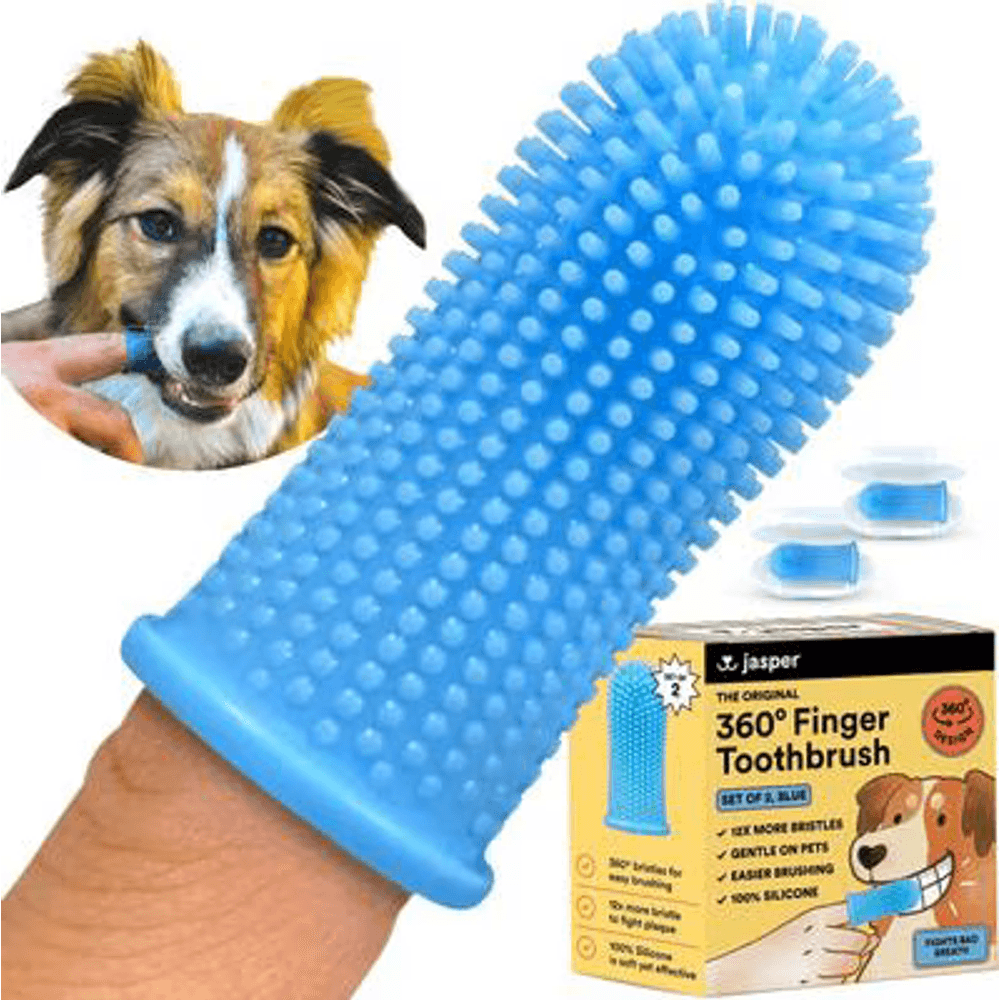
A 360-degree silicone finger toothbrush that brushes every side of a tooth at once. Gentle on gums and ideal for dogs new to brushing or owners who find a handled brush awkward.
Webvet may earn a commission when you click through to Chewy, at no extra cost to you.
Signs your kitten is teething and how to help
Teething kittens are usually only mildly bothered, but you may notice:
- More chewing on toys, hands, and furniture
- Slightly red or swollen gums
- A little drool, or a spot of blood on toys
- Eating more slowly or briefly turning away from hard kibble
To help, offer soft kitten-safe chew toys and keep fingers out of biting range so play biting is not encouraged. If hard kibble seems uncomfortable, switch to a slightly softer food for a few days.
Never give a teething kitten human teething gels or pain medicine. Many of these products are toxic to cats, even in tiny amounts.
Cats vs. dogs vs. humans: teeth count compared
Cats actually have fewer teeth than both dogs and adult humans. A dog has 42 permanent teeth, a person has 32, and a cat has just 30.
The gap is mostly in the molars and premolars. Dogs and people chew a wider range of foods, while cats are strict meat-eaters that slice and swallow rather than grind.
Interestingly, a house cat and a lion carry the same 30-tooth blueprint. A big cat's teeth are dramatically larger, but the dental formula is identical, because both are pure carnivores built around the same slice-and-swallow design. Your tabby is running the same equipment as a tiger, just scaled down.
The dog number is worth a second look, too. A dog has more teeth than a person because dogs kept extra grinding molars for the scavenging, omnivorous side of their diet. Cats did not. It is the clearest sign in the mouth that a cat is a true obligate carnivore.

| Species | Adult (permanent) teeth | Baby teeth |
|---|---|---|
| Cat | 30 | 26 |
| Dog | 42 | 28 |
| Human | 32 | 20 |
Share your home with a dog too? Their bigger mouth and 42 teeth also mean bigger dental bills, and our guide to dog teeth cleaning cost breaks down what to expect.
Do adult cats lose teeth? (what is and isn't normal)
A healthy adult cat should keep all 30 teeth for life. Losing a permanent tooth is not a normal part of aging the way graying whiskers might be.
When an adult cat loses a tooth, or a tooth becomes loose, it almost always signals an underlying dental problem that needs veterinary attention.
Tooth resorption and periodontal disease
The two most common reasons adult cats lose teeth are tooth resorption and periodontal (gum) disease. Tooth resorption, where the body breaks down the tooth structure from the inside, is extremely common and affects a large share of adult cats.
Periodontal disease starts as gingivitis and, left untreated, destroys the support around the tooth until it loosens and falls out. Both conditions are painful, even though cats are experts at hiding it.

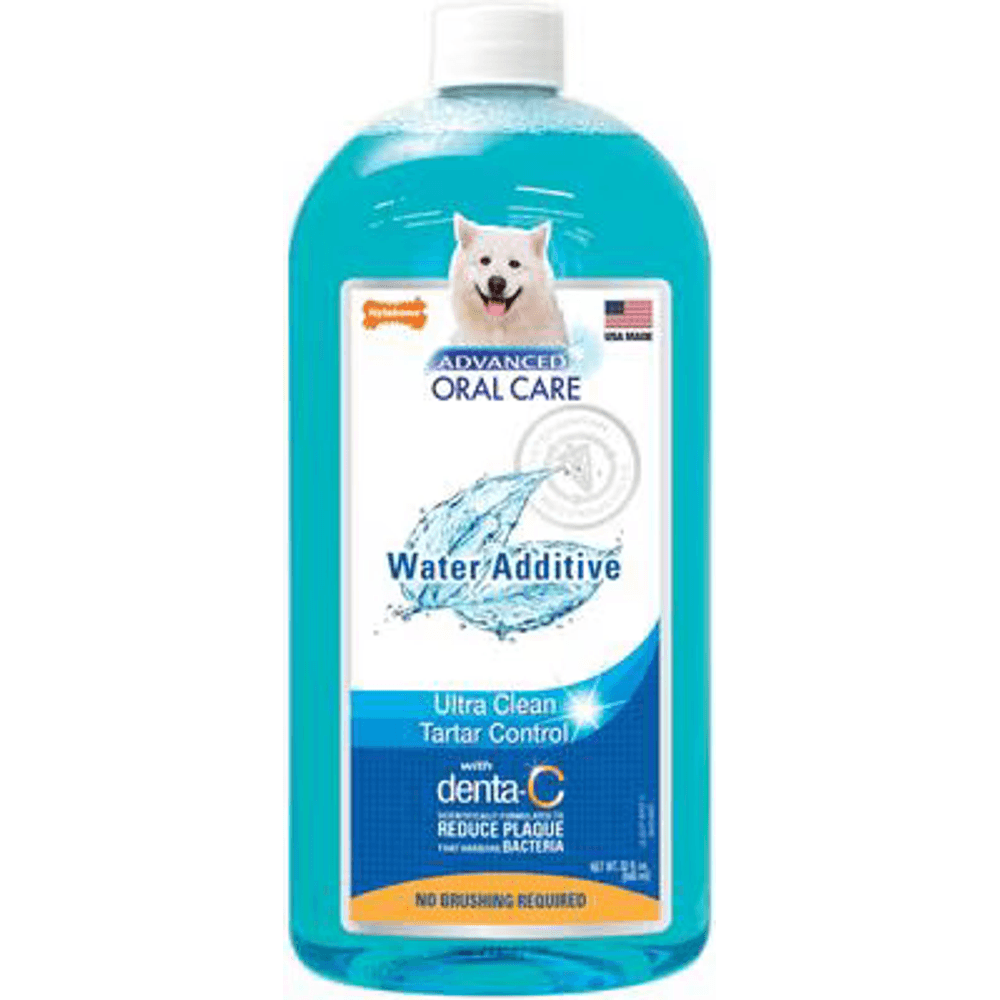
A no-brushing water additive with denta-C that targets the plaque-causing bacteria behind tartar and bad breath. Just add to the water bowl for daily dental support between brushings.
Webvet may earn a commission when you click through to Chewy, at no extra cost to you.
Retained baby (deciduous) teeth
Sometimes a baby tooth fails to fall out when the adult tooth erupts, leaving two teeth crowded into one spot. These retained deciduous teeth trap food and plaque, crowd the permanent tooth, and speed up gum disease.
They are most common with the canines and usually need to be removed, often at the time a kitten is spayed or neutered.
Signs of dental problems to watch for
Because cats mask pain so well, dental disease often goes unnoticed until it is advanced. Watch for these red flags, and remember that bad breath is one of the earliest and most common signs:
- Bad breath (a strong or unusual smell from the mouth)
- Red, swollen, or bleeding gums
- Yellow or brown tartar buildup along the gumline
- Drooling, sometimes tinged with blood
- Pawing at the mouth or face
- Dropping food, chewing on one side, or preferring soft food
- Weight loss or a suddenly unkempt coat from reduced grooming
Severe mouth pain, heavy drooling, and difficulty eating can also point to stomatitis, a painful inflammatory condition that needs prompt veterinary care. Any of these signs is a reason to book a dental exam.
Cat dental care basics: how to keep those 30 teeth healthy
Cats keep the same 30 adult teeth for their entire lives, so prevention pays off. A simple home and vet routine can keep those teeth healthy for years. For a deeper walkthrough, see our full guide to cat teeth cleaning.
Brushing your cat's teeth
Daily brushing is the single most effective thing you can do at home. Use a cat-specific toothbrush or finger brush and pet-safe enzymatic toothpaste.
Never use human toothpaste, which contains fluoride and sometimes xylitol that are unsafe for cats to swallow. Introduce brushing slowly over a week or two so your cat learns to tolerate, and even enjoy, the routine.

Dental diets, treats, and water additives
For cats who resist brushing, dental diets, dental treats, and water additives can help reduce plaque and tartar. Look for the Veterinary Oral Health Council (VOHC) seal, which means a product has been tested and shown to work.
These tools support brushing, but they do not fully replace it or a professional cleaning. Think of them as a helpful add-on, not a substitute.
Start dental care young if you can. A kitten that learns to accept a toothbrush during its first year is far easier to maintain than an adult cat introduced to brushing for the first time.
Consistency beats intensity. A quick daily pass along the outer surfaces of the teeth, where tartar builds fastest, does more good than an occasional deep session. Even a few times a week is a meaningful improvement over nothing.
Professional dental cleanings
Even with great home care, most cats benefit from periodic professional cleanings. Done under anesthesia, a cleaning removes tartar below the gumline and lets the vet take dental X-rays to catch resorption and root disease you cannot see.
As a rough US 2026 guide, a routine feline dental cleaning typically runs about 300 to 700 dollars, and more when extractions or X-rays are needed. Your vet will recommend a schedule based on your cat's mouth.
| Service | Typical US 2026 cost |
|---|---|
| Routine cleaning (with anesthesia and dental X-rays) | $300 to $700 |
| Cleaning plus a few extractions | $600 to $1,300+ |
| Cat-safe toothbrush and toothpaste (home) | $10 to $25 |
| VOHC-accepted dental treats or water additive | $10 to $30 per month |
| Single-tooth extraction (added to a cleaning) | $50 to $300 per tooth |
| Full-mouth extractions (advanced disease or stomatitis) | $1,000 to $3,000+ |
| Pre-anesthetic bloodwork (often required) | $80 to $200 |
When to see a vet
Every cat should have its mouth checked at least once a year at a routine wellness visit, and more often for seniors. Beyond that annual check, call your veterinarian promptly if you notice any of the following.
Frequently asked questions
What is the 3-3-3 rule for cats?
The 3-3-3 rule is a guideline for helping a newly adopted cat adjust to a home, not a dental rule. It suggests about 3 days to decompress in a quiet space, 3 weeks to settle into a routine, and 3 months to fully bond and feel at home.
It is a rough framework, not a strict schedule, and every cat adjusts at its own pace. Some settle in within days, while shy or previously stray cats may take longer than three months to fully relax.
Can cats survive without teeth?
Yes. Cats can live full, comfortable lives with few or even no teeth. When severe dental disease means teeth must be removed, most cats actually feel better afterward because the source of pain is gone.
Toothless cats eat well, and many still manage dry food, though canned or softened food is often easier and is usually recommended. Their tongue and gums do most of the work of moving food to the back of the mouth.
Remember that cats barely chew in the first place. They slice food into swallowable chunks rather than grinding it, so losing those teeth is far less disabling than it would be for a person. What a cat truly cannot tolerate is a mouth full of diseased, painful teeth, which is why removal so often helps.
How do cats say I love you?
Cats show affection through body language rather than words. A slow blink, gentle head-bunting, kneading with their paws, purring in your lap, and following you from room to room are all feline ways of saying they trust you. You can learn to read these signals in our guide to cat body language.
What is the silent killer of cats?
The phrase silent killer is most often used for chronic kidney disease, which is common in older cats and shows few obvious signs until it is advanced. Other quiet threats include heart disease, high blood pressure, hyperthyroidism, and diabetes.
Dental disease also flies under the radar because cats hide the pain so effectively. Regular wellness exams and routine bloodwork are the best way to catch all of these problems early, while they are still treatable.
Do cats have baby teeth that fall out like humans?
Yes. Just like children, kittens grow a temporary set of 26 baby teeth and then shed them for a permanent adult set, ending at 30 teeth. The baby teeth usually start falling out around 3 to 4 months of age and are fully replaced by about 6 to 7 months.
The big difference is the molars. Kittens have no molars at all, so those 4 back teeth only ever appear as part of the adult set. Most owners never see a shed baby tooth because kittens tend to swallow them harmlessly while eating.
How do I say "I love you" in cat language?
The classic way to tell a cat you love them is the slow blink. Look at your cat, then slowly close and open your eyes in a relaxed, unhurried way.
In feline body language this signals calm and trust, and a content cat will often slow-blink back. Soft speech, gentle head scratches, and simply sharing quiet space also communicate affection in a way cats understand.
$65 · no membershipHave a health question about your cat?
A licensed vet can assess your cat over video and prescribe online when it's appropriate.
Talk to a vet- Licensed vets
- All 50 states
- same-day Rx
Webvet may earn a commission if you book.

Editor
The Webvet Editorial Team is the in-house group of pet-care editors and writers behind Webvet, operated by Smart Pet Collective. The team researches, writes, and maintains Webvet's pet health, behavior, and medication content. Every article follows a defined editorial process: research from reputable veterinary and scientific sources, careful drafting, mandatory review of medical content by a credentialed veterinarian, and dated publication. Health and medication articles are medically reviewed by a licensed veterinary professional before they go live and are kept current over time.
Veterinarian · BVMS MRCVS
Dr. Pippa Elliott, BVMS, MRCVS, is a veterinarian with nearly 30 years of experience in companion animal practice. Dr. Elliott earned her Bachelor of Veterinary Medicine and Surgery from the University of Glasgow. She was also designated a Member of the Royal College of Veterinary Surgeons. Married with 2 grown-up kids, Dr. Elliott has a naughty Puggle named Poggle, 3 cats and a bearded dragon.


