Dog Teeth Cleaning Cost: 2026 Vet Price Breakdown
A vet-reviewed 2026 guide to dog teeth cleaning cost, including anesthesia vs non-anesthetic pricing, costs by size and tartar grade, what the quote includes, and proven ways to lower your bill.

BVMS MRCVS
Medically reviewed by Dr. Pippa Elliott, BVMS MRCVS · Last reviewed

This article contains affiliate links. Webvet may earn a commission when you buy through them, at no extra cost to you.
The average dog teeth cleaning cost in 2026 runs roughly $300 to $700 for a routine cleaning under anesthesia at a general veterinary practice. That figure climbs to $500 to $1,500 or more once full-mouth X-rays and tooth extractions are added, and drops to about $100 to $300 for a non-anesthetic (anesthesia-free) cleaning, which does far less than most owners assume. Below is a vet-reviewed, fully itemized 2026 price breakdown so you know exactly what each line on the estimate pays for and how to lower the total.
Prices vary widely by region, clinic type, your dog's size, and how much disease is already present. A 10-pound terrier with mild tartar in rural Texas and a 90-pound shepherd with advanced periodontal disease in coastal California can receive estimates that differ by more than $1,000. Understanding the individual pieces of the bill is the single best way to compare quotes fairly and avoid overpaying.
- 1Routine anesthetic dog teeth cleaning cost in 2026: about $300 to $700, before X-rays or extractions.
- 2With full-mouth X-rays and extractions, expect $500 to $1,500+, and occasionally over $2,000 for severe cases.
- 3Non-anesthetic (anesthesia-free) cleaning runs $100 to $300 but cannot clean below the gumline, where disease actually lives.
- 4Bigger dogs cost more because anesthesia is dosed by weight and takes longer to monitor.
- 5Skipping cleanings is more expensive long term: untreated periodontal disease leads to extractions, oral surgery, and systemic health risk.
How much does dog teeth cleaning cost in 2026?
For a healthy adult dog with mild to moderate tartar, a standard professional cleaning under anesthesia typically costs $300 to $700 in 2026. That range usually covers the pre-anesthetic exam, anesthesia and monitoring, ultrasonic scaling above and below the gumline, and polishing. It generally does not include dental X-rays or any extractions, which are billed separately.
Once your dog needs radiographs and one or more teeth removed, the total commonly lands between $500 and $1,500, and complex cases with multiple surgical extractions or a board-certified veterinary dentist can exceed $2,000. A non-anesthetic cleaning, offered at some grooming and mobile services, runs about $100 to $300 but only scrapes the visible tooth surface.
Dental prices have crept upward in recent years, and 2026 is no exception. Veterinary wages, anesthetic drug costs, and the near-universal shift to digital dental X-rays have all pushed the baseline higher than the figures many owners remember from five years ago. The upside is that a modern cleaning is safer and more thorough than it used to be, so the extra dollars buy real diagnostic value rather than just inflation.
Real owners report a broad spread. On community forums, quotes of $250 to $400 for a young small dog are common, while owners of seniors with several extractions often report bills of $1,200 to $2,500. Location is a major driver: high cost-of-living metros in California and the Northeast tend to sit at the top of every range, while nonprofit and rural clinics sit at the bottom.
One thing to watch for when reading online price anecdotes: owners rarely note whether their quote included dental X-rays or extractions, so a $300 bill and an $1,100 bill may reflect completely different procedures on similar dogs. Always match your quote to what is actually being done, not just the headline number, and treat the itemized estimate as the real answer to what your dog's cleaning will cost.
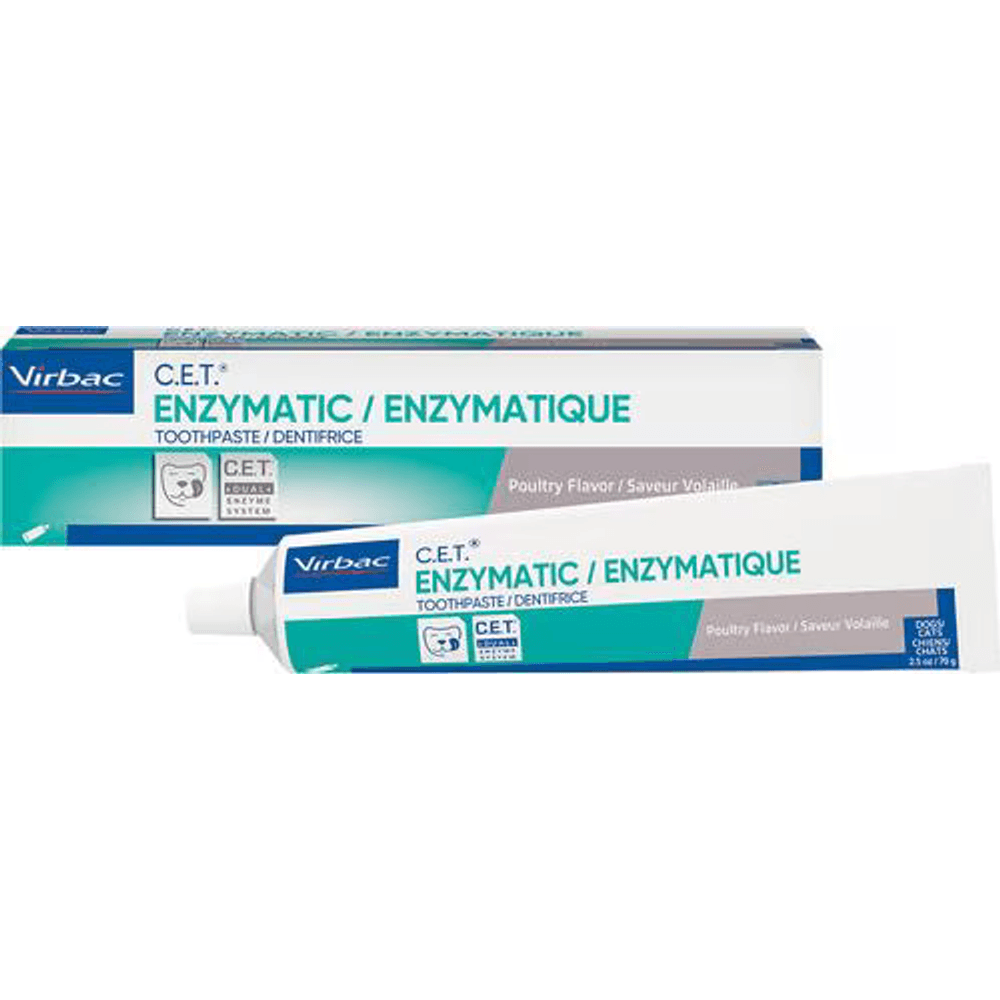
The vet-favorite enzymatic toothpaste. Its dual-enzyme system keeps working between brushings to control plaque and freshen breath, and the poultry flavor makes daily brushing easy.
Webvet may earn a commission when you click through to Chewy, at no extra cost to you.
2026 dog teeth cleaning cost table
Use this at-a-glance table to see typical 2026 US price ranges by service line. Your clinic may bundle some items, so always ask for an itemized estimate.
| Service line | Typical 2026 US price range | Notes |
|---|---|---|
| Pre-anesthetic exam and bloodwork | $80 - $200 | Confirms your dog is safe for anesthesia |
| IV catheter and fluids | $50 - $150 | Supports blood pressure and speeds recovery |
| Anesthesia and monitoring | $100 - $300 | Priced partly by body weight and time |
| Scaling and polishing (the cleaning itself) | $100 - $300 | Ultrasonic scaling above and below the gumline |
| Full-mouth dental X-rays | $100 - $300 | Reveals disease hidden under the gumline |
| Tooth extractions | $10 - $150+ per tooth | Simple incisors are cheap; surgical molars cost more |
| Antibiotics, pain meds, take-home care | $20 - $100 | Common after extractions or advanced disease |
| Routine cleaning (no X-rays or extractions) | $300 - $700 | Healthy dog, mild to moderate tartar |
| Cleaning with X-rays and extractions | $500 - $1,500+ | Moderate to severe periodontal disease |
| Non-anesthetic (anesthesia-free) cleaning | $100 - $300 | Cosmetic only; cannot clean under the gumline |

What is actually included in a professional dental cleaning quote
A proper canine dental cleaning is a medical procedure, not a cosmetic scrub. Here is what each line item on a typical estimate pays for and why it matters.
Pre-anesthetic exam and bloodwork ($80 to $200)
Before anesthesia, your vet examines your dog and usually runs bloodwork to check organ function and rule out hidden problems. This step protects the kidneys, liver, and heart during anesthesia. For senior dogs it is especially important, and you can read more in our guide to senior dog health. Curious how bloodwork is priced on its own? See our dog bloodwork cost breakdown.
Anesthesia and monitoring ($100 to $300)
General anesthesia keeps your dog still and pain-free so the vet can clean below the gumline, take X-rays, and probe every tooth. A trained team monitors heart rate, oxygen, blood pressure, and temperature throughout. Anesthesia is the item owners fear most, but modern protocols with pre-op bloodwork make it very safe for the vast majority of dogs.
Many practices add an IV catheter and fluids (roughly $50 to $150) to this stage. The catheter gives immediate access to a vein if a drug is needed quickly, and the fluids support blood pressure and help your dog wake up faster. It reads as an extra line on the estimate, but it is a genuine safety measure rather than padding, especially for older dogs or longer procedures.

Scaling, polishing, and subgingival cleaning
This is the cleaning itself. An ultrasonic scaler removes plaque and tartar from the crown and, critically, from below the gumline where periodontal disease begins. The teeth are then polished smooth so plaque sticks less easily. Cleaning under the gumline is the single thing a non-anesthetic cleaning cannot do, and it is where most disease hides.
The vet also charts each tooth, probing for pockets and mobility, so problems are documented and tracked over time. This full-mouth assessment is why an anesthetic cleaning is diagnostic as well as therapeutic: it finds trouble early, when a simple cleaning is enough, rather than after a tooth is already lost.
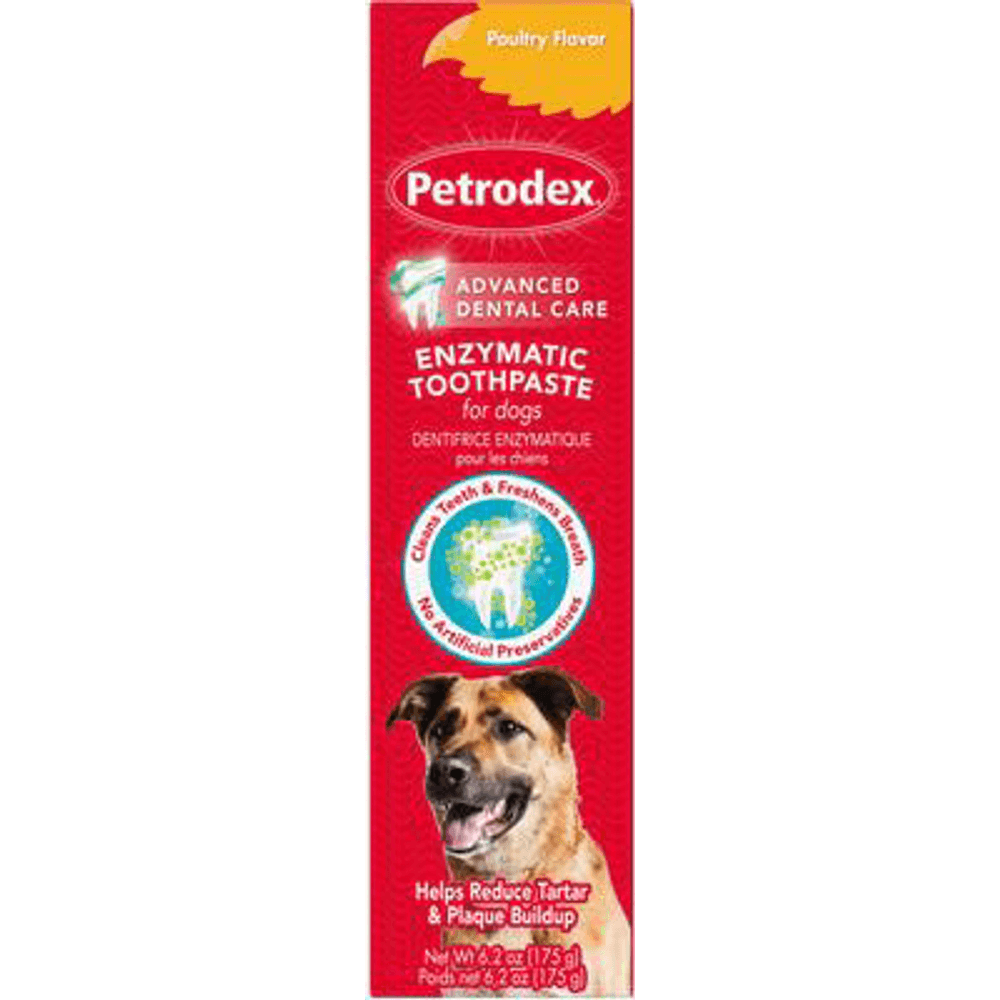
Veterinary-strength enzymatic toothpaste that helps reduce tartar and plaque buildup while freshening breath. Poultry flavored, made for dogs, with no artificial preservatives.
Webvet may earn a commission when you click through to Chewy, at no extra cost to you.
Full-mouth dental X-rays ($100 to $300)
Roughly 60 percent of a dog's tooth structure sits below the gumline and is invisible to the naked eye. Dental radiographs reveal bone loss, root abscesses, and retained roots that would otherwise be missed. Many vets consider full-mouth X-rays essential for a thorough cleaning. If your dog needs imaging elsewhere in the body, our dog X-ray and ultrasound cost guide covers those prices.

Tooth extractions ($10 to $150+ per tooth)
Extraction cost depends on the tooth. A loose single-root incisor may be $10 to $25, while a large multi-root molar requiring surgical removal, sectioning, and stitches can run $100 to $150 or more each. Several extractions in one visit are the main reason a routine cleaning turns into a four-figure bill. See our dedicated dog tooth extraction cost guide for the full picture.
Antibiotics, pain meds, and take-home care
After extractions or advanced disease, your dog usually goes home with pain medication and sometimes antibiotics, adding roughly $20 to $100. This supports healing and keeps your dog comfortable during recovery.
Add-on charges that can surprise you on the final bill
The gap between the estimate you approve and the invoice you pay usually comes down to what the vet finds once your dog is asleep and the X-rays are up on the screen. None of these charges are hidden fees, but they are easy to miss when you focus only on the headline cleaning price.
- Discovered extractions: X-rays routinely reveal roots or bone loss the exam could not see, so a cleaning quoted with no extractions can gain several hundred dollars once teeth that must come out are removed in the same session.
- Nerve blocks and extra pain control: Surgical extractions often need local nerve blocks and additional pain medication, which may appear as separate lines rather than being folded into the extraction fee.
- Bonded sealant or barrier gel: Some clinics apply a plaque-barrier sealant at the end of the cleaning for roughly $30 to $75. It is optional, so ask whether it is included or added on.
- Biopsy or lab fees: If the vet finds an unusual mass or growth in the mouth, sending a sample to a lab adds a separate pathology charge, often $100 to $250.
The way to stay in control is to authorize a spending ceiling up front and ask the team to call you if the total will exceed it. A good clinic expects this conversation and will phone from the treatment room before doing anything beyond the approved estimate, so you are never surprised at checkout.
 $65 · no membership
Have a health question about your dog?
A licensed vet can assess your dog over video and prescribe online when it's appropriate.
 Talk to a vet
- Licensed vets
- All 50 states
- same-day Rx
Webvet may earn a commission if you book.
Anesthesia vs non-anesthetic teeth cleaning: cost and what you get
The biggest price gap in dog dental care is between anesthetic and non-anesthetic (anesthesia-free) cleaning. The cheaper option is tempting, but the two procedures are not equivalent.
Anesthesia-free dog teeth cleaning at a glance
Pros
- Lower upfront cost, roughly $100 to $300
- No anesthesia, which appeals to owners of high-risk or very anxious dogs
- Can make the visible crowns look cleaner and brighter
Cons
- Cannot clean below the gumline, where periodontal disease actually develops
- No dental X-rays, so hidden root and bone disease goes undetected
- Scraping a conscious dog can stress the animal and risk injury
- Often gives a false sense of security while disease progresses underneath
- Not a substitute for a real cleaning; you may still pay for a full procedure later
Why vets and the AVDC do not recommend anesthesia-free cleaning alone
The American Veterinary Dental College (AVDC) does not endorse anesthesia-free cleaning as a replacement for a professional cleaning under anesthesia. Without anesthesia, a provider cannot clean under the gumline, take diagnostic X-rays, or probe each tooth properly. The visible result may look better, but the disease that matters most is left untreated. Learn more about the full picture in our guide to non-anesthetic dog teeth cleaning.
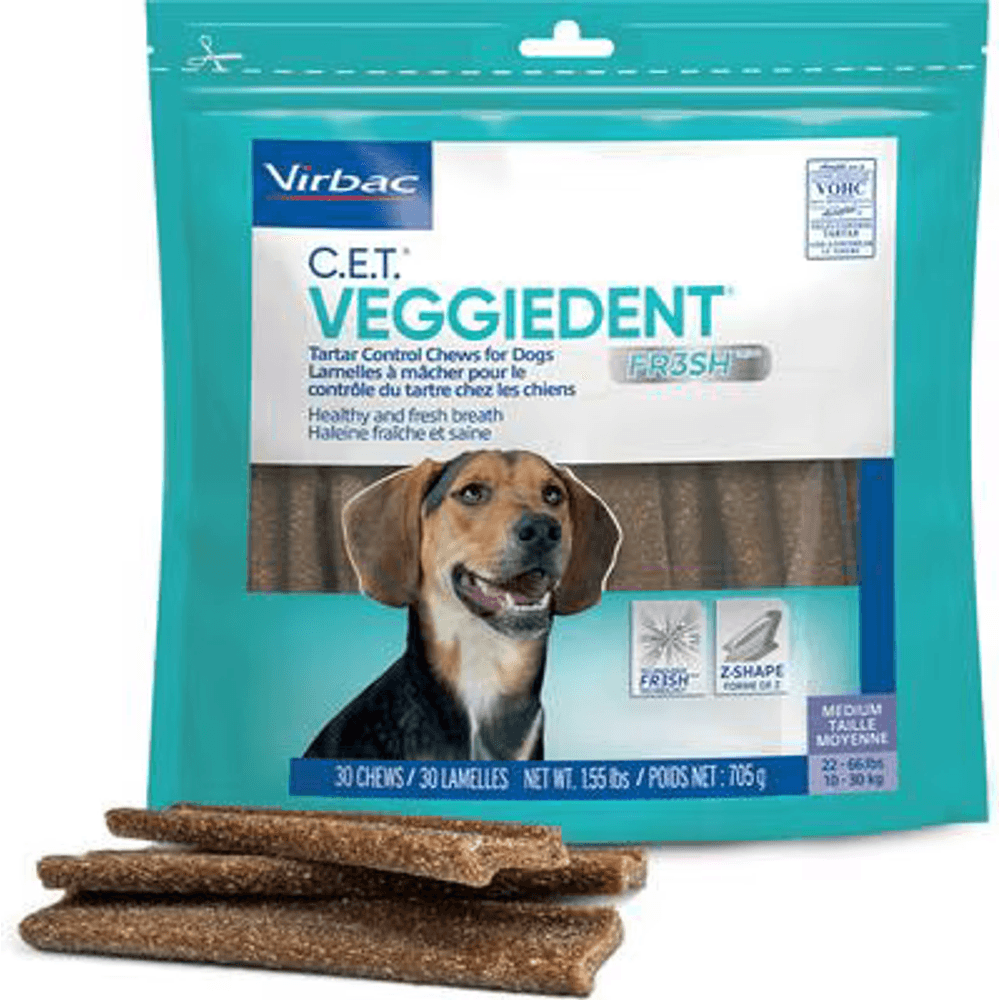
VOHC-accepted dental chews clinically shown to reduce plaque and tartar. The Z-shape and texture clean as your dog chews and freshen breath. A plant-based daily chew for medium dogs.
Webvet may earn a commission when you click through to Chewy, at no extra cost to you.
How dog size and tartar severity change the price
Two dogs at the same clinic can receive very different estimates. Body size and the amount of existing disease are the two biggest reasons.
Small vs large breed (anesthesia dosing and time)
Anesthetic drugs and monitoring are dosed by body weight, so a large dog simply requires more medication and more staff time. A big dog under anesthesia longer also costs more to monitor. Ironically, small breeds tend to develop worse dental disease because their teeth are crowded, so they may need cleanings more often even though each one costs a little less.
| Dog size | Typical routine cleaning cost | Why |
|---|---|---|
| Small (under 25 lb) | $300 - $600 | Less anesthetic, but crowded teeth mean frequent cleanings |
| Medium (25 - 60 lb) | $400 - $800 | Moderate anesthesia and monitoring time |
| Large (over 60 lb) | $500 - $1,000+ | More anesthetic and longer monitoring raise the base cost |
Mild vs moderate vs severe tartar and periodontal grade
Vets stage periodontal disease from grade 1 (mild gingivitis) to grade 4 (severe bone loss). The higher the grade, the more time, X-rays, extractions, and medication are needed, which drives up the cost.
| Periodontal grade | What it looks like | Typical total cost |
|---|---|---|
| Grade 1 (mild) | Slight tartar, mild gum redness | $300 - $600 |
| Grade 2 (early) | More tartar, visible gingivitis | $400 - $800 |
| Grade 3 (moderate) | Heavy tartar, gum recession, some loose teeth | $700 - $1,300 |
| Grade 4 (severe) | Bone loss, multiple loose or abscessed teeth | $1,200 - $2,500+ |
The pattern to notice is that the cost curve is steep, not gradual. Moving from grade 1 to grade 2 might add a couple hundred dollars, but moving from grade 3 to grade 4 can double or triple the bill because it brings surgical extractions, longer anesthesia, advanced pain control, and sometimes a specialist referral. That is why the cheapest moment to treat a mouth is always the earliest one.

Dog teeth cleaning cost by provider: vet clinic vs PetSmart or Petco vs low-cost clinics
Where you go changes both the price and what is actually done. Here is how the common options compare.
- General veterinary clinic: The standard choice. Full anesthetic cleaning with X-rays and extractions available, typically $300 to $1,500 depending on disease. This is the only setting that treats the whole mouth.
- PetSmart, Petco, and grooming services: These retailers do not perform anesthetic dental cleanings themselves. They may offer non-anesthetic teeth brushing or surface cleaning through third-party providers for roughly $100 to $300, which is cosmetic only.
- Low-cost and nonprofit clinics: Community and nonprofit clinics can offer anesthetic cleanings for as little as $150 to $400. Availability is limited and X-rays may cost extra, but for budget-conscious owners this is a legitimate way to get a real cleaning.
- Veterinary school clinics: Teaching hospitals often provide quality cleanings at reduced rates because students perform the work under expert supervision.
- Board-certified veterinary dentist: For advanced cases, root canals, or oral surgery, a specialist costs the most (often $1,000 to $3,000+) but offers the highest level of care.

Cost by region: why California and Texas quotes differ
Geography has a large effect on price. Clinics in high cost-of-living states such as California, New York, and Massachusetts pay more in rent, wages, and overhead, and those costs pass to you. A routine cleaning that runs $350 in rural Texas can easily be $700 or more in San Francisco or Los Angeles.
Texas and other lower cost-of-living states tend to sit at the bottom of national ranges, and nonprofit dental clinics there sometimes advertise cleanings in the $165 to $230 range. When you compare quotes across regions, compare itemized estimates rather than headline prices, since one clinic may include X-rays that another leaves out.
If you live in an expensive metro but are willing to travel, a clinic in a nearby lower-cost county can shave a meaningful amount off the bill, particularly for a large dog or a case with several extractions. Just make sure the savings do not come from skipping X-rays or monitoring, which are the parts that keep the procedure safe and thorough.
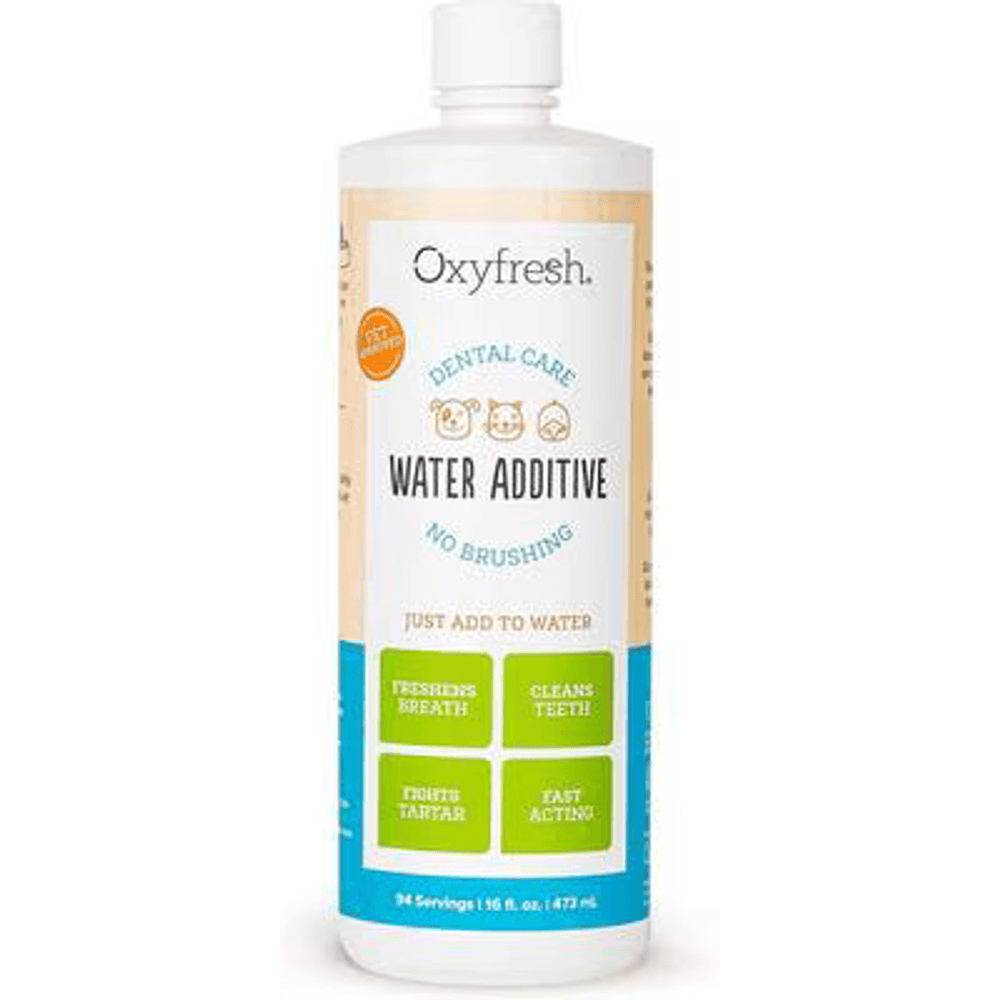
A taste-free, odor-free water additive you pour straight into the bowl. No brushing needed: it freshens breath, helps clean teeth, and fights tartar. About 94 servings per 16-oz bottle.
Webvet may earn a commission when you click through to Chewy, at no extra cost to you.
Is dog teeth cleaning worth it? The cost of skipping it
Yes. Professional cleaning is one of the highest-value preventive investments you can make for your dog. By age three, most dogs already show some periodontal disease. Left untreated, it leads to painful infections, loose and abscessed teeth, and expensive surgical extractions later.
The mouth is also connected to the rest of the body. Chronic dental infection creates constant inflammation and can strain the heart, kidneys, and liver over time. Paying $400 to $700 now for a routine cleaning is far cheaper, and far kinder, than paying $1,500 to $2,500 later for multiple extractions and treating a mouth full of disease. For the daily-care side of prevention, see our overview of dog dental health.
How to lower the cost of your dog's dental cleaning
You do not have to choose between your dog's health and your budget. These strategies genuinely reduce the bill without cutting corners on safety.
Get an itemized estimate and compare clinics
Ask two or three clinics for a written, itemized estimate. Comparing line by line reveals whether X-rays, monitoring, and take-home meds are included. It also flags an unusually high or suspiciously low quote. Do not choose on price alone: a real anesthetic cleaning with X-rays beats a cheap surface polish every time.

Pet insurance and wellness plans
Many pet insurance policies cover dental disease and some offer wellness add-ons that include routine cleaning. Coverage varies, so enroll before problems start, since pre-existing dental disease is usually excluded. Wellness plans from your clinic can also spread the cost across monthly payments.
CareCredit and payment plans
Financing options such as CareCredit and in-house payment plans let you split a large dental bill into manageable installments, often with an interest-free promotional window. This is especially useful when extractions turn a routine visit into a bigger expense. For a broader look at everyday vet pricing, see our guide to how much a vet visit costs.
Dental month promotions and vet school clinics
Many clinics run Pet Dental Health Month promotions in February with discounts of 10 to 20 percent on cleanings. Veterinary school teaching hospitals and nonprofit clinics also offer reduced rates year-round. Booking during a promotion on a healthy mouth is one of the easiest ways to save.
At-home prevention to stretch the interval
The cheapest cleaning is the one you delay by keeping your dog's mouth healthy. Daily brushing is the gold standard, and our step-by-step guide on how to brush your dog's teeth makes it easy. Pair it with vet-recommended dental chews that carry the Veterinary Oral Health Council (VOHC) seal, plus water additives, to slow tartar between professional cleanings.

How often do dogs need professional cleanings?
Most dogs benefit from a professional cleaning once a year, though the right interval depends on the individual. Small breeds and dogs prone to dental disease may need one every 6 to 12 months, while some large breeds with good home care can stretch to every 18 to 24 months. Your vet will recommend a schedule based on your dog's mouth, and consistent home brushing can lengthen the gap between visits.
Budgeting for one cleaning a year makes the cost far more manageable and prevents the expensive four-figure bills that come from neglect. Think of the annual cleaning as a fixed line in your pet-care budget, much like vaccines or heartworm prevention. Owners who stay on a regular schedule almost never face the grade 4 disease, multiple surgical extractions, and specialist referrals that drive the biggest dental bills.
How to remove heavy tartar and plaque safely
Heavy, hardened tartar cannot be safely removed at home. Once plaque mineralizes into tartar (calculus), it bonds firmly to the tooth and extends below the gumline, where only professional ultrasonic scaling under anesthesia can reach it. Trying to scrape it yourself risks injuring the gums, cracking enamel, and pushing bacteria deeper, and it does nothing about the disease under the gumline.
The safe approach is a professional cleaning to reset the mouth, followed by daily brushing, VOHC-accepted chews, and water additives to keep new plaque from hardening. Prevention at home controls plaque; only a vet can remove established tartar.
When to see your vet
Book a dental exam if you notice any of the warning signs below. Dental disease is painful, and dogs are experts at hiding it.
- Persistent bad breath (one of the earliest and most reliable signs)
- Red, swollen, or bleeding gums
- Heavy brown or yellow tartar along the gumline
- Loose, broken, or missing teeth
- Dropping food, chewing on one side, or reluctance to eat
- Pawing at the mouth, drooling, or facial swelling
Frequently asked questions
How much does a vet charge to clean dog teeth?
A vet typically charges $300 to $700 for a routine dog teeth cleaning under anesthesia in 2026, covering the pre-anesthetic exam, anesthesia and monitoring, scaling, and polishing. The total rises to $500 to $1,500 or more once full-mouth X-rays and tooth extractions are added. Price depends on your dog's size, the severity of dental disease, and your region.
Is it worth getting dental cleaning for dogs?
Yes, dental cleaning is worth it for dogs. Most dogs show periodontal disease by age three, and left untreated it causes pain, infection, tooth loss, and strain on the heart, kidneys, and liver. Paying for a routine cleaning now is cheaper and kinder than paying for multiple extractions and treating advanced disease later. A professional cleaning is one of the best preventive investments in your dog's health.
How much do vets cost to clean dogs' teeth?
Vets cost about $300 to $700 for a standard cleaning without extractions, and $500 to $1,500 or more when X-rays and extractions are needed. Small dogs sit toward the lower end and large dogs toward the higher end because anesthesia is dosed by weight. Low-cost and nonprofit clinics may offer anesthetic cleanings for $150 to $400, while board-certified veterinary dentists cost the most.
Why is dog teeth cleaning so expensive?
Dog teeth cleaning costs more than human cleaning because dogs will not hold still and open wide, so the entire procedure is done under general anesthesia. That single fact adds pre-anesthetic bloodwork, an IV catheter, anesthetic drugs, a dedicated technician monitoring vital signs, and recovery time to the bill. Full-mouth digital X-rays, tooth-by-tooth charting, and any extractions found on the images add more. You are paying for a supervised surgical procedure, not just a scrub of the visible teeth, which is why even a routine cleaning starts around $300.
Does pet insurance cover dog teeth cleaning?
Most standard accident-and-illness pet insurance policies cover dental disease and extractions caused by illness or injury, but not a routine preventive cleaning on a healthy mouth. To get routine cleanings covered, you usually need to add an optional wellness or preventive-care rider, which reimburses a set amount toward a yearly cleaning. Two rules matter most: enroll before any dental disease appears, because pre-existing conditions are excluded, and read the dental clause closely, since some insurers require proof of annual cleanings to honor later dental claims.
How can I remove heavy tartar from my dog's teeth?
Heavy tartar can only be safely removed by a veterinarian using ultrasonic scaling under anesthesia. Once plaque hardens into tartar it bonds to the tooth and extends below the gumline, where home tools cannot reach. After a professional cleaning resets the mouth, you can slow new tartar with daily brushing, VOHC-accepted dental chews, and water additives. Do not attempt to remove hardened tartar at home.
Can I scrape plaque off my dog's teeth?
You should not scrape plaque or tartar off your dog's teeth at home. Scraping a conscious dog risks injuring the gums, cracking enamel, and pushing bacteria deeper, and it cannot clean below the gumline where disease develops. It also creates micro-scratches that let plaque stick faster. Instead, brush daily to prevent plaque from hardening and leave established tartar removal to your vet.
Is it too late to start brushing dogs' teeth?
It is never too late to start brushing your dog's teeth. While brushing works best begun young, dogs of any age benefit from daily brushing to slow plaque and tartar. If your dog already has heavy tartar or gum disease, start with a professional cleaning to reset the mouth, then begin a home brushing routine to maintain the results and stretch the interval between cleanings.
Which dog breed has the most dental problems?
Small and toy breeds have the most dental problems because their teeth are crowded in a small mouth, which traps plaque and accelerates disease. Yorkshire Terriers, Chihuahuas, Dachshunds, Poodles, Maltese, and Pomeranians are especially prone. Flat-faced (brachycephalic) breeds like Pugs and Bulldogs also struggle because their teeth are rotated or overlapping. These breeds often need more frequent professional cleanings.
$65 · no membershipHave a health question about your dog?
A licensed vet can assess your dog over video and prescribe online when it's appropriate.
Talk to a vet- Licensed vets
- All 50 states
- same-day Rx
Webvet may earn a commission if you book.

Editor
The Webvet Editorial Team is the in-house group of pet-care editors and writers behind Webvet, operated by Smart Pet Collective. The team researches, writes, and maintains Webvet's pet health, behavior, and medication content. Every article follows a defined editorial process: research from reputable veterinary and scientific sources, careful drafting, mandatory review of medical content by a credentialed veterinarian, and dated publication. Health and medication articles are medically reviewed by a licensed veterinary professional before they go live and are kept current over time.
Veterinarian · BVMS MRCVS
Dr. Pippa Elliott, BVMS, MRCVS, is a veterinarian with nearly 30 years of experience in companion animal practice. Dr. Elliott earned her Bachelor of Veterinary Medicine and Surgery from the University of Glasgow. She was also designated a Member of the Royal College of Veterinary Surgeons. Married with 2 grown-up kids, Dr. Elliott has a naughty Puggle named Poggle, 3 cats and a bearded dragon.


