Is Non-Anesthetic Dog Teeth Cleaning Safe? A Vet Guide
Non-anesthetic dog teeth cleaning makes the crowns look white, but it cannot reach below the gumline where real dental disease lives. Here is the honest, vet-reviewed picture of how it works, what it misses, the risks, and the safer options.

BVMS MRCVS
Medically reviewed by Dr. Pippa Elliott, BVMS MRCVS · Last reviewed

This article contains affiliate links. Webvet may earn a commission when you buy through them, at no extra cost to you.
If you have ever booked a groomer or a pop-up dental clinic and seen "teeth cleaning, no anesthesia required," you have met non-anesthetic dog teeth cleaning. It sounds appealing: no sedation, no fasting, a lower price, and your dog walks out with whiter-looking teeth the same afternoon. The catch is that whiter teeth and a healthy mouth are not the same thing.
Here is the verdict up front, because this is a health decision and you deserve a straight answer. Non-anesthetic dog teeth cleaning (also written "anesthesia-free," "no anesthesia," or "non sedation" dog teeth cleaning) is essentially cosmetic. An awake dog can only be cleaned where a hand-held scaler can safely reach, which is the visible crown above the gumline. The part of the mouth where painful dental disease actually develops, below the gumline, cannot be evaluated or treated while your dog is awake.
That does not make this article a hit piece. There is a place for a cosmetic touch-up, and there are excellent things you can do at home between professional visits. But you should understand exactly what you are buying, what it cannot do, and when it can quietly let a serious problem get worse. This is a vet-reviewed dog dental health explainer, and a calm look at your dog's mouth beats a marketing promise every time.
- 1Non-anesthetic dog teeth cleaning only cleans the visible crown of the tooth.
- 2It cannot probe, X-ray, or treat below the gumline, which is exactly where periodontal disease, the most common dental problem in dogs, takes hold.
- 3Use it (if at all) as a cosmetic add-on, never as a replacement for a professional cleaning under anesthesia.
What is non-anesthetic (anesthesia-free) dog teeth cleaning?
Non-anesthetic dental cleaning, sometimes shortened to NAD, is a procedure in which tartar and plaque are scraped off a dog's teeth while the dog is awake and restrained. You will see it advertised under several names: anesthesia-free dog teeth cleaning, anaesthesia free dog teeth cleaning (the British spelling), dog teeth cleaning anesthesia free, and non sedation dog teeth cleaning. They all describe the same thing.
The terminology matters because owners search for it a dozen different ways and then assume they are comparing different services. They are not. Whether a flyer says "no anesthesia," "anesthesia-free," or "non-anesthetic," the underlying limitation is identical: the dog is conscious, so the work stops at the gumline.
These cleanings are performed in a few different settings, and the setting changes how seriously you should take it:
- At a veterinary practice, sometimes offered as a quick cosmetic option for low-risk patients, ideally with a vet examining the mouth first.
- At a groomer or pet store, often by a technician with no veterinary supervision.
- At a mobile or pop-up clinic, where you may never see a licensed veterinarian at all.
The American Veterinary Dental College is blunt about this. It notes that anesthesia-free cleaning addresses only the visible crown and cannot treat the disease below the gumline where it matters (American Veterinary Dental College). That single sentence is the whole story, and the rest of this guide unpacks why.
How a non-anesthetic dental cleaning is actually done (the procedure)

Understanding the dog teeth cleaning procedure for an awake animal explains its limits better than any warning could. Here is the typical process, step by step:
- Restraint. Because the dog is awake, it must be held still. This usually means a person holding the dog (sometimes wrapped in a towel or held on its back or side) while another person works in the mouth. Larger or anxious dogs may be restrained more firmly.
- Hand scaling above the gumline. A technician uses a hand-held dental scaler to chip and scrape visible tartar off the crowns of the teeth. This is cosmetic scaling above the gumline only.
- A quick visual look. Whatever the technician can see with the dog's mouth held open gets noted. Surfaces facing the cheek and tongue, and the backs of the rear teeth, are hard to reach and often skipped.
- A polish (sometimes). Some providers finish with a quick polish to make the crowns shine.
What is missing from that list is everything that makes a veterinary cleaning medical rather than cosmetic. There is no full-mouth probing of each tooth's gum pocket, no dental X-rays, and no cleaning of the tooth surface under the gumline (subgingival scaling), because none of that can be done safely or comfortably on an awake dog.
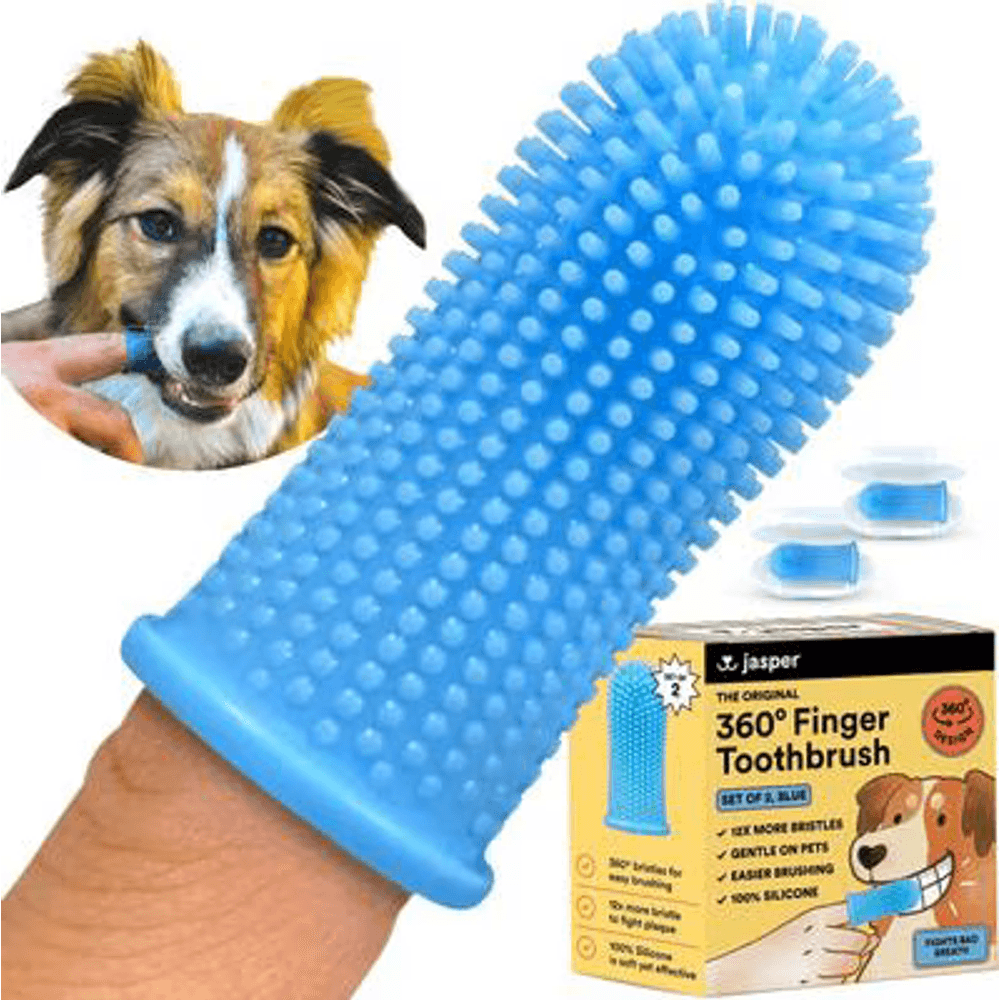
A 360-degree silicone finger toothbrush that brushes every side of a tooth at once. Gentle on gums and ideal for dogs new to brushing or owners who find a handled brush awkward.
Webvet may earn a commission when you click through to Chewy, at no extra cost to you.
Is non-anesthetic dog teeth cleaning safe? The real risks
This is the core question, and it is a genuine your-money-or-your-life (YMYL) health decision, so let us be precise. The honest answer to "is non-anesthetic teeth cleaning for dogs safe" is: it carries real risks, and many of them are invisible to the owner.
The risks of anesthesia-free dental work fall into four buckets:
- Stress and fear. Being pinned down while strangers put sharp instruments in the mouth is frightening for most dogs. For an already anxious dog, the experience can create lasting fear of handling, the mouth, or the vet.
- Physical injury. A sudden head jerk against a sharp scaler can cut the gums, lips, or tongue, or chip a tooth. The instruments are designed to be used on a still patient.
- Aspiration and stress on the body. Dislodged tartar, water, or debris can be inhaled by an awake, struggling dog. The cardiovascular stress of forceful restraint is not nothing, especially in small, old, or flat-faced dogs.
- Missed disease, the biggest risk of all. A mouth that looks clean afterward can hide advanced disease below the gumline. The cosmetic result can give an owner false reassurance and delay the real treatment a dog needs.
VCA Animal Hospitals is direct that anesthesia-free dentistry carries risks including stress, injury, and missed disease, and does not substitute for a veterinary dental cleaning (VCA Animal Hospitals). That last point, missed disease, is why so many veterinary dentists push back on the practice: the danger is not just what happens in the chair, it is the disease that goes untreated for another year because the teeth "looked fine."
Why white teeth do not mean a clean, healthy mouth (below the gumline)

Here is the single most important concept in this entire topic. The disease that destroys dogs' teeth, periodontal disease, does its damage below the gumline, in the pocket between the tooth and the gum. Plaque slips under the gum, hardens into tartar, and triggers inflammation that slowly eats away at the bone and ligament holding the tooth in place.
You cannot see any of that by looking at the crown. A dog can have gleaming white visible teeth and significant bone loss, infected roots, or a painful abscess hiding just millimeters below the gumline. Cosmetic scaling that is cosmetic only removes the part you can see and leaves the part that matters completely untouched.
This is why "what it misses" is the defining limitation. A proper cleaning under anesthesia includes probing each tooth for deep pockets, taking full-mouth dental X-rays (the only way to see root and bone disease), and cleaning under the gumline. An awake cleaning does none of these things. If your dog already has bad breath, this is often the reason, and our guide to what causes bad breath in dogs walks through the dental and medical culprits in detail.
 $65 · no membership
Have a health question about your dog?
A licensed vet can assess your dog over video and prescribe online when it's appropriate.
 Talk to a vet
- Licensed vets
- All 50 states
- same-day Rx
Webvet may earn a commission if you book.
Is dog teeth cleaning even necessary? How often dogs need it
Owners reasonably ask "is dog teeth cleaning necessary," and even "is dog teeth cleaning really necessary," when their dog seems fine. The answer is yes, for the large majority of dogs, because periodontal disease is extremely common and largely silent until it is advanced. Dogs are stoic; they keep eating through significant mouth pain, so "he's eating normally" is not proof of a healthy mouth.
The American Kennel Club recommends a combination of regular at-home tooth brushing and professional cleanings to prevent periodontal disease (American Kennel Club). So how often does a dog need teeth cleaning? It depends on the dog:
| Dog profile | Typical professional cleaning frequency |
|---|---|
| Average adult dog, daily brushing at home | Every 1 to 2 years |
| Small or toy breed, crowded teeth | Often yearly, sometimes more |
| Senior dog with existing disease | As directed by your vet, sometimes yearly |
| Large breed, good home care, low tartar | Sometimes longer than 2 years |
Your veterinarian sets the schedule based on what they see at each annual exam. The point of frequency is prevention: catching disease early, when a routine cleaning fixes it, instead of late, when teeth must be extracted.
Anesthesia-free vs cleaning under anesthesia: how they compare
When people compare anesthesia-free work to dog teeth cleaning with anesthesia, they are really comparing a cosmetic service to a medical procedure. The American Veterinary Medical Association and the veterinary dentistry community position professional cleaning under anesthesia as the standard of care for pets (American Veterinary Medical Association). Here is the head-to-head:
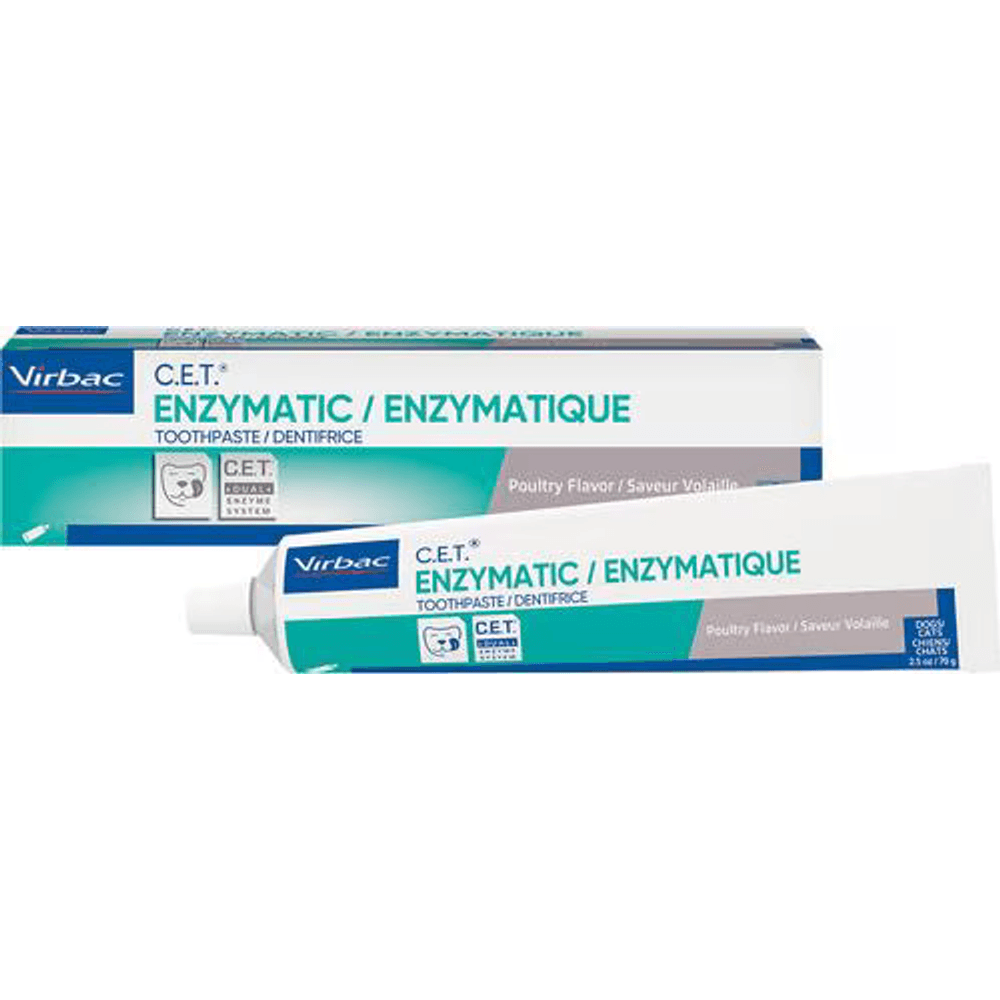
The vet-favorite enzymatic toothpaste. Its dual-enzyme system keeps working between brushings to control plaque and freshen breath, and the poultry flavor makes daily brushing easy.
Webvet may earn a commission when you click through to Chewy, at no extra cost to you.
| Feature | Non-anesthetic (anesthesia-free) | Under anesthesia (professional / vet recommended) |
|---|---|---|
| Cleans visible crown | Yes | Yes |
| Cleans below the gumline | No | Yes |
| Probes gum pockets | No | Yes |
| Full-mouth dental X-rays | No | Yes |
| Treats periodontal disease | No | Yes |
| Can perform extractions | No | Yes |
| Dog held still by | Physical restraint | Anesthesia (no fear, no movement) |
| What it is | Cosmetic touch-up | Diagnosis and treatment |
Anesthesia is not a downside here; it is the thing that makes a real cleaning possible. A still, unconscious patient lets the vet work below the gumline, take X-rays, and treat problems in one visit without fear or pain. That is why "professional dog teeth cleaning" and "vet recommended dog teeth cleaning" almost always mean cleaning under anesthesia.
Is anesthesia safe for my dog's dental cleaning?
The fear of anesthesia is the single biggest reason owners reach for the anesthesia-free option, so it deserves a direct answer. Modern veterinary anesthesia is very safe for the vast majority of dogs, including many seniors, when it is done properly. "Is it safe for a dog to go under anesthesia for teeth cleaning" is a fair question, and the safeguards are real:
- Pre-anesthetic bloodwork checks organ function and flags risks before anything begins.
- A physical exam and, when warranted, additional tests tailor the plan to your individual dog.
- Anesthesia monitoring during the procedure tracks heart rate, blood pressure, oxygen, and temperature, with a dedicated person watching.
- An IV catheter and fluids support circulation and give instant access if medication is needed.
How long is a dog under anesthesia for teeth cleaning? Usually somewhere around 45 minutes to a bit over an hour for a routine cleaning, longer if extractions or extensive treatment are needed. As for "how risky are dental cleanings for dogs," the risk for a healthy, properly screened dog is low, and your vet will weigh it against the very real harm of leaving dental disease untreated.
If your dog is older or has a heart, kidney, or other condition, talk to your veterinarian about the specific plan; they can often adjust the protocol to make anesthesia safer rather than avoiding it altogether.
What does non-anesthetic dog teeth cleaning cost (and is it worth it)?

Cost is what draws most people to the anesthesia-free option, so let us put real-world ranges side by side. A non-anesthetic dog teeth cleaning cost is typically far lower than a full cleaning, which is exactly why it is tempting. But "dog teeth cleaning cost without anesthesia" buys you a fraction of the service.
| Service | Typical price range (US) | What you get |
|---|---|---|
| Non-anesthetic cleaning | About $100 to $300 | Cosmetic crown scaling only |
| Cleaning under anesthesia (no extractions) | About $300 to $800 | Full cleaning, probing, X-rays |
| Cleaning with extractions / advanced treatment | $800 to $2,000+ | Treatment of actual disease |
Prices vary widely by region, clinic, and your dog's size, and the average cost of dog teeth cleaning under anesthesia sits in the middle band for most dogs. So, is non-anesthetic dog teeth cleaning worth it? As a one-off cosmetic polish for a young dog with already-healthy gums, maybe. As a substitute for a real cleaning, no, because you may pay twice: once for the cosmetic version, and again later for the disease it could not detect.
A note on coverage: some pet insurance plans help with dental care, but many treat routine cleanings as wellness rather than illness. Check whether your dog insurance covers teeth cleaning before you assume it does, because policies differ sharply.
After a cleaning: coughing, whining, and what is normal
Aftercare questions are extremely common, especially after an anesthetic cleaning, so here is what to expect and when to worry. A dog coughing after teeth cleaning under anesthesia is often reacting to mild irritation from the breathing tube used during the procedure. A little soft coughing or throat-clearing for a day or so is usually nothing to panic about.
A dog whining after teeth cleaning, or a dog whimpering after teeth cleaning, is also common in the first evening. Grogginess from anesthesia, mild mouth soreness (especially if extractions were done), and disorientation can all cause vocalizing. Your vet will usually send pain medication home if any extractions were performed; give it as directed.
Safer at-home alternatives between professional cleanings
This is where you have real power. The best alternatives to dog teeth cleaning with anesthesia are not a competing procedure at all; they are the daily and weekly habits that slow plaque so professional cleanings are needed less often. Done consistently, cleaning dog teeth at home is genuinely effective at controlling plaque, which is the precursor to tartar and disease.
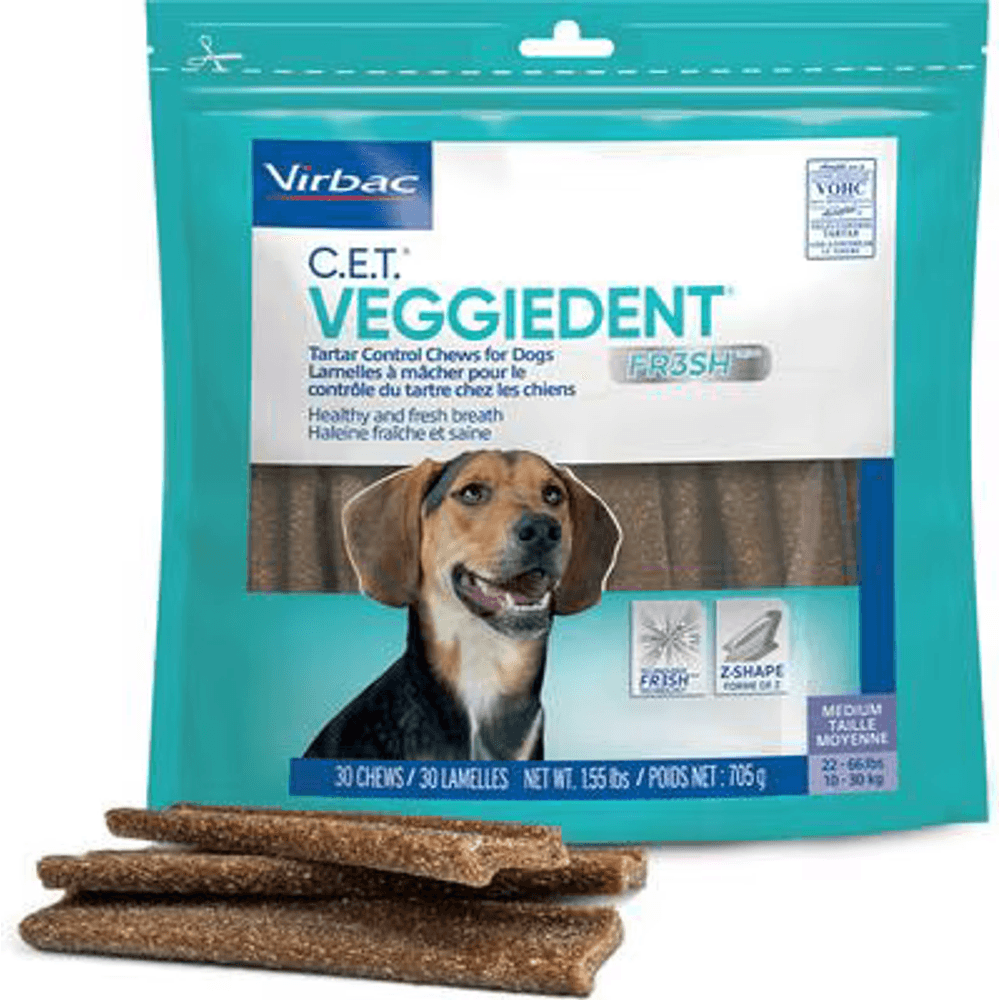
VOHC-accepted dental chews clinically shown to reduce plaque and tartar. The Z-shape and texture clean as your dog chews and freshen breath. A plant-based daily chew for medium dogs.
Webvet may earn a commission when you click through to Chewy, at no extra cost to you.
Two ground rules govern everything below. First, "what dissolves plaque on dogs teeth naturally" has no magic answer; nothing you pour, spray, or feed dissolves established tartar, which is why we focus on stopping plaque before it hardens. Second, only products carrying the Veterinary Oral Health Council Seal of Acceptance are independently proven to reduce plaque or tartar (Veterinary Oral Health Council). Look for that seal.
Brushing and dental chews that actually work (VOHC)

Daily tooth brushing is the gold standard of at-home dental care, full stop. Nothing else removes plaque as well as mechanical brushing with a dog toothbrush and pet-safe (never human) toothpaste. Our step-by-step guide on how to brush your dog's teeth makes the habit easy to build, even with a wiggly dog.
When brushing is not possible every day, the right chews help. The "dog teeth cleaning treats" and "best dog teeth cleaning chews" aisle is full of marketing, so anchor on proof: choose VOHC-accepted dog dental chews, which are tested to reduce plaque or tartar. For a curated shortlist, see our roundup of vet-recommended dog dental chews. Some specially textured dog food for teeth cleaning and certain dental diets carry the seal too. A quick word on "best bones for dog teeth cleaning": hard bones, antlers, and hooves can fracture teeth, so favor chews that flex rather than ones that could crack a molar.
Water additives, sprays, gels, and natural methods

Beyond brushing, a range of adjunct products can help at the margins. A dog teeth cleaning water additive, a dog teeth cleaning spray, or a dog teeth cleaning gel can reduce plaque-forming bacteria, and the VOHC list again tells you which ones are actually proven. We break down the category in our guide to dog dental water additives. These are helpers, not replacements for brushing.
On the natural dog teeth cleaning front, be skeptical of viral claims. Cleaning dog teeth with coconut oil is a popular home remedy, but there is no good evidence it removes plaque or tartar; at best it is a pleasant-tasting carrier, and it adds calories. Most home remedies for dog teeth cleaning are similarly unproven. The genuinely effective "natural" method is the boring one: brushing, plus the right chews.
DIY scaling and ultrasonic-at-home tools: why vets warn against them
A growing category deserves a flat warning. DIY dog teeth cleaning, especially owner scraping with a metal scaler or using an ultrasonic dog teeth cleaning at home kit, can do real harm. Cleaning tartar off dog teeth with a sharp tool risks gouging the gums, fracturing teeth, and pushing bacteria under the gumline, and the roughened enamel left behind attracts more plaque.
Marketing for a dog teeth cleaning kit or a dog teeth cleaning tool makes it look easy, but you cannot safely scale a moving, unanesthetized dog at home, and a home ultrasonic device offers no diagnostic benefit. If you want to remove tartar, that is a job for a professional cleaning. For what tartar is and how it forms, see our explainer on tartar on dog teeth, and if your dog already has loose or decaying teeth, read about dog rotting teeth and see your vet rather than reaching for a tool. If you want a vet's full take on the awake-cleaning category specifically, our deeper piece on non-anesthetic dog teeth cleaning covers it.
- 1Stick to proven, safe at-home care: daily brushing, VOHC-accepted chews, and a VOHC water additive.
- 2Skip DIY scaling, at-home ultrasonic kits, and unproven natural remedies.
- 3None of these replace a professional cleaning, but together they dramatically slow how fast disease returns.
Which dogs need dental care most (toy, small, brachycephalic, senior)

Some dogs are simply built for dental trouble, and they are exactly the dogs for whom skipping a real cleaning is riskiest. If your dog falls into one of these groups, be especially wary of relying on an anesthesia-free polish.
- Small and toy breeds. Small dog teeth cleaning is a frequent need because tiny jaws crowd full-size teeth together, trapping plaque and accelerating periodontal disease. Yorkies, Chihuahuas, Poodles, and similar breeds are among those with the most dental problems.
- Brachycephalic (flat-faced) breeds. Pugs, Bulldogs, Boston Terriers, and Shih Tzus have crowded, rotated, and often abnormally positioned teeth in a short jaw, which is a recipe for early disease.
- Senior dogs. Senior dog teeth cleaning matters because years of accumulated plaque and tartar mean older dogs often have the most advanced disease, and the most to gain from treatment. Age alone is not a reason to avoid anesthesia; a screened protocol usually makes it safe.
For these higher-risk dogs, the gap between a cosmetic cleaning and a real one is widest, because they are the most likely to be hiding disease the awake cleaning cannot touch. Untreated mouth pain can also quietly change behavior and appetite; if your dog has started eating less than usual, a dental cause is worth ruling out.
When in doubt, the right move is simple: have your veterinarian look in your dog's mouth at the next exam and recommend a schedule. A clear-eyed professional assessment beats a cosmetic promise, and it is the surest way to keep your dog comfortable, healthy, and pain-free.
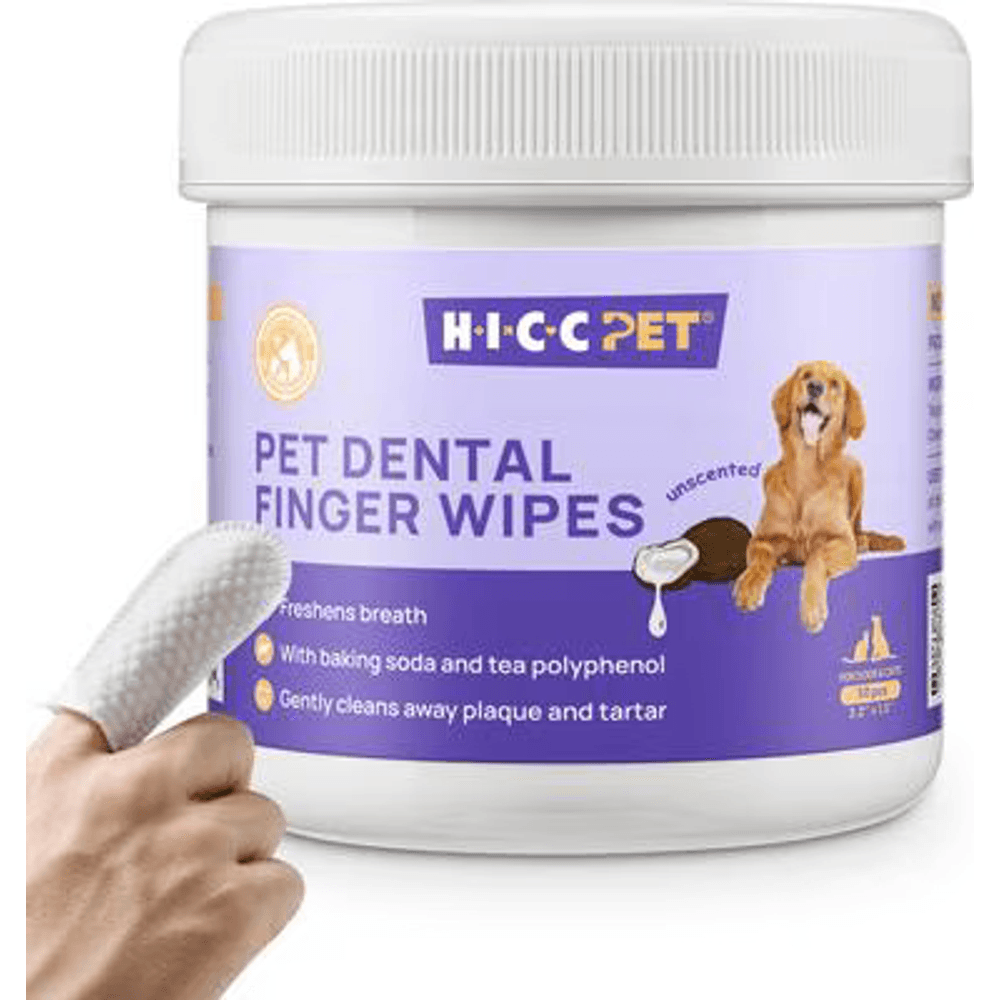
Pre-moistened finger-glove dental wipes with baking soda and tea polyphenol that wipe away plaque and freshen breath. The easiest brushless option for a dog that will not tolerate a toothbrush.
Webvet may earn a commission when you click through to Chewy, at no extra cost to you.
Frequently Asked Questions
Is there dog teeth cleaning without anesthesia?
Yes, it exists and is offered at some clinics, groomers, and pop-up events. But it is a cosmetic procedure that only cleans the visible crown of the tooth. It cannot reach below the gumline, take X-rays, or treat dental disease, so it does not replace a professional cleaning under anesthesia.
Is it safe for a dog to go under anesthesia for teeth cleaning?
For most dogs, yes. Modern veterinary anesthesia with pre-anesthetic bloodwork, an IV catheter, and continuous monitoring is very safe, including for many seniors. The risk for a healthy, properly screened dog is low and is generally outweighed by the harm of leaving dental disease untreated. Discuss your individual dog's risk with your vet.
What are the alternatives to dog teeth cleaning with anesthesia?
The real alternatives are preventive home care, not a competing procedure: daily tooth brushing, VOHC-accepted dental chews, and a VOHC water additive. These slow plaque buildup so professional cleanings are needed less often, but they do not remove existing tartar or treat disease below the gumline.
How do I clean my dog's teeth if I can't do surgery?
Focus on prevention. Brush daily with a dog toothbrush and pet-safe toothpaste, offer VOHC-accepted chews, and consider a water additive. This controls plaque before it hardens. If tartar or disease is already present, only a professional cleaning can address it, so talk to your vet about options that fit your dog's health.
What dissolves plaque on dogs' teeth naturally?
Nothing reliably dissolves hardened tartar at home, despite popular claims. The genuinely effective natural approach is mechanical: daily brushing removes soft plaque before it mineralizes into tartar. Once tartar has formed, it must be removed professionally. Be skeptical of coconut oil and similar remedies, which lack good evidence.
How risky are dental cleanings for dogs?
A professional cleaning under anesthesia is low-risk for a healthy dog that has been screened with bloodwork and is properly monitored. The greater risk is usually doing nothing: untreated periodontal disease causes pain, tooth loss, and infection that can affect the rest of the body. Your vet can tailor the anesthetic plan to your dog.
Is non-anesthetic dog teeth cleaning worth it?
As a rare cosmetic polish for a young dog with already-healthy gums, it may have limited value. As a substitute for a real cleaning, it is not worth it, because it cannot detect or treat the disease that actually harms dogs, and it can give false reassurance that delays needed care.
What breed of dog has the most dental problems?
Small and toy breeds (such as Yorkshire Terriers, Chihuahuas, and Toy Poodles) and brachycephalic breeds (such as Pugs, Bulldogs, and Shih Tzus) tend to have the most dental problems. Crowded, rotated teeth in small or short jaws trap plaque and speed up periodontal disease, so these dogs often need cleanings more frequently.
How long does a dog teeth cleaning take?
A routine professional cleaning usually takes around 45 minutes to a bit over an hour, including induction, cleaning, probing, and X-rays. Procedures involving extractions or advanced treatment take longer. An anesthesia-free cosmetic scaling is quicker but accomplishes far less.
Why is my dog coughing after a teeth cleaning?
Mild coughing after an anesthetic cleaning is often due to slight irritation from the breathing tube used during the procedure. A small amount of soft coughing for a day or so is usually normal. Call your vet if the cough worsens, persists beyond a couple of days, or comes with labored breathing.
Is it normal for my dog to whine or whimper after a dental cleaning?
Some whining or whimpering on the first evening is common, caused by grogginess from anesthesia, mild mouth soreness (especially after extractions), and disorientation. Give any prescribed pain medication as directed. Contact your vet if the discomfort seems severe, escalates, or comes with not eating, facial swelling, or bleeding.
How long is a dog under anesthesia for a teeth cleaning?
For a routine cleaning, a dog is typically under anesthesia for roughly 45 minutes to just over an hour. If extractions or extensive treatment are needed, it can be longer. Your veterinary team monitors vitals continuously throughout and recovers your dog under observation.
Is it safe to clean my dog's teeth with an ultrasonic device at home?
No. At-home ultrasonic kits and DIY scaling can gouge the gums, fracture teeth, and roughen the enamel so plaque returns faster, and they provide no diagnostic benefit. You cannot safely scale an awake, moving dog. Leave tartar removal to a professional cleaning and focus your home efforts on brushing and VOHC products.
Does coconut oil really clean a dog's teeth?
There is no good evidence that coconut oil removes plaque or tartar. At best it is a pleasant-tasting carrier that does not improve dental health, and it adds calories. The proven home methods remain daily brushing and VOHC-accepted chews and additives.
Do dental chews and water additives actually work?
They can help as part of a routine, but only products carrying the VOHC Seal of Acceptance are independently proven to reduce plaque or tartar. Treat chews and additives as useful supplements to brushing, not replacements for it, and never as a substitute for a professional cleaning when disease is present.
How much does a dental cleaning under anesthesia cost vs anesthesia-free?
Anesthesia-free cleaning typically runs about $100 to $300 and is cosmetic only. A professional cleaning under anesthesia generally costs about $300 to $800 without extractions, and more with extractions or advanced treatment. The higher price buys diagnosis (probing and X-rays) and actual treatment, which the cheaper option cannot provide.
Does pet insurance cover dog teeth cleaning?
It depends on the policy. Many plans treat routine cleanings as wellness or preventive care, which is not always covered, while illness-related dental treatment may be. Read your specific policy or add-on, and confirm with your insurer before assuming a cleaning is covered.
Is anesthesia-free cleaning safe for senior or small-breed dogs?
These are the dogs most likely to be hiding advanced disease, so a cosmetic cleaning is least appropriate for them. Age and small size are not automatic reasons to avoid anesthesia; vets can tailor a safer protocol. For senior and small or toy breeds, a proper cleaning under anesthesia is usually the better, safer choice.
Is dog teeth cleaning really necessary?
Yes, for most dogs. Periodontal disease is common and largely silent until advanced, and dogs hide mouth pain well. Regular at-home brushing plus professional cleanings on the schedule your vet recommends prevents pain, infection, and tooth loss. Skipping dental care does not save money in the long run; it usually costs more.
$65 · no membershipHave a health question about your dog?
A licensed vet can assess your dog over video and prescribe online when it's appropriate.
Talk to a vet- Licensed vets
- All 50 states
- same-day Rx
Webvet may earn a commission if you book.

Editor
The Webvet Editorial Team is the in-house group of pet-care editors and writers behind Webvet, operated by Smart Pet Collective. The team researches, writes, and maintains Webvet's pet health, behavior, and medication content. Every article follows a defined editorial process: research from reputable veterinary and scientific sources, careful drafting, mandatory review of medical content by a credentialed veterinarian, and dated publication. Health and medication articles are medically reviewed by a licensed veterinary professional before they go live and are kept current over time.
Veterinarian · BVMS MRCVS
Dr. Pippa Elliott, BVMS, MRCVS, is a veterinarian with nearly 30 years of experience in companion animal practice. Dr. Elliott earned her Bachelor of Veterinary Medicine and Surgery from the University of Glasgow. She was also designated a Member of the Royal College of Veterinary Surgeons. Married with 2 grown-up kids, Dr. Elliott has a naughty Puggle named Poggle, 3 cats and a bearded dragon.


