Dog Dental Water Additives: Do They Actually Work?
A vet-reviewed, honest look at whether dog dental water additives actually work, which ingredients have real evidence, the VOHC seal that proves efficacy, safety and side effects, and what additives can never replace.

BVMS MRCVS
Medically reviewed by Dr. Pippa Elliott, BVMS MRCVS · Last reviewed

This article contains affiliate links. Webvet may earn a commission when you buy through them, at no extra cost to you.
If you have ever poured a capful of liquid into your dog's water bowl hoping to beat bad breath and tartar, you have used a dog dental water additive. They are everywhere now, from the pet aisle to your vet's front desk, and the marketing promises are big: cleaner teeth, fresher breath, no brushing required.
But do they actually work? That is the honest question this guide answers. A dental dog water additive can play a real role in your dog's oral care, but only some products are backed by evidence, only a short list of ingredients does anything useful, and no additive in the world can do the one thing that matters most. We will sort the proof from the hype, show you the seal that separates real products from snake oil, and tell you exactly where a dog water additive for teeth fits in a routine that genuinely protects your dog's mouth.
This article is the practical hub on the topic. For the deep dives, we link out to the dedicated guides as we go.
- 1A water additive for dogs teeth is a helpful add-on, not a cure.
- 2The products worth buying carry the VOHC Seal of Acceptance, contain evidence-backed ingredients, and are paired with brushing.
- 3Additives reduce plaque and freshen breath above the gumline, but they cannot reach below it, which is where serious dental disease begins.
What is a dog dental water additive?
A dog dental care water additive is a flavorless (ideally) liquid you measure into your dog's drinking water each day. As your dog drinks, the active ingredients circulate through the mouth, where they are designed to slow plaque buildup, reduce the bacteria that cause odor, and freshen breath. Think of it as mouthwash your dog doesn't have to swish.

So when owners ask "what can I add to my dog's water for teeth," the honest answer is: a purpose-built dental drinking water additive, not a kitchen remedy. These products sit in the "home care" tier of canine dentistry, alongside brushing, dental chews, and dental diets. None of them replace a professional cleaning, but together they slow how fast trouble develops between cleanings.
A good additive to water for dogs teeth shares a few traits:
- It is formulated specifically for dogs (or for dogs and cats), not borrowed from human products.
- It carries efficacy proof, ideally the VOHC seal (more on that below).
- It is tasteless enough that your dog keeps drinking normally.
- It lists its active ingredients clearly so you can evaluate it.
The catch is that "water additive for dog dental health" is an unregulated marketing phrase. Any company can print it on a bottle. That is exactly why you need a filter for what actually works, which is what the rest of this guide gives you.
Do dental water additives actually work? What the evidence says
Here is the straight answer: some dog dental water additives work, and some do nothing. The category is real, but it is also crowded with products that have never been tested.
When people ask "do dog dental water additives actually work," they usually mean two different things: does it freshen breath, and does it reduce plaque and tartar. Freshening breath is easy and most products manage it for a few hours. Reducing plaque is the hard part, and only a minority of products have data showing they do it.
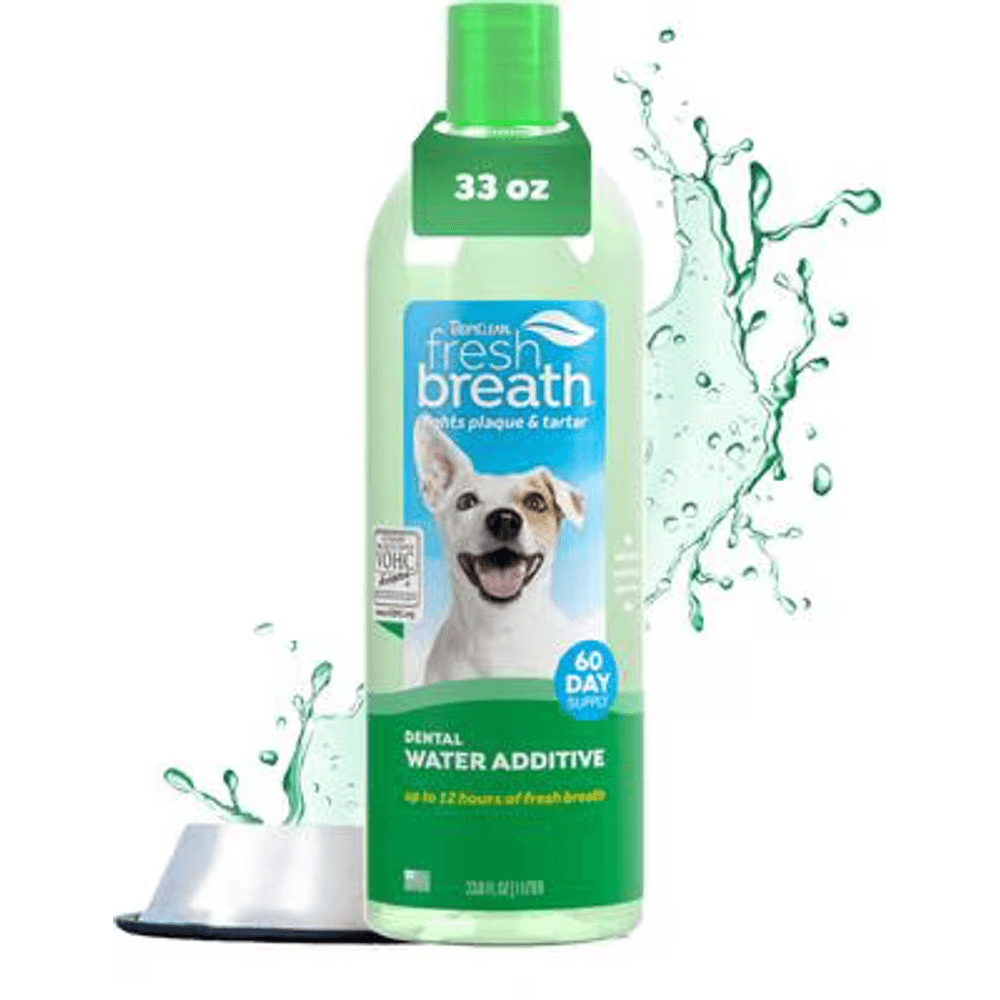
A no-brushing dental water additive: add one capful to your dog's water bowl daily to fight plaque and tartar and freshen breath for up to 12 hours. One 33.8-oz bottle is about a 60-day supply.
Webvet may earn a commission when you click through to Chewy, at no extra cost to you.
The clinically proven examples are encouraging. In one controlled study, a water additive containing pomegranate, erythritol, and inulin meaningfully reduced dental plaque in dogs over an eight-week period (PubMed Central, Gawor 2023). That is the kind of evidence you want to see: a measured reduction, not a marketing claim. So when someone asks "does water additive work for dogs teeth" or "is there a water additive for dogs teeth plaque," the answer is yes, for the specific products that have been tested and accepted.
The problem is that most products on the shelf have no published efficacy data at all. They may smell nice and lower bacteria counts in a lab dish, but that does not prove a real reduction in plaque on a living dog's teeth.
VOHC-accepted: the seal that proves a product works
If you remember one thing from this article, make it this: look for the VOHC seal.

The Veterinary Oral Health Council (VOHC) is an independent body that reviews dental products against pre-set standards for plaque and tartar reduction. Products that meet the standard earn the VOHC Seal of Acceptance. The seal is, in plain terms, the proof that a product actually does what it claims (Veterinary Oral Health Council). It is the canine equivalent of the human dental seals you already trust.
This is why "VOHC approved water additive for dogs" and "vohc approved dental products" are such valuable searches. You are not asking which product has the best ad budget. You are asking which products passed a real test.
How to use the VOHC filter when shopping:
- Decide you want a dog dental water additive VOHC has accepted.
- Check the current VOHC accepted-products list (it is public and updated).
- Match the exact product name and formula, because brands sometimes have multiple SKUs and only one carries the seal.
- Treat the seal as your floor, not your ceiling, then weigh ingredients, taste acceptance, and price.
A quick note on language: people search "vohc dental water additive" and "vohc approved water additive" interchangeably. They mean the same thing. The seal applies to a specific tested formula, so always verify the exact product, not just the brand.
What's actually in them: common ingredients (and what each does)
Once you can read the label, you can judge almost any product. Here are the active ingredients you will see most often and what the evidence says about each.

| Ingredient | What it's for | Evidence level |
|---|---|---|
| Chlorhexidine | Antimicrobial, reduces plaque bacteria | Strong; one of the best-supported dental actives |
| Stabilized chlorine dioxide | Kills odor bacteria, freshens breath | Moderate; common in breath-focused products |
| Zinc (zinc gluconate/sulfate) | Slows plaque mineralization, reduces odor | Moderate |
| Pomegranate extract | Antioxidant, anti-plaque support | Promising; part of a study-backed blend |
| Erythritol | Sugar alcohol that disrupts plaque bacteria | Promising; safe for dogs, part of tested blend |
| Inulin | Prebiotic fiber supporting oral microbiome | Promising; part of tested blend |
A few details worth knowing:
- Chlorhexidine is one of the few ingredients with solid scientific backing for antimicrobial dental benefit in dogs (Cornell Riney Canine Health Center). It is potent, which is why some dogs find it bitter.
- Stabilized chlorine dioxide is the workhorse behind many "fresh breath" additives. It is good at odor control, with more modest plaque claims.
- Zinc shows up as a supporting actor, helping with both odor and plaque mineralization.
- The pomegranate, erythritol, and inulin trio is notable because it was the blend that reduced plaque in the clinical study cited above.
What you do not want to see is a label that lists only "proprietary blend" with no actives named, or worse, a sweetener you cannot identify. That brings us to safety.
 $65 · no membership
Have a health question about your dog?
A licensed vet can assess your dog over video and prescribe online when it's appropriate.
 Talk to a vet
- Licensed vets
- All 50 states
- same-day Rx
Webvet may earn a commission if you book.
Are dental water additives safe? Side effects and the xylitol warning
For most dogs, a properly formulated dog dental water additive is safe when used at the labeled dose. But "most" is not "all," and there is one ingredient that turns a safety question into an emergency.

The xylitol warning comes first. Xylitol is a sugar substitute that is highly toxic to dogs, capable of causing a dangerous blood-sugar crash and liver injury. It has no business being in a dog product, yet it occasionally appears in items marketed for fresh breath. Always read the full ingredient list. If you see xylitol, do not buy it, and if your dog has already ingested a xylitol-containing product, call your vet or an animal poison line immediately.
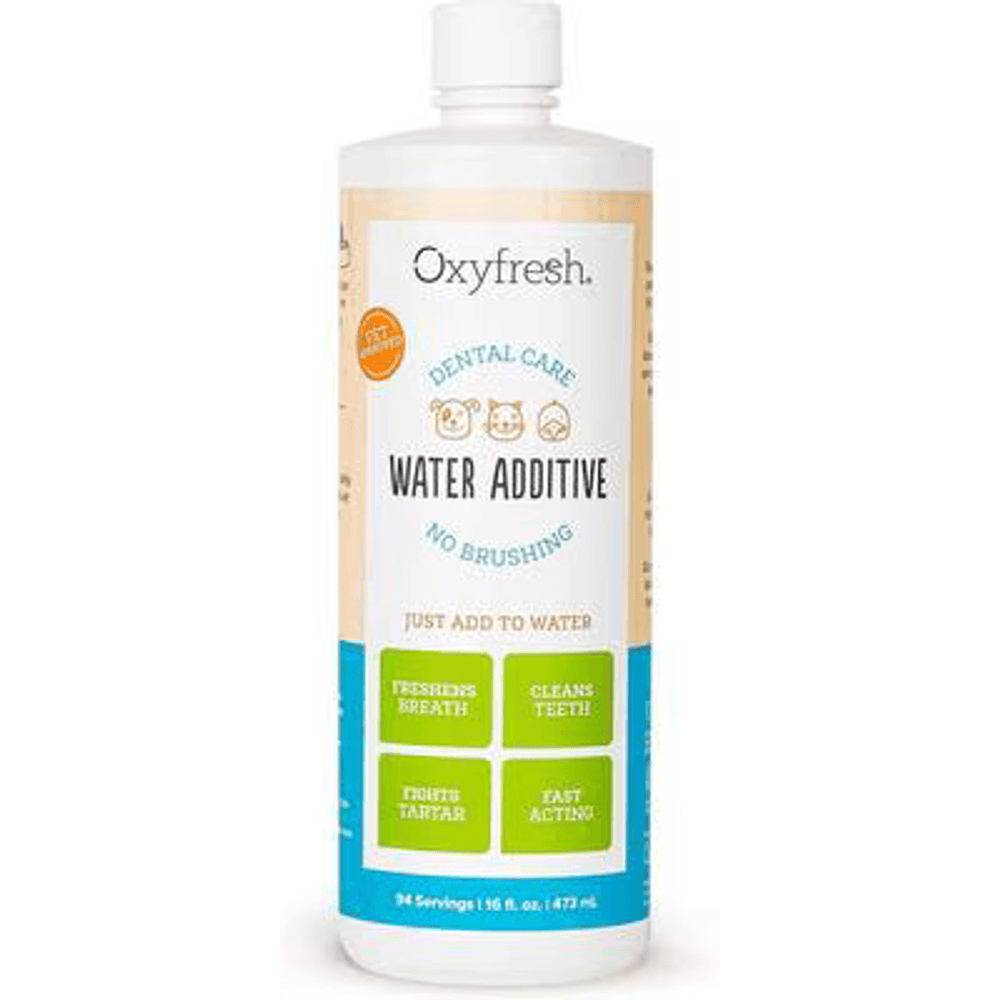
A taste-free, odor-free water additive you pour straight into the bowl. No brushing needed: it freshens breath, helps clean teeth, and fights tartar. About 94 servings per 16-oz bottle.
Webvet may earn a commission when you click through to Chewy, at no extra cost to you.
Setting xylitol aside, the realistic side effects of dental water for dogs are mild and uncommon:
- Refusing to drink. The most frequent issue. If the additive changes the taste, some dogs drink less, which risks dehydration. Always provide a second bowl of plain water.
- Mild stomach upset. Occasional loose stool or a slightly upset stomach, usually when starting out or overdosing.
- Mouth or gum irritation. Rare, more likely with stronger antimicrobial formulas.
So when owners search "is dog dental water additive safe" or "is fresh dental teeth cleaning water additive safe for dogs," the practical answer is: yes for a VOHC-style product used as directed and free of xylitol, with the main caution being whether your individual dog will keep drinking. Introduce it gradually, watch water intake, and stop if you see any reaction.
When in doubt, your veterinarian is the right call, especially for dogs with kidney issues, diabetes, or a history of dental disease.
Can dogs and cats share the same water additive?
In multi-pet homes, the obvious question is whether one bottle can serve the whole household. Sometimes, but not by default.

A dental water additive for dogs and cats has to be formulated and labeled for both species. Cats are not small dogs; they metabolize some compounds differently and are pickier about water taste, which can make them stop drinking entirely. Many products are explicitly dual-species ("for dogs and cats"), and a dedicated dental fresh water additive for cats also exists.
Rules for sharing safely:
- Only use a product whose label specifically includes cats. A dog-only additive may use a dose or ingredient that is not validated for cats.
- Watch your cat's drinking closely, because reduced water intake in cats raises urinary and kidney risks fast.
- If pets share bowls, dose for the species with the stricter limit and confirm both are still drinking normally.
So "is dog dental water additive safe for cats" depends entirely on the label. If it says dogs and cats, and your cat tolerates the taste, the best dental water additive for dogs and cats can simplify your routine. If it is dog-only, get a separate cat-appropriate product rather than guessing.
The best vet-recommended water additives (and how to pick one)
There is no single "best dog dental water additive" for every dog, but there is a clear method for finding the best one for yours. That method matters more than any ranked list, because formulas and SKUs change.

Here is the vet-minded shortlist of criteria, in priority order:
- VOHC accepted. Start here. A vet recommended water additive for dogs teeth almost always means one that has earned the seal.
- Named, evidence-backed actives. Chlorhexidine, zinc, stabilized chlorine dioxide, or the pomegranate/erythritol/inulin blend.
- No xylitol, clean label. No mystery sweeteners, no unnamed proprietary blends.
- Taste acceptance. The best water additive for dogs teeth is the one your dog actually keeps drinking.
- Right species and size dosing. Matched to your dog (and cat, if shared).
| Selection factor | Why it matters | What to look for |
|---|---|---|
| VOHC seal | Independent efficacy proof | On the public VOHC accepted list |
| Active ingredients | Determines if it does anything | Chlorhexidine, zinc, chlorine dioxide, tested botanical blend |
| Safety | Avoids harm | No xylitol; species-appropriate |
| Palatability | No benefit if unused | Low/neutral flavor, dog keeps drinking |
| Cost per day | Sustainability | Concentration and dose, not bottle price |
When people search "top rated dog dental water additive" or "what is the best water additive for dogs teeth," they are usually one step away from the better question: which product is VOHC accepted, palatable to my dog, and something I will use daily? Answer that and you have your best dog water additive.
Popular brands compared: TropiClean, HealthyMouth, Oxyfresh, Vetradent, Arm & Hammer
Brand searches dominate this category, so here is an honest editorial read on the names you will encounter. Always verify the exact product against the VOHC list, because brands carry multiple formulas.
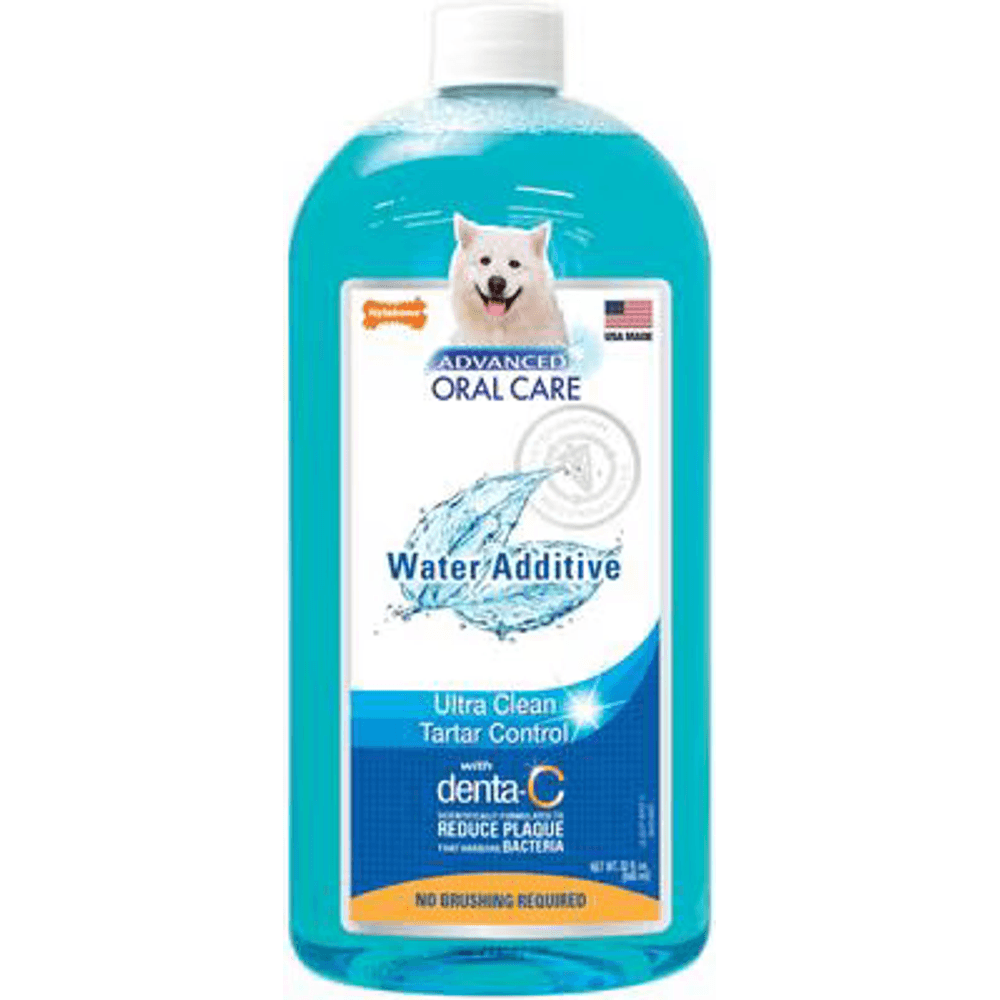
A no-brushing water additive with denta-C that targets the plaque-causing bacteria behind tartar and bad breath. Just add to the water bowl for daily dental support between brushings.
Webvet may earn a commission when you click through to Chewy, at no extra cost to you.
| Brand / product family | Typical positioning | What to verify |
|---|---|---|
| TropiClean Fresh Breath water additive | Mass-market, breath-focused | Which specific SKU; ingredient panel |
| HealthyMouth water additive for dogs | Premium, botanical/VOHC-oriented | VOHC acceptance for the exact formula |
| Oxyfresh water additive | Flavorless, stabilized chlorine dioxide | Taste acceptance; plaque vs. breath claims |
| Vetradent water additive | Vet-channel, professional-leaning | Where to buy; full ingredient list |
| Arm & Hammer dog dental water additive | Budget, baking-soda branding | Evidence beyond brand recognition |
A few honest distinctions:
- HealthyMouth built its reputation around VOHC-backed efficacy and a botanical formula, which is why "healthymouth water additive for dogs" and "healthy mouth water additive" are heavily searched by owners who want proof.
- Oxyfresh leans on stabilized chlorine dioxide and a flavorless profile, which helps with picky drinkers.
- TropiClean Fresh Breath is the most widely available and breath-first; confirm whether your chosen SKU has plaque data.
- Vetradent is positioned through veterinary channels and worth asking your vet about directly.
- Arm & Hammer trades on brand familiarity; judge it on its ingredient panel like any other.
Do TropiClean, Oxyfresh, and HealthyMouth additives actually differ? Yes, mostly in active ingredients and whether the specific formula has VOHC acceptance. Brand reputation is a starting point, not the proof.
Natural and homemade water additives: what's safe vs. what to avoid
This is the area where good intentions cause the most harm, so read it carefully. The internet is full of "homemade dog dental water additive" recipes, and many are useless or unsafe.

Let's be clear about a natural dog dental water additive first: "natural" is a marketing word, not a safety guarantee. Plenty of natural substances are toxic to dogs. The standard is the same as for any product: named ingredients, no xylitol, and ideally efficacy data.
| DIY idea | Verdict | Why |
|---|---|---|
| Plain water, changed daily | Safe and underrated | Clean water alone limits bacteria |
| Commercial enzymatic dental water (labeled) | Safe, can work | Formulated and dosed for dogs |
| Diluted apple cider vinegar | Avoid | No proven plaque benefit; can irritate, deters drinking |
| Baking soda in water | Avoid | Sodium load, no proven benefit, dogs may refuse |
| Essential oils in water | Avoid (some toxic) | Several oils are toxic to dogs; risky |
| Hydrogen peroxide in water | Do not use | Not for routine oral care; dangerous |
For the "dog breath freshener homemade" and "dog breath freshener for water" crowd, the safe path is simple: fresh clean water daily, a VOHC-accepted commercial additive if you want active help, and brushing. For a vet recommended dog breath freshener, ask your vet for a product they trust rather than mixing one yourself.
If you want safe at-home approaches that actually help breath, our guide to home remedies for dog bad breath covers what is genuinely worth doing, and our breakdown of what causes dog bad breath helps you tell a cosmetic odor from a medical warning sign.
Beyond additives: brushing, dental chews, and what additives can't replace
Here is the limitation that the marketing never highlights, and it is the most important paragraph in this guide.

A water additive only reaches what your dog's saliva and water reach: the surfaces above the gumline. But most serious dental disease starts below the gumline, in the space between tooth and gum where plaque hardens and bacteria attack the roots and bone (Cornell Riney Canine Health Center). No additive, no matter how good, can clean below the gumline. That is the line additives cannot cross.
This is why periodontal disease is the most common dental problem in dogs, and why both home care and professional cleanings are needed to manage it (AVMA). The gold standard for home plaque control is not an additive at all. It is daily toothbrushing, the single most effective home method for controlling plaque (AKC expert advice).
So where does each tool fit?

| Method | Reaches below gumline? | Role |
|---|---|---|
| Daily brushing | Partially (gumline edge) | Gold standard home care |
| Dental chews | No | Mechanical scrubbing, helpful add-on |
| Water additive | No | Above-gumline support, easiest to do daily |
| Professional cleaning | Yes (under anesthesia) | Only true below-gumline clean |
What dissolves plaque on a dog's teeth? Nothing in a bottle dissolves hardened tartar. Soft plaque is disrupted by brushing and chewing before it mineralizes; once it has hardened into tartar, only a professional dental cleaning removes it. Additives help slow the cycle, they do not reverse it.
The practical takeaway: stack your tools. Use the additive as the daily easy layer, brush as the foundation, add chews, and keep up with professional care.
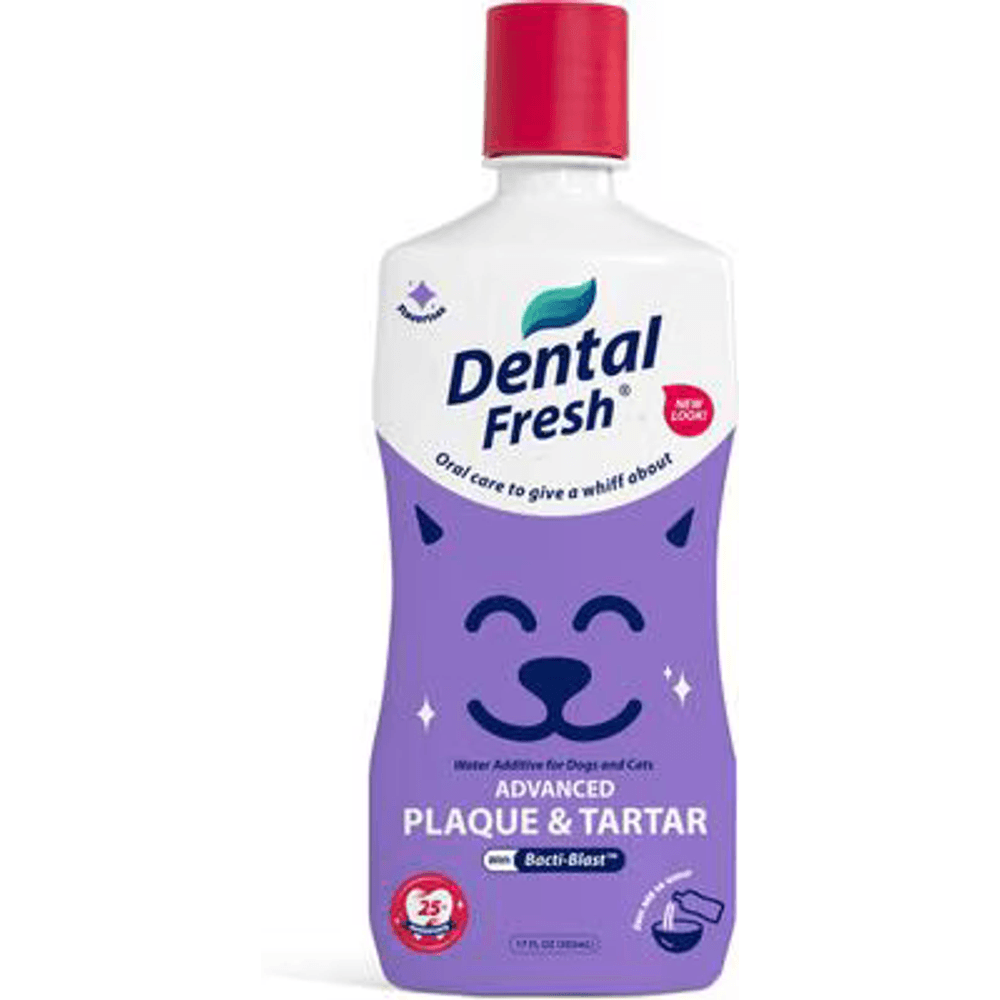
An advanced no-brushing water additive with Bacti-Blast that targets the bacteria behind plaque, tartar, and bad breath. Add it to the bowl daily for hands-off dental support.
Webvet may earn a commission when you click through to Chewy, at no extra cost to you.
- Master the foundation with our step-by-step on how to brush your dog's teeth.
- For the chewing layer, see our vet-recommended dog dental chews guide.
- To go deeper on the additive itself, we maintain a focused dog dental water additive deep dive.
- If tartar has already built up, read tartar on dog teeth and, for advanced cases, dog rotting teeth.
- Curious about the cleaning itself, our explainer on non-anesthetic dog teeth cleaning covers why anesthesia-free cleaning has real limits below the gumline.
For the full picture of how diet, texture, and routine fit together, start at our pillar guide to dog dental health.
- 1A dog dental water additive is the easiest daily habit and a legitimate above-gumline helper, but it is the supporting cast, not the star.
- 2Brushing is the gold standard, professional cleanings are the only below-gumline fix.
- 3The best results come from combining all of them.

Frequently Asked Questions
Do dental water additives for dogs work?
Some do and some do not. Products with the VOHC seal or published efficacy data can measurably reduce plaque and freshen breath above the gumline. Untested products may freshen breath briefly without doing anything for plaque. Look for the VOHC seal or named, evidence-backed ingredients before trusting a 'do they work' claim.
Does a dog dental water additive actually work to remove plaque?
A good additive helps slow soft plaque buildup and freshen breath, but it does not remove existing hardened tartar. Soft plaque is disrupted before it mineralizes; once it hardens, only a professional cleaning removes it. Treat additives as plaque-slowing support, not plaque removal.
What can I add to my dog's water for teeth?
Use a purpose-built dog dental water additive, ideally one that is VOHC accepted and free of xylitol. Avoid kitchen remedies like vinegar, baking soda, or essential oils, which lack proof and can be unsafe or make your dog stop drinking.
Is there a water additive for dogs teeth plaque?
Yes. Certain additives, including a clinically studied blend of pomegranate, erythritol, and inulin, have been shown to reduce dental plaque in dogs. Choose products with VOHC acceptance or published data rather than relying on marketing language alone.
What dissolves plaque on a dog's teeth?
Nothing in a bottle dissolves hardened tartar. Soft plaque is removed mechanically by brushing and chewing before it mineralizes, and hardened tartar is removed only during a professional dental cleaning. Water additives help slow the cycle but do not dissolve buildup.
What are the side effects of dental water for dogs?
The most common issue is a dog drinking less because of the taste, which risks dehydration, so always offer plain water too. Mild stomach upset or rare gum irritation can occur. The serious risk is xylitol, which is toxic to dogs and should never appear on the label.
What are the side effects of water additives for dogs?
For VOHC-style products used as directed, side effects are usually mild: occasional loose stool, reduced drinking, or rarely mouth irritation. Introduce the additive gradually and stop if you notice a reaction. Avoid any product containing xylitol entirely.
Are VOHC-approved water additives better than regular ones?
Yes, in the way that matters most: VOHC accepted products have submitted real plaque and tartar data and met a set standard, so you have proof rather than promises. A product without the seal might still work, but you are trusting the brand's word instead of independent review.
Can I use the same dental water additive for my dog and my cat?
Only if the label specifically says it is for dogs and cats. Cats metabolize some ingredients differently and are sensitive to taste changes, which can make them stop drinking. If a product is dog-only, use a separate cat-appropriate additive rather than guessing on dosing.
Is it safe to make a homemade dog dental water additive?
Generally no. Most homemade recipes lack proven benefit and some, like essential oils or hydrogen peroxide, are unsafe for dogs. Fresh clean water plus a VOHC-accepted commercial additive and brushing is a safer, more effective route than mixing your own.
What ingredients should a dog water additive contain (and which to avoid)?
Look for named, evidence-backed actives such as chlorhexidine, zinc, stabilized chlorine dioxide, or the pomegranate/erythritol/inulin blend. Avoid xylitol entirely, and be wary of products that list only an unnamed 'proprietary blend' with no disclosed ingredients.
Does water additive replace brushing my dog's teeth?
No. Daily toothbrushing is the gold standard for home plaque control because it physically disrupts plaque at the gumline, while additives only reach surfaces above it. An additive is a helpful daily add-on, not a substitute for the brush.
How long does it take for a dental water additive to work?
Breath improvement is often noticeable within hours to days. Plaque-related benefits are slower and require consistent daily use over weeks, as seen in studies measured over roughly eight weeks. Results depend on using it every day alongside brushing.
Which dental water additive do vets recommend most?
Vets most often recommend VOHC-accepted products and ones stocked in veterinary channels, because they come with efficacy data. Rather than a single universal pick, ask your own vet which VOHC-accepted additive suits your dog's size, taste preferences, and dental history.
Can dental water additives cause an upset stomach or diarrhea in dogs?
Occasionally, yes, especially when first introduced or if overdosed. Start at the lower end of the dosing range, introduce it gradually, and watch your dog's stool. If diarrhea persists after stopping the additive, contact your veterinarian.
Do TropiClean, Oxyfresh, and HealthyMouth additives actually differ?
Yes. They differ in active ingredients, flavor profile, and whether the specific formula carries VOHC acceptance. HealthyMouth leans on VOHC-backed botanicals, Oxyfresh on flavorless stabilized chlorine dioxide, and TropiClean on breath-first mass availability. Compare the exact SKU, not just the brand name.
$65 · no membershipHave a health question about your dog?
A licensed vet can assess your dog over video and prescribe online when it's appropriate.
Talk to a vet- Licensed vets
- All 50 states
- same-day Rx
Webvet may earn a commission if you book.

Editor
The Webvet Editorial Team is the in-house group of pet-care editors and writers behind Webvet, operated by Smart Pet Collective. The team researches, writes, and maintains Webvet's pet health, behavior, and medication content. Every article follows a defined editorial process: research from reputable veterinary and scientific sources, careful drafting, mandatory review of medical content by a credentialed veterinarian, and dated publication. Health and medication articles are medically reviewed by a licensed veterinary professional before they go live and are kept current over time.
Veterinarian · BVMS MRCVS
Dr. Pippa Elliott, BVMS, MRCVS, is a veterinarian with nearly 30 years of experience in companion animal practice. Dr. Elliott earned her Bachelor of Veterinary Medicine and Surgery from the University of Glasgow. She was also designated a Member of the Royal College of Veterinary Surgeons. Married with 2 grown-up kids, Dr. Elliott has a naughty Puggle named Poggle, 3 cats and a bearded dragon.


