Home Remedies for Dog Bad Breath That Actually Work
Stinky dog breath usually traces back to plaque and gum disease, not just last night's dinner. Here are 11 vet-vetted home remedies for dog bad breath that actually work, what's behind the smell, and the red flags that mean it's time to call your vet.

BVMS MRCVS
Medically reviewed by Dr. Pippa Elliott, BVMS MRCVS · Last reviewed

This article contains affiliate links. Webvet may earn a commission when you buy through them, at no extra cost to you.
If your dog's hello comes with a cloud of stink, you are not alone, and you are not stuck with it. The good news: most of the home remedies for dog bad breath that actually work are simple, cheap, and safe to start today. The catch: bad dog breath is almost never "just how dogs smell." It is usually a signal, most often from plaque and gum disease, sometimes from the gut, and occasionally from something more serious.
This vet-reviewed guide gives you 11 safe, at-home and natural remedies for bad dog breath, explains what causes that smell in the first place, and lays out the danger signs that mean stinky breath needs a veterinarian, not a carrot. We will keep the homemade remedies for bad dog breath honest: what genuinely helps, what only masks the odor, and the few "bad dog breath cure home remedies" floating around online that can actually hurt your dog.
- 1The single most effective home remedy for dog bad breath is daily tooth brushing with dog-specific toothpaste.
- 2Everything else (chews, food add-ins, water additives) supports that habit but rarely replaces it.
- 3Persistent, sudden, or "rotting" breath is a reason to see your vet, because the fix may be under the gumline where home care cannot reach.
What Causes Bad Breath in Dogs?
Understanding the dog bad breath causes is the whole game, because the right remedy depends on the source. When people ask "why does my dog have bad breath" or "what gives a dog bad breath," the honest answer is that one cause dominates the rest.
By far the most common of the causes of dog bad breath is periodontal disease: plaque hardening into tartar, then bacteria inflaming the gums below the gumline. The American Veterinary Medical Association notes that dental disease is one of the most common problems vets see, and home dental care plus professional cleaning is the standard of care (AVMA - Pet Dental Care). That bacterial activity is exactly what makes the breath smell.
But periodontal disease is not the only reason. Here are the main reasons for dog bad breath:
- Plaque, tartar, and gum disease (the leading cause of chronic odor)
- Diet and eating habits (table scraps, eating feces, raw or rich foods)
- Gastrointestinal issues (acid reflux, slow digestion)
- Foreign objects lodged in the mouth or between teeth
- Systemic illness (kidney disease, diabetes, liver problems)
- Oral tumors or infections
So when you wonder "what causes bad dog breath" or "why does my dog breath smell so bad," start with the mouth, then work outward. The remedies below target the mouth first, because that is where the smell usually lives.
Why Does My Dog's Breath Smell Like Death (or Fish)? Decoding the Smell

The specific odor is a useful clue. People search "dog breath smells like death" or "fishy bad breath in dogs" for a reason: different smells point toward different sources. Use this decoder as a starting point, not a diagnosis.
| The smell | Likely source | What to do |
|---|---|---|
| Rotten, "smells like death," foul | Advanced periodontal disease, dying tissue, oral infection or tumor | See your vet promptly; this is rarely fixable at home |
| Fishy | Anal gland fluid (from licking) or, less often, kidney issues | Check rear-end licking; vet visit if fishy breath is sudden or persistent |
| Sweet or fruity | Possible diabetes (ketones) | Vet visit, especially with increased thirst or urination |
| Ammonia or urine-like | Possible kidney disease | Vet visit, especially in senior dogs |
| Just stinky / meaty | Plaque, tartar, food | Home remedies below often help |
If you are dealing with extreme bad dog breath, very bad dog breath, or a sudden fishy dog breath that appeared overnight, treat that as a signal to dig deeper. Truly rotting, "death" breath usually means tissue is breaking down somewhere, and that needs a professional eye. Dogs bad breath from stomach issues can also produce a sour, off odor that no chew will fix.
Bad Breath From the Stomach or Gut: GI and Diet Causes
Not all odor starts in the mouth. Dogs bad breath from stomach and gut sources is real, and it is a distinct problem from plaque. If the teeth look clean but the breath is sour, the digestive tract is the next suspect.
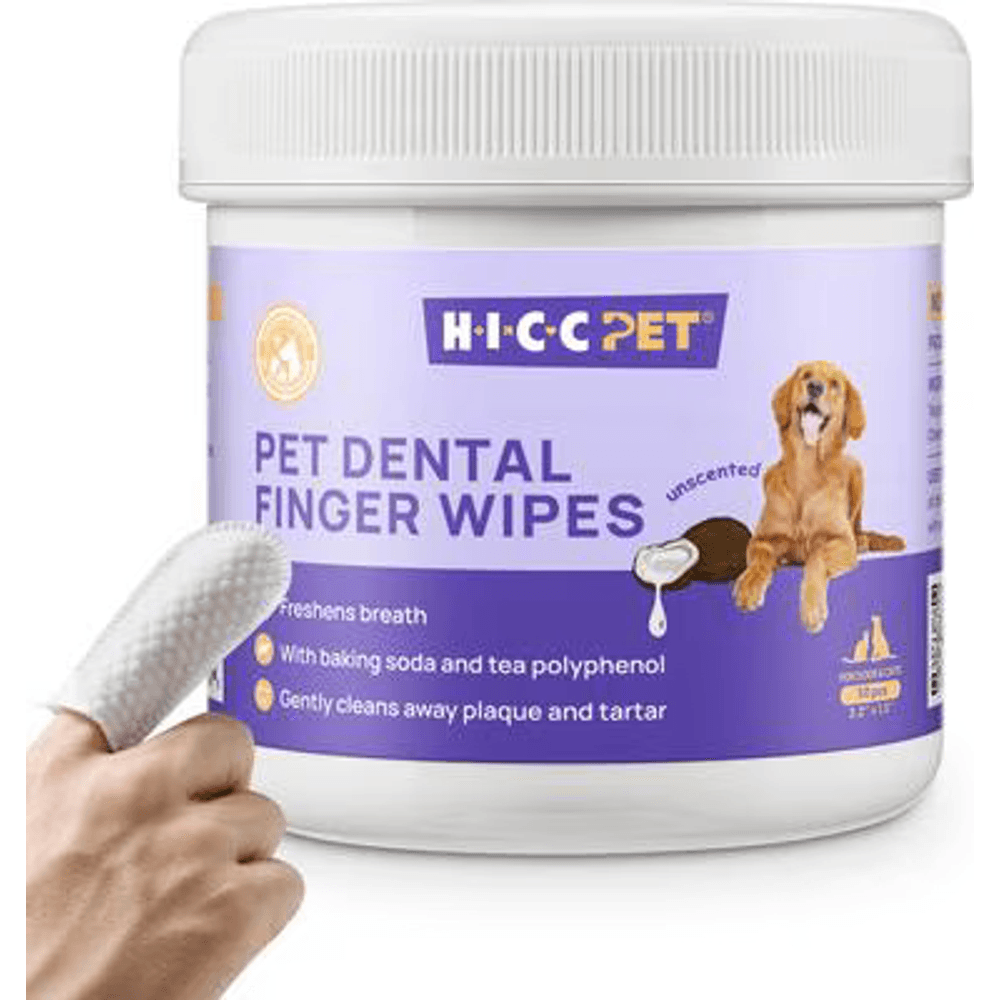
Pre-moistened finger-glove dental wipes with baking soda and tea polyphenol that wipe away plaque and freshen breath. The easiest brushless option for a dog that will not tolerate a toothbrush.
Webvet may earn a commission when you click through to Chewy, at no extra cost to you.
Common GI-origin contributors include acid reflux, slowed digestion, food sensitivities, and coprophagia (eating feces), which is one of the more notorious sources of foul breath. A rich, low-quality, or rapidly changed diet can also throw off the gut and show up on the breath.
How to treat dogs bad breath from stomach causes usually means addressing the gut, not the gums: a consistent, high-quality diet, slower transitions between foods, discouraging stool-eating, and, when reflux is suspected, a vet's input. If your dog also vomits, drools, or seems nauseated, the gut connection is worth taking seriously. Our guide to dog upset stomach causes and remedies covers the digestive side in depth.
Sudden or New Bad Breath: When It Came On Fast
Onset timing matters. There is a meaningful difference between breath that has slowly gotten worse over months and a dog has bad breath all of a sudden. When a dog's breath suddenly smells bad, the cause is more likely to be acute: a fractured or abscessed tooth, a foreign object (a stick fragment or bone shard wedged in the gums), or, less commonly, a systemic problem flaring up.
Sudden bad breath in dogs that appears alongside pawing at the mouth, dropping food, drooling, or reluctance to chew points strongly toward something physical and painful in the mouth. That combination warrants faster vet attention than slow-building plaque breath, because an abscess or stuck object will not resolve on its own and can be quite painful.
- 1Slow-onset breath usually means plaque you can manage at home.
- 2Dog sudden bad breath, especially with mouth pain signs, usually means a specific problem (broken tooth, abscess, lodged object) that needs a vet.
- 3Speed of onset is one of your best triage clues.
11 Vet-Vetted Home Remedies for Dog Bad Breath

Here is the part you came for: how to get rid of bad dog breath with remedies that hold up to scrutiny. These are the bad dog breath solutions worth your time, ordered roughly from most to least effective. None of these "cures" gum disease that already exists below the gumline, but together they are a genuine plan for how to fix bad dog breath and keep it from coming back.
A quick promise before we start: when people ask what kills dogs bad breath naturally or search for a bad dog breath cure, they often get sold a single miracle product. There is no single fix. The dogs whose breath stays fresh are the ones whose owners stack a few of these habits and stay consistent. That is the real answer to how to stop bad dog breath.
1. Brush Your Dog's Teeth (the Gold Standard) + Dog Toothpaste
If you do only one thing, do this. Daily brushing with a dog-formulated toothpaste is the most effective at-home measure for oral health and breath, full stop. Cornell's Riney Canine Health Center and the AVMA both put home brushing at the center of canine dental care (Cornell Riney Canine Health Center).
Use a soft dog toothbrush or a finger brush and a dog bad breath toothpaste. Dog toothpaste for bad breath comes in flavors like poultry or peanut butter that make the habit easier to build. Aim for daily; even three times a week beats nothing.
A word on "best dog toothpaste for bad breath": the best one is the one your dog tolerates and you will actually use consistently. Enzymatic veterinary toothpastes are a reliable choice.
New to this? Our step-by-step walkthrough on how to brush your dog's teeth shows you how to introduce the toothbrush without a wrestling match.
2. Dental Chews, Treats, and Chew Bones That Actually Work

Dental chews are the most popular non-brushing remedy, and for good reason: chewing mechanically scrapes plaque while your dog enjoys it. But the dog dental chews for bad breath market is full of products that do little more than freshen for an hour.
Here is the filter that separates dog breath treats that actually work from the rest: look for the VOHC Seal. Only chews and products bearing the Veterinary Oral Health Council Seal of Acceptance are independently verified to reduce plaque and tartar (Veterinary Oral Health Council). If a box of dog bad breath treats or dog bones for bad breath does not carry that seal, you are trusting marketing, not data.
When choosing dog treats for bad breath or the best dog chews for bad breath:
- Match the chew size to your dog (too small is a choking risk)
- Pick VOHC-accepted products when possible
- Use dog bad breath chews as a daily supplement to brushing, not a replacement
- Avoid bones hard enough to fracture teeth (cooked bones, antlers, hard hooves)
 $65 · no membership
Have a health question about your dog?
A licensed vet can assess your dog over video and prescribe online when it's appropriate.
 Talk to a vet
- Licensed vets
- All 50 states
- same-day Rx
Webvet may earn a commission if you book.
3. Coconut Oil, Parsley, and Other Food Add-Ins
This is where the "natural" remedies cluster lives. Coconut oil for dog bad breath is popular, and a small amount mixed into food may help freshen breath and offers a mild antibacterial reputation, though evidence is modest. Keep it to roughly a quarter teaspoon per 10 pounds of body weight, and less if your dog is prone to pancreatitis or weight gain, because coconut oil is calorie-dense and fatty.
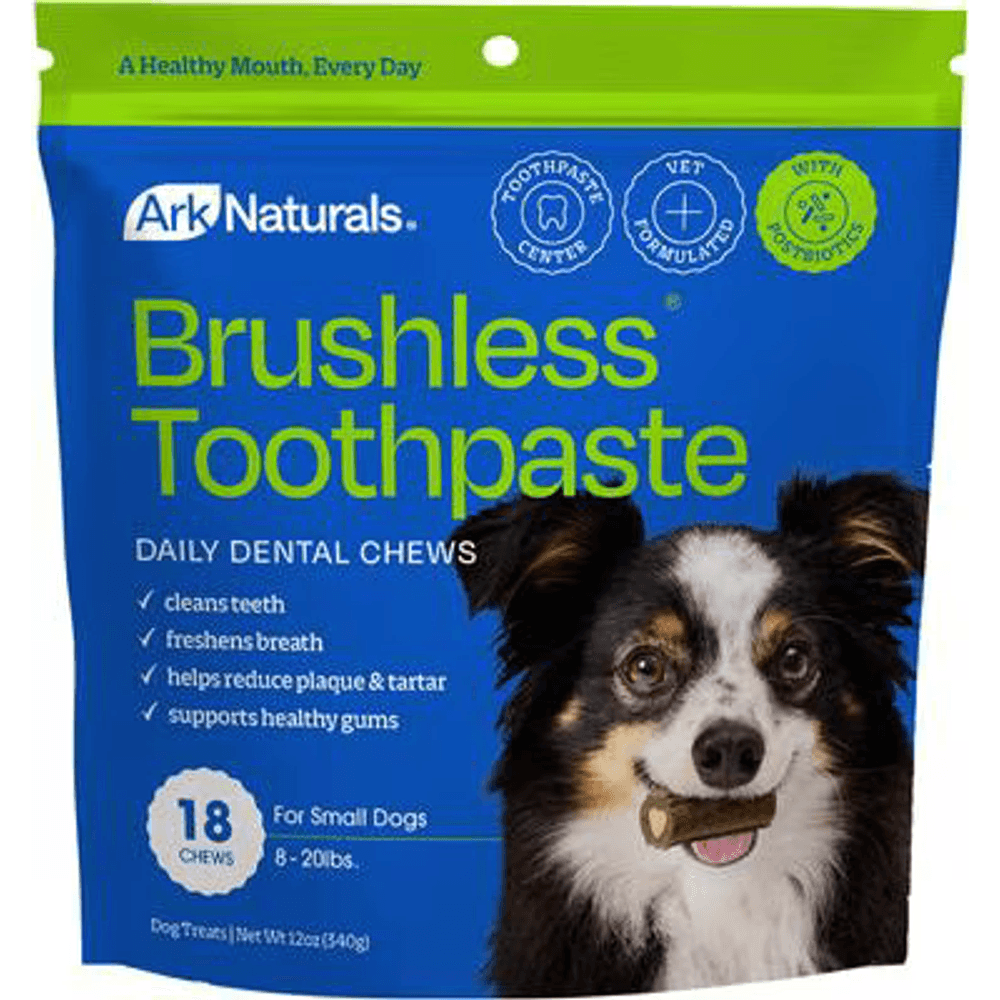
Brushless dental chews for small dogs with a toothpaste center that cleans teeth, reduces plaque and tartar, and freshens breath as they chew. A no-brushing daily option for dogs 8 to 20 pounds.
Webvet may earn a commission when you click through to Chewy, at no extra cost to you.
Fresh parsley is the classic natural breath freshener. A small amount of finely chopped flat-leaf parsley sprinkled on food acts as a mint dog breath freshener from the inside. Use curly or flat-leaf parsley in small amounts; avoid spring parsley, which is a different plant and can be unsafe.
These food add-ins are gentle, low-risk helpers, not cures. Think of parsley for dog bad breath and a dab of coconut oil as a supporting cast, not the headliner.
4. Apple Cider Vinegar, Baking Soda, and Water Additives

People constantly ask, does vinegar help bad dog breath? A very small amount of apple cider vinegar (around half a teaspoon for a medium dog) added to the water bowl may slightly support oral pH and freshness for some dogs. It is mild and unproven, and many dogs dislike the taste and stop drinking, which is the opposite of what you want. If you try a senior dog bad breath home remedy vinegar approach, dilute heavily and never let it discourage drinking.
Baking soda gets mentioned as a dog bad breath home remedy baking soda trick, but it is high in sodium and unpleasant; we do not recommend dosing your dog's water or making a paste from it.
The more reliable liquid option is a purpose-made water additive. A dog water additive for bad breath dissolves into the bowl and works passively all day. As with chews, prefer VOHC-accepted formulas.
| Liquid remedy | Verdict | Notes |
|---|---|---|
| Apple cider vinegar in water | Mild, optional | Tiny amount only; stop if it reduces drinking |
| Baking soda | Not recommended | High sodium, unpalatable |
| Commercial water additive | Reasonable supplement | Choose VOHC-accepted; passive daily benefit |
For a full rundown of which additives are worth it, see our guide to dog dental water additives.
5. Crunchy Snacks: Carrots and Apple Slices

Some of the simplest home remedies for dog bad breath are sitting in your fridge. Crunchy raw vegetables and fruits act like edible toothbrushes: the firm texture provides mechanical scraping that knocks loose surface plaque while your dog chews.
Raw carrots for dog teeth are the go-to. They are low-calorie, satisfying to gnaw, and the crunch does light cleaning work. Apple slices dog breath fans like them too (remove the seeds and core), since the texture helps and the freshness is a bonus.
These crunchy snacks scrape plaque only at the surface, so they complement brushing rather than replace it. But as a guilt-free daily treat that does double duty, they are hard to beat.
6. Probiotics, Yogurt, Supplements, and Diet Changes
Because some bad breath starts in the gut, the right food and gut support can address odor that brushing never touches. A dog bad breath remedy yogurt approach (a spoonful of plain, unsweetened, xylitol-free yogurt) introduces beneficial bacteria, and dedicated dog probiotics for bad breath do the same more reliably.
Diet itself matters. The "best dog food for bad breath" is less about a magic brand and more about a consistent, high-quality, appropriately digestible diet. Dog food for bad breath that is fresh, complete, and not loaded with cheap fillers supports a healthier gut and, indirectly, fresher breath. Some owners find the best dry dog food for bad breath simply produces less odor than rich wet diets, while others see the opposite; the key is consistency and quality.
If you suspect a food link, consider:
- A plain unsweetened yogurt spoonful or a canine probiotic supplement
- Switching to a consistent, complete, high-quality diet (transition slowly)
- Dog supplements for bad breath formulated for oral and gut health
- Cutting table scraps and rich human food
Looking for dog food that helps bad breath is reasonable, but pair any diet change with brushing for the real win.
- 1Probiotics and diet quality target gut-origin odor, which brushing and chews cannot reach.
- 2If your dog's teeth look clean but the breath is still off, this is the remedy category to lean into.
7. Breath Sprays, Mints, and Mouthwash: Do They Help?
These are the most cosmetic of the bunch, and honesty matters here. A dog spray for bad breath or dog mints for bad breath can freshen for a short window, which is genuinely useful before a vet visit or a cuddle on the couch. But they mask odor rather than remove its cause.
A dog mouth spray bad breath product or canine "dog mouthwash for bad breath" (always a dog-specific, swallow-safe formula, never human mouthwash) can offer mild antibacterial benefit, but the effect is temporary. If you want to freshen dog breath no brush is involved, these are a reasonable quick option, with the understanding that they do nothing for underlying gum disease.
| Product type | Corrective or cosmetic? | Best use |
|---|---|---|
| Dental chews (VOHC) | Partly corrective | Daily plaque control |
| Water additives | Partly corrective | Passive daily support |
| Sprays and mints | Cosmetic | Short-term freshening |
| Dog mouthwash | Mildly corrective | Antibacterial support, temporary |
How to Freshen Dog Breath Without Brushing (and the Quick-Fix Question)
Plenty of owners ask how can I freshen my dog's breath without brushing, and the answer is the no-brush stack above: VOHC chews, crunchy carrots, a water additive, a parsley sprinkle, and the occasional breath spray. Together they meaningfully reduce odor even if a toothbrush never enters the picture.
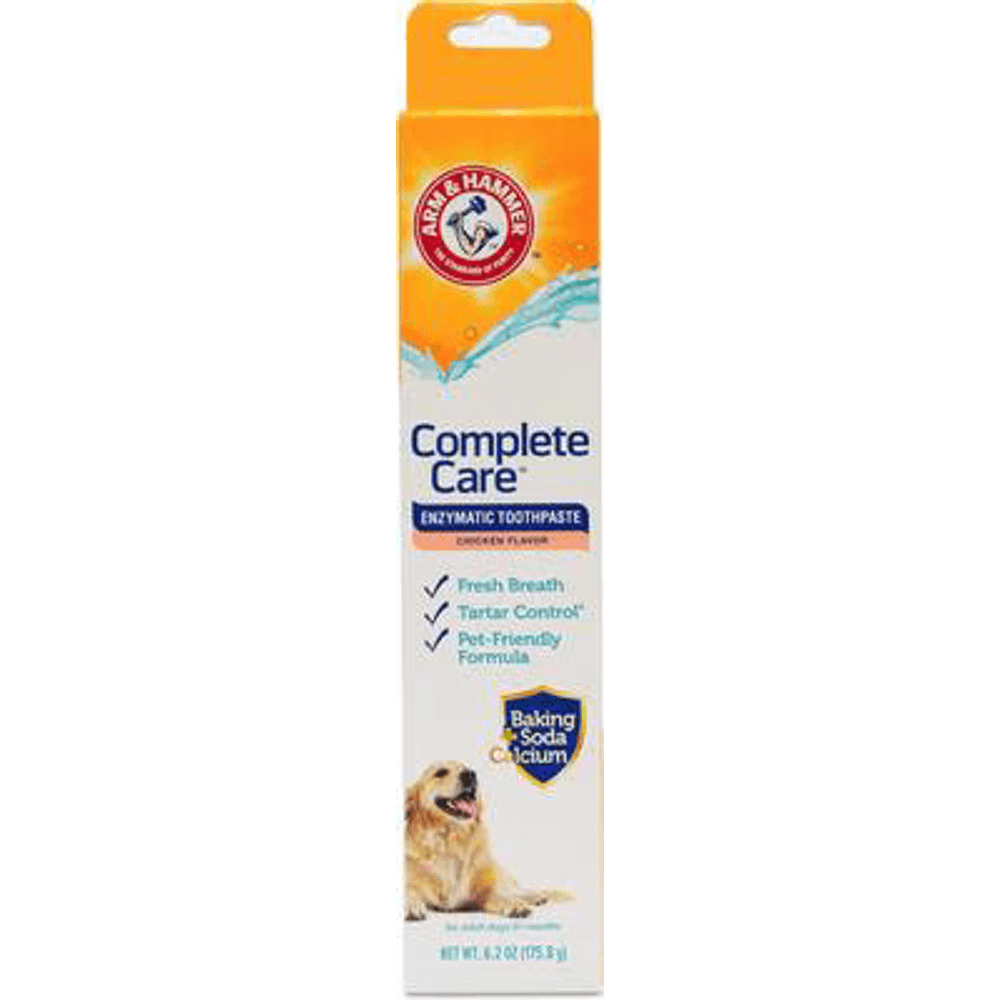
Enzymatic dog toothpaste with baking soda that fights plaque, tartar, and bad breath. Chicken flavored so most dogs accept daily brushing, and safe to swallow with no rinsing needed.
Webvet may earn a commission when you click through to Chewy, at no extra cost to you.
But let's be straight about the quick fix dog bad breath question. Searches for how to get rid of bad dog breath fast or quick fix dog bad breath naturally are looking for an overnight cure, and the honest truth is that quick fixes are temporary. A spray, a mint, or a crunchy snack can buy you an hour or an afternoon. None of them reverse tartar buildup or treat gum disease.
The fastest real improvement is mechanical: a good chew session plus a freshening additive today, and a brushing habit started tonight. That is the closest thing to how to get rid of dog bad breath naturally that actually lasts.
Puppy, Senior, and Teething Dogs: Age-Specific Bad Breath

Age changes the meaning of bad breath, so the right response differs across life stages.
Puppies and teething: A bad dog breath puppy is often nothing to worry about. Dog teething bad breath is common and usually benign: as baby teeth loosen and fall out, minor gum bleeding and bacteria can create a temporary odor that fades once the adult teeth are in. Frozen carrots and appropriate chew toys help soothe sore gums. If puppy breath is severely foul or paired with refusal to eat, check with your vet.
Senior and older dogs: Old dog bad breath and senior dog bad breath are different. By the senior years, periodontal disease has had time to establish, so stinky breath in an older dog more often signals real dental disease that needs professional cleaning. A senior dog bad breath home remedy (brushing, chews, additives) still helps, but it is more likely sitting on top of advanced tartar that requires a vet. Sudden bad breath in a senior dog also raises the index of suspicion for systemic illness.
What NOT to Use (Safety: Human Toothpaste, Xylitol, Dawn Dish Soap)

The internet is full of unsafe dog breath remedies, and a few can genuinely harm your dog. This is the safety differentiation that matters most.
- Human toothpaste: Never. Many contain xylitol, and the formulas are not safe to swallow.
- Xylitol (in any form): Toxic to dogs. Found in sugar-free gum, mints, some peanut butters, and human dental products. Even small amounts can cause a dangerous blood-sugar crash (AKC Expert Advice - Health).
- Dawn dish soap mixtures: A viral hack pairs dish soap with apple cider vinegar. To answer the common question directly, can I mix Dawn dish soap and apple cider vinegar for my dog: no. That mixture is a flea-bath folk remedy, not a breath treatment, and it is not safe to put in your dog's mouth or water. Do not do it.
- Strong essential oils: Many are toxic to dogs.
- Hard bones, antlers, and hooves: These fracture teeth, which makes breath worse and causes pain.
When Bad Breath Is a Sign of Illness: Kidney, Diabetes, and Dental Disease Red Flags

Sometimes bad breath is the body waving a flag. Is bad breath in dogs a sign of illness? It can be. Persistent halitosis can indicate dental disease or underlying systemic disease (kidney, gastrointestinal, or metabolic), and persistent bad breath warrants a veterinary exam (Merck Veterinary Manual).
Watch for these red flags:
- Ammonia or urine-like breath with increased thirst and urination: possible dog bad breath kidney disease or kidney failure. Dog fishy breath kidney disease can also occur.
- Sweet or fruity breath: possible diabetes.
- My dog has black gums and bad breath: dark, discolored, or bleeding gums alongside odor suggest advanced periodontal disease or other oral pathology and need prompt evaluation.
- Dog teeth falling out bad breath: loose or lost teeth signal serious dental disease.
- Excessive licking and bad breath in dogs: could be oral pain, nausea, or anal-gland licking transferring odor; persistent licking plus bad breath deserves a vet's look.
| Red flag | Possible meaning | Urgency |
|---|---|---|
| Ammonia/urine breath + thirst | Kidney disease | See vet soon |
| Sweet/fruity breath | Diabetes | See vet soon |
| Black or bleeding gums | Advanced dental disease | See vet promptly |
| Loose/falling-out teeth | Severe periodontal disease | See vet promptly |
| Sudden foul breath + mouth pain | Abscess, fracture, foreign body | See vet promptly |
If your dog has visibly rotting or loose teeth, our guide to dog rotting teeth and our explainer on tartar on dog teeth cover what is happening and what to do.
- 1Home remedies are for maintenance and mild odor.
- 2Breath that smells like ammonia, sweet/fruity, or rotting, or that comes with discolored gums, loose teeth, or behavior changes, is a medical signal.
- 3When in doubt, see your veterinarian.
Treatment Options and What the Vet Can Do
When home care is not enough, the vet has tools you do not. This bridges at-home remedies to professional treatment for bad dog breath.
The cornerstone of professional dog bad breath treatment is a dental cleaning under anesthesia, which lets the vet scale away tartar above and below the gumline, probe for hidden disease, take dental X-rays, and extract diseased teeth. This is the only way to truly clean below the gumline, which is exactly where odor-causing disease hides. (You may see ads for anesthesia-free cleaning; read our take on non-anesthetic dog teeth cleaning before assuming it is equivalent, because it is not.)
Beyond cleaning, treatment for bad dog breath depends on the cause. There is no general dog bad breath medication you buy off a shelf; instead, a vet may prescribe antibiotics for infection, treat an underlying systemic disease, or address GI issues. When owners ask what to give a dog with bad breath or what can i give my dog for bad breath, the safest answer is: vet-approved dental products at home, and a veterinary exam to determine whether anything prescription is needed.
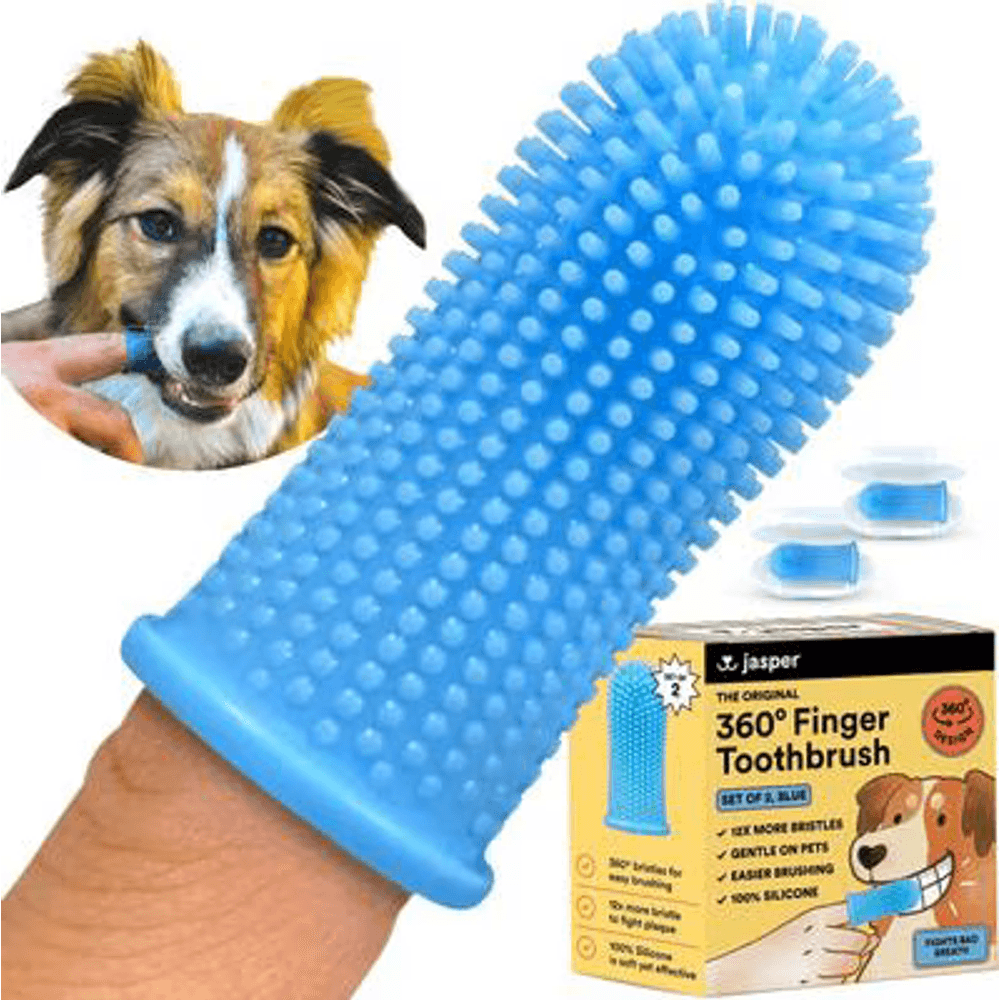
A 360-degree silicone finger toothbrush that brushes every side of a tooth at once. Gentle on gums and ideal for dogs new to brushing or owners who find a handled brush awkward.
Webvet may earn a commission when you click through to Chewy, at no extra cost to you.
This article is one spoke of our broader resource on canine oral care. For the complete picture, start at our dog dental health hub and branch out from there.
Frequently Asked Questions
How do I stop my dog from having smelly breath?
Brush your dog's teeth daily with dog-specific toothpaste, add VOHC-accepted dental chews and a water additive, feed a consistent quality diet, and offer crunchy snacks like carrots. Combine these habits and stay consistent. If the smell persists despite good home care, see your vet, because the cause may be below the gumline.
Does vinegar help bad dog breath?
A very small amount of apple cider vinegar in the water bowl may offer mild freshening for some dogs, but the evidence is weak and many dogs dislike the taste enough to stop drinking. It is an optional, minor add-on at best. It does not treat the plaque and gum disease behind most bad breath, so do not rely on it.
What causes a dog's breath to stink so bad?
The most common cause is periodontal disease: plaque and tartar feeding bacteria that inflame the gums and produce odor. Other causes include diet (including eating feces), gastrointestinal issues, foreign objects in the mouth, and systemic illnesses like kidney disease or diabetes. Persistent or severe stink should be evaluated by a vet.
How can I freshen my dog's breath without brushing?
Stack non-brushing remedies: VOHC-accepted dental chews, crunchy carrots or apple slices, a dental water additive, a parsley sprinkle in food, and the occasional dog-safe breath spray. Together these meaningfully reduce odor. They work best as a routine, though brushing remains the most effective single measure if you can build the habit.
What kills dogs' bad breath naturally?
Natural approaches that genuinely help include daily brushing, crunchy raw vegetables for mechanical scraping, parsley and a small amount of coconut oil in food, plain unsweetened yogurt or probiotics for gut-origin odor, and a clean, consistent diet. There is no single natural cure; consistency across several of these is what works.
How to clean the dark gunk off of your dog's teeth and gums at home?
You can remove soft plaque at home with regular brushing, dental wipes, and chews, but the hard dark gunk is tartar, which is mineralized and bonded to the tooth. Tartar cannot be safely scraped off at home; trying to pick it off can injure the gums. Hardened tartar requires a professional cleaning under anesthesia.
Can I mix Dawn dish soap and apple cider vinegar for my dog?
No. That mixture is a folk flea-bath remedy, not a breath treatment, and it is not safe to put in your dog's mouth or drinking water. For breath, stick to dog-specific products: vet toothpaste, VOHC chews, and approved water additives. Never improvise oral remedies with household cleaning products.
Why does my dog's breath smell like death?
A truly rotten, death odor usually means tissue is breaking down, most often from advanced periodontal disease, a dying or abscessed tooth, or an oral infection or tumor. This is rarely fixable with home remedies. Schedule a veterinary exam promptly, because the source is likely below the gumline or otherwise needs professional treatment.
Why does my dog have fishy breath all of a sudden?
Sudden fishy breath most often comes from anal gland fluid transferred when your dog licks its rear, not from the mouth at all. Less commonly, fishy or ammonia-like breath can point to kidney issues. Check for scooting or rear-end licking first; if the fishy smell persists or your dog seems unwell, see your vet.
Can bad breath in dogs come from the stomach?
Yes. Gastrointestinal causes like acid reflux, slowed digestion, food sensitivities, and eating feces can all produce bad breath that originates from the gut rather than the mouth. If your dog's teeth look clean but the breath is sour, the digestive system is the next place to look, especially alongside vomiting or appetite changes.
Is bad breath normal for teething puppies?
Often, yes. As a puppy's baby teeth loosen and fall out, minor gum bleeding and bacteria can cause a temporary odor that fades once the adult teeth come in. It is usually benign. If a puppy's breath is severely foul, or paired with refusing food or visible mouth problems, have your vet take a look.
Why does my senior dog suddenly have bad breath?
In senior dogs, new bad breath more often reflects established periodontal disease finally producing strong odor, or it can signal systemic illness such as kidney or liver disease. Older dogs warrant a lower threshold for a vet visit, since the causes tend to be more serious and less likely to resolve with home care alone.
Can kidney disease cause bad breath in dogs?
Yes. Kidney disease can cause an ammonia-like or urine-scented breath because waste products the kidneys normally clear build up in the body. This is more common in older dogs and is often accompanied by increased thirst, increased urination, and weight loss. Ammonia-like breath with these signs warrants a prompt veterinary exam.
Does coconut oil really help dog bad breath?
A small amount of coconut oil mixed into food may offer mild freshening and a modest antibacterial reputation, but the evidence is limited and it does not treat underlying dental disease. Keep portions small (roughly a quarter teaspoon per 10 pounds), and avoid it in dogs prone to pancreatitis or weight gain. It is a minor helper, not a cure.
Do dog water additives for bad breath actually work?
Quality water additives can offer modest, passive help by reducing oral bacteria throughout the day, especially VOHC-accepted formulas. They are a reasonable supplement, but not a replacement for brushing, and they will not reverse existing tartar or gum disease. Think of them as one supporting layer in a broader dental routine.
What is the fastest way to get rid of dog bad breath?
The fastest temporary freshening comes from a dog-safe breath spray, a mint, or a crunchy chew, but those effects last only an hour or two. The fastest lasting improvement is mechanical: a good chewing session plus a water additive today, and starting a daily brushing habit. There is no genuine overnight cure for breath driven by tartar.
Do dental chews and breath treats actually work or just mask the smell?
It depends on the product. VOHC-accepted dental chews are independently verified to reduce plaque and tartar, so they do real work, while many breath treats and mints only mask odor temporarily. Look for the VOHC Seal to tell the difference, and use chews as a daily supplement to brushing rather than a standalone fix.
What dog food is best for dogs with bad breath?
Less about a specific brand, more about quality and consistency: a complete, digestible, high-quality diet supports a healthier gut and fewer odor-producing issues. Some dogs do better on dry food that encourages chewing; others do fine on wet. Avoid cheap fillers and table scraps, transition foods slowly, and pair any diet with dental care.
My dog has black gums and bad breath, is that an emergency?
Dark, discolored, or bleeding gums combined with bad breath suggest advanced periodontal disease or other oral pathology and should be evaluated promptly, though it is usually not a same-hour emergency unless your dog is in obvious distress, bleeding heavily, or not eating. Book a vet visit soon rather than waiting it out.
$65 · no membershipHave a health question about your dog?
A licensed vet can assess your dog over video and prescribe online when it's appropriate.
Talk to a vet- Licensed vets
- All 50 states
- same-day Rx
Webvet may earn a commission if you book.

Editor
The Webvet Editorial Team is the in-house group of pet-care editors and writers behind Webvet, operated by Smart Pet Collective. The team researches, writes, and maintains Webvet's pet health, behavior, and medication content. Every article follows a defined editorial process: research from reputable veterinary and scientific sources, careful drafting, mandatory review of medical content by a credentialed veterinarian, and dated publication. Health and medication articles are medically reviewed by a licensed veterinary professional before they go live and are kept current over time.
Veterinarian · BVMS MRCVS
Dr. Pippa Elliott, BVMS, MRCVS, is a veterinarian with nearly 30 years of experience in companion animal practice. Dr. Elliott earned her Bachelor of Veterinary Medicine and Surgery from the University of Glasgow. She was also designated a Member of the Royal College of Veterinary Surgeons. Married with 2 grown-up kids, Dr. Elliott has a naughty Puggle named Poggle, 3 cats and a bearded dragon.


