Tartar on Dog Teeth: How to Remove It and Prevent It
Tartar on dog teeth is mineralized plaque that only a professional cleaning can fully remove. Here is what it looks like, why it threatens your dog's health, and the realistic, vet-backed way to prevent it at home.

BVMS MRCVS
Medically reviewed by Dr. Pippa Elliott, BVMS MRCVS · Last reviewed

This article contains affiliate links. Webvet may earn a commission when you buy through them, at no extra cost to you.
If you have lifted your dog's lip and spotted a crusty yellow-brown coating creeping along the gum line, you are looking at tartar on dog teeth. It is one of the most common things veterinarians see in the exam room, and it is also one of the most misunderstood. Here is the honest answer up front: tartar on teeth in a dog is hardened plaque, and once it has mineralized, only a veterinarian can safely remove it. No home gadget, gel, or natural rinse scrapes it off the way a professional cleaning does.
That truth matters, because most people searching for how to deal with dog tartar on teeth are hoping for a quick at-home fix. We will be straight with you about what actually works, what is a waste of money, and what can hurt your dog. You can do a great deal to prevent dog teeth tartar from forming. You cannot safely remove established calculus yourself. This guide covers both: how vets remove and prevent tartar, what the buildup looks like at each stage, why it is more dangerous than it appears, and the realistic routine that keeps your dog's mouth healthy between cleanings. This article is part of our dog dental health hub.
Tartar (dental calculus) is plaque that has hardened with minerals from saliva. Soft plaque can be brushed away at home; hardened tartar cannot. Safe removal of tartar from dog teeth happens at the vet, under anesthesia. Everything you do at home is prevention, not removal.
Plaque vs. Tartar vs. Calculus: What's the Difference?

Understanding dog teeth plaque vs tartar is the single most useful thing an owner can learn, because the two require completely different responses.
Plaque is a soft, sticky, nearly invisible film of bacteria, saliva, and food particles that forms on the teeth within hours of eating. It is the starting point for everything. When you understand dog plaque vs tartar, the key fact is that plaque is soft. You can wipe or brush it off.
Tartar is what plaque becomes when it is left alone. Minerals in your dog's saliva (mostly calcium) harden the plaque into a rough, cement-like crust. This is the plaque vs tartar on dog teeth distinction that owners feel under their fingernail: plaque is slimy, tartar is hard.
Calculus is simply the clinical name for tartar. Veterinarians use the words interchangeably. Both refer to mineralized plaque.
The progression of how plaque becomes tartar is fast and relentless:
- Bacteria form a soft plaque film on clean teeth within 24 hours.
- Within 24 to 72 hours, minerals from saliva begin hardening that plaque.
- Once mineralized, the rough tartar surface gives even more bacteria a place to cling, so new plaque forms faster, and the cycle accelerates.
This is exactly why daily prevention works and occasional effort does not. You are racing a 24-hour clock.
| Feature | Plaque | Tartar / Calculus |
|---|---|---|
| Texture | Soft, sticky film | Hard, crusty, cement-like |
| Color | Clear to whitish | Yellow, brown, or black |
| Removable at home? | Yes, by brushing | No, requires a vet |
| Forms in | Hours | 24 to 72 hours from plaque |
| Bacteria load | High | Very high, plus it shelters more |
What Does Tartar on Dog Teeth Look Like? (Color Signals)

Owners often ask what does tartar look like on a dog, and the answer is a useful diagnostic clue. The color tells you roughly how advanced the buildup is.
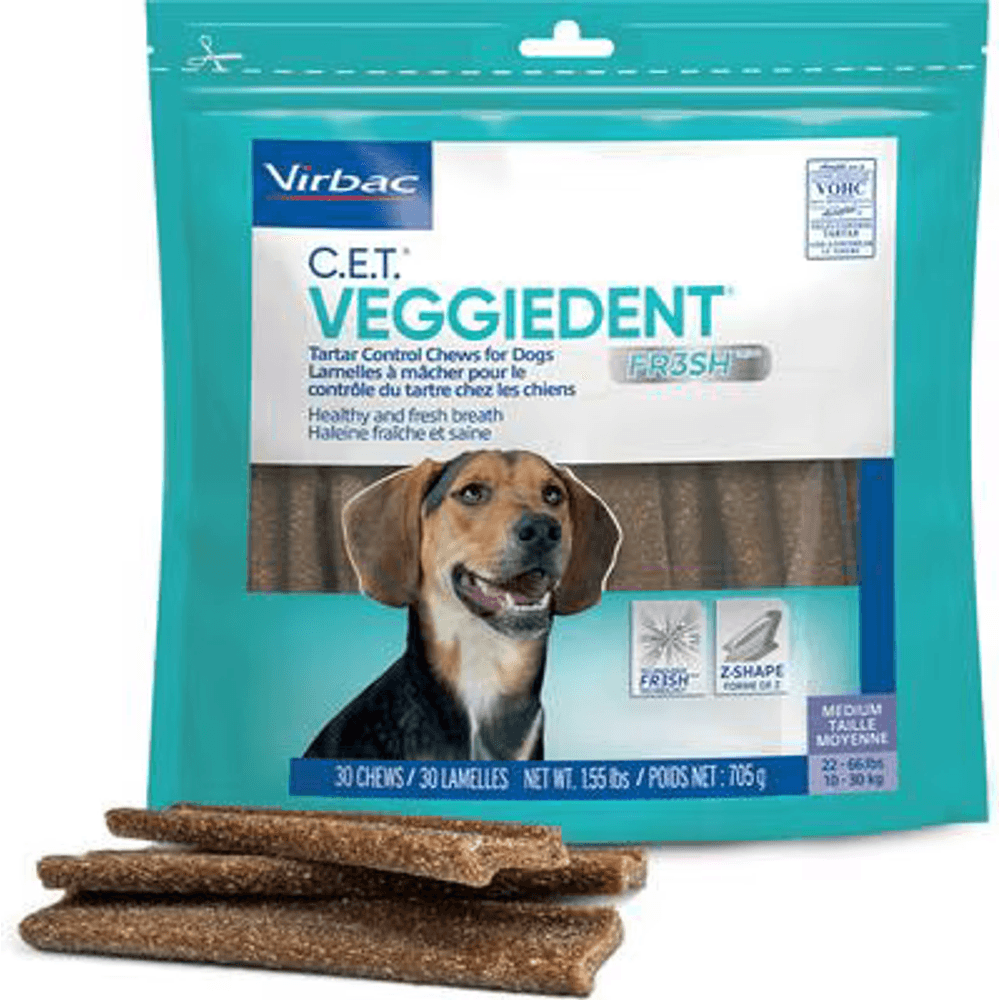
VOHC-accepted dental chews clinically shown to reduce plaque and tartar. The Z-shape and texture clean as your dog chews and freshen breath. A plant-based daily chew for medium dogs.
Webvet may earn a commission when you click through to Chewy, at no extra cost to you.
- Yellow to light tan: This is early tartar, the first stage of yellow brown buildup on dog teeth. It usually appears at the gum line of the large cheek teeth. It signals it is time to step up dental care.
- Brown: Thicker, older calculus. Brown tartar means the buildup has been accumulating for a while and gum inflammation is likely present underneath.
- Black tartar on dog teeth: Dark brown to black buildup is the most advanced and the most concerning. It typically reflects long-standing accumulation, significant bacterial load, and often gum disease below the surface. People searching how to treat black tartar on dog teeth should know there is no home treatment: black calculus needs a professional cleaning, and the gums beneath it need a vet's assessment.
- Green tartar on dog teeth: Green or greenish buildup usually comes from pigment-producing bacteria and food staining. It still represents mineralized plaque and is treated the same way: professionally.
If you are searching for tartar on dog teeth images to compare against your dog's mouth, focus less on matching an exact picture and more on the pattern: a hard, discolored crust hugging the gum line, usually worst on the upper back teeth.
The Stages of Tartar and Dental Disease (Grading Chart)

Veterinarians grade dental disease on a scale from 0 to 4. This is the dental grading chart dogs are assessed against during an oral exam, and it maps closely to dog teeth tartar stages. If you have been looking for dog teeth tartar stages pictures, the grades below describe what each looks like in plain terms.
| Grade | Name | What you see | What's happening |
|---|---|---|---|
| 0 | Healthy | Clean teeth, pink gums | No plaque buildup or inflammation |
| 1 | Gingivitis | Mild red gum line, slight film | Inflammation, but no bone loss yet (reversible) |
| 2 | Early periodontitis | Yellow tartar, redder gums | Up to 25% support loss around teeth |
| 3 | Moderate periodontitis | Heavy brown tartar, receding gums | 25 to 50% attachment loss |
| 4 | Advanced periodontitis | Black calculus, loose teeth, pus | Over 50% attachment loss, often tooth loss |
The most important line on any veterinary dental grading chart is between Grade 1 and Grade 2. Grade 1 gingivitis is reversible with good care. Once you cross into the grades of dental disease dog owners dread (Grade 2 and beyond), the damage to the bone and ligaments holding the teeth becomes permanent. The goal of prevention is to keep your dog at Grade 0 or 1 for life. Periodontal disease is the most common clinical condition in adult dogs, so this is not a rare problem you are unlikely to face.
Where Tartar Builds Up First (and Why the Back Teeth)

When a dog has tartar on teeth, it almost never appears uniformly. There is a predictable pattern, and knowing it helps you self-inspect.
Tartar buildup on dog teeth begins on the upper back teeth, specifically the large fourth premolar (the carnassial tooth) and the molars behind it. There are two reasons. First, the salivary glands that dump the most mineral-rich saliva sit right next to these upper cheek teeth, so plaque mineralizes there fastest. Second, the back teeth do the least self-cleaning. The front teeth and canines get scrubbed a little by chewing, licking, and tongue movement, while the back teeth sit quietly collecting buildup.
So if your dog has tartar on back teeth but the front teeth still look clean, that is completely typical, not a sign you caught it unusually early. When you check for tartar buildup on teeth dog owners should always lift the upper lip toward the back of the mouth, not just look at the smile-friendly front teeth. A dog has tartar on teeth long before it becomes visible from the front.
 $65 · no membership
Have a health question about your dog?
A licensed vet can assess your dog over video and prescribe online when it's appropriate.
 Talk to a vet
- Licensed vets
- All 50 states
- same-day Rx
Webvet may earn a commission if you book.
Why Tartar Is Dangerous: Gum Disease and Beyond

Tartar is not a cosmetic problem. It is the visible part of a disease process. The crust itself is packed with bacteria, and it sits in direct contact with the gum line.
Here is the chain of harm. Bacteria in plaque and tartar inflame the gums, causing gingivitis dog teeth owners can spot as a red, sometimes swollen line where tooth meets gum. Left unchecked, that inflammation spreads below the gum line and starts destroying the ligament and bone that anchor the teeth. That is periodontal disease in dogs, and it leads to pain, loose teeth, abscesses, and tooth loss. Untreated tartar reliably progresses to periodontal disease.
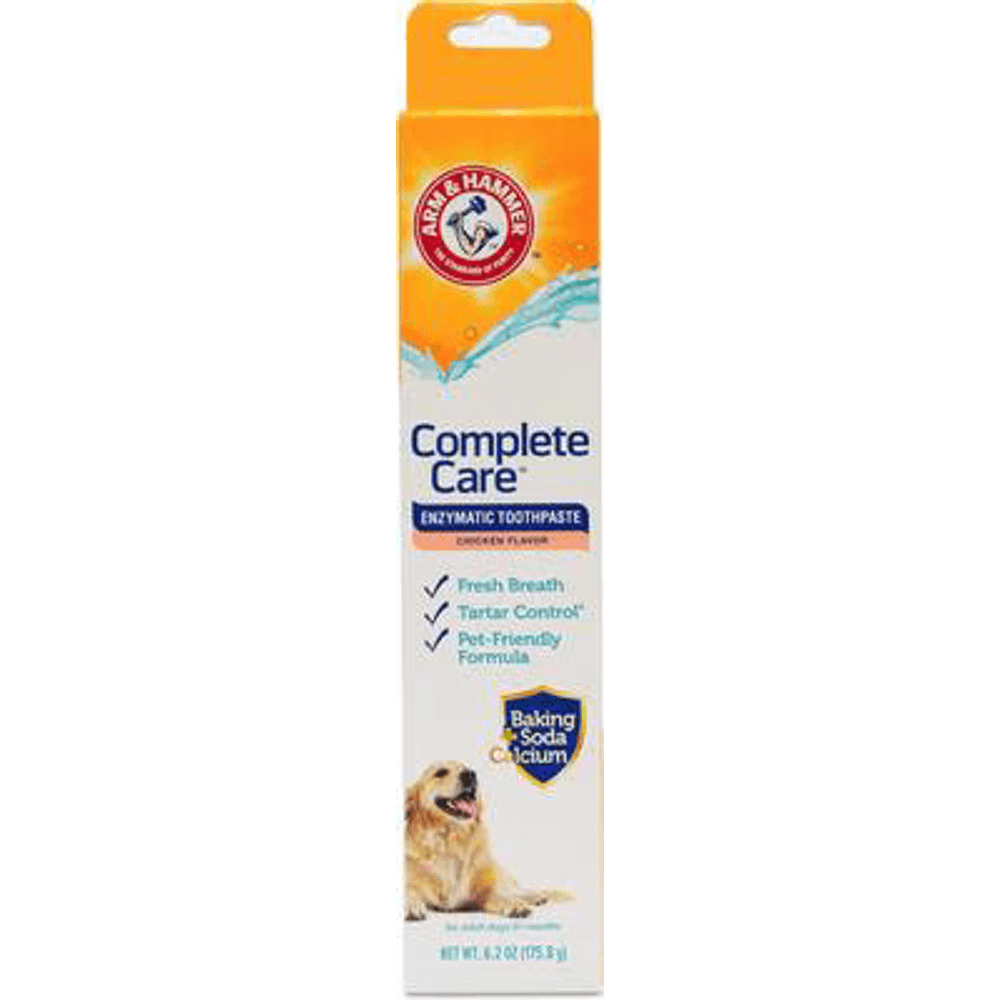
Enzymatic dog toothpaste with baking soda that fights plaque, tartar, and bad breath. Chicken flavored so most dogs accept daily brushing, and safe to swallow with no rinsing needed.
Webvet may earn a commission when you click through to Chewy, at no extra cost to you.
The danger does not stop in the mouth. The inflamed, infected gum tissue is a doorway into the bloodstream. Bacteria and inflammatory byproducts can travel and burden the heart, liver, and kidneys over time. This is why dental disease is sometimes called the silent killer of dogs: it advances quietly, behind a closed mouth, while owners assume bad breath is just "dog breath." A systemic infection from dog teeth is the worst-case end of a process that started as a thin film of plaque. The Merck Veterinary Manual details how periodontal disease progresses through these stages.
Bad breath is usually the earliest sign owners notice. If your dog's breath has turned genuinely foul, that odor is bacterial, and it deserves attention rather than a breath mint. We cover the underlying reasons in depth in our guide to dog bad breath causes.
The bacteria living in tartar do not stay in the mouth. Chronic dental infection raises the workload on the heart, liver, and kidneys, which is why veterinarians treat dental disease as a whole-body health issue, not a vanity one.
How Vets Remove Tartar From Dog Teeth (and Why Anesthesia)

This is the section every owner searching for dog tartar removal needs to read honestly. Real removing tartar on dog teeth is a medical procedure called a professional dental cleaning, or COHAT (Comprehensive Oral Health Assessment and Treatment).
Here is what tartar on dog teeth removal actually involves at the clinic:
- Pre-anesthetic bloodwork to confirm your dog is healthy enough for the procedure.
- General anesthesia, which keeps the dog still, pain-free, and allows the airway to be protected.
- Ultrasonic and hand scaling to break tartar off every surface of every tooth, including the back and inner surfaces a struggling dog would never allow.
- Subgingival scaling, the most important step: cleaning below the gum line, where disease actually lives.
- Polishing to smooth microscopic scratches so new plaque sticks less.
- Dental X-rays and probing to find disease hidden under the gums.
So how to get hardened tartar off dog teeth in any complete way? Professional scaling under anesthesia. The reason anesthesia is non-negotiable comes down to that subgingival step. The disease that threatens your dog's teeth is below the gum line, and you cannot clean there on an awake animal without causing pain and risking injury.
This is also why anesthesia free dog teeth cleaning is discouraged by veterinary dentists. It can buff visible tartar off the crown so the teeth look cleaner, but it cannot reach below the gum line, where it counts. The American Veterinary Dental College advises against scaling without anesthesia precisely because it creates a false sense of security while leaving the real disease untreated. We go deeper on this in our breakdown of non-anesthetic dog teeth cleaning, and on what advanced calculus does to teeth in our guide to dog rotting teeth. If your dog already has significant buildup, see our dedicated guide on tartar on dog teeth removal options.
How Much Does Professional Tartar Removal Cost?
Cost is the question owners ask quietly, and it deserves an honest answer. Dog tartar removal cost varies widely by region, by your dog's size, by the disease grade, and by what the vet finds once your dog is under.
A routine dog dental cleaning cost (a Grade 1 mouth that just needs scaling and polishing, with X-rays and anesthesia) commonly lands in the few-hundred-dollar range. The number climbs when the team has to do more than clean. If they find Grade 3 or 4 disease and need extractions, advanced X-rays, or additional anesthesia time, the total can reach four figures. That is the real reason owners wonder how much to remove tartar from dog teeth: the cleaning itself is predictable, but the treatment of the disease underneath is what drives the cost up.
This is the strongest financial argument for prevention. A dog kept at Grade 0 or 1 needs the cheaper, routine cleaning. A dog allowed to reach Grade 4 needs extractions and surgery. Daily home care is not just about health; it is the cheapest dental insurance you can buy.
Can You Remove Tartar at Home? Soften, Dissolve, and Natural Methods (the Honest Answer)
This is the biggest cluster of searches and the one with the most misinformation, so we will be blunt. The honest answer to how to remove tartar on dog teeth at home is: you cannot fully remove hardened tartar at home, and you should not try to scrape it off yourself.
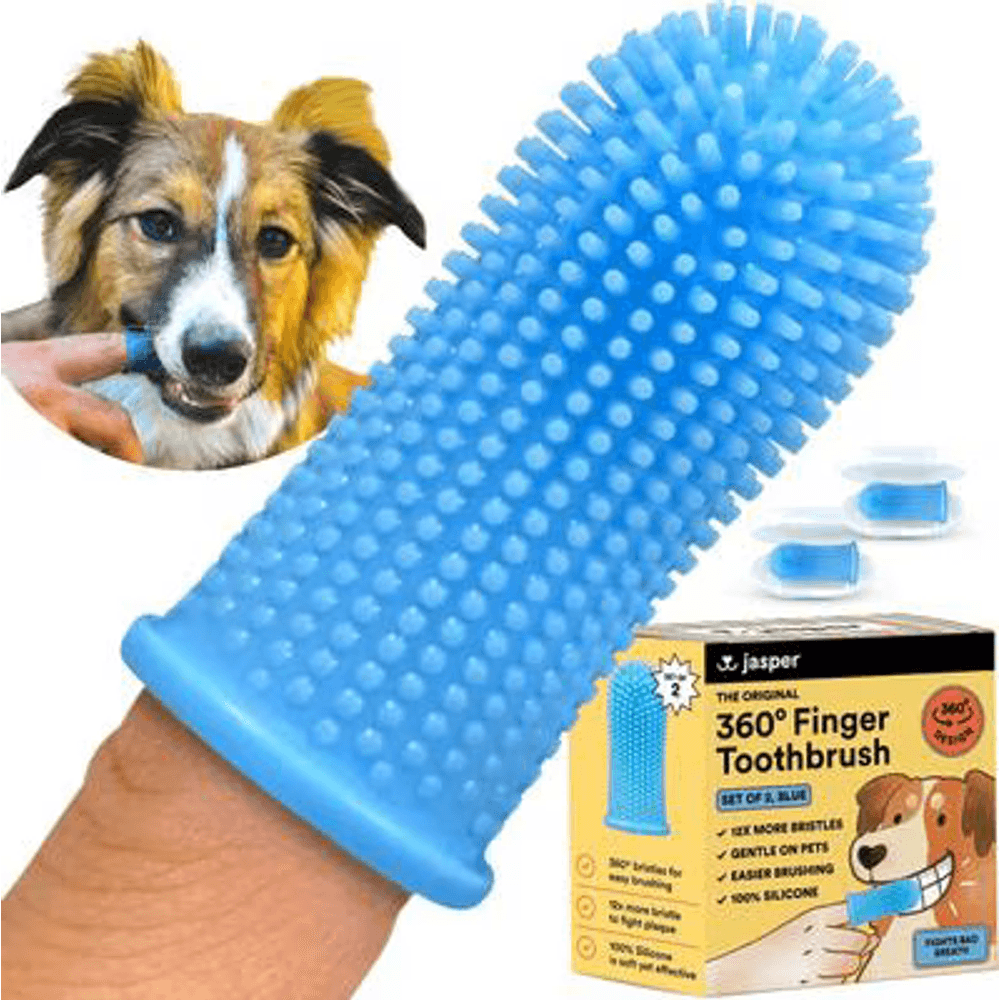
A 360-degree silicone finger toothbrush that brushes every side of a tooth at once. Gentle on gums and ideal for dogs new to brushing or owners who find a handled brush awkward.
Webvet may earn a commission when you click through to Chewy, at no extra cost to you.
Let us go through the specific things people search for:
- How to soften dog tartar / what softens hard tartar: No safe home product reliably softens mineralized calculus enough to wipe it away. Enzymatic gels and water additives can slow new plaque, but they do not melt off existing tartar. The same goes for searches like how to soften dog tartar naturally at home.
- Dissolve tartar on dog teeth / what dissolves tartar on dogs teeth naturally: Nothing you can safely put in your dog's mouth dissolves established calculus. Tartar is a mineral deposit bonded to the tooth. Acids strong enough to dissolve it would also damage enamel and burn soft tissue. Claims that a natural rinse will dissolve tartar are marketing, not dentistry.
- How to remove tartar from dog teeth without dentist / remove tartar without brushing: There is no safe substitute for professional removal of hardened tartar. What you can do without a dentist is prevent new buildup (covered below). For dogs that resist a toothbrush, see our home remedies for dog bad breath for gentler, brush-free options that help with prevention.
- Dog tartar removal at home / how to remove dog tartar naturally at home / how to remove tartar from dog teeth naturally: Every legitimate at-home method is preventive. It keeps soft plaque from hardening. None of it removes calculus that has already formed.
- Can you descale dogs teeth at home: Please do not. Hand scalers sold online are sharp dental instruments. Used on an awake, moving dog by an untrained person, they slip, gouge the gums, scratch the enamel (giving plaque more to cling to), and can crack teeth. They also only touch the crown, leaving the dangerous below-gum-line disease untouched.
The winning move is to reframe the goal. You will not win by removing tartar at home. You win by preventing it so the vet only ever has to do the routine, inexpensive cleaning.
Tartar Scrapers, Gels, and Tools: What's Safe and What Isn't
The market is full of products promising easy removal. Here is how to read the dog tartar removal tool aisle without getting hurt or scammed.
| Product type | What it claims | The honest reality |
|---|---|---|
| Hand tartar scrapers | Scrape tartar off at home | Unsafe on an awake dog; risk of gouged gums, cracked teeth, scratched enamel |
| Dog tartar removal gel | Dissolves or loosens tartar | Helps slow new plaque at best; does not remove hardened calculus |
| Ultrasonic plaque remover for dogs | Vet-style cleaning at home | An ultrasonic plaque remover for dogs (and any electric plaque remover for dogs) cannot safely clean below the gum line on an awake pet |
| Enzymatic toothpaste | Reduces plaque with brushing | Genuinely effective for prevention when used daily |
| VOHC-accepted chews | Reduce plaque and tartar | Genuinely effective; backed by clinical testing |
If you are shopping for the best dog tartar removal products or the best tartar remover for dogs, redirect that energy. The products worth buying are the preventive ones: an enzymatic toothpaste and a brush, and chews that carry independent clinical proof. The scrapers and at-home ultrasonic units marketed as a substitute for a vet cleaning are the ones to skip. They tackle the cosmetic crown and miss the disease.
How to Prevent Tartar Buildup on Dog Teeth

This is where you have real power. Here is how to prevent tartar buildup on dogs teeth with a routine that actually works, ranked from most to least effective.
1. Daily brushing. This is the gold standard, full stop. Brushing physically removes soft plaque before it can mineralize within 24 to 72 hours. Use a dog toothbrush and dog-safe enzymatic toothpaste (never human toothpaste, which contains ingredients toxic to dogs), and aim the bristles at the gum line. Daily beats occasional by a wide margin. Our step-by-step walkthrough on how to brush a dog's teeth makes it easier than you expect, even for resistant dogs.
2. Dental chews with proof. Look for the VOHC Seal of Acceptance, which means the product was clinically tested to reduce plaque or tartar. Generic "dental" treats without the seal are usually just treats. VOHC dental chews work by mechanical scrubbing as the dog chews. We round up the options in our guide to vet-recommended dog dental chews.
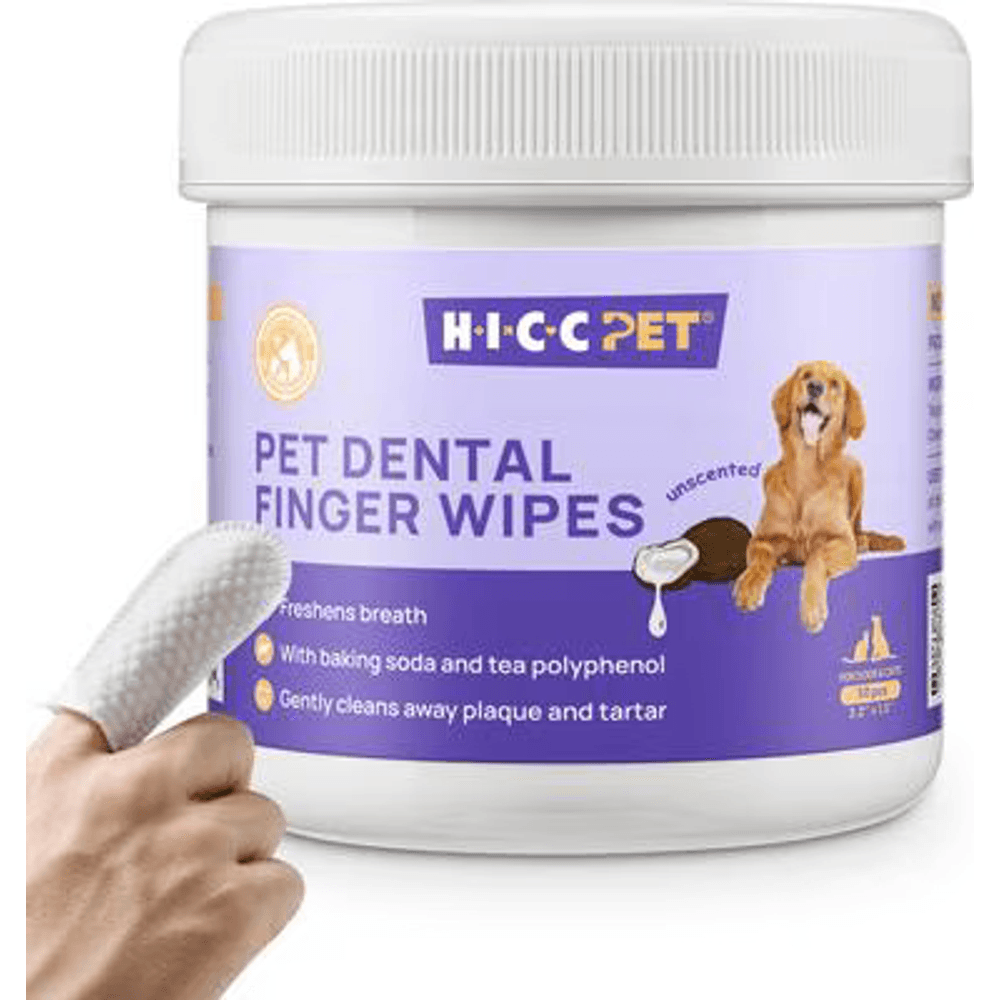
Pre-moistened finger-glove dental wipes with baking soda and tea polyphenol that wipe away plaque and freshen breath. The easiest brushless option for a dog that will not tolerate a toothbrush.
Webvet may earn a commission when you click through to Chewy, at no extra cost to you.
3. Dental diets. A best dog dental diet uses a special kibble shape and texture that scrubs the tooth as the dog bites, rather than shattering on contact. Some are VOHC-accepted. These help most with the cheek teeth where tartar starts.
4. Water additives. A dog water additive plaque product mixes into the water bowl to slow bacterial growth. It is the lowest-effort option and a reasonable add-on, though it is the weakest single tool. We compare products in our guide to dog dental water additives. A dog plaque removal water additive works best alongside brushing, not instead of it.
A quick word on diet myths. Owners ask about foods that cause tartar in dogs, hoping a food swap fixes everything. The truth is that texture matters more than ingredients for tartar, and dry kibble does not meaningfully "clean" teeth on its own the way many assume. The AKC's dental care guidance reinforces that home brushing plus professional cleanings, not a magic food, is the foundation. For more on the food-texture question specifically, see our dog dental health pillar.
The realistic prevention stack is: brush daily, give VOHC-accepted chews, consider a dental diet and a water additive as backup, and get a professional cleaning when your vet recommends one. Brushing is the foundation; everything else is support.
If your dog is dropping food, chewing on one side, or eating less than usual, dental pain may be the reason rather than pickiness. A change in appetite is a common early flag of mouth trouble worth a vet's look.
This article is educational and not a substitute for veterinary care. If your dog has tartar buildup, gum inflammation, bad breath, or any signs of dental pain, schedule an exam with your veterinarian.
Frequently Asked Questions
Can you descale dogs' teeth at home?
No, not safely. Hand scalers are sharp dental instruments, and using them on an awake dog risks gouging the gums, scratching the enamel, and cracking teeth. They also only reach the visible crown, not the disease below the gum line. Leave descaling to your veterinarian.
Can you remove dog tartar at home safely?
You cannot safely remove hardened tartar at home; that requires a professional cleaning. What you can do at home is prevent new tartar by brushing daily and using VOHC-accepted chews. Home care is prevention, not removal.
What foods cause tartar build up in dogs?
No single food is the main culprit. Tartar forms from plaque bacteria regardless of diet, and the idea that dry kibble cleans teeth is largely a myth. Soft, sticky, or sugary foods may let plaque accumulate slightly faster, but brushing and dental chews matter far more than the food itself.
How can I remove tartar from my dog's teeth without brushing?
For prevention without brushing, use VOHC-accepted dental chews, a dental diet, and a water additive. These reduce new plaque buildup. None of them remove tartar that has already hardened, though; only a vet can do that.
What does tartar look like on a dog?
Tartar looks like a hard, crusty coating along the gum line, usually starting on the upper back teeth. It ranges from yellow (early) to brown to black (advanced). It feels rough and cement-like, unlike soft, slimy plaque.
How to get hardened tartar off dog teeth?
Hardened tartar comes off only through professional scaling at a veterinary clinic, performed under anesthesia so the team can clean below the gum line. There is no safe at-home method to remove calculus once it has formed.
What softens hard tartar?
No safe home product reliably softens mineralized tartar enough to remove it. Enzymatic gels and water additives can slow new plaque, but they do not soften or melt off existing calculus. Removal requires a vet.
What dissolves tartar on dogs' teeth naturally?
Nothing safe dissolves established tartar naturally. Tartar is a mineral deposit bonded to the tooth, and any acid strong enough to dissolve it would also damage enamel and burn gum tissue. Claims otherwise are marketing.
How much does dog tartar removal cost?
A routine cleaning for a healthy mouth often runs in the few-hundred-dollar range, including anesthesia and X-rays. If extractions or advanced disease treatment are needed, the total can reach four figures. Ask your clinic for a written estimate.
Is black tartar worse?
Yes. Black tartar usually signals long-standing buildup and gum disease beneath the surface. It is the most advanced color signal and needs a professional cleaning plus a gum-health assessment, not a home remedy.
Does baking soda remove dog tartar?
No. Baking soda does not remove hardened tartar, and it is not recommended for dogs because its high sodium content can be a problem if swallowed and it can upset the stomach. Use a dog-safe enzymatic toothpaste for prevention instead.
Is anesthesia-free dog teeth cleaning safe?
It is generally discouraged by veterinary dentists. It can polish the visible crown so teeth look cleaner, but it cannot clean below the gum line where disease lives, creating a false sense of security. Anesthesia allows a complete, pain-free cleaning.
What is the best dog tartar removal tool, and are scrapers safe?
The best tools for owners are preventive: a dog toothbrush with enzymatic toothpaste and VOHC-accepted chews. Hand scrapers are not safe for home use on an awake dog and only address the crown, so they are best left to professionals.
When to see a vet about dog tartar?
See your vet if you notice brown or black buildup, red or bleeding gums, bad breath, dropping food, chewing on one side, or any loose teeth. As a baseline, ask your vet to check your dog's teeth at every annual exam.
What is the silent killer of dogs?
Dental and periodontal disease is sometimes called a silent killer because it advances quietly behind a closed mouth, and chronic oral infection can strain the heart, liver, and kidneys over time. Prevention and regular cleanings keep it from progressing.
$65 · no membershipHave a health question about your dog?
A licensed vet can assess your dog over video and prescribe online when it's appropriate.
Talk to a vet- Licensed vets
- All 50 states
- same-day Rx
Webvet may earn a commission if you book.

Editor
The Webvet Editorial Team is the in-house group of pet-care editors and writers behind Webvet, operated by Smart Pet Collective. The team researches, writes, and maintains Webvet's pet health, behavior, and medication content. Every article follows a defined editorial process: research from reputable veterinary and scientific sources, careful drafting, mandatory review of medical content by a credentialed veterinarian, and dated publication. Health and medication articles are medically reviewed by a licensed veterinary professional before they go live and are kept current over time.
Veterinarian · BVMS MRCVS
Dr. Pippa Elliott, BVMS, MRCVS, is a veterinarian with nearly 30 years of experience in companion animal practice. Dr. Elliott earned her Bachelor of Veterinary Medicine and Surgery from the University of Glasgow. She was also designated a Member of the Royal College of Veterinary Surgeons. Married with 2 grown-up kids, Dr. Elliott has a naughty Puggle named Poggle, 3 cats and a bearded dragon.


