Dog Dental Health: Does Food Texture Matter for Oral Issues?
Dog dental health plays a major role in comfort, chewing ability, and eating habits. Learn how oral health affects feeding behavior and whether softer foods may help dogs with dental sensitivities.

BVMS MRCVS
Medically reviewed by Dr. Pippa Elliott, BVMS MRCVS · Last reviewed

This article contains affiliate links. Webvet may earn a commission when you buy through them, at no extra cost to you.
The quality of your pup's food probably isn't the first thing that comes to mind when you think about dog dental health, the overall condition of their gums, teeth, and oral tissue, but there's a definite connection. What your dog eats is just as important as oral health-specific practices such as consistent brushing, regular checkups with the vet, and proper chew toy purchasing in maintaining the fitness of your pup's chompers and, ultimately, their overall well-being.
Dental problems can change a dog's appetite and affect everything from their ability to chew to their overall comfort. That's why it's so important for pet parents to pay close attention to their dog's diet and make adjustments whenever the situation warrants it. For instance, when dogs have oral sensitivities, texture should play a role in food-purchasing decisions.
Fresh dog foods that offer softer textures, such as The Farmer's Dog, may be easier for some orally sensitive pups to eat, especially when these options are recommended in conjunction with regular veterinary care. Let's take a closer look at the role food quality and texture play in optimal dog dental health.

Webvet may earn a commission when you click through to Chewy, at no extra cost to you.
- 1Dental disease is one of the most common health issues in dogs and can directly affect appetite, chewing, and comfort.
- 2Periodontal disease, gingivitis, plaque and tartar buildup, and broken teeth are the most common dog dental problems.
- 3Reluctance to eat hard food, slow chewing, bad breath, and pawing at the face can all signal oral discomfort.
- 4Softer food textures may be easier for dogs with dental sensitivities while you work with your vet on a treatment plan.
- 5Daily brushing, dental chews, and annual vet exams remain the foundation of dog dental care.
Common Dental Problems in Dogs
Dental problems are among the most common health issues in dogs.
Untreated dog dental health problems can lead to a host of major problems, such as infection and tooth decay. Not to mention, these issues leave our four-legged friends in discomfort and pain.
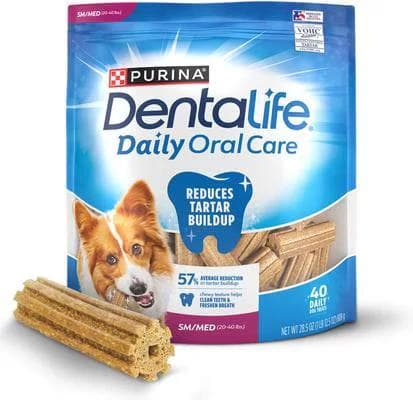
Daily dental chews with a porous, ridged texture designed to help clean teeth and reduce tartar buildup as part of an at-home oral-care routine.
Webvet may earn a commission when you click through to Chewy, at no extra cost to you.
Breaking down the most common categories of dog dental health problems helps pet parents understand what to look for and, if needed, when to seek veterinary assistance.
Plaque and tartar buildup
A dog's mouth is a breeding ground for the thousands of bacteria that reside there and multiply to form an invisible layer of plaque. This plaque then forms a bacterial slime, or biofilm, a collection of bacteria that's extremely resistant to removal. Plaque can be removed naturally, through a dog's tongue and chewing habits, but when it remains, the plaque thickens, mineralizes, and turns to tartar. This creates a vicious cycle where tartar attracts more plaque to stick to the teeth and build up. This can eventually lead to periodontal disease.
Periodontal disease
A disease of the tissues surrounding the teeth, including gums, bone, the periodontal ligament, and cementum. It's estimated that more than two-thirds of dogs three years old and up suffer from periodontal disease. Smaller breeds and short-nosed dogs are even more susceptible to dental issues due to their smaller, crowded jaws.
Gum inflammation / gingivitis
Gingivitis is an early stage of periodontal disease; it is an inflammation of the gums. While this may be concerning for pet parents, it's extremely common and treatable if caught early in its progression. Swollen, red gums; bleeding while chewing; bad breath; and tartar buildup along the gumline are all signs of gingivitis. Left untreated, inflammation can lead to advanced periodontal disease and cause more severe, permanent issues such as tooth loss.
Broken teeth
From gnawing on hard bones or chews to falling from a significant height, there are a slew of reasons dogs suffer broken teeth. Broken teeth aren't simply benign, cosmetic issues that create a quirky dog smile, either. They can cause your dog significant pain and lead to infection, which can spread and cause other long-term health complications. Missing teeth can also stem from the progression of periodontal disease to an advanced stage where a canine's tooth or teeth will completely lose the attachment from their socket and become loose or fall out.
Vet-formulated fresh meals delivered to your door. Custom portions tailored to your dog. No fillers, no by-products.
- 50% off your first box
- Custom portion plans tailored to your dog
- Vet-formulated fresh meals made
Trusted by hundreds of thousands of dog parents
Webvet may earn a commission when you click through to Farmers Dog, at no extra cost to you.
 $65 · no membership
Have a health question about your dog?
A licensed vet can assess your dog over video and prescribe online when it's appropriate.
 Talk to a vet
- Licensed vets
- All 50 states
- same-day Rx
Webvet may earn a commission if you book.
Signs Your Dog May Have Oral Discomfort
Unlike their two-legged companions who tend to complain at the slightest hint of discomfort in their mouths, dogs often don't communicate their pain, at least not in a way that's clear to their owners. It's up to pup parents to read up on dog dental health and be aware of the signs that may indicate oral discomfort or early periodontal disease.
These signs include:
- Aversion to eating or chewing
- Chewing more slowly than usual or dropping food while eating
- Reluctance to eat hard foods
- Bad breath
- Bleeding gums, especially when brushing
- Difficulty eating
- Excessive drooling
- Pawing at the face
Oral discomfort is most apparent when your pup is eating. One of the most effective ways to spot potential problems is to observe your pet during their meals and note any changes in their eating behavior.

Dog Dental Health and Eating Behavior
Because dog dental health problems can affect appetite directly and indirectly in several ways, you want to investigate further whenever sudden mealtime changes occur. Again, changes in a pup's behavior around food may signal something more serious.
Compare coverage choices for your pet, then request a quote directly on Lemonade.
- Check a price for your pet
- Review available coverage choices
- See the terms before you decide
Eligibility, waiting periods, limits and exclusions apply.
Webvet may earn a commission when you click through to Lemonade, at no extra cost to you.
One of the most common changes pet parents see is when their dog suddenly starts avoiding crunchy foods they previously enjoyed. If your spirited Boston suddenly stops devouring the dry kibble they've eaten for years without issue, it's probably not because the dog develops a more mature, sophisticated palette. Gum disease, broken teeth, or other oral health issues often make the hard texture of kibble uncomfortable or even painful to chew.
You may also notice your pup chewing more cautiously, taking longer to eat than usual, or losing interest in food altogether. While these aren't necessarily signs of a major dog oral health crisis, they do deserve a further look, given the fact that dental disease and sudden appetite changes are often related.
Does Food Texture Matter for Dogs With Dental Issues?
It absolutely does, especially if the pup is dealing with some type of oral sensitivity issue. Switching from hard kibble to softer food can make a huge difference in symptoms of dog tooth pain or dog chewing problems. Foods with softer textures, such as The Farmer's Dog, may be easier for your pup to chew.
If they've been displaying any of the signs of a potential dog dental health problem, meal avoidance, difficulty chewing, etc., a switch may be all it takes to make them comfortable with their food while you get to the bottom of what's going on inside their mouth.
Vet-formulated fresh meals delivered to your door. Custom portions tailored to your dog. No fillers, no by-products.
- 50% off your first box
- Custom portion plans tailored to your dog
- Vet-formulated fresh meals made
Trusted by hundreds of thousands of dog parents
Webvet may earn a commission when you click through to Farmers Dog, at no extra cost to you.
Supporting Dog Dental Health
The last thing pet owners want is for their pup to suffer from a dog dental health problem that could've been avoided with a little preventative care. Regular veterinary dental exams, where your pup's teeth and gums are examined for tartar buildup, redness and inflammation, or a recession of the gums, are part of a routine checkup and shouldn't be missed.
You should also create a dental care routine that includes brushing your pup's teeth (with dog toothpaste!) whenever possible and purchasing dental chews or other approved dental products. Remember, the best way to prevent major dog oral health problems later in your pet's life is by committing to regular preventative care early on.
Final Thoughts on Dog Dental Health
Maintaining good dental health is paramount to a dog's comfort, appetite, and overall well-being. In addition to causing significant discomfort and pain, oral health issues and dental disease can negatively affect a dog's appetite, chewing, and meal enjoyment.
Proper, preventative care is the first line of defense against future dental problems, but diet plays an important role in your pet's health and happiness. The right food texture can make a world of difference in supporting the comfort of some pets, especially smaller breeds, seniors, and dogs predisposed to oral sensitivities. Fresh options with soft, uniform textures, such as The Farmer's Dog, may be the perfect complement to a comprehensive dog dental care plan.
Vet-formulated fresh meals delivered to your door. Custom portions tailored to your dog. No fillers, no by-products.
- 50% off your first box
- Custom portion plans tailored to your dog
- Vet-formulated fresh meals made
Trusted by hundreds of thousands of dog parents
Webvet may earn a commission when you click through to Farmers Dog, at no extra cost to you.
FAQs
What are the most common dog dental health problems?
The most common dog dental health problems are plaque and tartar buildup, gum disease (gingivitis), periodontal disease, and broken teeth, the latter of which can result from late-stage periodontal disease.
How can I tell if my dog has tooth pain?
Dogs with tooth pain tend to have certain behaviors in common, such as a reluctance to eat (especially when offered hard foods) or chew; chewing more slowly; difficulty eating or dropping food while eating; or pawing at the face. Bad breath, bleeding gums, and excessive drooling are also often signs of tooth pain in dogs.
Can dental disease affect my dog's appetite?
Dog dental disease can affect a dog's appetite in several ways, including a sudden aversion to hard, crunchy foods they previously enjoyed. Dogs suffering from dental disease also tend to chew more cautiously, take longer to eat than usual, or, sometimes, lose interest in food altogether.
Are soft foods better for dogs with dental issues?
For pups with dog dental health issues, food with softer textures, such as The Farmer's Dog, is often easier to chew and less likely to cause irritation, discomfort, and pain than dry kibble.
How often should dogs have dental checkups?
Regular veterinary dental exams, where a dog's teeth and gums are examined for tartar buildup, redness and inflammation, or a recession of the gums, are part of a routine checkup that should occur annually.
Sources
American Kennel Club. Dog dental care: how to keep the cost of dog oral care down. Published February 2026. https://www.akc.org/expert-advice/health/dental-care-dog/
VCA Animal Hospitals. Dental Disease in Dogs.
$65 · no membershipHave a health question about your dog?
A licensed vet can assess your dog over video and prescribe online when it's appropriate.
Talk to a vet- Licensed vets
- All 50 states
- same-day Rx
Webvet may earn a commission if you book.

Jared Bilski is a Philadelphia-based journalist whose work has appeared in The New York Times, The Washington Post, Parents, and McSweeney's. He serves as editor-in-chief of AORN's Outpatient Surgery Magazine, covering health care for professional audiences, and shares his home with a Boston Terrier named Judith.
Veterinarian · BVMS MRCVS
Dr. Pippa Elliott, BVMS, MRCVS, is a veterinarian with nearly 30 years of experience in companion animal practice. Dr. Elliott earned her Bachelor of Veterinary Medicine and Surgery from the University of Glasgow. She was also designated a Member of the Royal College of Veterinary Surgeons. Married with 2 grown-up kids, Dr. Elliott has a naughty Puggle named Poggle, 3 cats and a bearded dragon.


