Dog Diapers: A Vet-Reviewed Guide to Fit, Use, and Safety
Dog diapers can manage urine leaks, marking, heat discharge, and some household messes. Learn which style to choose, how to fit and change it, and when to call a veterinarian.

BVMS MRCVS
Medically reviewed by Dr. Pippa Elliott, BVMS MRCVS · Last reviewed

This article contains affiliate links. Webvet may earn a commission when you buy through them, at no extra cost to you.
Dog diapers are a management tool for urine leaks, urine marking, heat-cycle discharge, and selected stool accidents. They protect floors and bedding, but they do not diagnose or treat incontinence. New leaking, frequent urination, straining, pain, weakness, or a sudden change in housetraining deserves veterinary attention before the problem is treated as a shopping decision.
The right system depends on what needs to be contained. A full-coverage diaper surrounds the rear and can collect urine or discharge from a female dog. A belly band wraps around a male dog’s waist and covers the penis for urine-only needs. Pads and washable blankets protect a surface without keeping moisture against the skin.
- 1Dog diapers are a useful management tool, not medical treatment for the cause of leaking.
- 2Choose full coverage, a belly band, or no diaper according to the fluid, anatomy, and setting.
- 3Inspect frequently, change promptly whenever wet or soiled, and give the skin regular diaper-free time.
Dog diapers at a glance: when they help and when they do not
Start with a purpose-by-coverage decision. The most absorbent garment is not automatically the best one. Coverage must match anatomy, the kind of accident, mobility, and how closely a caregiver can supervise. If the dog is suddenly leaking, the first decision may be veterinary evaluation rather than full diaper, belly band, or no diaper.
| Need | Usually the best starting point | Important limit |
|---|---|---|
| Female urine leakage | Full-coverage dog diaper | A diaper manages moisture but not the cause of incontinence |
| Male urine marking or small urine leaks | Belly band | It does not contain stool and must fully cover the penis |
| Heat-cycle discharge | Full-coverage female diaper | It is not contraception and cannot prevent mating |
| Formed or loose stool | Veterinary plan plus purpose-built full coverage | A tail opening can let stool escape |
| Protected sleep or resting area | Washable pad or waterproof blanket | A surface layer may be safer than continuous wear |
| New or unexplained accidents | Veterinary examination | Do not use a garment to delay diagnosis |
Dog incontinence diapers can be useful after a veterinarian has identified or is investigating the underlying problem. They may also make travel, recovery, or supervised time indoors more manageable. A good plan protects the home while preserving normal walks, toileting opportunities, grooming, and social contact.
Webvet may earn a commission when you click through to Chewy, at no extra cost to you.
Dog diapers should not be used to punish accidents, stop a dog from asking to go out, or replace a medical workup. They are also not a dependable solution for diarrhea. Loose stool can spread beneath the garment, soil the coat, and increase skin exposure.
Use a purpose-by-coverage decision before choosing a product: a full diaper surrounds the rear, a belly band covers male urine needs, a pad protects one surface, and no diaper is the right answer when coverage would hide symptoms or create more skin contact than the accident requires.
When a veterinarian may recommend diaper management
Veterinarians may include diapers in a care plan for urethral sphincter weakness, neurologic disease, mobility loss, recovery from some procedures, or chronic conditions that increase urine output. The garment is one part of management. History, examination, urinalysis, and sometimes imaging help determine why urine is escaping. If a veterinarian wants nonabsorbent recovery coverage rather than a diaper, the Suitical Recovery Suit for Dogs is a separate garment to compare for that specific plan, not for urine containment.
Urinary incontinence means involuntary urine passage. It can look like a wet bed after sleep, dribbling while walking, damp hair around the vulva or prepuce, or spots where the dog was resting. Deliberate marking looks different: the dog is awake, chooses a target, and usually passes a small amount. Urine-marking behavior needs behavior and environmental work, even if a belly band temporarily protects the room.
Increased thirst and larger urine volumes can overwhelm a previously adequate diaper. Read about why a dog may be drinking and peeing a lot, and contact your veterinarian when the pattern is new. Frequent small urinations, discomfort, licking, or accidents may also fit signs of a urinary tract infection in dogs.
Using dog diapers for urinary incontinence
Dog diapers for urinary incontinence can manage involuntary urine leakage after a veterinarian evaluates the pattern and underlying cause. Dog incontinence diapers must keep the absorbent core beneath the leak, stay aligned during movement, and be changed before moisture causes friction or moisture-associated dermatitis. Track when leakage occurs, urine volume, thirst, odor, blood, straining, pain, weakness, medication changes, and sleep accidents. The record helps distinguish a fit failure from urinary tract infection, increased urine production, urethral sphincter weakness, spinal disease, or another medical problem. Diapers for incontinent dogs protect skin and surfaces only when combined with normal toilet access, treatment, prompt changes, and diaper-free checks.
How to choose dog diapers that fit the job
What diapers work best for dogs? The best option provides the correct coverage, fits without gaps or rubbing, has enough absorbency for the expected amount, and can be changed as often as the dog needs. Brand popularity alone is a poor shortcut because body shape and purpose matter more than a label.
- Choose a full diaper for female anatomy, heat discharge, or a need for rear coverage.
Male dog diapers and belly bands
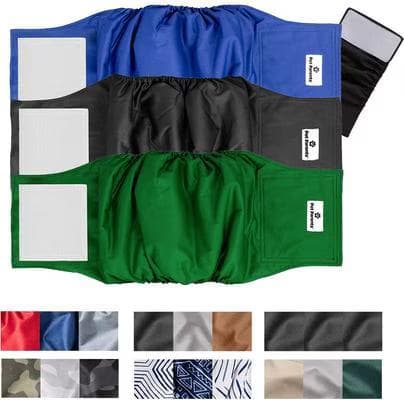
Dog diapers for male dogs, dog diapers male shoppers, and belly-band users need urine-only coverage aligned over the penis. A full diaper is necessary for stool or rear coverage. The dedicated male guide explains measurement, washable and disposable choices, change frequency, and when a medical cause matters more than the garment. For a washable urine-only benchmark, compare the current 13 to 16-inch waist chart for Pet Parents Washable Belly Band Male Dog Diapers, Dog Wraps & Extenders, Gentlemen, Small: 13 to 16-in Waist, 3 count; confirm that the panel stays centered over the penis while the dog walks and rests.
- Choose a male dog diaper or belly band for urine-only management in a male dog.
Webvet may earn a commission when you click through to Chewy, at no extra cost to you.
Reusable vs. disposable dog diapers
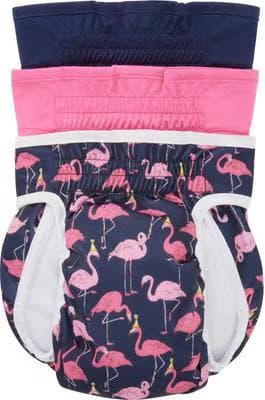
Dog disposable diapers simplify occasional use and travel, while reusable dog diapers require enough clean garments, dependable washing, and complete drying. Compare disposable dog diapers by real cost per change and compare washable systems by rotation and skin response. Both materials need correct fit, prompt changes, and diaper-free skin checks. For a washable full-coverage female example, compare Frisco Washable Female Diaper, X-Small, 3 count, Flamingo by its current X-small chart, rise, tail opening, and wash rotation.
- Compare reusable and disposable dog diapers by change frequency, laundry access, travel, cost per change, and the dog’s skin.
Webvet may earn a commission when you click through to Chewy, at no extra cost to you.
- Use a pad or waterproof blanket when protecting one resting area meets the need and continuous body contact would add risk.
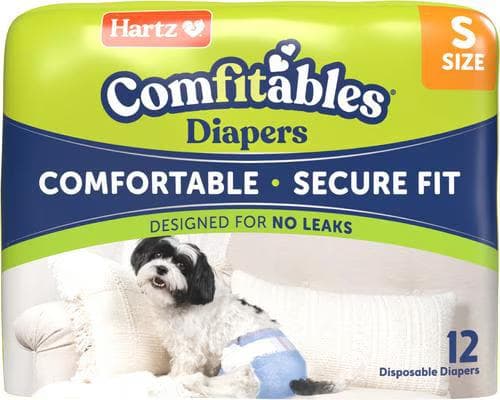
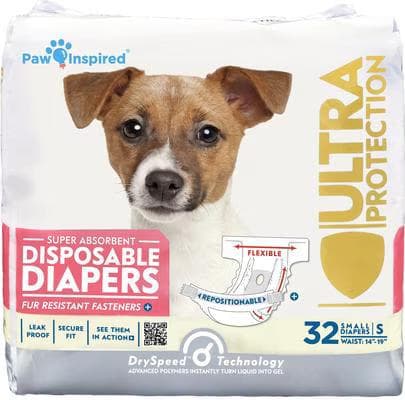
For a full-coverage disposable comparison, Hartz Comfitables Male & Female Dog Diapers and Paw Inspired Ultra Protection Disposable Female Dog Diapers provide two different size charts, fastener systems, and package counts to check against the dog's anatomy and measurements. Neither product name guarantees a safe fit, so test movement and recheck the skin.
Webvet may earn a commission when you click through to Chewy, at no extra cost to you.
Build a system around the real number of changes
Before buying a large package, track accidents for two or three typical days. Record when they occur, whether the dog is asleep or awake, the approximate amount, and how quickly a garment becomes damp. Share new patterns with the veterinarian. For product planning, the same notes reveal how many clean units must be available between laundry cycles or deliveries. For a disposable full-coverage baseline, compare the package count and current size chart for Hartz Comfitables Male & Female Dog Diapers against the recorded change rate.
A washable system needs a working rotation, not one garment worn repeatedly. Count the expected daily changes, add the time needed to wash and fully dry each diaper, and keep at least one clean backup for a surprise accident. A disposable system needs enough stock to change promptly without rationing. Some households use washable diapers at home and disposables during travel or when laundry access is limited. For reusable diapers or belly bands designed to accept disposable inserts, PAWPANG Disposable Dog Diaper Liners, Medium, 100 count is one size-specific option; keep the liner flat and change the garment whenever urine reaches the shell.
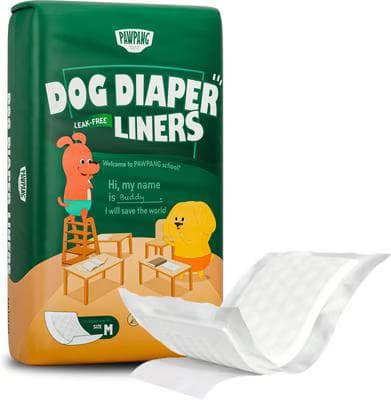
A convenient 100-count liner option for adding absorbency to a correctly fitted washable dog diaper or belly band.
Webvet may earn a commission when you click through to Chewy, at no extra cost to you.
- Occasional dribbles: prioritize precise coverage, low bulk, and fast skin checks over maximum capacity.
- Several daily changes: calculate cost per change and keep enough clean replacements for the entire day.
- Heavy urine volume: contact the veterinarian about the change and choose a system that can be inspected and replaced often.
- Sensitive skin: minimize time in contact with moisture, choose smooth seams, and stop using any product that causes rubbing.
Review the plan after the first day, first week, and any health or mobility change. Note leaks, slipping, redness, licking, resistance during dressing, and whether the dog can walk and rest normally. Returning or replacing an unsuitable cut is safer than tightening it until it stays.
Dog diaper sizes and measuring
Measure the waist where the garment will sit, not where a human waistband would rest. Keep the tape level and snug without compressing the coat. Then compare that number with the manufacturer’s current chart. Weight can help narrow the range, but waist, rise, tail position, and body shape decide the fit.
Dogs between sizes may need a different cut rather than a tighter fastener. A deep chest, narrow waist, broad hindquarters, or very short back changes how fabric travels during movement. The complete dog diaper size guide explains waist, rise, tail-hole, and body-shape checks for small dogs, large dogs, and dogs at the edge of a brand’s chart.
How a dog diaper should fit
A correctly fitted dog diaper stays in place when the dog stands, walks, lies down, and turns. The waistband should accept a two-finger check without sliding. Leg cuffs should touch the coat evenly instead of folding inward, and the tail opening should be centered around the tail base without pulling.

- Too loose: the waist rotates, the absorbent panel shifts away from the leak, or a visible gap opens at a leg.
- Too tight: the dog resists sitting, the waistband leaves a deep mark, the cuffs pinch, or the tail hole pulls.
- Wrong rise: the diaper sits too far forward or backward even though the waist measurement seems correct.
- Wrong coverage type: a belly band is being asked to contain stool or a full diaper does not cover the source of urine.
Recheck fit after the absorbent core becomes damp because weight changes how the garment hangs. Also check after a haircut, weight change, or mobility change. A fit that worked last season may not work now.
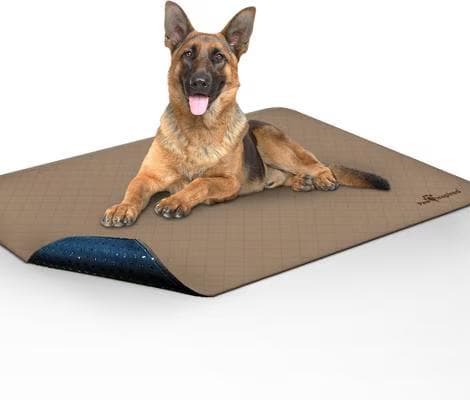
Webvet may earn a commission when you click through to Chewy, at no extra cost to you.
 $65 · no membership
Have a health question about your dog?
A licensed vet can assess your dog over video and prescribe online when it's appropriate.
 Talk to a vet
- Licensed vets
- All 50 states
- same-day Rx
Webvet may earn a commission if you book.
How often to change a dog diaper
There is no safe universal number of hours. Inspect the diaper frequently and change it promptly whenever it is wet or soiled. A dog producing a large volume of urine may need changes much sooner than a dog with occasional dribbles. Heat, activity, absorbency, and skin sensitivity also alter the interval.
Build a routine around predictable checks: after waking, after meals or drinking, after walks, before travel, before sleep, and whenever the dog becomes restless or starts licking. Each change should include a quick look and feel for dampness, redness, odor, swelling, discharge, or tenderness.

- Wash or sanitize your hands and prepare the clean garment before removing the used one.
- Remove the diaper gently and keep fasteners away from fur and irritated skin.
- Clean only as needed with warm water or a veterinarian-approved product, then dry the coat and skin fully.
- Inspect contact areas, allow diaper-free air time, and fit the replacement without tightening to stop a leak.
Can you leave a dog in a diaper all day? No. Continuous wear increases moisture, friction, odor, and the chance that a change is missed. Even when a dry diaper remains on for part of the day, the dog still needs regular toileting breaks, movement, grooming, and a daily diaper-free skin check.
Skin care and hygiene
Urine trapped against the coat can contribute to moisture-associated dermatitis and urine scald. The practical defenses are fast changes, complete drying, correct fit, and diaper-free time. Shaving the area without veterinary or grooming guidance can create clipper irritation and does not fix the reason for leakage.

Do not apply human diaper cream unless your veterinarian approves the exact ingredients. Dogs may lick topical products, and some ingredients can be harmful when swallowed. Ask for a pet-safe barrier plan if the dog repeatedly develops irritation.
Wash reusable garments according to the label, rinse away detergent, and dry them completely before reuse. Keep enough clean units for the actual number of daily changes. If laundry turnaround forces a dog to remain wet, add disposables or more washable units rather than extending wear.
For outer-coat cleanup between changes, HICC PET Deodorizing Cat & Dog Glove Wipes may help when used exactly as labeled. They are not a skin treatment; use plain water or veterinary guidance around raw skin, the genitals, or other sensitive tissue.
How to help a dog accept a diaper
Introduce a diaper as handling equipment, not a correction. Start when the dog is calm and the garment is clean. Let the dog sniff it, reward relaxed behavior, touch the waist and hindquarters briefly, and stop before the dog becomes worried. A dog who is painful, suddenly touch-sensitive, or unable to stand comfortably needs veterinary assessment before more practice.
- Show the clean diaper and reward the dog for remaining nearby.
- Touch the garment to the dog’s side for one second, reward, and remove it.
- Fasten it loosely for a few seconds while feeding a small reward, then take it off.
- Build to a short supervised walk and sitting check before extending wear.
- End the session if the dog freezes, pants, hides, growls, or repeatedly tries to bite the garment.
Never punish resistance or chase a dog to dress them. Check for pinching fur, a stiff tail, arthritis pain, or a garment that blocks normal movement. Calm cooperation should improve as the fit and routine become predictable. Chewing that continues after fit is corrected may mean the dog needs a protected surface instead of unsupervised body-worn coverage.
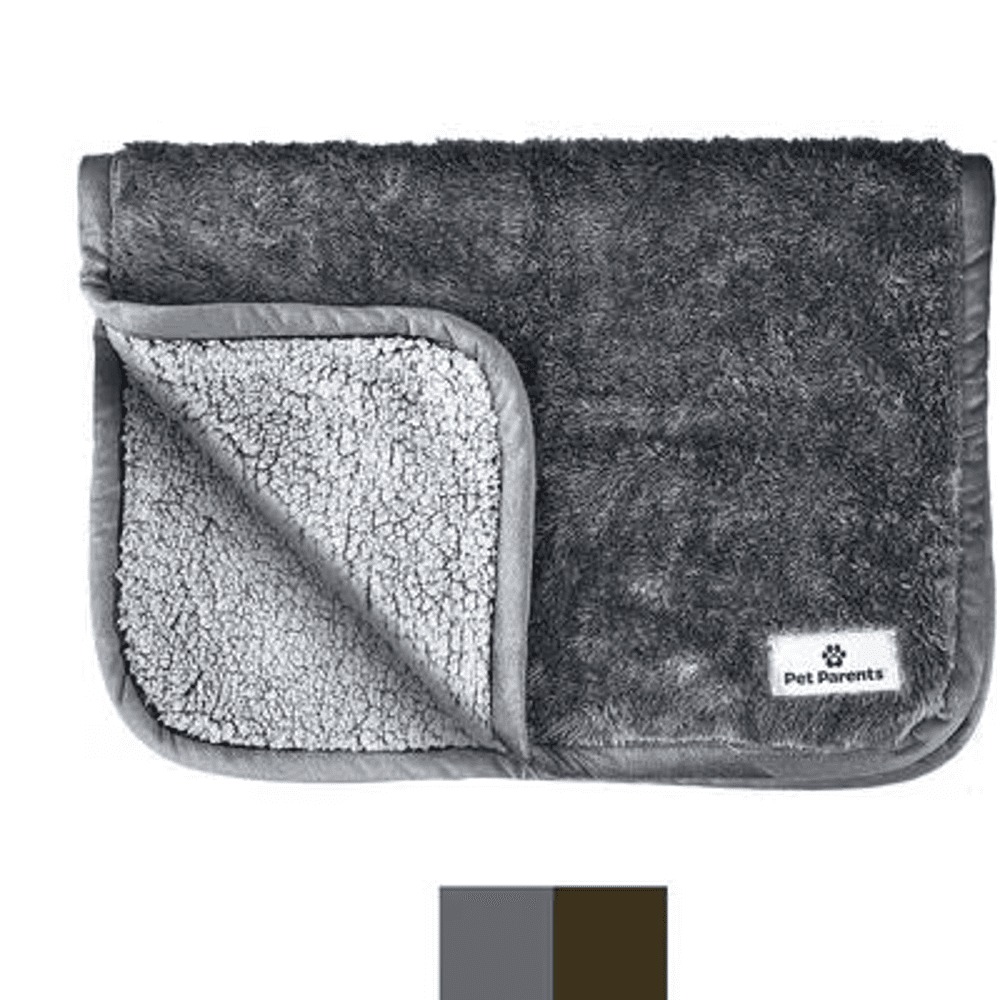
A plush, waterproof sherpa blanket that gives a cold or shivering dog a warm, cozy layer to curl into. The hidden waterproof lining protects the bed, couch, or car seat, and the whole thing is machine washable.
Webvet may earn a commission when you click through to Chewy, at no extra cost to you.
Keep a short care log
A simple log can reveal whether the management plan is working. Record each change, whether the diaper was dry, damp, saturated, or soiled, where any leak began, and what the skin looked like. Also note drinking, appetite, urine volume, stool, mobility, and medication changes. Patterns help a veterinarian distinguish a health change from a fit failure.
- Stable plan: predictable changes, dry skin, comfortable movement, and no increase in leakage.
- Fit problem: repeated rotation, one-sided gaps, dry core with wet coat, or chafing in the same place.
- Medical change: new large volumes, blood, odor, pain, straining, weakness, or a sudden increase in accidents.
Reassess the plan instead of normalizing problems
A diaper plan should make care easier without reducing the dog’s comfort or activity. Reassess if the dog spends more time wet, resists normal movement, stops asking to go outside, develops recurring redness, or needs a steadily larger absorbent system. Those changes can signal a poor setup or worsening health.
Ask whether body-worn coverage is still the simplest safe choice. A waterproof blanket may be better for predictable sleep leaks. A belly band may reduce bulk for male urine-only needs. More accessible toileting may reduce accidents for a dog with mobility loss. A veterinarian can help revise medical management when the volume or pattern changes.
- Comfort check: the dog walks, rests, toilets, and interacts normally.
- Skin check: contact areas remain clean, dry, and free of persistent redness.
- Coverage check: the system contains the observed accident without repeated gaps or rotation.
- Care check: every caregiver can inspect and change the garment when required.
Why a dog diaper leaks or slips
Troubleshoot the failure before buying a more absorbent product. A waist gap versus saturation calls for a different fix. Look at the garment immediately after a leak and note where moisture escaped, whether the core was fully wet, and whether the diaper had rotated.
- Leak at one leg: smooth the cuff, center the absorbent panel, and reassess the cut or rise.
- Leak at the waist: confirm the waist size and check whether the garment slid during sitting or sleep.
- Dry core but wet coat: suspect the wrong coverage type, a folded panel, or anatomy outside the absorbent zone.
- Fully saturated core: change sooner or use the correctly sized absorbency system without reducing skin checks.
- Diaper slides off: reassess size, rise, fastener placement, coat friction, and activity before adding restraint.
How to keep a dog diaper on
Dog diapers and suspenders should be considered only after size, rise, tail opening, coat friction, and saturation are corrected. Dog suspenders for diapers use gentle compatible attachment points; they should never tighten a poor fit or pull the neck. The retention guide covers safer alternatives and daily pressure checks.
When fit is correct but the diaper slips, the dedicated guide to dog diaper suspenders explains supervised retention options. Suspenders should not be used to force an uncomfortable or wrongly sized garment to stay on.
Dog diapers for heat and female dogs
A female dog in heat may wear a full diaper to collect discharge indoors. The garment does not block mating and is not contraception. Supervise her, keep her physically separated from intact males, use secure doors and barriers, and follow a veterinarian’s reproductive-health guidance. The dog diapers for heat guide covers cycle stages, change checks, and pregnancy-prevention limits.
Can dog diapers contain poop?
Some full-coverage diapers can catch certain stool accidents, but a standard tail opening creates an escape path for formed stool and loose stool can spread under the garment. Fecal incontinence also has medical causes that need evaluation. Read the focused guide to dog diapers for poop before relying on a urine-focused diaper.
Dog diapers for poop work best with formed stool, close rear coverage, and rapid changes. A tail opening can become an escape gap, while loose stool can spread against the coat and skin. The dedicated fecal-incontinence guide explains why containment depends on stool consistency, body shape, mobility, and veterinary treatment rather than absorbency alone.
Dog diapers for potty training
A diaper may protect a floor during training, but it does not teach where to eliminate. House training depends on frequent outdoor opportunities, supervision, predictable routines, and immediate positive reinforcement after the dog toilets in the desired place. The guide to dog diapers for potty training separates surface protection from actual learning.
Dog diapers for potty training protect surfaces but do not teach an elimination habit. Keep scheduled toilet trips, immediate rewards, and normal supervision as the training plan, then use the diaper only as a temporary accident-management layer. The potty-training guide shows how to phase it out without blurring the final toilet cue.
Diapers for old dogs and senior care
Older dogs may leak because of urethral, neurologic, cognitive, mobility, kidney, endocrine, or other changes. A new accident should not be dismissed as normal aging. After evaluation, diapers can support comfort and housekeeping, especially when paired with easy outdoor access and protected bedding. See diapers for old dogs for mobility-aware fit and nighttime routines.
Dog diapers for senior dogs and dog diapers for elderly dogs need a mobility-aware fit, frequent skin checks, and surface backup. Senior dog diapers are management, not an explanation for new leakage. Pain, weakness, increased thirst, cognitive change, or a sudden pattern still needs a veterinary exam and a plan the caregiver can sustain.
Alternatives to dog diapers
What can you use instead of a dog diaper? The best substitute depends on the goal. Washable pee pads and waterproof blankets protect beds and floors. More frequent walks or an accessible indoor toilet area reduce waiting. Baby gates can limit access to easy-to-clean rooms. Grooming can keep long coat hair from holding moisture. One reusable surface option to compare is the Paw Inspired Washable Dog Pee Pad, chosen by the dimensions of the area that actually needs protection.
- Use a washable surface layer when accidents happen mainly during sleep in one predictable location. For a cushioned senior rest station, the FurHaven NAP Ultra Plush Orthopedic Cat & Dog Bed has a removable cover but still needs a separate waterproof layer.
- Use scheduled toileting and an accessible route when the dog can still eliminate voluntarily.
- Use belly bands only for male urine needs, not as a substitute for rear coverage or stool containment.
- Use a veterinary treatment plan when a diagnosed condition can be treated or medically managed.
Layered protection often works better than one product. A dog may wear a diaper during supervised activity, rest on a washable pad after the garment is removed, and use a waterproof blanket overnight. This reduces continuous skin contact while preserving quick cleanup. Replace every damp surface layer just as promptly as a wet diaper.
Choose washable protection large enough to extend beyond the dog’s usual sleeping position. Secure loose edges so a mobility-limited dog does not trip, and place the setup on a nonslip floor. Launder soiled pads separately according to their care labels and dry them completely before reuse.
For a short-term emergency, a homemade garment may help until the correct product is available, but it must not restrict movement or circulation. Follow the DIY dog diaper guide for temporary materials and fit limits rather than improvising with pins or tight tape. If your dog chews or swallows any part of a diaper, remove access and follow the emergency steps for a dog that ate a diaper; do not induce vomiting unless a veterinarian instructs you.
The bottom line
Dog diapers work best as a carefully monitored layer in a larger care plan. Match full coverage, a belly band, or a surface protector to the real need. Measure the dog, use the two-finger waistband check, center cuffs and tail opening, inspect frequently, change promptly, and keep the skin clean and dry.
If the leaking is new, painful, frequent, accompanied by increased thirst, or associated with weakness or skin injury, pause the product search and call a veterinarian. Solving the medical cause and protecting the dog’s comfort matter more than keeping a garment on for a convenient number of hours.
Dog diaper questions owners ask
Frequently Asked Questions
Are doggie diapers a good idea?
Doggie diapers can be a useful management tool when the coverage matches the problem and a caregiver can change the garment promptly. They can protect surfaces during urine leakage, marking, or heat discharge, but a diaper does not diagnose or treat urinary, neurologic, reproductive, or gastrointestinal disease. New accidents, pain, blood, weakness, or increased thirst still need veterinary evaluation.
Can I leave my dog in a diaper all day?
No. Leaving a dog in one diaper all day increases moisture, friction, urine scald, and infection risk. Change every wet or soiled diaper promptly, maintain normal toilet breaks, and schedule diaper-free time. Perform at least a daily diaper-free skin check, and inspect more often when leakage is heavy, the weather is warm, or the dog already has sensitive skin.
What diapers work best for dogs?
The best dog diaper is the one that matches the accident type, anatomy, and real change frequency. Use a full diaper for female anatomy or rear coverage, a belly band for male urine-only needs, and a surface layer when body-worn coverage is unnecessary. Measure the dog, use the current brand-specific size chart, and test movement before buying a large package.
How long can you leave a dog diaper on?
There is no safe universal wear time for a dog diaper. Check frequently and change it as soon as it is damp, soiled, twisted, or no longer covering the leak. A dry-looking exterior does not prove the lining is dry. Build checks around waking, meals, drinking, toileting, exercise, and bedtime, with a skin inspection during every change.
Do vets recommend dog diapers?
Veterinarians may recommend dog diapers as one part of a management plan for diagnosed incontinence, recovery, mobility limits, or heat discharge. The recommendation depends on the underlying cause and whether a caregiver can keep the dog clean, dry, and comfortable. A veterinarian may instead prioritize treatment, scheduled toileting, bedding protection, mobility support, or a different coverage system.
$65 · no membershipHave a health question about your dog?
A licensed vet can assess your dog over video and prescribe online when it's appropriate.
Talk to a vet- Licensed vets
- All 50 states
- same-day Rx
Webvet may earn a commission if you book.

Editor
The Webvet Editorial Team is the in-house group of pet-care editors and writers behind Webvet, operated by Smart Pet Collective. The team researches, writes, and maintains Webvet's pet health, behavior, and medication content. Every article follows a defined editorial process: research from reputable veterinary and scientific sources, careful drafting, mandatory review of medical content by a credentialed veterinarian, and dated publication. Health and medication articles are medically reviewed by a licensed veterinary professional before they go live and are kept current over time.
Veterinarian · BVMS MRCVS
Dr. Pippa Elliott, BVMS, MRCVS, is a veterinarian with nearly 30 years of experience in companion animal practice. Dr. Elliott earned her Bachelor of Veterinary Medicine and Surgery from the University of Glasgow. She was also designated a Member of the Royal College of Veterinary Surgeons. Married with 2 grown-up kids, Dr. Elliott has a naughty Puggle named Poggle, 3 cats and a bearded dragon.


