Pawz Dog Boots Review: Rubber Balloon Boots for Salt, Heat, and Hardwood
Our expert-analysis review of Pawz dog boots: what the thin rubber protects against, how they stay on without squeezing, how to get them on a wriggling dog, and when a soled boot is the better choice.

BVMS MRCVS
Medically reviewed by Dr. Pippa Elliott, BVMS MRCVS · Last reviewed

This article contains affiliate links. Webvet may earn a commission when you buy through them, at no extra cost to you.
Pawz dog boots at a glance: what they are and who they suit
Pawz dog boots are pull-on rubber boots sold 12 to a pack. The maker says they keep paws safe from road salt, ice melt, snow and ice, and protect against hot asphalt and concrete. With no zippers or straps, each boot holds by a snug fit high up the wrist.

Pawz dog boots come in seven sizes, Tiny through X-Large, so measure your dog's paw width and check it against the Pawz size chart before you order. They are not a soled hiking boot: Pawz's listing describes no sole or outsole, which is what soled trail boots add.
- 1Pawz boots protect against road salt, ice melt, snow and wet ground, according to the maker, which also claims hot pavement protection without publishing a heat rating.
- 2Get the sizing right by measuring paw width before you order and matching it to the Pawz size chart, which runs from Tiny to X-Large.
- 3Take the boots off after about one hour, the maker's own limit, and check each paw for swelling, redness or blisters.
- 4For rocky trails and long days out, a soled boot is the better match, because the one-hour limit rules Pawz out for long hikes.
Our verdict: the Pawz Waterproof Dog Boots, Black, Medium, 12 count, are a low-cost way to keep road salt, ice melt and snow off paws on short walks; Chewy listed that pack at $21.49 in October 2026. The drawbacks: a one-hour wear limit, no published lifespan, and fitting help only as a video.
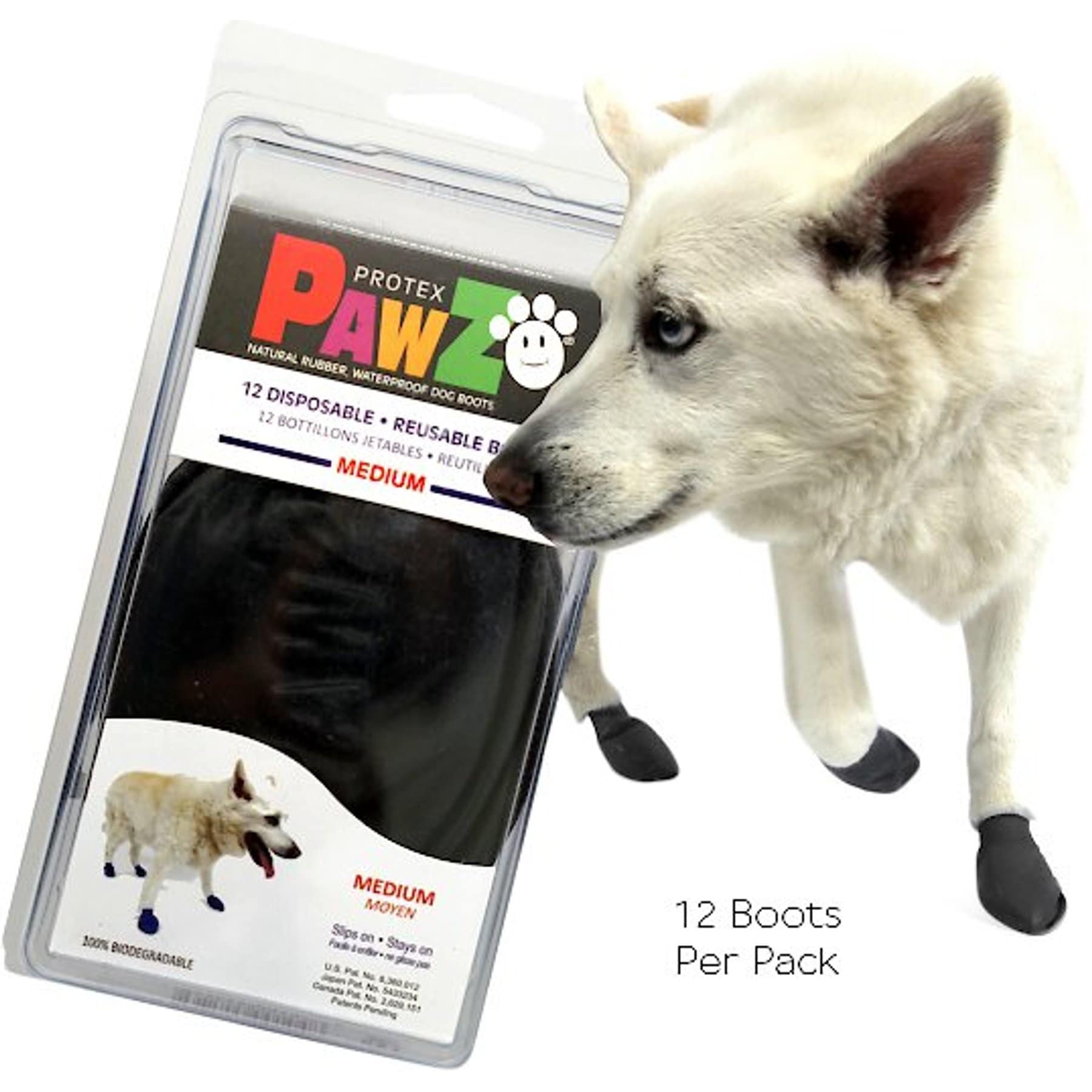
Twelve pull-on rubber boots in one pack, made for salted, icy, and wet sidewalks.
Webvet may earn a commission when you click through to Chewy, at no extra cost to you.
This review is an expert analysis of the manufacturer's published specifications, the Chewy listing, and veterinary guidance from Pet Poison Helpline, the UW-Madison School of Veterinary Medicine and the Metro Vet clinic, plus the Royal Kennel Club's hot-pavement advice. WebVet did not obtain the product, and no hands-on test, measurement or timed comparison was performed.
No manufacturer or retailer paid for or reviewed this article. WebVet may earn a commission on Chewy links; that relationship did not influence the conclusions.
Pawz suits these dogs and walks:
- City and suburban walks on salted or de-iced sidewalks, where Pet Poison Helpline recommends booties against cold, ice and salt.
- Snowy or wet walks, since Chewy sells Pawz as a waterproof boot and the maker says it stops snow matting.
- A bandaged paw that has to stay clean, a use Pawz markets the boots for, once your vet agrees.
- Short outings of about an hour or less, which is the maker's own wear limit.
Look elsewhere for:
- Rocky trails, gravel and long hikes, where a boot with a grip sole or outsole suits the job.
- Slick hardwood floors, since Pawz makes no indoor grip claim.
 Sponsored
Have a health question about your dog?
Talk to a licensed vet at Dutch over video or message, including nights and weekends.
Use code Pets60
Plans start at $12/month · covers up to 5 pets
- Licensed vets in most states
- Rx for 150+ conditions
- 4.7 on Trustpilot
What Pawz boots protect against: salt, heat, floors, and wounds
The things Pawz says its boots protect against fall into three groups: winter sidewalks, hot pavement, and bandaged paws. Chewy sells them as Pawz Waterproof Dog Boots in a 12-count pack. The evidence behind each use is not equal, and indoor floors are not on the maker's list at all.
Road salt and ice melt. Pawz says the boots keep paws safe from snow matting, freezing ice, salt, ice melt and other chemicals. This is the use with the firmest backing, because two veterinary sources point the same way:
- Pet Poison Helpline says salt on the paws can cause dryness and irritation, tells owners to put booties on against cold, ice and salt, and warns that de-icing products may cause stomach upset and vomiting if swallowed.
- The UW-Madison School of Veterinary Medicine says salt and other ice melt products can irritate paws, and that coats and boots can help protect dogs from cold, ice and salt.
The waterproof build also suits wet and snowy walks, since snow matting is on the maker's list of problems the boots prevent. For the temperature side of winter outings, see our guide to how cold is too cold for dogs.
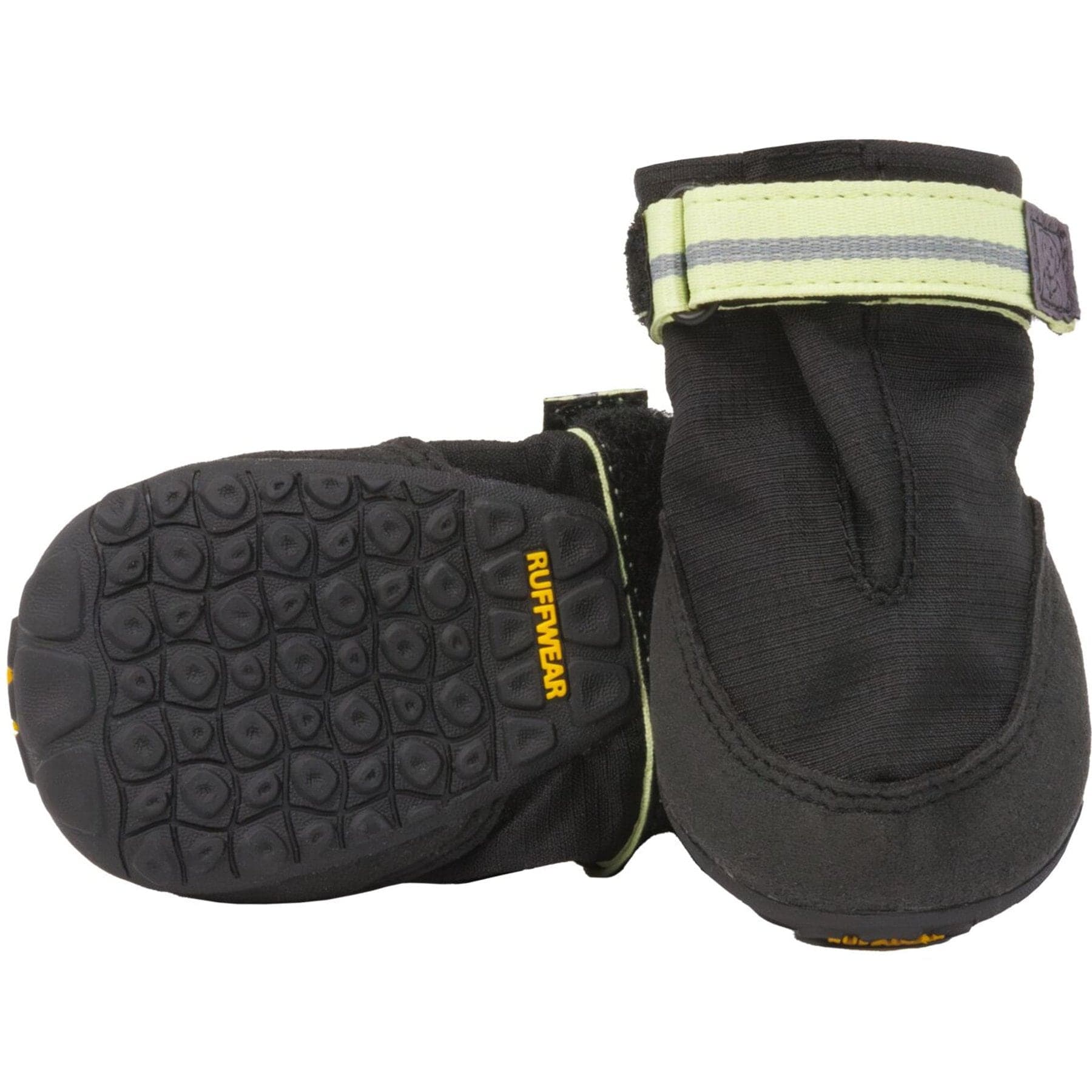
A soled option whose Chewy listing names both icy winter sidewalks and hot summer pavement.
Webvet may earn a commission when you click through to Chewy, at no extra cost to you.
Hardwood and slick floors. This is where the evidence runs out. Pawz's claims name heat, snow, ice, salt and bandages, not indoor grip, and the maker publishes no traction figure for polished floors. If the dog slipping at home is an older one, our senior dog health guide covers the bigger picture.
Hot pavement. Pawz says the boots protect paws from burning asphalt and scorching concrete. That is a maker claim with no independent test behind it. The Royal Kennel Club warns that pavement in the sun can get hot enough to cause pain, discomfort and even burns to a dog's paws.
There is no agreed air temperature threshold at which pavement starts to burn paws, and no measured burn time to rely on, so check the surface itself. Our guide to hot pavement and dog paws covers summer walks in more depth. Before a warm-weather walk:
- Place the back of your hand on the pavement for seven seconds, which is the Royal Kennel Club's test.
- If you cannot hold it there comfortably, the surface is too hot for bare paws, and a boot with no published heat rating is not a reason to stay on it.
Bandaged paws and wounds. Pawz markets the boots for keeping a dog's bandages clean during recovery, but it gives no instructions for wearing them over a dressing.
Metro Vet, a veterinary clinic, notes that a dirty or moist bandage against warm skin is an ideal place for bacteria to grow. Ask your vet before sealing a bandaged paw inside a waterproof boot, and ask how long it can stay covered.
 Sponsored
Vet care that's always there
Unlimited video calls and messaging with licensed vets for less than a typical vet visit. One membership covers up to five pets.
Use code Pets60
Plans start at $12/month · covers up to 5 pets
- Licensed vets in most states
- Rx for 150+ conditions
- 4.7 on Trustpilot
Sizing Pawz boots: measuring paw width
Pawz lists its black rubber dog boots in 7 sizes on the maker's site:
- Tiny
- XX-Small
- X-Small
- Small
- Medium
- Large
- X-Large
The Pawz FAQ sends sizing questions to its size chart, and the Chewy listing tells owners to measure before ordering. The size chart page shows no size table or measuring steps in its text, though, so there are no Pawz paw width ranges to quote here.
Measuring paw width before you order matters more with a boot like this, because Pawz holds on by fit alone. The fit points the maker does put in writing:
- The boot should sit as high up on the wrist as possible.
- It does not have to cover the dewclaw.
- It should fit snugly, but not so tight that it obstructs blood flow.
How to measure a dog's feet for boots?
Measure before you buy, and measure for the specific boot. The Chewy listings for Pawz, the Canada Pooch Soft Shield and the Ruffwear Summit Trex all open with a reminder to measure your pet for the right fit. Then read the result against that maker's own chart and its measuring steps.
Sizes do not carry across brands: a Pawz Medium, a Canada Pooch size 3 and a Ruffwear 2.00-in boot belong to three different sizing systems. For Pawz, keep the fit rule in mind as you compare, because the cuff needs to reach high on the wrist without squeezing.
How to put Pawz boots on, and keeping them on
Pawz says the boots are easy to put on and stay on securely once in place; that is the maker's claim, and WebVet did not fit them on a dog. Chewy's listing says the boots go on easily and fit securely without zippers or straps, so the rubber cuff does all the holding.
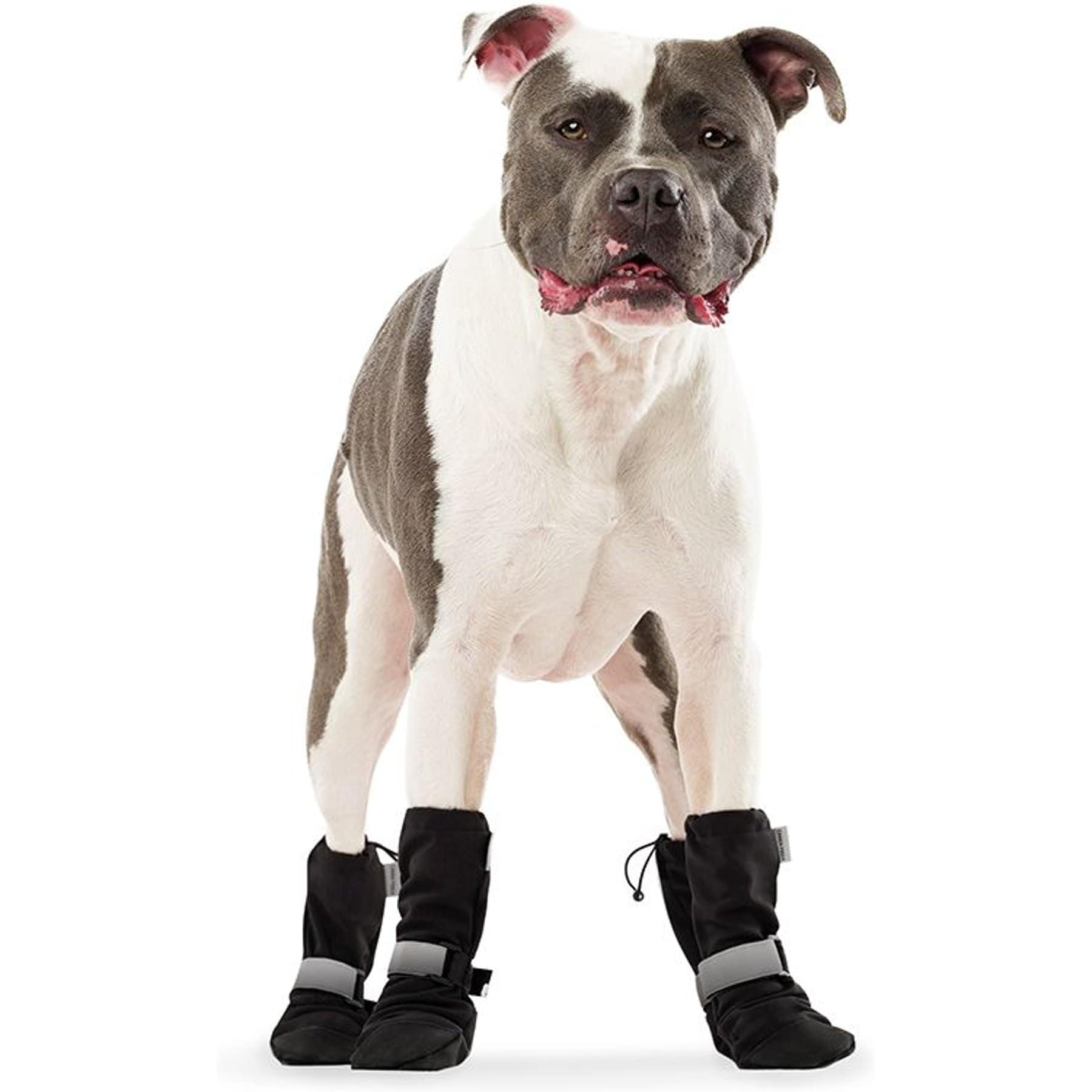
A water-resistant soled boot with an ultra-wide opening, rubber grip soles, and fuzzy fasteners.
Webvet may earn a commission when you click through to Chewy, at no extra cost to you.
For the fitting itself, Pawz offers a video on its how-to page rather than written steps. Putting the boots on without a struggle starts before the walk:
- Confirm the size against the Pawz size chart, since a boot that is too small is the one that squeezes.
- Watch the Pawz fitting video once before the first try.
- Work the boot over the paw and pull the cuff as high up the wrist as it will go.
- Leave the dewclaw uncovered if the boot does not reach over it; Pawz says it does not need to.
- Check that the boot feels snug but not tight enough to obstruct blood flow.

Keeping them on comes back to the same fit points. Pawz claims the boots stay on once in place, and wrist height is the one written fit point that bears on it. If a boot keeps slipping off, recheck the size and how high the cuff sits before the next walk.
Taking them off is part of the routine too. Pawz generally recommends removing the boots after about one hour, so plan each outing around that limit and dry any damp paws once the boots come off. A longer day on rough ground calls for a different kind of boot.
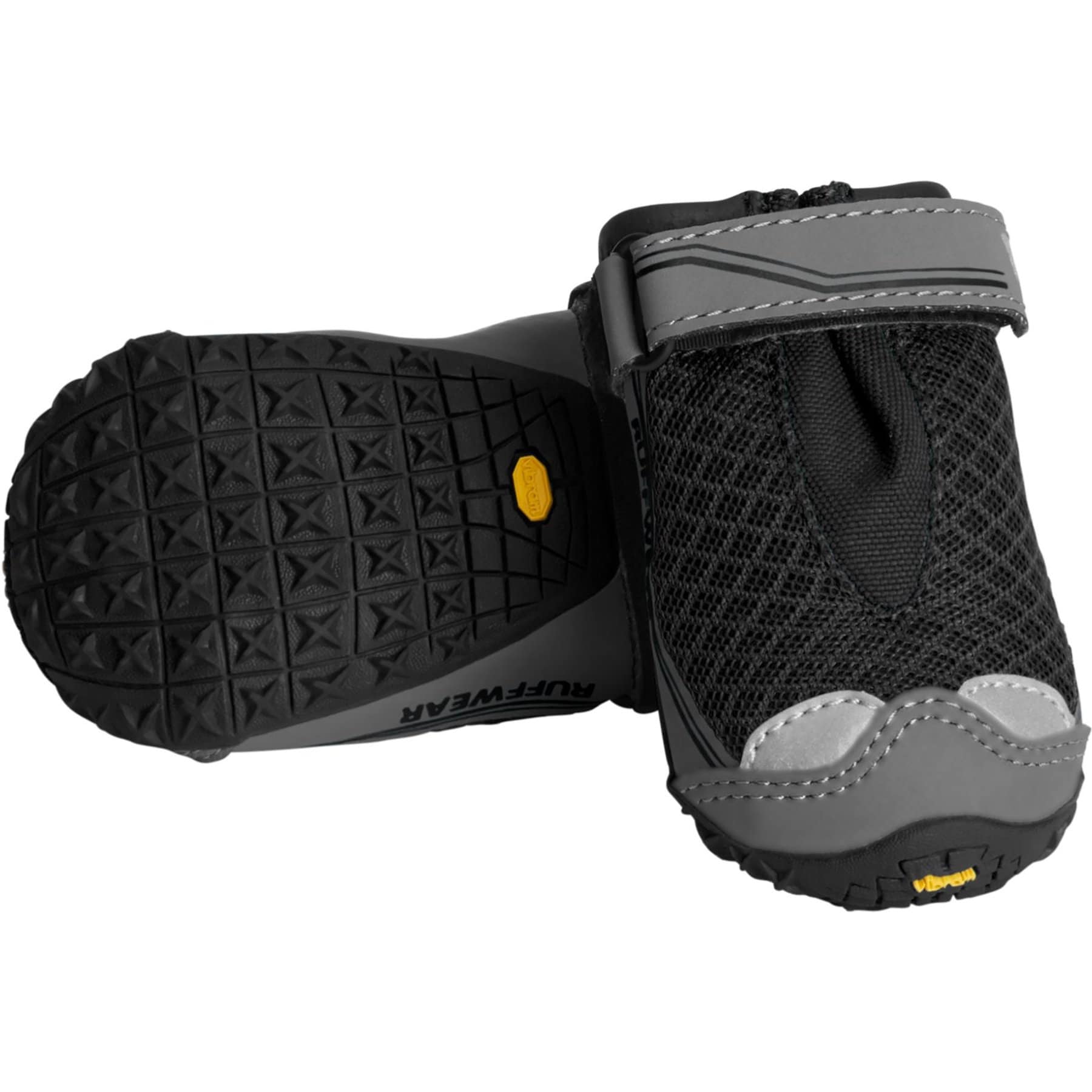
A soled Ruffwear boot sold as a set of two, with a rugged outsole for traction on all types of terrain.
Webvet may earn a commission when you click through to Chewy, at no extra cost to you.
Circulation, wear time, and safety checks
A boot held on by a snug rubber cuff raises a fair circulation question. Pawz's FAQ says the boots fit snugly, but not so tight as to obstruct blood flow, and recommends removing them after about one hour. No veterinary source gives a wear-time number, so treat that maker's hour as the ceiling.

The warning signs come from advice written for bandages, winter paws and hot pavement, applied by analogy to a snug boot. After each outing, take the boots off and check:
- Comfort: Metro Vet says discomfort or chewing at the site can mean a bandage is too tight, so chewing at a paw after boot time deserves the same attention.
- Swelling and color: the Royal Kennel Club says paws that look red, swollen or blistered mean getting the dog off the surface and contacting a vet.
- Pads: the UW-Madison School of Veterinary Medicine advises checking paw pads for cracks, bleeding or ice accumulation.
- Moisture: Metro Vet notes that moisture against warm skin lets bacteria grow, so dry damp paws rather than putting a wet boot back on.
The simplest wear-time rule from those figures: one outing of about an hour, then boots off and paws checked, every time.
Durability, reuse, and how many boots you go through
Pawz sells the boots 12 to a pack and calls them disposable, reusable and 100% biodegradable. Chewy's listing repeats that Pawz is a disposable and reusable waterproof boot and calls it durable. On durability, that is all there is: Pawz publishes no lifespan, so the number of outings per pack is unknown.
The material is the other open question. Neither the Pawz FAQ nor the Chewy listing says whether these booties are natural rubber. The maker's product name, PawZ Rubber Dog Boots, is the only material detail on offer, so treat natural rubber as unconfirmed if it matters to you.
What the pack does make clear is the cost:
- Chewy listed the Medium 12-count pack at $21.49 in October 2026, about $1.79 a boot.
- One pack holds three full sets of four boots.
- Pawz's own site listed the black 12-boot pack from $17.99 in October 2026.
- By comparison, Chewy listed the Ruffwear Grip Trex Dog Boots, Obsidian Black, 2.00-in, Set of 2 at $49.99 for two boots in October 2026.
That price shapes how to think about reuse. Wear a boot again while it is whole and dry, and retire any boot with a tear, because a torn boot no longer keeps salt, ice melt or water off the paw.
Pawz also sells a Boots + Balm Kit, listed from $31.48 on its site in October 2026. For paw care between walks, see our guide to dog paw balm.
Pawz dog boots alternatives: soled boots for rough ground
Pawz says its boot is designed to protect your dog on every adventure, but its listing describes no sole or outsole. For rock, gravel and long trail days, these soled boots build traction and terrain protection into their Chewy listings:

- Ruffwear Grip Trex Dog Boots, Obsidian Black, 2.00-in, Set of 2: listed at $49.99 on Chewy when we checked in October 2026. Chewy says its rugged outsole offers traction and protection on all types of terrain, for hiking, biking, running and exploring. Our Ruffwear Grip Trex review goes deeper.
- Ruffwear Summit Trex Dog Boots, Obsidian Black, 2.00-in: listed at $29.99 on Chewy in October 2026, and described as durable, flexible boots for everyday use, from hot trails and pavement in summer to icy sidewalks in winter, built with weather-resistant polyester.
- Canada Pooch Soft Shield Dog Boots, Black, size 3: listed at $59.99 on Chewy in October 2026. The listing describes a water-resistant boot with an ultra-wide opening, rubber grip soles and fuzzy fasteners, made for snow, mud and rain. Our Canada Pooch dog boots review covers it in detail.
WebVet's Ruffwear Polar Trex review covers one more Ruffwear boot. Matched surface by surface, the evidence for each boot type splits like this:
| Surface or use | Pawz rubber boots | Soled boots | Check first |
|---|---|---|---|
| Sidewalks with road salt or ice melt | Maker claims protection from salt, ice melt and snow matting; Pet Poison Helpline and UW-Madison back booties against salt | Summit Trex listing names icy winter sidewalks | Wipe paws after the walk when boots are not an option |
| Hot pavement | Maker claims protection from hot asphalt and concrete; no heat rating published | Summit Trex listing names hot trails and pavement | Back of the hand on the pavement for seven seconds |
| Rain, snow and mud | Sold as waterproof, disposable and reusable | Soft Shield listing: water-resistant, rubber grip soles, for snow, mud and rain | Dry damp paws once the boots come off |
| Hardwood and slick floors | No indoor grip claim or traction figure | No indoor grip claim in these listings | Watch how the dog moves on the floor before buying for it |
| Trails, rock and gravel | No sole or outsole described | Grip Trex listing: rugged outsole with traction on all types of terrain | Pads for cracks or bleeding after the walk |
| Bandaged paw | Marketed for keeping bandages clean; no instructions given | Not covered in these listings | Ask your vet first, since moisture under a covering lets bacteria grow |
| Outings longer than an hour | Maker advises removal after about one hour | Follow each maker's own wear advice | Boots off, then check for swelling and circulation problems |
Where to buy: Pawz sells the boots on its own site, which listed the black 12-boot pack from $17.99 in October 2026, and Chewy listed the Pawz Waterproof Dog Boots, Black, Medium, 12 count at $21.49.
The bottom line: Pawz earns its place for short walks on salted or icy sidewalks, the use Pet Poison Helpline and UW-Madison both back booties for, at about $1.79 a boot. For trails and long days, choose a soled boot.
When booties are not an option at all, Pet Poison Helpline's fallback is to wipe the paws after the walk. For the wider field, see WebVet's guide to the best dog boots.
Pawz dog boots questions
Frequently Asked Questions
How do you put on Pawz dog boots?
Pawz shows the fitting in a video rather than written steps, so it does not spell out how far to stretch the opening or how to seat the toes. In writing, it says the boot should sit as high on the wrist as possible and does not need to cover the dewclaw.
How long can dogs wear Pawz boots?
About an hour at a time. Pawz generally recommends removing them after one hour, so they are not meant to stay on for hours. That limit is the maker's figure, so the after-walk check matters: swelling or chewing at a paw points to a fit or circulation problem.
Can Pawz boots cut off circulation?
They are not meant to. Pawz says the boots fit snugly but not so tight as to obstruct blood flow, so the right size decides it. Bandage advice treats discomfort or chewing as signs of a too-tight wrap, and the Royal Kennel Club lists swelling, redness or blisters as reasons to call a vet.
Are Pawz boots good for hot pavement?
Only as a backup. Pawz claims protection from burning asphalt and scorching concrete, but no independent test or heat rating supports it. Use the Royal Kennel Club's seven-second hand test on the pavement first, skip surfaces that fail it, and check the pads for redness or blisters afterward.
Are Pawz dog boots reusable?
Yes, according to the maker, which calls them disposable, reusable and 100% biodegradable. Pawz does not say how many walks one boot survives, so reuse each boot until it shows a tear, then replace it from the pack of 12.

Editor
The Webvet Editorial Team is the in-house group of pet-care editors and writers behind Webvet, operated by Smart Pet Collective. The team researches, writes, and maintains Webvet's pet health, behavior, and medication content. Every article follows a defined editorial process: research from reputable veterinary and scientific sources, careful drafting, mandatory review of medical content by a credentialed veterinarian, and dated publication. Health and medication articles are medically reviewed by a licensed veterinary professional before they go live and are kept current over time.
Veterinarian · BVMS MRCVS
Dr. Pippa Elliott, BVMS, MRCVS, is a veterinarian with nearly 30 years of experience in companion animal practice. Dr. Elliott earned her Bachelor of Veterinary Medicine and Surgery from the University of Glasgow. She was also designated a Member of the Royal College of Veterinary Surgeons. Married with 2 grown-up kids, Dr. Elliott has a naughty Puggle named Poggle, 3 cats and a bearded dragon.
Related reading

Ruffwear Polar Trex Review: Winter Dog Boots for Snow, Ice, and Salt

Canada Pooch Dog Boots Review: Soft Shield, Hot Pavement, and Suspender Fit

Ruffwear Grip Trex Review: Trail Boots Sized, Fitted, and Compared
