Best Dog Paw Balm for Winter: Picks for Salt, Ice, and Cracked Pads
Road salt, ice, and dry indoor air crack paw pads every winter. A good paw balm softens and protects them, but the right choice depends on whether you need a barrier before a walk or repair after one. Here are our picks and how to use them.

BVMS MRCVS
Medically reviewed by Dr. Pippa Elliott, BVMS MRCVS · Last reviewed

This article contains affiliate links. Webvet may earn a commission when you buy through them, at no extra cost to you.
A dog paw balm does two jobs in winter: it puts a barrier between the paw pads and road salt, ice, and snow before a walk, and it softens dry, cracked pads afterward. The single biggest buying decision is which of those jobs your dog needs most.
VCA Animal Hospitals notes that cold weather can dry out paw pads and leave them chapped or cracked, and that a dog paw balm also creates a barrier against salt and other deicing agents. Below is a quick comparison of our four picks, then the detail on each.
| Product | Best fit | Format and base | Key use | Main tradeoff |
|---|---|---|---|---|
| Musher's Secret Paw Protection Natural Dog Wax, 200-g jar | Barrier before winter walks | Wax: beeswax, carnauba, candelilla, vegetable oils, vitamin E | Rub on before salt, ice, and snow | A wax, so it protects more than it repairs; about $24.99 |
| Natural Dog Company Paw Soother Dog Paw Balm, 2-fl oz tin | Cracked and dry pads | Balm: coconut oil, mango and cocoa butter, candelilla wax | Repair of rough, cracked pads | Contains cajeput essential oil; price varies by size |
| Natural Dog Company PawTection Dog Paw Protector Balm, 2-oz tin | Everyday light protection | Plant-wax balm: sunflower oil, candelilla and carnauba wax | Apply before going outside | Contains lavender essential oil; about $18.95 |
| Bag Balm Pet Nose, Paw & Hot Spot Moisturizer, 2-fl oz, tube | Budget overnight repair | Original formula: petrolatum and lanolin | Softening dry, cracked pads and noses | Petroleum-based, so licking is a stomach-upset risk; about $4.99 |
Prices are Chewy prices at the time of writing and vary by retailer and size.
 Sponsored
Want a vet's take on your dog's skin or coat?
Talk to a licensed vet at Dutch over video, often the same day. They can recommend treatment and prescribe it when it's appropriate.
Use code Pets30
Plans start at $11/month · covers up to 5 pets
- Licensed vets in most states
- Rx for 150+ conditions
- 4.7 on Trustpilot
What dog paw balm does and when a dog needs it
Paw pads are, in VCA's words, the thick, cushioned part of the foot that absorbs every step. When they dry out or crack, walking hurts. Winter is the main culprit: Cornell University College of Veterinary Medicine says paws can get cracks or cuts from ice and salt on the roads.
Road salt does damage even when a dog never eats it. Pet Poison Helpline says most dogs meet salt through their paws, and that salt on the paws can cause dryness and irritation. NC State College of Veterinary Medicine adds that this irritation can lead to cracked paws, discomfort, and possible infection.
- 1Here is what paw balm does: it shields paw pads from salt, ice melt, and snow, and it softens dry, cracked pads.
- 2Our picks by use case: a barrier wax before winter walks, a repair balm for cracked pads after.
- 3Wipe paws after every winter walk, with or without balm.
- 4Bleeding, swelling, smell, discharge, or limping means a vet visit, not more balm.
A dog needs a dog paw balm for winter in a few situations:
- Regular walks on salted sidewalks or roads. A dog paw balm for winter salt goes on before you leave the house.
- Snow that balls up between the toes. A wax rubbed between the pads helps here, which is why a dog paw balm for snow is usually a wax.
- Cracked dog paws or rough, dry pads. A softer balm for cracked paws, applied after the walk or at bedtime, is the better fit.
- Hot pavement in summer. The same barrier idea applies; see our guide to hot pavement and dog paws.

What can I put on my dog's paws to soothe?
A paw balm made for dogs is the simplest answer. The ASPCA suggests massaging petroleum jelly or another vet-approved paw protectant into the pads before going out. Cornell says certain balms or petroleum jelly may help prevent and ease cracked pads. Avoid anything with camphor, covered below.
Do vets recommend paw balm?
Veterinary sources support it as a preventive step rather than naming brands. Cornell says applying certain balms or petroleum jelly to paw pads may help prevent and alleviate cracking. VCA recommends a thick layer before a walk, and the ASPCA says paw wax or booties give an excellent barrier for sensitive feet exposed to ice melts.
The best dog paw pad balm is the one whose job matches the problem: protect healthy pads, or repair cracked ones. To moisturize dog paws naturally, choose a balm built on natural waxes, oils, and butters rather than petroleum; the ingredient notes on each pick below show which is which.
Peeling or flaking pads are a related but different problem. Our guide to dog paw pad peeling covers the causes.
Our picks: the best paw balms and waxes for dogs
We chose these as an expert-analysis roundup from manufacturer and retailer product information and veterinary guidance; we did not test them hands-on. The best dog paw balm for your dog depends on the job, so each pick is matched to one.
What we looked for in a dog safe paw balm:
- A clear job. Paw protection (a barrier before the walk) or repair (softening cracked pads).
- Ingredients you can check. Natural dog paw balm formulas built on beeswax, plant waxes, and butters such as shea, mango, or cocoa butter are easy to read on a label.
- No camphor or zinc oxide. Both are poor choices on a dog that licks.
- A realistic licking risk. "Non toxic" and "organic" on a label are label claims, not veterinary safety findings, so we note where a product is petroleum-based or contains essential oils.
Several of these double as a dog nose and paw balm. The format matters less than the base: waxes mainly form a surface barrier that helps protect the paw, while oils and butters soak in.
Musher's Secret Paw Protection Wax: best barrier before winter walks
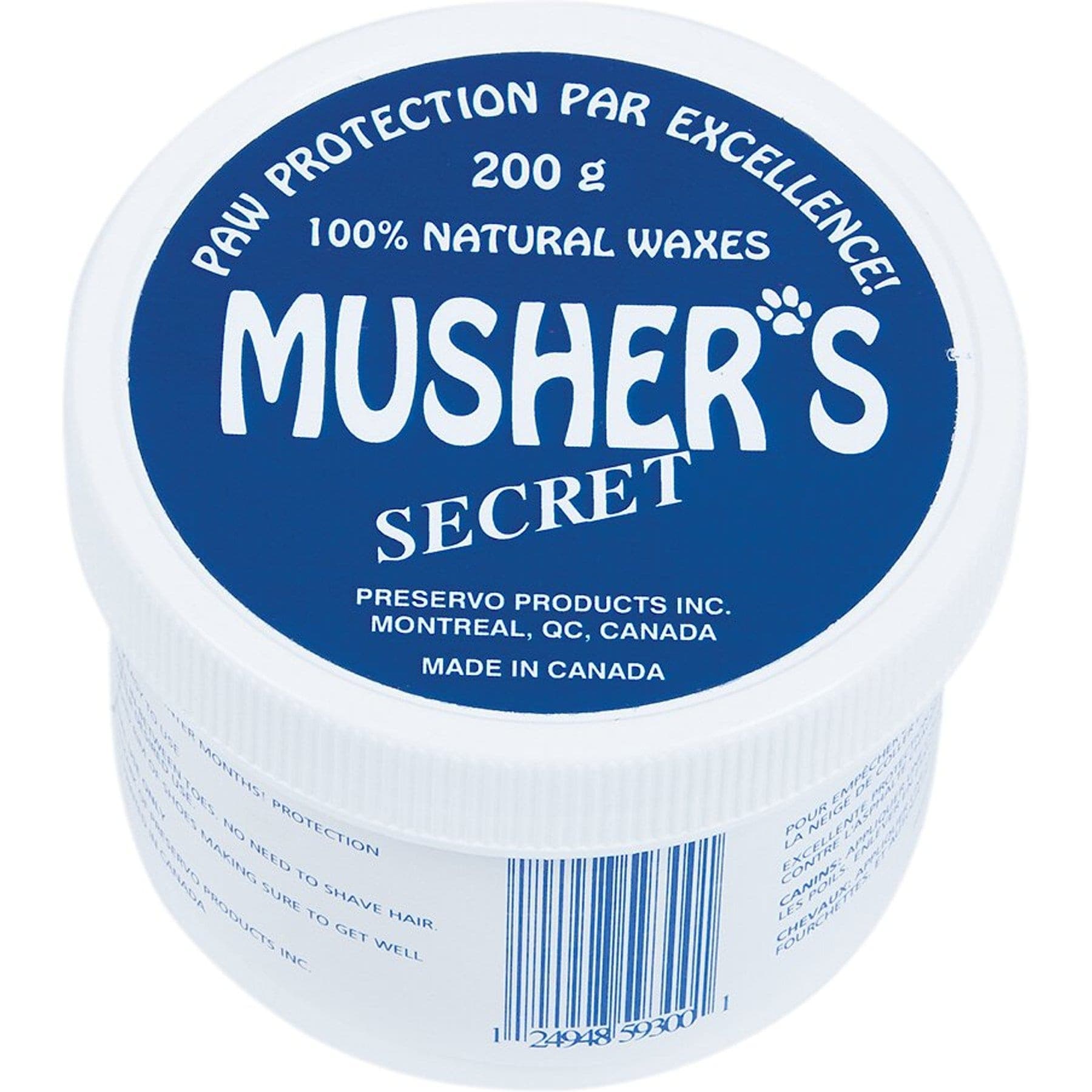
A natural wax barrier you rub on before salty, icy, or snowy walks to keep grit and de-icers off the pads.
Webvet may earn a commission when you click through to Chewy, at no extra cost to you.
Musher's Secret is the best known paw wax, and it is a wax, not a soft balm. Retailer ingredient text from Pet Market NYC describes a blend of beeswax, carnauba wax, and candelilla wax with oils and vitamin E. The maker's own website currently shows only a placeholder, so these specs come from retailers.
Who it suits:
- Dogs that walk on salted pavement or in snow most days.
- Dogs whose snow balls up between the toes; retailer directions say to work it between the pads in harsh cold.
- Owners who want a petroleum-free and lanolin-free option. Mud Bay lists it as free of soy, coconut oil, tea tree oil, nut oils, lanolin, and petroleum.
The retailer text calls the formula semi-permeable, absorbed into the pads while allowing perspiration to escape. Pet Market NYC also says it is non-toxic if pets lick their paws, which is a label claim rather than a veterinary finding.
The tradeoff: as a barrier wax, Musher's Secret is built for prevention. A dog with deep cracks needs a repair balm alongside it. Chewy listed the 200-g jar at $24.99 at the time of writing; Mud Bay lists a smaller 60-g jar.
Natural Dog Company Paw Soother: best for cracked and dry pads
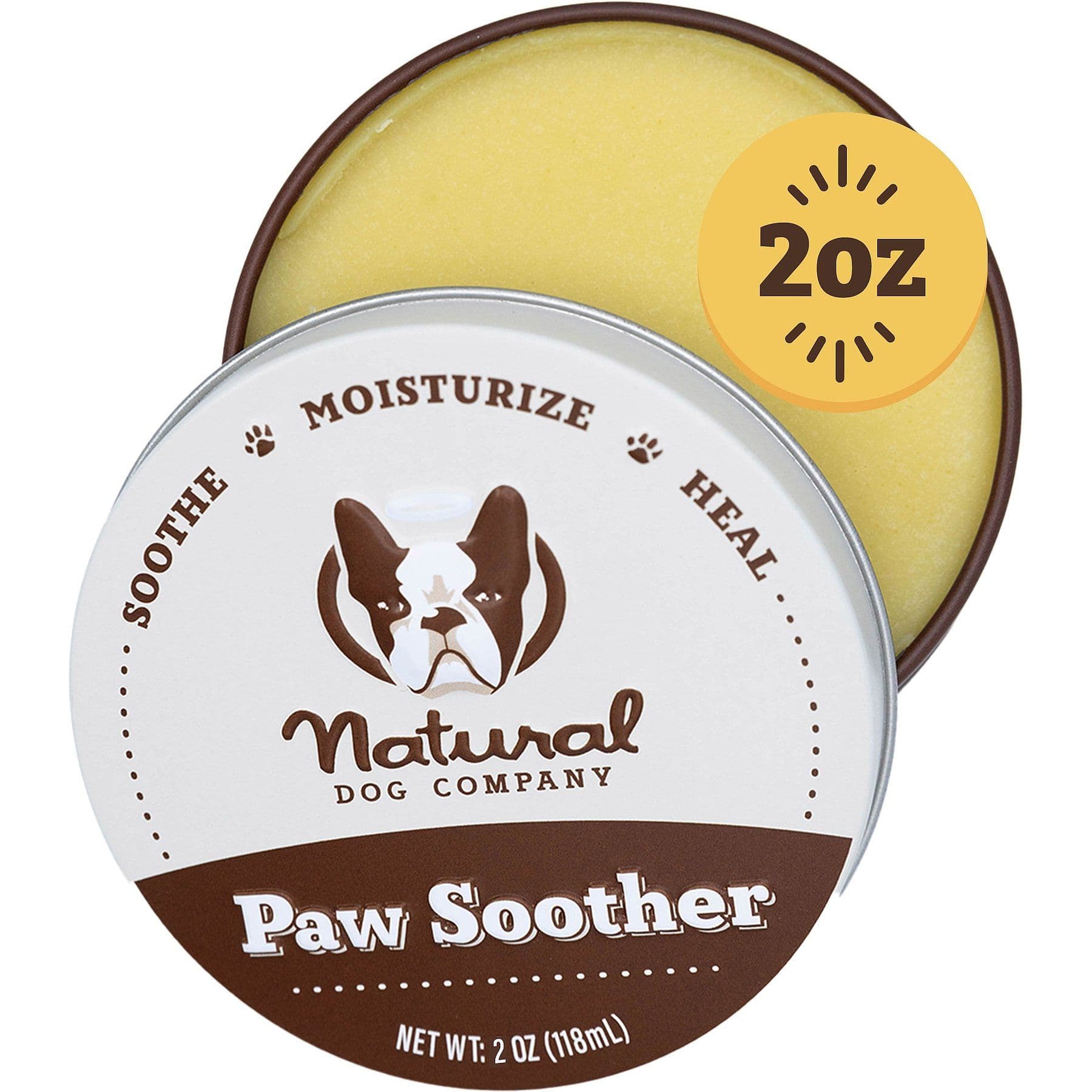
A plant-butter repair balm made for rough, dry, cracked pads that need softening rather than a barrier.
Webvet may earn a commission when you click through to Chewy, at no extra cost to you.
Paw Soother is a repair balm. Natural Dog Company markets it for existing damage: rough, dry pads and cracks. Its listed ingredients include:
- Base: organic coconut oil, candelilla wax, organic mango butter, and organic cocoa butter
- Additions: chamomile extract and vitamin E
- Featured botanicals: calendula, rosemary, jojoba, and hempseed
Who it suits:
- Dogs with cracked dog paws that need softening after winter walks.
- Owners who want a natural dog paw balm without beeswax or petroleum.
The maker also claims it eliminates excessive licking and itching from allergies. No veterinary source has tested that claim, and itchy, licked paws are worth a vet check on their own.
The tradeoff: Paw Soother contains cajeput essential oil. Pet Poison Helpline warns that concentrated essential oils can cause toxicity through skin or oral exposure, though it does not assess cajeput at balm strength, and no primary source has assessed this product. Price varies by tin size.
Natural Dog Company PawTection: best light everyday protector
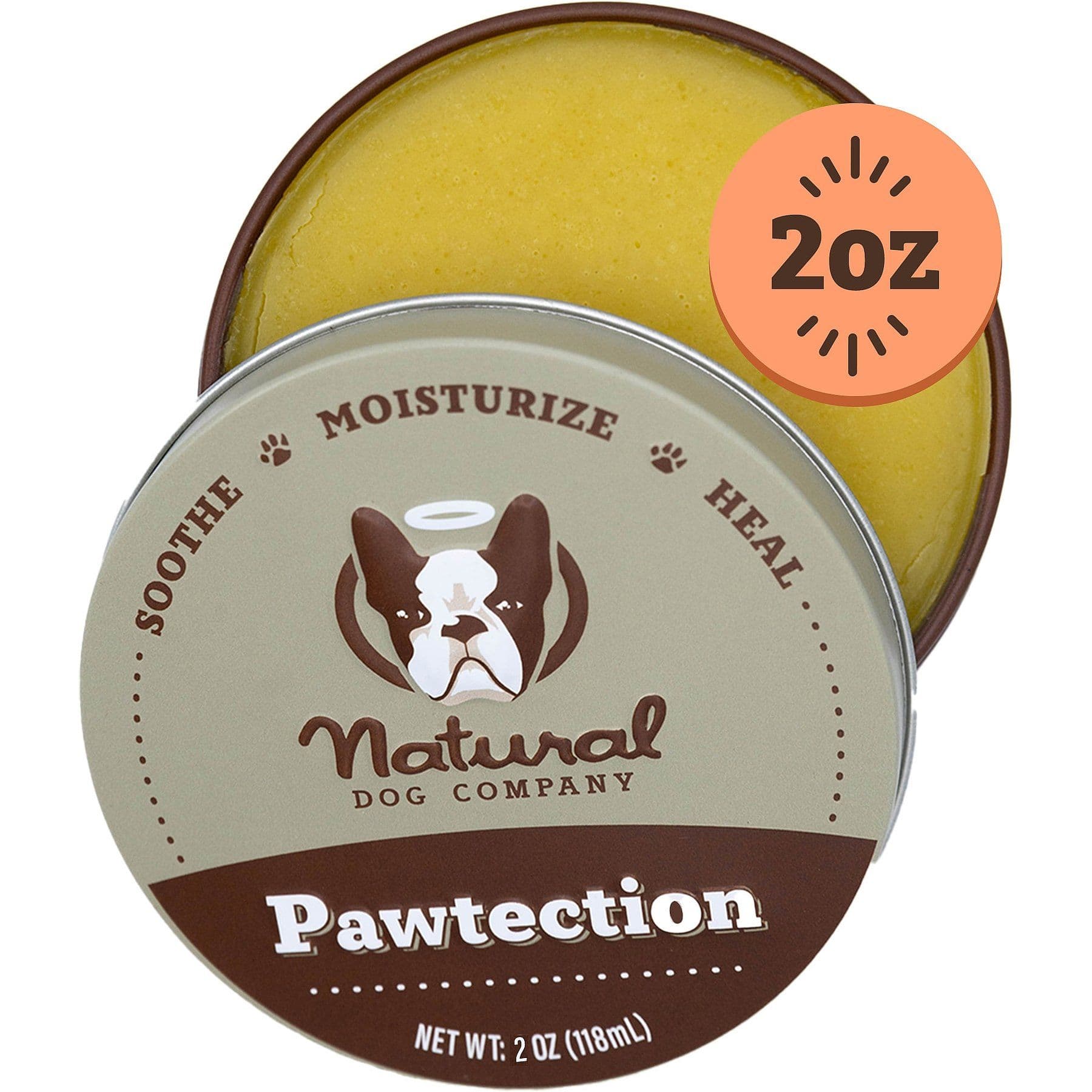
A plant-wax paw protector for daily use before going outside, with no beeswax or petroleum in the base.
Webvet may earn a commission when you click through to Chewy, at no extra cost to you.
PawTection is the protective partner to Paw Soother. Natural Dog Company says to apply it before any outdoor activity to defend against harsh temperatures, rough terrain, and pad injuries. The base is organic sunflower oil, candelilla wax, organic carnauba wax, sunflower wax, stearic acid, benzoin, and vitamin E.
Who it suits:
- Dogs that will not tolerate a thick wax but need daily protection.
- Owners who prefer a plant-wax formula with no beeswax or petroleum.
- Anyone pairing protection and repair; the maker suggests using it with Paw Soother.
Its featured ingredients include organic mango butter, rice bran oil, rosemary extract, and lavender essential oil. As with Paw Soother, Pet Poison Helpline flags essential oils generally, and no primary source has assessed this product. Because it contains lavender essential oil, limit licking until it soaks in.
The tradeoff: a softer balm suits daily wear, but a heavy wax may suit long salty walks better. Chewy listed the 2-oz tin at $18.95 at the time of writing.
Bag Balm Pet Nose, Paw and Hot Spot Moisturizer: best budget pick
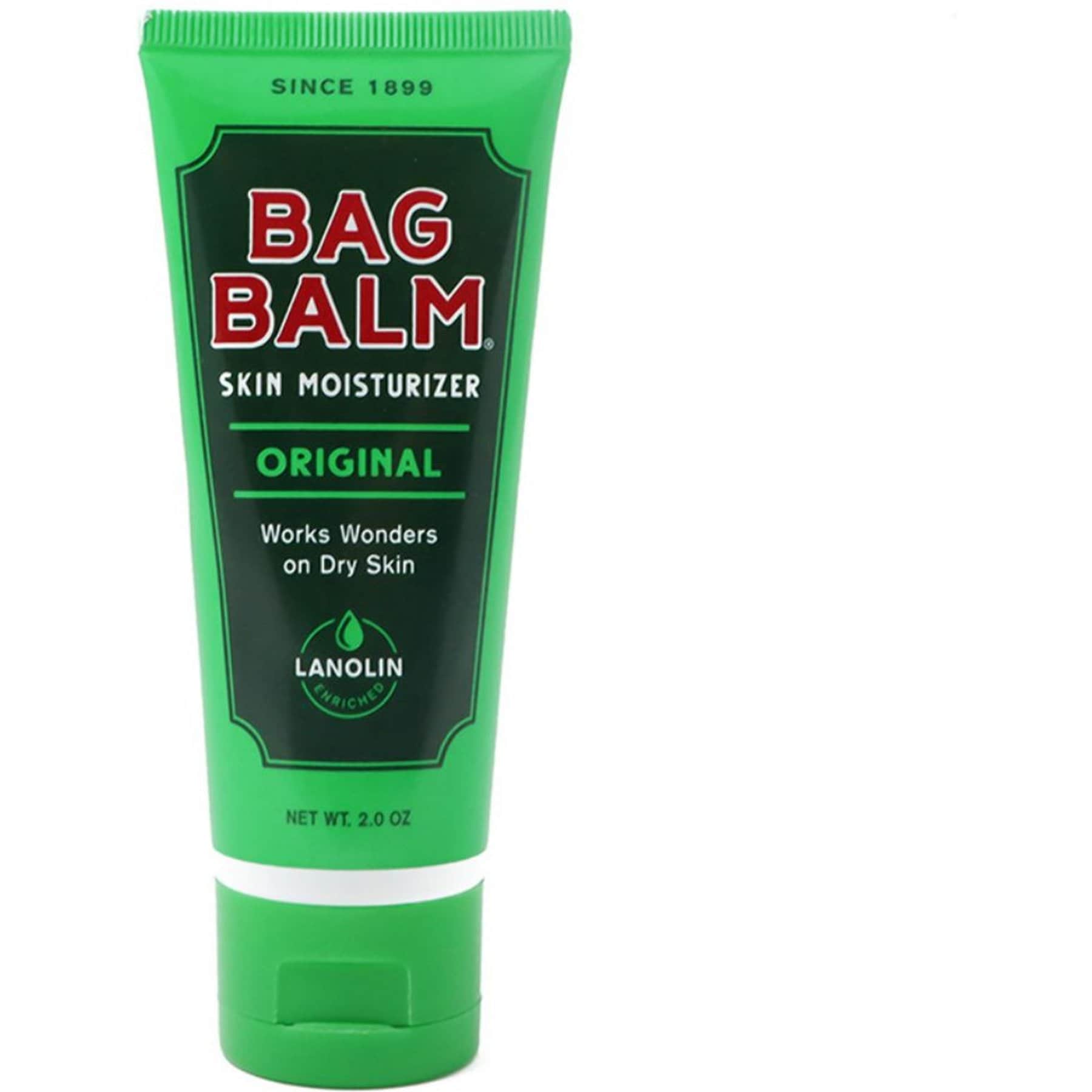
A low-cost lanolin and petrolatum ointment for softening cracked pads and dry noses, best used at bedtime.
Webvet may earn a commission when you click through to Chewy, at no extra cost to you.
Bag Balm is the budget repair option. The maker describes its Original formula as petrolatum to moisturize and lanolin to soften, with no added fragrance or colors. The pet-labeled tube is not listed on the maker's site, so we have not confirmed its full ingredient list.
Who it suits:
- Owners who want a cheap ointment for dry, cracked pads and noses.
- Dogs that can wear socks or booties after application; Bag Balm suggests covering treated paws while pads renew.
The tradeoff: petrolatum is a petroleum product, and the ASPCA says petroleum jelly is a laxative that can upset the stomach if swallowed. Use it at bedtime or under socks, not on a dog that will lick it straight off. Chewy listed it at $4.99 at the time of writing.
 Sponsored
Vet care that's always there
Unlimited video calls and messaging with licensed vets for less than a typical vet visit. One membership covers up to five pets.
Use code Pets30
Plans start at $11/month · covers up to 5 pets
- Licensed vets in most states
- Rx for 150+ conditions
- 4.7 on Trustpilot
Paw balm vs paw wax: protection before the walk or repair after
The labels overlap, but the jobs do not. A barrier wax is firm and sits on the surface to keep salt, ice melt, and sand off the pads. A repair balm is softer, built on oils and butters, and is meant to soften pads that are already dry or cracked.
Veterinary routines follow the same split. The ASPCA treats the barrier as a before-walk step. VCA says to wipe the paws when you get home, then add a thin protective layer of balm. That is protection first, care after.
| Product type | What it does | Best use | When to apply | Our pick |
|---|---|---|---|---|
| Barrier wax | Forms a protective layer on healthy pads | Salted sidewalks, ice melt, snow between the toes | Before the walk | Musher's Secret Paw Protection Wax |
| Light protective balm | Thinner plant-wax layer for daily wear | Everyday walks, dogs that dislike thick wax | Before going outside | Natural Dog Company PawTection |
| Repair balm | Softens dry, rough, cracked pads | Cracked or chapped pads after winter exposure | After wiping paws, or at bedtime | Natural Dog Company Paw Soother |
| Budget ointment | Petrolatum and lanolin moisturizer | Overnight softening under socks | Bedtime | Bag Balm Pet Nose, Paw and Hot Spot Moisturizer |

How to choose between them:
- Healthy pads, salty streets: a barrier wax such as Musher's Secret Paw Protection Natural Dog Wax, 200-g jar before each walk.
- Cracked pads now: a repair balm after the walk, plus a barrier before the next one.
- Severe salt, long walks, or a dog that will not keep wax on: booties. Our guide to the best dog boots compares options; the ASPCA names booties alongside wax as an excellent barrier.
Neither product replaces cleaner sidewalks. If you treat your own steps, our pet safe ice melt guide explains what the label really means.
Bag Balm, Vaseline, Aquaphor and other human products on dog paws
Many owners reach for what is already in the cabinet. Some human products are safe enough in a pinch, and some are unsafe and should never touch a dog. The deciding question is what happens when the dog licks it off, because most dogs will.
Camphor poisoning signs, per Pet Poison Helpline, include skin irritation, nausea, vomiting, diarrhea, and depression, with seizures possible after large amounts. The warning rests on camphor; we found no veterinary source on menthol alone in dogs.
Petroleum-based products such as Vaseline and Aquaphor are a different case. The ASPCA says they can cause mild vomiting and diarrhea if swallowed, and that vomited product can be inhaled into the lungs, risking aspiration pneumonia. Use them thinly, and stop the dog from licking.
Is bag balm okay for dog paws?
Yes, with care. Bag Balm's Original formula is petrolatum and lanolin, and the maker's pet blog names dry, cracked paws and noses, hot spots, flea bites, and dry skin. Because petrolatum can upset the stomach if licked, apply a thin layer at bedtime or cover the paws with socks.
Answers to the common Bag Balm questions:
- How to use Bag Balm on dogs: a thin layer on clean, dry pads, then socks or booties, as the maker suggests.
- Is Bag Balm safe for dogs to lick? Petroleum products mainly risk stomach upset, per the ASPCA, and larger amounts cause more severe upset. Do not let the dog lick it off.
- Bag Balm for dogs' hot spots and itching: the maker lists hot spots, but an itchy dog licking or chewing needs a diagnosis. See dog licking paws: here's what it could mean.
- Bag Balm for a dog's nose or dry nose: the maker lists noses. Use a thin film, since a dog licks its nose constantly.
- Bag Balm for a dog's ears: the maker does not list ears, and ear problems need a vet exam.
- Bag Balm for an open wound: no. VCA advises a vet visit even for minor pad injuries.
- Bag Balm for nursing dogs: puppies would swallow it from the teats, so ask your vet first.
- Where to buy Bag Balm for dogs: the pet-labeled tube is sold through pet retailers such as Chewy; the maker sells the Original formula.
Can I put paw paw ointment on my dog's nose?
No primary veterinary source covers papaw (paw paw) ointment on dogs, so there is no direct answer. Reasoning from ASPCA guidance: if the ointment is petroleum-based, swallowing it can cause stomach upset, and a dog licks its nose constantly. A dog-specific nose balm is the safer choice.
How to apply paw balm and how often
Application frequency and technique matter as much as the product. Here is how to apply dog paw balm in a winter routine built on VCA and ASPCA guidance:
- Start with clean, dry paws. Balm traps whatever is already on the pad.
- Put paw balm on the dog before the walk. VCA says to apply a thick layer before heading out.
- Work it between the pads in snow. Musher's Secret retailer directions say to rub between the pads in harsh cold to prevent snowballing.
- Wipe paws as soon as you get home. The ASPCA says to use a damp cloth or baby wipes, and to wash and dry feet and belly after each walk to remove salt and chemicals.
- Add a thin layer afterward. VCA suggests a thin protective balm layer after wiping.

How often should I apply dog paw balm?
No veterinary source gives a set frequency. VCA says to apply before the walk and again after wiping. Retailers disagree on wax: Chaletnursery's Musher's Secret text says 1 to 2 times a week year-round, while Mud Bay says 2 to 3 times a week. Natural Dog Company says Paw Soother can go on 1 to 3 times daily on damaged pads.
If your dog licks off paw balm, these steps help:
- Distract the dog. Natural Dog Company's directions are to distract, apply, and reward; a treat or toy for a few minutes lets the balm absorb.
- Apply at bedtime for repair balms, when the dog is settling down.
- Use socks or booties over petrolatum products.
- Pick a lick-safe dog paw balm with a food-style base and no essential oils, camphor, or zinc oxide.
A dog paw balm to stop licking does not exist as such. Persistent licking points to an itch or pain a balm cannot fix.
Want a homemade or DIY dog paw balm for winter? No veterinary source we found publishes a tested recipe, so we do not give one. If you make your own anyway, keep to food-grade waxes and oils, and leave out essential oils, camphor, and zinc oxide.
Cold itself is part of the picture. Short walks in deep cold limit exposure; our guide on how cold is too cold for dogs has the details.
When cracked or sore paws need a vet, not a balm
Balm is for dry, chapped, or mildly cracked pads, and a few vet red flags mean it is the wrong tool. VCA's cold-weather guidance says to contact your veterinarian if pads become irritated or cracked, and its first aid guidance advises a vet visit even for minor pad injuries.
Call your vet if you see:
- Bleeding that will not stop; VCA says bleeding that continues after 10 to 15 minutes is an emergency.
- A pad wound that keeps bleeding or gapes open after three days.
- Swollen toes, a bad smell, or moist discharge.
- Limping, or pads that are bleeding from ice melt exposure.
- Thick, hard, or horn-like pads.
That last sign can be hyperkeratosis. The Merck Veterinary Manual describes an inherited form in Irish Terriers and Dogues de Bordeaux, and says treatment focuses on relief of signs, often including soaking the footpads. Merck notes that severe cases cause horns, fissures, and secondary infection with pain and lameness.
Hyperkeratosis can also be acquired. A PubMed Central case report lists repeated trauma, infections, cancer, and inflammatory skin disease as causes. A vet needs to find the cause; our guide to hyperkeratosis in dog paws explains what to expect.
Dog paw balm questions
Frequently Asked Questions
Is Bag Balm basically Vaseline?
Not quite. Vaseline is petroleum jelly, while Bag Balm's Original formula combines lanolin and petrolatum, so it shares the petroleum base and adds lanolin to soften. Both can upset a dog's stomach if licked.
Is Tiger Balm the same thing as Bag Balm?
No. Tiger Balm is a muscle rub containing camphor and menthol, and Pet Poison Helpline lists it among camphor products that should never be applied to dogs or cats. Bag Balm is a petrolatum and lanolin moisturizer. The rule for Tiger Balm is simple: never on a dog, on any part of the body.
What's better, Aquaphor or Bag Balm?
No veterinary source compares them directly, so this answer reasons from ASPCA guidance. Both are petrolatum-based, and the ASPCA names Aquaphor with Vaseline as products that can cause mild vomiting and diarrhea if swallowed. The ingestion risk is similar, so the better choice is whichever you can keep the dog from licking, or a dog-specific balm.
Can my dog lick paw balm?
A little licking is hard to prevent, so choose a balm with lick-safe ingredients such as food-grade waxes and oils, and avoid essential oils, camphor, zinc oxide, and heavy petroleum products. Distract for a few minutes with a treat or toy while it absorbs. After ice melt exposure, the ASPCA says to minimize licking until paws are completely clean.
Does paw balm protect against ice melt and salt?
It helps. VCA says balm creates a barrier against salt and deicers, and a wax barrier works best applied before the walk. It does not replace cleaning: rinse paws after every walk. The ASPCA says swallowing too much ice melt can raise sodium levels and cause tremors and seizures, and that no rule governs a "pet safe" de-icer label.

Editor
The Webvet Editorial Team is the in-house group of pet-care editors and writers behind Webvet, operated by Smart Pet Collective. The team researches, writes, and maintains Webvet's pet health, behavior, and medication content. Every article follows a defined editorial process: research from reputable veterinary and scientific sources, careful drafting, mandatory review of medical content by a credentialed veterinarian, and dated publication. Health and medication articles are medically reviewed by a licensed veterinary professional before they go live and are kept current over time.
Veterinarian · BVMS MRCVS
Dr. Pippa Elliott, BVMS, MRCVS, is a veterinarian with nearly 30 years of experience in companion animal practice. Dr. Elliott earned her Bachelor of Veterinary Medicine and Surgery from the University of Glasgow. She was also designated a Member of the Royal College of Veterinary Surgeons. Married with 2 grown-up kids, Dr. Elliott has a naughty Puggle named Poggle, 3 cats and a bearded dragon.


