Dog Elbow Callus: Causes, Treatment, and When to Worry
An elbow callus is thick, hairless skin a dog builds over a pressure point, and most need padding and softer bedding rather than treatment. How to tell a callus from a hygroma or an infected callus, safe home care, and the signs that need a vet.

BVMS MRCVS
Medically reviewed by Dr. Pippa Elliott, BVMS MRCVS · Last reviewed

This article contains affiliate links. Webvet may earn a commission when you buy through them, at no extra cost to you.
Dog elbow callus: what it is, and when a vet says leave it, treat it, or check it
A dog elbow callus is a patch of thickened, hairless skin that forms where the bony point of the elbow meets the floor each time a dog lies down. The Merck Veterinary Manual describes the callus as part of the body's cushioning response to repeated pressure at that pressure point.
Most dog elbow calluses need padding and softer bedding rather than treatment. A soft, fluid-filled swelling at the same spot may be a hygroma instead. Cracking, bleeding, pus, heat, swelling, or pain point to an infected callus, which needs a vet.
- 1Why calluses form over pressure points: the elbow takes the dog's weight on hard floors, and the skin thickens to cushion it.
- 2A hygroma versus a callus: a hygroma is a soft, fluid-filled swelling, while a callus is dry, firm, thickened skin.
- 3A dry, intact callus usually needs padding, softer bedding, and a dog-labeled balm at most.
- 4Redness, swelling, pus, bleeding, odor, or pain means an infected callus and a vet visit.
The thickening has a name. Vets call it hyperkeratosis, which a 2025 study in Veterinary Sciences defines as an increased thickening of the stratum corneum, the outer layer of skin. The ISCAID pyoderma guidelines list the usual callus changes as hyperkeratosis, lichenification (leathery skin), and hyperpigmentation (darkening).

Are dog elbow calluses bad? On their own, usually not. A callus is a protective response, and an intact one is mostly a cosmetic change. The problems start when the callus cracks, becomes infected, or sits on top of a fluid-filled hygroma.
Will dog elbow calluses go away? Not on any set timeline. Vets focus on stopping a callus from getting worse rather than on making it disappear. Reducing the pressure that built it is the change that matters most.
Here is how vets sort the three situations:
- Leave it and pad it: a dry, firm, hairless callus with no cracks, heat, or discharge.
- Protect it and watch it: a soft, painless, fluid-filled swelling under the callus, which may be a hygroma.
- See a vet now: redness, swelling, heat, pus, blood, odor, open sores, limping, or a lump that grows fast.
For a dry, intact callus, many owners add a thin layer of a dog-labeled elbow balm while they fix the bedding. Choose one sold for dogs, apply it to unbroken skin only, and follow the label directions.
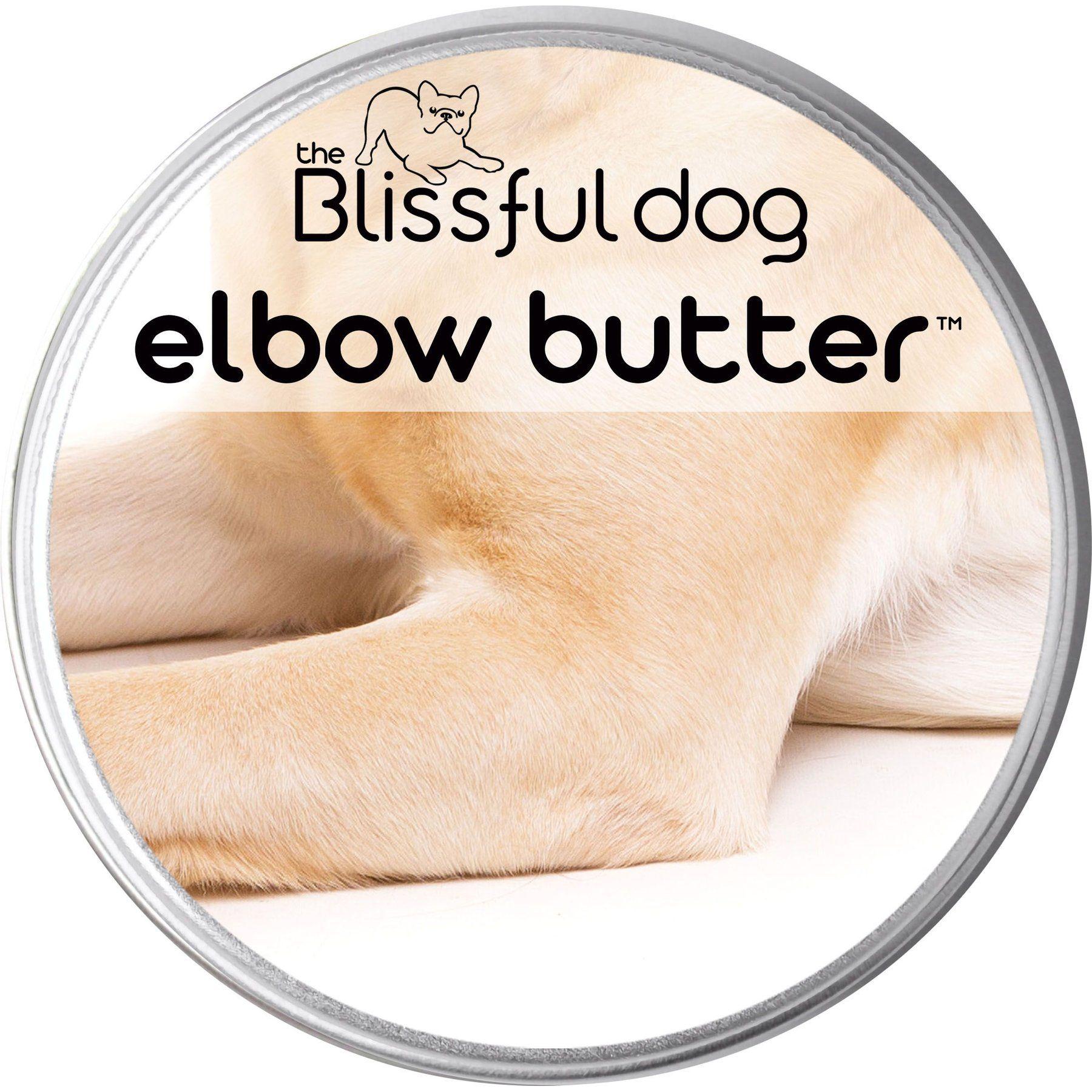
A dog-labeled elbow balm for moisturizing a dry, intact, uninfected elbow callus between bedding changes.
Webvet may earn a commission when you click through to Chewy, at no extra cost to you.
Why dogs get elbow calluses: pressure points, body size, hard floors, and lying habits
A dog elbow callus is caused by simple pressure, repeated many times a day, in a puppy and a senior alike. When a dog lies on its chest with the front legs folded, the bony point of each elbow carries weight against the floor. Merck shows the callused, hairless skin sitting exactly where that bony prominence touches the floor.
Why dog elbow callus?
A dog gets an elbow callus because repeated pressure on hard surfaces irritates the skin over the bony elbow, and the skin thickens to protect itself. The ISCAID guidelines name large breeds, heavy weight, and sleeping on hard surfaces as the predisposing factors for pressure point infections, and the same pressure drives the callus underneath.
The main causes of a dog elbow callus fall into a few groups:
- Body size and weight: large dogs and heavy dogs press more weight into a small patch of skin.
- Hard floors: tile, concrete, and hardwood give the elbow no cushioning.
- Lying habits: dogs that sprawl on bare floors, or spend long hours lying down, load the elbows more often.
- Mobility: Merck notes that the repeated trauma behind elbow swellings can come from impaired movement or long periods lying on hard surfaces.
Big dogs carry the most risk. Merck lists large and giant breeds, including the German Shepherd Dog, Great Dane, Mastiff, Newfoundland, Saint Bernard, and Irish Wolfhound, as the dogs most often affected by elbow hygromas, which grow from the same pressure. For a German Shepherd or any heavy breed on that list, Merck's advice to pad the pressure points of dogs that lie on hard surfaces applies directly.
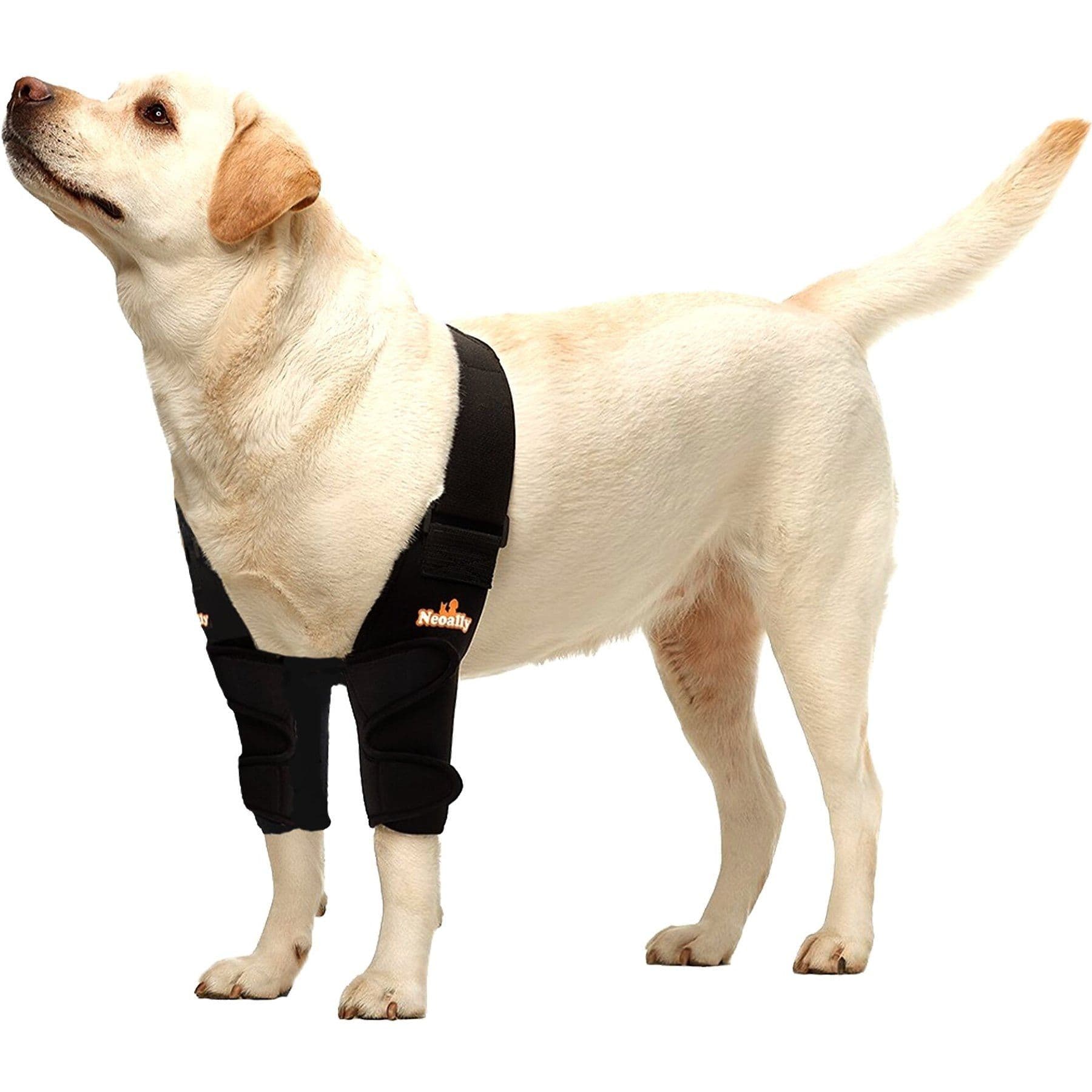
A padded protector for both elbows that cushions the pressure point while a dog lies on hard floors.
Webvet may earn a commission when you click through to Chewy, at no extra cost to you.
Older dogs have their own pattern. Merck notes that elbow hygromas are common in older dogs with elbow osteoarthritis, and links the repeated trauma to impaired movement and long hours lying down. If a callus appears in an older dog, joint problems such as elbow dysplasia in dogs and arthritis are worth raising with your vet.
Body size matters for joints as well as skin. WebVet's guide to how size affects arthritis in dogs explains why bigger dogs carry more load through each limb. If a callus appears alongside stiffness or limping, mention both to your vet.
 Sponsored
Want a vet's take on your dog's skin or coat?
Talk to a licensed vet at Dutch over video, often the same day. They can recommend treatment and prescribe it when it's appropriate.
Use code Pets60
Plans start at $12/month · covers up to 5 pets
- Licensed vets in most states
- Rx for 150+ conditions
- 4.7 on Trustpilot
Callus, hygroma, or infected callus: how to tell them apart
An owner can tell a callus, a hygroma, and an infected callus apart by matching what they see and feel on the elbow to the likely problem and the next step: pad it at home, watch it, or see a vet.
| What you see and feel | Likely problem | Next step |
|---|---|---|
| Dry, firm, darkened, hairless patch of thick skin; no heat or pain | Uncomplicated callus | Leave it and pad it: softer bedding, elbow padding, dog-labeled balm on intact skin |
| Soft, squishy, fluid-filled swelling over the elbow point; dog does not mind it being touched | Possible hygroma | Protect it and watch it: pad the elbow, add soft bedding, and have your vet confirm it |
| Red, swollen, hot, or painful skin; cracks, crusts, pus, blood, or odor | Infected callus (callus pyoderma) | See a vet now; do not try to treat it at home |
| Lump that grows fast, feels hard, or looks unlike the other elbow | Needs a diagnosis | See a vet; other lumps can look similar |
Pictures can help you recognize the basic look, but touch tells you more than a photo. An early-stage callus is usually a small, darkened, hairless patch right on the point of the elbow. The skin feels dry and firm, and the dog shows no discomfort when you touch it.
A hygroma feels different. Merck describes it as a fibrous sac filled with fluid that develops over a pressure point, and the typical finding is a soft, fluid-filled, painless swelling, most often at the elbow. WebVet's full guide to hygroma in dogs covers drainage, surgery, and recovery in depth.
An infected callus looks angry rather than leathery. The ISCAID guidelines call it callus pyoderma, a deep bacterial infection that complicates the thickened callus skin. Merck's photo of an uncomplicated elbow hygroma shows how calm a non-infected elbow looks by comparison.

A vet usually tells these apart with a physical exam. Merck notes that X-rays or ultrasound can help, and lists a true cyst, a callus, infectious dermatitis, and benign or malignant tumors among the look-alikes for a hygroma. The ISCAID guidelines add deep fungal infection and other deep bacterial infections to the list for an infected callus.
Do dog hygromas go away on their own?
Not reliably. The Merck Veterinary Manual states that there is no ideal treatment to resolve elbow hygromas. Small, early ones can be managed by a vet with specialized bandaging or sterile needle drainage, followed by softer housing. Merck adds that a long-lasting hygroma can develop ulcers, infection, and abscesses, so early padding matters.
Merck also lists laser therapy and shock wave therapy as options for smaller hygromas, and warns against steroid injections into a hygroma because infection has been reported after them. Those are decisions for your vet after an exam.
 Sponsored
Vet care that's always there
Unlimited video calls and messaging with licensed vets for less than a typical vet visit. One membership covers up to five pets.
Use code Pets60
Plans start at $12/month · covers up to 5 pets
- Licensed vets in most states
- Rx for 150+ conditions
- 4.7 on Trustpilot
How to care for a dog elbow callus at home: balms, softening, and what not to use
Treatment for an intact, uninfected callus starts with pressure, not cream. Any balm only softens the surface while the dog keeps grinding the same spot into the floor. The home routine is short:
- Check both elbows for cracks, heat, discharge, or swelling before anything else.
- Move the dog's favorite resting spots onto padding or a thick bed.
- Apply a thin layer of a dog-labeled balm to dry, unbroken skin, following the label.
- Distract the dog or take a short walk afterward so the balm absorbs instead of getting licked.
- Recheck the elbow every few days and stop the balm if the skin breaks.
Choosing what to put on the elbow mostly comes down to what happens when the dog licks it, so a product sold for dogs, with directions written for dogs, is the simpler choice. The Blissful Dog Elbow Butter, 4-oz is a butter-and-oil balm sold specifically for calluses, listed at $20.95 on Chewy when checked in November 2026.
Dermoscent BioBalm Skin Repairing Dog Balm, 1.67-oz jar is described in its listing as made without mineral oil or petroleum-based ingredients, with calloused pressure points among its stated uses. Natural Dog Company Skin Soother Dog Healing Balm, 2-fl oz tin is sold as a moisturizing balm for dry skin. Use either only on intact skin.

Be realistic about what a balm can do. Evidence for moisturizing thick, localized skin in dogs is thin. A 2025 pilot study of a balm for nasal hyperkeratosis in 20 dogs found signs improved with no adverse events, but the authors called the results preliminary and noted that management options are poorly documented. WebVet's guide to dog paw balm covers how to choose a balm in general.
How to heal a dog elbow callus depends on the skin: a dry, intact one needs less pressure and no licking, while one that has cracked or opened needs a vet before anything goes on it. For an intact callus, taking away the pressure comes first; a balm alone will not remove one. Clearing the callus completely is the wrong goal while the dog still lies on hard floors, because the callus is the skin's cushion.
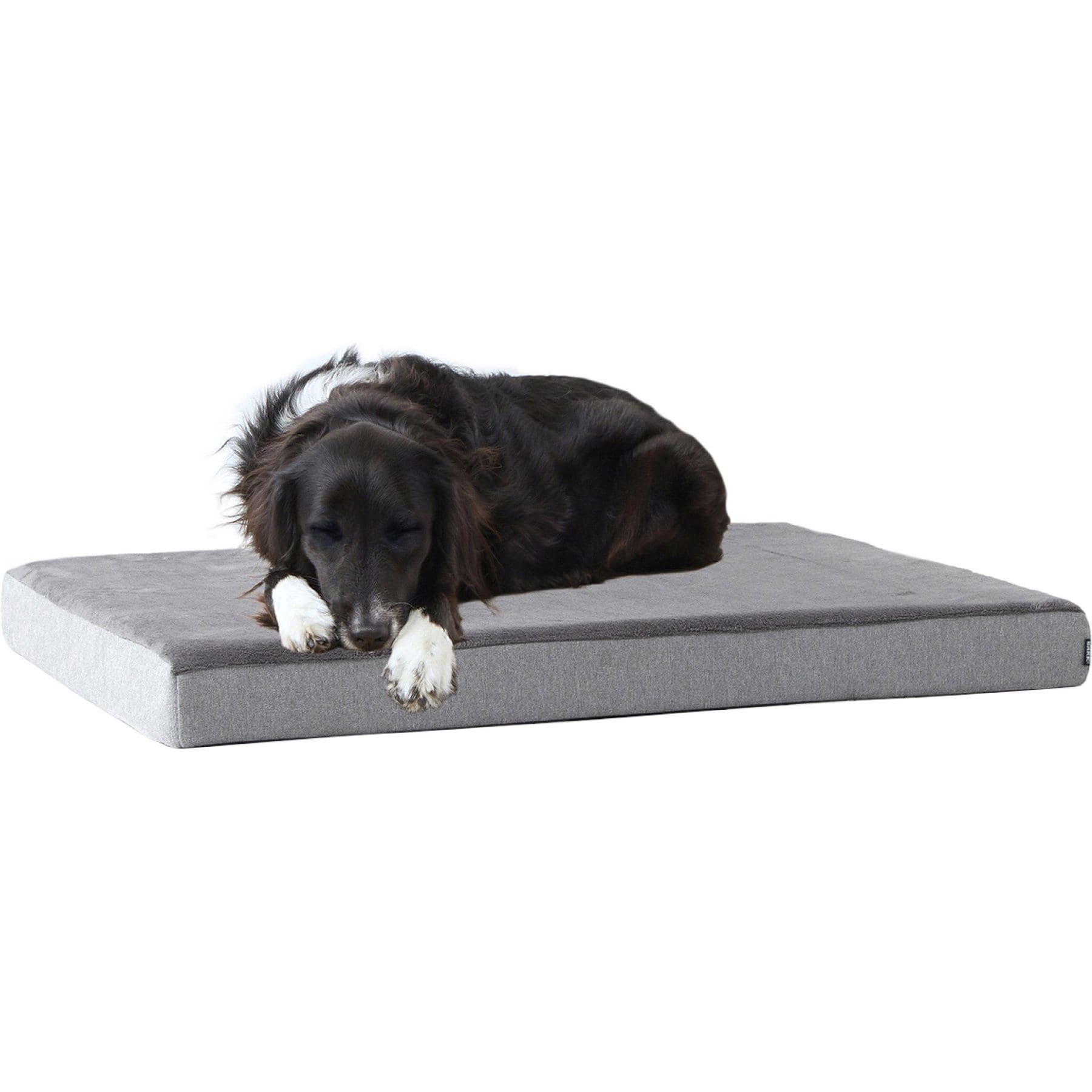
A memory foam orthopedic bed that spreads a large dog's weight away from the elbow pressure points.
Webvet may earn a commission when you click through to Chewy, at no extra cost to you.
Home remedies need the same licking test:
- Coconut oil: the ASPCA says coconut products in small amounts are not likely to cause serious harm, but the oils may cause stomach upset, loose stools, and diarrhea when eaten.
- Vaseline (petroleum jelly): the ASPCA notes it is a laxative, and if a dog vomits after eating it, it can be inhaled and cause aspiration pneumonia.
- Zinc oxide creams: Pet Poison Helpline warns that zinc oxide ointments can cause vomiting when licked off.
- Bag balm and other livestock or human balms: read the label, because they are not labeled with a licking dog in mind.
Never try to remove a callus at home. Do not cut, file, or peel the callus, and use a dog cone if your vet wants the area left alone while it settles.
Can I put neosporin on my dog's elbows?
Only if your vet says so. Pet Poison Helpline says Neosporin is acceptable for slight cuts and abrasions with your vet's guidance, but a dog can lick it off. Merck notes that triple antibiotic ointments usually cause only mild stomach upset when licked, though some versions add steroids or numbing agents.
The bigger issue is that an intact callus is not a cut, so an antibiotic ointment adds nothing. An infected callus is a deep infection, and Merck reserves systemic treatment for deep pyoderma, with topical care only as an add-on. That needs a vet's exam and treatment plan instead.
Elbow pads, sleeves, and bedding that take pressure off a callus
Protecting the elbow means putting something soft between the bony elbow and the floor. The Merck Veterinary Manual states that soft bedding and padding over pressure points is important to prevent further trauma, and that dogs who lie on hard surfaces can wear padding over pressure points.
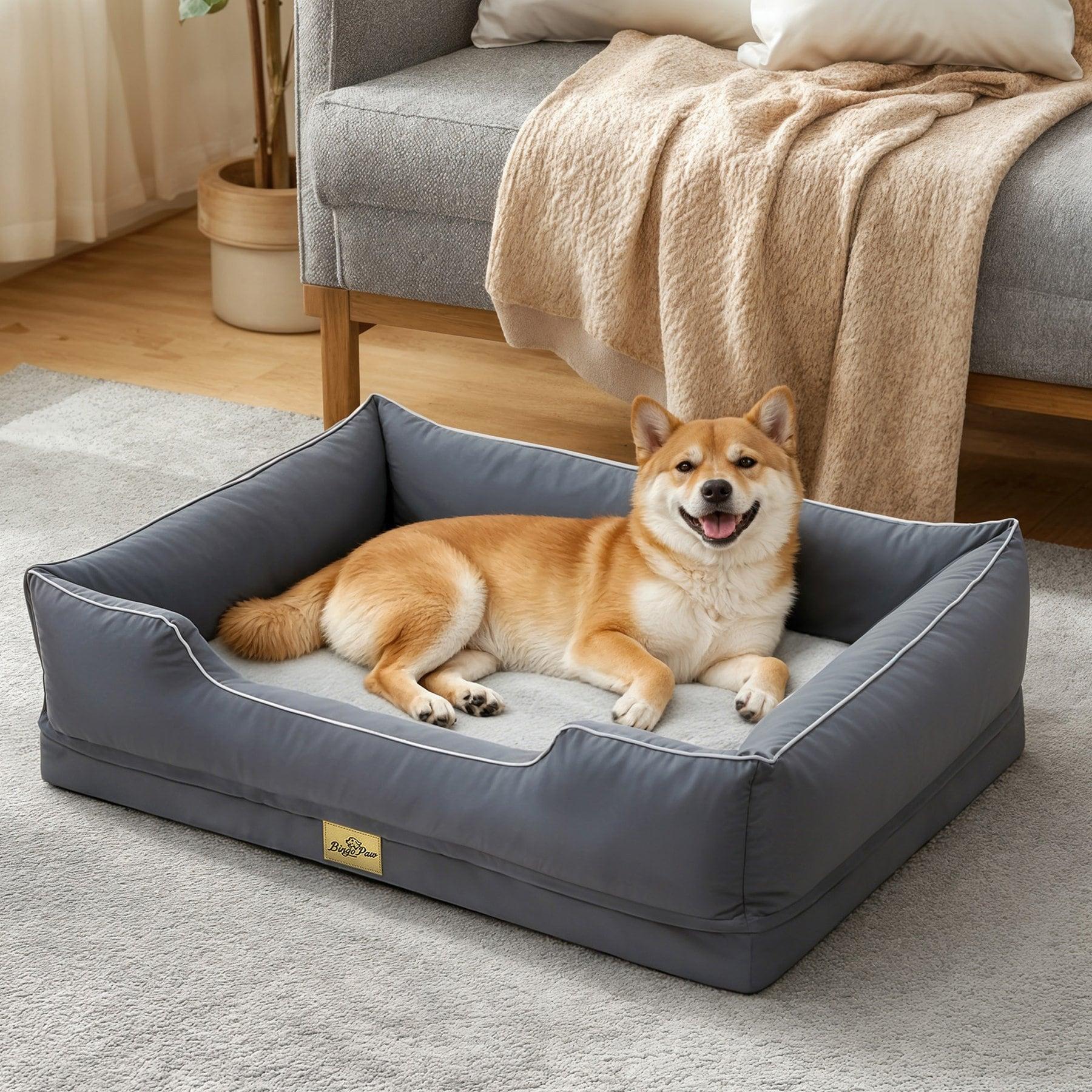
A bolster orthopedic bed for dogs that like to lean or curl, giving the elbows a cushioned place to rest.
Webvet may earn a commission when you click through to Chewy, at no extra cost to you.
A dog elbow pad usually comes as a sleeve, a cuff, or a brace with a built-in cushion over the elbow point. Merck includes a photo of a dog fitted with protective elbow padding for hygroma management. The options break down like this:
- Sleeves: these slide up the front leg and hold a pad over the elbow.
- Cuffs and protectors: these strap around the leg so the pad stays put when the dog lies down.
- Two-leg braces: these cover both elbows at once, which suits dogs with calluses on both sides.
- Bandages: a bandage over the elbow is something your vet should place; Merck lists specialized bandaging as a vet-managed option for small hygromas.

NeoAlly Elbow Protector Dog & Cat Support Brace, Both Legs, Medium is a padded protector for both elbows, listed at $79.95 on Chewy when checked in November 2026. A lower-cost option is the Labra Canine Dual Shoulder Elbow Dog Brace Wrap, Medium, a dual-sided shoulder and elbow wrap listed at $39.95 on Chewy when checked in November 2026; check the listing photos to confirm it covers the elbow point.
Fit matters with any elbow protector. Measure according to the maker's chart, check the skin under the pad daily for rubbing or moisture, and take it off if the dog chews it. A pad should never sit over an open, oozing sore without your vet's advice.
Bedding does the rest. The BARK Orthopedic Dog Bed, Large, Grey uses high-density memory foam, according to its listing, and is listed at $47.49 on Chewy when checked in November 2026. A thick orthopedic bed only helps if the dog actually uses it, so put it where the dog already likes to rest.
When a dog elbow callus needs a vet: bleeding, swelling, pus, and pain
An infected elbow callus is a deep skin infection, not a cosmetic problem. The ISCAID guidelines classify callus pyoderma as a localized deep pyoderma, and Merck notes that pressure points such as elbows and hocks are prone to infection, possibly because chronic pressure irritates and ruptures hair follicles.
Signs of infection to watch for:
- A callus that is red and swollen, or warm to the touch.
- Pus, an abscess, or a draining hole in the skin.
- Bleeding, crusts, or scabs on the callus.
- Odor from the elbow, pain when touched, or limping.
- Pressure sores: Merck notes that severe elbow lesions can develop into decubital ulcers, the medical name for pressure sores.
What does an infected callus look like on a dog?
An infected callus looks red, swollen, crusted, and often wet, rather than dry and firm. The Merck Veterinary Manual owner guide to pyoderma lists the signs of deep pyoderma in dogs as pain, crusting, odor, and secretions of blood and pus, with redness, swelling, ulceration, scabs, and blisters also possible. Pressure points such as the elbows are prone to it.
Photos of severe cases show these changes, but a photo cannot tell you how deep an infection goes. Treatment for a dog elbow callus infection, which vets call callus pyoderma, depends on a vet's tests, not on what the elbow looks like from the outside.
How to treat dog elbow callus bleeding is a vet question too. The visit starts with an exam to find out whether the skin simply cracked or the bleeding comes from an infection underneath. What owners can expect from that care:
- Testing: Merck advises basing treatment on bacterial culture and susceptibility results rather than guessing.
- Deeper samples: a vet may sample from deeper tissue, since surface swabs often miss the bacteria in deep infections.
- Time: Merck's owner guide states that long-term, recurrent, or deep pyodermas typically require 8 to 12 weeks or longer to heal completely.
- Patience: improvement may not show for 14 to 21 days, so rechecks and finishing the full plan matter.
Why is my dog licking their elbows?
Licking usually means the elbow feels sore, itchy, or irritated, and it can also become a habit. Merck classes acral lick dermatitis as a self-directed repetitive behavior, and notes that deep pyoderma can develop in areas a dog licks. Constant licking of a callus is a reason for a vet check.
Itchy skin conditions such as dermatitis in dogs can also start the licking. For dogs that lick their paws rather than elbows, WebVet's guide to what paw licking could mean explains what owners can put on a paw and when to call the vet.
Hair loss away from the elbows is a different problem from a callus. If bald patches show up elsewhere on the body, see the guide to hair loss in dogs. Odor from an elbow is also different from the corn-chip smell owners notice on paws, covered in why do dogs' feet smell like Fritos.
Preventing elbow calluses in large, lean, and senior dogs
Prevention is the same change that helps an existing callus: less time on hard floors. The ISCAID guidelines include providing softer surfaces for play and rest as part of managing deep pyoderma, and they say a dog's environment is part of diagnosing callus pyoderma.

Practical steps for large, lean, and senior dogs:
- Start soft bedding early in large and giant breed puppies, since Merck notes elbow hygromas typically appear between 6 and 18 months of age.
- Put rugs or foam mats where the dog naps on tile, concrete, or hardwood.
- Keep the dog at a healthy weight, since heavy weight is a listed risk for pressure point infection.
- Ask your vet about joint pain in a senior dog that drops heavily onto its elbows.
- Check elbows during routine grooming, such as when you trim your dog's nails.
The ISCAID guidelines single out short-coated, deep-chested dogs for pressure infections over the breastbone, so lean, short-coated dogs deserve the same bedding and padding steps as heavier dogs. A bolster bed suits dogs that like to lean or curl against a side. The BingoPaw Orthopedic Bolster Dog Bed, Grey, Large uses high-density foam with padded bolsters, according to its listing, and is listed at $69.99 on Chewy when checked in November 2026.
The goal is a dog that chooses soft surfaces on its own. Put the bed where the family spends time, and the elbows get a break without any extra effort.
Dog elbow callus questions
Frequently Asked Questions
Will a dog elbow callus go away?
Veterinary guidance does not promise that a callus will disappear, and the thickened skin is there for a reason while the dog keeps lying on hard floors. Softer bedding and elbow padding are what change the outlook, because the callus formed to cushion repeated pressure on the bony elbow.
Can I use coconut oil on my dog's elbow callus?
Coconut oil is not dangerous in small amounts, but most dogs lick it off, and the ASPCA notes coconut oils can upset the stomach and cause loose stools. A dog-labeled balm applied thinly to intact skin is the safer choice, and it is worth asking your vet first.
Can I put Vaseline on a dog elbow callus?
It is better not to. Petroleum jelly is a laxative if eaten, and dogs tend to lick it off an elbow. The ASPCA also warns that if a dog vomits after eating it, the jelly can be inhaled and cause aspiration pneumonia.
Is Bag Balm safe for a dog elbow callus?
Read the label before using any balm made for people or livestock, and check every ingredient with your vet. A dog will lick whatever sits on its elbow, so a product sold for dogs, with directions written for dogs, is the simpler option for an intact callus.
Should a dog elbow callus be removed?
Removing a simple callus is not the goal, since the thickened skin protects the elbow. Even for large hygromas, Merck notes that surgery has a high complication rate, including poor healing of the repair, which is why some cases need skin grafting.
Why is my dog's elbow callus bleeding?
Bleeding means the skin over the callus has cracked or become infected. Blood and pus are signs of a deep skin infection, so a bleeding callus needs a vet exam rather than home treatment, especially if the elbow is also swollen, warm, or painful.
Are elbow calluses bad for dogs?
An intact callus is protective rather than harmful: it is thickened skin cushioning a pressure point. It becomes a problem when it cracks, ulcerates, or develops an infection, which is why padding, soft bedding, and regular elbow checks matter for big and senior dogs.
Veterinarian · BVMS MRCVS
Dr. Pippa Elliott, BVMS, MRCVS, is a veterinarian with nearly 30 years of experience in companion animal practice. Dr. Elliott earned her Bachelor of Veterinary Medicine and Surgery from the University of Glasgow. She was also designated a Member of the Royal College of Veterinary Surgeons. Married with 2 grown-up kids, Dr. Elliott has a naughty Puggle named Poggle, 3 cats and a bearded dragon.


