How Often to Trim Dog Nails: A Vet's Schedule and What to Do if You Cut the Quick
Dogs need nail trims on a schedule set by how fast their nails grow and how much they wear down, and nails that click on the floor mean it is time. How short to cut, how to shorten overgrown nails, and what to do if you hit the quick.

BVMS MRCVS
Medically reviewed by Dr. Pippa Elliott, BVMS MRCVS · Last reviewed

This article contains affiliate links. Webvet may earn a commission when you buy through them, at no extra cost to you.
How often to trim dog nails: a vet's schedule and the floor-click test
How often to trim dog nails depends on how fast your dog's nails grow and how much they wear down on walks. Most dogs benefit from a trim about once a month, according to Purdue University's Canine Welfare Science program, and dogs that get little wear need checking more often.
The quickest check is the floor-click test. If you hear nails clicking on a hard floor as your dog walks, a trim is due, a sign the vets at PDSA describe.
Nails that are already long need small trims more often than that, staying clear of the quick, the living core of the nail. Keep styptic powder or cornstarch at hand in case the quick is cut.
- 1Follow a schedule by lifestyle: about monthly for most dogs, sooner for dogs that rarely walk on hard ground.
- 2Use the floor-click test: nails clicking on a hard floor are due for a trim.
- 3Cut a few millimetres in front of the quick, and trim black nails in small slices.
- 4Keep styptic powder or cornstarch within reach before you start.
- 5A nail that keeps bleeding, splits, or grows into the pad needs a vet.
Veterinary sources do not agree on one calendar number. Texas A&M's College of Veterinary Medicine says trimming every six to eight weeks is good practice, while Purdue puts most dogs at monthly. Both point to the same idea: your dog's nails, not the calendar, decide when the next trim is due.

Indoor dogs sit at the short end of that range. A dog that spends most of its day on rugs, grass, and sofas gets little of the natural filing that hard surfaces give, so its nails usually need checking more often than a dog walked on pavement every day.
Set out a small kit before the first session so a slip is easy to handle:
- Dog nail clippers or a nail grinder sized for your dog
- Small treats for every paw
- Good light, and a helper if your dog wriggles
- Styptic powder or cornstarch, which Purdue lists for stopping nail bleeding
A small tub of Miracle Care Kwik-Stop Styptic Powder for Dogs, Cats & Birds, .5-oz is one option for that last item. It is a styptic powder made for minor cuts and nail clippings, and it contains benzocaine. It is listed at $9.99 on Chewy when checked in November 2026.
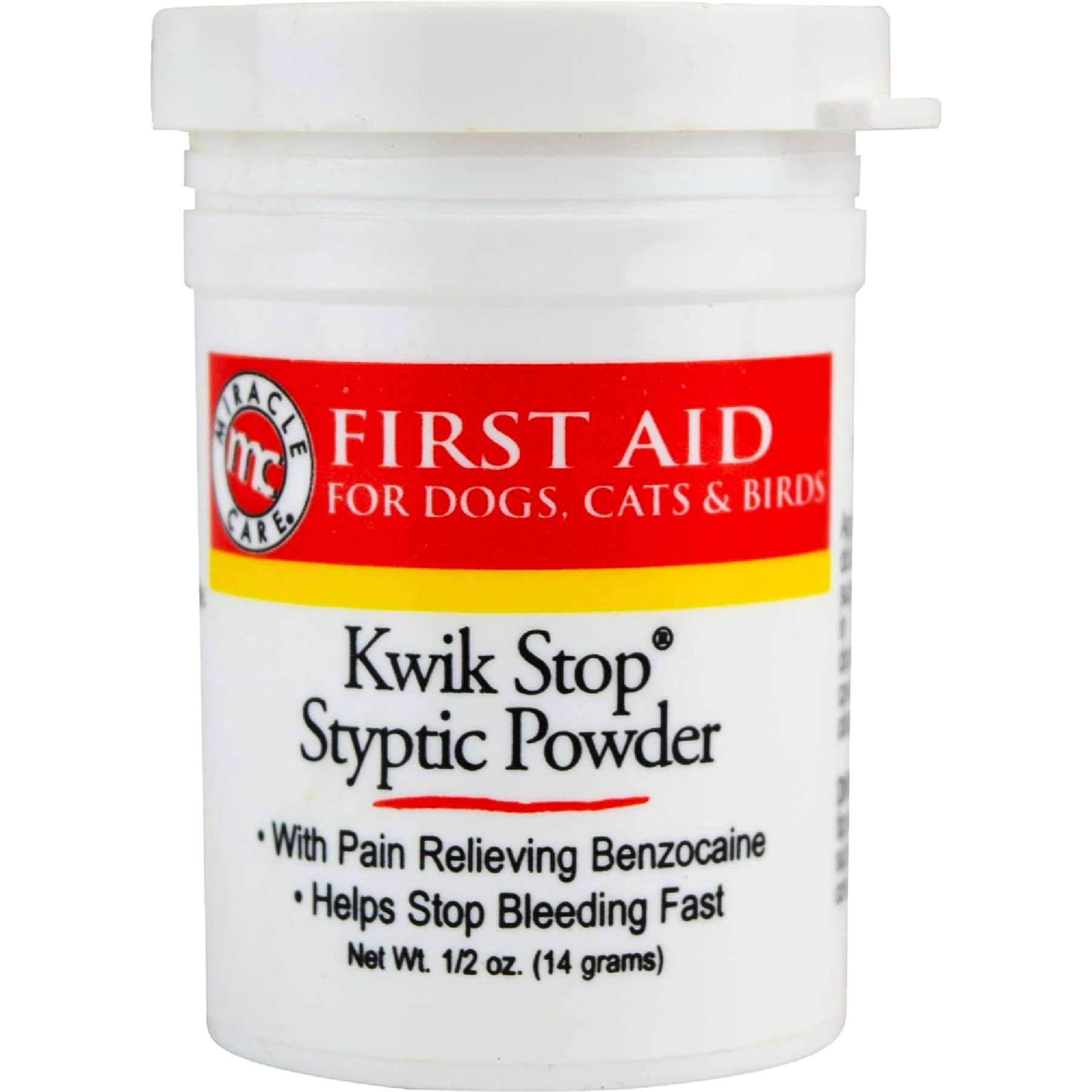
A styptic powder to keep beside the clippers so a nail tip that bleeds after a trim can be dabbed straight away.
Webvet may earn a commission when you click through to Chewy, at no extra cost to you.
Are you supposed to hear dogs' nails when they walk?
No. Clicking or tapping on a hard floor usually means the nails are longer than they should be. The vets at PDSA note that you may hear long nails clicking on solid surfaces, and they suggest a second check: hold the paw flat on your palm. If the nails touch your hand, they may be slightly long.
Do dogs feel better after nail trimming?
Yes, when the nails were long enough to cause problems. Purdue notes that overlong nails can change how a dog stands or walks, which can be painful, and make it hard to grip the floor. Cornell's Riney Canine Health Center advises keeping nails and foot hair trimmed to help older dogs walk.
The evidence in healthy dogs is more modest. A small 2026 study in Frontiers in Veterinary Science trimmed the nails of seven sound dogs and found no significant differences in stride length or stance time afterward. The authors flag the small sample. For nails that already snag, split, or curl, a trim removes the problem directly.

 Sponsored
Have a health question about your dog?
Talk to a licensed vet at Dutch over video or message, including nights and weekends.
Use code Pets60
Plans start at $12/month · covers up to 5 pets
- Licensed vets in most states
- Rx for 150+ conditions
- 4.7 on Trustpilot
What changes the schedule: activity, walking surfaces, age, and breed
| Dog's lifestyle | Typical nail wear | Trim schedule to start with | Signs a trim is due |
|---|---|---|---|
| Daily walks on pavement or concrete | A hard walking surface files the nails down | Check monthly; trims may be needed less often | Floor-click test: clicking on hard floors, or nails touching your palm |
| Mostly indoors, on carpet, grass, or a yard | A soft walking surface gives little wear | About monthly, or sooner if the nails click | Clicking on kitchen or hall floors; nails catching on fabric |
| Toy and small breeds | Less weight and friction on the nails | Check more often than monthly | Nails curling, catching, or clicking |
| Senior or less active dogs | Shorter walks mean less wear | Check at every grooming session | Floor-click test sounds, or a change in how the dog walks |
| Puppies | Small, fast-changing nails | Tiny tip trims as regular handling practice | Tips that click or scratch |
| Dogs with dewclaws | Dewclaws never touch the walking surface | Trim them at every session | A dewclaw curving back toward the leg |
Activity and walking surface change the schedule most, because hard ground files nails down and soft ground does not. For a medium or large dog on a monthly routine, a sturdy clipper sized for thicker nails keeps sessions quick. The Resco Original Dog Nail Clippers, Large, Chrome have all-steel construction with chrome plating, and are listed at $25.99 on Chewy when checked in November 2026.
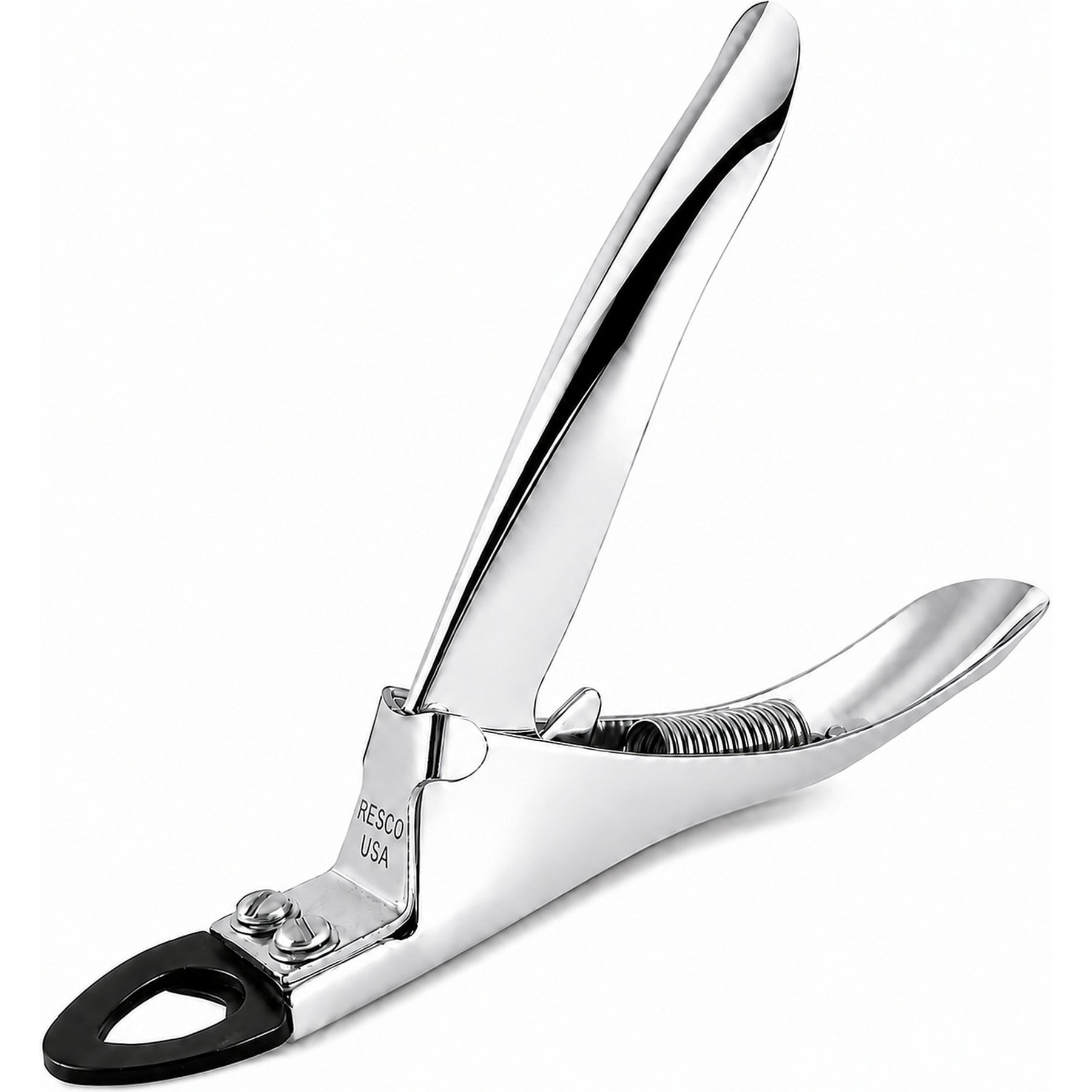
An all-steel clipper sized for medium and large dogs whose nails need a regular monthly trim.
Webvet may earn a commission when you click through to Chewy, at no extra cost to you.
Nails grow all the time. A 2025 study in the Journal of Small Animal Practice notes that dogs' nails grow continuously and will eventually overgrow unless they are worn down naturally or clipped. Wear is the main thing that changes how often a dog needs a trim.
PDSA's vets say hard surfaces on walks should wear nails down naturally and help keep a good length. Texas A&M adds that the right trimming schedule varies with how active the dog is and what surfaces its nails touch, so a city dog and a backyard dog rarely need the same interval.

Size, breed, and age shift the odds too. The JSAP study drew 2,440 nail clipping cases from UK veterinary records and found that dogs under 10 kg had higher odds of overgrown nails than dogs of 40 kg or more.
Chihuahuas, beagles, and Greyhounds had the highest odds of nail clipping by breed, and dogs aged 1 to 2 years the highest by age.
The authors suggest toy breeds may get less nail wear from lower weight and friction on the ground. They also note that toy, hound, and terrier breeds were less likely to get at least 30 minutes of exercise a day. Check more often if any of these apply:
- Your dog walks mostly on grass, carpet, or soft trails
- Your dog is a small or toy breed
- Your dog is older or walking less than it used to
- Your dog has dewclaws, which PDSA notes sit further up the inside of the leg and are easy to miss
Older dogs that spend their days lying on hard floors are worth a wider check of the legs and feet at trim time; calluses are covered in the guide to dog elbow callus.
How many nails do dogs have?
Most dogs have 18 nails. The University of Illinois Extension says the front paw has five toes, one of them the dewclaw, and the hind paw has four, usually without a dewclaw.
PDSA adds that some dogs have five toes on every foot, with dewclaws on the back legs too. The Merck Veterinary Manual notes dewclaws need trimming like other nails; more on dew claws on dogs.
Is it okay to not trim my dog's nails?
Only if walks keep the nails short enough to pass the floor-click and palm checks. Otherwise, no. PDSA warns that long nails can snag, split, or grow into the pad, and the JSAP authors note overgrown nails can cause discomfort, mobility problems, pain, injury, and infection. Texas A&M adds that skipped trims let the quick overgrow too.
 Sponsored
Vet care that's always there
Unlimited video calls and messaging with licensed vets for less than a typical vet visit. One membership covers up to five pets.
Use code Pets60
Plans start at $12/month · covers up to 5 pets
- Licensed vets in most states
- Rx for 150+ conditions
- 4.7 on Trustpilot
How short to cut dog nails, and finding the quick on light and black nails
How short to cut dog nails comes down to one landmark: the quick. PDSA's vets advise leaving roughly 3–4 mm between the quick and the cut. As a length guide, Texas A&M says the end of the nail should reach no further than halfway down the front of the paw pad on average.
A well-trimmed nail is short enough that it stops clicking on the floor but still keeps that margin in front of the quick. No single length suits every breed, so those two landmarks, the quick and the paw pad, are the practical guides.
What is the quick in a dog's nail?
The quick is the living core of the nail, with blood vessels and nerves. The Merck Veterinary Manual describes it as a blood vessel in the nail, and the University of Illinois College of Veterinary Medicine notes that cutting it causes pain and bleeding.
In white or pale nails, Purdue says, you may be able to see the quick as a pink blood vessel. That makes light nails the easier ones to learn on.

Black nails hide the quick. Merck notes the quick is hard to see in dogs with black nails, so the method changes. To trim black dog nails at home:
- Find a light-coloured nail on the same dog, if there is one, and use its quick to estimate where to cut, as PDSA suggests.
- Take small slices from the tip rather than one big cut; Purdue advises trimming a small amount at a time on dark nails.
- Look at the cut face after each slice. Researchers in the 2026 gait study checked every cut for a central black dot, the sign the quick was near, and stopped there.
- If you are struggling, PDSA's vets suggest asking your vet for advice.
Do you cut dogs' nails sideways or straight?
Neither: cut at an angle. Texas A&M says nails should be trimmed at an angle that follows the natural slant of the nail's growth. Purdue's version is to clip only the very tip while watching for the curve of the nail, so the cut sits in front of where the nail bends down.
Tool choice is its own decision. Texas A&M lists scissor clippers, guillotine clippers, and grinding trimmers as options. Human nail clippers are not one of them: PDSA advises using only dog nail clippers, not scissors or human clippers. The best dog nail clippers guide compares the clipper styles.
Some owners prefer a nail grinder for black nails because it takes the nail down in small, controlled passes. The Casfuy Dog & Cat Nail Care Rechargeable Grinder, Black is a rechargeable grinder with two speed options and three ports for different nail sizes, listed at $18.69 on Chewy when checked in November 2026.

A rechargeable two-speed grinder for taking dark or long nails down in small passes instead of single cuts.
Webvet may earn a commission when you click through to Chewy, at no extra cost to you.
Shortening overgrown nails: frequent small trims to make the quick recede
When a dog's nails are too long, two problems follow. The nail itself snags or curls, and the quick grows out with it. PDSA's vets note that longer nails can have a longer quick, and Texas A&M warns that if nails are not trimmed regularly, quicks can overgrow, causing severe pain when standing or walking.
Signs the nails are too long:
- Clicking on hard floors, or nails touching your palm when you hold the paw flat
- Nails catching on carpet or fabric, or splitting
- A change in how the dog stands or walks, or trouble gripping the floor, which Purdue notes long nails can cause
- Nails, often dewclaws, curling around toward the pad, which Texas A&M warns can lead to pain and infection
Veterinary sources give no fixed interval for helping the quick recede. Trimming more often than your usual schedule keeps each session small and keeps the quick from growing further. Your vet can check how far the quick extends and suggest a trimming pace for your dog.
To shorten overgrown nails, take small, frequent trims rather than one big cut. Remove only the tip each time, as Purdue advises, and stop at the first sign of the quick on the cut face. On overgrown black nails, the small slices and black-dot check above matter even more, because a long quick sits closer to the tip.
Small dogs, which had higher odds of overgrown nails in the JSAP study, need a tool sized for small nails. The Boshel Dog Nail Clippers, Deep Blue, Small are a small clipper with sharp blades, an ergonomic grip, and a safety guard, listed at $11.37 on Chewy when checked in November 2026.
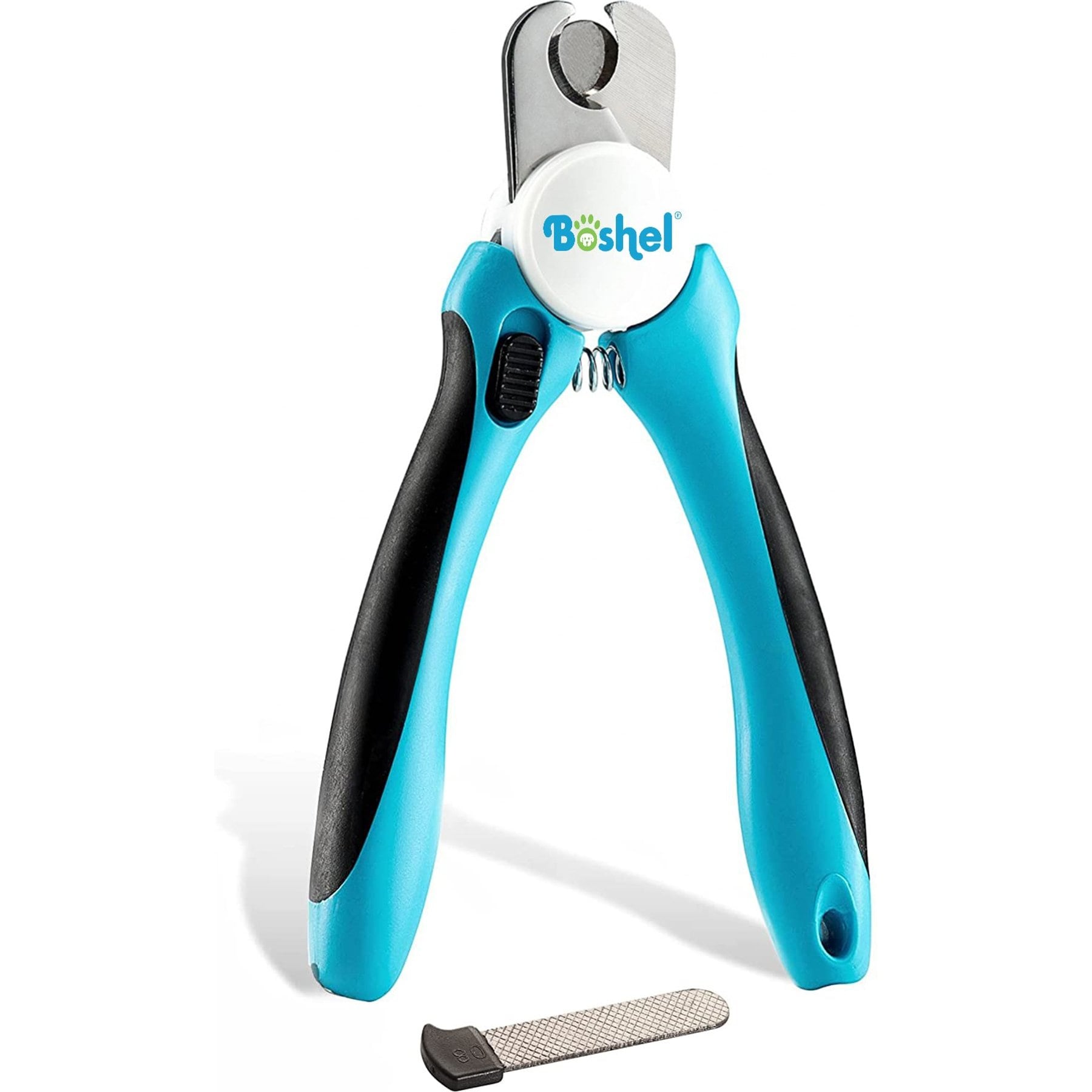
A small clipper with a safety guard, sized for toy breeds and puppies with small, thin nails.
Webvet may earn a commission when you click through to Chewy, at no extra cost to you.
Owners who prefer filing to clipping have another grinder option. The Wahl Dog Nail Grinder, Black/Grey has a safety guard, a soft grip, and a grinding stone with a concave tip for rounding off the nail, and is listed at $34.99 on Chewy when checked in November 2026. The guide to best dog nail grinders compares more.
When an overgrown nail is curled or ingrown
A nail that has curled round and presses into or grows into the pad is a vet job, not a home trim.
The JSAP authors note overgrown nails can grow into the pads and cause pain, injury, and infection. Vet care for a damaged nail can involve sedation and antibiotics, as in a broken-nail case the University of Illinois describes, so the cost depends on what the dog needs; ask your clinic for an estimate.
Cut the quick? How to stop dog nail bleeding at home
A nail that bleeds after a trim usually means the quick was nicked. PDSA's first advice is not to panic. Cutting the quick hurts, so your dog may yelp or pull back; hold the paw gently and work through these steps:
- Press styptic powder or cornstarch onto the bleeding tip. Purdue lists both, and PDSA suggests dipping the nail in cornflour to help it clot.
- Hold a clean cloth firmly over the nail. The American Veterinary Medical Association advises not checking until you have pressed for at least three minutes.
- If blood soaks through the cloth, add another layer on top instead of removing the first, as the AVMA advises.
- Give a treat once it stops, so the session still ends on a good note.
If the bleeding is heavy or will not stop with pressure, the AVMA advises going straight to the nearest veterinary hospital. PDSA's vets go further: they advise having someone contact your vet straight away for advice while you stem the bleeding.
Most bleeds can be avoided with a few habits:
- Trim in good light with the dog still, using a helper if needed.
- Take small slices, and stop at the first dark dot on the cut face.
- Leave the 3–4 mm margin PDSA recommends in front of the quick.
- Use dog nail clippers rather than human clippers or scissors.
A nail-trim kit can hold styptic gel instead of loose powder. Miracle Care Kwik Stop Styptic Gel Swabs for Dogs, Cats, & Birds 3 applicators are single-use swabs filled with styptic gel, listed at $13.02 on Chewy when checked in November 2026.
When overgrown or bleeding nails need a groomer or a vet
Nail problems are a routine reason for vet visits. In the JSAP study, nail clipping was the main reason for the visit in 59.4% of nail clipping events; overgrown or ingrown nails accounted for 12.66% of events and broken claws or dewclaws for 8.84%. Book a vet visit when:
- Bleeding will not stop with firm pressure, or is heavy
- A nail is broken, cracked, or hanging; the University of Illinois advises calling your vet first, and dog broken nail covers what happens next
- A nail has curled into the pad, or the toe is red, swollen, or oozing; see dog nail infection and swollen dog paw
- Your dog freezes, tries to escape, or tries to bite during trims; Purdue advises stopping and asking your vet for help
- Nails suddenly grow long or wear unevenly on one foot

That last sign deserves a closer look. The 2026 gait study notes that injuries to the digital flexor tendons reduce claw wear and lead to longer nails, and that painful corn-like lesions on the pads can shift a dog's weight. Long nails can be a result of a foot problem, not only a missed trim.
If paw odor is part of the picture, the guide to why dogs' feet smell like Fritos explains when a smell points to infection.
For routine trims on a calm dog, a groomer works well. Texas A&M suggests talking with a groomer or veterinary professional if you are unsure of the method. Clinics can also trim nails while a dog is sedated, which the JSAP authors note allows better precision and control.
How much should it cost to get a dog's nails trimmed?
The price is set by each groomer or clinic, so a quote from the place you plan to use is the only reliable figure.
Costs rise when a dog needs a vet visit, sedation, or treatment for a broken nail; the University of Illinois notes severely broken nails may need sedation to trim the nail back.
Many owners pay for the first trims and then learn to do it at home. The JSAP authors suggest that novice owners may seek veterinary help early and later become confident enough to clip at home.
Puppy nail trims and making nail care easier for anxious dogs
Start puppies early. Purdue advises getting puppies used to gentle touches of the paws right away and pairing paw handling with treats. PDSA's vets agree handling paws from an early age helps, and Texas A&M says getting animals used to nail trimming early in life greatly increases their acceptance later.
For a puppy, the schedule matters less than the practice. Short, regular sessions build a puppy that accepts nail care as an adult. For the first trims:
- Touch and hold each paw for a few seconds in short, regular sessions, with a treat each time.
- Let the puppy sniff and investigate the trimmer at its own pace, as Purdue suggests.
- Trim the very tip of one or two nails, then stop and reward.
- Build up until, as Purdue puts it, you can trim all the nails at once over time.
- For black puppy nails, take tiny slices from the tip only.
A small clipper such as the Boshel suits puppy nails. For first-time trimmers who want a guard against taking too much, the Fido Fave Dog Nail Clippers & Trimmer with Safety Guard & Nail File, Green pairs a clipper that has a built-in safety guard with a nail file, listed at $19.13 on Chewy when checked in November 2026.

Anxious adult dogs need the same slow approach. Texas A&M suggests exercising an anxious pet before a nail trim to help it settle, and offering praise, petting, and treats to build a positive association. Trim one nail, reward, and stop while the dog is still relaxed.
How do groomers cut dog's nails that won't let you?
With more hands, more training, and sometimes a muzzle. Sedation is only given by a vet. Texas A&M notes a helper can hold and calm the dog.
Cornell's Riney Canine Health Center says that in a basket muzzle dogs can pant, drink, and eat treats but cannot bite, and advises teaching muzzle wearing ahead of time. Dogs too stressed for that are a job for the vet.
Dog nail trimming questions
Frequently Asked Questions
How often should I trim my puppy's nails?
Little and often. For a puppy, each trim is mostly handling practice, so take just the tips whenever the nails click, and touch the paws daily with treats in between. Texas A&M notes that early, regular trims make nail care far easier to accept later in life.
How often should you trim dog nails to make the quick recede?
More often than your usual schedule, with each trim taking only a little. Veterinary guidance does not set one interval for helping the quick recede, but regular trims keep it from growing further. Ask your vet to check how far the quick extends and suggest a pace for your dog.
How do I trim black dog nails?
Work from the tip in small slices and check the cut face each time. On black nails, a dark dot appearing in the centre means the quick is close, so stop there. If the dog has a pale nail, its quick gives a rough guide to the others.
How short should dog nails be?
Short enough that they do not click on the floor or touch your palm when you hold the paw flat. The margin in front of the quick matters more than any fixed length, and Texas A&M's guide is a tip no further than halfway down the front of the paw pad.
Can I cut my 8 week old puppy's nails?
Yes. An 8-week-old puppy can have the very tips of its nails trimmed, and Purdue advises getting puppies used to paw touches right away. Keep sessions to a nail or two, use a small clipper, and pair every touch with a treat.
Veterinarian · BVMS MRCVS
Dr. Pippa Elliott, BVMS, MRCVS, is a veterinarian with nearly 30 years of experience in companion animal practice. Dr. Elliott earned her Bachelor of Veterinary Medicine and Surgery from the University of Glasgow. She was also designated a Member of the Royal College of Veterinary Surgeons. Married with 2 grown-up kids, Dr. Elliott has a naughty Puggle named Poggle, 3 cats and a bearded dragon.
Related reading

Myasthenia Gravis in Dogs: Signs, Megaesophagus, Treatment, and Outlook

Meningitis in Dogs: SRMA and Other Causes, Signs, Treatment, and Prognosis

Autoimmune Disease in Dogs: Types, Signs, Diagnosis, and Treatment
