Dog Broken Nail: What to Do, When to See a Vet, and Healing
A broken dog nail can be painful even after bleeding stops. Learn how to respond, what veterinary treatment may involve, and which changes need attention during recovery.

BVMS MRCVS
Medically reviewed by Dr. Pippa Elliott, BVMS MRCVS · Last reviewed

This article contains affiliate links. Webvet may earn a commission when you buy through them, at no extra cost to you.
A dog broken nail can cause sudden limping and surprisingly conspicuous bleeding, even when the damaged area looks small. Keep your dog still, apply steady pressure with clean gauze if you can safely handle the paw, and call your veterinarian. A nail that is hanging, split into sensitive tissue, or painful to touch needs more than a routine trim.
The immediate priorities are controlling bleeding and getting the injury assessed. Later, the job changes: protect the treated toe, follow the clinic's discharge instructions, and watch how your dog is using the foot. This guide separates those decisions so a stopped bleed does not get mistaken for a fully healed nail.
Dog broken nail first aid
- 1Apply gentle, continuous direct pressure with clean gauze or a clean towel if your dog allows it. Do not repeatedly lift the material to check.
- 2Contact a veterinarian promptly for a painful attached nail, exposed quick, or bleeding that continues after 5–10 minutes of pressure. Seek urgent care for heavy bleeding, weakness, or other substantial injuries.
- 3Do not pull the nail off, cut through an attached painful segment, or give human pain medicine. If handling causes distress or a bite risk, stop and get help.
Move your dog away from the surface or object involved in the injury. Close off stairs and keep other pets back. If you can safely look, note which paw and nail are involved. You do not need to spread every toe, bend the nail, or expose the entire wound. Even a dog who normally accepts grooming may snap when an injured nail is touched. Call the clinic for handling and transport advice if you cannot approach the foot safely.
For bleeding, hold clean gauze or a clean towel against the affected area with steady pressure. Start a timer so you can tell the clinic how long you have tried. Avoid repeatedly peeling the material away, which can disturb a forming clot. The VCA guide to broken-nail first aid describes pressure and prompt veterinary treatment of the damaged nail.
The same pressure-first approach applies to a bleeding dew claw. If you accidentally cut a nail too short during grooming, explain that to the clinic: a clipped quick and a nail torn backward may need different follow-up. Stop the grooming session and do not keep trimming to make the injured nail look even. Persistent bleeding or pain still needs veterinary advice.
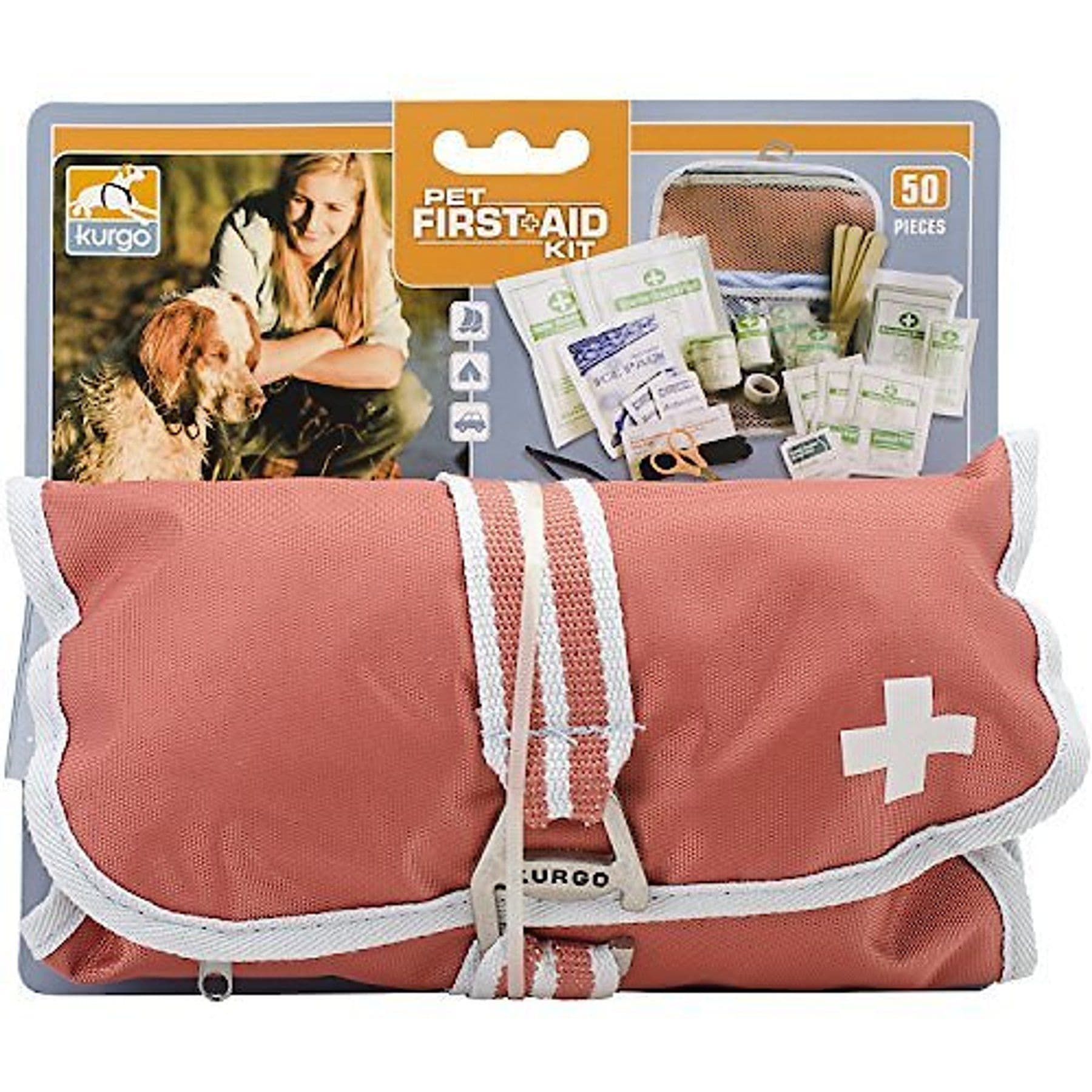
Keep basic first-aid supplies together before an injury. Check the kit contents and add your veterinary contact details.
Webvet may earn a commission when you click through to Chewy, at no extra cost to you.
- Which foot is affected, and whether the nail is still attached.
- Whether pressure has controlled the bleeding and for how long.
- Whether your dog will bear weight or let anyone near the paw.
- How the injury happened, including any fall, crush injury, or trapped foot.
- Any current medicines, previous bleeding problems, and anything already applied to the toe.
A photo can help the clinic understand what you see, provided taking it does not delay care or require painful handling. A photograph cannot establish how far a crack extends under the nail or rule out a deeper toe injury. Follow the clinic's advice about coming in even if a picture looks less dramatic than the bleeding did.
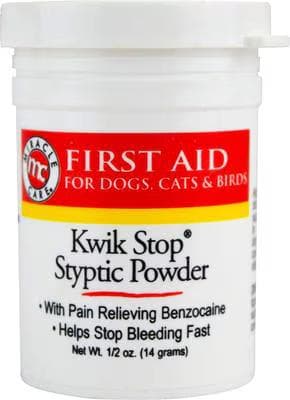
A styptic powder option for appropriate minor nail bleeding. Follow the label and ask your vet about a torn nail.
Webvet may earn a commission when you click through to Chewy, at no extra cost to you.
Why a broken nail hurts and what the injury can involve

The hard outer nail protects the quick, which contains nerves and blood vessels. A superficial chip in that outer shell is different from a split that exposes or moves against the living tissue. That distinction explains why a nail injury can be intensely painful even when there is no large cut across the paw.
Several descriptions can refer to different injuries:
- Split or cracked nail: a break runs through part of the nail; some of it may still be firmly attached.
- Torn or ripped nail: a snag or other force has displaced part of the nail, sometimes leaving a painful attached piece.
- Nail shell missing: the hard covering has come away and sensitive tissue may be exposed.
- Broken dewclaw, also written dew claw: the higher nail on the side of the leg is injured; it still contains living tissue even though it does not normally contact the ground.

These labels describe what an owner sees, not the depth of an injury. A veterinarian's examination is what distinguishes damaged nail from a wound involving the nail bed or adjacent toe. Let the clinic know if you are uncertain whether the red area is tissue or dried blood; there is no need to scrub it just to improve the view.
A nail broken at the base may leave very little hard shell to see. A nail bent sideways or pulled out can leave painful exposed tissue even when bleeding has stopped. A split underneath may be difficult to judge without lifting or bending it, so do not test it that way. Report toenail pain, bleeding, a moving or snagging piece, and whether your dog is protecting the foot. If the nail fell off or your dog chewed it off, the absence of a loose piece does not settle the problem. Do not encourage chewing to finish removing a damaged nail.
Repeated problems deserve a different conversation from a single obvious snag. If your dog is losing toenails or several toenails are coming off without an accident, record which ones are affected and whether swelling persists between episodes. Nail infections and other nail disorders can require investigation and treatment beyond clipping a rough edge. Bring that history rather than assuming every recurrence has the same cause.
Do I need to take my dog to the vet for a ripped nail?
Usually, a nail that has ripped into sensitive tissue, is hanging at an angle, or causes ongoing pain should be assessed by a veterinarian. A tiny chip at the dry outer tip may be a grooming issue if there is no bleeding, pain, or change in walking. If you cannot confidently tell which situation you have, ask the clinic instead of testing the nail by pulling on it.
| What you notice | Next action | What a home check cannot establish |
|---|---|---|
| A small chip at the outer tip, with no pain or bleeding | Keep it from snagging and ask whether routine smoothing is appropriate | Whether a fine crack continues farther toward living tissue |
| An attached nail that bends, hangs, or hurts when touched | Keep your dog quiet and arrange prompt veterinary assessment | How much damaged nail can safely be removed and what pain control is needed |
| Exposed quick, a missing nail shell, or a raw nail bed | Control bleeding with direct pressure and contact the clinic | Whether the underlying toe or surrounding tissue is also injured |
| Bleeding that continues despite pressure, or substantial bleeding with weakness | Seek urgent veterinary care | Whether blood loss or a bleeding disorder is contributing |
| Repeated nail loss, swelling, discharge, or a nail that keeps reopening | Arrange an examination and describe the pattern over time | Whether infection or another nail-bed disorder needs investigation |
| Dark material that looks like blood forming inside the nail | Tell the clinic when the change appeared and whether the toe is painful; arrange assessment for a new concerning change | Whether the dark area is blood, natural pigment, or another nail change; color alone cannot identify the cause |
Tell the veterinarian if the nail injury followed a door closing on the foot or a significant fall. The visible nail may be only part of that event. Also mention injuries to more than one nail rather than treating each as a separate grooming accident.
If it is after hours, call the regular clinic's recorded emergency number or a local veterinary emergency service. Explain whether bleeding is controlled and whether your dog is comfortable at rest. Those details help the clinical team advise on urgency. Do not assume a small injured area means it can safely wait until morning.
 $65 · no membership
Have a health question about your dog?
A licensed vet can assess your dog over video and prescribe online when it's appropriate.
 Talk to a vet
- Licensed vets
- All 50 states
- same-day Rx
Webvet may earn a commission if you book.
What will a vet do for a split nail?
The veterinarian will examine the nail and foot, assess pain, and decide how to manage the damaged portion. Treatment may include removing an unstable segment, cleaning and protecting exposed tissue, and prescribing pain relief. Some dogs need sedation or local anesthesia so the procedure can be performed comfortably and safely. The appropriate approach depends on the break and the dog's response to handling.
Removing a damaged nail segment is different from removing the entire toe or permanently preventing nail growth. Ask the team to explain what was removed and what remains. This distinction is especially useful if the discharge note uses words such as trimming, avulsion, or debridement that are unfamiliar to you. Ask for the practical meaning for this injury rather than inferring the procedure from the amount of nail you can see afterward.
Expect the clinic to ask what happened and what care has already been tried. Bring the name or packaging of any powder, cream, or medicine used. Mention regular medications and medical conditions before treatment, including drugs given for an unrelated problem. This helps the veterinarian choose an appropriate plan rather than guessing what may already be in your dog's system.
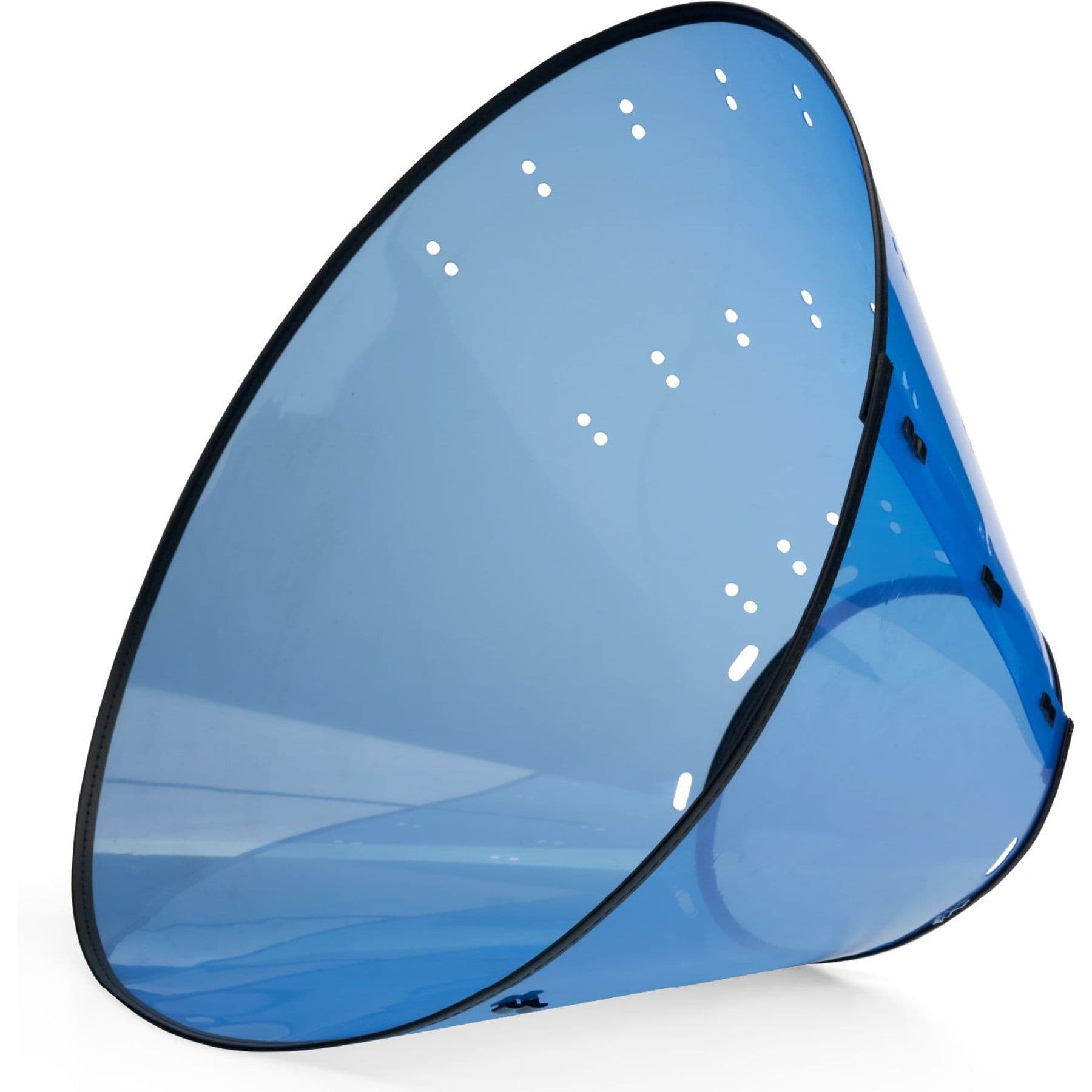
A rigid collar option to help prevent paw licking during recovery. Check the size and fit with your veterinary team.
Webvet may earn a commission when you click through to Chewy, at no extra cost to you.
- Is the injury limited to the nail, or is the nail bed or toe also involved?
- Is any damaged nail still present that needs monitoring?
- Does my dog need a bandage, and who should remove or replace it?
- What is the pain-control plan, including when the next dose is due?
- What changes should prompt a same-day call or an emergency visit?
- When is the recheck, and what activity is allowed before then?
Antibiotics are a clinical decision, not an automatic home-care step. Do not use leftover tablets or assume a topical cream replaces an examination. If medication is prescribed, follow the exact directions and contact the clinic about problems or missed doses instead of adjusting the plan yourself.
Broken-nail treatment costs vary with the examination, urgency, sedation, medication, bandaging, and follow-up needed. PetMD gives a broad estimate from under $100 to several hundred dollars; that is orientation rather than a quote for your dog or a verified national average. A telephone estimate for trimming an uncomplicated broken tip may not include the care needed for a painful nail-bed injury. Ask for an itemized estimate identifying today's treatment, take-home medicine, and any separate recheck or bandage-change charges. Tell the clinic about budget limits at the start so it can explain the essential next step and available options. Do not delay urgent bleeding control to compare prices. That dollar range is a US reference, not a verified UK price. For UK care, request a local GBP estimate with the same examination, sedation, treatment and recheck items separated; this guide has no verified UK cost range.
Before leaving, ask the team to write the care plan down. If two people share pet care at home, designate who records each medication dose. A simple note showing the medicine, dose time, and next scheduled dose can prevent a well-meaning family member from giving the same treatment twice.
Home care after veterinary treatment

Follow the discharge instructions for this injury, even if a previous torn nail was managed differently. One dog may go home with an uncovered toe and a protective collar; another may need a bandage and an early recheck. The presence or absence of a bandage is not a reliable measure of how serious the original injury was.
Set up a recovery area that makes the instructions practical. Put a washable resting surface on the same level as the usual exit if possible. Keep the route to toilet breaks short and free of obstacles. Ask the clinic to define activity limits in terms your household can follow, including stairs, walks, play with other pets, and time outdoors.
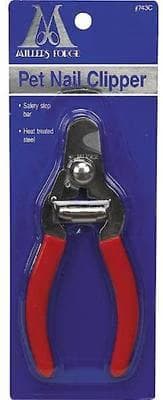
For routine nail maintenance after recovery. Ask your vet to demonstrate trimming; never cut a painful attached tear.
Webvet may earn a commission when you click through to Chewy, at no extra cost to you.
- Nail care: confirm whether to leave the site alone or clean it, and exactly what solution and method to use.
- Bandage plan: write down the next check or removal time and whom to call if the bandage gets wet or slips.
- Licking protection: confirm the type, fit, and duration of the collar or other prescribed protection.
- Medicines: record dose times and the symptoms that require calling before another dose.
- Activity: write down permitted toilet walks and restrictions until the recheck.
- Follow-up: keep the appointment and out-of-hours contact details together.
A bandage needs attention even when the dog seems comfortable. Keep it clean and dry, inspect it as instructed, and contact the clinic if it becomes wet, displaced, chewed, or foul-smelling, or if visible toes swell. Do not add a tight layer to keep a slipping wrap in place. VCA's bandage-care guidance explains why changes in fit and condition need veterinary attention.
For wound cleaning, use only the clinic's recommended method. More frequent cleaning or adding a disinfectant is not necessarily helpful. The separate dog wound-care guide explains general wound-management decisions, but the instructions for your dog's exposed nail tissue take priority over a generic routine. Do not start Epsom-salt soaks unless the clinic specifically prescribes them for this injury. If a dog boot is recommended for a brief outdoor trip, confirm the fit and removal instructions; do not leave a damp cover on the paw or assume that a boot replaces a prescribed dressing.
Healing, regrowth, and signs to call the clinic
Comfort, surface healing, and complete nail regrowth are separate milestones. Your dog may become more comfortable before the nail has grown back. Conversely, a nail can appear drier while the dog is still guarding the foot. Judge progress against the veterinarian's expected course and recheck plan, not the appearance of one photograph.
After a nail has been ripped off or fallen off, ask the clinic what remaining tissue you should expect to see at the next check. A missing hard covering will not look like an intact nail immediately. The question is whether this particular injury is progressing as expected, rather than whether it already resembles the other toes. New pain, discharge, or bleeding needs reassessment even if some nail material seems to be returning.
Uncomplicated broken nails often heal over a few weeks, but more severe injuries take longer. Replacement of lost nail material can take weeks to months, and injury to the growth area may affect the result. These are broad ranges, not a countdown for removing protection or restarting normal exercise. PetMD's broken-nail guide also distinguishes uncomplicated healing from injuries requiring additional care.
- Is your dog using the foot more comfortably, less comfortably, or about the same?
- Has bleeding restarted, and what was happening just beforehand?
- Is there new swelling, discharge, odor, or persistent licking?
- Is the protective equipment still doing its job?
- Is your dog eating, resting, and taking prescribed medicine as expected?
Contact the clinic about worsening pain, renewed bleeding, swelling, discharge, a concerning smell, or a bandage problem. A dog who was improving and suddenly stops using the foot deserves reassessment. Persistent symptoms do not automatically mean infection, but they are a reason to have the site checked rather than adding another home treatment.
If a prescribed medicine seems to cause vomiting, diarrhea, appetite loss, or another unexpected change, call the veterinarian for instructions. Do not substitute a human painkiller. The FDA's guidance on pain relievers for pets explains that medicines suitable for people can be harmful to pets and that veterinary NSAIDs require individualized prescribing.
For broader context, dog wound-healing stages explains why an early improvement is only one part of recovery. Your dog's planned recheck remains the right place to decide whether the toe is ready for ordinary walks and nail maintenance.
Preventing another nail injury

Routine nail checks help you notice overgrowth, rough edges, and dewclaws that are easy to overlook. This is a practical part of preventing another injury. Ask the veterinary team to demonstrate a safe trim on your dog after recovery. Dark nails can make the quick harder to see, so a tool's guide or guard should not be treated as a substitute for knowing how much to remove.
Choose a maintenance method you can use calmly and consistently:
- For clipping, compare size, grip, and cutting style in the dog nail-clipper guide.
- For gradual smoothing, the dog nail-grinder guide covers tool choices. Introduce noise and vibration gradually, away from the injured foot until your vet clears grooming.
- If your dog pulls away, growls, or becomes frightened, arrange professional help and a handling plan instead of forcing through the trim.
Also look at the circumstances of the injury. A loose carpet loop, damaged crate surface, or snagging fabric may be something you can repair. If no single accident explains recurring damage, bring the pattern to the veterinarian. Prevention then starts with finding the cause, not simply cutting the nails shorter.
Broken nail questions
Frequently Asked Questions
Will a dog's broken nail heal on its own?
A small chip confined to the outer tip may grow out without medical treatment if it causes no pain or bleeding. A painful split, exposed quick, or partly attached nail needs veterinary assessment. Bleeding stopping does not prove the injury is resolved. Ask the veterinarian what healing should look like for this nail and when a recheck is needed.
What can I give my dog for a broken nail?
Give only medication prescribed or specifically approved by your veterinarian for this dog and injury. Do not use ibuprofen, naproxen, acetaminophen, aspirin, or leftover pet pain medicine on your own. Tell the clinic about everything your dog already takes. While arranging care, keep your dog quiet and avoid handling the painful nail more than necessary.
How to bandage a dog's paw for a broken nail?
For active bleeding, use clean gauze or a clean towel to apply direct pressure while contacting the veterinarian. That is different from constructing a bandage to leave on the foot. Ask the clinic to apply or demonstrate any longer-term wrap: a poorly fitted bandage can cause harm. Get written instructions for checking it and returning for removal or replacement.
Can I cover my dog's paw with a sock?
A sock is not a substitute for a properly fitted medical dressing or a collar that prevents licking. It can become wet, slip, be chewed, or conceal a problem. If the veterinarian suggests a temporary cover for transport or a brief toilet trip, ask exactly how to use and remove it. Do not tie a sock tightly around the leg.
Can I put Neosporin on my dog's broken nail?
Do not apply it routinely without asking your veterinarian. The relevant questions are whether this wound needs a topical treatment, which ingredients are appropriate, and how licking will be prevented. A cream does not repair an unstable nail or establish whether the nail bed is infected. Tell the clinic if you have already applied it, including the exact product name.
What human wound cream is safe for dogs?
There is no human wound cream that should be assumed appropriate for every broken dog nail. Products can contain different active ingredients, including added pain relievers, and dogs may lick them off. Ask the veterinarian to name the exact product, amount, and frequency if a topical treatment is needed. Avoid layering several products on the same site.
Should I put hydrogen peroxide on my dog's broken nail?
No, unless your veterinarian specifically directs otherwise. VCA's open-wound guidance advises against hydrogen peroxide and other household cleaning products because they can interfere with healing. Ask what, if anything, you should use to clean this nail injury. During active bleeding, focus on safe pressure and veterinary advice rather than scrubbing the exposed tissue.
$65 · no membershipHave a health question about your dog?
A licensed vet can assess your dog over video and prescribe online when it's appropriate.
Talk to a vet- Licensed vets
- All 50 states
- same-day Rx
Webvet may earn a commission if you book.
Veterinarian · BVMS MRCVS
Dr. Pippa Elliott, BVMS, MRCVS, is a veterinarian with nearly 30 years of experience in companion animal practice. Dr. Elliott earned her Bachelor of Veterinary Medicine and Surgery from the University of Glasgow. She was also designated a Member of the Royal College of Veterinary Surgeons. Married with 2 grown-up kids, Dr. Elliott has a naughty Puggle named Poggle, 3 cats and a bearded dragon.


