Dog Wound Healing Stages: Normal Changes vs. Infection
Learn how an assessed dog wound repairs, how to compare swelling, drainage, and comfort, and when a change needs veterinary attention. Includes a practical recovery log and open-versus-sutured guidance.

BVMS MRCVS
Medically reviewed by Dr. Pippa Elliott, BVMS MRCVS · Last reviewed

This article contains affiliate links. Webvet may earn a commission when you buy through them, at no extra cost to you.
Dog wound healing stages overlap: bleeding control and inflammation begin the response, repair tissue fills the injury, new skin covers the surface, and deeper tissue gradually strengthens. For an open wound already assessed by a veterinarian, the most useful question is whether comfort, swelling, drainage, and wound size are moving in the expected direction.
A wound can look pink and still need protection. A small scab can conceal a problem underneath. This guide explains what those changes mean, how to keep a useful recovery record, and which changes deserve a call before the next scheduled recheck.
Dog wound healing stages: what changes
An open wound has several jobs to complete: stop the bleeding, clear damaged material, replace missing tissue, and restore a skin covering. These jobs overlap. The center may still be filling with granulation tissue while new skin advances at the edges, so one wound can show more than one healing process at once.
Inflammation starts the repair response, granulation tissue helps fill an open wound, and new skin eventually covers it. Look for improving comfort and decreasing swelling or discharge together with wound changes. New pain, swelling, pus, or illness needs veterinary advice, even if the opening looks smaller.
- Bleeding control and inflammation: Hemostasis is the immediate response that limits blood loss. Blood vessels initially narrow, then inflammatory cells enter the damaged area to deal with bacteria and debris. This early response helps prepare the site for repair; it does not mean that every red or swollen wound is infected.
- Cleanup: The body clears damaged material, but substantial dead tissue or contamination may need veterinary debridement. Removing it creates a more suitable surface for repair. A wound can therefore look larger just after treatment than before, because the veterinarian has removed tissue that could not survive. Ask what the treated wound should look like when you first see it at home.
Protecting the site starts immediately. A Dogswell Remedy+Recovery rigid E-collar is an option if its size and shape prevent your dog from reaching this particular wound. Check its effectiveness when your dog bends and lies down; wearing a collar is not enough if licking remains possible.
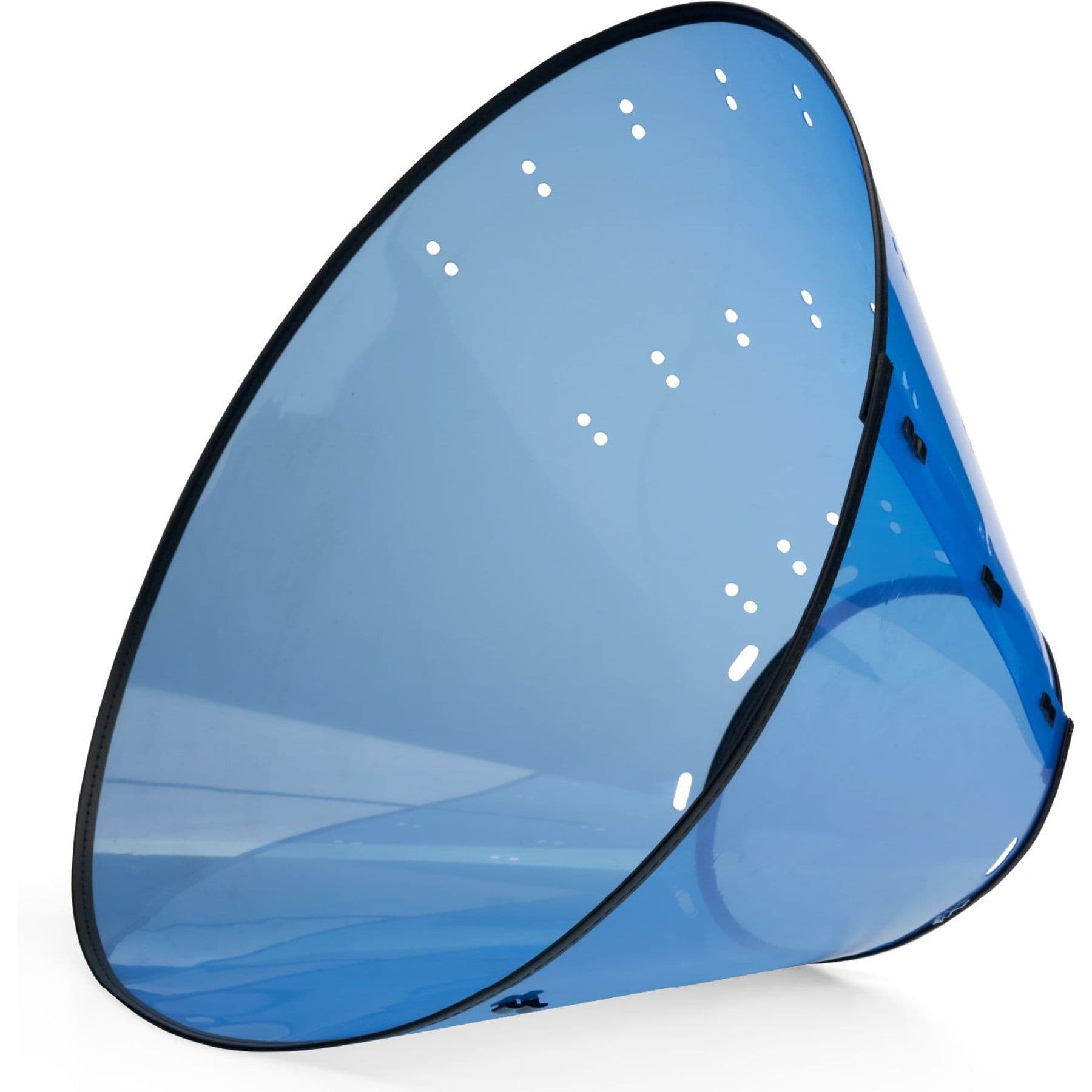
A rigid collar option for preventing access to a healing wound. Have the fit checked and confirm that your dog cannot reach the affected site.
Webvet may earn a commission when you click through to Chewy, at no extra cost to you.
- Repair and granulation tissue: New small blood vessels supply the developing wound bed. Cells called fibroblasts produce supporting material, including collagen. Together these form granulation tissue, the living tissue that helps fill the defect. Its blood supply contributes to its pink or reddish, moist appearance and makes it easy to injure through rubbing.
- Epithelialization: Skin cells move across the wound surface to form a covering. An open wound needs a healthy repair bed for these cells to cross. Filling the defect and covering it are related but different changes, which is why a shallow-looking wound may still have an exposed center. The Merck Veterinary Manual explains these overlapping processes.
| Process | What is happening | What it means for observation |
|---|---|---|
| Hemostasis and inflammation | Bleeding is controlled and the injury response begins | Watch the overall course; increasing bleeding or swelling needs attention |
| Cleanup and debridement | Damaged material is cleared, naturally or through veterinary treatment | Do not remove tissue yourself or judge its viability by color |
| Repair and granulation tissue | New supporting tissue and blood vessels develop | A pink repair surface is different from a dry scab |
| Epithelialization | New skin grows over a suitable wound bed | A narrowing surface does not prove deeper infection has cleared |
| Maturation | Repair tissue reorganizes and strengthens | Surface closure does not automatically end activity restrictions |
Look at the wound edges as well as the central granulation tissue. In a wound healing openly, the exposed area should eventually become smaller as repair proceeds. You may notice less depth or a narrower opening before the entire surface is covered. Do not rub the center to test whether it is new tissue: both the granulation bed and the emerging skin are delicate. Color alone cannot establish that repair is healthy.

The wound views here illustrate separate appearances, not one dog's documented recovery. Use them to understand the distinction between exposed repair tissue and a covered surface. They cannot tell you the age of your dog's wound or establish whether it is infected.
For the quieter recovery period, a Frisco Swirl crate mat can provide a removable resting surface in a suitable space. Keep it clean and dry and follow its care label. It is bedding, not a sterile dressing or a waterproof barrier for wound drainage.

A removable resting surface for a suitable recovery space. Keep it clean and dry according to the care label; it does not replace a wound dressing.
Webvet may earn a commission when you click through to Chewy, at no extra cost to you.
Scab, closure, and strength are different milestones
A scab is dried material on the surface, whereas skin closure is a new living covering. Granulation tissue fills the gap beneath that covering. Deeper healing continues as collagen reorganizes during maturation, so a surface that no longer looks open is not automatically ready for stretching, rough play, or repeated licking.
Keep granulation tissue, a scab, skin closure, and deeper healing distinct in your practical trend log. Record the surface change alongside pain, swelling, and drainage. A scab with new swelling or a closing wound that becomes more painful calls for advice; a photograph of yesterday's surface cannot establish today's deeper recovery.
At the recheck, ask separately whether the surface has closed and whether the wound is strong enough for the next activity. Those answers can differ. The examination may therefore lead to less cleaning while protection or exercise restrictions continue.
How long does a dog wound take to heal?
For a genuinely minor cut or graze, PDSA advises veterinary assessment if it has not healed within a few days, or sooner if infection is suspected. That is a recheck threshold for minor injuries, not permission to wait several days with a bite, puncture, large wound, or painful injury. Those need their own prompt assessment and recovery plan.
Useful timing depends on what is being measured. The start of repair, complete surface closure, and recovery of tissue strength happen on different timescales. According to Merck's general principles of wound healing:
- Within hours: Skin-cell migration begins, although this early microscopic activity will not look like a suddenly closed wound.
- Around day three in a healthy wound: Fibroblasts begin appearing as supporting tissue develops. Infection or poor tissue condition can alter progress, so this is not a deadline for a visible pink wound bed.
- Within about 48 hours in a properly closed incision: A surface layer may cover the joined edges. This describes epithelialization of an incision, not complete healing of an open wound or restored strength.
- During later remodeling: Collagen reorganizes and strength develops over a much longer period, potentially up to two years. This does not mean two years of confinement; the veterinarian sets activity limits for the actual injury.
For an owner, the key distinction is between a narrow, clean incision whose edges have been joined and an open defect that must fill and acquire new skin. A broad wound with missing skin has more repair to accomplish. A deep puncture may have little visible surface damage yet need treatment of infection or injury underneath. Neither can be timed reliably by comparing its photograph with a routine surgical incision.
Ask for checkpoints tied to this wound
The most practical timeline has three separate questions:
- When should comfort and swelling begin improving?
- When should the opening or drainage change enough to justify a recheck?
- When can normal exercise, bathing, and licking protection safely resume?
For example, if the vet intends to manage a contaminated wound openly before closing it later, an open surface at the first recheck may be part of the plan. The decision then concerns whether the tissue is healthy enough for closure, not whether the dog has failed to heal. MSD's wound-management guidance explains that contamination, infection, available skin, and location affect that choice.
Record the treatment date separately from the injury date. If tissue was removed or a closed infection was opened, the appearance after that treatment becomes a more useful comparison than the original photograph. At each visit, ask what should change before the next appointment and what should trigger an earlier call.
Healing or infection: compare the changes
You can tell that a dog's wound may be healing by a consistent combination of improving comfort, settling swelling, less concerning drainage, and gradual repair of the wound surface. Eating and behaving more normally are helpful supporting signs. No single sign, including a scab or pink tissue, proves that infection is absent.
Keep routine care consistent while you observe progress. If the clinic specifically approves Vetericyn Plus wound care spray for a suitable superficial wound, use it only as directed within that plan. A topical cleaning product cannot replace drainage, removal of foreign material, or prescribed antibiotics. Ask before adding it to an existing dressing or medication routine.
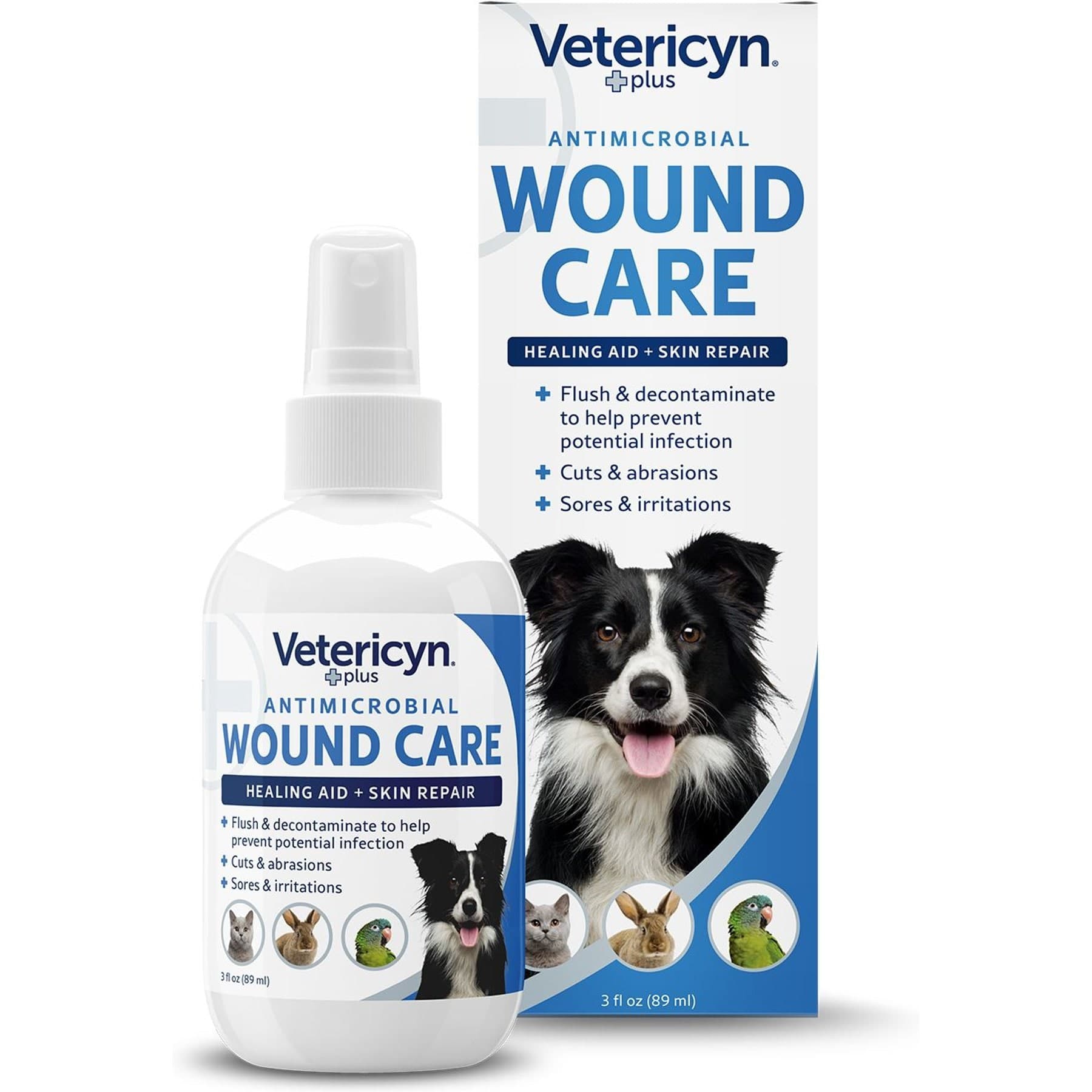
A topical cleaning option to discuss with your veterinarian for a suitable superficial wound. It does not replace drainage or prescribed treatment.
Webvet may earn a commission when you click through to Chewy, at no extra cost to you.
| Observation | May fit the prescribed healing course | Contact the clinic promptly when |
|---|---|---|
| Wound edges | The opening gradually narrows without new swelling | Edges separate, the wound enlarges, or swelling develops beneath a closing surface |
| Drainage | Expected fluid gradually decreases | New discharge appears, or fluid becomes thick, foul, increasingly bloody, or more abundant |
| Surrounding skin | Local changes settle as comfort improves | Redness or swelling spreads, or a new dark area develops |
| Comfort | Resting and ordinary movement become easier | Pain increases, the dog guards the area, or licking suddenly intensifies |
| Appetite and behavior | The dog returns toward its usual eating and interaction | Appetite falls, the dog becomes withdrawn, or weakness develops |
Signs of an infected dog wound can include worsening pain, increasing swelling, foul odor, and pus. Thick yellow or green discharge is concerning, particularly if it is new or increasing. Tell the clinic about these changes rather than using an infected-wound picture to choose a treatment. VCA's open-wound guidance explains why some wounds must remain open and require individualized care.

Check drainage before cleaning, then compare it at a similar point in the care routine. Fluid seen immediately after rinsing is not directly comparable with fluid that accumulated overnight. Note whether a new stain appeared on previously dry bedding, whether discharge stopped and returned, and whether the surrounding area became swollen. Those details help the clinic interpret a change without relying on color alone.
Dark tissue needs an examination
Necrosis means tissue death. New black or dusky skin around an injury can be concerning, but owners cannot reliably distinguish necrotic tissue from dried blood, pigment, or other changes in a photograph. Do not pull off a dark patch to “see what is underneath.” Report it and let the veterinarian assess tissue viability.
For an infected wound on a dog's paw or leg, increasing lameness matters even when the visible hole is small. A puncture can extend beneath the surface. VCA's guidance on bite wounds recommends immediate veterinary contact after a fight because small punctures can hide substantial injury.
 $65 · no membership
Is your dog's itching or skin issue getting worse?
A licensed vet can examine your dog over video and prescribe treatment online when it's appropriate.
 Talk to a vet
- Licensed vets
- All 50 states
- same-day Rx
Webvet may earn a commission if you book.
Why a dog wound may stop healing
A dog wound that is not healing may need a different treatment rather than more of the same home cleaning. A retained object can keep a site inflamed; dead tissue may need removing; and licking can repeatedly damage an otherwise repairing surface. The veterinarian may investigate persistent infection, revise the dressing or closure plan, or assess the dog's wider health.
A Kurgo Pet First Aid Kit can keep gauze and other basic supplies together for the care your clinic has demonstrated. Check what you need rather than assuming every included item belongs on a wound. Alcohol or iodine pads in a kit are not instructions to apply them to exposed tissue.
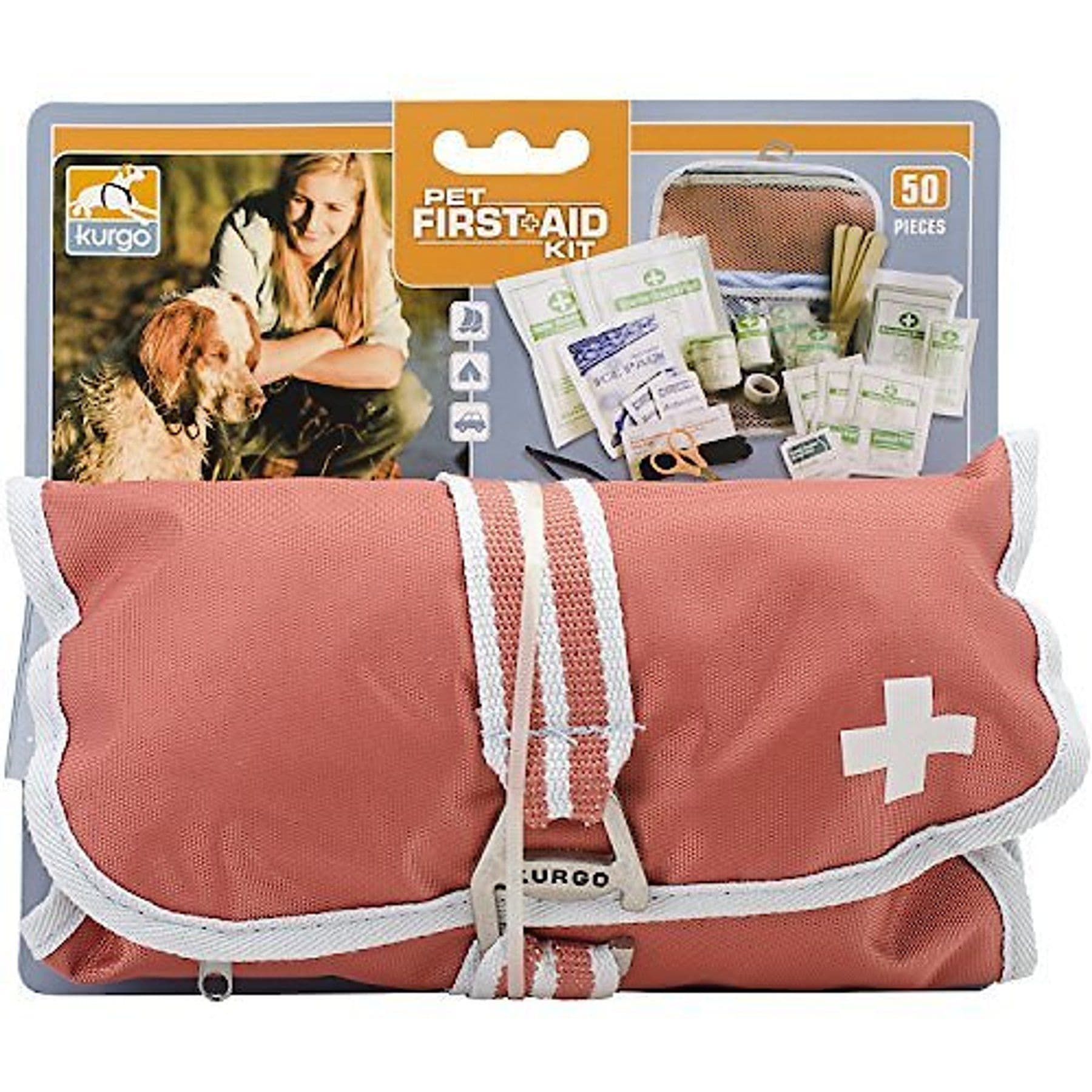
Keep gauze and other basic supplies together for the wound-care tasks your clinic demonstrates. Included alcohol or iodine pads are not instructions to apply them to a wound.
Webvet may earn a commission when you click through to Chewy, at no extra cost to you.
Merck's pet-owner wound guide notes that anemia, malnutrition, and some medications can slow healing. Tell the clinic if your dog is eating poorly and provide its medication list. Do not stop a prescribed drug or add supplements on your own; correcting a medical contributor requires knowing what it is.
- Protect healing: To help healing proceed as quickly as the injury allows, prevent licking, give medication correctly, keep follow-up appointments, and follow activity restrictions. Adding a stronger disinfectant or an unprescribed “healing” supplement does not remove a retained object or resolve trapped infection. Report missed doses or practical care difficulties so the plan can be adjusted.
- Keep a short trend log: At the observation times recommended by the clinic, compare the same features. A once-daily note can be more useful than a large collection of poorly matched close-ups:
- Wound edges: Do they look narrower, wider, or unchanged without touching them?
- Drainage: Is there more or less, and is there a new odor or color?
- Comfort: Is your dog resting normally or increasingly guarding the site?
- Behavior: Record appetite, drinking, and interest in ordinary activities.
- Care: Note medication times, licking incidents, and a wet or slipped dressing.

If photos are comfortable to take, use similar lighting, distance, and body position. Do not stretch the wound, press a ruler into it, remove a prescribed dressing, or restrain a painful dog simply to improve a picture. Send the dated observations with the photograph so the clinic has information the image cannot supply.
For example, an entry might read: “Before evening cleaning: exposed area looks slightly smaller, same small amount of fluid as this morning, ate normal meal, resting comfortably.” That supports continuing the prescribed plan until the arranged check. “Opening looks smaller, but a new swelling appeared and he is guarding the leg” describes a reason to call sooner. These are examples of how to report observations, not a patient timeline or a home diagnostic test.
Daily care that protects healing
The best thing to put on a dog's wound is whatever the examining veterinarian has selected for that injury. For initial gentle cleaning, water or saline may be appropriate. Do not routinely add hydrogen peroxide, alcohol, iodine preparations, herbal products, or human ointments. Neosporin is not an automatic choice for an open wound, particularly one the dog may lick.
If you are considering Neosporin, ask the veterinarian about the exact product and the injury before applying it. An ointment chosen for a minor human scrape does not establish a treatment plan for a dog's puncture, infected pocket, or deep wound. Adding it can also complicate instructions for a site that needs drainage or a specific dressing.
Covered versus uncovered is also a treatment decision. Some wounds need a professionally selected dressing; others must remain accessible for prescribed drainage and cleaning. A tight or wet home bandage can create additional problems. Do not decide that “air heals faster,” seal an open injury, or leave a bite wound to heal on its own without assessment. See our dog wound care guide for first aid, cleaning, and wound-specific covering decisions.
When home observation is appropriate
Letting a wound heal on its own should mean following a veterinarian's decision that home management is suitable, not assuming a small opening is harmless. Report how the injury happened, especially a fight or puncture, and whether pain, swelling, or lameness is present. Those details help the clinic determine how promptly your dog needs examination.
Arrange the home routine around the part you can actually perform. If the dressing must be changed at the clinic, observe the dog and the outside of the bandage between visits rather than unwrapping it for a daily photograph. Tell the clinic if a collar can be bypassed or cleaning cannot be done comfortably; an unworkable plan needs adjustment.
Follow the dressing instructions
Ask for a demonstration if dressing changes are part of the plan. Clarify how often to change it, what solution to use, and who to call if it gets wet or slips. Do not pull away material stuck to the wound. VCA's wound-care dos and don'ts notes that poorly applied bandages can impair circulation and wet bandages need prompt attention.
Surgical incisions and abscess wounds
A planned surgical incision usually begins with edges deliberately brought together. An open traumatic wound may have missing skin, contamination, or tissue damage that prevents immediate closure. Their surface appearances and cleaning instructions should not be treated as interchangeable. Follow the operation-specific plan and our spay and neuter incision healing guide for that separate recovery situation.
A skin abscess adds another issue: a pocket of infection beneath the skin. After treatment, an opening or drain may be intentional. The aim is controlled drainage and improving health, not the fastest possible scab. Our dog abscess guide explains recognition, treatment, and what to do if a swelling bursts.
For a dog with a Penrose drain, fluid output should generally diminish. VCA's dog-specific drain instructions describe removal commonly after two to four days, sometimes longer for extensive wounds. That is a veterinary appointment, not a home removal deadline. The wound can still need protection and further healing after the drain has finished its job.
Before the next recheck
Confirm these details before leaving the wound appointment:
- Whether the wound should remain open, has a drain, or is sutured closed.
- Which changes and amount of drainage are expected for this dog.
- The date of the next examination or drain-removal visit.
- Which activities remain restricted and whom to contact after hours.
Dog wound healing questions
Frequently Asked Questions
What are the 4 C's of wound healing?
“Four C's” is not a universal veterinary sequence for dog wound recovery, and it is not a timetable. Different resources use different memory aids. Ask your veterinarian what the phrase means in your dog's instructions. The biological processes described here are bleeding control, inflammation and cleanup, repair, and maturation, with substantial overlap.
Can a dog heal its wound by licking it?
Do not allow licking as wound care. A dog's mouth introduces bacteria, and repeated licking or chewing can damage the repairing surface. Use the collar or other protection your veterinarian recommends. If the dog can still reach the injury or is suddenly determined to lick it, report that rather than simply removing protection.
Can a scab mean a wound is fully healed?
A scab only describes the surface. Tissue underneath may still be healing, and a small opening can close over infection. Leave a scab alone unless the treating veterinarian has given specific drainage instructions for that wound. New swelling, pain, odor, or discharge after scabbing warrants contact with the clinic.
Does healthy granulation tissue always look the same?
No. Pink repair tissue can look different with lighting, moisture, wound location, and the surrounding skin. A photograph cannot confirm tissue health or reveal everything beneath it. Judge the appearance alongside comfort, swelling, drainage, and the veterinarian's examination; do not scrub or remove unfamiliar tissue to identify it.
$65 · no membershipIs your dog's itching or skin issue getting worse?
A licensed vet can examine your dog over video and prescribe treatment online when it's appropriate.
Talk to a vet- Licensed vets
- All 50 states
- same-day Rx
Webvet may earn a commission if you book.
Veterinarian · BVMS MRCVS
Dr. Pippa Elliott, BVMS, MRCVS, is a veterinarian with nearly 30 years of experience in companion animal practice. Dr. Elliott earned her Bachelor of Veterinary Medicine and Surgery from the University of Glasgow. She was also designated a Member of the Royal College of Veterinary Surgeons. Married with 2 grown-up kids, Dr. Elliott has a naughty Puggle named Poggle, 3 cats and a bearded dragon.


