Spay Incision Healing: What's Normal, Day by Day, in Dogs and Cats
A vet-reviewed guide to normal spay incision healing in dogs and cats: what a healthy incision looks like, a day-by-day timeline, how to protect the wound, and the red-flag signs that mean call your vet today.

BVMS MRCVS
Medically reviewed by Dr. Pippa Elliott, BVMS MRCVS · Last reviewed

This article contains affiliate links. Webvet may earn a commission when you buy through them, at no extra cost to you.
Watching your pet's belly after surgery can be nerve-wracking. Is that pink color normal? Should there be a little swelling? When is a scab a problem? Spay incision healing follows a fairly predictable path, and knowing what healthy healing looks like, day by day, is the fastest way to tell "this is fine" from "call the vet now."
- 1A normal incision looks clean, closed, and slightly pink; mild early bruising can be normal.
- 2A small firm lump under the skin is often a normal seroma or suture reaction.
- 3Warning signs: spreading redness, swelling, discharge or pus, an opening, or a bad smell.
- 4Keep it dry; no baths or swimming for 10 to 14 days.
- 5Photograph the incision daily so you can spot changes and call the vet early.
This guide covers the whole incision-healing picture for both dogs and cats: what a normal healing spay incision looks like, the timeline from surgery to a closed wound, how to protect the site, and the warning signs you should never ignore. It is a companion to our full recovery guides, so we focus here on the incision itself.
What a normal healing spay incision looks like (with a photo guide)

If you only remember one thing about normal spay incision healing, make it this: a healthy incision has skin edges that touch, is dry, and is a normal to slightly reddish-pink color for the first few days. According to VCA Animal Hospitals, the edges of a well-healing incision should be touching, and the skin should be its normal color or a slightly reddish-pink.
Here is what a normal, healing incision generally shows:
- Edges are closed and touching, held by sutures, staples, or surgical glue (or dissolving stitches under the skin).
- A thin, clean line, sometimes with a little bruising (yellow-green to purple) spreading around it in the first days. Bruising can look alarming but is often normal.
- Slight pink to reddish color along the edges early on, fading over the first week.
- Mild, firm swelling right along the incision line, especially in active pets or those with absorbable "buried" sutures.
- Small amounts of dried blood or a thin scab in the first day or two.
What you should not see: a wide gap between the edges, thick yellow or green discharge, a bad odor, heavy or ongoing bleeding, or a hot, growing swelling. Those belong in the warning-signs section below.
A note on "spay incision healing pictures." Many owners search for photos to compare. A reference image of a clean, dry, closed incision is useful, but every pet's skin tone, fur, and surgical technique differ. Photos help you spot obviously abnormal wounds, but they cannot diagnose a subtle infection. When your gut says something looks off, a quick phone photo sent to your clinic beats any stock image online.
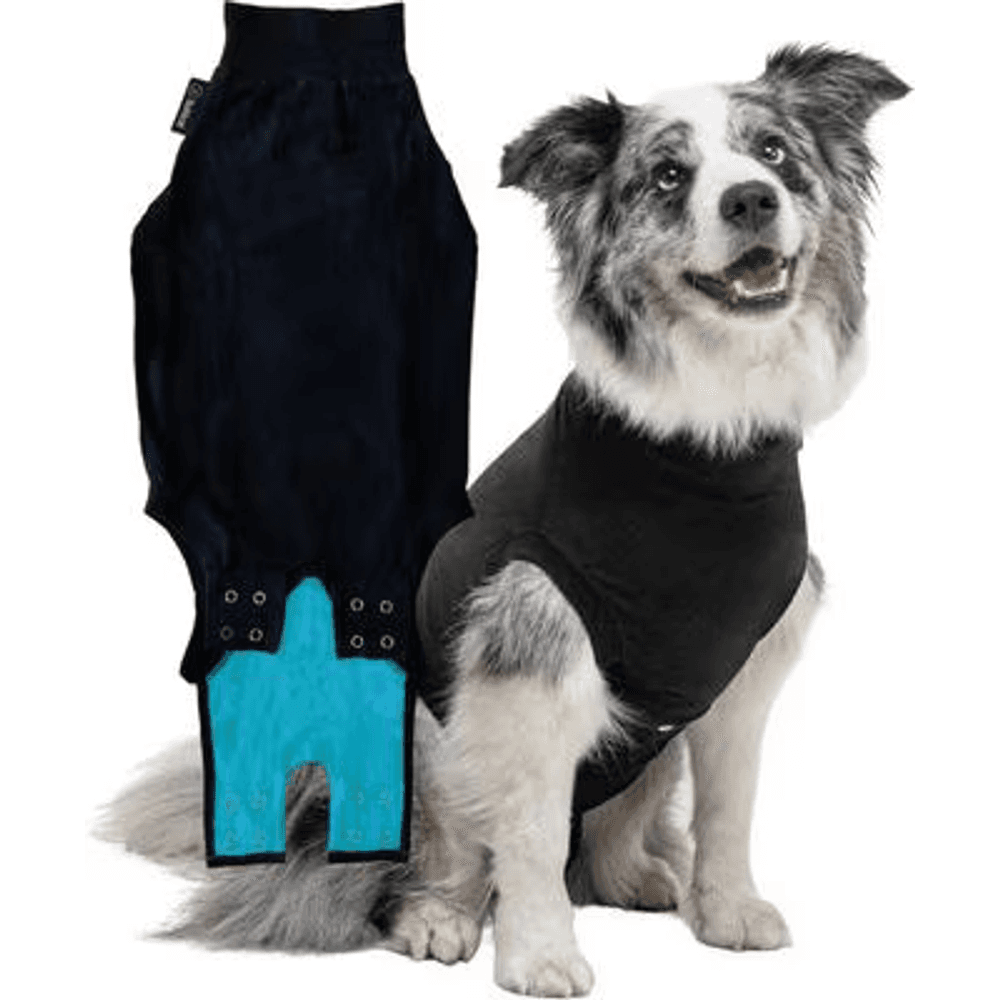
A breathable full-body recovery suit that covers a spay or abdominal incision, the vet-recommended cone alternative that lets a dog rest, walk, and go potty normally without licking or scratching the wound.
Webvet may earn a commission when you click through to Chewy, at no extra cost to you.
Normal vs. abnormal at a glance
| Feature | Normal healing | Call the vet |
|---|---|---|
| Skin edges | Touching, closed | Gaping, separated, opening (dehiscence) |
| Color | Pink to slightly reddish, fading | Bright/spreading red, dark, or bruising that worsens after day 3 |
| Discharge | None, or a tiny bit of clear/pink-tinged fluid early | Yellow/green pus, cloudy fluid, foul smell |
| Swelling | Mild, firm, stable or shrinking | Growing, soft/squishy, hot to the touch |
| Bleeding | A few drops in the first 24 hours | Active bleeding, or fresh bleeding after day 1 |
| Your pet | Bright, eating, resting | Lethargic, not eating, vomiting, painful belly |
The spay incision healing process, day by day

The spay incision healing process happens in overlapping stages. The surface usually looks healed by about two weeks, but the deeper tissue keeps strengthening for weeks after that. The Animal Humane Society notes that spay and neuter incisions heal over roughly 10 to 14 days, and that a small amount of blood and some redness or swelling at the incision is expected early on.
Here is a realistic spay incision day by day timeline. Individual pets vary, so treat this as a guide, not a promise.
Days 1 to 3: fresh incision
- The line looks freshest now: slightly pink to red, possibly a little bruised.
- A few drops of blood or thin pink-tinged fluid in the first 24 hours can be normal.
- Mild swelling and tenderness are common. Your pet may be quiet or groggy from anesthesia and pain medication.
- This is the highest-risk window for the incision opening if your pet is too active. Keep them calm and confined.
Days 4 to 7: settling down
- Redness and bruising begin to fade. Swelling should be stable or shrinking, not growing.
- The incision starts to feel less tender. A thin scab may form and is usually fine (do not pick it off).
- By 7 days after spay surgery, a dog or cat's incision should look noticeably calmer than day 1. This is often when owners search "spay incision after 1 week" to check they are on track: a drier, flatter, less-red line is the goal.
- Many pets feel much better now, which is exactly why activity restriction still matters. Feeling good is not the same as being healed.
Days 8 to 14: surface closes
- The surface skin is knitting together. Any external sutures or staples are typically removed around 10 to 14 days if they are not the dissolving kind.
- The line should be dry, flat, and pale, with edges firmly closed.
- Internal (buried) sutures dissolve over weeks, so a small, firm bump under the skin during this period can be normal healing tissue rather than a problem.
Weeks 2 to 6: deep strength
- Even after the skin looks healed, the deeper muscle and body-wall closure keeps gaining strength for several weeks. This is why vets are cautious about lifting activity limits too soon.
- Full internal healing and complete dissolving of absorbable sutures can take several weeks.
For the complete species-by-species aftercare routine (feeding, medication schedules, and when normal energy returns), see our dog spay recovery and cat spay recovery guides. This article stays focused on the incision.
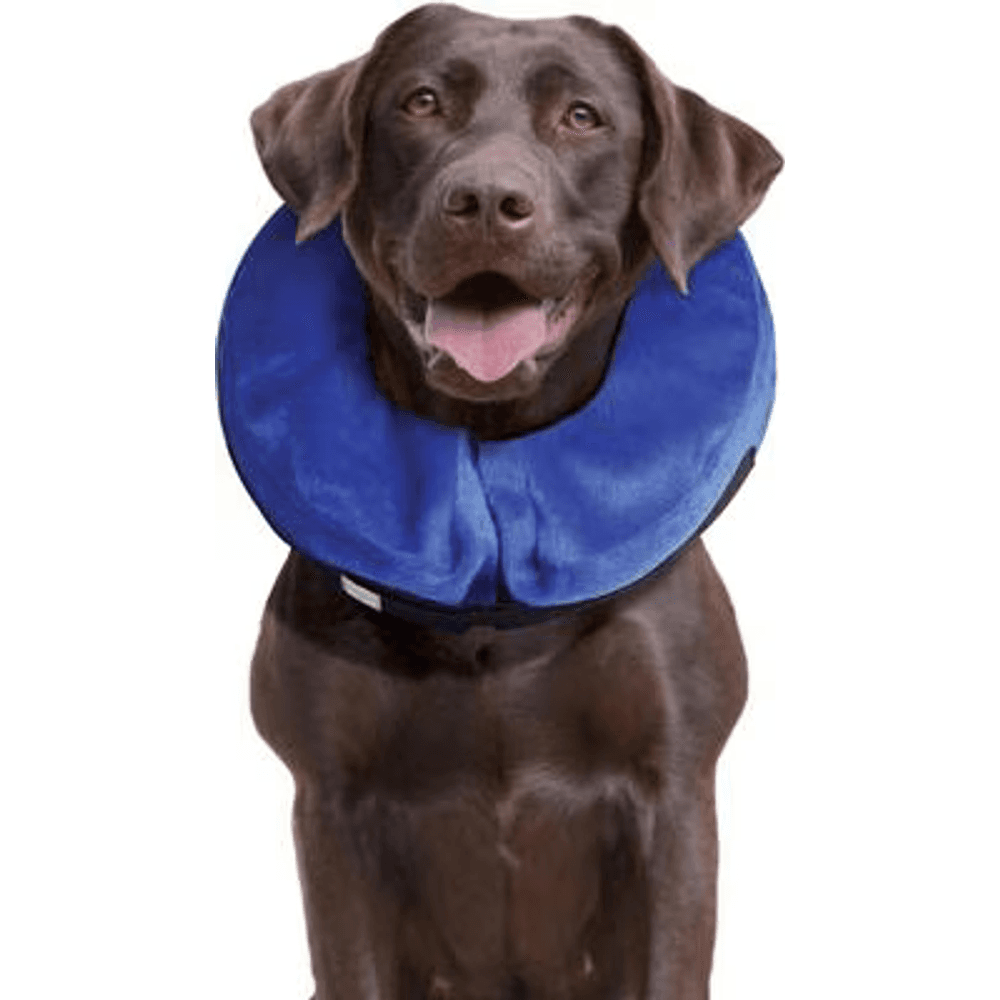
A soft, inflatable donut-style recovery collar that keeps many pets from licking or biting at a healing surgical incision or hot spot while still letting them eat, drink, and sleep in comfort.
Webvet may earn a commission when you click through to Chewy, at no extra cost to you.
Dog spay incision healing: what's normal for your dog

Dog spay incision healing follows the same overall arc as above, with a few dog-specific notes. A dog's spay incision usually sits on the midline of the lower belly and can be a couple of inches long, depending on the dog's size and the surgical approach.
What is normal for dog spay incision healing in the first week or two:
- Some redness and mild swelling early, fading over days 4 to 7, per VCA's incision-care guidance.
- Bruising that may spread down the belly or toward the legs in the first days. Gravity pulls it, so it can appear away from the incision itself.
- A small, firm lump at the incision from buried absorbable sutures or from a "seroma" (a pocket of clear tissue fluid). Many small seromas resolve on their own, but a dog spay incision lump that is growing, hot, painful, or draining needs a vet check.
Dogs are often the harder patients simply because they feel better fast and want to run. That energy is the enemy of a clean incision. VCA's spaying guidance for dogs advises using an Elizabethan collar or recovery garment to stop licking and chewing, and limiting activity (leash walks only, no swimming, bathing, or running) in the days after surgery.
A common worry is "dog spay incision after 1 week": by day 7, expect a drier, flatter, less-red line. If instead it is redder, more swollen, or opening at day 7 than it was at day 3, that is a reason to call. For a deeper look at the visual progression, see our healing-stages explainer linked in the cluster below. Male dogs heal a bit differently because the neuter incision is in a different spot and is often smaller, so if you have a boy, our dog neuter recovery guide is the better fit.

 $65 · no membership
Have a health question about your pet?
A licensed vet can assess your pet over video and prescribe online when it's appropriate.
 Talk to a vet
- Licensed vets
- All 50 states
- same-day Rx
Webvet may earn a commission if you book.
Cat spay incision healing: what's normal for your cat

Cat spay incision healing is similar to a dog's, but cats hide discomfort well and are meticulous groomers, which raises the risk of them licking the site open. A cat's spay incision is usually on the midline of the belly (or occasionally on the flank/side, depending on the clinic's technique).
Normal signs during cat spay incision healing:
- Edges touching, a thin line, and a slightly pink color that fades over the first week, matching VCA's cat incision-care guidance.
- A little dried blood or a crusty appearance in the first days. A cat spay incision that looks slightly crusty from dried fluid is often normal, but crustiness combined with redness, swelling, discharge, or odor is not.
- Mild bruising, which can look more dramatic on pale-skinned cats.
There is one thing you should never do with a cat's incision: VCA explicitly warns that you should never clean a cat's incision with hydrogen peroxide or alcohol, because these damage healing tissue and delay recovery. If the vet wants the area cleaned, they will tell you exactly how.
By cat spay incision after 1 week, you want the same picture as in dogs: drier, flatter, less pink. Kittens tend to bounce back quickly, which again makes confinement and the cone (or a recovery suit) essential. For the full feeding-and-monitoring routine, our cat spay recovery guide covers it, and if you have a male cat, see cat neuter recovery for that different, smaller incision.
Dog vs. cat incision healing: quick comparison
| Factor | Dog | Cat |
|---|---|---|
| Typical incision site | Midline lower belly | Midline belly (sometimes flank) |
| Surface healing time | ~10 to 14 days | ~10 to 14 days |
| Main risk to the incision | Too much activity, running, jumping | Meticulous licking/grooming |
| Best protection | Cone or recovery suit + confinement | Recovery suit often better tolerated than a cone |
| Never clean with | Peroxide/alcohol unless vet directs | Peroxide/alcohol (explicitly warned against) |

Warning signs after spaying: when to call your vet

This is the most important section. Reassurance is only useful when you also know exactly when it does not apply. Most incisions heal uneventfully, but the following are the red flags that mean stop monitoring and start calling. Contact the clinic that did the surgery, or an emergency vet if they are closed.
Call your vet the same day if you see:
- The incision opens, gapes, or the skin edges separate (this is called dehiscence). VCA advises contacting the vet if the pet removes some or all of the sutures or the incision opens. Do not try to re-close it yourself.
- Discharge, pus, cloudy fluid, or a foul smell from the incision. VCA lists swelling, excessive redness, foul smell, and discharge as reasons to call.
- Bleeding that does not stop, or fresh bleeding after the first day.
- Swelling that keeps growing or feels hot, especially after day 3.
- Excessive or spreading redness rather than the mild pink that should be fading.
Treat as an emergency (possible internal problem):
- Not eating for more than 24 to 48 hours, vomiting, diarrhea, or marked lethargy. The Animal Humane Society lists not returning to eating or drinking in the days after surgery, and intermittent vomiting for days after surgery, among the signs that warrant contacting the clinic. (AHS notes some decreased energy in the first 24 hours can be normal, but energy that stays low, or a pet that becomes markedly lethargic, is a standard reason to call.)
- Pale gums, weakness, a swollen or painful belly, or collapse. These can signal internal bleeding after spaying and are an emergency. Do not wait to see if it improves.
- Pain that worsens instead of improving over the days after surgery.
On lumps and "not healing": A small, firm spay incision lump from buried sutures or a small seroma is common and often harmless. But a spay incision not healing after two weeks, a lump that grows, drains, is hot or painful, or a dog spay incision lump months later all deserve a vet exam rather than a wait-and-see. An infected cat spay incision will typically look red, swollen, and may ooze; do not treat it at home.

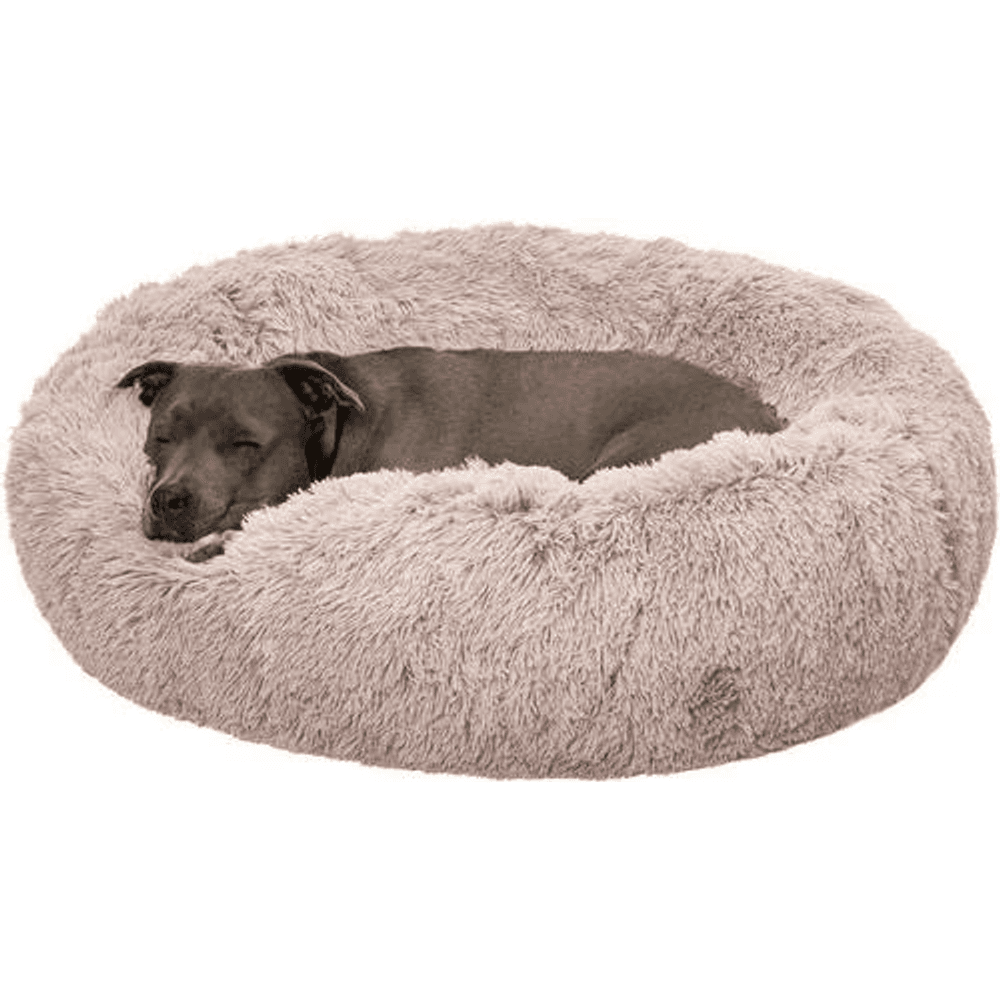
A plush, long-fur donut bolster bed with a raised rim that gives a recovering pet a secure, cushioned place to curl up during the crucial 10 to 14 days after surgery.
Webvet may earn a commission when you click through to Chewy, at no extra cost to you.
How to protect the incision while it heals: cones, suits, and activity limits
Good spay incision healing is mostly about two things: keeping the mouth off the wound and keeping the body calm. Get those right and most incisions heal without drama.
Keep the cone on
The Elizabethan collar (the cone) exists for one reason: to stop your pet from licking or chewing the incision open. VCA recommends using an e-collar or recovery garment to prevent this. Licking is not "cleaning"; it introduces bacteria and mechanically pulls the wound apart, and it is a leading cause of a spay incision not healing.
"Should I cover my dog's spay incision?" In most cases the vet leaves the incision open to air, and covering it is not needed or recommended unless your vet directs it. What you should "cover" is your pet's access to it, with a cone or a snug dog spay recovery suit (a fabric bodysuit) that keeps the mouth away while letting the incision breathe. Suits are often better tolerated than cones and can be a good option for both dogs and cats. If you are weighing cone versus suit versus inflatable collar, our dedicated guide breaks down the trade-offs: cone alternatives after spay/neuter.
Limit activity for 10 to 14 days
VCA's incision-care guidance is clear: restrict activity for 7 to 14 days with no running, jumping, or strenuous play, keep the incision dry, and do not bathe the pet during this window. Here is how that translates to common questions:
- "Can my dog run 10 days after spay?" Not on its own. Even at day 10, the deep tissue is still gaining strength. Keep to leash walks and wait for your vet's clearance (often around the two-week recheck) before free running.
- "How long after a dog is spayed can they do stairs?" Minimize stairs during the restriction period; a single controlled trip on leash is better than free dashing up and down. Ask your vet about your specific dog.
- "My dog jumped after being spayed, what now?" One jump is not automatically a disaster, but inspect the incision for any opening, new swelling, or bleeding. If the edges look separated or it starts bleeding, call the vet. Then double down on confinement.
Practical containment tips:
- Use a crate, pen, or small gated room to prevent jumping on and off furniture.
- Leash walks only for bathroom breaks; no dog parks, no fetch, no rough play with other pets.
- No baths, swimming, or getting the incision wet until your vet says it is fully healed.
- Keep the cone or suit on at all times, including overnight, unless your vet says otherwise. Most incisions come apart the one time the cone is off.
- Check the incision twice a day in good light so you catch changes early.
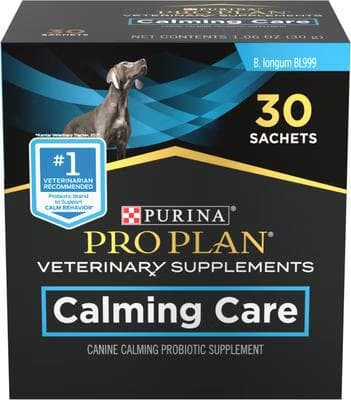
Probiotic supplement formulated to help dogs maintain calm behavior, with the BL999 strain. Liver-flavored powder in 30 daily sachets.
Webvet may earn a commission when you click through to Chewy, at no extra cost to you.
Where this article fits (the recovery cluster)
This is the incision-healing spoke of our spay/neuter recovery series. It owns the "what does it look like and when do I worry" question across dogs and cats. For everything beyond the incision, use these companions:
- Spay/neuter recovery hub: the overview that ties the whole recovery process together.
- Dog spay recovery and cat spay recovery: full species-specific aftercare timelines (feeding, meds, activity, when to return to normal).
- Dog neuter recovery and cat neuter recovery: male-specific care; the neuter incision is in a different spot and heals a little differently.
- Cone alternatives after spay/neuter: a deeper comparison of cones, suits, and inflatable collars.

These incision milestones apply to surgical wounds closed by a veterinarian. For a traumatic open wound, use our dog wound healing stages guide. For recovery after a treated bite-wound abscess, see cat abscess healing stages; drainage and recheck instructions differ from routine spay recovery.
How long does a spay incision take to fully heal?
To pull it together: the surface of a spay incision usually heals in about 10 to 14 days, which is when external sutures or staples typically come out. But full internal healing, including the body-wall closure and the dissolving of buried absorbable sutures, continues for several weeks afterward, per VCA, which notes that larger incisions and major surgeries can require keeping a pet housebound for several weeks. The Animal Humane Society reinforces the same point from the other direction: it warns that strenuous activity in the first two weeks can cause the internal sutures to dissolve prematurely, which is precisely the risk of treating a good-looking surface as fully healed. That gap is exactly why you keep the cone on and activity restricted for the full window, even after the skin looks perfect.
The bottom line for spay incision healing: expect a little redness, mild swelling, and maybe some bruising early; expect it to get calmer, drier, and flatter each day. If it is trending the wrong way, or your pet seems unwell, do not wait it out. A same-day phone call to your vet is always the right move when something looks off.
A day-by-day look at a normal spay or neuter incision
Knowing what normal looks like makes the warning signs obvious. Here is the typical arc for a routine incision, though your clinic's own discharge instructions always come first.
- Days 1 to 3: A clean line, sometimes with mild redness, slight bruising, or a little swelling. A tiny bit of clear or pinkish fluid in the first day can be normal. Your pet may be groggy and less interested in food the first evening.
- Days 3 to 5: Redness and swelling should be improving, not worsening, and the edges stay together. Any firm fluid pocket (a seroma) should be shrinking.
- Days 5 to 10: The incision looks progressively better and the skin edges knit together. Your pet feels better, which is exactly when owners relax the rules too soon. Keep the cone on and activity limited.
- Around days 10 to 14: Healing is largely complete. Skin sutures or staples, if used, are typically removed at a recheck; some clinics use absorbable sutures under the skin that need no removal.
Normal vs abnormal: the checklist
Call your vet if you see any of the following, which the Animal Humane Society flags as reasons to have the incision checked:
- The incision is open, gaping, or the edges have separated
- Discharge, especially yellow, green, or bloody pus, or a bad smell
- Swelling that is increasing rather than shrinking, or that feels hot
- Bleeding that does not stop, or ongoing fresh blood
- Your pet is lethargic, not eating, vomiting, or seems painful beyond the first day
- Sutures or staples come out early, or your pet has licked or chewed the site (the reason the cone stays on)
When in doubt, photograph the incision and call. A problem caught on day 4 is a quick fix; one ignored for a week can become a serious infection or a reopened wound.
Keeping the incision clean and dry
Do not bathe your pet or let the incision get wet until it is fully healed, usually about 10 to 14 days, because moisture softens the wound and invites infection. Skip baths, swimming, and wet grass. Do not apply ointments, creams, hydrogen peroxide, or human antiseptics unless your veterinarian specifically tells you to, since many of them sting and slow healing. Check the incision twice a day in good light so you catch any change early. If your pet keeps reaching the site, the cone is not optional, and a recovery suit or surgical onesie is a comfortable alternative for many pets as long as it fully covers the incision and cannot be chewed through. Finally, keep other pets from licking the incision and keep the recovering pet away from stairs, furniture jumping, and rough play for the full two weeks, even after it starts to look healed, because the deeper body-wall stitches take longer to gain strength than the skin on the surface.
Frequently Asked Questions
What should a healing spay incision look like?
A healing spay incision should have skin edges that are touching and closed, be dry, and be a normal to slightly reddish-pink color that fades over the first week. VCA notes the edges should touch and the skin should be its normal color or slightly reddish-pink. Mild firm swelling and a little bruising in the first days are common. You should not see a gap between the edges, yellow or green discharge, a foul smell, or heavy bleeding; those are reasons to call your vet.
How long does a spay incision take to fully heal?
The surface of a spay incision usually heals in about 10 to 14 days, which is when external sutures or staples are typically removed. Full internal healing, including the body-wall closure and dissolving of buried absorbable sutures, continues for several more weeks. That is why activity restriction should last the full window your vet recommends, not just until the skin looks closed.
Should I cover my dog's spay wound?
In most cases the vet leaves the incision open to the air, and you should not cover it with a bandage or apply creams unless your vet specifically directs it. What you do need to cover is your dog's access to the wound: use an Elizabethan collar (cone) or a fabric recovery suit to stop licking and chewing, which is a leading cause of incisions failing to heal. Keep it on at all times until your vet says otherwise.
Can my dog run 10 days after spay?
Not freely on its own. Even at 10 days, the surface may look healed but the deeper tissue is still gaining strength for several weeks. Keep your dog to leash walks and wait for your vet's clearance, which often comes at the two-week recheck, before allowing free running, jumping, or strenuous play. VCA advises restricting activity with no running or jumping for 7 to 14 days.
How long after a dog is spayed can they do stairs?
Minimize stairs throughout the roughly 10 to 14 day activity-restriction period. A single controlled trip on a leash is far safer than letting your dog dash up and down freely, which can strain the incision. Ask your vet about your specific dog, since size, incision location, and how the dog is healing all matter. Full return to normal stair use should wait for your vet's clearance.
How long is a female dog in pain after spaying?
Most dogs are most uncomfortable for the first 2 to 3 days, when tenderness and mild swelling are expected, then improve steadily over the following days as the incision settles. Your vet typically sends home pain medication to keep her comfortable; give it exactly as prescribed. Discomfort should lessen each day. Pain that worsens rather than improves, or a dog that will not eat or seems very lethargic, is a reason to call the vet.
Should I cover my dog's spay incision?
Generally no. Vets usually leave the incision uncovered to air-heal, and you should not apply bandages, human creams, ointments, or disinfectants unless your vet tells you to. VCA advises not bathing the pet or applying anything to the incision unless directed. The protection that matters is keeping your dog from licking or chewing it, using a cone or recovery suit, plus limiting activity for 10 to 14 days.
$65 · no membershipHave a health question about your pet?
A licensed vet can assess your pet over video and prescribe online when it's appropriate.
Talk to a vet- Licensed vets
- All 50 states
- same-day Rx
Webvet may earn a commission if you book.

Editor
The Webvet Editorial Team is the in-house group of pet-care editors and writers behind Webvet, operated by Smart Pet Collective. The team researches, writes, and maintains Webvet's pet health, behavior, and medication content. Every article follows a defined editorial process: research from reputable veterinary and scientific sources, careful drafting, mandatory review of medical content by a credentialed veterinarian, and dated publication. Health and medication articles are medically reviewed by a licensed veterinary professional before they go live and are kept current over time.
Veterinarian · BVMS MRCVS
Dr. Pippa Elliott, BVMS, MRCVS, is a veterinarian with nearly 30 years of experience in companion animal practice. Dr. Elliott earned her Bachelor of Veterinary Medicine and Surgery from the University of Glasgow. She was also designated a Member of the Royal College of Veterinary Surgeons. Married with 2 grown-up kids, Dr. Elliott has a naughty Puggle named Poggle, 3 cats and a bearded dragon.


