Cat Neuter Recovery: Day-by-Day Timeline and Aftercare Guide
A vet-reviewed guide to cat neuter recovery for male cats: how long healing takes, day-by-day timeline, cone and incision care, behavior changes, and the emergency warning signs that mean call your vet right away.

BVMS MRCVS
Medically reviewed by Dr. Pippa Elliott, BVMS MRCVS · Last reviewed

This article contains affiliate links. Webvet may earn a commission when you buy through them, at no extra cost to you.
Neutering is one of the most routine surgeries your male cat will ever have, and most cats bounce back fast. But cat neuter recovery is not finished when your cat wakes up bright-eyed the next morning. The surgical site needs the full 10 to 14 days of quiet, protected healing that your vet advises, even when it looks healed after a few days.
- 1Neuter recovery is quicker than a spay; most cats feel better within a few days.
- 2Keep the cone on and limit jumping for about 7 days.
- 3Most scrotal neuters have no skin stitches; just keep the area clean.
- 4Use dust-free or paper litter to protect the site.
- 5Call the vet for swelling, bleeding, discharge, or a cat who will not eat.
This guide walks you through what to expect hour by hour and day by day, how to care for your male cat after neutering, how to tell a normal incision from one that needs a vet, and the emergency signs you should never ignore. Everything here is drawn from primary veterinary sources and is meant to sit alongside, not replace, your own vet's discharge instructions.
Cat neuter recovery: what to expect (quick answer)
Here is the short version for anyone who just brought their cat home and wants the essentials.
- The surgery itself is quick and low-risk. A male cat neuter (castration) is a short procedure, and most cats are stable and able to move about within an hour or so of surgery, according to the Cornell Feline Health Center.
- The incision usually looks healed in 5 to 7 days. For a simple cat neuter, surface healing is typically complete in about 5 to 7 days, per PetMD.
- Activity and lick restriction runs the full 10 to 14 days. Even though the site looks healed early, your cat should stay on exercise restriction and keep the cone or recovery suit on for the 10 to 14 days following surgery, as the Animal Humane Society advises. Do not stop early.
- Keep the incision dry and unlicked. No baths, no cleaning the site, and no letting your cat lick it.
- Only vet-prescribed pain relief. Never give human painkillers. Acetaminophen (Tylenol) is toxic to cats and should never be given, per VCA Animal Hospitals, and cats are far more sensitive to aspirin poisoning than dogs, per the Pet Poison Helpline.
The rest of this article expands each of these into a practical plan. This is a spoke of our broader spay and neuter recovery hub, which links out to female-cat, dog, cone, and incision-healing guides.
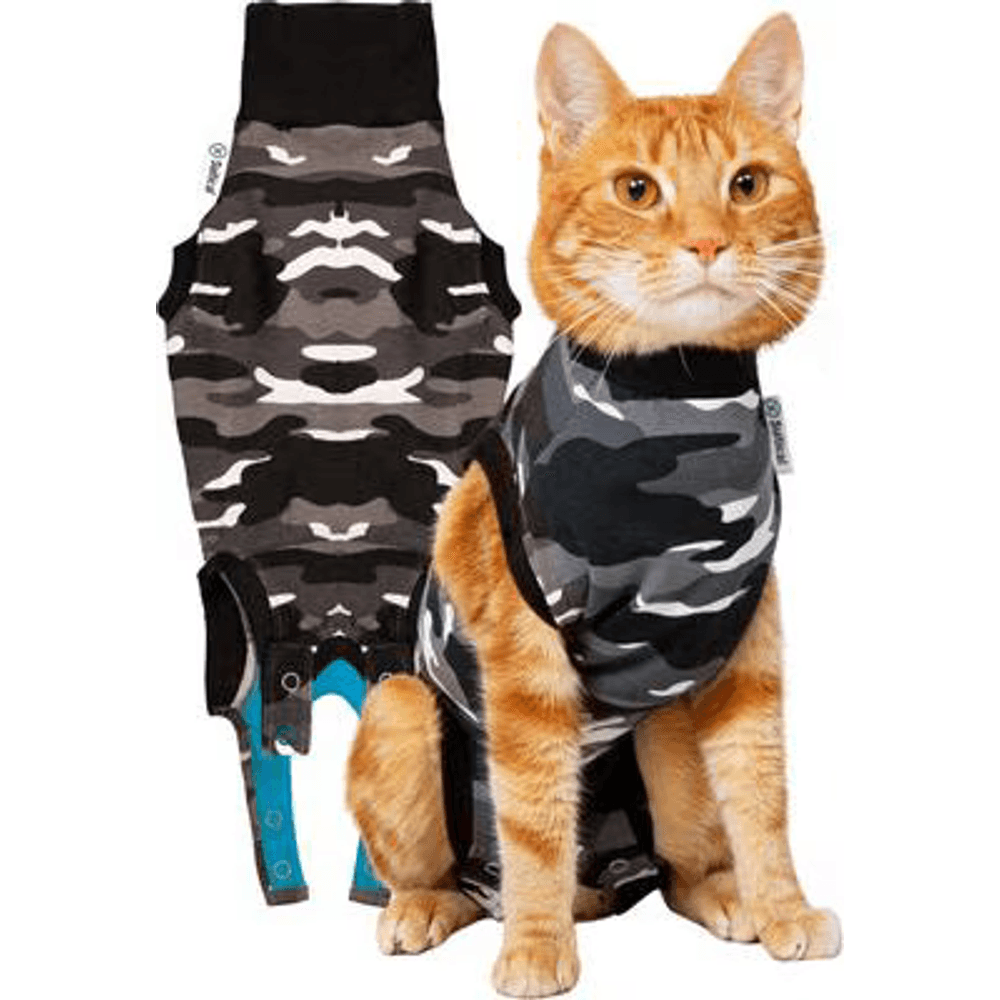
A breathable full-body recovery suit made for cats, the vet-recommended cone alternative that covers a spay or abdominal incision so a cat cannot lick or scratch the wound while she still moves, uses the litter box, and rests in comfort.
Webvet may earn a commission when you click through to Chewy, at no extra cost to you.
Cat neuter recovery time: how long does it take?
The most common question is simply: how long is cat neuter recovery? The honest answer is that there are two clocks running at the same time, and confusing them is the number-one reason cats get hurt during recovery.
Clock one is surface healing. For a simple, uncomplicated male cat neuter, the incision usually looks healed within about 5 to 7 days, according to PetMD. Male cat neuter incisions are small scrotal incisions and often are not even closed with visible skin stitches.
Clock two is protected recovery. The tissue underneath keeps knitting together for longer, which is why the standard veterinary instruction is exercise restriction and close supervision for the 10 to 14 days following surgery, per the Animal Humane Society. The Cornell Feline Health Center advises supervising the cat closely and keeping it as quiet as possible for about a week after surgery; Cornell notes that this quiet period is especially important for preventing abdominal spay incisions from herniating, so a scrotal neuter incision is lower-risk on that specific point, but the same restraint still protects the healing site. Because a small scrotal incision can look deceptively healed early, the safer default is to follow the Animal Humane Society's full 10-to-14-day restriction rather than easing off at a week.
So when people ask about male cat neuter recovery time, the practical answer is: expect your cat to feel almost normal within a couple of days, expect the incision to look healed by about a week, but plan to keep restrictions in place for the full 10 to 14 days your vet specifies.
How recovery time compares by situation
| Situation | Feels normal | Incision looks healed | Full restriction period |
|---|---|---|---|
| Routine male cat neuter | 1 to 2 days | ~5 to 7 days | 10 to 14 days |
| Cryptorchid (undescended testicle) neuter | 2 to 3 days | ~7 to 10 days | 10 to 14 days, sometimes longer |
| Feral or outdoor cat (TNR) | 1 to 2 days | ~5 to 7 days | Often released sooner; see special-cases section |
| Female cat spay (for comparison) | 2 to 3 days | ~7 to 10 days | 10 to 14 days |
Recovery time ranges reflect general guidance from PetMD and the Animal Humane Society; your cat's exact timeline is set by your vet. For a deeper look at the female timeline, see our cat spay recovery guide.
Recovery timeline day by day (first 24 hours to full healing)

Here is a realistic cat neuter recovery day by day map. Think of it as three stages rather than 14 identical days. Individual cats vary, so treat this as a guide and defer to your vet's discharge sheet.
The first 24 hours: grogginess and a quiet room
Your cat comes home still shaking off anesthesia. He may be wobbly, sleepy, and quieter than usual, and that is expected.
- Offer a small meal. Anesthesia can cause nausea, so give a small portion of the normal food a few hours after arriving home rather than a full bowl.
- Confine him to one quiet, warm room with a low bed, water, and a low-sided litter box he does not have to climb into.
- Check the incision once tonight if he tolerates it, without touching it.
- Do not be alarmed by mild grogginess. Most cats are stable and moving about within an hour of surgery, per Cornell, but full mental clarity can take the night.
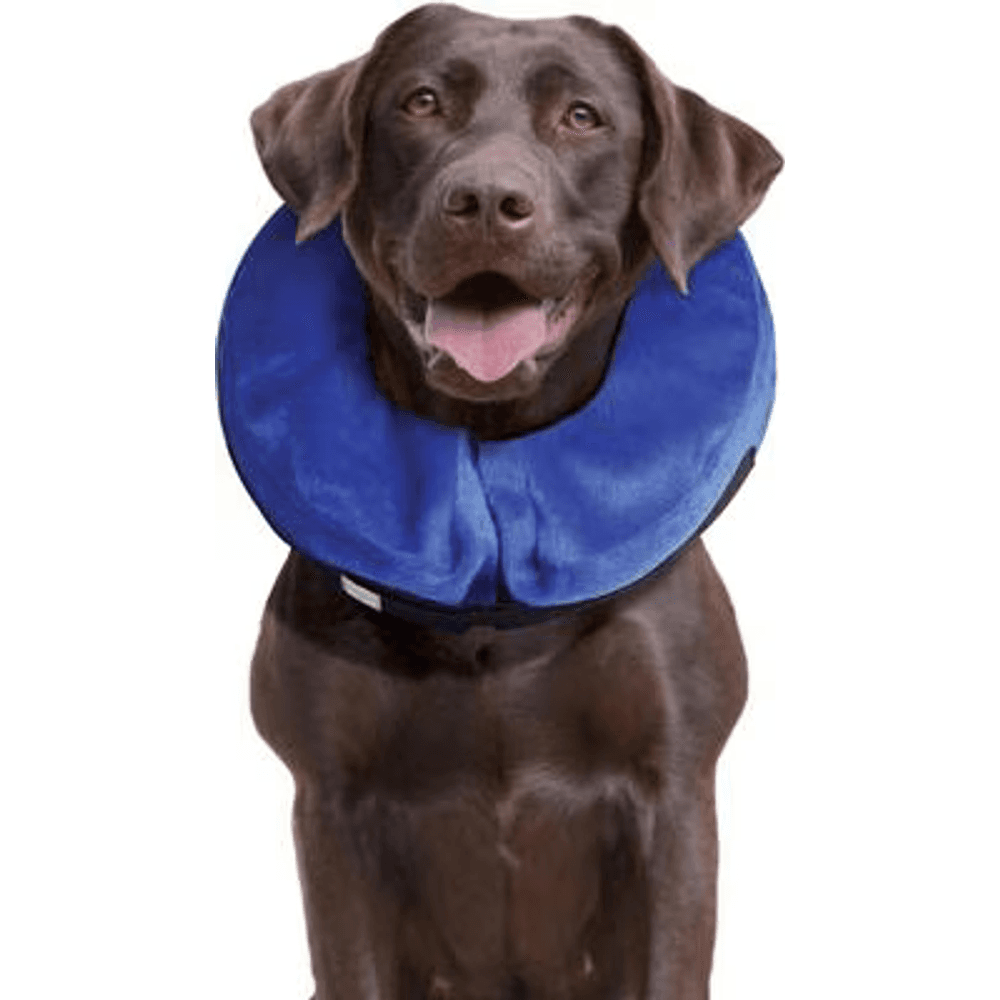
A soft, inflatable donut-style recovery collar that keeps many pets from licking or biting at a healing surgical incision or hot spot while still letting them eat, drink, and sleep in comfort.
Webvet may earn a commission when you click through to Chewy, at no extra cost to you.
Days 1 to 3: alert, hungry, and wanting to jump
By the second and third day most cats are eating normally, using the litter box, and acting like themselves. This is deceptively the riskiest window, because your cat feels great and wants to leap onto the counter while the deeper tissue is still fragile.
- Restrict jumping and climbing. No cat trees, no counters, no dashing up stairs.
- Keep the cone or recovery suit on at all times, including while eating and sleeping.
- Check the incision twice daily for redness, swelling, or discharge, as the Animal Humane Society recommends.
- Continue any prescribed pain medication exactly as directed.
Days 5 to 14: looks healed, but keep restrictions
Around day 5 to 7 the incision typically looks closed and dry. Do not read that as a green light. The Animal Humane Society advises keeping exercise restriction and the protective collar or suit on for the full 10 to 14 days.
- If non-dissolvable skin sutures were used, they come out at 10 to 14 days; intradermal (buried) sutures dissolve on their own, per PetMD. Many male neuters use no visible stitches at all.
- Reintroduce normal activity only once your vet confirms the site is fully healed.
A quick word on searches for male cat neuter healing photos day by day and cat neuter recovery pictures: real incisions vary a lot, and a photo can be reassuring or falsely alarming depending on lighting and your cat's coat. Use the healthy-versus-concerning description in the next section as your reference, and send your own vet a photo if you are unsure. For a dedicated visual walk-through of what closing tissue looks like, see our spay and neuter incision healing guide.
 $65 · no membership
Have a health question about your cat?
A licensed vet can assess your cat over video and prescribe online when it's appropriate.
 Talk to a vet
- Licensed vets
- All 50 states
- same-day Rx

Webvet may earn a commission if you book.
How to care for your male cat after neutering

Good cat neuter recovery care comes down to a handful of habits repeated consistently. Here is the full cat neuter recovery process in practical terms.
1. Create a safe, confined recovery space. Set up one small room or a large crate with a low bed, fresh water, food, and a low-entry litter box. Remove anything he can climb or jump onto. A calm, boring space is exactly what promotes healing.
2. Keep the incision dry and untouched. The Animal Humane Society is explicit: keep the incision dry, do not bathe your cat, and do not apply ointments or clean the site unless your vet tells you to. Water and licking are the two biggest infection risks.
3. Prevent licking with a cone or recovery suit. A cat must be stopped from licking the surgical site, using an e-collar or a recovery suit, according to PetMD. Licking reopens wounds and introduces bacteria.
4. Give only vet-prescribed pain medication. Follow the dosing schedule your clinic sent home. Never reach for the human medicine cabinet.
5. Check the litter box. Switch to a plain, dust-free or paper-based litter for about a week so granules do not stick to the incision, and confirm your cat is urinating and passing stool normally.
6. Feed lightly at first, then normally. A small first meal, then back to the regular diet as appetite returns.
7. Keep it calm. Some cats get stressed or restless in confinement. Soft lighting, familiar bedding, and a calming aid (a pheromone diffuser or vet-approved calming treat) can smooth the two-week stretch.
A plush orthopedic foam mattress that cushions aging joints and pressure points, giving a stiff or trembling senior dog warm, supportive rest.
Webvet may earn a commission when you click through to Chewy, at no extra cost to you.
The cone and recovery suits: how long and what to use

Do male cats need a cone after neutering? In most cases, yes, some form of lick protection is used, because a cat licking the incision is the fastest route to infection or a reopened wound. The two mainstream options are the e-collar (the classic plastic cone) and a soft cat neuter recovery suit (a snug garment that covers the surgical area).
Cone vs. recovery suit at a glance
| Option | Best for | Pros | Watch-outs |
|---|---|---|---|
| E-collar (cone) | Cats who reach the site easily | Cheap, very effective barrier, easy to see the incision | Can bump doorways; some cats panic at first |
| Soft recovery suit | Cats who hate the cone | Less stressful, lets the cat eat and groom normally, covers scrotal site well | Must stay clean and dry; check fit so it does not rub |
| Inflatable donut collar | Mild cases, vet-approved | More comfortable than a hard cone | Flexible cats may still reach a low scrotal site |
How long does the cone or suit stay on? For the same 10 to 14 days that activity is restricted, per the Animal Humane Society, and until your vet confirms the site has healed. That answers the common question of when to remove the cone after a neuter cat: not on a fixed calendar day, but when your vet gives the all-clear.
If your cat is freaking out with the cone after the neuter, do not just take it off and leave the site exposed. Try a soft recovery suit or an inflatable collar instead, and keep any lick protection on. We cover the full menu of options, including body suits and creative at-home fixes, in our dedicated cone alternatives after spay/neuter guide so we will not rebuild it here.
Monitoring the incision: what normal vs. infected healing looks like

Checking the incision twice a day is the core of at-home monitoring. A male cat's incision is on the scrotum (not the stomach, unlike a female spay), so it can be a little awkward to see. Here is what a healed neuter looks like on a cat versus what should prompt a call.
Normal healing
- The skin edges are closed and mostly dry.
- Mild redness or a little bruising around the site in the first few days is common.
- Slight, thin pinkish fluid in the first 24 hours can be normal.
- The area gradually looks flatter and less pink over the first week.
Concerning signs (call your vet)
- The incision is open, gaping, or the edges have separated.
- Discharge, pus, a bad smell, or thick yellow or green fluid.
- Swelling that grows rather than shrinks, or a firm lump under the skin.
- Continuous bleeding after the first 24 hours.
- Heat and marked redness spreading outward.
The Animal Humane Society specifically says to contact the clinic for redness, swelling, discharge, or an open incision. When people worry about a male cat neuter incision open, this is exactly the scenario to act on, promptly, rather than watching for another day. For a side-by-side visual reference across the full healing arc, our incision healing guide has the detail.
Pain, side effects, and how to keep your cat comfortable
How painful is it for a male cat to be neutered? The surgery is done under general anesthesia, so your cat feels nothing during the procedure, and modern clinics send home pain control for afterward. Most male cats show only mild, short-lived discomfort and are back to eating and moving within a day or two.
Common, expected male cat neutering side effects in the first couple of days include:
- Grogginess or wobbliness from anesthesia (first 12 to 24 hours).
- Reduced appetite for the first meal or two.
- Mild soreness or reluctance to jump.
- A quieter, sleepier mood than usual.
- Mild redness or minor swelling at the site.
To keep him comfortable:
- Give prescribed pain medication on schedule. Do not wait for him to look sore.
- Never give human painkillers. Ibuprofen and other human NSAIDs should never be given to companion animals, warns the Pet Poison Helpline, and cats are far more sensitive to aspirin poisoning than dogs. Acetaminophen (Tylenol) in particular is toxic to cats and should never be given under any circumstances, per VCA Animal Hospitals. Use only medication your vet prescribes.
- Provide a warm, quiet resting spot away from other pets and children.
- Do not clean or medicate the site unless your vet directs it.

Probiotic supplement formulated to help cats maintain calm behavior, with the BL999 strain. 30 daily sachets.
Webvet may earn a commission when you click through to Chewy, at no extra cost to you.
When to call your vet (emergency warning signs)

This is the load-bearing part of the guide. Most cats sail through recovery, but knowing the red flags means you catch the rare problem early. Contact your veterinarian, or seek same-day emergency care, if you see any of the following.
- The incision opens, gapes, or bleeds continuously after the first 24 hours.
- Discharge, pus, or a foul odor from the surgical site.
- Significant or growing swelling at or around the incision.
- Pale gums or severe lethargy (not just post-anesthesia sleepiness).
- Vomiting or diarrhea that continues past 48 hours.
- Not eating for more than 24 to 48 hours.
- Straining to urinate, or no urination for 24 hours (inability to urinate is a same-day emergency).
- No bowel movement for 24 to 72 hours, or obvious pain when going.
The Animal Humane Society directs owners to contact the clinic for redness, swelling, discharge, or an open incision, and the whole point of close twice-daily monitoring is to catch these early. When in doubt, call. A quick phone check is always cheaper and safer than waiting.
Behavior after neutering: what changes and how long testosterone lasts
Many owners search for male cat before and after neutering expecting an overnight personality change. Here is the realistic picture of male cat behavior after neutering.
Do male cats change after getting neutered? Often, yes, but the changes are usually reductions in hormone-driven behaviors rather than a new personality. Neutering a male cat prevents testicular cancer and some prostate problems and reduces territorial urine spraying, according to the ASPCA; neutered males also typically roam and fight less as the drive to seek out mates fades. Owners commonly notice:
- Less urine spraying and marking.
- Less roaming and escape-seeking.
- Reduced fighting with other male cats.
- Less of the strong tomcat urine odor.
How long after neutering is a cat's testosterone gone? It is not instant. Residual testosterone lingers for a period after surgery, so spraying, roaming, or mounting can continue for several weeks before fading. If a behavior was a long-standing learned habit rather than purely hormonal, some of it may persist and benefit from training.
A note on the opposite worry: some owners report a male cat very active after neutering. That is usually just a young, healthy cat feeling good, which is exactly why the activity restriction during the recovery window matters. His energy will return to a normal baseline, and neutered cats are not doomed to become lazy; weight gain, when it happens, is about calories, not the surgery itself.
Are male cats happier after neutering? They are generally calmer and less driven by frustrating, unfulfillable urges to roam and mate, and they avoid the injuries and diseases tied to those behaviors. Combined with the population benefits the ASPCA highlights, most owners describe a more settled, easier-to-live-with companion. For how the picture differs in females, see our cat spay recovery guide.
Feral, outdoor, and cryptorchid cat neuter recovery
Not every neuter is a standard indoor pet. Here are the common variations.
Feral cat neuter recovery time. In trap-neuter-return (TNR) programs, feral males are typically held for a shorter observation period, often overnight, then released once awake and stable, because prolonged confinement is highly stressful for an unsocialized cat. Males generally recover faster than females and can usually be released sooner, though the clinic running the program sets the exact protocol. An ear-tip is done during surgery to mark the cat as already neutered.
Outdoor cat neuter recovery. Owned outdoor cats ideally stay indoors and confined for the recovery window so the incision stays clean and dry, which is far harder to guarantee outside. If indoor confinement truly is not possible, ask your vet how to minimize risk.
Cryptorchid cat neuter recovery. A cryptorchid cat has one or both testicles that did not descend, so the surgeon must retrieve the retained testicle from the groin or abdomen. That means a larger or additional incision (sometimes abdominal), so recovery may be a bit longer and closer to a spay-style timeline. Follow the same 10-to-14-day restriction, and watch the incision especially carefully.
Cat laser neuter recovery. Some clinics use a surgical laser, which can mean slightly less bleeding and swelling. It does not shorten the fundamental healing timeline: plan on the same activity restriction and monitoring.
Frequently asked questions
How long do male cats take to recover after neutering?
Most male cats feel normal within 1 to 2 days and the incision usually looks healed in about 5 to 7 days (PetMD). However, activity restriction and lick protection should stay in place for the full 10 to 14 days following surgery (Animal Humane Society). The surgery itself is quick, and cats are typically stable within an hour (Cornell Feline Health Center).
How painful is it for a male cat to be neutered?
The neuter is performed under general anesthesia, so your cat feels no pain during surgery, and clinics send home pain medication for afterward. Most male cats have only mild, short-lived soreness for a day or two. Give only vet-prescribed pain relief and never human painkillers: acetaminophen (Tylenol) is toxic to cats and should never be given (VCA Animal Hospitals), and cats are far more sensitive to aspirin poisoning than dogs (Pet Poison Helpline).
Do male cats change after getting neutered?
Often, yes. Neutering prevents testicular cancer and some prostate problems and reduces territorial urine spraying (ASPCA); neutered males also tend to roam and fight less. It reduces hormone-driven behaviors rather than changing your cat's core personality, and some residual testosterone can keep those behaviors going for a few weeks after surgery.
How do you take care of a male cat after neutering?
Confine him to a quiet room with a low bed, water, and a low-sided litter box; keep the incision dry with no baths or cleaning; keep a cone or recovery suit on to stop licking; restrict jumping and climbing for 10 to 14 days; give only prescribed pain medication; and check the incision twice daily. These steps follow post-surgical care guidance from the Animal Humane Society and PetMD. Contact your vet for redness, swelling, discharge, or an open incision.
Are male cats happier after neutering?
Neutered males are generally calmer and less driven by the urge to roam, fight, and spray, and they avoid the injuries and diseases linked to those behaviors. The ASPCA notes neutering confers health benefits and reduces territorial behaviors, which most owners experience as an easier, more settled companion.
Can my cat play 7 days after a spay?
For a male neuter, even though the incision often looks healed by about day 5 to 7, normal play, jumping, and rough activity should wait until the full 10-to-14-day restriction period is over and your vet confirms the site is healed (Animal Humane Society). The same caution applies to a female spay, which has a larger abdominal incision. When in doubt, ask your vet before letting your cat play.
What is the 3-3-3 rule of cats?
The 3-3-3 rule is an adjustment guideline for a newly adopted cat, not a surgery-recovery rule: roughly 3 days to decompress in a safe space, 3 weeks to learn the household routine, and 3 months to feel fully at home. It is handy if your cat is both new to you and recovering from a neuter, because the same calm, confined, low-stress setup serves both purposes. For medical recovery, follow the 10-to-14-day timeline and your vet's instructions rather than the 3-3-3 framework.
$65 · no membershipHave a health question about your cat?
A licensed vet can assess your cat over video and prescribe online when it's appropriate.
Talk to a vet- Licensed vets
- All 50 states
- same-day Rx
Webvet may earn a commission if you book.

Editor
The Webvet Editorial Team is the in-house group of pet-care editors and writers behind Webvet, operated by Smart Pet Collective. The team researches, writes, and maintains Webvet's pet health, behavior, and medication content. Every article follows a defined editorial process: research from reputable veterinary and scientific sources, careful drafting, mandatory review of medical content by a credentialed veterinarian, and dated publication. Health and medication articles are medically reviewed by a licensed veterinary professional before they go live and are kept current over time.
Veterinarian · BVMS MRCVS
Dr. Pippa Elliott, BVMS, MRCVS, is a veterinarian with nearly 30 years of experience in companion animal practice. Dr. Elliott earned her Bachelor of Veterinary Medicine and Surgery from the University of Glasgow. She was also designated a Member of the Royal College of Veterinary Surgeons. Married with 2 grown-up kids, Dr. Elliott has a naughty Puggle named Poggle, 3 cats and a bearded dragon.


