Cat Spay Recovery: A Vet-Reviewed Day-by-Day Timeline and Care Guide
Cat spay recovery takes 10 to 14 days of strict rest and incision protection. Here is what to do day by day, plus the warning signs that mean call your vet.

BVMS MRCVS
Medically reviewed by Dr. Pippa Elliott, BVMS MRCVS · Last reviewed

This article contains affiliate links. Webvet may earn a commission when you buy through them, at no extra cost to you.
Cat spay recovery takes about 10 to 14 days, and most of the work is on you: keeping your cat calm, protecting the incision, and watching for the warning signs that mean call the vet now. Spaying is major abdominal surgery, so your cat needs strict rest and close monitoring while she heals, not a return to normal jumping and climbing the day she comes home. This vet-reviewed guide walks you through cat spay recovery hour by hour and day by day, from the groggy first night through incision care, the cone-versus-recovery-suit decision, keeping her still, the long-term behavior changes to expect, and exactly when a symptom crosses from normal healing into an emergency.
- 1Confine your cat to one calm room for 10 to 14 days.
- 2Keep the cone on; cats are agile and will lick the incision.
- 3No jumping onto high furniture; switch to low-dust litter.
- 4Watch for swelling, discharge, an open incision, lethargy, or not eating.
- 5Give pain medication only as prescribed; never give a cat human drugs.
If your cat's incision opens or gapes, leaks pus or foul-smelling discharge, bleeds actively, develops a growing or painful swelling, or she refuses food and water for more than 24 hours or turns severely lethargic after the first day, contact your veterinarian or an emergency clinic immediately. Those are the moments this article exists to catch.
How long does cat spay recovery take? (the 10-14 day timeline)
Full cat spay recovery takes 10 to 14 days. That is the window your veterinarian is protecting when they tell you to keep your cat quiet and confined. Spaying, technically an ovariohysterectomy, is major abdominal surgery in which the surgeon makes an incision through the skin, subcutaneous tissue, and abdominal wall to remove both ovaries and the uterus, according to the Cornell Feline Health Center. The internal tissue and the abdominal wall take longer to knit back together than the skin on the surface, which is why the recovery clock runs to two full weeks even when your cat looks and acts fine after a few days.
Here is how the female cat spay recovery time typically unfolds:
- First 12 to 24 hours: Most cats return home within 12 to 24 hours of surgery, per VCA Animal Hospitals. Expect grogginess, wobbliness, and a reduced appetite while anesthesia clears.
- Days 1 to 3: The most uncomfortable stretch. Pain medication is doing its job; strict rest matters most now.
- Days 3 to 7: Energy returns, which is a trap. She feels better and wants to move, but the incision is nowhere near healed.
- Days 7 to 10: Skin sutures, when placed, are usually removed after seven to ten days. Some clinics use dissolvable sutures or skin glue instead, so ask which your cat has.
- Days 10 to 14: The incision closes over on the surface and internal healing finishes. Your vet gives the all-clear to resume normal activity.
The recovery time for a cat spay is not shorter just because your cat seems energetic. Cats hide discomfort well and rebound in appetite and mood faster than their tissues heal. Treat the full 10 to 14 days as non-negotiable, even if she is bouncing off the walls by day four.

A breathable full-body recovery suit made for cats, the vet-recommended cone alternative that covers a spay or abdominal incision so a cat cannot lick or scratch the wound while she still moves, uses the litter box, and rests in comfort.
Webvet may earn a commission when you click through to Chewy, at no extra cost to you.
Cat spay recovery day by day: what to expect
Knowing the cat spay recovery day by day helps you tell normal healing from a problem. The table below is a general map. Your own clinic's discharge instructions always come first.

| Stage | What is normal | What you should be doing |
|---|---|---|
| Day 0 (surgery day) | Grogginess, wobbly walking, little interest in food, sleeping a lot | Confine to a small warm room; offer a little water and a small meal; keep the cone on |
| Days 1 to 2 (most crucial) | Low energy, mild soreness, reduced appetite, incision slightly red or bruised | Give pain meds exactly as prescribed; strict rest; check incision twice daily |
| Days 3 to 4 | Appetite and interest returning; incision still pink, a small firm ridge may form | Keep confining and restricting; resist letting her jump or play |
| Days 5 to 7 | Energy near-normal; incision drying and closing; scab or thin scab line | Keep the cone on; no baths; continue activity restriction |
| Days 7 to 10 | Incision looks closed; suture removal if non-dissolvable stitches were used | Attend the recheck if scheduled; still no jumping or rough play |
| Days 10 to 14 | Fully closed incision; a small firm lump of scar tissue can persist | Get vet clearance before resuming normal activity and outdoor access |
The most crucial days after a spay are the first two to three. This is when pain is highest, anesthesia is fully clearing, and the incision is freshest and most vulnerable to being licked open or reopened by sudden movement. The Animal Humane Society advises keeping your cat confined and calm and restricting exercise for the full 10 to 14 days after surgery to protect the incision. If you can only be strict for part of the recovery, be strictest here.
The first 24 hours: grogginess, confinement, food and water
For the first 24 hours after a spay, confine your cat to a small, quiet, warm room while the anesthesia wears off. A bathroom, laundry room, or a large crate with her bed, litter box, water, and a little food works well. She will be uncoordinated, so keep her off high surfaces where a stumble could hurt her. Dim lighting and quiet help; block access to stairs, other pets, and children.
How much rest does a cat need after spaying? Essentially total rest for the first day and heavily restricted activity for the full recovery. Prevent your cat from running and jumping for up to two weeks following surgery, keep her indoors in a quiet place away from other animals, and use an Elizabethan collar to stop her licking the incision, the ASPCA advises.
Handling food and water in the first 24 hours:
- Offer water once she is fully alert and steady on her feet, not while still groggy.
- Give a small meal, roughly half her normal portion, a few hours after she is home. Anesthesia can cause nausea, so a light meal is safer than a full one.
- Do not panic over a skipped meal on surgery night. A groggy cat often is not hungry. Appetite should return within about 24 hours.
- A normal appetite by the next morning is a good sign. Refusing all food and water for more than 24 hours is not, and warrants a call to your vet.
Can I leave my cat alone after being spayed? Short absences are fine once she is fully awake and settled in her confinement room, but you should not leave a newly spayed cat unsupervised for long stretches on the first day. Is it okay to leave a cat alone after spay overnight? By the second night, a calm cat confined to a safe room with the cone on can usually be left alone overnight, as long as she is eating, drinking, and using the litter box normally and you have checked the incision. The real question is not company but containment: she must not be able to jump, climb, or reach the incision while you are gone.
How long do I need to watch my cat after spaying? Watch her closely for the full 10 to 14 days, with the most attentive monitoring during the first 48 to 72 hours. Daily incision checks, appetite, energy, and litter box use are your dashboard. You are not on constant guard the whole time, but you should lay eyes on the incision at least twice a day and know what normal looks like for your cat.
A few practical points for that first day and night:
- Use dust-free or shredded-paper litter for the first several days if you can. Clumping clay dust can cling to a fresh incision and irritate it. Switch back to her usual litter once the site has closed over.
- Keep the litter box in the confinement room, on the floor, so she never has to jump or climb to reach it.
- A quieter, sleepier cat on night one is expected. Anesthesia leaves cats groggy and less social, and many hide. That alone is not a warning sign; a cat who is unrousable, cold, or has pale gums is.
- Warmth matters. Anesthesia can drop body temperature, so give her a warm, soft bed away from drafts and out of air conditioning.
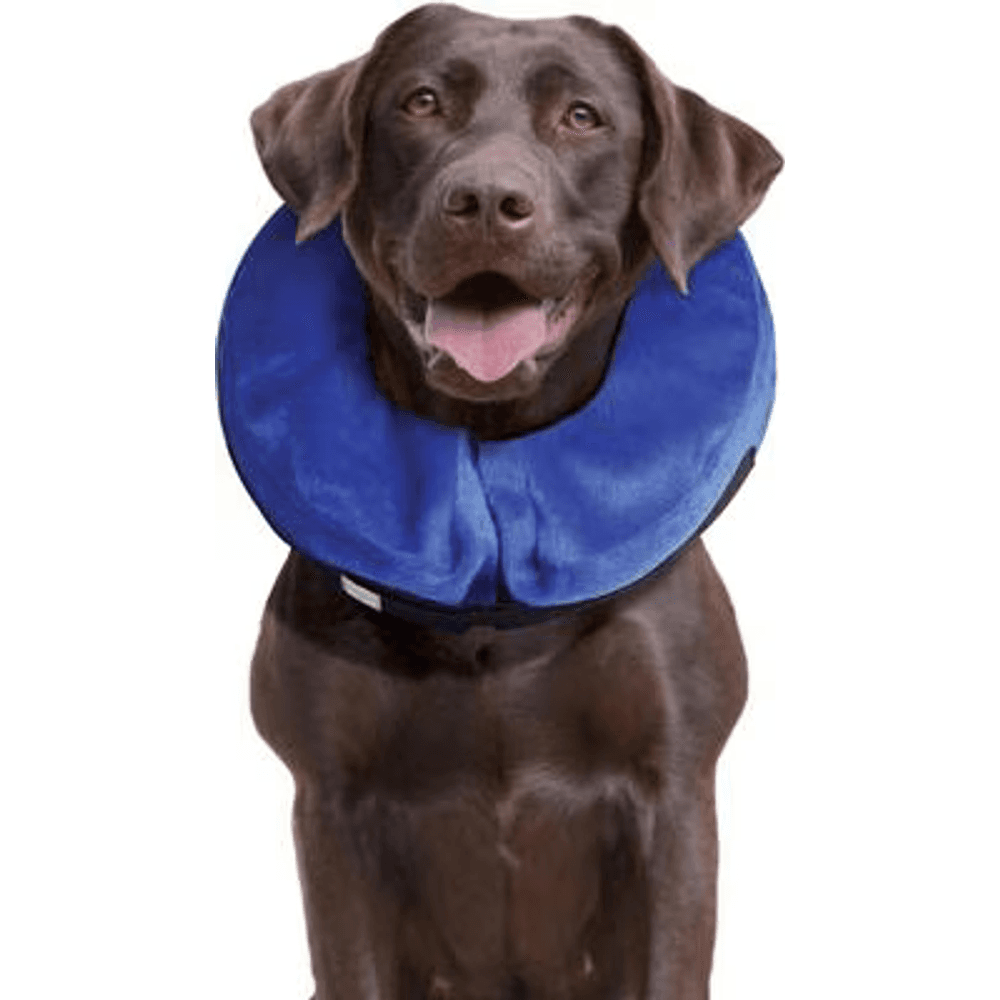
A soft, inflatable donut-style recovery collar that keeps many pets from licking or biting at a healing surgical incision or hot spot while still letting them eat, drink, and sleep in comfort.
Webvet may earn a commission when you click through to Chewy, at no extra cost to you.
 $65 · no membership
Have a health question about your cat?
A licensed vet can assess your cat over video and prescribe online when it's appropriate.
 Talk to a vet
- Licensed vets
- All 50 states
- same-day Rx
Webvet may earn a commission if you book.
Incision care and healing stages (with photos)

A healthy healing spay incision is a clean, dry, closed line on the shaved lower belly, with skin edges neatly together. Mild redness and slight bruising in the first few days are common. Over the next week the line dries, any minor scabbing forms and flakes, and a small firm ridge of scar tissue may develop underneath. That firm ridge, or a small pea-sized lump, is often normal seroma or scar tissue rather than a problem.
Check the incision twice a day. Check the incision site daily to confirm proper healing, and avoid bathing your cat for at least ten days after surgery, per the ASPCA. Keeping the site dry matters: no baths, no swimming, no letting her groom it wet.
What a cat spay incision looks like week by week:
- Days 1 to 3: Pink to slightly red line, possible mild bruising, edges closed. Small amount of clear or slightly pink weeping can be normal.
- Days 3 to 7: Redness fading, line drying, thin scab may form. A firm ridge under the skin can develop.
- After 1 week: Incision should look essentially closed and dry. Sutures come out around now if they are not dissolvable.
- Days 10 to 14: Fully closed; hair regrowing; a small firm lump of scar tissue may remain and usually resolves over weeks.
A cat spay recovery lump is common and usually harmless, but not always. A soft, fluid-filled swelling (seroma) or a small firm scar ridge is typically fine. A lump that is growing, hot, painful, red, or leaking is not. When in doubt, send your vet a photo or bring her in.
For a deeper, photo-by-photo walk through what a normal versus abnormal incision looks like at each stage, see our companion guide on spay and neuter incision healing, which covers the healing stages in detail so you can compare your cat's incision with confidence.
Cone vs. recovery suit: keeping the incision protected

The single most important job during cat spay recovery is stopping your cat from licking or chewing the incision, and you do that with either an Elizabethan cone or a fitted recovery suit worn the entire 10 to 14 days. A cat's tongue is abrasive, and licking can pull out sutures, introduce bacteria, and reopen the wound. Keeping the barrier on is not optional.
| Elizabethan cone (E-collar) | Recovery suit / bodysuit | |
|---|---|---|
| How it works | Plastic or soft cone blocks the mouth from reaching the incision | Fabric onesie covers the belly so licking hits cloth, not skin |
| Best for | Determined lickers; cats that tolerate cones | Cats stressed by cones; the incision itself |
| Pros | Reliable full-mouth block; cheap | Less stressful; lets her eat, drink, groom face normally |
| Cons | Can bump furniture, disrupt eating and drinking | Must fit snugly; must be changed if soiled; some cats wriggle free |
| Watch for | Cat pushing it off or getting stuck | Gaps at the leg openings; dampness over the incision |
A properly fitted recovery suit is often gentler than a cone for cats, because it lets her eat, drink, and groom her face while still protecting the belly. A kitten recovery suit after spaying can be especially helpful for small, wriggly patients. Whichever you choose, it stays on full time. If you remove it, supervise every second and put it right back.
When to remove the cone after a spay in cats: leave it on until your veterinarian confirms the incision is fully healed, typically at the 10-to-14-day mark or at the suture-removal recheck. Taking it off early, even by a day, is one of the most common reasons cats end up back in surgery to repair a reopened incision. A cat recovery suit with legs offers more coverage for cats that also target their flanks.
For a full comparison of soft cones, inflatable collars, recovery suits, and other options, including how to pick the right size and manage a cat that hates its cone, see our guide to cone alternatives after spay and neuter.

A plush orthopedic foam mattress that cushions aging joints and pressure points, giving a stiff or trembling senior dog warm, supportive rest.
Webvet may earn a commission when you click through to Chewy, at no extra cost to you.
Keeping your cat calm and restricting activity

Restricting activity means no running, jumping, climbing, stairs, rough play, or outdoor access for the full recovery. This is the hardest part with an energetic cat who feels fine by day four, but jumping down from the couch or a bookshelf is exactly the kind of sudden force that can tear an internal suture line. Keep her as quiet as possible for a week or so, with full recovery in about two weeks, the Cornell Feline Health Center advises.
Practical cat spay recovery tips to keep her calm:
- Confine to one level. A single room or a large pen removes the temptation to climb.
- Remove jumping targets. Block access to cat trees, windowsills, counters, and the top of the couch, or move furniture so she cannot reach high perches.
- Use quiet enrichment. Food puzzles, gentle petting, a warm bed, and a sunny window at floor level tire her mind without taxing her body.
- Separate other pets. Roughhousing with a housemate can undo days of healing in seconds.
- Skip the harness walks and outdoor time until your vet clears her.
How to keep a cat from jumping after a spay: the reliable answer is environmental, not verbal. You cannot train a cat out of jumping in two weeks, so you remove the opportunity. Confinement to a low, boring, safe space beats trying to catch her mid-leap.
How to pick up a cat after spaying: support her chest and hindquarters so her body stays level and the belly is not stretched or pressed. Scoop one hand under the chest behind the front legs and the other under the rear, and lift her as a unit. Never lift by the scruff or under the front legs alone, which stretches the abdominal wall right over the incision. Keep handling to a minimum overall.
Two more habits make the confinement fortnight easier on both of you. First, feed on a schedule rather than free-feeding during recovery, because a set routine gives an under-stimulated cat something to anticipate and lets you monitor exactly how much she is eating. Second, resist the urge to overhandle or cuddle her at the incision; affection is good, but pressure on the belly and repeated lifting are not, so let her come to you and keep petting to the head, cheeks, and shoulders.
Warning signs: when to call the vet (bad signs after a spay)

Call your veterinarian or an emergency clinic immediately if you see any of these bad signs after a cat spay. This section is the reason to read the whole article. Most cats recover uneventfully, but a reopened incision or an internal complication is a genuine emergency, and catching it early is the difference between a minor fix and a life-threatening problem.
Contact your veterinarian if you notice redness, swelling, or discharge at the incision, or if your cat seems lethargic or has appetite or digestive problems, the ASPCA advises. When you are unsure whether something is normal, err on the side of calling; your clinic would far rather answer a photo text than see a preventable emergency.
Never give your cat human pain relievers. Acetaminophen (paracetamol, the active ingredient in Tylenol) is fatal to cats even in small doses, and human NSAIDs like ibuprofen are toxic to them. Never use leftover medication from another pet or a previous illness. Use only the pain medication your veterinarian prescribed, exactly as directed. If you think your cat is painful, call the vet for the right drug rather than reaching for anything in your medicine cabinet.
What about the cat spay death rate? Spaying is a routine, veterinarian-recommended procedure, and owners should follow the clinic's post-op aftercare and contact the vet with any concerns, per the ASPCA. Serious complications and death are rare in healthy cats operated on by a licensed veterinarian, and the health benefits of spaying far outweigh the surgical risk. The most preventable complications, by a wide margin, come from a reopened incision, which is exactly what strict activity restriction and keeping the cone on prevent.

Probiotic supplement formulated to help cats maintain calm behavior, with the BL999 strain. 30 daily sachets.
Webvet may earn a commission when you click through to Chewy, at no extra cost to you.
Behavior and long-term changes after spaying
After spaying, a female cat stops going into heat, which ends the yowling, restlessness, and attention-seeking that come with heat cycles. Beyond that, her core personality stays the same. The Cornell Feline Health Center notes that once she has fully recovered in about two weeks, the spayed female is likely to be exactly the same as she was before the operation. Spaying changes hormone-driven reproductive behaviors, not who your cat is.
How do female cats change after getting spayed? The clearest changes are the disappearance of heat behavior: no more loud yowling, rolling, or trying to escape outdoors to find a mate. Spayed females avoid the frequent yowling and urination that come with heat cycles, the ASPCA notes. Some cats are a touch calmer overall without the hormonal drive, but a playful cat stays playful and an affectionate cat stays affectionate.
Are cats happier after being spayed? They are generally more comfortable and settled. Ending repeated heat cycles removes a real source of stress and frustration, and spaying eliminates the risk of a painful uterine infection and reduces disease risk long term. A cat not driven by hormones to escape, yowl, or seek a mate tends to be a calmer, more content housemate.
Health benefits and long-term side effects of spaying a female cat.
The long-term picture is strongly positive:
- Near-elimination of mammary (breast) cancer risk when spayed early. The Cornell Feline Health Center notes spaying virtually eliminates her risk for mammary cancer later in life.
- No pyometra, a potentially fatal uterine infection, because the uterus is removed.
- Prevention of uterine infections and a reduced risk of breast tumors, as the ASPCA notes.
- The main long-term consideration is a modestly slower metabolism, so spayed cats can gain weight more easily. Manage portions and encourage play to keep her lean; this is easily controlled, not a reason to skip the surgery.
What is the best age to spay a female cat? Veterinary organizations generally recommend spaying female cats by five months of age. The AVMA supports spaying or neutering of cats by 5 months of age, and the Cornell Feline Health Center recommends spaying before her first heat, ideally when she is three to six months old. Spaying before the first heat is what delivers the greatest protection against mammary cancer. The ASPCA notes it is generally considered safe for kittens as young as eight weeks old to be spayed. Your veterinarian will confirm the right timing for your individual cat.
Special cases: feral, outdoor, pregnant, and laser spays
Most of this guide assumes a healthy indoor pet cat, but several situations change the recovery picture. In every one, your veterinarian's specific instructions override the general advice here.
- Feral cat spay recovery. Feral and community cats spayed through trap-neuter-return programs typically recover in a trap or carrier for 24 to 72 hours before release, longer for females than males. They cannot wear a cone, so surgeons use dissolvable internal sutures and a small, glued or buried closure. Keep the trap covered, warm, dry, and quiet, and follow the clinic's release timing exactly.
- Outdoor cat spay recovery. An owned outdoor cat must be kept strictly indoors for the full 10 to 14 days. Outdoor access risks a dirty, reopened incision, so set up an indoor confinement space even for a cat that normally lives outside.
- Pregnant cat spay recovery. Spaying a pregnant cat is a more involved surgery with more tissue and blood supply, so expect a slightly longer, more closely monitored recovery. Watch the incision and energy level especially carefully and keep her confined.
- Cat spay laser recovery. Some clinics offer laser spays, which can mean slightly less inflammation and swelling at the incision. Recovery still runs the same 10 to 14 days, and every rule about the cone, rest, and warning signs applies unchanged.
- Flank spay cat recovery. In a flank spay the incision is on the side rather than the midline belly, common in some shelter and TNR settings. Care is the same: protect the incision, restrict activity, and watch for the same warning signs, just on the flank.
Recovering a male cat instead? Neuter recovery is generally shorter and simpler because it is not abdominal surgery. See our dedicated guide to cat neuter recovery for the male-specific timeline and care, and our broader spay and neuter recovery hub for how recovery differs across species and procedures.
The bottom line on cat spay recovery
Cat spay recovery is straightforward when you commit to three things: keep the cone or recovery suit on for the full 10 to 14 days, enforce strict rest with no jumping or climbing, and watch the incision twice a day so you catch a problem early. Spaying is major abdominal surgery with a strongly positive long-term payoff, from near-eliminated mammary cancer risk to no more heat cycles. Give her a quiet, confined space, protect the incision, use only vet-prescribed pain medication, and call your veterinarian the moment anything looks wrong. Do that, and the overwhelming majority of cats sail through to a full recovery.
Frequently Asked Questions
How long does it take for a female cat to recover from being spayed?
A female cat takes about 10 to 14 days to fully recover from being spayed. Most cats come home within 12 to 24 hours of surgery and feel more energetic within a few days, but the incision and abdominal wall are not fully healed until the two-week mark. Keep her confined and activity-restricted, and keep the cone or recovery suit on, for the entire 10 to 14 days even if she seems back to normal sooner.
How do female cats change after getting spayed?
The biggest change is that a spayed female stops going into heat, so the loud yowling, restlessness, rolling, and attempts to escape outdoors to find a mate disappear. Her core personality stays the same: a playful cat stays playful and an affectionate cat stays affectionate. Some cats are slightly calmer without the hormonal drive, and spaying also removes the risk of a uterine infection and greatly lowers mammary cancer risk long term.
How long do I need to watch my cat after spaying?
Watch your cat closely for the full 10 to 14 days, with the most attentive monitoring during the first 48 to 72 hours. Check the incision at least twice a day and keep an eye on her appetite, energy, and litter box use. You do not need to sit next to her the whole time, but you do need to know what a normal healing incision looks like and confine her so she cannot jump, climb, or reach the wound when you are not watching.
Can I leave my cat alone after being spayed?
Short absences are fine once your cat is fully awake and settled in her quiet confinement room, but do not leave a newly spayed cat unsupervised for long stretches on the first day while anesthesia is still wearing off. The priority is containment, not company: she must be in a small, safe space with the cone on where she cannot jump, climb, or lick the incision while you are away.
Is it okay to leave a cat alone after spay overnight?
By the second night, it is usually okay to leave a calm, spayed cat alone overnight as long as she is eating, drinking, and using the litter box normally, the incision looks good, and she is confined to a small room with the cone or recovery suit on. On surgery night itself she is groggy and less coordinated, so more supervision is better. If you must leave her, make sure she cannot jump onto or off of furniture and cannot reach the incision.
What are the most crucial days after spay?
The most crucial days after a spay are the first two to three. This is when pain is highest, anesthesia is fully clearing, and the fresh incision is most vulnerable to being licked open or torn by a sudden jump. Be strictest about confinement, rest, and keeping the cone on during this window, give pain medication exactly as prescribed, and check the incision twice a day. Strict rest still matters through the full 10 to 14 days.
Are cats happier after being spayed?
Cats are generally more comfortable and settled after being spayed. Ending repeated heat cycles removes a real source of stress, frustration, and yowling, and spaying eliminates the risk of a painful uterine infection while lowering long-term disease risk. A cat no longer driven by hormones to escape, yowl, or find a mate tends to be a calmer, more content housemate. Her underlying personality does not change.
What's the best age to spay a female cat?
Veterinary organizations generally recommend spaying female cats by five months of age, and the AVMA supports spaying or neutering cats by 5 months. The Cornell Feline Health Center recommends spaying before a cat's first heat, ideally at three to six months old, because spaying before the first heat gives the greatest protection against mammary cancer. Kittens can be safely spayed as young as eight weeks. Your veterinarian will confirm the best timing for your individual cat.
$65 · no membershipHave a health question about your cat?
A licensed vet can assess your cat over video and prescribe online when it's appropriate.
Talk to a vet- Licensed vets
- All 50 states
- same-day Rx
Webvet may earn a commission if you book.

Editor
The Webvet Editorial Team is the in-house group of pet-care editors and writers behind Webvet, operated by Smart Pet Collective. The team researches, writes, and maintains Webvet's pet health, behavior, and medication content. Every article follows a defined editorial process: research from reputable veterinary and scientific sources, careful drafting, mandatory review of medical content by a credentialed veterinarian, and dated publication. Health and medication articles are medically reviewed by a licensed veterinary professional before they go live and are kept current over time.
Veterinarian · BVMS MRCVS
Dr. Pippa Elliott, BVMS, MRCVS, is a veterinarian with nearly 30 years of experience in companion animal practice. Dr. Elliott earned her Bachelor of Veterinary Medicine and Surgery from the University of Glasgow. She was also designated a Member of the Royal College of Veterinary Surgeons. Married with 2 grown-up kids, Dr. Elliott has a naughty Puggle named Poggle, 3 cats and a bearded dragon.


