Dog Diapers for Potty Training: Do They Help?
Dog diapers can protect floors during house training, but they do not teach a bathroom habit. Learn how to pair temporary diaper use with a schedule, supervision, and immediate rewards.

BVMS MRCVS
Medically reviewed by Dr. Pippa Elliott, BVMS MRCVS · Last reviewed

This article contains affiliate links. Webvet may earn a commission when you buy through them, at no extra cost to you.
Dog diapers for potty training can protect floors and furniture, but they do not teach a puppy where to eliminate or how to wait for an outdoor trip. Use a diaper only as a temporary management layer while the real training plan relies on scheduled toilet breaks, close supervision, confinement when needed, and an immediate reward for eliminating in the right place.
A diaper can be useful during a short car ride, a brief supervised indoor period, or a situation where one accident would be difficult to clean. It becomes counterproductive when it replaces outdoor opportunities, hides changes in the puppy's pattern, or stays wet against the skin.
Dog diapers manage messes but do not teach potty habits
Does putting a diaper on a dog help with potty training? It can help the human manage a mess, but the garment itself does not create a learned bathroom habit. A puppy learns when eliminating in the desired place is followed immediately by something valuable, such as food, praise, play, or access to a favorite activity.
- 1Surface protection and learned bathroom habits are different goals.
- 2Remove the diaper for every planned toilet trip so the puppy can practice the desired behavior.
- 3Reward immediately after elimination outdoors, then continue supervision indoors.
A diaper may actually make the training pattern harder to read if caregivers stop noticing sniffing, circling, restlessness, door-seeking, or a pause in play. These signals are opportunities to take the puppy out. If the diaper makes accidents invisible, the schedule must become more deliberate, not less.
Webvet may earn a commission when you click through to Chewy, at no extra cost to you.
For general wear, changing, and skin guidance, use the dog diapers guide. It owns the broader question of how long a dog can safely wear a diaper. This article focuses on keeping the garment subordinate to house training.
The management-versus-learning boundary is simple: a diaper catches an accident, while training changes where and when the dog eliminates. Keep the final toilet area, cue, supervision, and immediate reward consistent. Remove the diaper for every planned trip so the dog practices the behavior that should remain after accident management ends.
Before treating accidents as a training problem
A puppy who is still learning will have accidents, but a sudden change in a previously reliable dog is different. New urgency, frequent small urinations, straining, blood, increased thirst, urine leakage during sleep, diarrhea, pain, weakness, or confusion can point to a medical issue rather than forgotten training.
Young puppies also differ in bladder and bowel control. Age, recent drinking, meals, play, waking, excitement, illness, medication, and individual development all affect the interval. A rigid expectation based only on age can create preventable failures.
A medical evaluation matters when a previously trained dog changes suddenly, urinates frequently, strains, leaks during sleep, drinks more, has diarrhea, or shows pain or weakness. Skin checks and prompt diaper changes protect the dog during temporary management, but they do not replace diagnosis or treatment.
When a diaper can help without becoming the training plan
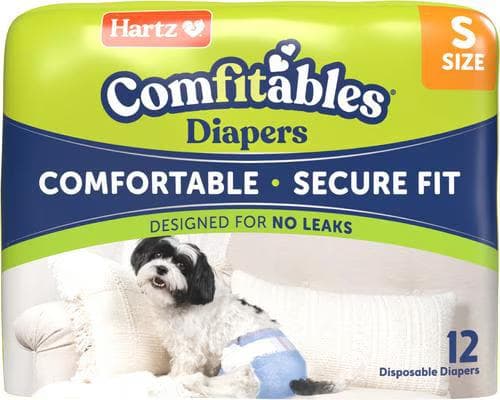
Are dog diapers good for potty training? They are best viewed as temporary accident management in a limited setting. For example, a diaper may protect a rental property during a short supervised visit, provide backup during transport, or help while a caregiver prepares the outdoor routine. If full-coverage accident backup is appropriate for that short window, compare the current size chart for Hartz Comfitables Male & Female Dog Diapers without changing the toilet-trip schedule. For a compatible washable shell designed for inserts, PAWPANG Disposable Dog Diaper Liners, Medium, 100 count can add a replaceable layer during brief accident management; it still does not teach elimination and must be changed with the garment when wet.
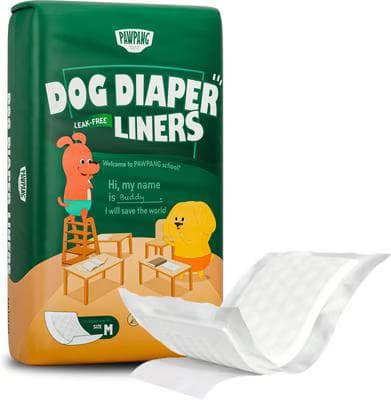
A convenient 100-count liner option for adding absorbency to a correctly fitted washable dog diaper or belly band.
Webvet may earn a commission when you click through to Chewy, at no extra cost to you.
- Use it for a defined period with an identified reason, not as the default indoor state.
- Keep the normal toilet schedule and remove the diaper before each trip.
- Inspect frequently and change promptly whenever the diaper is wet or soiled.
- Give regular diaper-free time in a safe, easy-clean, supervised area.
- Track successes and accidents so the garment does not erase useful training information.
Do dog diapers work for potty training when a caregiver cannot supervise? No garment teaches in the caregiver's absence. A safe confinement area sized for rest, water, and appropriate movement can reduce access to the whole home, but it must not be used to make a puppy hold urine beyond a realistic interval.
Webvet may earn a commission when you click through to Chewy, at no extra cost to you.
 $65 · no membership
Have a health question about your dog?
A licensed vet can assess your dog over video and prescribe online when it's appropriate.
 Talk to a vet
- Licensed vets
- All 50 states
- same-day Rx
Webvet may earn a commission if you book.
A realistic house-training routine
The quickest way to potty train a dog is not a trick or a diaper. It is a consistent cycle that prevents many mistakes and makes successful elimination easy to reward. Take the puppy to the same appropriate area after waking, eating, drinking, vigorous play, excitement, and before confinement or sleep.
| Moment | Caregiver action | Training purpose |
|---|---|---|
| Immediately after waking | Go directly to the toilet area on leash | Prevents a predictable accident |
| After meals or a large drink | Schedule a prompt outdoor trip | Connects body rhythm with location |
| After active play | Pause and take the puppy out | Catches excitement-related urgency |
| Successful elimination | Reward immediately in the toilet area | Marks the exact behavior to repeat |
| No elimination | Return to close supervision briefly, then try again | Prevents free roaming after an incomplete trip |
| Before confinement or bedtime | Offer a calm final toilet trip | Starts rest with an empty bladder |

Use a leash even in a fenced yard at first so you can observe whether the puppy actually urinates or defecates. Stay quiet enough for the puppy to focus. The instant elimination finishes, mark the success with praise and deliver the reward while still in the correct area.
Positive reinforcement depends on timing. The Merck Veterinary Manual discussion of canine behavior problems explains that house training develops a preference for a surface or location and the ability to inhibit elimination until that location is available. A diaper cannot teach either part by itself.
If the puppy does not eliminate, return indoors for a short period of direct supervision or appropriate confinement, then try again. Do not release the puppy for unrestricted play, because that creates a high-risk window for an accident. Avoid punishment after accidents; punishment can teach a puppy to hide elimination rather than choose the correct place.
Webvet may earn a commission when you click through to Chewy, at no extra cost to you.
Use positive reinforcement immediately after the dog finishes in the correct place, not after returning indoors. Schedule trips after waking, meals, drinking, play, excitement, and rest; record accidents to shorten the interval. Punishment can suppress signals without teaching the desired location and can make supervision harder.
How to use a diaper temporarily with a puppy
Dog diapers for puppies should be measured and fitted like any other dog diaper. The waistband sits immediately in front of the hind legs, the tail opening should not pull, and the leg openings should lie flat without digging into the coat. A growing puppy needs frequent remeasurement. For one disposable full-coverage dry-fit check, compare the puppy's current waist with Hartz Comfitables Male & Female Dog Diapers and remeasure as the puppy grows.
- Offer a toilet trip and wait for the puppy to finish before applying a clean dry diaper.
- Record the time so the next scheduled trip is not forgotten.
- Keep the puppy supervised and watch for sniffing, circling, restlessness, or door-seeking.
- Remove the diaper before going outside and reward successful elimination immediately.
- Inspect the skin and garment, then decide whether protection is still needed for the next defined period.
Use the dog diaper sizes guide for waist, rise, tail-opening, and movement checks. Puppy diapers labeled female or male still require anatomy-specific coverage. A label does not guarantee that the absorbent area sits over the urine source.
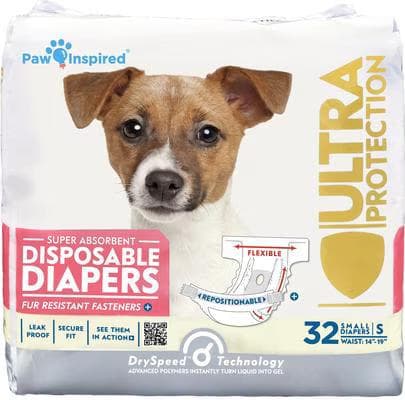
When a veterinarian or specific situation supports temporary full coverage, Hartz Comfitables Male & Female Dog Diapers and Paw Inspired Ultra Protection Disposable Female Dog Diapers are options to compare by sex, measurement range, and change frequency. Neither teaches bladder control or replaces scheduled trips to the chosen toilet area.
Protecting surfaces without keeping a puppy diapered
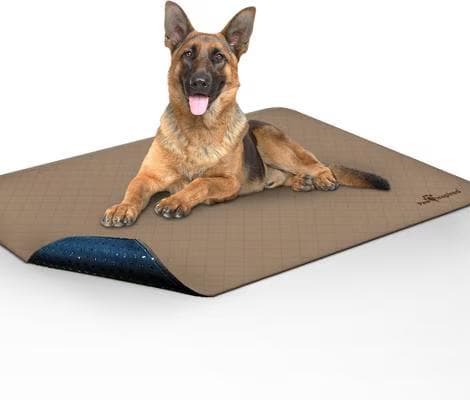
A washable pad or waterproof blanket can be a better management choice when the goal is protecting one resting or play area. Surface protection lets the puppy remain uncovered, makes urine amount easier to notice, and avoids continuous fabric contact with the skin. One reusable surface option to compare is the Paw Inspired Washable Dog Pee Pad, sized to protect the supervised area without creating loose edges.
Compare laundering, disposal, and travel needs in the reusable versus disposable dog diapers guide. Choose the management layer that causes the least interference with frequent outdoor practice.
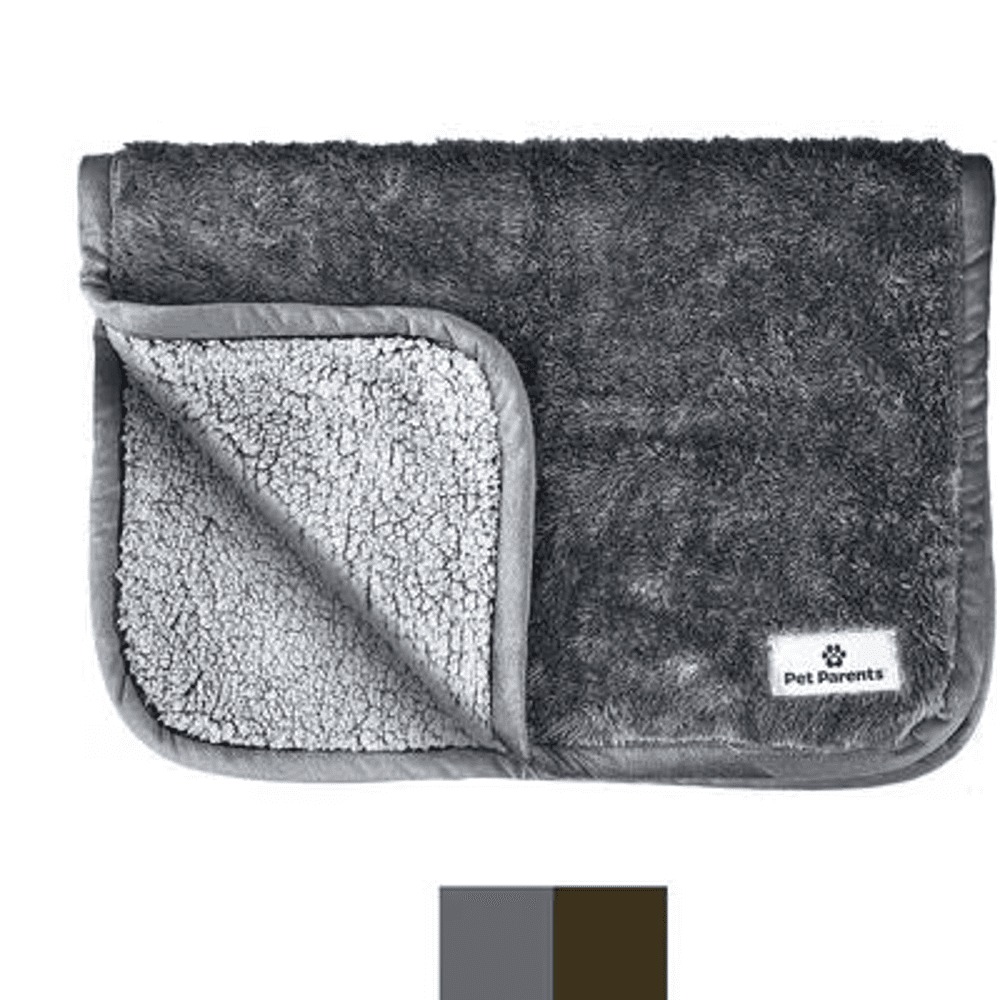
A plush, waterproof sherpa blanket that gives a cold or shivering dog a warm, cozy layer to curl into. The hidden waterproof lining protects the bed, couch, or car seat, and the whole thing is machine washable.
Webvet may earn a commission when you click through to Chewy, at no extra cost to you.
A Paw Inspired Washable Dog Pee Pad can define an intentional easy-clean station, while a Pet Parents Pawtect Waterproof Dog Blanket can protect bedding during supervised rest. Reward the final location you want the dog to use; management products should not blur the training cue.
Age, bladder capacity, and realistic expectations
What is the easiest age to potty train a puppy? Training can begin as soon as a healthy puppy comes home, often around eight weeks, but easy does not mean immediate. Very young puppies have limited voluntary control and need many planned opportunities. Older puppies may hold longer but can arrive with established surface preferences.
Do not use a formula such as one hour per month of age as a promise. It is a rough planning idea, not an instruction to make every puppy wait that long. Watch the individual puppy, shorten intervals after accidents, and plan extra trips after drinking, meals, play, waking, and excitement.
The AKC potty-training guide emphasizes schedules, recognizing signals, and positive reinforcement. Those practices teach the behavior; a diaper merely changes where an accident lands.
Troubleshooting accidents while a diaper is in the plan
If accidents continue, review the routine before switching products. Ask whether the puppy had a real outdoor opportunity, whether the reward arrived immediately, whether supervision was close enough to catch signals, and whether freedom expanded too quickly.
- Accident soon after coming inside: the outdoor trip may have ended before elimination.
- Accident during play: add a planned break before the puppy becomes highly excited.
- Wet diaper after waking: take the puppy out immediately upon waking, before play or greeting.
- Repeated accidents in one location: clean with an appropriate enzymatic product and restrict unsupervised access.
- Sudden increase in accidents: contact a veterinarian rather than assuming stubbornness.
If a diaper leaks, recheck size and anatomy placement. Do not use a tighter waistband to compensate for a full insert or missed toilet trip. Leakage can be useful information that the schedule, fit, or absorbency is not matching the puppy's actual needs.
How to phase out the diaper
The transition should be based on observable success, not a fixed number of days. Begin by removing the diaper during the easiest supervised periods, such as immediately after a successful outdoor elimination. Keep the puppy in the same room and preserve the full schedule.

- Choose one predictable low-risk period and leave the puppy uncovered after a successful trip.
- Continue direct supervision and take the puppy out at the planned time or first signal.
- After several dry, successful repetitions, extend the uncovered period gradually.
- Remove protection from another routine period only after the first remains reliable.
- If accidents return, shorten the interval and increase supervision rather than punishing the puppy.
A useful phase-out criterion is a growing sequence of dry intervals paired with successful outdoor eliminations and clearer communication signals. The goal is not simply fewer wet diapers. The goal is repeated practice of the bathroom behavior you want when no diaper is present.
Keep the schedule stable during the transition. If the puppy succeeds without a diaper only because someone took the puppy outside much more often that day, the garment may not be the key variable. Track trip times, outdoor successes, accidents, and supervision so you can expand freedom based on a repeatable pattern rather than one unusually easy afternoon.
Phase out accident management after a consistent pattern of successful toilet trips, not after one dry day. Shorten diapered periods, keep surface protection available, and continue the same schedule and rewards. If accidents increase, return to the last successful interval and reassess health, access, supervision, and cue clarity.
Potty training and diaper questions
Frequently Asked Questions
Does putting a diaper on a dog help with potty training?
A diaper manages messes but does not teach a dog where or when to eliminate. Potty training still requires frequent trips to the chosen toilet area, supervision, immediate rewards after success, and a schedule matched to age and health. Use a diaper only as a temporary protection layer, then remove it for every planned toilet opportunity so the learning cue stays clear.
What is the 10 10 10 rule for potty training puppies?
The phrase is used inconsistently, so it should not replace an individualized schedule. A practical version is to use short supervised activity intervals, take the puppy to the toilet area predictably, and reward success immediately. Age, sleep, meals, drinking, play, health, and prior habits matter more than a slogan. A diaper should never delay a needed toilet trip.
What is the quickest way to potty train a dog?
The quickest humane approach is a consistent routine: prevent unsupervised accidents, take the dog out after waking, eating, drinking, play, and rest, reward the correct location immediately, and clean mistakes without punishment. Track patterns and shorten the interval when accidents occur. Medical causes must be ruled out when frequency, volume, pain, or previously learned behavior changes.
What is the easiest age to potty train a puppy?
Training can begin as soon as a puppy comes home, but reliability develops with bladder capacity, routine, communication, and repetition rather than one easiest age. Young puppies need more frequent trips and closer supervision. Set realistic expectations, reward the chosen location, and extend intervals gradually after consistent success instead of using a diaper to expect adult-level control too soon.
$65 · no membershipHave a health question about your dog?
A licensed vet can assess your dog over video and prescribe online when it's appropriate.
Talk to a vet- Licensed vets
- All 50 states
- same-day Rx
Webvet may earn a commission if you book.

Editor
The Webvet Editorial Team is the in-house group of pet-care editors and writers behind Webvet, operated by Smart Pet Collective. The team researches, writes, and maintains Webvet's pet health, behavior, and medication content. Every article follows a defined editorial process: research from reputable veterinary and scientific sources, careful drafting, mandatory review of medical content by a credentialed veterinarian, and dated publication. Health and medication articles are medically reviewed by a licensed veterinary professional before they go live and are kept current over time.
Veterinarian · BVMS MRCVS
Dr. Pippa Elliott, BVMS, MRCVS, is a veterinarian with nearly 30 years of experience in companion animal practice. Dr. Elliott earned her Bachelor of Veterinary Medicine and Surgery from the University of Glasgow. She was also designated a Member of the Royal College of Veterinary Surgeons. Married with 2 grown-up kids, Dr. Elliott has a naughty Puggle named Poggle, 3 cats and a bearded dragon.


