Diapers for Old Dogs: Senior Incontinence Care
Diapers can help an older dog stay clean and comfortable while a veterinarian evaluates incontinence. Learn mobility-aware fit, skin protection, nighttime routines, and quality-of-life checks.

BVMS MRCVS
Medically reviewed by Dr. Pippa Elliott, BVMS MRCVS · Last reviewed

This article contains affiliate links. Webvet may earn a commission when you buy through them, at no extra cost to you.
Diapers for old dogs can protect skin, bedding, and dignity while a veterinarian investigates and treats the cause of incontinence. They work best as one part of a care plan that also includes frequent toilet opportunities, mobility support, prompt changes, gentle cleaning, dry skin, and honest quality-of-life monitoring.
Do not assume new leakage is simply normal aging. A senior dog may have urinary tract disease, increased urine production, medication effects, arthritis that makes toileting difficult, neurologic disease, cognitive change, or another treatable problem. Schedule an examination before building the routine around a diaper.
Sudden incontinence needs a veterinary exam
Why is a 12-year-old dog suddenly incontinent? Age alone cannot answer that question. Urine may leak because the bladder outlet does not stay closed, because the bladder is overly full, because the dog produces more urine, or because pain, weakness, confusion, or neurologic disease prevents normal toileting.
The Merck Veterinary Manual overview of micturition disorders explains that urinary incontinence can have storage, voiding, anatomical, or neurologic causes. History, examination, urinalysis, and sometimes additional testing help separate these possibilities.
Before the appointment, record when leakage occurs. Note whether the bed is wet after sleep, urine dribbles while walking, the dog squats frequently, the stream is weak, or accidents happen because the dog cannot reach the door. Also track drinking, appetite, stool, medication changes, mobility, and signs of discomfort.
Information to bring to the appointment
- When accidents began and whether the change was sudden or gradual.
- Whether leakage happens during sleep, movement, excitement, or active urination.
- The approximate amount, color, odor, and frequency of urine.
- Changes in thirst, appetite, weight, stool, sleep, awareness, or mobility.
- All medications, supplements, recent illnesses, and prior urinary problems.
- Photos or a simple diary showing the timing and circumstances of accidents.
Urinary incontinence in an older dog can reflect a urinary tract infection, kidney or endocrine disease, medication effects, pain, prostate disease, spinal or neurologic change, or canine cognitive dysfunction. Do not assume aging is the diagnosis. Straining, blood, fever, vomiting, weakness, or a large increase in thirst or urine volume deserves prompt care.
Use diapers as one part of a senior incontinence plan
An old dog's incontinence plan should reduce discomfort without taking away normal activities. A diaper can contain leakage during sleep, supervised indoor time, or transport. It should not replace walks, opportunities to urinate outdoors, prescribed medication, pain management, or environmental changes that help the dog reach a toilet area. To protect a favorite resting area without extending garment wear, compare the Pet Parents Pawtect Waterproof Dog Blanket against the dog's usual sleep position.
- 1Comfort: the garment stays clean, dry, smooth, and easy to remove.
- 2Mobility: fit and changing do not force painful joints or weak hind limbs.
- 3Skin: every change includes cleaning, complete drying, and inspection.
- 4Veterinary plan: the diaper supports diagnosis and treatment rather than hiding symptoms.
Some dogs need a diaper only at night or during naps. Others need short periods of daytime protection between frequent assisted trips. A dog with fecal incontinence may need a different full-coverage system than a dog with urine leakage alone. The least restrictive effective setup is usually the best starting point.
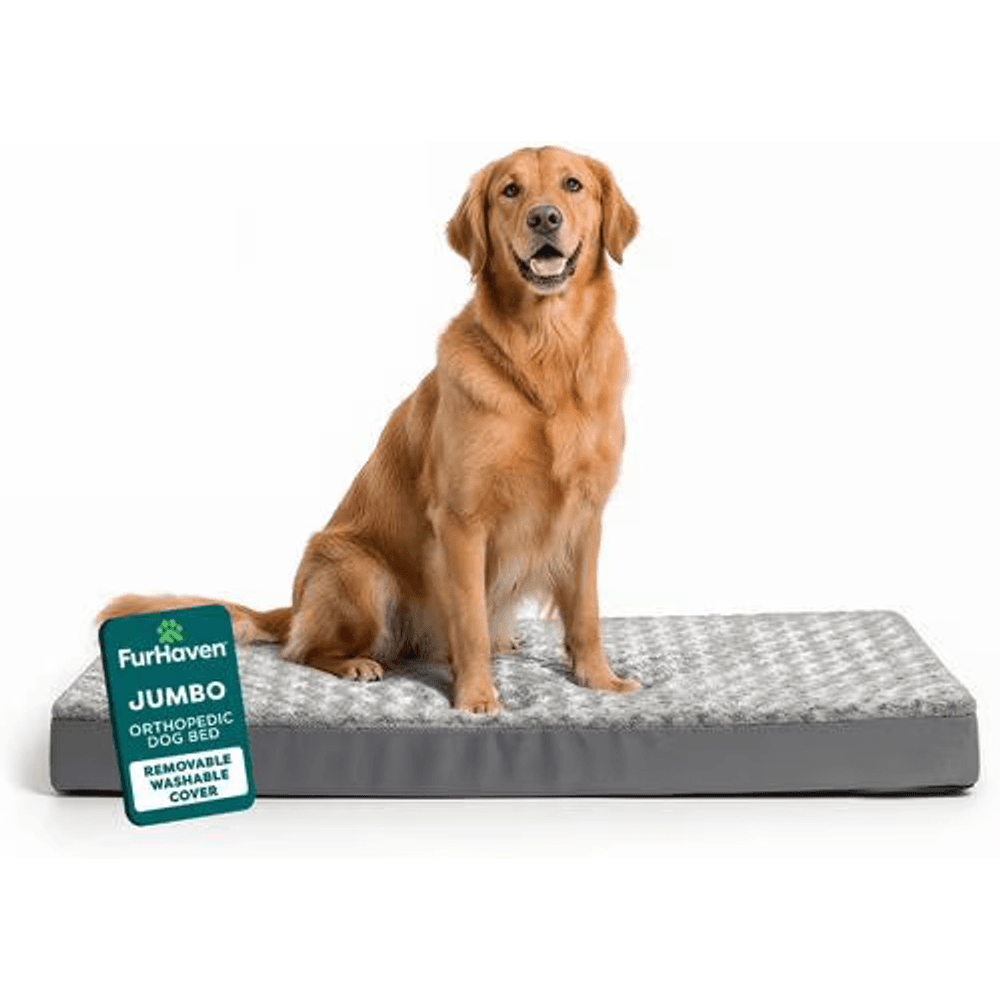
A plush orthopedic foam mattress that cushions aging joints and pressure points, giving a stiff or trembling senior dog warm, supportive rest.
Webvet may earn a commission when you click through to Chewy, at no extra cost to you.
The broader dog diapers guide covers general indications, limits, wear, and hygiene. For a senior dog, adapt those basics around pain, balance, muscle loss, sleep, and the caregiver's ability to perform frequent checks.
Do diapers work for old dogs?
Dog diapers work for senior dogs when success is defined correctly. They can contain urine or selected stool accidents, protect bedding, and make caregiving more manageable. They cannot strengthen the bladder, treat infection, reverse cognitive dysfunction, relieve arthritis, or correct a neurologic problem.
The best dog diapers for old dogs are not one universal brand or style. The right choice covers the actual source of leakage, fits the current body shape, stays aligned during the dog's normal movement, and can be changed as often as needed. A product that is highly absorbent but hard to remove from a painful dog may be the wrong product. Labels such as senior dog diapers or doggie diapers for old dogs still need the same anatomy, mobility, fit, and change checks.
Signs the system is working
- The dog walks, rests, rises, and lies down without restriction or anxiety.
- Urine or stool is contained without remaining against the skin for long periods.
- The waistband, tail opening, and leg seals leave no redness or pressure marks.
- Changes can be completed calmly without twisting painful hips or knees.
- The dog continues normal outdoor trips, social contact, sleep, and enjoyable activities.
- The caregiver can reliably maintain enough clean garments and bedding.
Signs the system needs to change
- Repeated leaks despite correct absorbent placement and prompt changes.
- Rubbing, urine scald, odor, moist coat, hair loss, or painful skin.
- Sliding, twisting, tail pulling, or shortened steps.
- Chewing, panic, freezing, panting, hiding, or resisting the garment.
- Care needs exceed what the household can provide safely.
- The underlying symptoms worsen or new symptoms appear.
Choosing a diaper for an older dog's body and mobility
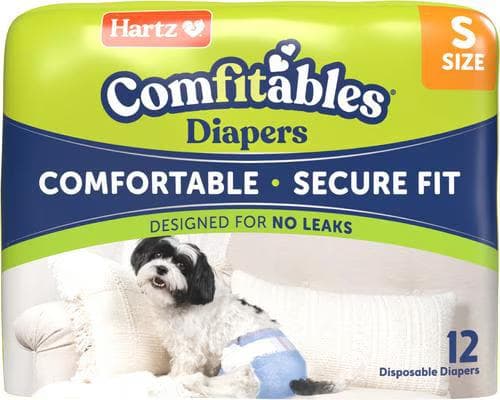
Older dogs often lose muscle over the spine and hindquarters while the abdomen changes shape. A size that worked months ago may now slide or pull. Measure the waist immediately in front of the hind legs, check the rise and tail position, and repeat the measurement after weight, coat, or mobility changes. When a disposable full-coverage style fits the need, compare the current size chart for Hartz Comfitables Male & Female Dog Diapers with those fresh measurements.

Use the dog diaper sizes guide for a waist-first, brand-second fit process. A two-finger waistband check is useful, but movement remains the real test. Watch the dog stand, take several steps, turn, and settle on the bed.
Male wrap or full diaper
A male dog with urine-only leakage may be more comfortable in a belly band because the hindquarters and tail remain uncovered. The band must fully cover the penis and stay level without compressing the abdomen. It will not contain stool and may not suit leakage that originates farther back. For an older male dog with urine-only leakage, Pet Parents Washable Belly Band Male Dog Diapers, Dog Wraps & Extenders, Gentlemen, Small: 13 to 16-in Waist, 3 count is one washable small-waist option to compare after measuring and checking mobility.
See the male dog diapers guide for anatomy and placement. A female dog, a dog in heat, or a dog needing rear coverage generally requires a full diaper. Fecal accidents require purpose-built full coverage and especially prompt changes.

Webvet may earn a commission when you click through to Chewy, at no extra cost to you.
Weak hind limbs and arthritis
For a dog with arthritis or weak hind limbs, prepare the diaper before lifting. Work on a padded nonslip surface, support the rear only as advised by the veterinarian or rehabilitation professional, and avoid pulling the legs backward. A rear-lift harness can support standing while leaving room to fasten the waist.
If standing is painful, ask the veterinarian or veterinary nurse to demonstrate a side-lying change that protects the spine and joints. The goal is not to force a textbook position. It is to complete the change safely, preserve skin access, and minimize stress for both dog and caregiver.
Dogs who cannot posture normally
A dog who cannot squat or lift a leg may wet the front or side of a garment differently than expected. Observe the pattern during a supervised toilet trip and place absorbency where leakage actually lands. Do not add bulk indiscriminately because thick inserts can change rise, leg clearance, and pressure.
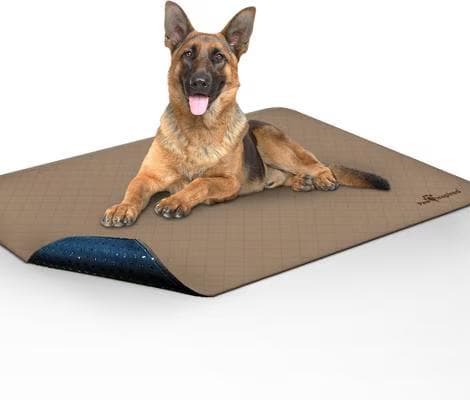
Webvet may earn a commission when you click through to Chewy, at no extra cost to you.
Selecting absorbency without sacrificing fit
Absorbency should match the volume between realistic changes, not an all-day target. A diaper that is too bulky can spread the hind legs, pull on the lower back, or create gaps. A thin garment that saturates quickly exposes the skin and bedding. The care schedule and the product must be designed together.
For a senior rest station, the FurHaven NAP Ultra Plush Orthopedic Cat & Dog Bed has a removable cover but is not described here as waterproof. Add a correctly sized Paw Inspired Washable Dog Pee Pad above or beneath the bedding according to the care labels, and keep a dry replacement ready.
Change frequency and skin protection
Can you leave a dog in a diaper all day? No. There is no single clock interval that is safe for every dog, but a wet or soiled diaper should be removed promptly. Inspect frequently enough to catch moisture before it remains against the skin. Dogs with heavy leakage, diarrhea, thin skin, infection, or reduced sensation may need especially close checks.

- Prepare the clean diaper, soft cloths, warm water if advised, and dry towel before removing the used garment.
- Support the dog in the least painful safe position and remove the garment without pulling fur or weak limbs.
- Clean urine or stool gently. Avoid scrubbing fragile skin and avoid scented products unless the veterinarian approves them.
- Dry the coat and skin completely, including folds, groin, vulvar or preputial area, and beneath the tail.
- Inspect for redness, odor, swelling, discharge, hair loss, sores, or pain before applying anything clean.
- Provide diaper-free time on a protected surface whenever practical.
Persistent wetness can contribute to urine scald and dermatitis. The Merck Veterinary Manual notes that incontinence-related wetness can affect skin around the vulva or prepuce. Contact the veterinarian for raw skin, worsening odor, discharge, persistent licking, pain, or a rash that does not improve promptly.
Do not apply human diaper cream, powder, essential oil, or ointment unless the veterinarian confirms the exact product is safe if licked. Some products can irritate, trap moisture, or create ingestion concerns. A veterinary plan may include clipping soiled fur, a prescribed topical product, or treatment for infection.
Older skin can develop moisture-associated dermatitis and urine scald quickly, especially when weakness prevents repositioning. Change every wet or soiled diaper promptly, clean only as needed, dry completely, and inspect the waist, legs, tail opening, and pressure points. Recurrent redness, odor, broken skin, or pain needs veterinary review.
 $65 · no membership
Have a health question about your dog?
A licensed vet can assess your dog over video and prescribe online when it's appropriate.
 Talk to a vet
- Licensed vets
- All 50 states
- same-day Rx
Webvet may earn a commission if you book.
Cleaning and drying an older dog
Clean an older dog with warm water or a veterinarian-approved product, support weak limbs during handling, and dry the coat completely before replacing any garment. Avoid fragrance and human barrier creams unless the veterinarian approves the ingredients. Gentle, repeatable care is safer than aggressive scrubbing after long contact with urine or stool.
A nighttime setup for senior dog incontinence
Nighttime care should reduce the longest unobserved stretch. Give a calm final toilet opportunity as late as practical, set up an easy route with nonslip flooring and low lighting, and keep clean supplies within reach. A waterproof layer protects the bed, while an absorbent washable layer above it keeps the dog from lying in pooled moisture.
| Time | Care step | Reason |
|---|---|---|
| Before bed | Offer an unhurried supported toilet trip | Reduces bladder volume before sleep |
| At setup | Apply a clean correctly fitted garment if needed | Starts the rest period dry |
| On the bed | Layer washable absorbency over waterproof protection | Allows fast bedding changes |
| During the night | Check at the interval set for this dog's leakage pattern | Limits prolonged moisture contact |
| If wet or soiled | Change, clean, dry, inspect, and replace bedding | Protects skin and comfort |
| In the morning | Remove the diaper and offer a toilet trip promptly | Restores normal elimination opportunity |

The Pet Parents Pawtect Waterproof Dog Blanket can protect a favorite resting surface, while Hartz Comfitables Male & Female Dog Diapers are one disposable full-coverage option to compare with the older dog's current measurements and mobility. Neither product should delay evaluation of new leaking, weakness, pain, or skin damage.
If nighttime leakage suddenly increases, the dog wakes distressed, drinks much more, cannot rise, or repeatedly asks to go out, contact the veterinarian. A thicker diaper is not the correct first response to a changing medical pattern.
Build the overnight routine around a late toilet trip, a fresh correctly fitted garment only when needed, washable pads, waterproof bedding, and a morning skin check. A diaper is not permission to skip overnight monitoring when leakage is heavy, mobility is limited, or the dog cannot reposition or signal discomfort.
Planning daytime toilet trips and mobility support
Continue offering frequent outdoor trips even when the diaper is usually dry. Senior dogs may need more time to stand, walk to the exit, choose a surface, and posture. Rushing can turn a manageable mobility delay into an indoor accident.
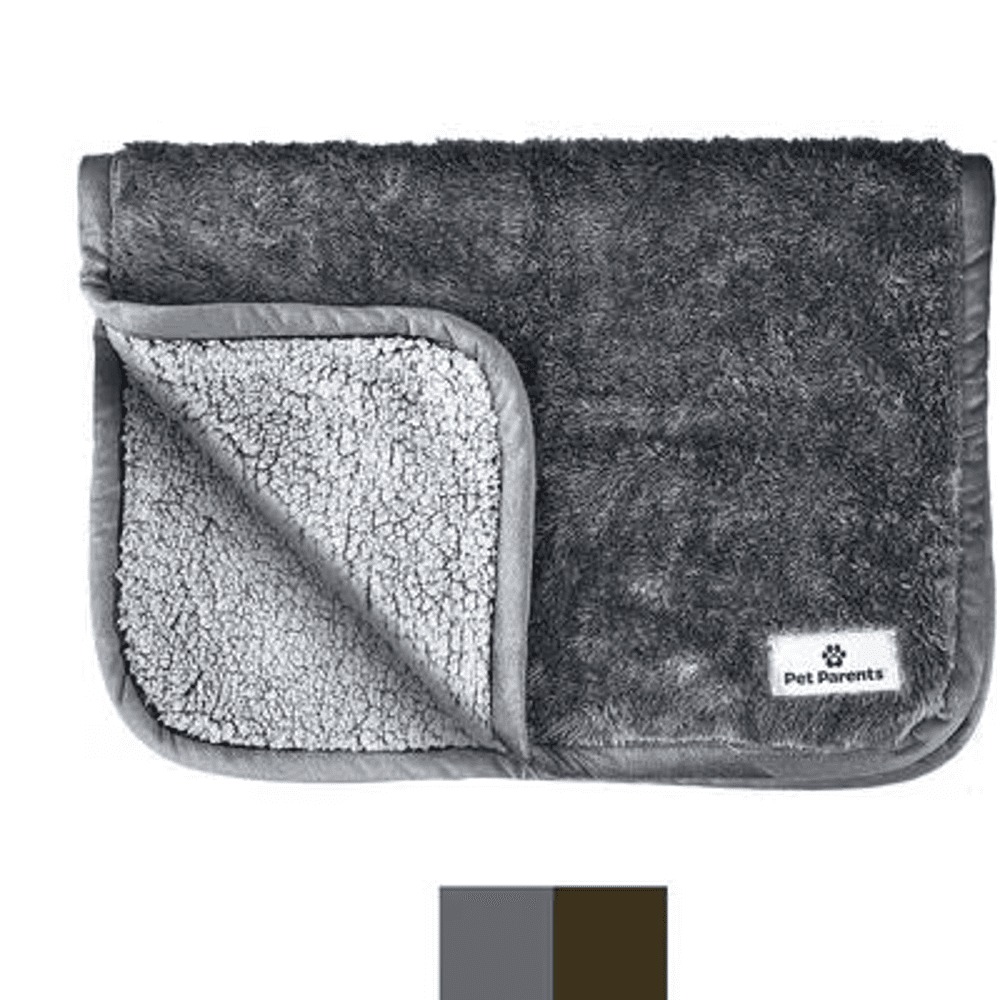
A plush, waterproof sherpa blanket that gives a cold or shivering dog a warm, cozy layer to curl into. The hidden waterproof lining protects the bed, couch, or car seat, and the whole thing is machine washable.
Webvet may earn a commission when you click through to Chewy, at no extra cost to you.
- Use nonslip runners between the bed and exit.
- Add a ramp where stairs are painful or unsafe.
- Keep the route clear of furniture, cords, and narrow turns.
- Use a support harness only with a fit demonstrated for the dog's condition.
- Schedule trips after waking, meals, drinking, medication, and before long rest periods.
- Allow enough time outdoors for both urine and stool without forcing a painful posture.
The senior dog health guide covers broader age-related mobility, sensory, and wellness needs. Incontinence care works better when pain, vision, hearing, sleep, and home layout are addressed together.
Urine leakage, stool accidents, and diarrhea are different problems
A male wrap is designed for urine and cannot contain stool. A full diaper may contain some stool accidents, but many designs have a tail opening through which formed stool can escape. Loose stool can spread under the garment, contaminate the coat, and cause rapid skin irritation.
Use the dog diapers for poop guide for full-coverage limits and cleanup planning. New diarrhea, black stool, blood, repeated straining, abdominal pain, vomiting, or loss of bowel control needs veterinary attention, not simply a more absorbent insert.
Record urine and stool patterns separately. A dog may have urinary leakage during sleep but normal bowel control, or arthritis may delay both. Distinguishing the pattern helps the veterinarian and prevents the household from choosing a full garment when a simpler surface layer or male wrap would be more comfortable.
Laundry, supplies, and a sustainable care routine
A reliable system needs enough clean inventory for the worst realistic day, not just the average day. Count garments, inserts, pads, blankets, and cleaning cloths. Separate clean and used items, follow product washing instructions, and replace fabric that remains rough, stretched, odorous, or damaged.
Disposable systems reduce laundry but increase waste and require secure storage. Reusable systems reduce repeated purchasing but require timely washing and drying. A mixed system may work best: washable protection at home and disposables for travel or periods when laundry access is limited. For a compatible reusable diaper or male wrap, PAWPANG Disposable Dog Diaper Liners, Medium, 100 count is one replaceable liner option; keep it flat and choose another size if the medium insert changes garment fit.
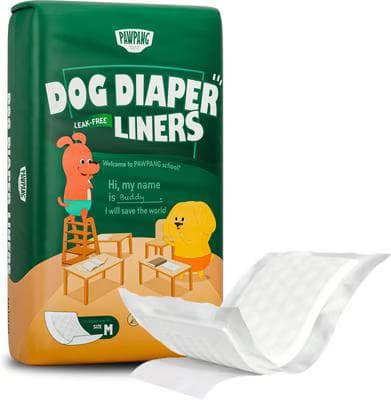
A convenient 100-count liner option for adding absorbency to a correctly fitted washable dog diaper or belly band.
Webvet may earn a commission when you click through to Chewy, at no extra cost to you.
- Store clean supplies near each common changing area.
- Use a closed bin or wet bag that the dog cannot open.
- Prepare travel kits with more changes than the planned time seems to require.
- Keep a written schedule when several caregivers share responsibility.
- Record skin findings and leakage changes instead of relying on memory.
- Ask for respite or veterinary-nursing help before caregiver fatigue becomes unsafe.
For limited outer-coat cleanup, HICC PET Deodorizing Cat & Dog Glove Wipes may help when used as labeled and tolerated. They are not a substitute for warm water, full drying, or veterinary treatment, and fragranced wipes should stay away from broken skin, the genitals, and other sensitive tissue.
Match the setup to the leakage pattern
A wet bed after sleep suggests a different daily problem than small awake dribbles, inability to posture, or a full-bladder accident on the way outside. Track the pattern before adding absorbency. The pattern can guide both veterinary testing and the least restrictive household setup.
Leakage mainly during sleep
Use an absorbent washable layer over waterproof bedding, offer a final supported toilet trip, and check at an interval matched to the dog's actual leakage. A diaper may help, but bedding remains important because the garment can shift when the dog changes position.
Accidents while trying to reach the door
Shorten the route and the wait. Add nonslip runners, move the bed closer to the exit, use a ramp, and schedule trips before the usual accident time. A diaper is backup protection, while mobility and timing address the functional barrier.
Frequent small urinations or straining
Contact the veterinarian promptly. Frequent attempts, pain, blood, odor, or licking can accompany urinary disease. Record how often the dog tries, whether urine is produced, and whether the stream is normal. Do not use a diaper to make repeated attempts less visible.
Large-volume urine accidents
Tell the veterinarian about increased thirst, larger urine amounts, appetite or weight changes, and medication use. A highly absorbent product can contain the accident but may hide a meaningful change in urine production. Measure drinking only if the veterinarian explains how to do it safely.
Webvet may earn a commission when you click through to Chewy, at no extra cost to you.
Treatment and follow-up still matter after the diaper fits
The veterinary plan depends on the cause. Some dogs may need treatment for urinary infection, medication adjustment, pain control, management of a condition that increases urine production, or therapy directed at bladder-outlet function. Neurologic disease and cognitive dysfunction require different evaluations and support.
Do not give another dog's incontinence medication, change a prescribed dose, or stop a medicine because the diaper looks drier. A change in leakage can reflect treatment, hydration, disease progression, or an overly absorbent garment. Report the pattern at the planned recheck.
- Keep laboratory and imaging appointments even when household mess improves.
- Bring the leakage diary and photos of skin changes to rechecks.
- Ask which treatment effects should appear quickly and which require longer monitoring.
- Clarify whether blood tests, urinalysis, culture, blood pressure, or imaging need follow-up.
- Report medication side effects, appetite change, vomiting, diarrhea, weakness, or behavior change.
Use WebVet's senior dog health overview to organize broader wellness questions, but let the treating veterinarian interpret this dog's test results and treatment response.
Travel, appointments, and time away from home
Travel makes the change schedule harder, especially when a senior dog moves slowly or becomes anxious in unfamiliar places. Pack more garments, liners, cloths, bedding, waste bags, and prescribed medication than the planned trip seems to require. Carry the veterinarian's contact information and identify an emergency clinic near the destination. A Paw Inspired Washable Dog Pee Pad can provide a reusable vehicle or waiting-area layer when its dimensions fit the space.
- Offer a toilet trip immediately before departure and at realistic intervals during travel.
- Protect the seat or crate with a washable absorbent layer over waterproof protection.
- Never leave a diapered senior dog unattended in a parked vehicle.
- Check fit after lifting into or out of the vehicle because the garment may twist.
- Bring a written care schedule when another person will perform changes.
For boarding or pet-sitting, demonstrate the least painful changing position and provide written red flags. Confirm that the caregiver can lift or support the dog safely and is willing to inspect and dry the skin. If that level of care is not available, discuss medical boarding or an in-home veterinary-care option.
Protecting the caregiver as well as the dog
Repeated lifting and floor-level changes can injure a caregiver's back or shoulders. Set up the change area at a safe working height only if the dog can be secured from falling. Otherwise, use a padded floor area, kneeling support, and a second person for transfers that exceed one caregiver's ability.
- Prepare every supply before moving the dog.
- Use a properly fitted support harness instead of lifting by the diaper or tail.
- Keep floors dry and nonslip around the change area.
- Ask a veterinary professional to demonstrate transfers and positioning.
- Use laundry and waste containers that can be opened without releasing the dog.
A sustainable plan is part of compassionate care. If sleep loss, physical strain, cost, or the number of daily changes is becoming unmanageable, tell the veterinarian plainly. The plan may be simplified, treatment adjusted, home support added, or quality-of-life goals revisited without blaming the dog or caregiver.
Helping a senior dog accept a diaper
Introduce the garment during a calm, dry period. Let the dog sniff it, reward relaxed behavior, touch the waist briefly, and build toward a short dry fit. Use food only if medically appropriate and the dog remains comfortable. Stop before the dog becomes anxious or exhausted.
Never punish resistance. A dog may object because the fit hurts, joints are painful, the skin is irritated, hearing or vision loss makes handling startling, or cognitive change increases fear. Slow the process and ask the veterinarian to assess pain or handling sensitivity.
For a dog with cognitive dysfunction, keep the sequence and location predictable. Approach where the dog can see or hear you, use the same gentle cue, prepare supplies first, and avoid waking the dog abruptly when a check can safely wait for natural stirring.
Quality of life is broader than leakage alone
Should you put a senior dog down for incontinence? Leakage alone does not answer that question. Many dogs remain comfortable and engaged when the medical cause, skin, mobility, sleep, and household routine are manageable. The decision should consider the whole dog and be made with a veterinarian who knows the condition and response to treatment.

Questions to review regularly
- Is pain controlled during rest, rising, walking, toileting, and diaper changes?
- Can the dog eat, drink, sleep, and breathe comfortably?
- Can skin and coat be kept clean and dry without repeated painful sores?
- Does the dog still seek or enjoy affection, food, sniffing, family time, or favorite activities?
- Can the dog reach a toilet area with reasonable support?
- Are anxious, confused, or distressed periods becoming more frequent or severe?
- Do good days still outnumber difficult days by the standard your family and veterinarian set?
Write brief daily notes because gradual decline is difficult to see from memory. A quality-of-life conversation can also identify treatable pain, infection, sleep disruption, nausea, constipation, anxiety, or environmental barriers. Seeking that conversation early does not commit the family to euthanasia; it creates a clearer, kinder plan.
Urgent suffering should not wait for a scheduled quality-of-life appointment. Contact a veterinarian promptly for uncontrolled pain, inability to breathe comfortably, collapse, inability to urinate, repeated vomiting, severe distress, inability to rise for basic needs, or rapidly worsening skin injury.
A practical first-week plan
During the first week, prioritize information and comfort over finding a perfect product immediately. Use protected bedding while testing fit, because that prevents a leak from becoming an urgent sizing decision. Keep the routine simple enough that every caregiver can follow it. For a cushioned rest station, the FurHaven NAP Ultra Plush Orthopedic Cat & Dog Bed has a removable cover but is not a waterproof layer, so protect it separately.
- Book the veterinary examination and begin a written urine, stool, drinking, mobility, and medication diary.
- Measure the waist and rise, then choose one anatomy-appropriate garment for a brief supervised dry fit.
- Create two changing stations with clean garments, cloths, waterproof layers, and secure waste storage.
- Set toilet opportunities around waking, meals, drinking, medication, and rest rather than waiting for an accident.
- Inspect and document skin at every change, including any area that remains damp or develops odor.
- Review the first several days with the veterinarian if symptoms, fit, skin, or mobility are not improving.
Diapers for old dogs are successful when they reduce mess without adding pain, moisture, restriction, or missed diagnosis. The best plan remains flexible: it changes with the dog's medical findings, body, mobility, sleep, skin, and daily comfort.
Senior dog incontinence questions
Frequently Asked Questions
What can you do for an old incontinent dog?
Begin with veterinary evaluation, then build a layered care plan around the diagnosed cause, mobility, toilet access, skin health, sleep, and caregiver capacity. Scheduled trips, non-slip paths, washable pads, waterproof bedding, treatment, and a correctly fitted diaper can work together. Track urine volume, stool, pain, weakness, thirst, confusion, and skin changes so the plan can be adjusted.
Do dog diapers work for senior dogs?
Dog diapers can work for senior dogs as a management layer when they provide the right coverage, allow normal movement, and are changed promptly. Older dogs may need a mobility-aware fit, surface backup, more frequent skin checks, and help reaching a toilet area. The diaper should reduce mess without hiding a treatable cause or lowering comfort, activity, or dignity.
Can I leave my dog in a diaper all day?
Do not leave a senior dog in one diaper all day. Older skin can be fragile, and arthritis or weakness may prevent the dog from moving away from moisture or signaling discomfort. Use prompt changes, normal toilet opportunities, diaper-free skin time, and washable surface protection. Near-continuous leakage needs a veterinary review and a sustainable caregiver schedule.
Why is my 12 year old dog suddenly incontinent?
Sudden incontinence in a 12 year old dog should not be assumed to be normal aging. Urinary tract infection, bladder or kidney disease, diabetes, medication effects, pain, spinal or neurologic disease, prostate problems, cognitive change, and mobility limits can alter toileting. Arrange a veterinary exam promptly, especially with straining, blood, fever, vomiting, weakness, or increased thirst.
$65 · no membershipHave a health question about your dog?
A licensed vet can assess your dog over video and prescribe online when it's appropriate.
Talk to a vet- Licensed vets
- All 50 states
- same-day Rx
Webvet may earn a commission if you book.

Editor
The Webvet Editorial Team is the in-house group of pet-care editors and writers behind Webvet, operated by Smart Pet Collective. The team researches, writes, and maintains Webvet's pet health, behavior, and medication content. Every article follows a defined editorial process: research from reputable veterinary and scientific sources, careful drafting, mandatory review of medical content by a credentialed veterinarian, and dated publication. Health and medication articles are medically reviewed by a licensed veterinary professional before they go live and are kept current over time.
Veterinarian · BVMS MRCVS
Dr. Pippa Elliott, BVMS, MRCVS, is a veterinarian with nearly 30 years of experience in companion animal practice. Dr. Elliott earned her Bachelor of Veterinary Medicine and Surgery from the University of Glasgow. She was also designated a Member of the Royal College of Veterinary Surgeons. Married with 2 grown-up kids, Dr. Elliott has a naughty Puggle named Poggle, 3 cats and a bearded dragon.


