Dog Neuter Recovery: Day-by-Day Timeline & Care Guide
A vet-reviewed, day-by-day guide to dog neuter recovery: the 10-14 day timeline, incision care, how long to keep the cone on, activity rules, and the warning signs that mean call your vet right away.

BVMS MRCVS
Medically reviewed by Dr. Pippa Elliott, BVMS MRCVS · Last reviewed

This article contains affiliate links. Webvet may earn a commission when you buy through them, at no extra cost to you.
Bringing your dog home after surgery can feel more nerve-wracking than the procedure itself. Dog neuter recovery usually takes about 10 to 14 days, and the single most important job during that window is simple: keep your dog from licking the incision and keep him quiet. Neutering is one of the most common surgeries in companion animals, and most male dogs sail through it. Your part is to protect the incision, manage the energy, and know the handful of warning signs that mean you call the clinic.
This guide walks you through dog neuter recovery day by day, what a normal incision looks like, how long to keep the cone on, what NOT to do, and exactly when a symptom crosses from "expected" into "call the vet now." It is educational and not a substitute for your own veterinarian's discharge instructions. Every dog and every clinic's post-op protocol differs, and your vet's written instructions always override anything you read here.

How long does dog neuter recovery take? (the 10-14 day timeline)
For most male dogs, full dog neuter recovery takes around 10 to 14 days, which is the time it takes for the incision to fully knit and for internal and external tissues to heal. Many dogs feel bright and act "back to normal" much sooner. The ASPCA advises limiting movement for a 7 to 10 day recovery period and no bathing for 10 days, and VCA Animal Hospitals notes that most dogs resume normal activity within roughly 5 to 10 days while an E-collar keeps them from licking the site.
Here is the important catch: feeling recovered and being recovered are not the same thing. Your dog will likely feel great by day 3 or 4, long before the incision is strong enough to survive rough play. That gap between how he feels and how healed he actually is defines the whole recovery. Your calendar, not his energy level, decides when the cone comes off and normal life resumes.
The AVMA describes spaying and neutering as among the most common surgeries veterinarians perform on cats and dogs, with risks that are typically low, and says that after surgery you will be asked to keep your pet calm and quiet for a few days as the incision begins to heal. Following your own veterinarian's discharge instructions is the throughline of this entire article.
Quick answer: plan for a 10 to 14 day recovery. Keep the cone on and activity restricted the whole time, even after your dog seems fine.
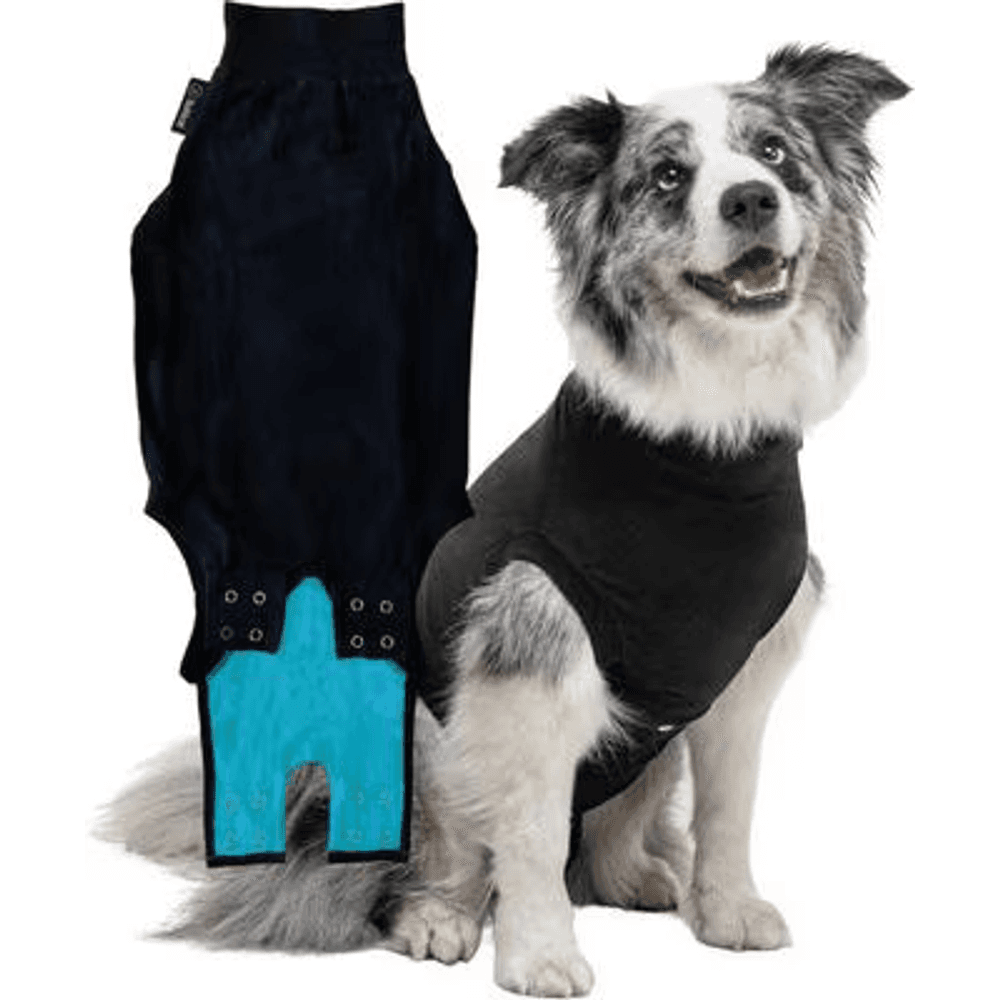
A breathable full-body recovery suit that covers a spay or abdominal incision, the vet-recommended cone alternative that lets a dog rest, walk, and go potty normally without licking or scratching the wound.
Webvet may earn a commission when you click through to Chewy, at no extra cost to you.
Dog neuter recovery day by day: what to expect
Here is a realistic dog neuter recovery timeline so you know what is normal on each day and where the risk peaks. Use it as a map, not a guarantee, since every male dog heals at his own pace.

| Phase | What you will see | Your job |
|---|---|---|
| Days 1-2 | Groggy, sleepy, wobbly from anesthesia. Reduced or picky appetite. Maybe mild whining. | Offer a half-size meal the first evening, plus water. Quiet, warm, confined rest. Cone on. |
| Days 3-7 | Energy returns fast. Dog wants to jump, run, and play. This is the highest-risk window for tearing stitches. | Strictly confine and leash-walk only. Cone stays on 24/7. Check incision twice a day. |
| Days 8-10 | Incision looks clean, dry, and closed. Swelling fading. Dog acts normal. | Keep restricting activity. Do not be fooled by how good he looks. Still no baths. |
| Days 11-14 | Internal and external healing completes. Skin sealed. | Follow your vet's word on when to remove the cone and resume normal activity. |
Days 1 to 2: home and groggy
Your dog just had general anesthesia, so expect a sleepy, uncoordinated, sometimes clingy or grumpy dog for the first day or two. Appetite is often reduced. The ASPCA suggests offering a small, roughly half-size meal that first evening with water, then returning to their normal evening meal. Keep him in a calm, warm spot away from other pets and kids, and keep movements limited: the VCA emphasizes rest, confinement, and keeping an E-collar on so the dog cannot lick the healing site.
Days 3 to 7: the danger zone
This is the part owners underestimate. As the anesthesia and any pain medication settle in, your dog feels good and wants to be a dog again. But the incision is nowhere near full strength yet. This is when torn stitches, swelling from over-activity, and opened incisions happen. Treat days 3 through 7 as the strictest part of recovery even though your dog is begging to play.
Days 8 to 14: healing finishes
By now the incision should look clean and dry, with the edges together and the redness fading. Most dogs are fully recovered by day 14. Do not remove the cone or green-light the dog park until your vet confirms the timing. Skin can look sealed on the surface while deeper layers are still finishing up.
Caring for the incision: what a normal neuter incision looks like (and normal swelling)
Knowing what normal looks like takes a lot of the anxiety out of dog neuter recovery. A male dog's neuter incision is small, usually just in front of the scrotum. Most vets close it with internal, dissolvable stitches, so there is often nothing to remove and the surface looks like a thin closed line.

A normal healing neuter incision:
- Edges are together and the line is closed.
- Skin is pink to slightly reddish at first, fading over days.
- It may be mildly bruised (a bluish tint) in the first few days, which is normal.
- A little clear or slightly pinkish fluid in the first 24 hours can be normal.
- Mild, symmetric swelling around the site can be normal early on.
Signs that cross into "call the vet":
- Heavy or ongoing bleeding.
- Pus-like or foul-smelling discharge.
- The incision opening up or gaping.
- Extreme redness, a hot feel, or a sudden large bulge.
- Swelling that keeps growing instead of shrinking.

One point that surprises owners: the empty scrotum can look swollen for a while, and in some dogs it fills with fluid (a scrotal hematoma or seroma), especially if the dog was too active. Mild puffiness that stays stable and shrinks is usually fine. Swelling that grows, feels hot, or comes with discharge is not.
A note on dissolvable stitches: because they are internal and absorb on their own, you typically will not go back for suture removal, but you should still keep the recovery timeline the full 10 to 14 days. The stitches dissolving does not mean the tissue is instantly strong.
When in doubt, take a clear photo and send it to your clinic or call. Do not decide on your own that a worrying incision is fine. WebVet has a full photo walk-through for what each stage should look like at our dog eye ulcer and incision healing stages guide, so use that alongside this scannable summary rather than guessing from a single glance.
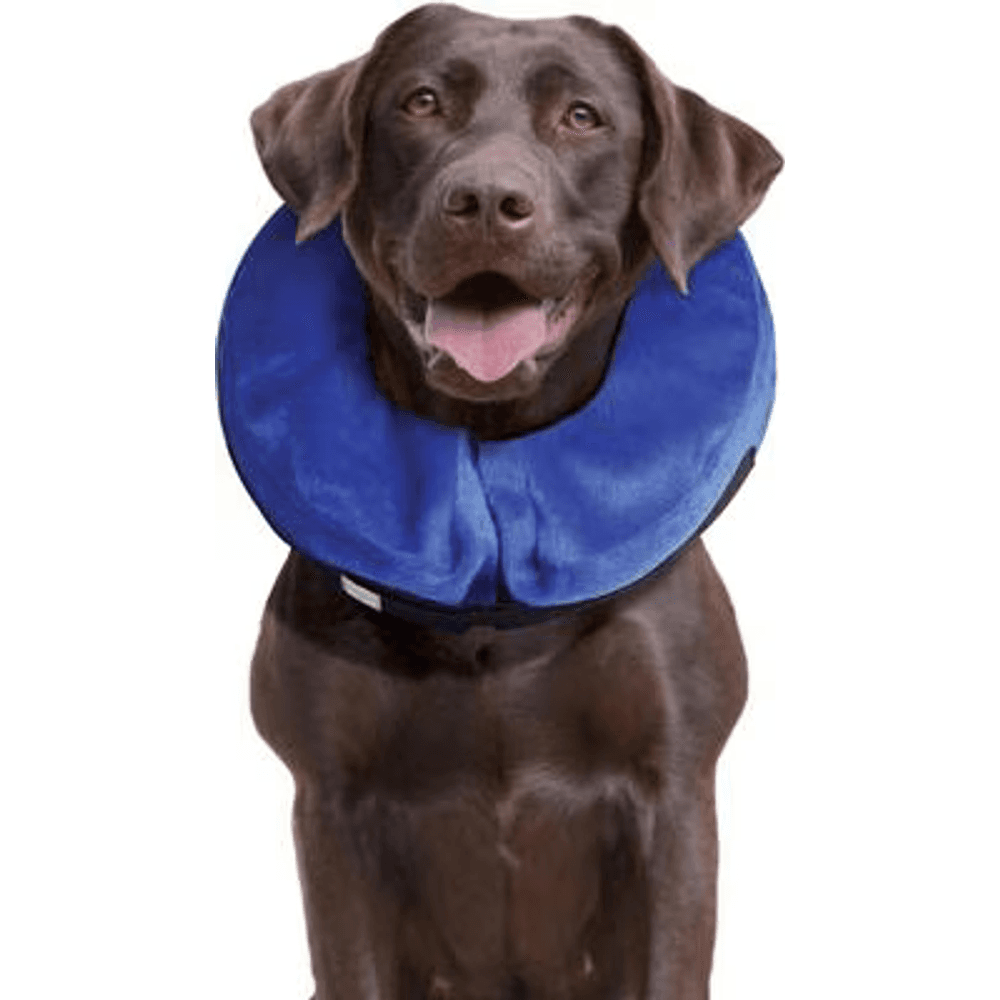
A soft, inflatable donut-style recovery collar that keeps many pets from licking or biting at a healing surgical incision or hot spot while still letting them eat, drink, and sleep in comfort.
Webvet may earn a commission when you click through to Chewy, at no extra cost to you.
 $65 · no membership
Have a health question about your dog?
A licensed vet can assess your dog over video and prescribe online when it's appropriate.
 Talk to a vet
- Licensed vets
- All 50 states
- same-day Rx
Webvet may earn a commission if you book.
The cone after neutering: how long to keep it on and when to take it off
The cone (Elizabethan collar, or "E-collar") is not a punishment, it is the whole reason the incision heals cleanly. A dog's tongue carries bacteria, and licking pulls at stitches, introduces infection, and reopens wounds. The VCA is explicit that an E-collar or a suitable alternative should stay on to prevent the dog from licking the incision.

How long to keep the cone on: plan for the full 10 to 14 day recovery, or until your veterinarian tells you the incision is healed. A common owner mistake is removing the cone on day 4 or 5 because the dog "seems fine." That is exactly the danger zone. One session of unsupervised licking can undo a week of healing.
Cone rules that actually work:
- Keep it on 24/7, including sleep and meals, unless your vet says otherwise.
- Make sure the cone extends past the tip of the muzzle so the dog cannot reach the incision.
- Supervise closely for the first few minutes with a new cone; dogs adjust faster than you expect.
- Raise food and water bowls slightly or use a shallow dish so a coned dog can eat and drink.
"My dog won't wear the cone after neuter." Almost every dog protests the cone for the first hour, then adapts. Do not give in. If your dog genuinely cannot function, is panicking, or is getting stuck on furniture, that is when you switch to a comfortable alternative rather than going without protection entirely. That leads to the next section.
Cone alternatives: recovery suits and inflatable collars
If the traditional hard cone is making life miserable, there are gentler options that still protect the incision. This is a summary; WebVet has a dedicated deep dive comparing every option at our cone alternatives after spay/neuter guide.

The main alternatives to a dog cone after neuter:
| Option | How it works | Best for |
|---|---|---|
| Hard E-collar (classic cone) | Rigid plastic cone that blocks the muzzle from the incision | Determined lickers; most reliable protection |
| Inflatable donut collar | Soft ring around the neck that stops the dog bending to reach the site | Dogs who hate the hard cone; comfort and sleep |
| Fabric recovery suit / surgical suit | Bodysuit that physically covers the incision area | Dogs who tolerate a suit; keeps the site clean |
| Soft fabric cone | Flexible cone that is less clunky than hard plastic | Milder lickers; more comfort, slightly less rigid |
A recovery suit (often searched as a "surgical suit," "Suitical recovery suit," or "male dog neuter recovery suit") covers the incision with breathable fabric so the dog can move and rest more comfortably while the site stays protected. Suits designed for female dogs cover a larger abdominal area; for a male neuter you want one that covers the lower belly and groin region. Whatever you choose, the test is the same: can the dog physically reach the incision? If yes, it is not doing its job.
Inflatable donut collars are popular because dogs can eat, drink, and sleep more easily. They work well for dogs who are not determined lickers, but a flexible or short-necked dog can sometimes still reach the site, so watch the first day before trusting it overnight. When you are shopping "dog recovery suit near me" or comparing brands, prioritize fit and coverage over looks.
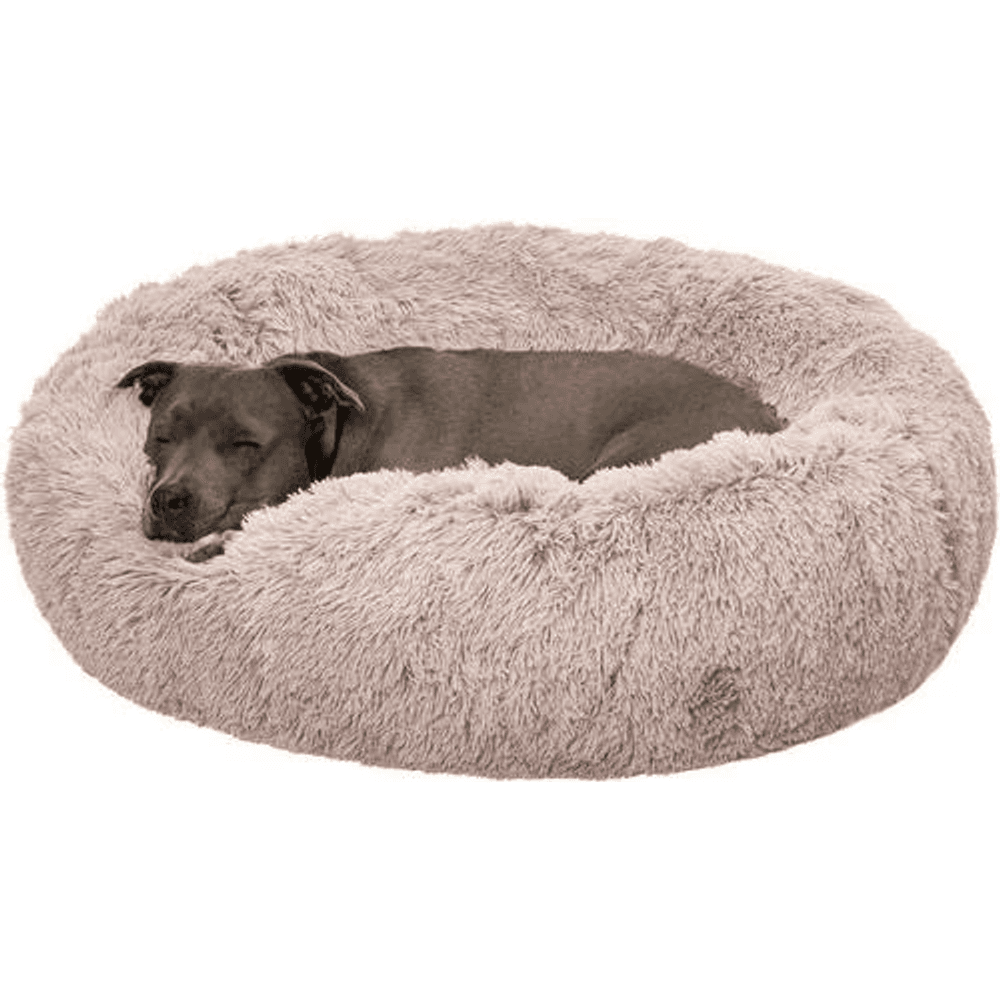
A plush, long-fur donut bolster bed with a raised rim that gives a recovering pet a secure, cushioned place to curl up during the crucial 10 to 14 days after surgery.
Webvet may earn a commission when you click through to Chewy, at no extra cost to you.
Activity restriction: what NOT to do after neutering
Activity restriction is half the battle in dog neuter recovery. The ASPCA recommends limiting movement for the recovery period, and the VCA says the same: rest and confinement protect the healing incision.
What NOT to do after your dog gets neutered:
- No running, jumping, or rough play. This is the top cause of torn stitches and swelling.
- No stairs or furniture jumping where you can prevent it. Carry small dogs or use a ramp; block couch access.
- No off-leash play, dog parks, or wrestling with other dogs.
- No baths or swimming for about 10 to 14 days. Getting the incision wet invites infection.
- No letting the dog lick, chew, or scratch the incision. This is what the cone is for.
- Do not remove the cone early, even if he seems recovered.
- Do not give human pain relievers or leftover medications. Only give what your vet prescribed, exactly as directed.
What happens if a dog jumps after being neutered? A single big jump can pop internal or external stitches, cause bleeding under the skin, trigger swelling, or open the incision. If your dog jumps or gets loose and then you notice new swelling, bleeding, an opened incision, or he seems painful, call your vet. Even if everything looks okay, dial back activity even harder for the rest of recovery.
"My dog keeps jumping after being neutered." Because dogs feel good by day 3, the fix is management, not willpower. Leash him even indoors, confine him to a small room or crate, use a ramp, and add calm mental enrichment (below) to burn energy without motion.
Keeping your dog calm and comfortable during recovery
A bored, high-energy dog on strict rest is a recipe for a torn incision. Your goal is to tire the brain while resting the body.

Where should a dog sleep after neutering? On a flat, supportive bed at floor level in a quiet, draft-free spot, ideally in a confined area like a crate or a small gated room so he cannot jump on or off furniture during the night. Keep him near you the first night or two so you can monitor him, but away from other pets who might nudge or play. A ground-level bed also removes the temptation to leap up onto the couch or your bed.
Comfort and calm ideas that respect activity limits:
- Puzzle feeders, lick mats, and stuffed frozen toys to occupy the mind without movement.
- Short, calm training like nose work or scent games done in place.
- Gentle attention and a familiar routine, which lowers stress.
- A confined, cozy recovery zone so rest is the default, not a fight.
Calming aids after neuter: some dogs are simply too wired to rest safely. Vets sometimes prescribe a calming medication such as trazodone for these dogs, but this must come only from your veterinarian and only if prescribed. Never give human sedatives, leftover medications, or over-the-counter products to sedate your dog without veterinary direction. If your dog is impossible to keep calm, call your clinic and ask, rather than improvising.
For the wider picture on getting through the whole rest period, see WebVet's general spay/neuter recovery overview, which ties the dog, cat, spay, and neuter guidance together in one place.
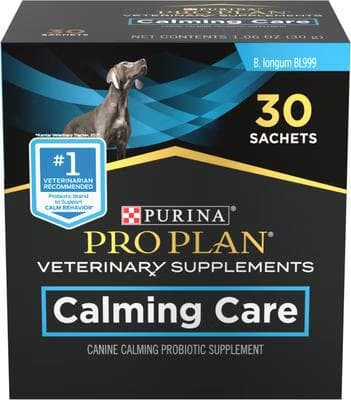
Probiotic supplement formulated to help dogs maintain calm behavior, with the BL999 strain. Liver-flavored powder in 30 daily sachets.
Webvet may earn a commission when you click through to Chewy, at no extra cost to you.
Warning signs after neutering: when to call your vet (emergency)
This is the most important section. Most dogs recover uneventfully, but you are the early-warning system. The ASPCA lists the classic red flags to call the clinic about immediately: vomiting, diarrhea, discharge or bleeding from the incision, loss of appetite, an unsteady gait, pale gums, or labored breathing.
Some grogginess, a quiet appetite the first evening, and mild swelling early on are expected. What matters is the direction and timing: symptoms should improve day over day, not worsen. Anything that is getting worse, is severe, or appears well after the anesthesia should have worn off deserves a phone call. When in doubt, send a photo or call. It is always better to check than to wait.
Does recovery differ by size, age, or a cryptorchid neuter?
The core 10 to 14 day plan holds for most dogs, but a few factors shift the details.
Small dogs often bounce back quickly and can be easier to confine, but they are also expert couch-jumpers, so blocking furniture matters. Large and giant-breed dogs may take a little longer to feel steady and are harder to keep still, so leash control and a truly confined space are key. The AAHA notes that recommended spay/neuter timing depends on the dog's breed and adult size, which is context worth discussing with your vet for your individual dog.
Adult and senior dogs sometimes need a bit more recovery time and closer monitoring than puppies, simply because tissue heals a touch slower with age. Cryptorchid neuters (where one or both testicles did not descend and the surgeon has to retrieve them, sometimes from inside the abdomen) are a bigger surgery than a routine neuter. Recovery can take longer, the incision may be larger or in a different location, and your vet's specific instructions matter even more. Follow them to the letter.
Laser neuter surgery recovery is broadly similar to a standard neuter; some clinics report less swelling. Your recovery timeline still centers on rest, the cone, and watching the incision. Whatever the technique, the AVMA guidance stands: follow your veterinarian's post-op plan.
A quick note on the female side: this article is about male dogs. A spay is a larger abdominal surgery with a bigger incision and its own considerations, so if you have a female dog, read WebVet's dedicated dog spay recovery guide instead of applying the neuter timeline.
Does a male dog change after being neutered? (behavior FAQ)
Owners often ask whether their dog's personality will change. In short: neutering can reduce some hormone-driven behaviors, but it does not change who your dog fundamentally is.
Neutering commonly reduces behaviors tied to testosterone, such as roaming to find a mate, urine marking, and some forms of male-to-male aggression or mounting. It does not make a dog dull, and it will not fix behaviors rooted in habit, fear, or training gaps. Core personality (playfulness, affection, energy, and intelligence) stays the same. A dog's core temperament comes from genetics and life experience, not his reproductive hormones. Any short-term "change" in the first two weeks is almost always the recovery itself (grogginess, discomfort, the cone) rather than a permanent shift, and it fades as he heals.
Dog neuter recovery: the short version
- 1Timeline: about 10 to 14 days; many dogs feel normal by day 3 to 4, but they are not healed yet.
- 2The one non-negotiable: keep the cone (or a proper alternative) on and licking prevented the entire time.
- 3Highest-risk days: 3 to 7, when energy returns and stitches are still weak.
- 4No running, jumping, stairs, off-leash play, baths, or swimming for the full recovery.
- 5Feed a half-size meal the first evening with water, then resume normal feeding.
- 6Call the vet for an opened incision, bleeding, discharge, big swelling, vomiting, not eating, or persistent lethargy.
- 7When in doubt, photograph the incision and call. Your vet's discharge instructions always win.
Neutering is routine, and with a cone, a quiet space, and a close eye on the incision, the vast majority of male dogs are fully back to themselves in two weeks. Your calm, boring, well-managed recovery week is exactly what a great outcome looks like.
Frequently Asked Questions
How long does it take for a male dog to recover from being neutered?
Most male dogs take about 10 to 14 days to fully recover from a neuter, which is how long the incision needs to heal completely. Many dogs act normal within 5 to 10 days, but feeling recovered is not the same as being healed. Keep the cone on and activity restricted for the full window, even after your dog seems fine, and follow your vet's specific discharge instructions.
Can I leave my dog alone 4 days after neutering?
Day 4 falls in the highest-risk window (days 3 to 7), when energy returns but the incision is still weak, so leaving your dog alone then carries real risk. If you must, confine him to a crate or small gated room with the cone on and nothing to jump on, remove anything he could get tangled in, and keep the time short. A calm, confined, unsupervised dog is far safer than one with room to jump, run, or lick. If your dog is too wired to rest, call your vet about calming options.
What not to do after your dog gets neutered?
After a neuter, do not let your dog run, jump, use stairs, play off-leash, or wrestle with other dogs, and do not bathe or let him swim for about 10 to 14 days. Do not remove the cone early, do not let him lick or chew the incision, and never give human pain relievers or leftover medications. Give only what your vet prescribed. In short, restrict activity and protect the incision until your vet says recovery is complete.
Does a male dog change after being neutered?
Neutering can reduce hormone-driven behaviors like roaming, urine marking, and some mounting or male-to-male aggression, but it does not change your dog's core personality. His playfulness, affection, energy, and intelligence stay the same because temperament comes from genetics and experience, not reproductive hormones. Any change you notice in the first two weeks is usually the recovery itself (grogginess, the cone, mild discomfort) and it fades as he heals.
What happens if a dog jumps after being neutered?
A single hard jump can tear internal or external stitches, cause bleeding under the skin, trigger swelling, or open the incision, especially during the days 3 to 7 danger zone. If your dog jumps or gets loose, check the incision. Call your vet right away if you see new swelling, bleeding, an opened or gaping incision, or signs of pain. Even if it looks fine, tighten activity restriction for the rest of recovery.
Where should a dog sleep after neutering?
Your dog should sleep on a flat, supportive bed at floor level in a quiet, draft-free, confined space such as a crate or small gated room, so he cannot jump on or off furniture overnight. Keep him near you the first night or two to monitor him, but away from other pets who might play or nudge the incision. The cone stays on while he sleeps.
What is the 3-3-3 rule for dogs?
The 3-3-3 rule describes how a newly adopted or rescued dog typically adjusts to a new home: roughly the first 3 days to decompress and feel overwhelmed, about 3 weeks to start settling into a routine, and around 3 months to feel fully comfortable and bonded. It is an adjustment guideline for new dogs, not a surgical recovery timeline. For a neuter, plan instead on the 10 to 14 day healing window described in this guide.
$65 · no membershipHave a health question about your dog?
A licensed vet can assess your dog over video and prescribe online when it's appropriate.
Talk to a vet- Licensed vets
- All 50 states
- same-day Rx
Webvet may earn a commission if you book.

Editor
The Webvet Editorial Team is the in-house group of pet-care editors and writers behind Webvet, operated by Smart Pet Collective. The team researches, writes, and maintains Webvet's pet health, behavior, and medication content. Every article follows a defined editorial process: research from reputable veterinary and scientific sources, careful drafting, mandatory review of medical content by a credentialed veterinarian, and dated publication. Health and medication articles are medically reviewed by a licensed veterinary professional before they go live and are kept current over time.
Veterinarian · BVMS MRCVS
Dr. Pippa Elliott, BVMS, MRCVS, is a veterinarian with nearly 30 years of experience in companion animal practice. Dr. Elliott earned her Bachelor of Veterinary Medicine and Surgery from the University of Glasgow. She was also designated a Member of the Royal College of Veterinary Surgeons. Married with 2 grown-up kids, Dr. Elliott has a naughty Puggle named Poggle, 3 cats and a bearded dragon.


