Dog Spay Recovery: Day-by-Day Timeline and Care Guide
A complete, vet-reviewed guide to dog spay recovery: what is normal each day of the 10 to 14 day window, how long to keep the cone on, activity restrictions, incision care, and the red-flag symptoms that mean call your vet now.

BVMS MRCVS
Medically reviewed by Dr. Pippa Elliott, BVMS MRCVS · Last reviewed

This article contains affiliate links. Webvet may earn a commission when you buy through them, at no extra cost to you.
Your dog just had her spay surgery, and now the hard part is on you: the next two weeks at home. Dog spay recovery usually takes about 10 to 14 days, and how carefully you manage that window is the single biggest factor in whether your dog heals cleanly or ends up back at the clinic with a reopened incision.
A spay (ovariohysterectomy) is major abdominal surgery, not a minor procedure. According to the American Veterinary Medical Association, sterilization carries the same real risks as any surgery, including those tied to anesthesia. That is exactly why the at-home aftercare matters so much. This guide walks you through the full recovery day by day, what is normal, what is not, and the warning signs that mean you need to call your vet.
How long does dog spay recovery take?
Most dogs need about 10 to 14 days to fully recover from a spay. During that window the incision on the abdomen knits closed and the internal tissues heal. Your dog will likely act close to normal well before the two weeks are up, which is precisely the trap that hurts so many recoveries.
Here is the important distinction. Feeling well and being healed are not the same thing. The VCA Animal Hospitals note that most dogs can resume normal activity 5 to 10 days after surgery, but that return to activity has to be gradual and vet-guided. The skin surface may look sealed while the muscle wall and internal sutures underneath are still fragile.
The short version: plan for a full 10 to 14 days of restricted activity and a cone or recovery suit worn around the clock, even if your dog seems ready to run laps by day 4.
This page is the dog spay spoke of our broader spay and neuter recovery hub. If you have a male dog, see dog neuter recovery instead, since the incision and timeline differ.
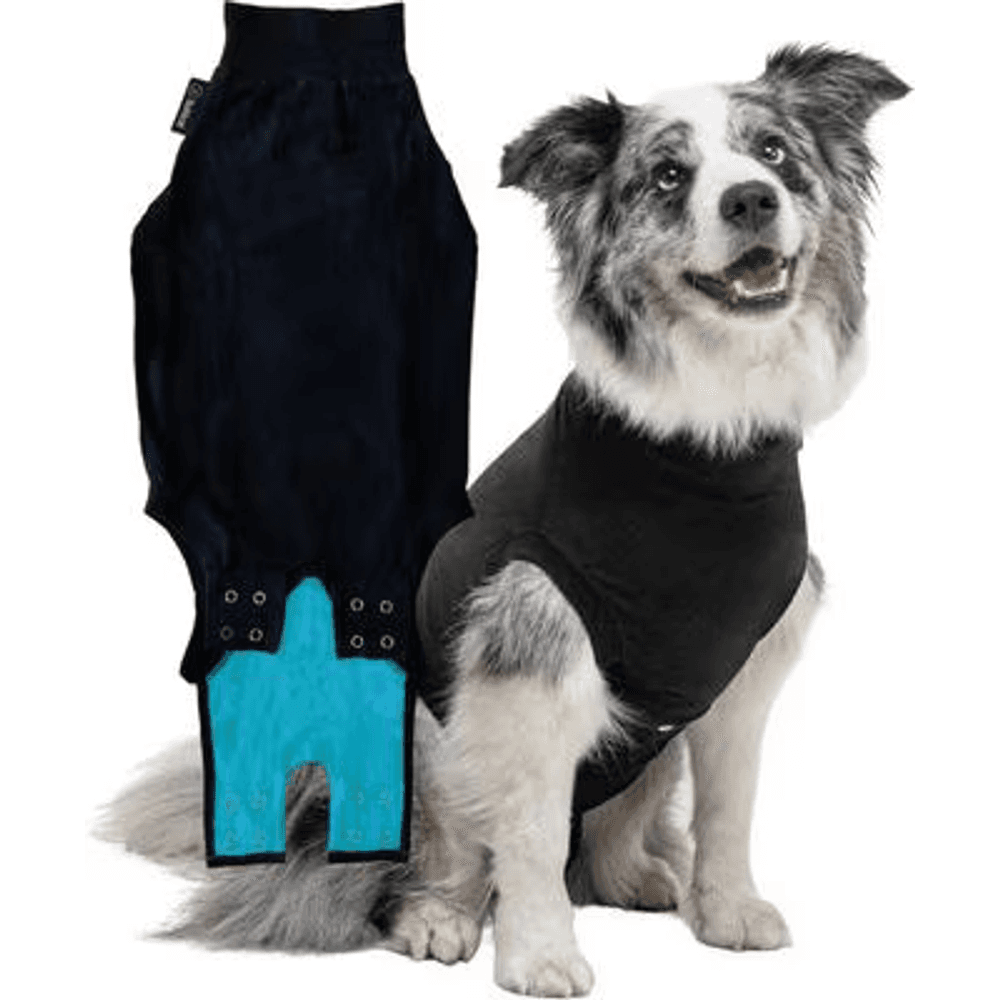
A breathable full-body recovery suit that covers a spay or abdominal incision, the vet-recommended cone alternative that lets a dog rest, walk, and go potty normally without licking or scratching the wound.
Webvet may earn a commission when you click through to Chewy, at no extra cost to you.
How long for a girl dog to recover, in plain terms
A girl dog recovers from a spay in roughly two weeks. The first 24 to 48 hours are the groggy anesthesia-hangover phase. Days 3 through 7 are usually when she starts feeling good again, which is the highest-risk stretch for overactivity. By days 10 to 14, most incisions are closed enough that your vet can clear her for normal life.
Every dog is an individual, and factors like age, size, and body condition shift the timeline. We break those modifiers down further below.
Dog spay recovery day by day (the 14-day timeline)

Recovery is easiest to manage when you know what each phase should look like. Below is a day-by-day map of a typical female dog spay recovery, built around the standard post-operative care principles that the AVMA and VCA describe: keep her calm and quiet, restrict activity, protect the incision, and give all prescribed medication on schedule.
| Phase | Days | What is normal | Your job |
|---|---|---|---|
| Anesthesia recovery | Days 1 to 3 | Grogginess, wobbliness, reduced appetite, sleeping a lot, mild whining | Quiet confinement, cone on 24/7, medicate on schedule, offer a small bland meal |
| The restless phase | Days 4 to 7 | She feels much better and wants to play; this is the most dangerous stretch | Enforce strict rest, leash-only potty breaks, no jumping, keep the cone on |
| Wound closure | Days 8 to 14 | Incision looks dry and closed; energy is near normal | Keep restricting activity until the vet clears her; final incision check |
Days 1 to 3: coming out of anesthesia
The first few days are the grogginess window. Anesthesia can leave your dog wobbly, sleepy, and off her food. A reduced appetite on the day of surgery and the day after is common; offer a small, light meal rather than her full normal portion.
Keep her calm and quiet. The AVMA advises keeping your pet calm and quiet for the first several days as the incision begins to heal. Set up a small, warm, low-traffic space. The cone or recovery suit goes on now and stays on.
Give all pain medication exactly as prescribed. Do not wait for her to look painful. Never add any human medication (more on that below).
Days 4 to 7: the restless phase
This is the stretch that catches owners off guard. Your dog feels good. She may want to jump on the couch, do zoomies, or wrestle with a housemate dog. The problem is that the internal healing is nowhere near finished, and this is when incisions get torn open. Treat days 4 to 7 as the highest-risk phase, not the finish line.
Around 7 days after spay surgery, many dogs act completely normal. Resist the urge to relax the rules. The VCA note that swimming, bathing, and running are all off-limits during this recovery period; leash walks and rest are the plan.
Days 8 to 14: wound closure
By the second week the incision should look dry, closed, and less red. Energy is back to normal or close to it. Keep the activity restriction and the cone in place until your vet gives the all-clear, usually at a recheck around days 10 to 14.
Many vets use absorbable sutures that dissolve on their own, so there may be nothing to remove, per the VCA. If your dog has skin sutures or staples, your clinic will schedule a removal visit. For a closer look at what the incision itself should look like at each stage, see our dedicated guide on spay and neuter incision healing.
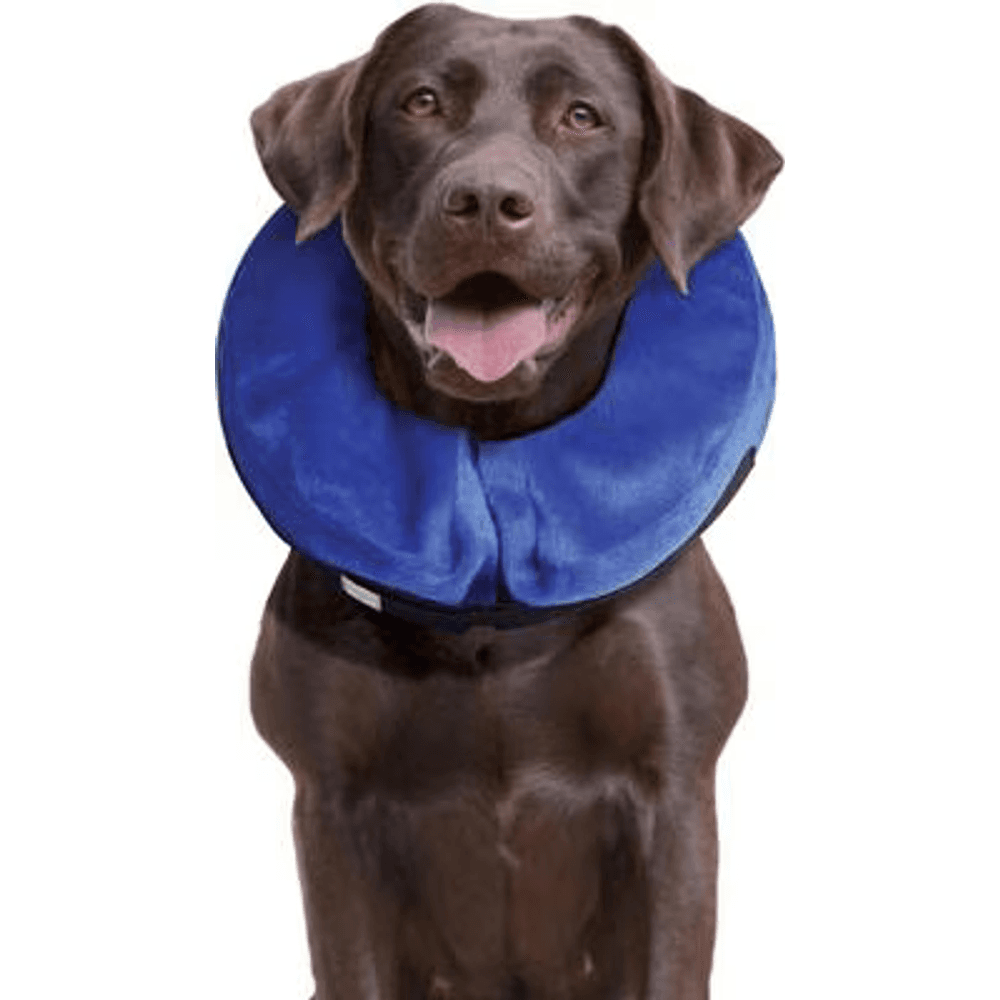
A soft, inflatable donut-style recovery collar that keeps many pets from licking or biting at a healing surgical incision or hot spot while still letting them eat, drink, and sleep in comfort.
Webvet may earn a commission when you click through to Chewy, at no extra cost to you.
Warning signs after spaying: when to call the vet

Most spay recoveries are uneventful. But because this is abdominal surgery, you have to know the red flags cold. The following are not "wait and see" situations. They are reasons to call your veterinarian immediately.
- An opened, gaping, or oozing incision or sutures that have torn. Licking is the number one cause of this.
- Discharge or pus from the incision (a small amount of clear or slightly blood-tinged fluid in the first day can be normal; pus is not).
- A foul odor coming from the incision site.
- Worsening swelling, redness, or bruising at or around the incision, especially if it is spreading.
- Persistent or heavy bleeding from the site.
- Lethargy or collapse, pale gums, or a distended, painful belly, which can signal internal bleeding.
- Refusal to eat beyond the first day, or vomiting that continues past the first 24 hours.
Normal versus warning: a quick comparison
| Normal in the first days | Call the vet |
|---|---|
| Mild swelling or a small firm lump under the incision | Rapidly worsening or spreading swelling |
| A thin line of redness right at the edges | Deep, spreading redness or heat |
| A few drops of clear or pinkish fluid on day 1 | Pus, thick discharge, or a bad smell |
| Sleepiness and low appetite for a day | Lethargy, collapse, pale gums, or not eating past day 1 |
| A closed incision your dog leaves alone | A gaping incision or exposed tissue |
When in doubt, take a clear photo and call your clinic. It is always cheaper and safer to ask than to miss a complication early. For a visual reference of how a healthy incision changes over time, our incision healing guide covers the day-by-day appearance in depth.
 $65 · no membership
Have a health question about your dog?
A licensed vet can assess your dog over video and prescribe online when it's appropriate.
 Talk to a vet
- Licensed vets
- All 50 states
- same-day Rx
Webvet may earn a commission if you book.
Keeping the cone or recovery suit on and preventing licking

Here is the rule that outranks almost everything else in this article: the cone or recovery suit stays on 24/7 until your vet clears it. Licking is the leading cause of infection and reopened incisions. A dog can undo a clean surgery in a few seconds of unsupervised licking.
The classic tool is the Elizabethan collar, the plastic cone. The VCA confirm that E-collars or approved alternatives are used specifically to stop a dog from reaching and licking her incision.
Cone versus recovery suit
You have two main licking-prevention options, and many dogs tolerate a fabric surgical suit better than a cone.
| Option | How it works | Best for |
|---|---|---|
| Elizabethan collar (cone) | Rigid plastic barrier blocks the mouth from reaching the belly | Dogs that ignore a suit or slip out of it; total physical block |
| Recovery suit or surgical suit | A snug fabric bodysuit covers the incision so she cannot reach it | Dogs that panic in a cone; keeps the site clean; less bumping into furniture |
A dog recovery suit for a spay (sometimes called a surgical suit for female dogs) covers the abdominal incision with breathable fabric. Many owners find a suit less stressful for the dog and easier around the house. Whichever you choose, it must fully prevent access to the incision, and it must be worn at all times, including overnight, unless you are directly supervising and she is calm.
A note on alternatives. Inflatable donut collars and soft cones can work for some dogs, but they do not stop every dog from reaching a belly incision. For a full comparison of the options, see our guide to cone alternatives after spay or neuter before you swap the hard cone for something softer.
Activity restriction: crating, jumping, and the restless phase
Activity restriction is not optional, and it is not just for the first day or two. Plan to restrict your dog's movement for the full 10 to 14 days. The VCA are explicit that recovery means leash walks, lots of rest, and no swimming, bathing, or running.
What activity restriction actually means:
- Leash-only bathroom breaks. No off-leash yard time.
- No running, jumping, or rough play.
- No jumping on or off furniture, and no stairs when you can avoid them.
- No wrestling with other dogs in the home.
- Confinement to a crate, playpen, or a small gated room when unsupervised.
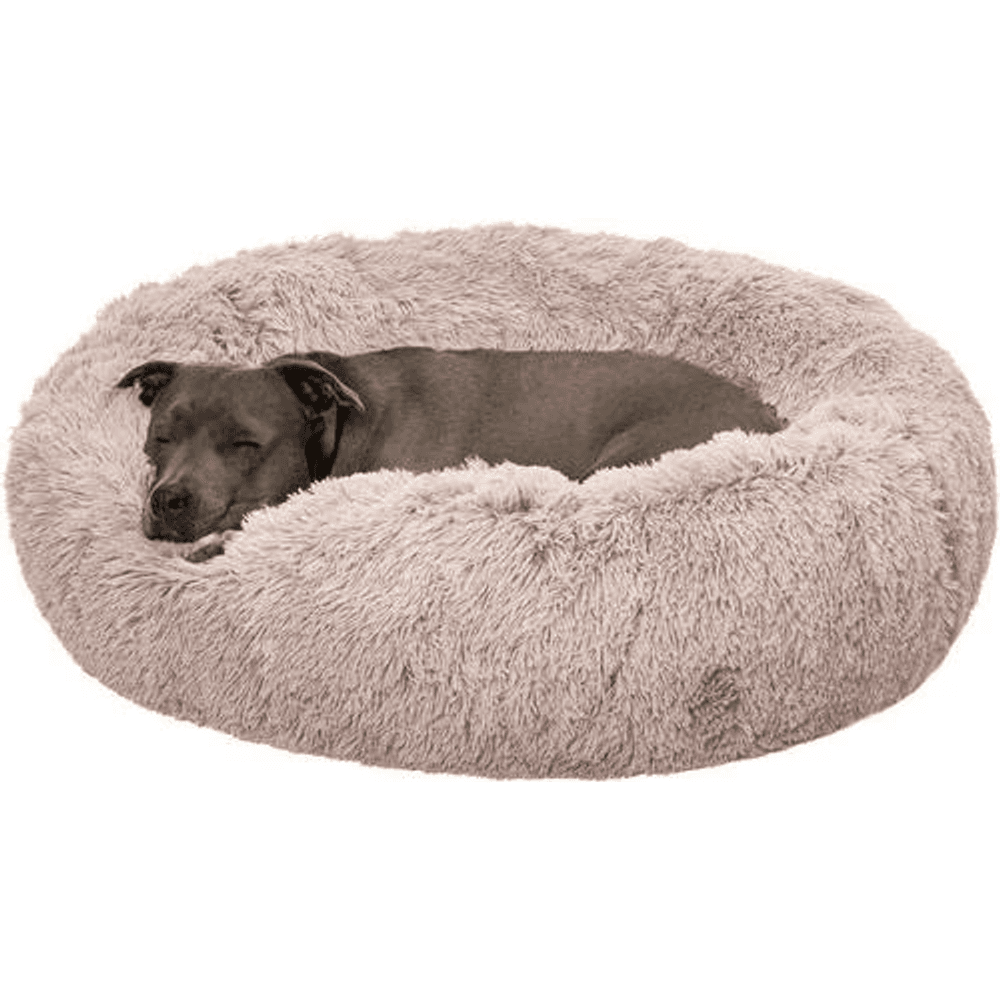
A plush, long-fur donut bolster bed with a raised rim that gives a recovering pet a secure, cushioned place to curl up during the crucial 10 to 14 days after surgery.
Webvet may earn a commission when you click through to Chewy, at no extra cost to you.
Should I keep my dog in a crate after spaying?
Yes, crating or a small confined space is one of the best ways to enforce rest, especially during the restless days 4 to 7. A crate, playpen, or small gated room prevents the running and jumping that can tear an incision. If your dog is not crate-trained, a small bathroom or a puppy pen works. The goal is simply a space where she physically cannot build up speed or leap.
My dog jumped or did zoomies after being spayed
If your dog jumped on the couch or had a burst of puppy zoomies once, do not panic, but do check the incision. Look for any new bleeding, swelling, gaping, or signs of pain. If everything looks the same as before, tighten up the confinement so it cannot happen again. If the incision looks changed at all, or she seems painful, call your vet. Repeated jumping is exactly how sutures tear, so the fix is stricter management, not hoping for the best.
Can my dog jump on the couch after being spayed?
Not during recovery. Jumping onto and, worse, off the couch puts a hard strain on the abdominal wall. Block access to furniture, or lift her up and down yourself if she must be with you. Save the couch privileges for after your vet clears her.
Where should a dog sleep after spaying?
Your dog should sleep somewhere flat, warm, low, and easy to get in and out of without jumping. A dog bed or crate on the floor near you is ideal, so she is calm and you can hear her overnight. Avoid letting her sleep on a raised bed or sofa she has to leap onto or off of. Keeping her near you also helps reduce anxiety-driven restlessness.
Can I leave my dog alone 3 days after spay?
Short absences are usually fine by day 3, as long as she is confined and wearing her cone or suit. The safest setup is a crate or small gated space where she cannot jump, run, or reach the incision. What you should avoid is leaving her loose with free run of the house or with access to other pets, since that is when unsupervised jumping or licking happens. If she is still very groggy, painful, or not eating, she should not be left alone yet. For the first 24 hours especially, keep someone with her.

Incision care, bathing, and pain medication at home
Good incision care is mostly about leaving the incision alone. Keep it clean and dry, and let it heal.
Do not clean the incision with alcohol, hydrogen peroxide, or ointments unless your vet specifically tells you to. Those products can irritate the tissue and slow healing. Keep the area dry, which is one reason bathing and swimming are off-limits for the full recovery window per the VCA.
Check the incision twice a day. A quick look for redness, swelling, discharge, or gaping takes seconds and catches problems early.

Probiotic supplement formulated to help dogs maintain calm behavior, with the BL999 strain. Liver-flavored powder in 30 daily sachets.
Webvet may earn a commission when you click through to Chewy, at no extra cost to you.
Pain medication: prescription only, never human drugs
Give only the pain medication your veterinarian prescribed, exactly on the schedule they set. Never give your dog human painkillers. Acetaminophen (Tylenol), ibuprofen, and aspirin are toxic to dogs and can cause serious harm or death. If you feel your dog's prescribed medication is not controlling her pain, call your vet for guidance rather than reaching for anything in your own cabinet.
Dog spay recovery tips at a glance
- 1Keep the cone or recovery suit on 24/7.
- 2Confine her; leash-only potty breaks; no running or jumping.
- 3Give all prescribed medication on time; no human drugs.
- 4Keep the incision dry; no baths or swimming.
- 5Offer small, light meals for the first day or two.
- 6Check the incision twice daily.
- 7Watch closely during days 4 to 7, the restless phase.
What affects recovery time (age, size, and spay type)
The 10 to 14 day window is the average, but a few factors move the needle.
| Factor | Effect on recovery |
|---|---|
| Older dogs | May recover more slowly and are watched more closely; anesthesia and healing can take longer |
| Small or young dogs | Often bounce back quickly and feel well fast, which paradoxically makes activity restriction harder to enforce |
| Large or overweight dogs | May have more tension on the incision and can need extra care with movement |
| Surgical approach | A standard open spay and a laparoscopic (keyhole) spay can differ in incision size and comfort; follow your clinic's specific guidance |
Older dog spay recovery deserves a little extra patience. Senior dogs can take longer to clear anesthesia and to heal, so watch appetite and energy carefully and keep rechecks. Small dog spay recovery is usually fast on the surface, but the small size does not mean the internal healing is any faster, so hold the full activity restriction.
Whatever your dog's age or size, the discharge instructions from her own surgical team are the ones to follow. The AVMA note that your veterinarian tailors the surgical and recovery plan to your individual pet after a pre-operative exam.

Behavior changes after spaying
A very common question is whether a dog's personality changes after being spayed. Here is the honest, evidence-aligned answer.
Do female dogs change after being spayed? Their core personality does not change. Your dog is still the same dog. What can change are behaviors that were driven by heat (estrus) cycles and reproductive hormones, such as the restlessness, roaming, and hormonal mood swings tied to being in heat. Removing the heat cycle removes those specific behaviors.
Are female dogs calmer after spaying? Sometimes, but not always, and not in the way people often assume. Spaying can reduce hormone-driven behaviors and the disruption of heat cycles. It does not, by itself, calm a hyperactive dog or fix behavior problems rooted in energy level, training, or anxiety. A high-energy young dog will still be high-energy after her spay. Exercise (once she is cleared), training, and enrichment are what shape general energy and behavior, not the surgery.
There is also a temporary, short-term behavior shift during the recovery itself. Anesthesia, pain, confinement, and the cone can make a dog seem quiet, clingy, or a little out of sorts for a few days. That is a normal part of recovery and resolves as she heals. The reason to spay in the first place is health, not behavior: the Merck Veterinary Manual notes that spaying female dogs at around 6 months of age, before the first heat cycle, helps prevent mammary (breast) cancer and uterine cancer.
What is the 3-3-3 rule for dogs?
The 3-3-3 rule is not about spay recovery at all, but it comes up so often alongside dog questions that it is worth clearing up. The 3-3-3 rule is a rough guideline for a newly adopted or rescued dog adjusting to a new home: roughly 3 days to decompress and feel overwhelmed, 3 weeks to start settling into a routine, and 3 months to feel fully at home and bonded.
For a dog recovering from a spay, the timeline that actually matters is the 10 to 14 day healing window described throughout this guide, plus whatever recheck schedule your veterinarian sets.
The bottom line on dog spay recovery
Dog spay recovery comes down to a handful of non-negotiables: keep the cone or recovery suit on around the clock, restrict activity hard for the full 10 to 14 days (especially the deceptive restless phase in days 4 to 7), keep the incision dry, give only vet-prescribed pain medication, and check the incision twice a day. Do those things and most dogs heal beautifully.
The one thing to never second-guess is a red flag. A gaping incision, discharge, a bad smell, spreading swelling, persistent bleeding, lethargy, or a refusal to eat all mean it is time to call your veterinarian now. When you are unsure, calling is always the right move.
For more on the surgery and the wider recovery picture, explore the spay and neuter recovery hub, the incision healing guide, and cone alternatives after spay or neuter.
Frequently Asked Questions
How long does it take for a girl dog to recover from spay?
A girl dog typically takes about 10 to 14 days to fully recover from a spay. She will usually seem close to normal after the first few days, but the internal healing is not finished, so activity must stay restricted for the full window. Most dogs can gradually resume normal activity 5 to 10 days after surgery under veterinary guidance, per VCA Animal Hospitals, but follow your own vet's recheck schedule before easing the rules.
Can I leave my dog alone 3 days after spay?
Short absences are usually fine by day 3, as long as your dog is confined to a crate or small gated space and wearing her cone or recovery suit so she cannot run, jump, or lick the incision. Do not leave her loose with free run of the house or access to other pets. If she is still very groggy, painful, or not eating, or during the first 24 hours, she should not be left alone.
Do female dogs change after being spayed?
A dog's core personality does not change after spaying. What can change are behaviors driven by heat cycles and reproductive hormones, such as roaming and hormonal restlessness, since removing the heat cycle removes those. Spaying does not calm a naturally high-energy dog or fix behavior problems rooted in training or anxiety. The main reason to spay is health: the Merck Veterinary Manual notes it helps prevent mammary and uterine cancer when done around 6 months of age.
Should I keep my dog in a crate after spaying?
Yes. Crating or confining your dog to a small gated space is one of the most effective ways to enforce the rest she needs, especially during the higher-risk restless phase around days 4 to 7. A crate, playpen, or small room prevents the running and jumping that can tear an incision. If she is not crate-trained, a small bathroom or puppy pen works just as well.
Are female dogs calmer after spay?
Sometimes, but not reliably. Spaying can reduce hormone-driven behaviors and the disruption of heat cycles, which may make some dogs seem steadier. It does not, on its own, calm a hyperactive dog or resolve behavior issues rooted in energy level, training, or anxiety. A high-energy young dog stays high-energy after her spay. Exercise once she is cleared, training, and enrichment shape general behavior, not the surgery itself.
Where should a dog sleep after spaying?
Your dog should sleep somewhere flat, warm, low, and easy to reach without jumping, such as a dog bed or crate on the floor near you. Avoid raised beds or sofas she has to leap onto or off of, since jumping strains the abdominal incision. Keeping her close by also lets you monitor her overnight and reduces anxiety-driven restlessness during the first days of recovery.
What is the 3-3-3 rule for dogs?
The 3-3-3 rule is a guideline for helping a newly adopted or rescued dog adjust to a new home, not a spay recovery rule. It refers to roughly 3 days to decompress, 3 weeks to settle into a routine, and 3 months to feel fully at home. For a dog recovering from a spay, the timeline that matters is the 10 to 14 day healing window plus whatever recheck schedule your veterinarian sets.
$65 · no membershipHave a health question about your dog?
A licensed vet can assess your dog over video and prescribe online when it's appropriate.
Talk to a vet- Licensed vets
- All 50 states
- same-day Rx
Webvet may earn a commission if you book.

Editor
The Webvet Editorial Team is the in-house group of pet-care editors and writers behind Webvet, operated by Smart Pet Collective. The team researches, writes, and maintains Webvet's pet health, behavior, and medication content. Every article follows a defined editorial process: research from reputable veterinary and scientific sources, careful drafting, mandatory review of medical content by a credentialed veterinarian, and dated publication. Health and medication articles are medically reviewed by a licensed veterinary professional before they go live and are kept current over time.
Veterinarian · BVMS MRCVS
Dr. Pippa Elliott, BVMS, MRCVS, is a veterinarian with nearly 30 years of experience in companion animal practice. Dr. Elliott earned her Bachelor of Veterinary Medicine and Surgery from the University of Glasgow. She was also designated a Member of the Royal College of Veterinary Surgeons. Married with 2 grown-up kids, Dr. Elliott has a naughty Puggle named Poggle, 3 cats and a bearded dragon.


