Dog Wound Care: Cleaning, First Aid, and When to See a Vet
Learn what to do for a minor dog wound, how to rinse it safely, and when bites, punctures, bleeding, or worsening symptoms need a veterinarian. Includes product and bandaging precautions.

BVMS MRCVS
Medically reviewed by Dr. Pippa Elliott, BVMS MRCVS · Last reviewed

This article contains affiliate links. Webvet may earn a commission when you buy through them, at no extra cost to you.
Dog wound care begins with deciding what kind of injury you are dealing with. A shallow scrape may need gentle cleaning and protection from licking. A puncture, bite, deep cut, or wound on an unwell dog needs veterinary assessment, even when the visible opening looks small.
For a genuinely minor wound, clean water or sterile saline is a sensible first rinse. Resist the urge to scrub, pour on disinfectant, or seal the skin. The steps below help you choose the next action and prepare for veterinary care when home first aid is not enough.
Dog wound care starts with the injury
Look at your dog's breathing, alertness, and ability to stand before concentrating on the skin. Heavy bleeding, collapse, marked weakness, breathing difficulty, or pale or blue gums means emergency veterinary care. Call ahead while someone prepares transport. Pain can make a normally gentle dog bite; do not force an examination that puts either of you at risk. VCA's bite-wound guidance explains these emergency signs.
A minor wound can be gently rinsed with clean water or sterile saline while you seek advice. Use direct pressure for bleeding. Bite wounds, punctures, deep or gaping cuts, and wounds accompanied by illness need veterinary care; a small opening does not prove a small injury.
For bleeding, hold clean gauze or a clean absorbent cloth firmly against the site. Keep pressure uninterrupted for three minutes before checking, as VCA advises for wound first aid. If blood soaks through, add material over the original layer instead of repeatedly lifting it. Severe or continuing bleeding requires urgent help; do not spend time washing it first.
| Injury or observation | First action | Next action |
|---|---|---|
| Small, shallow scrape; dog otherwise comfortable | Gently rinse away loose dirt | Contact your vet for advice on whether home monitoring is suitable |
| Bleeding cut | Apply direct pressure with clean absorbent material | Seek urgent care if bleeding is heavy or continues |
| Bite or puncture wound, including on a paw | Prevent licking; avoid probing the opening | Contact a veterinarian promptly, even if the hole is tiny |
| Gaping cut, embedded object, or injury near the eye | Prevent further contact or rubbing | Arrange prompt veterinary assessment; do not pull out an embedded object |
| Collapse, breathing trouble, or pale/blue gums | Handle gently and call the emergency clinic | Transport for emergency treatment immediately |
| Maggots, foul drainage, or a painful swelling | Keep the dog away from flies and licking | Seek urgent veterinary assessment; do not apply household insecticide |
For future preparation, the Kurgo Pet First Aid Kit includes gauze and gloves. Learn each item's purpose; included alcohol or iodine pads should not go into an open wound. Keep your clinic's emergency number with the supplies.
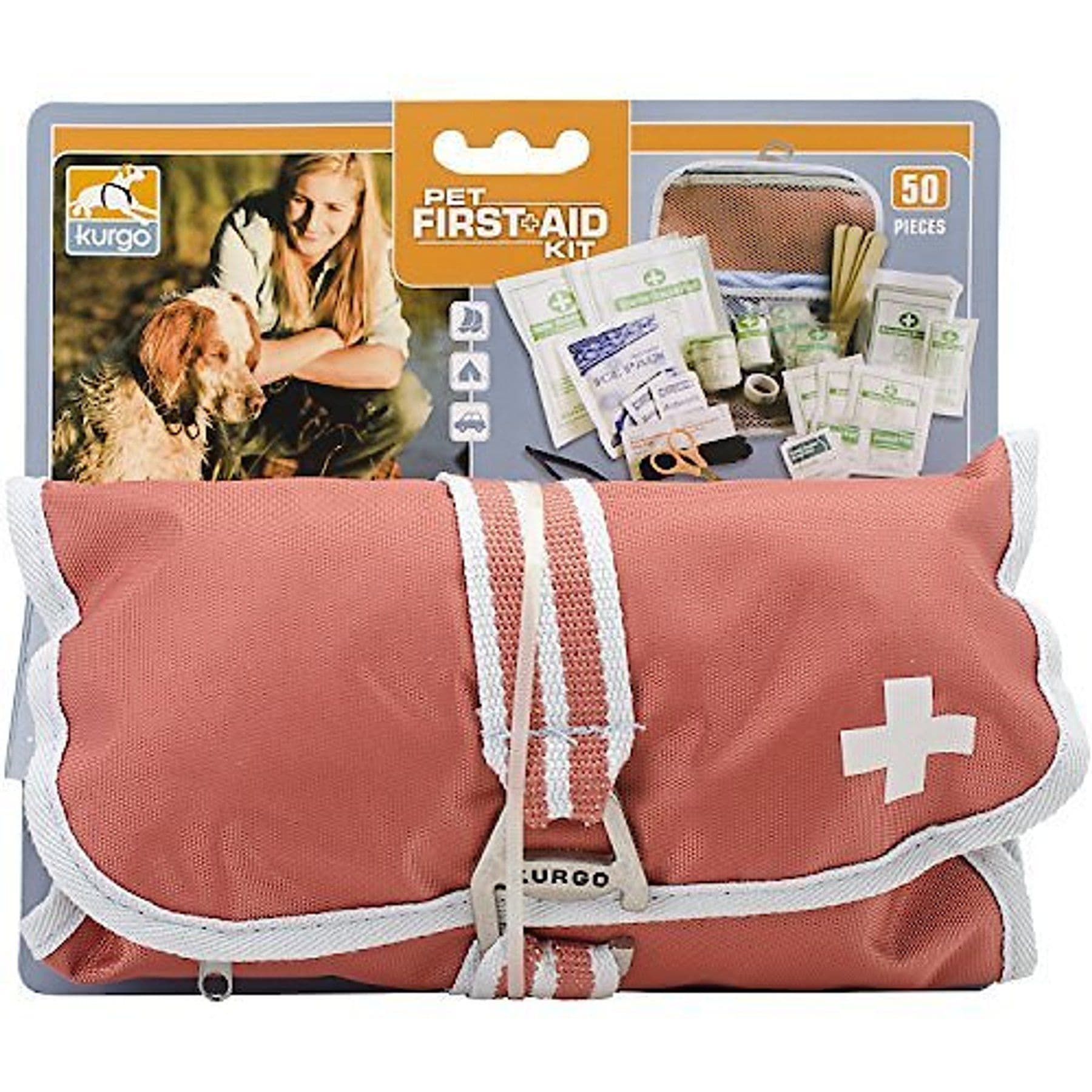
Keep basic supplies such as gauze and gloves together for first aid and transport. Learn each item's intended use before an injury occurs.
Webvet may earn a commission when you click through to Chewy, at no extra cost to you.
When home care may be reasonable
Home treatment is limited to a small, superficial injury in an otherwise well dog after checking with your vet. You should be able to see that it is a surface scrape, with no gaping edges, embedded material, ongoing bleeding, or significant pain. If you cannot tell how deep it is, describe that uncertainty when you call.
An open wound can heal without stitches, but that does not mean it should heal without assessment. Some contaminated wounds are intentionally left open under veterinary management. Others need debridement, meaning removal of damaged tissue, or a drain. MSD's wound-management guidance makes tissue condition and contamination central to the closure decision.
Details to share with the clinic
Tell the clinic about details that change the plan:
- A paw puncture, limping, or a cut that opens when the leg moves.
- An injury during a dog fight, hunting trip, or encounter with wildlife.
- A wound near the eye, diabetes, or medicines that may affect healing.
- Maggots or other moving larvae in the wound, sometimes called myiasis.
If your vet recommends a topical spray, Vetericyn Plus Antimicrobial Wound Care Spray is one product to discuss. Its manufacturer identifies hypochlorous acid as its active wound-cleaning ingredient. Use it only as directed for the assessed injury; it does not replace prescribed antibiotics, drainage, or treatment of a deeper infection.
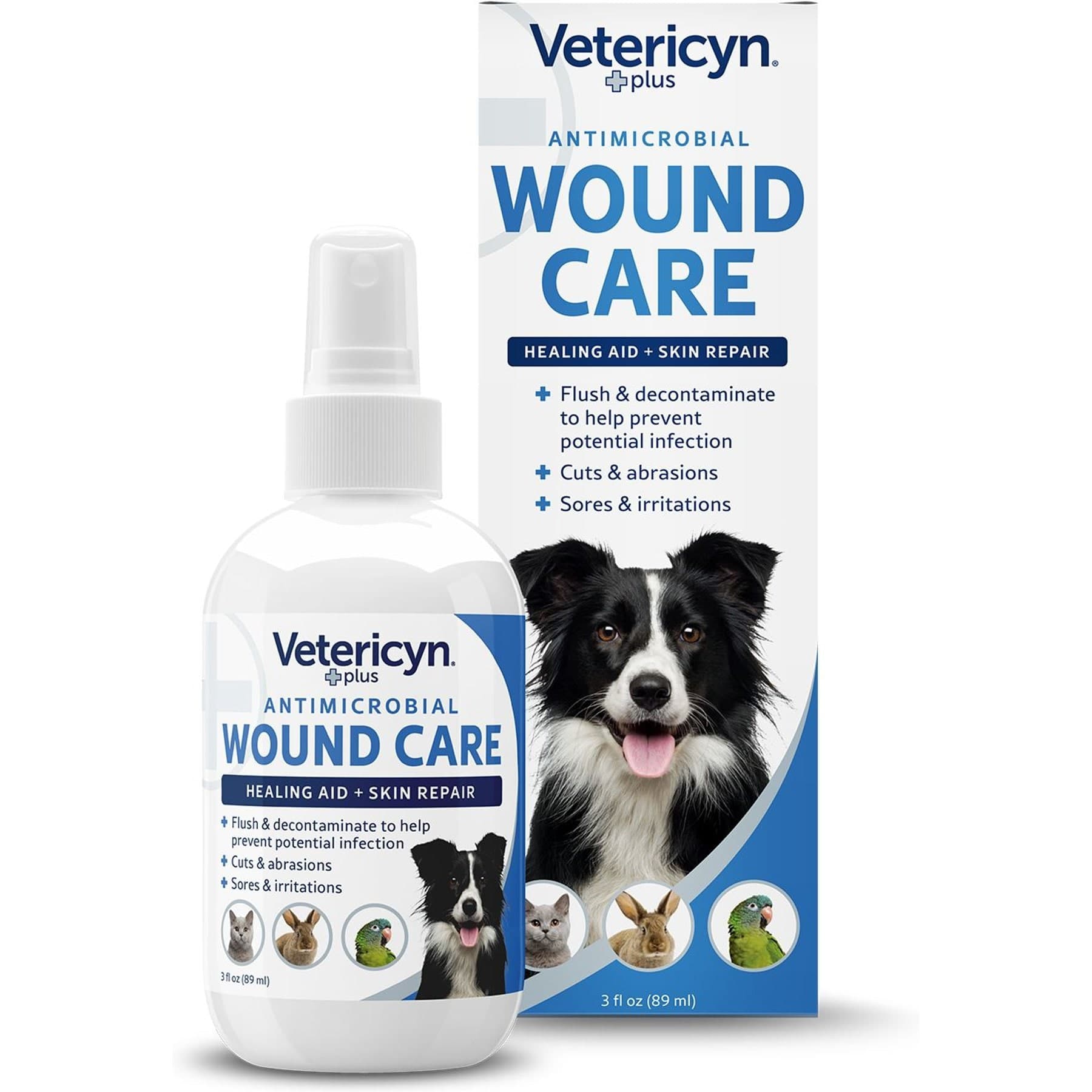
A topical cleaning option to discuss with your veterinarian for a suitable wound. Use as directed; a spray cannot replace drainage or prescribed infection treatment.
Webvet may earn a commission when you click through to Chewy, at no extra cost to you.
For an unfamiliar injured dog, contact a veterinary clinic or rescue for safe handling help. Do not improvise restraint. Warm compresses and wound hydrotherapy are treatments to discuss with the vet, not reasons to postpone assessment or soak an unknown injury.
How to clean a minor dog wound
To clean a minor dog wound at home, use a gentle flow of clean, lukewarm water or sterile saline to remove loose dirt. Keep the dog still without squeezing the injury. Cleaning is an initial first-aid step; it does not tell you whether antibiotics, stitches, or removal of foreign material are needed.
A superficial abrasion may look scraped or raw rather than like a deep split. A photograph can help you describe it to the clinic, but cannot confirm its depth or suitability for home treatment.

A gentle cleaning sequence
Use these steps only when bleeding is controlled and your dog tolerates handling:
- Wash your hands and prepare clean gauze, a clean towel, and the rinse before bringing your dog over.
- Let water or saline run gently across the surface. Avoid a forceful jet into tissue or a puncture opening.
- Allow loose dirt to wash away. Stop if material remains embedded; do not dig with tweezers or scissors.
- Pat the surrounding coat dry without rubbing the wound. Avoid leaving the dog standing on a wet towel.
- Prevent licking and ask your vet how often, if at all, cleaning should be repeated.
VCA's open-wound instructions support water or saline cleaning while advising against unprescribed creams and disinfectants. If your dog pulls away, cries, or tries to bite, stop. Painful restraint is not a necessary part of successful home cleaning; the veterinary team can provide appropriate pain control and handling.
Choosing saline and cleaning a paw
Saline is a sodium chloride solution: salt dissolved in water. Sterile saline sold for wound irrigation avoids the uncertainty of a homemade salt mixture. Check that the product is plain saline intended for that use, rather than a contact-lens cleaning or disinfecting product. If you have no suitable saline, clean water is a practical first rinse. Do not delay care while shopping or guessing a salt concentration.
For a paw wound, rinse accessible surface dirt gently and prevent walking through mud afterward. Do not force toes apart, squeeze a swollen area, or probe between pads. A small puncture, persistent lameness, or something lodged in the foot changes the problem from cleaning a scrape to finding and treating the underlying injury.
Does the wound need an ointment afterward?
Do not automatically apply Neosporin to an open wound after rinsing. There is no single best human ointment for every dog wound. The appropriate choice depends on the wound, its location, and whether your dog can lick it. Ask the vet about the exact product and ingredients before adding a topical medicine.
If you are looking for an alternative to Neosporin, begin with gentle rinsing and protection from licking rather than substituting another cream. A wound that needs prescription treatment will not become adequately treated by changing brands. Avoid medicated human products or added pain-relief ingredients unless your veterinarian specifically approves them for this dog and injury.
 $65 · no membership
Is your dog's itching or skin issue getting worse?
A licensed vet can examine your dog over video and prescribe treatment online when it's appropriate.
 Talk to a vet
- Licensed vets
- All 50 states
- same-day Rx
Webvet may earn a commission if you book.
What can you put on a dog wound?
Use clean water or appropriate saline for initial rinsing. A rinse carries away loose dirt; an antiseptic reduces microorganisms; an ointment may deliver medicine or form a coating. Your vet decides whether the wound needs anything beyond rinsing, based on its condition and the product's formulation.
An ointment's coating cannot replace drainage or removal of embedded material. Bandages may protect a wound, but trapped moisture or excessive pressure can damage tissue. Choose either only for the wound's needs and your vet's instructions.
For a vet-approved plan, a Dogswell Remedy+Recovery Rigid E-Collar, also called an Elizabethan collar, can provide a physical barrier. Choose the correct size and ask the clinic to check the fit. A comfortable-looking collar that still lets your dog reach a paw or flank is not doing the required job.

Help block access to the wound with a correctly fitted rigid collar. Check that your dog cannot reach the affected area and can eat, drink, and rest comfortably.
Webvet may earn a commission when you click through to Chewy, at no extra cost to you.
Avoid hydrogen peroxide and rubbing alcohol on a dog wound because they can injure healing tissue. Soap and shampoo also belong outside the wound unless the vet gives specific instructions. VCA cautions against these products and unprescribed herbal preparations.
| Product type | Appropriate role | Important limitation |
|---|---|---|
| Clean water or sterile saline | Gentle initial rinsing | Does not replace examination or treatment of infection |
| Hydrogen peroxide or rubbing alcohol | Avoid routine use on the wound | Can damage healing tissue |
| Iodine or chlorhexidine preparation | Only the exact product and dilution your vet directs | Surgical scrubs and concentrated preparations are not interchangeable with wound rinses |
| Veterinary wound spray | Vet-approved topical support for a suitable wound | Cannot remove trapped material or drain an abscess |
| Human ointment or balm | Only with specific veterinary approval | Ingredients, licking, and wound type affect suitability |
| Honey, sugar, or other specialized dressing | A clinician-directed wound-care decision | Not a kitchen remedy or DIY wrap |
Veterinary rinses and antiseptics
Ask for the product name, concentration, quantity, and frequency in writing. An instruction to use a particular diluted antiseptic cannot safely be transferred to a different bottle. Products sold as iodine, chlorhexidine, or Hibiscrub may have different formulations, and an intact-skin scrub is not automatically an open-wound rinse. Avoid making your own dilution from an online color comparison.
Home remedies and pain medicines
Do not apply unprescribed home remedies in an attempt to disinfect the wound. Products to leave out of a DIY wound-care routine include:
- Vinegar, baking soda, or Epsom salts.
- Essential oils, turmeric, or guava leaves.
- Colloidal silver or other unprescribed topical preparations.
Raw honey from the pantry is not interchangeable with a veterinary dressing plan. Likewise, a balm such as Aquaphor or Bag Balm is not a substitute for deciding whether damaged tissue needs treatment.
Send your vet a photo of the label before using a product you already own. If something has been applied, tell the clinic what it was and when; bring the packaging rather than trying additional chemicals to remove it.
For pain, do not give ibuprofen, naproxen, or another person's or pet's medication. The FDA warns that human pain relievers can harm pets. Appropriate pain relief makes care more humane, but the treating veterinarian needs to choose it for your dog's health and other medicines.
Should you cover a dog wound?
Whether to cover a dog wound depends on its depth, location, contamination, and treatment plan. A small superficial scrape may be managed without a bandage if licking and dirt can be prevented. Other wounds need a particular dressing or must remain open for drainage. Ask your vet which situation applies rather than wrapping every injury.
For a wound your vet says can remain uncovered, make the resting area easy to keep clean. A removable Frisco Swirl Dog Crate Mat can furnish that space if it fits your dog's setup and stays dry. Check its care label and replace it when soiled; a mat does not provide wound treatment or a sterile barrier.

Provide a removable resting surface that you can keep clean and dry. Choose a suitable size and follow its care label. Bedding does not treat or protect an open wound by itself.
Webvet may earn a commission when you click through to Chewy, at no extra cost to you.
There is no universally faster choice between covered and uncovered healing. The right choice depends on whether this wound needs a protective dressing or open drainage. A properly selected dressing can support healing; a dirty, wet, slipped, or tight bandage can create new damage. VCA's bandaging cautions emphasize circulation and keeping dressings dry. A temporary clean covering for transport serves a different purpose from a treatment bandage worn at home.

An "open wound" is not necessarily an uncovered wound. It means the skin edges have not been surgically closed; the vet may still protect it with a dressing. MSD describes dressings as part of open-wound management. If your dog comes home with a bandage, do not remove it to "let the wound breathe" unless the clinic instructs you to.
Ask the veterinary team to demonstrate any bandage care you are expected to do. Before leaving, confirm:
- What the dressing is protecting and whether you should change it yourself.
- When the next change or recheck is due.
- How to keep it dry during toilet breaks.
- Which exposed toes or surrounding areas you should observe.
- Whom to contact if it becomes wet, slips, smells, or causes discomfort.
Do not tighten a slipping wrap or add more stretchy material around it. Contact the clinic promptly for swelling around the bandage, cold or discolored exposed toes, new chewing, or worsening discomfort. If a dressing sticks, do not pull it off the wound; get removal instructions from the team that placed it.
Liquid bandage, household glue, and DIY sugar wraps are not general first aid for dog wounds. Do not seal a puncture or draining site. Specialized dressings, including tie-over bandages secured by a veterinarian, are selected for a particular wound and need an individualized change schedule.
Protect the wound during daily care
Preventing licking matters even when a wound is too small to need a dressing. Saliva does not make the site clean, and repeated licking can disrupt tissue. A collar or other protection must actually prevent your dog reaching the affected area; watch what happens when the dog bends and settles, not just while standing still.

Check for rubbing at the neck and confirm that your dog can eat, drink, and rest with the fitted collar. If ordinary neckwear caused the original sore, remove the rubbing source when safe and ask about an alternative restraint arrangement. Do not place a recovery collar over an injured neck without advice or allow the dog outside unsecured.
Set up a manageable resting area
Keep your dog away from rough play, dirty ground, and swimming while following the prescribed activity limits. Keep bedding clean and dry, and replace it when soiled.
A simple daily routine makes changes easier to notice:
- Check comfort and willingness to eat before handling the site.
- Look for new swelling or drainage without squeezing the skin.
- Give prescribed medicines on schedule and record doses.
- Keep the recheck appointment even if the surface looks better.
For a planned surgical incision, follow the surgeon's instructions rather than this cleaning routine. Our guide to spay and neuter incision healing explains that separate situation. Do not wash a closed incision, remove its scab, or add cream just because an open traumatic wound needs cleaning.
Healing changes and signs of infection
Watch the direction of change, not just the color of a scab. Increasing pain, swelling, foul or thick discharge, loss of appetite, or reduced activity calls for veterinary advice. A wound that repeatedly opens or drains also needs reassessment. Photos taken in similar light can help show the trend if taking them does not cause discomfort or delay care.
Granulation tissue forms part of an open wound's repair process, while new skin grows over the healing surface. These processes overlap, as explained in Merck's wound-healing principles. A photo cannot reliably distinguish all healthy tissue from infection or necrosis, and black skin or unusual discharge should not be diagnosed at home.
To support healing, prevent repeated trauma, follow the treatment plan, and seek help when progress reverses. Adding supplements or stronger cleaners is not a reliable shortcut. See dog wound healing stages for the fuller explanation of expected changes, warning signs, and why different wounds do not share one healing deadline.
Bite wounds and deeper injuries
Contact your veterinarian promptly after a bite or fight, even if your dog walks normally and the bleeding has stopped. Teeth can damage tissue beneath a small puncture opening. The surface may close while deeper contamination remains. The same need for assessment applies to penetrating injuries from sticks or other objects; do not probe the track yourself.

VCA's bite-wound guidance explains why small holes can hide extensive damage. Do not wait for swelling or pus before calling, and do not seal the hole with ointment, glue, or a liquid dressing.
What veterinary treatment accomplishes
At the appointment, explain when the injury happened and how your dog has behaved since. After checking your dog's overall condition, the vet assesses the wound's depth, contamination, and remaining healthy tissue. Sedation or anesthesia may be needed for a thorough examination and treatment. Different procedures address different problems:
- Clipping and flushing: expose the area and wash away debris so the team can examine the damaged tissue.
- Debridement: remove dead or nonviable tissue and foreign material that a surface rinse cannot deal with.
- Drainage: give fluid a way out of a deeper space instead of allowing it to collect beneath a closed surface.
- Closure: bring suitable tissue edges together when contamination and infection are controlled. When they are not, the vet may treat the wound open and reconsider closure later.
These decisions depend on the actual injury, as MSD's initial wound-management guidance explains. Prescribed pain relief and antibiotics, when indicated, support treatment but cannot physically remove a lodged object or dead tissue. If the vet places a drain, the veterinary team manages and removes it; do not pull it out at home.
After a wound is left open
Ask whether fluid is expected to drain, how to clean the opening, and when the team needs an update. Do not put medicine into a drain opening unless instructed. With a passive drain, output should generally decrease; increasing thick or foul drainage, fresh bleeding, or worsening swelling needs prompt contact. VCA's drain-care instructions explain why these changes deserve attention.
Do not judge a drain by its output alone. Less visible fluid together with a larger, painful swelling is a reason to contact the clinic, not to assume it has finished draining. Report both changes and do not squeeze the swelling.
If a painful lump appears or bursts afterward, see the guide to a dog abscess. Release of pus does not establish that the infection or foreign material is gone. Recurrent wounds may need further testing, including culture; a discharge color cannot identify bacteria such as Pseudomonas or tell you which antibiotic will work.
Dog wound care questions
Frequently Asked Questions
Can you put Neosporin on a dog's wound?
Ask your veterinarian before using it. The exact ingredients and wound location matter, and your dog may lick off a product meant to stay on the skin. If your vet approves an ointment, confirm the amount, frequency, and licking protection. Do not treat a bite, puncture, or deep injury with ointment alone.
What natural antiseptic can I use on my dog's wounds?
Plain water is a useful initial rinse, but it is not an antiseptic. There is no need to replace it with a homemade disinfectant. Herbal mixtures and essential oils can cause irritation or other harm. Ask your vet about an appropriate wound product instead of assuming that a natural ingredient is safe on damaged skin.
Does salt water heal dog wounds?
Sterile saline helps rinse away loose contamination; it does not cure infection or repair an untreated deep injury. Homemade salt water has uncertain concentration and cleanliness. Use suitable sterile saline or clean water for initial rinsing, and follow your vet's cleaning plan afterward. Sea water and swimming are not wound treatments.
What if a bandage sticks to my dog's wound?
Do not pull it away, because doing so may tear healing tissue or restart bleeding. Call your veterinarian for instructions on removal or replacement. They may need to examine the wound and change the dressing themselves. Report any swelling, bad smell, wetness, new pain, or chewing rather than waiting for the scheduled bandage visit.
$65 · no membershipIs your dog's itching or skin issue getting worse?
A licensed vet can examine your dog over video and prescribe treatment online when it's appropriate.
Talk to a vet- Licensed vets
- All 50 states
- same-day Rx
Webvet may earn a commission if you book.
Veterinarian · BVMS MRCVS
Dr. Pippa Elliott, BVMS, MRCVS, is a veterinarian with nearly 30 years of experience in companion animal practice. Dr. Elliott earned her Bachelor of Veterinary Medicine and Surgery from the University of Glasgow. She was also designated a Member of the Royal College of Veterinary Surgeons. Married with 2 grown-up kids, Dr. Elliott has a naughty Puggle named Poggle, 3 cats and a bearded dragon.


