Eosinophilic Granuloma Complex in Cats: Rodent Ulcers, Plaques, and Treatment
Eosinophilic granuloma complex is a group of three allergic lesions in cats: rodent ulcers, eosinophilic plaques, and linear granulomas. Learn where each appears, what triggers them, and how a vet diagnoses and treats them.

BVMS MRCVS
Medically reviewed by Dr. Pippa Elliott, BVMS MRCVS · Last reviewed

This article contains affiliate links. Webvet may earn a commission when you buy through them, at no extra cost to you.
Eosinophilic granuloma complex in cats is a group of three allergic skin lesions rather than a single disease: the rodent ulcer on the upper lip, the raw, intensely itchy eosinophilic plaque, and the firm eosinophilic granuloma, which can form a band along the back of the thighs or a swollen chin.
A flea, food, or environmental allergy usually drives flare-ups, and VCA Animal Hospitals says most cases respond well to treatment. These cats are usually otherwise well, so a sore that appears suddenly, grows fast, or eats into the lip, or a cat that seems sick, needs a prompt vet visit.
 Sponsored
Want a vet's take on your cat's skin or coat?
Talk to a licensed vet at Dutch over video, often the same day. They can recommend treatment and prescribe it when it's appropriate.
Use code Pets60
Plans start at $12/month · covers up to 5 pets
- Licensed vets in most states
- Rx for 150+ conditions
- 4.7 on Trustpilot
What eosinophilic granuloma complex in cats is and which of the three lesions you are seeing
The Merck Veterinary Manual lists three eosinophilic skin diseases in cats: the eosinophilic ulcer (also called the indolent ulcer or rodent ulcer), the eosinophilic plaque, and the focal eosinophilic granuloma. VCA uses the same grouping for eosinophilic granuloma complex (EGC), and Merck notes that one cat can have more than one lesion type at once.

- 1The three lesion types in the complex are the rodent ulcer, the eosinophilic plaque, and the eosinophilic granuloma, and a cat can have more than one.
- 2Where each lesion usually appears on a cat is the quickest clue: the ulcer on the upper lip, the plaque on the belly and thighs, and the granuloma on the chin, mouth, paw pads, or back of the thighs.
- 3An allergy to fleas, food, or the environment is the most common trigger, so flea control and treating any infection come first, with prescription anti-inflammatories if lesions persist.
- 4A sore that appears suddenly, grows quickly, or comes with a sick cat needs a prompt vet visit and possibly a biopsy.
Allergy is the common thread. Merck says a hypersensitivity reaction to an insect, environmental, or food allergen is the most common underlying cause, with flea and other insect bites high on the list. That is why thorough flea control is an early step in Merck's treatment guidance, and some of the products used are prescription-only.
Prescription options such as Revolution Plus, which combines selamectin and sarolaner, are dispensed by Chewy's pharmacy only with a veterinary prescription.
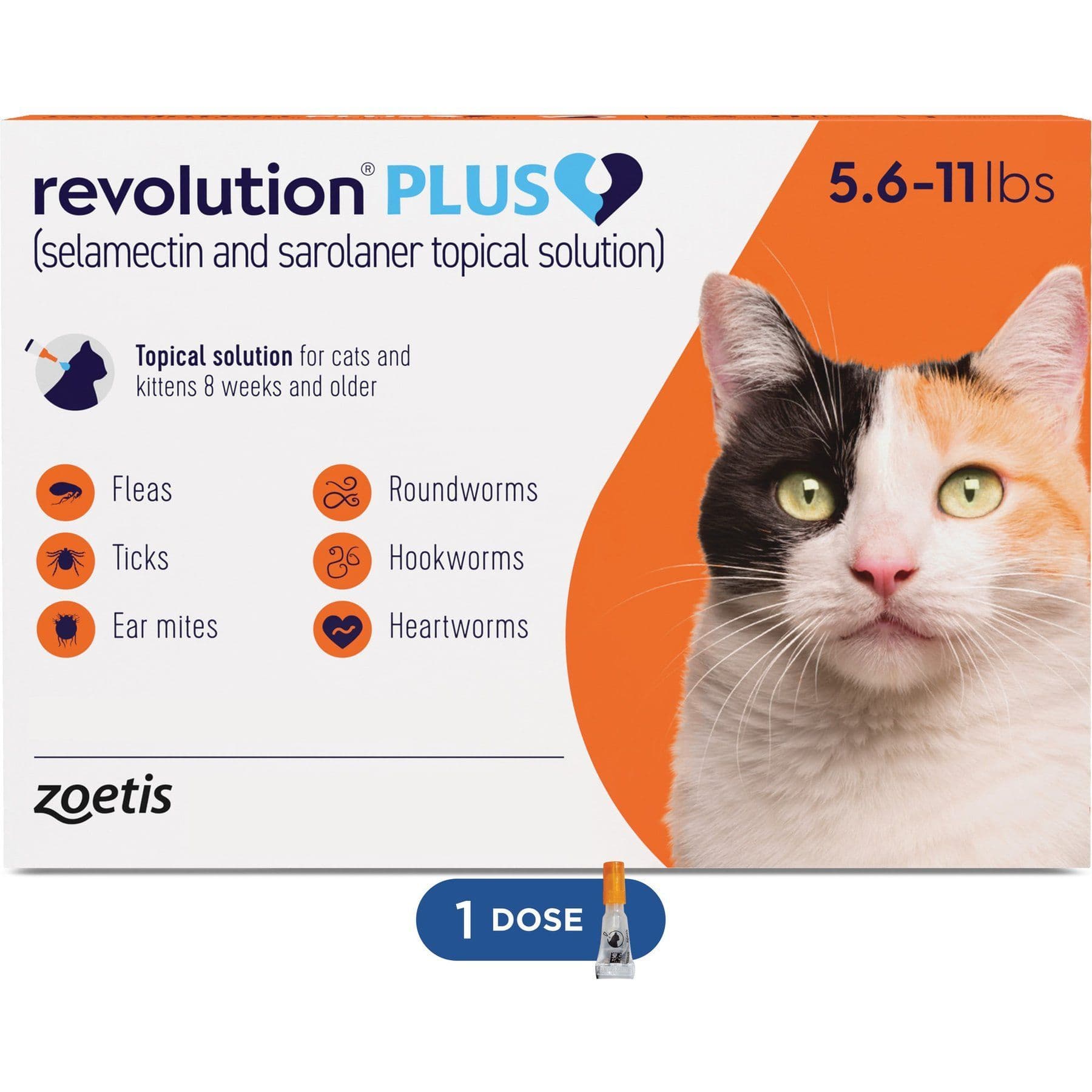
Prescription monthly topical that kills fleas before they lay eggs; Chewy's pharmacy fills it with your vet's prescription.
Webvet may earn a commission when you click through to Chewy, at no extra cost to you.
Merck describes eosinophilic skin conditions as clinical signs rather than diseases in their own right, so the real question is what set them off. The name comes from eosinophils, a type of white blood cell that VCA says can show up in large numbers when a vet examines a lesion sample.
No age group or breed is reliably singled out: a 2012 review in the Journal of Feline Medicine and Surgery reports no age predisposition, no well-documented breed predilection, and no consistently documented sex difference. The rodent ulcer name is a leftover from an old belief that rodent bites caused it, which VCA says is wrong.
Rodent ulcers, eosinophilic plaques, and linear granulomas: where each shows up on a cat
Location, look, and itch level separate the three feline lesion types faster than anything else. Matching each type to its usual body site also hints at the first treatment step, such as culture-guided antibiotics for a lip ulcer or a biopsy for a mouth lesion.
Two of the lesions, the plaque and the granuloma, are often tied to flea or other insect bites, and Merck notes that the linear granuloma has become less common in the US, presumably because flea preventives are now so widely used.
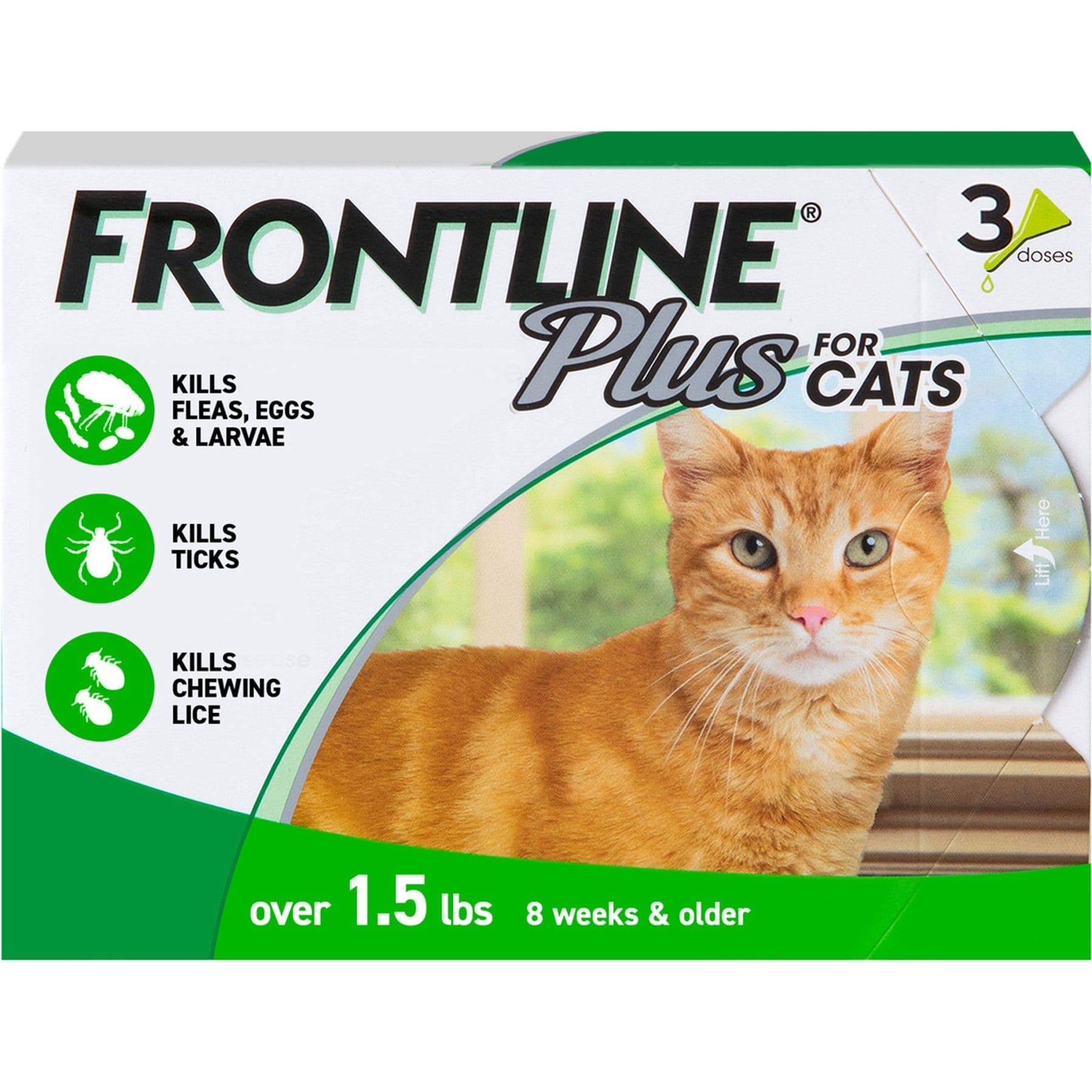
Fipronil and (S)-methoprene topical that kills adult fleas, flea eggs, and larvae, with 30 days of protection per dose.
Webvet may earn a commission when you click through to Chewy, at no extra cost to you.
- Rodent ulcer (eosinophilic or indolent ulcer): a well-defined red ulcer, most often on the upper lip, that the Merck Veterinary Manual owner guide says is usually not painful or itchy. VCA says these lip lesions range from barely noticeable to large enough to disfigure the lips, and some bleed.
- Eosinophilic plaque: a well-defined, red, raised sore most often found on the belly and thighs. Merck calls it extremely itchy, so cats scratch and rub the spot, and the bacterial infection these plaques often pick up usually makes the condition worse.
- Eosinophilic granuloma: raised, circular, yellowish to pink nodules that Merck describes as firm. They can appear anywhere on the body but are most common on the head, face, bridge of the nose, ears, paw pads, lips, chin, mouth, and thighs.
- Linear granuloma: a granuloma variant that often shows up as pencil-like thickenings along the back of both thighs.
| Lesion | Usual body site | Look and feel | Itch level | Most common trigger | First step |
|---|---|---|---|---|---|
| Rodent ulcer (indolent ulcer) | Upper lip | Well-defined red ulcer, from tiny to lip-disfiguring, may bleed | Usually not itchy or painful | Underlying flea, food, or environmental allergy | Vet exam, culture-guided antibiotics, and strict flea control |
| Eosinophilic plaque | Belly and thighs | Well-defined, red, raised sore, often infected | Extremely itchy | Flea bite allergy, or environmental or food allergy | Cytology to check for infection, then strict flea control |
| Eosinophilic granuloma | Chin, lips, mouth, paw pads, face, ears, bridge of the nose | Firm, raised, round, yellowish to pink nodule, or a puffy chin | Varies from cat to cat | Insect bite allergy, often fleas | Strict flea control, and a biopsy if it is in the mouth |
| Linear granuloma | Back of both thighs | Pencil-like thickening, often on both legs | Varies from cat to cat | Insect bite allergy, often fleas | Strict flea control |
Inside the mouth, VCA says eosinophilic granulomas can form along the gums and palate, and a lesion in the mouth is biopsied to rule out other diseases.
VCA also notes that some cats develop a swollen, puffy chin. Merck says these chin and lip lesions, known as fat chin, are common in cats with flea bite hypersensitivity, which puts flea control at the center of treating a swollen chin.
 Sponsored
Vet care that's always there
Unlimited video calls and messaging with licensed vets for less than a typical vet visit. One membership covers up to five pets.
Use code Pets60
Plans start at $12/month · covers up to 5 pets
- Licensed vets in most states
- Rx for 150+ conditions
- 4.7 on Trustpilot
What triggers eosinophilic granuloma complex: fleas, food, and environmental allergies
Allergy triggers are behind most flare-ups. Merck's owner guide lists insects (especially fleas), dietary and environmental allergies, infectious agents, and genetic or hereditary factors as possible causes, and VCA says some research suggests the condition may be partly inherited. In some cats, no cause is ever found.
- Fleas and other biting insects: Merck names flea bite hypersensitivity as one of the most common triggers of the eosinophilic plaque, and insect bite hypersensitivity as the most common trigger of the focal granuloma.
- Flea timelines: Merck's flea guide says clearing an infestation typically takes 2–3 months, and fleas may live and feed on a treated pet for 6–24 hours before they die.
- Cat-safe insect control: Merck warns that a mosquito-repelling insecticide that can be used in dogs is not safe to use in cats, so every insect product should be labeled for cats.
- Food: VCA lists beef, fish, chicken, and dairy as the foods typically associated with food allergies in cats.
- Environmental allergens: VCA says atopic cats are often allergic to tree and grass pollen, weeds, molds, and dust mites.
When food is the trigger, diet becomes part of treatment: VCA says most cats diagnosed with EGC benefit from a hypoallergenic food trial. For the wider picture of feline allergies, see allergies in cats: what to know about food and fleas.
The lesions are not considered contagious. Even with infectious agents on Merck's list of possible causes, a clinical review concluded that eosinophilic plaques are not transmissible.

For cats whose flare-ups trace to environmental allergy, VCA's atopy guidance says certain omega-3 and omega-6 fatty acids may help some cats. They support the skin alongside a vet's plan; they are not a treatment for the lesions themselves.
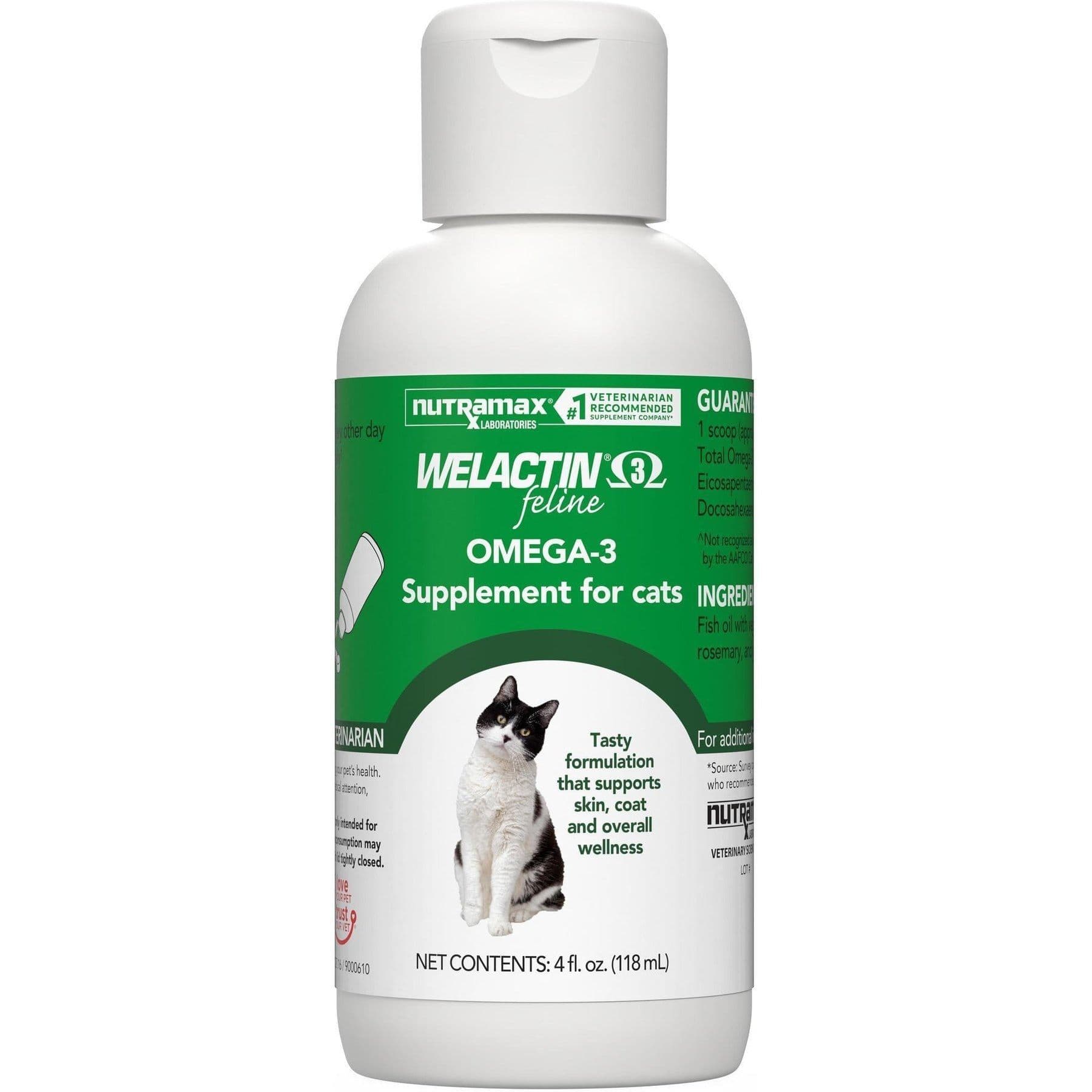
Liquid omega-3 fish oil from wild-caught, cold-water fish that supplies EPA and DHA to support skin and coat.
Webvet may earn a commission when you click through to Chewy, at no extra cost to you.
How a vet diagnoses eosinophilic granuloma complex: cytology, biopsy, and an allergy workup
Diagnosis starts with an exam and a look at the lesion's cells. The JFMS review recommends cytology for every EGC lesion, using stained impression smears or tape impressions from the surface, to confirm the inflammatory cells and check for secondary bacterial infection. For the general process, see how vets diagnose cat skin problems.
For a suspected plaque, VCA describes pressing a slide against the lesion and viewing the imprint under the microscope, where numerous eosinophils may be visible. Because plaques are often infected, cytology also shows whether bacteria are involved; see how to tell the difference between skin infections in cats.
A biopsy is sometimes needed to rule out other diseases. VCA says the classic lip ulcer is so characteristic that a biopsy may not be required, but lesions elsewhere on the skin or in the mouth are biopsied. Merck and the JFMS review add these reasons:
- the lesion does not respond to appropriate treatment
- it develops suddenly and is destructive
- it appears on only one side, which Merck says should raise the possibility of an oral tumor
- the vet needs to rule out non-allergic causes, particularly viral disease and cancer
Once the lesion is identified, the workup turns to the trigger. The review notes that telling the three lesion types apart rarely changes the overall treatment plan, because they usually share an allergic cause. It lays out these steps:
- Parasite trial: a strict 6–8 week trial using a topical adulticide, a product that kills adult fleas.
- Elimination diet trial: VCA calls this the only reliable test for food allergy in cats. Sources differ on length: the review says 6–8 weeks, VCA says at least eight weeks, and Merck says up to 3 months, with response times ranging from 1 to 9 weeks.
- Environmental allergy testing: possible, but the review notes doubts about how reliable and useful allergy testing is in cats.
During the parasite trial, a fine-toothed flea comb is a simple way to check the coat for fleas and flea debris between treatments.
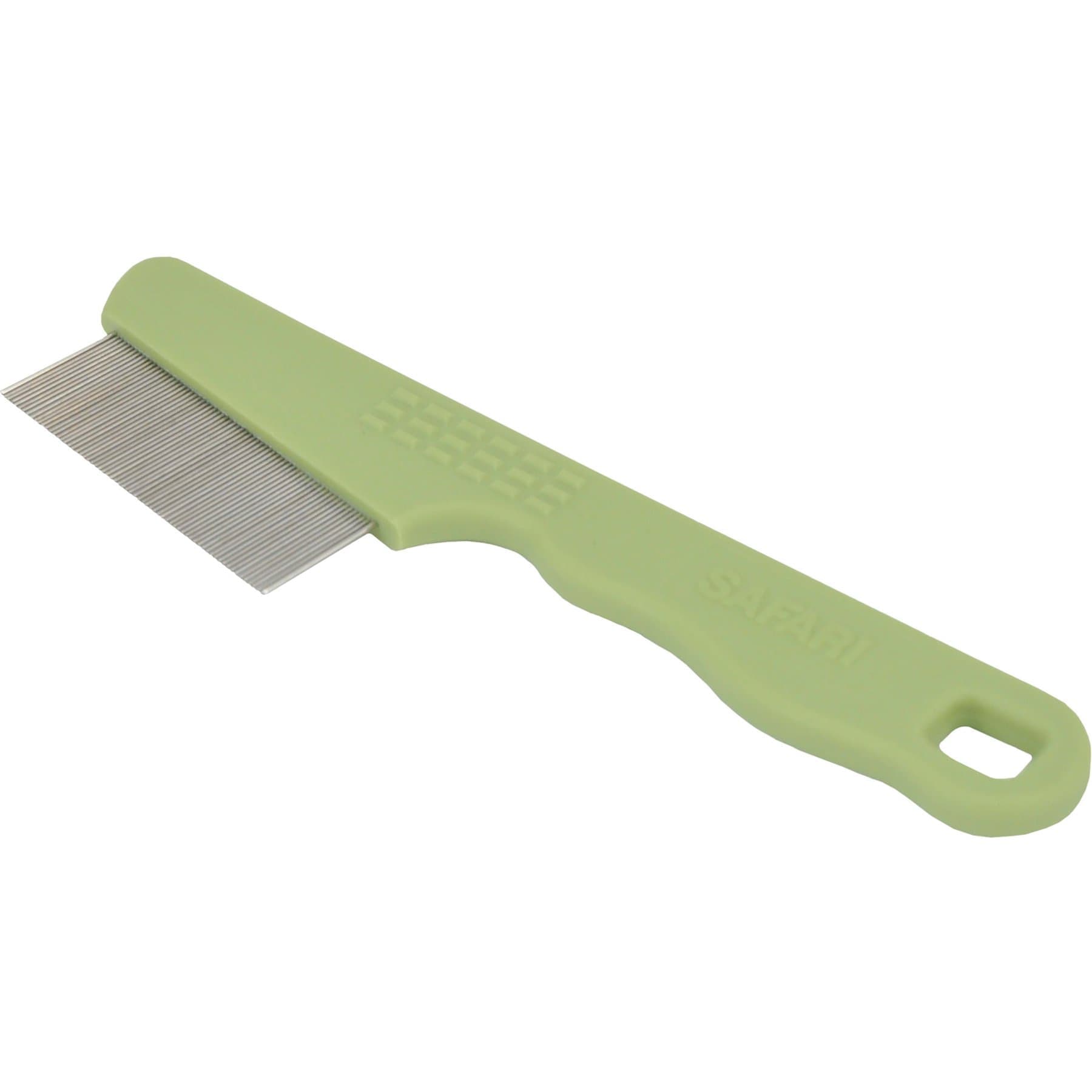
Closely spaced teeth reach deep into the coat to find and remove fleas and flea debris during routine coat checks.
Webvet may earn a commission when you click through to Chewy, at no extra cost to you.
Not every crusty or swollen patch on a cat is eosinophilic; stud tail in cats, for example, needs a different plan.

When an eosinophilic lesion needs the vet quickly
Cats with eosinophilic lesions are usually otherwise well, and the JFMS review says one showing signs of illness elsewhere should be checked for other problems. There is no published safe waiting period for a mouth or lip sore, so these signs set the pace. Book a prompt vet visit if:
- a sore appears suddenly or eats into the lip or nearby tissue
- a lump or swelling appears suddenly or grows quickly; VCA says vets are particularly concerned about these traits because they go with malignant skin tumors
- a lesion sits on only one side of the mouth or lip
- a lesion does not respond to the treatment your vet prescribed
- your cat is drinking or urinating more, eating less, or has less energy; Merck's guide to diagnosing skin disorders in cats says the skin can be the first place a body-wide illness shows
- your cat is eating poorly, since Merck warns that prolonged poor appetite can cause serious liver damage in cats
A lip sore cannot be judged by eye alone: VCA's squamous cell carcinoma guide says this cancer can look like a shallow or deep sore, a raised red area, or a cauliflower-like growth.
Eosinophilic granuloma complex treatment: steroids, cyclosporine, and allergy control
Treatment has two jobs: calming the lesion and controlling the allergy behind it. VCA says corticosteroids are the most common EGC treatment, but Merck puts flea control and infection treatment first. Every drug below is a vet's prescription, and the doses are published veterinary ranges, not home dosing:
- Flea control first: thorough flea preventive treatment, started and kept up for 2–4 months, per Merck. Isoxazoline products such as the sarolaner in Revolution Plus carry an FDA label warning about tremors, ataxia, and seizures, which your vet weighs.
- Treat infection: Merck says lip ulcers and oozing lesions often improve with antibiotics chosen by culture and susceptibility testing, the recommended first approach, and that antibiotics should not be given on a guess.
- Steroids if lesions persist: if aggressive flea control and antibiotics do not clear the lesions, Merck lists a vet-prescribed anti-inflammatory prednisolone dose range of 1–2 mg/kg by mouth once daily until resolution.
- Cyclosporine: Merck lists feline cyclosporine modified oral solution at 7 mg/kg by mouth once daily until resolution when no trigger can be found. VCA calls cyclosporine (Atopica) a good alternative for a cat that cannot take steroids, and the JFMS review says most cats tolerate it well at EGC doses.
- Allergy control: flea prevention and any prescribed diet, kept up after the lesions heal.

The same plan covers an eosinophilic ulcer and mouth lesions, which VCA says are biopsied to rule out other diseases. An antihistamine plays a small part, since VCA's atopy guidance calls these drugs relatively ineffective once a cat is already itchy.
Atopica for Cats is a prescription medication, dispensed by Chewy's pharmacy and others only with a veterinary prescription. Its FDA label covers feline allergic dermatitis, including miliary dermatitis and eosinophilic plaques, in cats at least 6 months old and 3 lbs, but does not name indolent ulcers or linear granulomas. Label limits include:
- It is not for cats with a history of cancer or suspected cancer, or cats infected with FeLV or FIV.
- Cats that have never been exposed to Toxoplasma can develop toxoplasmosis, which can be fatal, if infected during treatment.
- Vomiting was the most commonly reported side effect and usually resolved with continued dosing.
Living with eosinophilic granuloma complex: home care, flare-up prevention, and outlook
The outlook is good for most cats: VCA says most cases respond well to treatment, though recurrence is common and many cats need life-long intermittent treatment.
For life expectancy, the JFMS review describes cats with these lesions as otherwise well. The long-term watch points are recurrence and the side effects of repeated steroid courses, which VCA says can include weight gain and diabetes.
Long-term flare-up prevention at home centers on the triggers:
- Stick to the diet plan. If your vet sets up a food trial, keep it strict, and never starve a cat into accepting a new food.
- Treat the house, not just the cat. Merck recommends washing pet bedding, rugs, and carriers and vacuuming wherever pets rest, including sofa crevices and under beds.
- Keep flea control consistent. Frontline Plus 3pk, Cat & Kitten 1.5lbs and over Flea & Tick Treatment kills adult fleas, eggs, and larvae; the best flea treatment for cats guide compares other options.
- Check the coat between doses. The Safari Flea Comb for Cats has closely spaced teeth that reach deep into the coat to find and remove fleas and flea debris.
- Discuss omega-3 support. Nutramax Welactin Omega-3 Fish Oil Liquid Skin & Coat Supplement for Cats, 4-fl oz is a liquid fish oil that supplies EPA and DHA; see fish oil for dogs and cats for how these supplements are used.
- Protect an itchy plaque. Cats scratch and rub plaques, and infection usually makes them worse. If your vet wants the area covered, a soft cat cone such as the WZ PET Adjustable Waterproof Soft Cone Recovery Elizabethan Collar for Cat, Medium, or the Medipaw Recovery Protective Cat Suit, Medium for belly and thigh plaques, keeps a cat off the spot.
No veterinary source supports homeopathic or natural remedies as a treatment for these lesions. The home care with real support is flea control, a strict diet trial when your vet sets one up, keeping the cat off itchy spots, and giving prescriptions exactly as directed.
Eosinophilic granuloma complex questions
Frequently Asked Questions
Is eosinophilic granuloma complex in cats contagious?
No, it is not contagious. The lesions are an allergic immune reaction in the cat's own skin, and a clinical review concluded they are not transmissible after plaques could not be moved to other body sites in a study of five cats. Merck does list infectious agents among possible causes.
Can eosinophilic granuloma complex go away on its own?
Sometimes. The JFMS review notes that lesions that clear spontaneously seem unlikely to be allergic, since most allergies recur. Lesions do occur in young cats, including kittens, but no published figure shows how often they clear untreated, and recurrence is common, so a vet check is still worthwhile.
Can I give my cat Benadryl for an eosinophilic granuloma?
Only if your veterinarian prescribes it and sets the dose. VCA notes that diphenhydramine (Benadryl) is used off-label in animals, and that an antihistamine tends to do little for a cat that is already itchy. Flea control, culture-guided antibiotics, and prescription anti-inflammatories have clearer support.
Is a rodent ulcer painful for a cat?
Often not. Merck says the classic ulcer on the upper lip is usually not painful or itchy, though the JFMS review notes severe lesions can bring considerable itch or pain. A cat that stops eating needs a prompt vet visit, since Merck warns prolonged poor appetite can cause serious liver damage.
Can an eosinophilic lesion turn into cancer?
Very rarely. Merck says progression of an eosinophilic ulcer to squamous cell carcinoma is extremely rare, although it can occur. Because a tumor can resemble an eosinophilic sore, vets biopsy lesions that appear suddenly, are destructive, sit on one side only, or do not respond to treatment.

Editor
The Webvet Editorial Team is the in-house group of pet-care editors and writers behind Webvet, operated by Smart Pet Collective. The team researches, writes, and maintains Webvet's pet health, behavior, and medication content. Every article follows a defined editorial process: research from reputable veterinary and scientific sources, careful drafting, mandatory review of medical content by a credentialed veterinarian, and dated publication. Health and medication articles are medically reviewed by a licensed veterinary professional before they go live and are kept current over time.
Veterinarian · BVMS MRCVS
Dr. Pippa Elliott, BVMS, MRCVS, is a veterinarian with nearly 30 years of experience in companion animal practice. Dr. Elliott earned her Bachelor of Veterinary Medicine and Surgery from the University of Glasgow. She was also designated a Member of the Royal College of Veterinary Surgeons. Married with 2 grown-up kids, Dr. Elliott has a naughty Puggle named Poggle, 3 cats and a bearded dragon.
Related reading

Stud Tail in Cats: Causes, Treatment, and Grooming That Helps

Miliary Dermatitis in Cats: Causes, Treatment, and Flea Control

Cheyletiella in Dogs (Walking Dandruff): Signs, Treatment, and Contagion
