Cat Cones: Sizing, Soft vs. Rigid, Eating and Sleeping With One, and Alternatives
Most cats hate a cone, and most need one for a week or two after surgery anyway. Here is how to size a cat cone so it shields the wound without getting in the way at meals, when a soft collar is enough, and which alternatives vets accept.

BVMS MRCVS
Medically reviewed by Dr. Pippa Elliott, BVMS MRCVS · Last reviewed

This article contains affiliate links. Webvet may earn a commission when you buy through them, at no extra cost to you.
A cat cone, the plastic or fabric Elizabethan collar that comes home after surgery, has one job: keep your cat's tongue and teeth off a healing wound. Plan on about 10 to 14 days in a cone, or in a vet-approved recovery suit, after a spay, which is the window in which stitches usually come out.
Getting a cat cone right comes down to three decisions: the size, set by neck circumference and nose length; the type, set by where the wound is; and the daily workarounds for eating, drinking, the litter box, and sleep. When a recovery suit, soft collar, or lick sleeve can stand in is covered too.
 Sponsored
Have a health question about your cat?
Talk to a licensed vet at Dutch over video or message, including nights and weekends.
Use code Pets60
Plans start at $12/month · covers up to 5 pets
- Licensed vets in most states
- Rx for 150+ conditions
- 4.7 on Trustpilot
Does your cat need a cone? What it prevents
A cat cone prevents licking and chewing at a healing site. After surgery, a cat may instinctively try to clean the surgical site by licking, according to VCA Animal Hospitals. That instinct is exactly the problem the cone solves.
VCA's surgical discharge instructions for cats say licking often leads to chewing or removing stitches, and that this can happen in a few seconds. That is why a cone or recovery suit usually covers the 10 to 14 days until sutures come out, and two measurements, neck circumference and neck-to-nose length, decide the size.
- 1Why cats lick incisions and how fast they can open one: cats instinctively clean a surgical site, and VCA says licking can remove stitches in a few seconds.
- 2Neck circumference, nose length, and whisker clearance when sizing: the collar sits snug at the neck with two fingers of room and extends past the nose.
- 3After a spay or neuter, plan on about 10 to 14 days, and take the cone off only when your vet confirms the incision has healed.
- 4A recovery suit that covers the incision is an alternative VCA recognizes, and soft or inflatable collars suit some wounds better than hard plastic.
Do I need a cone for my cat?
If your vet sent your cat home with a cone, yes, until the vet says the site has healed. FirstVet says an E-collar must stay on until the incision or wound has healed. If no cone came home, ask whether a recovery suit is acceptable, since VCA lists a garment covering the incision as an alternative.
Can a cat heal its own wound by licking it?
No source reviewed here describes licking as helping a surgical wound heal. VCA frames it the other way: do not let a cat lick or scratch an incision, because she may pull out the sutures. VCA also says not to put creams or ointments on it unless your vet says to, so the fix is protection, not home treatment.
Why do cats wear cones beyond surgery?
Surgery is not the only reason. A vet may send a cat home in a cone after any of these:
- A spay or neuter, to keep the spay incision or neuter site away from the tongue
- An abscess drained with a Penrose drain, where VCA says an E-collar should be worn to prevent chewing and licking the wound
- Itchy skin or anxiety-driven over-grooming that has turned into self-trauma, an indication listed by the Royal Canin Veterinary Academy
- Any other wound your vet wants protected until it heals
Royal Canin's veterinary guidance adds the upside: a well-fitted Elizabethan collar can let skin lesions heal and wounds repair. The cone is uncomfortable for a short stretch so the tissue underneath can do its work.
The cat recovery cone also comes in more forms than the stiff cone of shame. FirstVet notes that E-collars come in hard plastic as well as softer or puffy versions, so a soft cone for cats, a cloth or fabric cone, and an inflatable donut ring are all options worth asking your vet about.
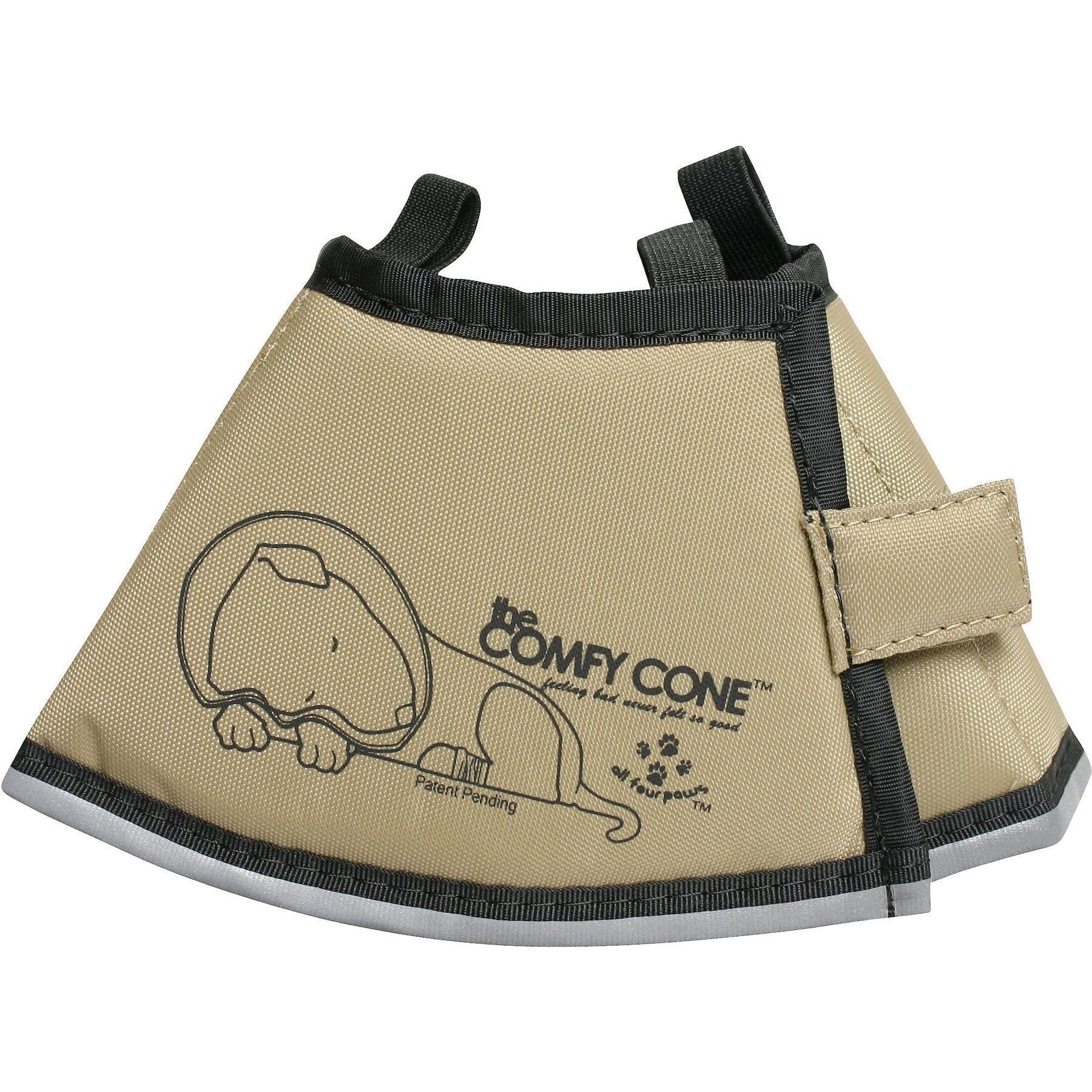
A padded soft cone listed for cats and kittens, with stays you can remove and a brim that folds back for meals.
Webvet may earn a commission when you click through to Chewy, at no extra cost to you.
How to put a cone on a cat and keep it on
Fit matters as much as type, so take your time the first time. These checks come from veterinary sources and apply to any cone collar:
- Measure first, using the sizing steps in the next section, rather than guessing from the cat's weight
- Fasten it snug at the neck so it extends past your cat's nose, the fit PetMD describes
- Slide two fingers between the neck and the collar; PetMD says you should be able to fit two fingers under the collar base
- Use built-in anchors where the product has them: the ZenCollar's security rings attach to the cat's own collar, and the Comfy Cone's plastic stays can be removed or kept to change how firm it is
If your cat won't keep the cone on, keeps taking it off, or keeps getting out of it, recheck the two-finger fit and the length past the nose. If she still slips free, is going crazy in it, or keeps scratching at the cone, tell your vet: Royal Canin's veterinary guidance says some cats will not accept a collar.
Daily life in a cone gets its own section below: feeding a cat wearing a cone from a raised, cone-friendly bowl, setting up an open litter box, and whether to leave the cone on at night (yes, unless your vet says otherwise).
Makeshift versions made at home from a paper plate, cardboard, or a pool noodle show up in plenty of searches, but none of the veterinary sources behind this guide gives a pattern for one. You can get a fitted cone from your vet, from online retailers such as Chewy, or from pet-supply stores.
Cat cone sizes: how to measure a cat for an e-collar
Cat cone sizes follow one principle from the Royal Canin Veterinary Academy: an Elizabethan collar should be the smallest size that shields the site. Bigger is not safer: a cone that is too long gets in the way at the bowl and the litter box, and one that is too short leaves the wound in reach.
The simplest case is an inflatable ring. Neck-pillow style cones sit around the neck rather than reaching toward the nose, so they are sized by neck circumference alone. The ZenCollar's Small, for example, fits a 6 to 9 inch neck.
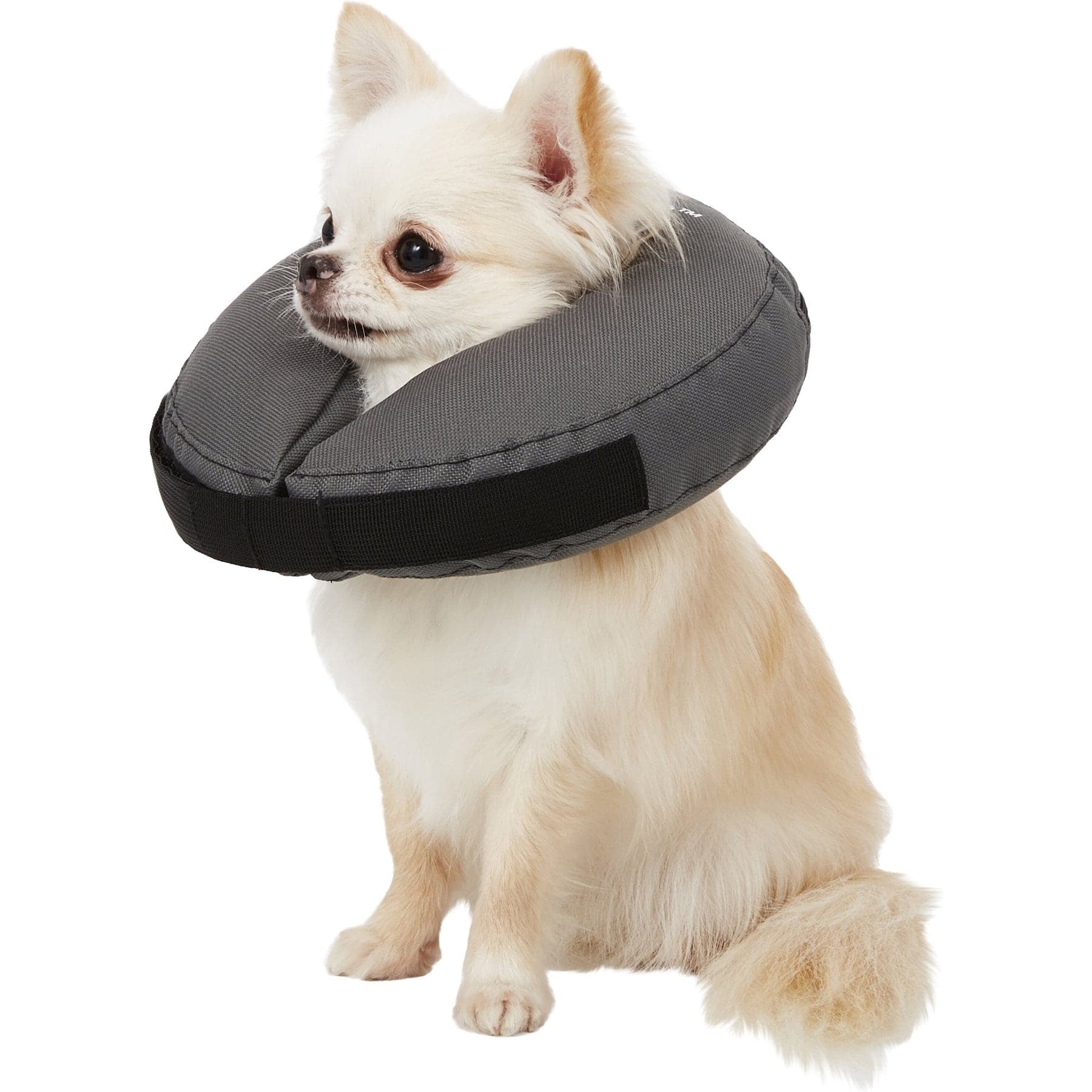
An inflatable ring sized only by neck, with a 6 to 9 inch Small and rings that clip to your cat's own collar.
Webvet may earn a commission when you click through to Chewy, at no extra cost to you.
Full cones need two numbers. PetMD describes a properly fitted collar for a cat as one that extends past the nose and is snug at the neck, so measure both before you buy:
- Measure neck circumference with a soft tape where a regular collar sits, snugly, as the ZenPet listing advises.
- Measure the length from the base of the neck to the tip of the nose.
- Compare both numbers to the brand's own chart, because each manufacturer sets its own neck ranges.
- When the cat falls between two sizes on a soft-cone chart, the ZenCone retailer chart advises choosing the larger size.
- After fitting, confirm two fingers slide between the neck and the collar.
Whisker clearance, the room the brim leaves around your cat's whiskers, is the one fitting question without a published number. No veterinary source reviewed for this guide gives a whisker-clearance figure for cat cones, so there is no measurement to aim for. The published checks are the ones above: snug at the neck, past the nose, and the smallest size that shields the site.

Cat cone size chart by brand
Neck ranges differ by product, so read the chart for the exact cone you are buying. These are the published ranges for the collars covered in this guide:
- All Four Paws Comfy Cone, X-Small: neck 9.25 to 11.75 inches, length 4.5 inches (11 cm), listed for Chihuahua-sized dogs, cats, and kittens (1-800-PetMeds listing)
- All Four Paws Comfy Cone, Small: neck 10 to 12.5 inches, length 5.5 inches (14 cm), listed for larger cats
- ZenPet ZenCollar inflatable: XSmall under 6 inches, Small 6 to 9 inches, Medium 9 to 13 inches, Large 13 to 16 inches, by neck alone (Dog Dog Cat listing)
- ZenPet ZenCone soft collar: Small fits an 8 to 12 inch neck and is the size the chart names for cats (Homes Alive listing)
- Suitical Recovery Suit for Cats: sized by the distance from the collar to the base of the tail, not the neck; Small covers 43 to 51 cm (16.9 to 20.1 inches)
What size cone should I get for my cat?
Get the smallest cone that still shields the wound, per Royal Canin's veterinary guidance, in a size that extends past the nose and sits snug at the neck. On the Comfy Cone chart, X-Small covers cats and kittens with 9.25 to 11.75 inch necks and a 4.5 inch length, while Small is listed for larger cats.
Kitten cone collars and small cat cones
A kitten cone collar or a cone for a small cat follows the same rules, just with smaller numbers. The Comfy Cone X-Small chart names kittens directly, and the ZenCollar's smallest size is for necks under 6 inches, so measure a kitten rather than assuming the smallest cone fits.
A soft cone for a kitten can be easier on a tiny neck, but the past-the-nose and two-finger checks still apply. A paper plate cone for a kitten is an improvised option with no veterinary instructions behind it in our sources. A kitty cone for a cat with a disability or long-term need is a question for your vet.
Shopping for a dog in the same house? Our dog cone guide covers canine sizing separately.
Soft, inflatable, or rigid cat cone: which type to choose
FirstVet says E-collars come as hard plastic as well as softer or puffy versions, and advises asking your vet which suits the wound. The Royal Canin Veterinary Academy does not rank one type over another. That leaves wound location as the deciding factor, which is how the table below is organized.
- Rigid plastic cone: the classic Elizabethan collar. A veterinarian writing for Vetstreet calls heavy-duty plastic frustratingly and painfully firm for some pets.
- Soft cone: a padded or fabric cone such as the All Four Paws Comfy Cone E-Collar for Dogs & Cats, Tan, X-Small, which is foam-backed, padded nylon. The same Vetstreet veterinarian suggests a soft collar, the E-collar "lite," when hard plastic is too firm.
- Inflatable ring: a donut-shaped collar like the ZenCollar, which sits around the neck and does not extend past the nose.
- Recovery suit: a fitted garment that covers the body, described by VCA as similar to one-piece pajamas.
- Lick sleeve: a sleeve that covers a leg wound.
What follows is a cone-type by wound-location table for cats and an honest answer to whether a spayed cat can skip the cone.

Cat cone type by wound location
| Type | Reach it blocks | Whisker clearance | Eating ease | Best for |
|---|---|---|---|---|
| Rigid plastic cone | Mouth kept from the body when it extends past the nose | Wide brim around the face; no published clearance figure | Often needs raised bowls or a supervised cone-off break | Feet, tail base, and face or eye problems your vet wants fully shielded |
| Soft padded cone | Same as a rigid cone when it extends past the nose | Fabric brim around the face; no published clearance figure | Comfy Cone style folds back for meals | Cats who find hard plastic too firm, at the same wound sites if your vet agrees |
| Inflatable ring | Limits how far the neck turns; nothing extends past the nose | Face left open | Face left open at the bowl | Upper leg and torso wounds, possibly a belly incision if your vet approves; not feet, tail, or scratching |
| Recovery suit | Covers the body from collar to tail base | No collar at the face | No collar at the face; Suitical can stay fastened in the litter box for most cats | Belly incision after a spay, as a garment that covers the incision |
| Lick sleeve | Covers one leg | No collar at the face | No collar at the face | Leg wounds, with cat sizing confirmed by your vet |
Read the table by where the wound is, not by which collar looks most comfortable:
- Belly incision: a cone or a recovery suit. VCA says a surgical recovery garment that covers the incision may be worn instead of a cone, which makes the recovery suit the main alternative after a spay.
- Leg: a cone, or a sleeve or bandage your vet fits. The Vetstreet veterinarian says neck-brace collars such as the BiteNot work for upper-limb and torso lesions.
- Feet and tail base: a cone that extends past the nose. The same veterinarian says brace-style collars do not work for pets who chew their feet and tails.
- Face, eyes, and ears: a cone. An inflatable ring leaves the face open, and the Vetstreet veterinarian says brace-style collars are definitely not for scratching problems.
That last point matters if your vet wants a cat kept from rubbing or pawing at an eye, for example during treatment for a cat eye infection. A soft cone can work there too, provided it still reaches past the nose.
For skin conditions, Royal Canin lists over-grooming and self-trauma from itch or anxiety as reasons for a collar. Because those cases can involve scratching as well as licking, and brace-style collars are not for scratching, ask your vet whether a full cone, other measures, or both fit the case.
SponsoredVet care that's always there
Unlimited video calls and messaging with licensed vets for less than a typical vet visit. One membership covers up to five pets.
Use code Pets60
Plans start at $12/month · covers up to 5 pets
- Licensed vets in most states
- Rx for 150+ conditions
- 4.7 on Trustpilot
The best cat cones and recovery collars
The best cat cone collar is not one product. It is the type that matches the wound, in the size that fits your cat. The four options below cover soft, inflatable, and recovery-suit choices, with the facts each manufacturer or retailer publishes.
What is the best cat cone collar?
The best cat cone is the smallest one that shields the wound, extends past the nose, and sits snug at the neck. For a cat that hates hard plastic, a soft collar is the lighter option a Vetstreet veterinarian suggests. For a spay incision your vet is happy to cover with fabric, a recovery suit avoids the collar entirely.
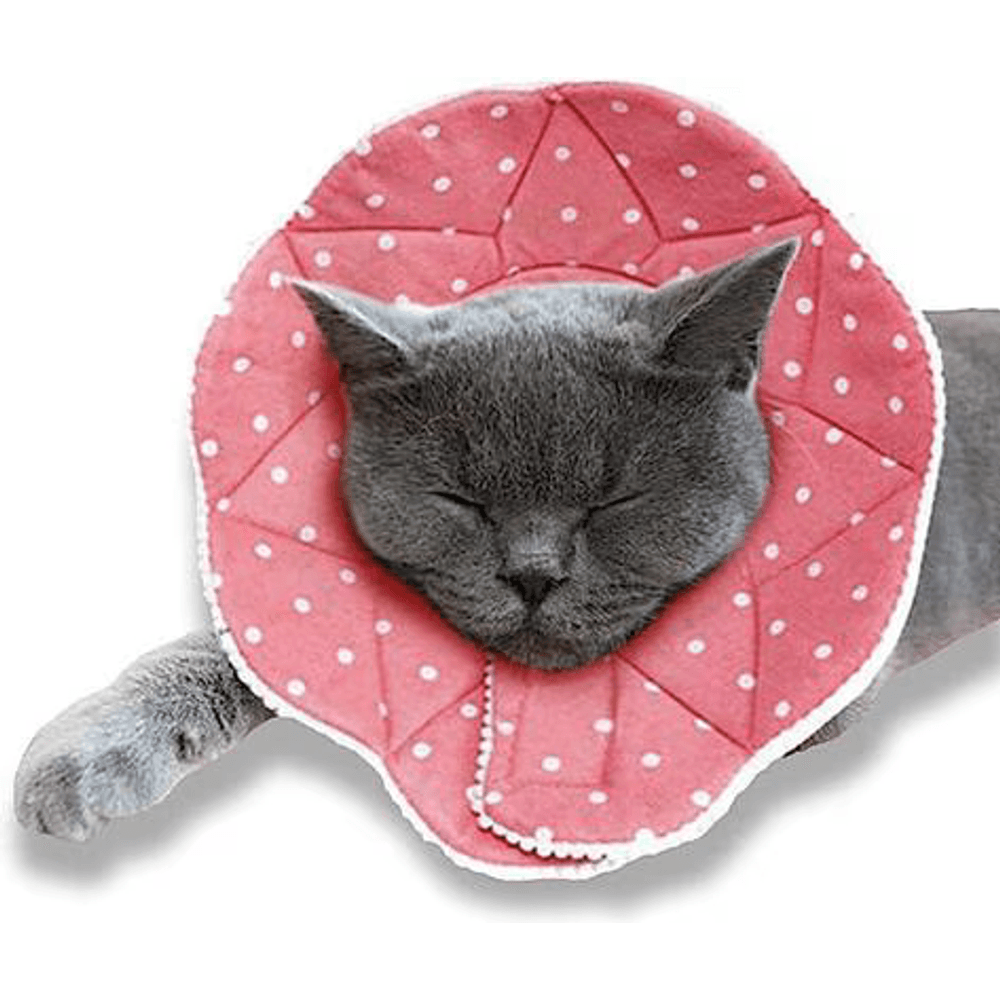
A soft post-surgery cone for cats that find hard plastic too stiff; check its size chart against your measurements.
Webvet may earn a commission when you click through to Chewy, at no extra cost to you.
Before comparing products, run through what separates a good cone cat collar from a poor one:
- Fit range: a published neck range and, for full cones, a length that reaches past the nose
- Material: hard plastic, padded fabric, inflatable, or a fitted garment, matched to the wound location
- Meal access: whether it folds back, leaves the face open, or needs raised bowls
- Security: a way to stay on, such as rings that attach to your cat's own collar
- Litter box access: a short enough brim, or a suit that stays fastened in the box
Soft cones: Comfy Cone and SunGrow
The All Four Paws Comfy Cone in X-Small is a soft cat cone collar made of foam-backed, padded, tight-gauge nylon. Its removable plastic stays let you adjust how rigid it is, and the listing says it can be folded back for eating and drinking. 1-800-PetMeds lists it at $19.79 for a 9.25 to 11.75 inch neck.
The tradeoff is that it is still a full cone. Your cat still has to get used to a brim around the face, and the listing advises supervising pets while they wear it. It suits a cat that needs full-cone protection but does better with fabric than plastic.
The SunGrow Post-Surgery Soft Cone Dog & Cat Recovery Collar, Pink, Medium is another soft post-surgery cone. Its specifications and neck chart could not be retrieved for this guide, so no dimensions are given here. Measure your cat's neck and nose length and check the product page chart before ordering a Medium.
Inflatable collar: ZenPet ZenCollar
The ZenPet ZenCollar is an inflatable recovery collar with a fusion-sealed air bladder and security rings that attach to your pet's collar. The ZenCollar line is listed for dogs and cats of all sizes; the Small fits a 6 to 9 inch neck and sells for $19.99 on the Dog Dog Cat listing.
The listing calls it a lower-stress alternative to plastic cones and says it protects wounds and post-surgery sites. Its "recommended by vets" wording does not name a veterinary source, though. Because it does not extend past the nose, it fits the torso and upper-limb wounds in the table above, not face, foot, or tail problems.
Where to buy a cat cone
You can buy a cat cone at your vet clinic, from online retailers including Chewy and Amazon, and at big-box and pet stores such as Walmart, PetSmart, and Petco. If you need one the same day, a nearby clinic or store is the quickest in-store route.
A plain plastic cat cone is the classic version, and it works when it fits. Wherever you buy, the checks do not change: the neck range on the chart, a length that reaches past the nose, and the type that matches the wound.
Recovery suit: Suitical for cats
The Suitical Recovery Suit for Cats, Black Camo, Small is made of breathable, stretchy cotton and Lycra fabric. It is sized by the distance from the collar to the base of the tail, with cat sizes from XX-Small (33 to 42 cm) up to Small (43 to 51 cm, or 16.9 to 20.1 inches).
According to the retailer listing, the suit can stay fastened when most cats use the litter box, thanks to the space tailored under the tail. It is built to cover the body, so it is a fit for a belly incision rather than a face or paw wound.
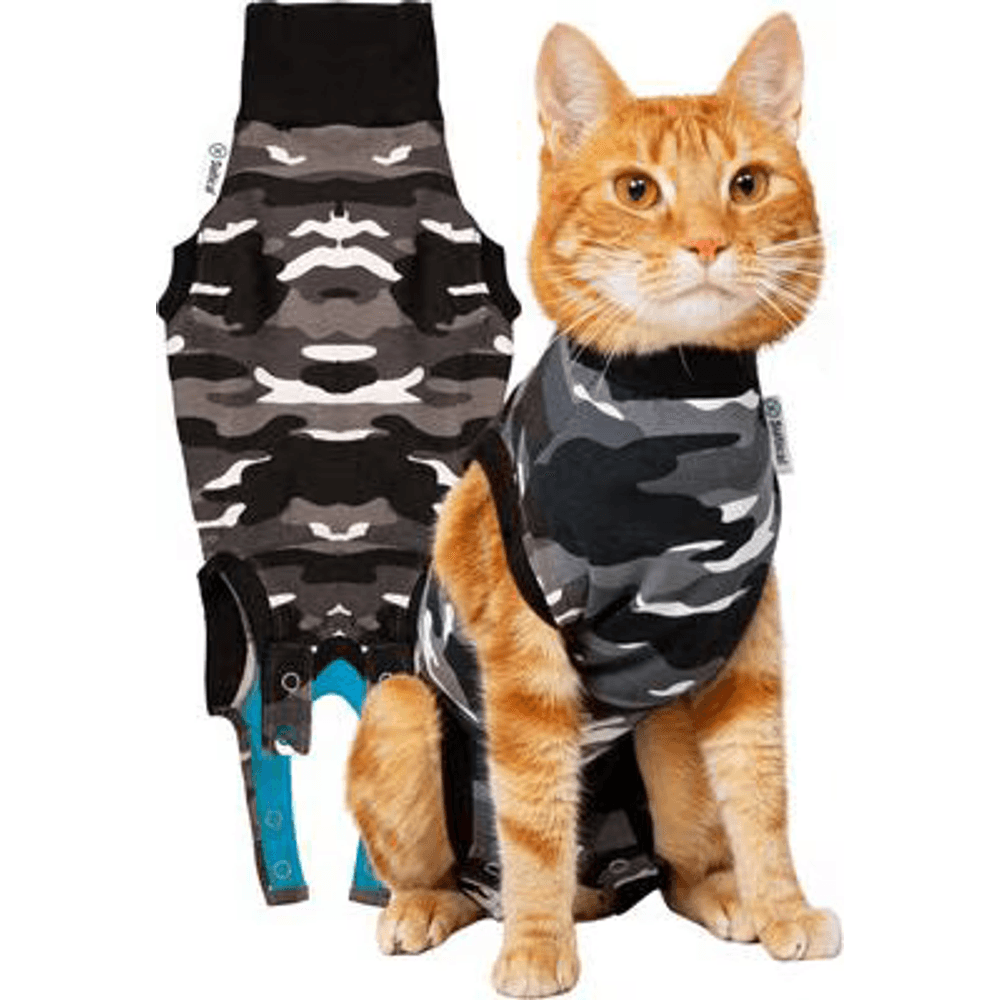
A cotton and Lycra cat suit sized collar to tail base that covers a belly incision and stays fastened in the litter box.
Webvet may earn a commission when you click through to Chewy, at no extra cost to you.
How long a cat wears a cone after a spay, neuter, or wound
There is no single number for how long a cat should wear a cone, because the cone stays on until the wound has healed. FirstVet says E-collars must stay on until the incision or wound has healed, and your vet confirms when removal is safe. The sourced ranges below give you a realistic plan:
- Spay: VCA says non-dissolving sutures or staples are usually removed 10 to 14 days after surgery, and activity is restricted for 7 to 14 days. PetMD says spay recovery typically lasts about 14 days. Plan on keeping the cone on for that whole window.
- Neuter: no source reviewed for this guide gives a separate cone duration for male cats. VCA's 7 to 14 day incision restriction is the nearest sourced range.
- Abscess: VCA says a Penrose drain usually comes out within two to four days, with larger wounds taking longer, and that an E-collar should be worn to prevent chewing and licking the wound.
- Dental extraction: PetMD says most vets schedule a recheck 7 to 14 days after extractions. That guidance does not mention an e-collar, so whether a cat needs one is your vet's call.
- Eye ulcers and longer cases: in a case series of 13 cats treated medically for deep ulcerative keratitis, a corneal ulcer, cited by the Royal Canin Veterinary Academy, collars were worn for a mean of 28 days, with a range of 13 to 73 days.
Our cat spay recovery guide walks through the rest of the healing timeline, and our guide to cat spay and neuter cost helps if surgery is still ahead. If your vet books a suture-removal recheck, our breakdown of how much a vet visit costs helps you plan for it.
When can I take my cat's cone off after a spay?
Take the cone off when your vet confirms the incision has healed, often at the suture check. Can you take your cat's cone off after 5 days? That is earlier than both VCA's 7 to 14 day restriction window and its 10 to 14 day suture window, so ask your vet before removing it.
Cat cone after surgery for the eyes or face works the same way. The best cat cone for eye surgery is the one your vet specifies, since the job is to keep the face shielded, and an inflatable ring leaves the face open.
If your cat keeps taking off the cone after a spay, or won't keep it on, refit it with the two-finger check and the past-the-nose length. To put a cone on a cat after surgery, fasten it snug at the neck, then watch for a few minutes to be sure she cannot back out of it.
Will my cat be ok without a cone after being spayed?
Only if something else keeps her off the incision. VCA says not to let a cat lick or scratch the incision because she may pull out the sutures, and that a cone may be needed to prevent this. Because that can happen in seconds, going without protection means watching her every minute until it heals.
Will my cat be okay without a cone after spay?
If your vet didn't give a cone after the spay, ask whether they expected a cone or a suit. VCA says a surgical recovery garment that covers the incision may be worn as an alternative, and FirstVet says recovery suits can be bought from the vet. Either way, your cat needs some barrier between her mouth and the incision.
If you need to keep your cat from licking stitches without a cone, a recovery suit that covers the incision is the sourced option. The alternatives section below covers suits, soft collars, and sleeves in more detail.
Eating, drinking, litter box, and sleeping with a cat cone
Expect some trouble at the bowl. In a feline owner survey cited by the Royal Canin Veterinary Academy, owners reported that Elizabethan collars interfered with daily activities, including drinking in 60.2 percent of cases. The setup changes below come from the same veterinary guidance.
How to help a cat eat and drink with a cone on
Can a cat eat with a cone on? Usually yes, once the bowls are within reach. These are the sourced fixes:
- Raise the bowls. Royal Canin's guidance recommends elevating food and water bowls so they are reachable with the collar on. The best food bowl for a cat with a cone is one raised enough to reach without the brim hitting the floor first.
- Fold back a soft cone at mealtimes. The Comfy Cone listing says it can be folded back for eating and drinking.
- Use a supervised cone-off break. FirstVet says the collar can come off for short periods, such as eating and drinking, only while your cat is watched, and then goes straight back on.
- Offer water during the break if your cat can't drink water with the cone on, and tell your vet if she is not drinking.
How does a cat eat with a cone on when none of that works? Hand the problem to your vet. Royal Canin's veterinary guidance says vets can and should consider alternative or adjunctive methods for cats that will not accept a collar.
Using the litter box with a cone
Hooded boxes and cones do not mix well. Royal Canin's guidance suggests removing the hood from a hooded litter tray for a cat in a collar, which turns it into an open box the cat can step into with the brim on.
PetMD advises keeping the litter box especially clean after spay surgery and checking it several times a day for urine and feces. A recovery suit is another route: per the Suitical listing, the suit can stay fastened in the litter box for most cats.

When your cat hates the cone or seems depressed
A cat depressed while wearing a cone, or one that clearly hates the cone, is not unusual given how much it gets in the way. Keep her routines as normal as you can, with raised bowls, an open litter box, and a quiet resting spot.
If she stops eating, keeps fighting the collar, or seems withdrawn, tell your vet. Royal Canin's veterinary guidance notes that some cats will not accept a collar at all, and a soft collar or recovery suit may protect the same wound with less stress.
Should a cat sleep with a cone on?
Yes, unless your vet says otherwise. No veterinary source reviewed for this guide addresses sleeping in a cone directly, but FirstVet says the collar stays on until the wound heals and comes off only while your cat is watched. You are not watching overnight, so the cone stays on while she sleeps.
Can a cat sleep with a cone on?
Yes. Cats can sleep in a properly fitted cone, though a heavy plastic brim can make settling harder. The Vetstreet veterinarian suggests a soft collar when hard plastic is too firm. If your cat cannot rest, ask your vet whether a softer cone or a recovery suit would protect this wound overnight.
Cat cone alternatives: recovery suits, soft collars, and lick sleeves
A cat cone alternative is not a workaround vets frown on. The Royal Canin Veterinary Academy says veterinarians can and should consider alternative or adjunctive methods of preventing self-trauma, partly because some cats will not accept a collar. The key is choosing one that blocks the specific wound.
Our guide to cone alternatives after spay or neuter covers the post-surgery options in more depth. Here is how each alternative matches up for a cat.
What can you use instead of a cone?
You can use a recovery suit, a soft collar, an inflatable ring, a bandage, or a lick sleeve, depending on where the wound is:
- Recovery suit: covers a belly incision or torso wound, per VCA
- Soft collar: a fabric cone that still reaches past the nose, for cats who find hard plastic too firm
- Inflatable ring: for upper-limb and torso wounds; not for feet, tails, or scratching
- Bandage: FirstVet notes paw bandages exist for paw wounds, best fitted by your vet
- Lick sleeve: a leg covering for leg wounds

What can a cat wear instead of a cone?
A cat can wear a recovery suit. A cat onesie used instead of a cone is, in practice, a recovery suit, and VCA describes one as similar to one-piece pajamas. The Suitical Recovery Suit for Cats, Black Camo, Small, for example, is cotton and Lycra and is sized from the collar to the base of the tail.
What do vets use instead of cones?
Vets use garments and bandages alongside or instead of cones. VCA says a surgical recovery garment covering the incision may be worn as an alternative, and FirstVet says special recovery suits can be bought from your vet. The Vetstreet veterinarian calls garments and bandages amazingly helpful for keeping pets away from an area.
How can I get my cat to stop licking a wound without a cone?
Cover the wound so the tongue cannot reach it: a recovery suit for the body, a vet-fitted paw bandage for a paw. FirstVet says anti-lick sprays go only on unbroken skin, and some pets like the taste. VCA says not to put anything on an incision unless your vet says to.
What can I use instead of a cone for my cat after spay?
A recovery suit is the main alternative after a spay, because it covers the belly incision directly. VCA says a garment covering the incision may be worn instead of a cone. Measure your cat from the collar to the base of the tail to pick a size, and check with your vet that the suit covers the full incision.
Recovery suit vs cone for a cat
The choice comes down to the wound and the cat:
- Choose a recovery suit for a belly incision when your vet agrees, especially for a cat that fights a collar, since there is nothing around the face at meals or in the litter box.
- Choose a cone for wounds on the face, feet, or tail base, which a body suit does not cover.
- Ask about combining them if your cat is a determined licker; Royal Canin's guidance describes adjunctive methods used alongside a collar.
What are some alternatives to the cat cone?
Beyond suits, soft collars, inflatable rings, bandages, and sleeves, owners often search for a DIY cat cone or a homemade alternative, such as a shirt, a no-sew sock, or a paper plate. No veterinary source reviewed for this guide gives a pattern for any homemade cat cone, so there is no tested DIY design to recommend.
If you improvise for a few hours before you can reach a vet or store, hold any homemade cone or DIY cat cone alternative to the published standards: a garment that covers the incision, as VCA describes, or a collar snug at the neck that reaches past the nose, per PetMD. If it slips, it protects nothing.
A lick sleeve is the least documented option on this list. Lick Sleeve is a leg-sleeve brand, but no source reviewed here confirmed a cat-specific model or a veterinary endorsement, so treat it as a leg-wound option to ask your vet about.
Cat cone questions
Frequently Asked Questions
What is a lick sleeve for cats?
A lick sleeve is a fabric sleeve that covers a leg, used to keep a pet's mouth off leg wounds. Lick Sleeve is a brand name, and no cat-specific model was confirmed for this guide, so check sizing and fit with your vet. For a belly wound, a recovery suit is the closer match.
How long does a cat wear a cone after being spayed?
Plan on about 10 to 14 days, the window in which VCA says non-dissolving stitches or staples are usually removed. The cone comes off when your vet confirms the incision has healed, not on a fixed date, so keep it on until that check.
Can a cat use the litter box with a cone on?
Yes, though a hooded box can be a squeeze. Royal Canin's veterinary guidance suggests removing the hood so your cat has an open box. If the brim still catches on the sides, ask your vet whether a shorter cone, the smallest size that still shields the wound, would work.
How do I measure my cat for a cone?
Measure neck circumference where a collar sits, then the length from the neck to the tip of the nose. Pick the size whose neck range fits and whose length reaches past the nose, then confirm two fingers fit under the collar once it is on.

Editor
The Webvet Editorial Team is the in-house group of pet-care editors and writers behind Webvet, operated by Smart Pet Collective. The team researches, writes, and maintains Webvet's pet health, behavior, and medication content. Every article follows a defined editorial process: research from reputable veterinary and scientific sources, careful drafting, mandatory review of medical content by a credentialed veterinarian, and dated publication. Health and medication articles are medically reviewed by a licensed veterinary professional before they go live and are kept current over time.
Veterinarian · BVMS MRCVS
Dr. Pippa Elliott, BVMS, MRCVS, is a veterinarian with nearly 30 years of experience in companion animal practice. Dr. Elliott earned her Bachelor of Veterinary Medicine and Surgery from the University of Glasgow. She was also designated a Member of the Royal College of Veterinary Surgeons. Married with 2 grown-up kids, Dr. Elliott has a naughty Puggle named Poggle, 3 cats and a bearded dragon.
Related reading

World's Best Cat Litter Review: Clumping, Tracking, Flushing, and Which Cats It Suits

Litter Genie Review: Does It Really Work, What Refills Cost, and the Best Alternatives

Best Litter Box Enclosures and Litter Furniture: What Vets Say About Enclosed Boxes
