Dog Cones: Sizing, Soft vs. Rigid, How Long to Wear One, and the Best Picks
A dog cone exists to keep teeth away from a wound until it heals. Here is how to measure for the right size, when a soft, inflatable, or rigid cone is the better choice, how long it stays on after common surgeries, and the cones we would buy.

BVMS MRCVS
Medically reviewed by Dr. Pippa Elliott, BVMS MRCVS · Last reviewed

This article contains affiliate links. Webvet may earn a commission when you buy through them, at no extra cost to you.
A dog cone has one job: keep your dog's mouth away from a wound until it heals. Vets call it an Elizabethan collar or e-collar, and many owners call it the cone of shame, but the purpose is the same after a spay, a neuter, a lump removal, or a hot spot.
Getting a dog cone right comes down to three choices: a type that actually blocks the wound's location, a size that reaches past the nose without squeezing the neck, and how long to keep it on. Below, we cover each, then eating, sleeping, and the alternatives that only work for some wounds.
 Sponsored
Have a health question about your dog?
Talk to a licensed vet at Dutch over video or message, including nights and weekends.
Use code Pets60
Plans start at $12/month · covers up to 5 pets
- Licensed vets in most states
- Rx for 150+ conditions
- 4.7 on Trustpilot
What a dog cone does and when your dog really needs one
A dog cone is a protective collar that flares around the head to stop licking, chewing, and pulling at a surgical incision or injury. VCA Animal Hospitals says the collar's primary purpose is preventing a dog from directly traumatizing a surgical site or injured area.
Two numbers decide the size: neck circumference and the length from the neck to the tip of the nose. The cone edge has to clear the nose, and the neck needs breathing room.
- 1Licking reopens incisions and spreads infection: it can turn into chewing out stitches within seconds, and even mild licking can cause an infection that needs antibiotics.
- 2Measure the neck and the neck-to-nose length: the cone edge should sit slightly beyond the tip of the muzzle, with two fingers of room at the neck.
- 3Pick the type by wound location: inflatable rings and recovery suits do not reliably protect paws or lower legs.
- 4Keep the cone on until your vet confirms the wound has fully healed, often 10 to 14 days after routine surgery.
Cones are not only for surgery. VCA describes a lick-itch-lick cycle behind the self-trauma that creates a hot spot, and lists an Elizabethan collar as an early treatment step alongside treating the cause.
A lick granuloma, usually on a front leg near the wrist, starts the same way: repeated licking drives self-trauma, inflammation, and infection.
Why licking is the real problem:
- It delays healing. Licking is natural, but VCA warns it can seriously delay healing and lead to infection or injury.
- It becomes chewing. Licking often leads to chewing or removing stitches, which VCA's discharge instructions say can happen in a few seconds.
- Even mild licking matters. It can cause an infection that needs antibiotic treatment.
- There is no safe amount. Tufts Cummings School of Veterinary Medicine tells owners not to allow licking or chewing of an incision for any length of time.
The simple rule for soft versus rigid: start with a soft, padded dog cone, because VCA notes many dogs tolerate soft collars better than firm plastic ones. Switch to a rigid plastic cone the moment your dog can bend or maneuver around the soft material, since a flexible cone the dog defeats protects nothing.
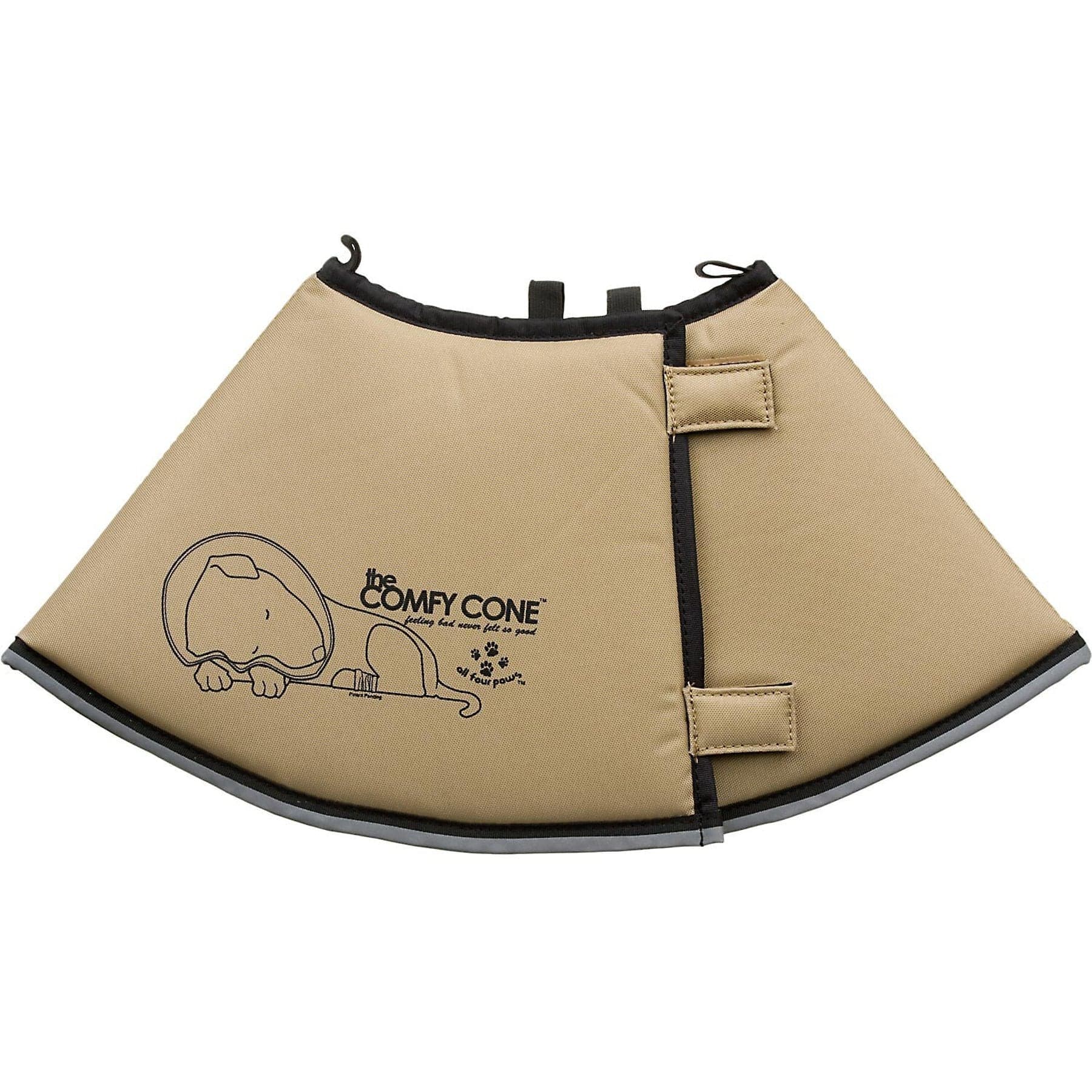
A soft, foam-padded fabric cone with a Velcro closure and loops that thread onto your dog's own collar.
Webvet may earn a commission when you click through to Chewy, at no extra cost to you.
Whether you pick one up from your vet, Tractor Supply, or a pet store, follow your vet's instructions and our guide to dog wound care. Makeshift versions built from a towel or pool noodle have no veterinary endorsement in the sources we reviewed.
Dog cone sizes: how to measure and fit an e-collar

How should a dog cone fit? The edge must extend slightly beyond the tip of your dog's muzzle for full protection from licking, according to VCA's e-collar guidance. At the neck, you should fit two fingers comfortably between the collar and the neck so it never restricts breathing or swallowing.
Measure before you buy any neck cone for dogs:
- Wrap a soft tape snugly around the neck where the collar sits. That is the neck circumference.
- Measure from that point to the tip of the nose. The Comfy Cone chart calls this neck-to-snout length.
- Choose the size whose chart covers both numbers, not just the neck.
- Fit it, then check the two-finger gap and that the edge clears the muzzle.
- If the collar irritates the neck, VCA says to adjust it or try a different size.
Dog cone size charts are not standardized, so use the exact chart for the product you buy, whether from Chewy, Walmart, PetSmart, or Amazon. PetSmart lists the Comfy Cone Small for a 10 to 14 inch neck and a 5.5 inch neck-to-snout length, yet the line's Medium Extra Long differs between retailers.
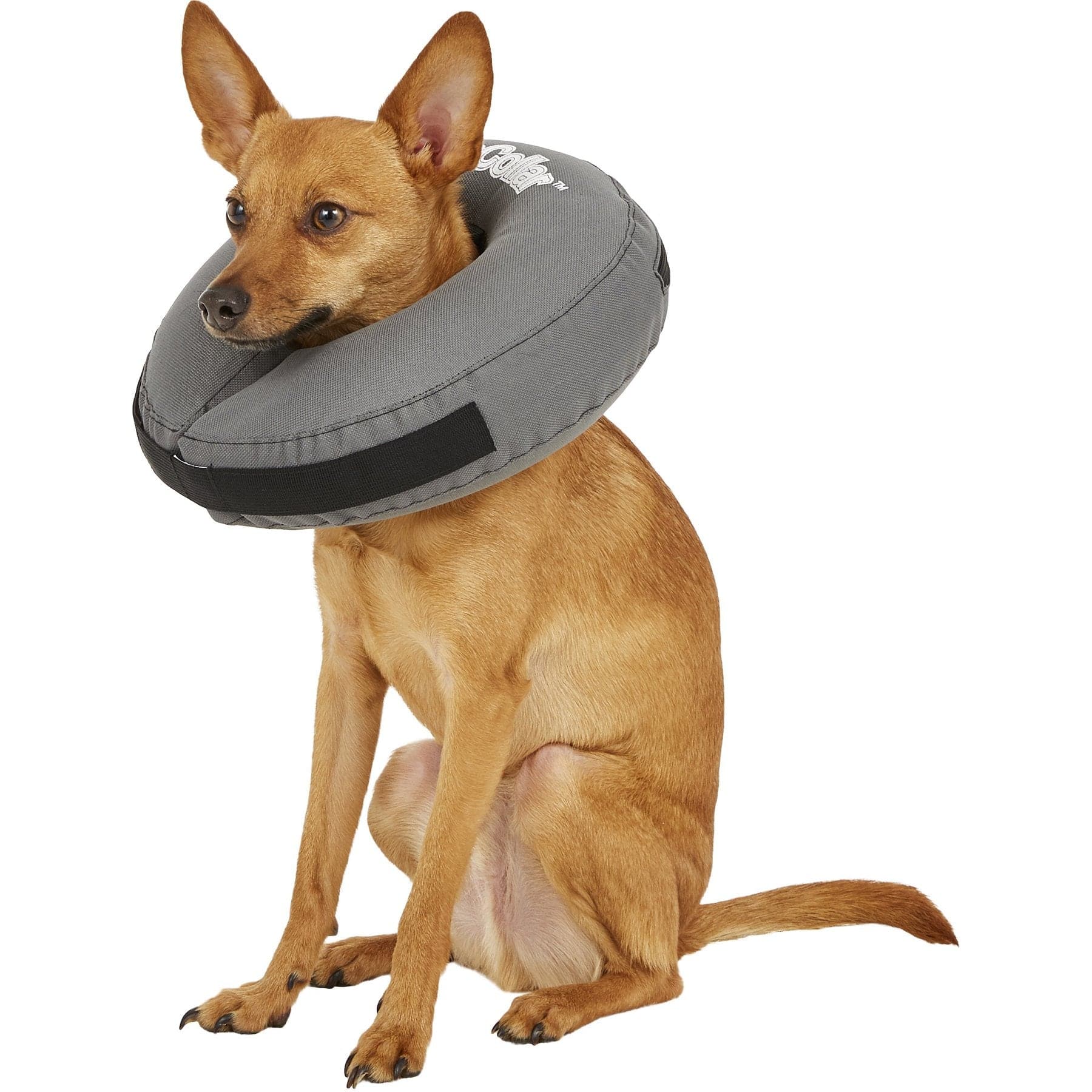
An inflatable ring for a 9 to 13 inch neck that attaches to your dog's own collar; other sizes run from under 6 inches to over 22.
Webvet may earn a commission when you click through to Chewy, at no extra cost to you.
Other lines size differently again. The ZenCollar inflatable ring runs XS under 6 inches, S 6 to 9, M 9 to 13, L 13 to 16, XL 16 to 22, and XXL over 22, per a DogDogCat listing.
Pet Valu lists the Dogswell rigid cone Small at an 8 to 9.5 inch neck and Medium at 9.5 to 12, while Chewy staff quoted a depth figure instead.
What that means for different dogs:
- Small dog cone sizes: soft cones for small dogs and toy breeds start below a 6 inch neck in some lines. Check the length too, since a small dog cone can still be too short for a long nose.
- Dog cones for medium dogs: medium sizes overlap heavily between brands, so a dog near a size boundary needs both measurements.
- Large and extra large dog cones: for big dogs, an XL or extra long dog cone collar may be needed so the edge clears a long muzzle. The best dog cone for large dogs is the one that reaches past the nose, not the biggest neck size.
If no cone fits well, the large dog cone alternatives in the last section may help, with your vet's approval. For cats, see our cat cone guide.
 Sponsored
Vet care that's always there
Unlimited video calls and messaging with licensed vets for less than a typical vet visit. One membership covers up to five pets.
Use code Pets60
Plans start at $12/month · covers up to 5 pets
- Licensed vets in most states
- Rx for 150+ conditions
- 4.7 on Trustpilot
Soft, inflatable, or rigid dog cone: which type to choose
A rigid plastic Elizabethan collar and a soft fabric or foam cone both extend past the nose, so the mouth cannot reach the body. An inflatable recovery collar, often called a donut, works more like a neck brace, which VCA says reduces licking by stopping the dog from fully turning its head.
| Cone type | Reach: belly, flank, and back | Reach: paw wounds and lower legs | Reach: tail base and hind end | Comfort | Eating ease | Best for |
|---|---|---|---|---|---|---|
| Rigid plastic cone (Elizabethan collar) | Blocks the mouth when the edge sits past the muzzle tip | Blocks the mouth when sized long enough | Blocks the mouth when sized long enough | Firmest; some dogs tolerate it less than soft collars | Fitted cones allow normal eating; a shallow dish or raised bowl helps | Dogs that defeat soft cones; paw, leg, and lick granuloma sites |
| Soft fabric or foam cone | Same reach as rigid while the edge holds its shape | Same, unless the dog folds the soft material | Same, unless the dog folds the soft material | Many dogs tolerate soft collars better | Some models fold back for supervised meals | Calm dogs that leave the edge alone |
| Inflatable collar (donut) | Limits head turning; may suit torso sites if your vet agrees | Not reliable: the ring does not extend past the nose | Varies with how far the dog can curl | Retailer says pets can eat, sleep, and move naturally | Nothing sits in front of the face | Vet-approved torso wounds in dogs that cannot curl around it |
| Recovery suit | Covers the torso under fabric | Does not cover paws or lower legs | Depends on the cut of the suit | Snug garment like a onesie | Nothing around the head | Belly incisions when your vet approves |
| Neck brace or neck pillow | Reduces head turning | Not reliable for front paws | Varies; ask your vet | Pillow does not block peripheral vision | Nothing in front of the face | Dogs your vet clears for a lighter option |
The buying mistake to avoid is choosing an inflatable collar for paw wounds. A ring sits around the neck and does not reach past the nose, so it cannot meet VCA's standard of an edge beyond the muzzle. Front paws and lower legs, the usual lick granuloma site, stay within reach of the mouth.

A rigid cone is the right call when the wound is on a paw or leg, when your dog has already beaten a soft or inflatable collar, or when your vet sends one home. Clear plastic models such as the Dogswell add a padded neckline for comfort.
Is a donut or cone better for dogs?
Neither wins in general. No primary veterinary source we reviewed ranks a donut over a cone, so the answer depends on the wound. A cone that reaches past the nose protects the most body sites. A donut can be more comfortable but leaves front paws and lower legs exposed.
Can I use a donut instead of a cone for my dog?
Sometimes, if your vet agrees and the wound is on the torso. VCA's guidance on alternatives says to ask your veterinarian which option suits your dog after a procedure. Watch the first hours closely: if your dog can curl around the ring and reach the incision, the donut is not enough and the cone goes back on.
Is an inflatable collar better than a cone?
An inflatable collar can be easier to live with, since nothing sits in front of the face while eating or sleeping. It is not better at protection. Because it limits head turning rather than blocking the mouth, it cannot protect paw wounds, and its reach at the tail base depends on how far your dog can curl.
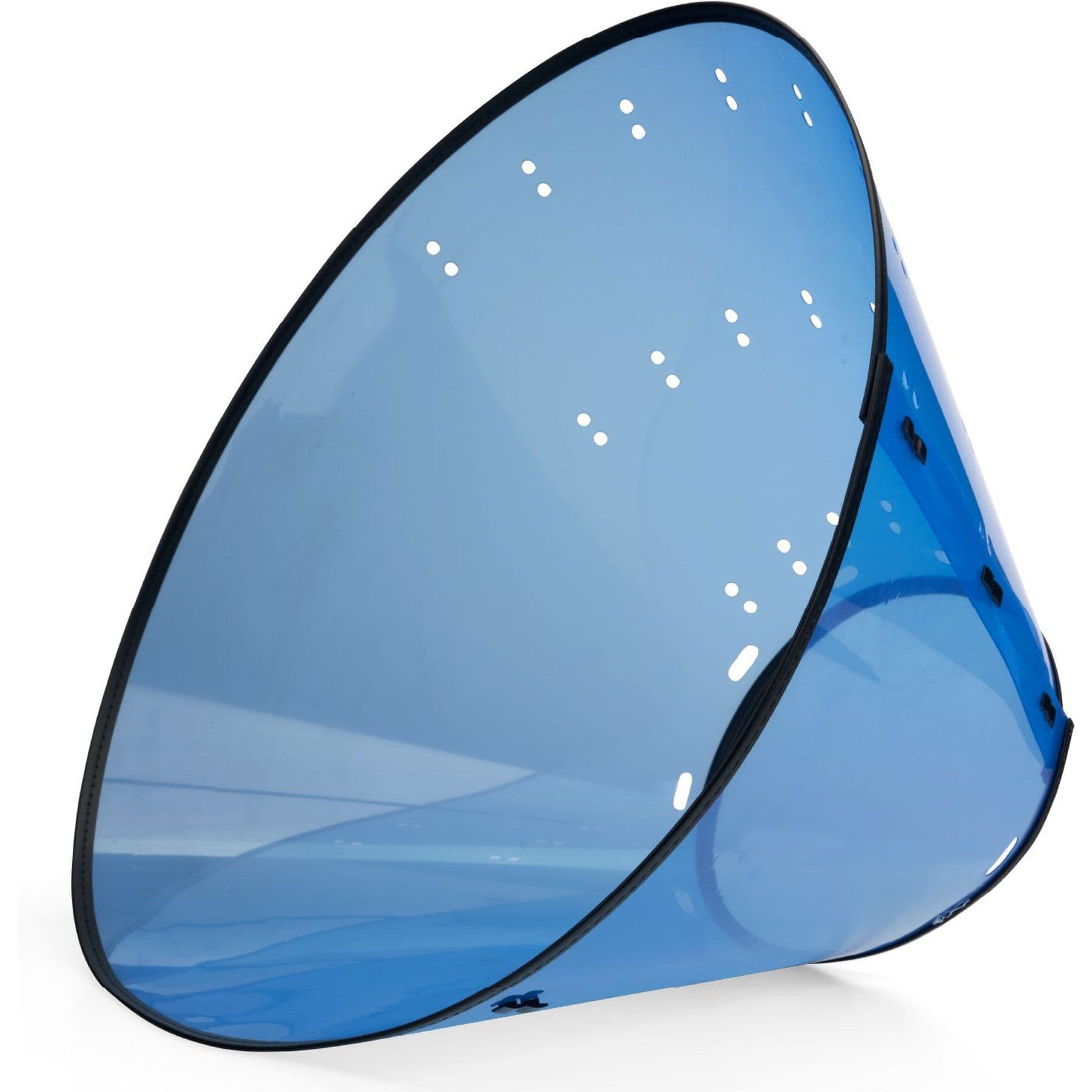
A clear rigid plastic e-collar with a padded neckline, for paw and leg wounds or dogs that defeat soft cones.
Webvet may earn a commission when you click through to Chewy, at no extra cost to you.
The best dog cones and recovery collars
You can buy a dog cone at Chewy, PetSmart, Petco, Walmart, Amazon, or your vet clinic. If you need a dog cone near you right now, call ahead to stores that are open.
Wherever you shop, check three things: the type suits the wound location, the chart covers both measurements, and the return policy. DogDogCat, for example, makes recovery cone sales final.
Our picks by job:
- Soft padded cone to try first: the All Four Paws Comfy Cone E-Collar for Dogs & Cats, Tan, Medium uses nylon fabric laminated onto 1/2 inch foam, a Velcro closure that opens without going over the head, and removable stays. It was about $30.59 at Chewy in October 2026.
- Inflatable collar for torso wounds: the ZenPet ZenCollar Inflatable Recovery Dog & Cat Collar, Medium fits a 9 to 13 inch neck, attaches through rings to your dog's existing collar, and was listed at $21.99.
- Rigid plastic cone for paws and determined lickers: the Dogswell Remedy+Recovery Rigid E-Collar for Dogs & Cats, Color Varies, Small is a clear plastic dog cone collar with a padded neckline. Retail size charts conflict, so measure first.
- Recovery suit when your vet approves: the Suitical Recovery Suit for Dogs, Black, Medium covers the torso in soft, snug, breathable fabric.
The Comfy Cone carries a label claim of being veterinary tested and approved, but the listing names no testing body, so weigh it as marketing. The ZenCollar's listing says pets can eat, drink, sleep, and move naturally, a retailer claim rather than proof it blocks every body site.
Suitical positions its suit as an alternative to a cone, and the maker's page lists no limitations. Owners in self-selected reviews describe using it after a neuter, a lumpectomy, and a gastropexy. By design, though, a suit covers the body, not the paws, so it fits belly and flank wounds only.
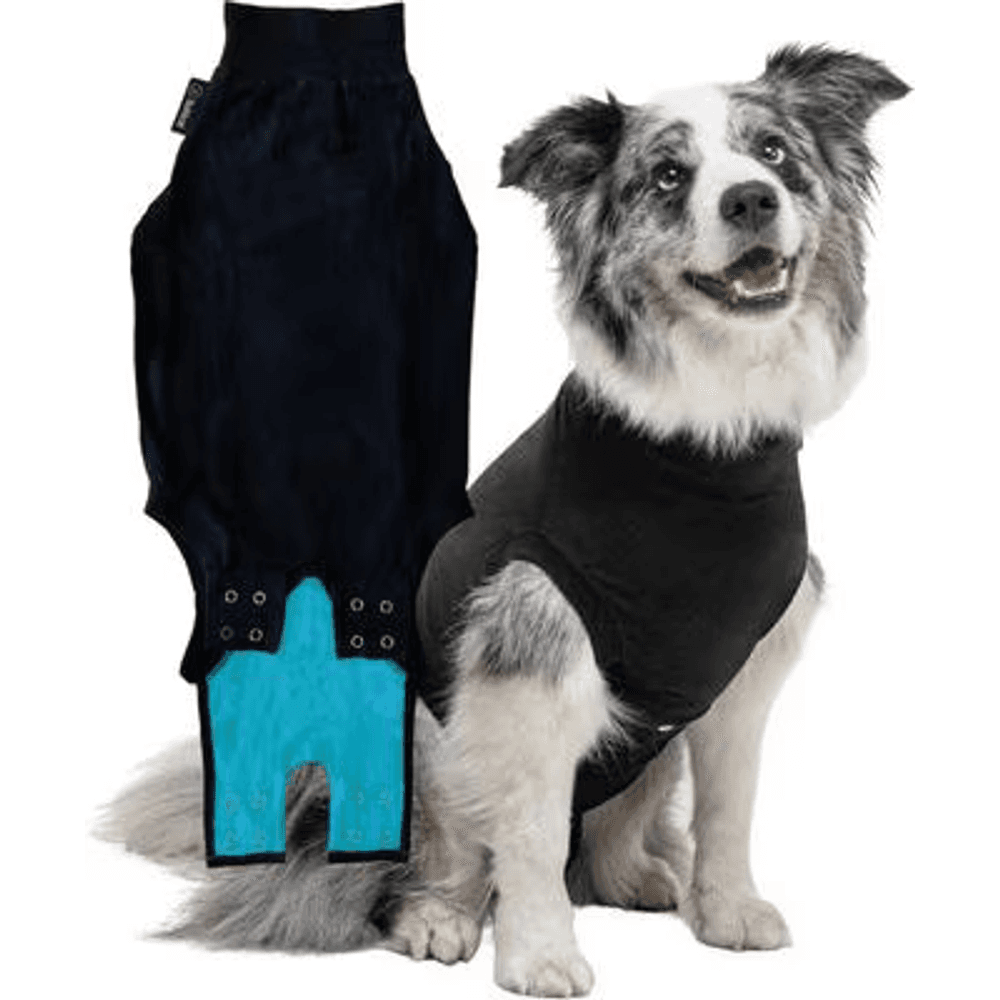
A soft, breathable recovery suit that covers belly and flank wounds when your vet approves skipping the cone.
Webvet may earn a commission when you click through to Chewy, at no extra cost to you.
How long a dog wears a cone after neuter, spay, or other surgery
The short answer to how long a dog should wear a cone: until the wound has fully healed, which VCA says can be as short as a few days or as long as a few weeks depending on the injury. For routine surgery, the common window is 10 to 14 days.
Here is what the sources say for the most searched cases:
- After a neuter: Tufts says the dog cone stays on at all times for the first week after surgery, and that animals should be watched and kept quiet for 10 to 14 days. Our dog neuter recovery guide covers the full timeline.
- After a spay: the same Tufts instructions apply, and VCA notes e-collars or alternatives are often recommended after spaying to keep the dog from the incision. See dog spay recovery for the full recovery timeline.
- Suture timing: VCA's incision care page says non-dissolving sutures or staples are usually removed 10 to 14 days after surgery, while another VCA page gives 7 to 14 days. Buried sutures need no removal.
- After lump removal or other surgery: no published cone duration exists for lump removal specifically. VCA says major surgery or a large incision can need several weeks of restricted activity, so ask the surgeon.
- Hot spots and lick granulomas: the cone stays on until the skin heals and the underlying cause is treated.
VCA says most dogs return to normal activity 5 to 10 days after a spay or neuter, but activity and cone removal are separate decisions. When can you take your dog's cone off after neutering or spaying? When your vet confirms the incision has healed, for example at the recheck or suture removal visit.
VCA's post-operative instructions advise keeping the collar on constantly rather than taking it on and off. If your dog won't wear the cone after a neuter, know that VCA says most dogs settle down and tolerate it. Check the fit or try a soft cone rather than removing it.
Call your vet if you notice any of these at the incision:
- Swelling
- Excessive redness of the skin
- A foul smell
- Discharge
If you are budgeting for rechecks, our guide to how much a vet visit costs lays out typical fees.
Eating, drinking, and sleeping with a dog cone
How do dogs eat with a cone? Normally, in most cases. VCA says a dog can eat and drink normally with a properly sized and fitted e-collar, and that it is not usually necessary to remove the collar for meals. If your dog struggles, start with the bowl.
Simple fixes for eating and drinking:
Three things solve most cone complaints: raised bowls, cone-off meal supervision, and sleeping arrangements that give the dog a wide, low bed where the cone edge does not catch on walls or crate bars.
- Use a shallow dish or plate if your dog refuses a deep bowl with the cone on.
- Raise the bowl or set it on a platform so the cone edge clears the rim. Elevating food and water helps some dogs eat while wearing the collar.
- Pick a water bowl for dogs with a cone that is wide and shallow, so the dog can drink without the cone hitting the sides.
- Supervise any cone-off meal. If you remove the collar to eat, VCA says to watch your dog and replace it as soon as the meal ends.
With the All Four Paws Comfy Cone E-Collar for Dogs & Cats, Tan, Medium, the maker's listing says you can remove the stays to fold the cone back while supervising meals. Keep both sides of any cone clean, since food and water collect on the inside.

Should a dog sleep with a cone on?
Yes. No source we reviewed sets a separate sleeping rule, but VCA advises keeping the collar on constantly rather than on and off, and Tufts says it stays on at all times in the first week, coming off only to eat or walk. Overnight, nobody is watching the incision, so keep it on.
Most dogs adjust. If your dog won't lay down with the cone, give it a bed with room to stretch and let it learn to roll onto its side. A comfortable dog cone with soft edges can help, and a comfortable DIY dog cone is not a safe substitute without your vet's approval.
If a dog walker or pet sitter cares for your dog during recovery, share the rules: cones stay on, meals are supervised, and any skin rubbed raw at the neckline means the fit needs adjusting.
Dog cone alternatives: recovery suits, donuts, and when they are not enough

A dog cone alternative can work when the wound location allows it and your vet agrees. VCA's page on alternatives to the Elizabethan collar says to ask your veterinarian which option fits your dog after a procedure. For a deeper look at the options for these surgeries, see our guide to cone alternatives after spay or neuter.
What can a dog use instead of a cone?
VCA names several substitutes for a dog cone, and each covers only certain body sites:
- A recovery suit, a snug onesie-style garment with a flap for urinating on walks
- A T-shirt, when the wound location allows
- Specially designed bandages for paws and joints
- A neck brace or a neck pillow
What can I use instead of a cone for my dog DIY?
A T-shirt instead of a cone can cover some torso wounds, according to VCA, depending on where the wound or surgery is. Beyond that, no primary veterinary source we reviewed endorses a homemade dog cone collar or DIY cone.
Clear any homemade idea with your vet first. For any collar-style alternative, VCA says two crossed fingers should fit between the collar and your dog's body.
How do I get my dog to stop licking without a cone?
Cover the site with a protective option your vet approves, such as a recovery suit for the belly or a fitted bandage for a paw. For a hot spot or lick granuloma, the underlying cause needs treatment too. If licking at the stitches continues, the cone goes back on.
When an alternative is enough, and when it is not:
- Often enough: belly, flank, and back incisions under a well-fitted recovery suit or T-shirt, in a dog that leaves the fabric alone.
- Sometimes enough: a donut or neck pillow for torso wounds in a dog that cannot curl around it.
- Not enough: paw licking, leg and lick granuloma sites, and any dog that chews through fabric or reaches the incision anyway.
Dog cone questions
Frequently Asked Questions
How to make a homemade dog cone?
No veterinary source we reviewed gives instructions for a homemade cone or endorses one. If you cannot get a real e-collar right away, call your vet clinic, which often sells cones, and supervise your dog closely so it cannot lick or chew the wound until a fitted cone is on.
Can I use a neck pillow as a cone for my dog?
Sometimes. VCA lists a neck pillow as an alternative that fits snugly around the neck without blocking peripheral vision. Like an inflatable collar, it limits head turning rather than blocking the mouth, so whether your dog can still reach the wound depends on its location. Ask your vet before swapping.
How long does a dog wear a cone after being neutered?
Usually 10 to 14 days. Tufts says to keep the collar on at all times for the first week and keep the dog quiet for 10 to 14 days, and VCA says the collar stays on until the incision has fully healed. Your vet confirms the end date at the recheck.
Can a dog eat and drink with a cone on?
Yes. VCA says a dog can eat and drink normally with a properly sized and fitted e-collar. Offer a shallow dish or a raised bowl if the cone edge hits the rim. Do not switch to a shorter cone on your own, because the edge must still reach slightly past the muzzle to protect the wound.
What size dog cone does my dog need?
Measure neck circumference and the length from the neck to the tip of the nose, then use that product's own chart. There is no veterinary rule that the edge must reach two inches past the nose; VCA says slightly beyond the tip of the muzzle, with two fingers of room at the neck.

Editor
The Webvet Editorial Team is the in-house group of pet-care editors and writers behind Webvet, operated by Smart Pet Collective. The team researches, writes, and maintains Webvet's pet health, behavior, and medication content. Every article follows a defined editorial process: research from reputable veterinary and scientific sources, careful drafting, mandatory review of medical content by a credentialed veterinarian, and dated publication. Health and medication articles are medically reviewed by a licensed veterinary professional before they go live and are kept current over time.
Veterinarian · BVMS MRCVS
Dr. Pippa Elliott, BVMS, MRCVS, is a veterinarian with nearly 30 years of experience in companion animal practice. Dr. Elliott earned her Bachelor of Veterinary Medicine and Surgery from the University of Glasgow. She was also designated a Member of the Royal College of Veterinary Surgeons. Married with 2 grown-up kids, Dr. Elliott has a naughty Puggle named Poggle, 3 cats and a bearded dragon.
Related reading

World's Best Cat Litter Review: Clumping, Tracking, Flushing, and Which Cats It Suits

Litter Genie Review: Does It Really Work, What Refills Cost, and the Best Alternatives

Best Litter Box Enclosures and Litter Furniture: What Vets Say About Enclosed Boxes
