Lick Granuloma in Dogs: Causes, Treatment, and Breaking the Lick Cycle
A lick granuloma is a firm, hairless sore a dog creates by licking one spot on a leg over and over. Learn why it starts, what a vet tests and treats, and how barriers and enrichment help break the lick cycle for good.

BVMS MRCVS
Medically reviewed by Dr. Pippa Elliott, BVMS MRCVS · Last reviewed

This article contains affiliate links. Webvet may earn a commission when you buy through them, at no extra cost to you.
Lick granuloma in dogs: what that raised, hairless spot is
A lick granuloma in dogs is a firm, raised, hairless sore on the lower leg that a dog creates by licking one spot repeatedly. Vets also call it acral lick dermatitis. The itch, pain, or boredom that starts the licking is only half the problem, because a deep infection usually keeps the sore going.
Lick granuloma in dogs calls for a vet's workup rather than waiting it out, plus a barrier that keeps the tongue off the skin while it heals. Treat it as more pressing if the sore drains pus or blood, smells, or swells, which the Merck Veterinary Manual lists among the hallmarks of deep pyoderma.
VCA Animal Hospitals says the sore most often forms on the wrist, or carpus, of a front leg, where the dog fixes on one spot and starts a cycle of self-trauma, inflammation, and infection.
- 1A lick granuloma, or acral lick dermatitis, is the firm hairless sore on the lower leg left where a dog licks one spot over and over.
- 2Healing depends on finding the itch, pain, or boredom that starts the licking, and allergy is the most common trigger.
- 3Deep bacterial infection is found in nearly every lesion and often needs months of culture-guided antibiotics.
- 4A cone, sleeve, or wrap that keeps the tongue off the skin is part of almost every treatment plan.
What causes lick granuloma in dogs is usually two problems stacked together: a trigger that makes the dog lick, and the damage and infection the licking creates. Veterinary Partner explains that the ulcerated skin becomes itchy in its own right, so the sore can keep fueling the itch-lick cycle.
So blocking access matters from day one. An Elizabethan collar is the most common barrier, according to board-certified veterinary dermatologist Pucheu-Haston in WSAVA proceedings on VIN. She adds that inflatable collars probably will not stop licking on their own but help when worn behind a cone so it cannot be pushed backward.
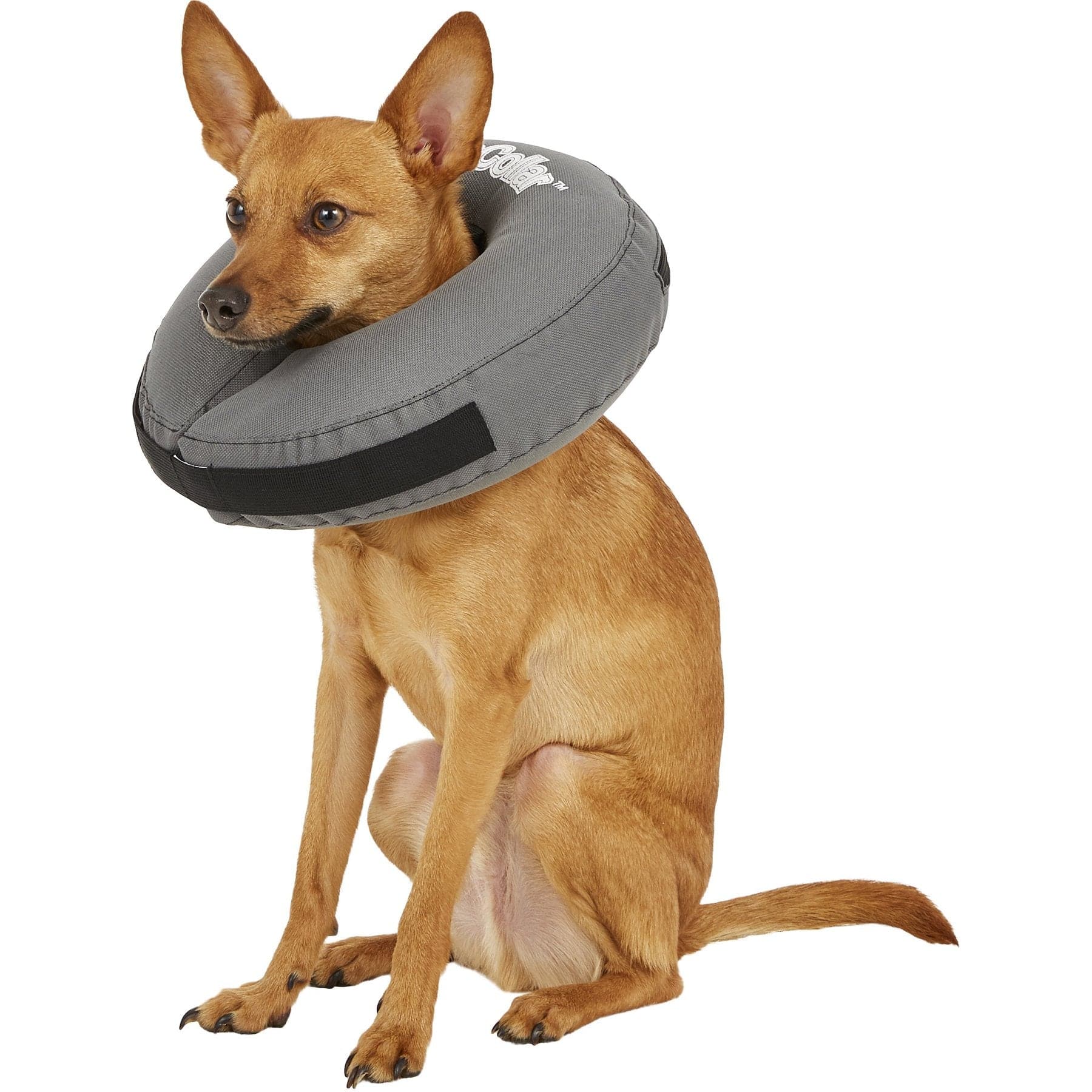
Inflatable, pillow-style collar that fastens to your dog's own collar to help keep it from reaching wounds and irritated skin.
Webvet may earn a commission when you click through to Chewy, at no extra cost to you.
Any breed can develop a lick granuloma, though VCA says medium and large breeds are affected most. The breed lists vary a little by source:
- VCA names Doberman Pinschers, Great Danes, Labrador Retrievers, Weimaraners, Golden Retrievers, and Boxers.
- Rosychuk, a Colorado State University veterinary dermatologist writing in WSAVA proceedings on VIN, lists a similar group and adds the Irish Setter.
- Veterinary Partner also includes German Shepherds, German Shorthaired Pointers, and Pointers.
A sore that looks like a lick granuloma is not always one. In a case series in the Journal of the American Animal Hospital Association, six dogs with lick-granuloma-style leg lesions actually had lymphoma, a mast cell tumor, an orthopedic pin, deep pyoderma, leishmaniasis, or a suspected fungal infection.
Veterinary Partner adds that lick granulomas can be mistaken for cancer, and that cats do not develop them, so a similar sore on a cat points to a different problem.

 Sponsored
Want a vet's take on your dog's skin or coat?
Talk to a licensed vet at Dutch over video, often the same day. They can recommend treatment and prescribe it when it's appropriate.
Use code Pets60
Plans start at $12/month · covers up to 5 pets
- Licensed vets in most states
- Rx for 150+ conditions
- 4.7 on Trustpilot
Signs of a lick granuloma and where it usually appears
Most lick granulomas sit on the top or outer surface of a front leg, between the metacarpal area just below the wrist and the elbow, according to Rosychuk. VCA explains that these are spots a dog can lick constantly while lying in a normal resting position.
Back legs are involved less often: Rosychuk lists the back foot (metatarsus), the hock (tarsus), and the shin (tibia) as less common sites. Veterinary Partner says most dogs have a single lesion, though more than one leg can be affected at once.
For a sore on a back leg, a soft sleeve over the rear leg can keep the tongue off it without a cone. A rear-leg sleeve leaves the front legs uncovered, so it suits only the less common hind-leg lesion.
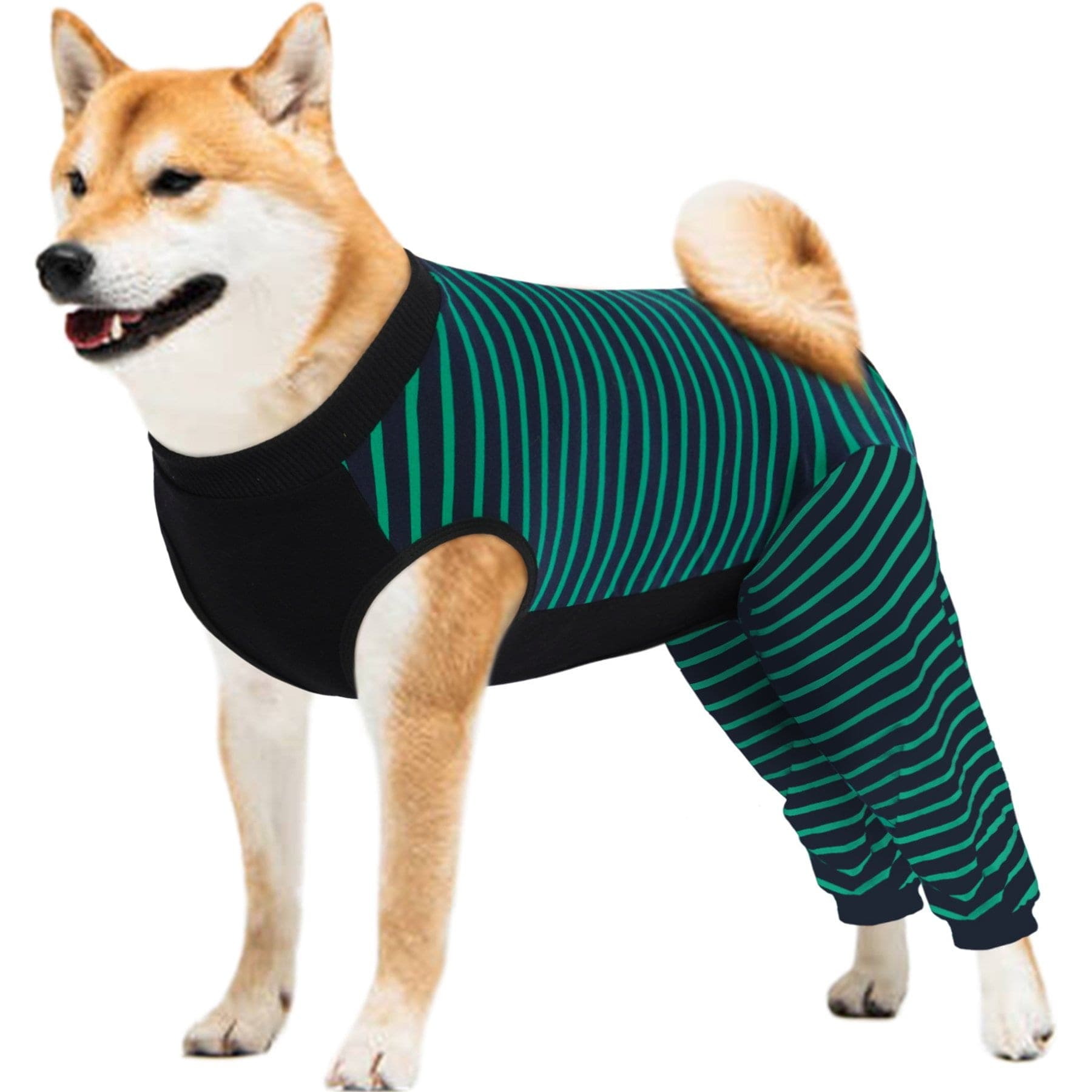
Soft fabric sleeve for the rear legs that helps keep a dog from licking wounds and irritated skin on a back leg.
Webvet may earn a commission when you click through to Chewy, at no extra cost to you.
On a dog's paw or foot, a lick granuloma usually sits on the top of the front foot, in that metacarpal area. Licking that works over the whole paw or between the toes has a broader set of causes, covered in WebVet's guide to what dog paw licking could mean.
What does a lick granuloma look like?
A lick granuloma looks like a well-defined, thick, raised patch or lump with no hair, usually on the top of a lower front leg. Rosychuk describes the surface as eroded or ulcerated, meaning worn raw or open, and the skin feels firm. Veterinary Partner lists these signs:
- Hair loss over the spot, often with discolored hair around it
- Open sores on the skin surface
- Thickened, fibrous skin that can feel like gristle
- Lameness caused by the mass itself
- In some dogs, growth of the bone underneath
When comparing your dog's leg with pictures or photos of lick granulomas in dogs, look at the location, the missing hair, the raised firm texture, and whether your dog keeps returning to one spot. Licking causes other sores as well, including hot spots on dogs, so a photo match is only a starting point.

Veterinary Partner notes that lick granulomas only rarely form on the flank or at the base of the tail. Steady licking under the tail or at the genitals usually has other causes, covered in WebVet's guides to a dog licking its butt and a dog licking its private area.
Licking that roams the body rather than fixing on one sore fits the broader causes in WebVet's guide to dog excessive licking. A dog that keeps licking a person's eczema is a separate habit, explained in WebVet's guide on how to prevent unwanted dog licking.
 Sponsored
Vet care that's always there
Unlimited video calls and messaging with licensed vets for less than a typical vet visit. One membership covers up to five pets.
Use code Pets60
Plans start at $12/month · covers up to 5 pets
- Licensed vets in most states
- Rx for 150+ conditions
- 4.7 on Trustpilot
What causes lick granulomas: itch, pain, boredom, and anxiety
Rosychuk sorts the causes into primary factors, which start the licking, and perpetuating factors, which keep the lesion going. Matching each likely trigger to the test a vet runs, and to the treatment that follows, explains why treating only the sore rarely works.
What are the common causes of lick granulomas in dogs?
Allergy is the most common trigger, either environmental allergy (atopy) or food sensitivity, according to Rosychuk, and Pucheu-Haston adds flea allergy. Less common triggers include joint or bone pain from arthritis or an old fracture, nerve problems, a foreign body, past trauma, fungal infection, and behavior problems such as boredom or anxiety.
Each underlying cause leaves different clues and needs a different test, so the trigger, not the sore, decides the treatment. A biopsy settles the cases that fit no clear pattern.
| Trigger (underlying cause) | Clues | Vet test | Treatment that follows |
|---|---|---|---|
| Allergy (atopy, food, or flea) | Seasonal itch, past ear infections | Elimination diet trial of at least 8 to 12 weeks, allergy testing last | Vet-prescribed steroid course or oclacitinib, diet change if food is the cause |
| Joint or bone pain | Sore over an arthritic joint, old fracture, or foreign body | Orthopedic exam, joint X-rays, then CT, MRI, or ultrasound if it persists | Care aimed at the joint or foreign body |
| Nerve problem | Neck or spine disease, licking driven by an odd sensation | History and exam | Prescription gabapentin |
| Deep bacterial infection | Pus from deep in the sore, odor, pain | Deep cytology and a bacterial culture from a biopsy or squeezed swab | Culture-guided antibiotics for 2 to 6 months or more |
| Mites or fungus | Organisms can hide deep in the tissue | Skin scrapes or hair plucks for Demodex, fungal culture | Treatment aimed at the organism found |
| Tumor or look-alike | Unusual look, no response to treatment | Skin biopsy with histopathology | Depends on the diagnosis |
| Boredom or anxiety | Licking tied to idle time or separation | History of routine and anxiety triggers | More stimulation, fewer triggers, clomipramine or fluoxetine in stubborn cases |
Rosychuk asks about seasonal itching and past ear infections because both point to allergy. When allergy is the trigger, WebVet's guide to dog skin allergies covers the wider picture.
Pain and nerve problems can start the licking too. Pucheu-Haston describes dogs licking:
- Over arthritic joints, foreign bodies, wounds, or tumors
- At the site of an old injury
- At a leg affected by disk herniation, degenerative myelopathy, or nerve damage, which can create an unpleasant sensation and the urge to lick or chew
Boredom, isolation, and separation anxiety can be linked to lick granulomas, but Pucheu-Haston finds behavior is usually not the primary problem, and Rosychuk calls a lick granuloma as the only sign of a behavior issue rare. Veterinary Partner notes that licking can release soothing endorphins in some dogs, which helps the habit stick.
Once a sore forms, deep infection keeps it going. Rosychuk calls deep bacterial infection, or deep pyoderma, the most common and important perpetuating factor, and WebVet's pyoderma in dogs pictures guide shows how this kind of infection looks elsewhere on the body. Three findings explain its grip:
- A 2008 Veterinary Dermatology study grew bacteria from 30 of 31 biopsied lesions, with multidrug-resistant organisms in 48% of cases. Rosychuk cites it as 29 of 31 and Veterinary Partner as 97%, but every version finds infection in nearly every lesion.
- Broken hairs embedded in the tissue and thick fibrosis create protected pockets for bacteria, Pucheu-Haston explains.
- Ruptured hair follicles (furunculosis) set off a foreign-body reaction that keeps the sore inflamed, according to Veterinary Partner.
Because licking keeps driving that damage, a barrier goes on early. VCA lists soft fabric cones among the alternatives for dogs that will not tolerate a plastic cone, and Pucheu-Haston advises checking that the dog cannot reach around the collar or scrape the leg on its edge.
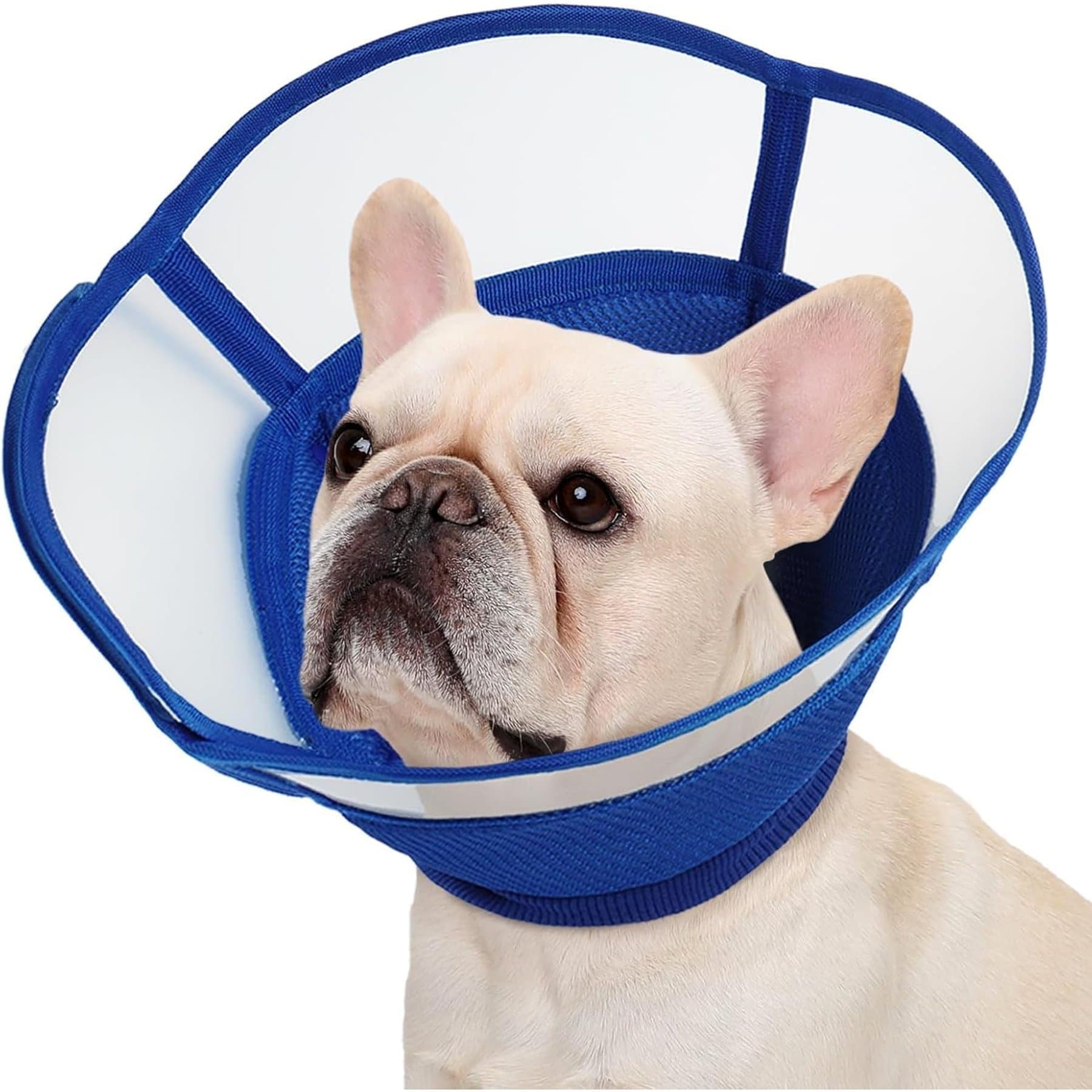
Soft, adjustable fabric cone with a clear upper layer and drawstring stopper that helps block licking and biting at a wound.
Webvet may earn a commission when you click through to Chewy, at no extra cost to you.
How a vet diagnoses a lick granuloma
VCA calls the location and look of the sore a major guide, but because look-alikes exist, a vet tests before treating. A typical workup draws on these steps:
- A history and exam for allergy clues, boredom, and changes at home
- Cytology of cells and fluid squeezed from deep in the lesion
- Skin scrapes or hair plucks for Demodex mites, plus a fungal culture
- A bacterial culture with sensitivity testing, ideally from a deep tissue biopsy
- A skin biopsy with histopathology if the sore looks unusual, fails to respond, or could be mange or a tumor
- An orthopedic exam and joint X-rays, with CT, MRI, or ultrasound in persistent cases
Rosychuk urges an early bacterial culture, especially after significant past antibiotic use, when the sore persists on current antibiotics, or when it is severe. Pucheu-Haston notes that first-visit scrapings can miss deeply hidden organisms; she starts diet trials once the infection is partly controlled and usually leaves intradermal or blood allergy tests for last.

When a lick granuloma needs a vet visit
Will a lick granuloma go away on its own?
Not reliably. Veterinary Partner says no treatment is uniformly successful and the condition is hard to control, and Pucheu-Haston calls the damage, itch, and lick cycle almost unbreakable while the dog keeps injuring the spot.
Book a visit for any firm leg sore that persists or grows, since Pucheu-Haston notes that mast cell tumors and other tumors can also trigger licking. Call sooner if you notice:
- Pus or blood draining from the sore, a bad smell, swelling, or pain, which Merck lists as hallmarks of deep pyoderma
- A fever, which VCA says often comes with a skin abscess even after it drains
- Redness, discharge, or odor around a bandage, or sudden chewing at a bandage the dog had ignored, which VCA says needs a prompt call to the vet
Deep pyoderma reaches the dermis and carries a higher risk of bacteria entering the bloodstream, Merck explains. No published emergency rule exists for lick granulomas themselves, so these infection signs are the practical line.
Lick granuloma treatment: what the vet does
What will a vet do for lick granuloma?
A vet will treat the infection, the inflammation, and the trigger together. VCA says identifying the underlying cause guides the plan, and that most dogs need treatment aimed at the inflammation, the infection, and the psychological side. Expect a culture-guided antibiotic course, a barrier, medicine for itch or inflammation, and periodic rechecks.
Between rechecks, some owners also want to rinse the surface of the sore. A cleansing spray reaches only the surface, not the deep, sheltered infection that prescription antibiotics target, so it is surface care alongside the vet's plan, never a substitute for it.
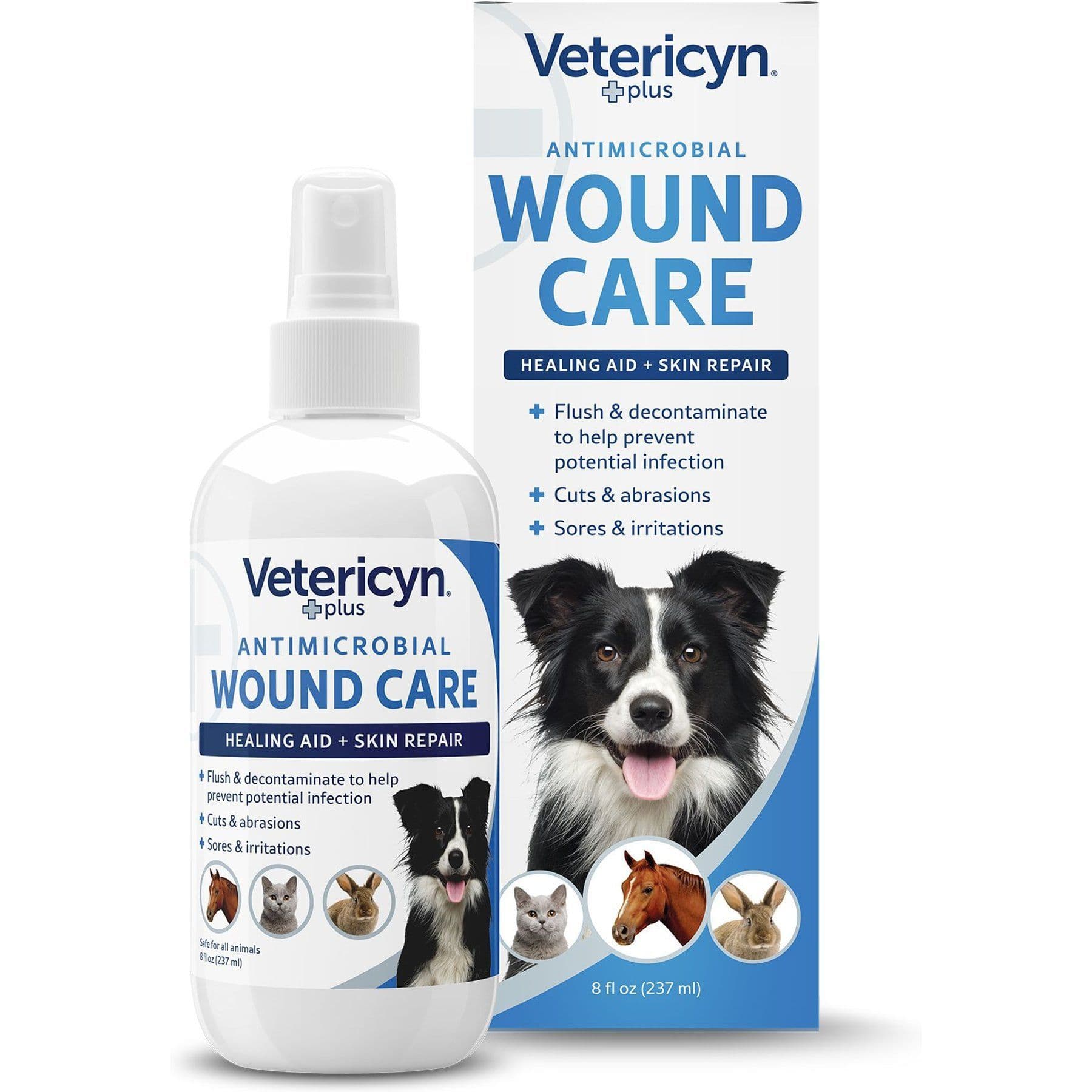
Spray for cleaning and flushing sores and irritated skin between vet visits; the listing says it is safe if licked.
Webvet may earn a commission when you click through to Chewy, at no extra cost to you.
Antibiotics are prescription medicines, and Pucheu-Haston says the choice is best based on sensitivity testing from a deep skin biopsy. Long courses of treatment are the norm for dogs with this condition: 2 to 6 months or more is often required, continuing at least until the lesion is completely resolved.
Sources differ on what to start while results are pending. Merck advises against empirical penicillin, ampicillin, and amoxicillin for skin infections because the most common bacterium produces beta-lactamase, an enzyme that inactivates them, while Rosychuk lists amoxicillin-clavulanate as a starting option. A culture settles the question for each dog.
For inflammation and allergy itch, VCA notes that topical and oral corticosteroids help. When allergy drives the licking, Rosychuk describes a vet-prescribed course of prednisone or prednisolone for one to two weeks at a dose the vet sets, and then tapering.

Steroids need care around infection. Merck lists inappropriate use of immune-suppressing therapy among the most common reasons skin infections keep coming back, and Rosychuk advises a topical steroid only on a lesion the dog cannot lick.
For strongly behavioral or stubborn cases of acral lick dermatitis, vets may add other prescription options:
- Clomipramine, amitriptyline, or fluoxetine, which Rosychuk usually trials for 6 to 8 weeks and continues until at least a couple of weeks past healing
- Clomipramine and fluoxetine both reduced acral lick dermatitis in a Veterinary Evidence review of three controlled studies, with no evidence that either works better
- Gabapentin, especially when nerve pain is suspected, and oclacitinib, the drug in Apoquel, which Pucheu-Haston says may work best when allergic skin disease underlies the licking
- Therapeutic laser and acupuncture, which VCA says have been used successfully
The Merck Veterinary Manual notes that behavior drugs are used extralabel for acral lick dermatitis, meaning they are not FDA-labeled for it. Pucheu-Haston finds this kind of symptom-focused therapy works best as an add-on rather than the only treatment.
Can a lick granuloma be cured? Veterinary Partner calls it hard to control or cure, rates the outlook as fair, and says treatment can take months. Pucheu-Haston names stopping further damage and treating the infection as the two factors that most decide success.
Acral lick dermatitis is one specific form of skin inflammation. Other kinds also heal best once their trigger is found, as WebVet's guide to dermatitis in dogs explains.
Breaking the lick cycle at home: barriers, wraps, and enrichment
Home care cannot treat the cause on its own, but it decides whether the vet's treatment gets a chance to work. Barriers that stop access to the spot while it heals come first: Pucheu-Haston says physical prevention of self-trauma is required at the start, and dogs can undo weeks of healing in an afternoon.
No veterinary source supports natural remedies such as apple cider vinegar for a lick granuloma. Vinegar on an open sore is more likely to sting than soothe, and nothing rubbed on the surface clears the deep infection inside the lesion. For dogs with acral lick dermatitis, useful home treatment is mostly mechanical.
Choose barriers by where the sore is and what your dog tolerates:
- Elizabethan collar. The most commonly used option for a leg sore. WebVet's dog cone guide covers the basics.
- Donut collars and recovery suits. VCA lists these, along with soft fabric cones, for dogs that will not wear a plastic cone; WebVet's guide to cone alternatives after spay or neuter covers more styles.
- Inflatable collar as a backup. On its own it probably will not stop a determined licker, but a ZenPet ZenCollar Inflatable Recovery Dog & Cat Collar, Medium can sit behind an Elizabethan collar so the cone cannot be pushed back.
- Sleeves, socks, leggings, or a bandage. Rosychuk lists these to break the itch-lick cycle; for a back-leg sore, the Kuoser Hind Leg Sleeve Dog Recovery Suit, Green, Large covers the rear leg.
- A bitter deterrent as an extra layer. Veterinary Partner lists bad-tasting substances among the ways to prevent licking. The NaturVet Bitter Yuck! No Chew Training Spray for Dogs & Cats, 8-fl oz, listed at $14.97 on Chewy when we checked in October 2026, is a water-based bitter spray its listing says can go over topical medication without stinging.
Keep the barrier on longer than seems necessary. Pucheu-Haston advises leaving the collar on, except at mealtimes, until new skin has covered the sore and it is nearly resolved. VCA says a cone stays on until the wound has fully healed, and some dogs with chronic or recurring skin problems need one long term.
Should I wrap my dog's lick granuloma?
A wrap can help when your vet approves it. Rosychuk lists a sock, leggings, or bandage among the ways to break the itch-lick cycle, and Veterinary Partner includes bandages over the lesion. Keep any wrap loose, since VCA notes wounds need oxygen to heal, and never remove a vet-placed bandage unless told to.
If your dog pulls a bandage off, VCA advises calling the clinic right away to arrange a recheck.
How to heal a lick spot on a dog?
A lick spot heals when three things happen together: the dog cannot reach it, the infection underneath is treated, and the reason for licking is addressed. In practice that means a barrier until new skin forms, the full course of any medicine your vet prescribes, and more activity and company during the day.

Enrichment matters most when boredom or anxiety feeds the habit. Veterinary Partner suggests more human contact, changes to kenneling habits, another animal for company, and chew toys for distraction, and VCA recommends more pleasant interaction and stimulation plus removing anxiety triggers.
Mealtimes, when the collar comes off, suit enrichment well. A food-filled lick mat such as the SodaPup Emat Honeycomb Dog Lick Mat, Large, listed at $13.99 on Chewy when we checked in October 2026, can be spread with soft food or frozen for a longer session. Stay with your dog while the collar is off.
Lick granuloma questions
Frequently Asked Questions
How long does it take a lick granuloma to heal?
Plan on weeks to months, not days. Antibiotic courses for the deep infection often run 2 to 6 months or more, a food allergy diet trial lasts at least 8 to 12 weeks, and a behavior drug trial usually takes 6 to 8 weeks.
No published figure gives a typical healing time. A useful milestone is new skin covering the sore, the point at which Pucheu-Haston considers taking the collar off.
Can a lick granuloma be treated at home without a vet?
Not reliably. Barriers at home stop new damage, but they cannot identify the underlying cause or clear a deep infection, which in one study grew multidrug-resistant bacteria in nearly half of cases.
Pucheu-Haston says a search for obvious underlying disease is indicated in almost every case, and VCA stresses weighing both physical and psychological causes. Home care is the half of the plan that protects the leg.
Is apple cider vinegar safe on a lick granuloma?
No veterinary source recommends it. Veterinary Partner describes the lesion as open sores from chronic self-trauma, and an acidic liquid on open, raw skin is likely to sting.
Anything that irritates the spot works against calming the itch-lick cycle, and vinegar cannot reach the deep infection under the surface. A barrier, plus the treatment your vet prescribes, is the safer path.
Do dogs need antibiotics for a lick granuloma?
Most do. A deep infection is present in nearly every lesion and is the main factor keeping it going. The antibiotic should be chosen by culture and sensitivity testing, ideally from a deep skin biopsy, because resistant bacteria are common in these sores.
For chronic or recurrent skin infections in general, VCA notes antibiotics may be needed for 8 to 12 weeks, and lick granulomas often need longer.
Can prednisone treat a lick granuloma?
Prednisone can calm inflammation and reduce licking when allergy is the trigger, but it does not fix the infection or the cause on its own. A steroid for this is always a vet's prescription, given as a short course and tapered.
Because immune-suppressing drugs used the wrong way can let skin infections return, it belongs alongside infection treatment rather than in place of it.

Editor
The Webvet Editorial Team is the in-house group of pet-care editors and writers behind Webvet, operated by Smart Pet Collective. The team researches, writes, and maintains Webvet's pet health, behavior, and medication content. Every article follows a defined editorial process: research from reputable veterinary and scientific sources, careful drafting, mandatory review of medical content by a credentialed veterinarian, and dated publication. Health and medication articles are medically reviewed by a licensed veterinary professional before they go live and are kept current over time.
Veterinarian · BVMS MRCVS
Dr. Pippa Elliott, BVMS, MRCVS, is a veterinarian with nearly 30 years of experience in companion animal practice. Dr. Elliott earned her Bachelor of Veterinary Medicine and Surgery from the University of Glasgow. She was also designated a Member of the Royal College of Veterinary Surgeons. Married with 2 grown-up kids, Dr. Elliott has a naughty Puggle named Poggle, 3 cats and a bearded dragon.
Related reading

Stud Tail in Cats: Causes, Treatment, and Grooming That Helps

Eosinophilic Granuloma Complex in Cats: Rodent Ulcers, Plaques, and Treatment

Miliary Dermatitis in Cats: Causes, Treatment, and Flea Control
