Why Does My Dog Keep Licking Their Private Area? Normal Grooming vs Infection
Brief licking after peeing is normal grooming, but a dog licking their private area constantly may have a urinary tract infection, skin infection, or irritation. This guide covers causes in male and female dogs and signs that need a vet.

BVMS MRCVS
Medically reviewed by Dr. Pippa Elliott, BVMS MRCVS · Last reviewed

This article contains affiliate links. Webvet may earn a commission when you buy through them, at no extra cost to you.
Dog licking private area: normal grooming or a problem, and whether today is a vet day
Brief licking right after peeing is normal grooming: a dog licking private area skin for a few seconds is simply cleaning up. Constant licking is different. It often points to a urinary tract infection, a skin infection, or irritation of the sheath or vulva, and the cause is worth finding.
When a dog licking private area skin also has discharge, blood, a strong smell, redness, swelling, or trouble peeing, call your vet. Straining with little or no urine, a penis that will not slide back into its sheath, or pus from an unspayed female's vulva are same-day emergencies.
The likely cause also depends on sex. In males, the sheath, penis, and testicles are the usual sources; in females, heat, the skin folds around the vulva, and vaginitis. Urinary tract infections, skin infections, and allergies can affect either.
- 1A quick lick after peeing is normal grooming after urination; licking that is constant, smelly, or paired with discharge is not.
- 2Causes specific to male dogs include balanoposthitis (sheath inflammation), sore testicles, and prostate enlargement in older intact males.
- 3Causes in female dogs include heat, vaginitis, and vulvar fold dermatitis, while urinary tract and skin infections affect both sexes.
- 4Straining with little or no urine, a penis stuck outside the sheath, or pus from an unspayed female is an emergency.
- 5A cone or a covering stops the lick-itch cycle while your vet finds and treats the cause.
VCA Animal Hospitals describes normal genital grooming as a quick swipe after urinating that is tied to elimination and is not persistent. Male and female dogs both do it. There is no published count of normal licks or seconds, so the pattern matters more than a number.
A little moisture can be normal too. The Merck Veterinary Manual notes that a slight mucoid preputial discharge is present in many sexually mature male dogs and is of little clinical importance. An unspayed female in heat has a bloody discharge, and some licking to keep clean fits that stage.
Constant licking, on the other hand, makes sore skin worse. VCA Animal Hospitals explains that licking an irritated spot stimulates nerve endings that trigger more itching, then more licking, a lick-itch-lick cycle behind self-trauma. An Elizabethan collar breaks that cycle, and a well-fitted dog cone lets the skin rest while the cause is found.
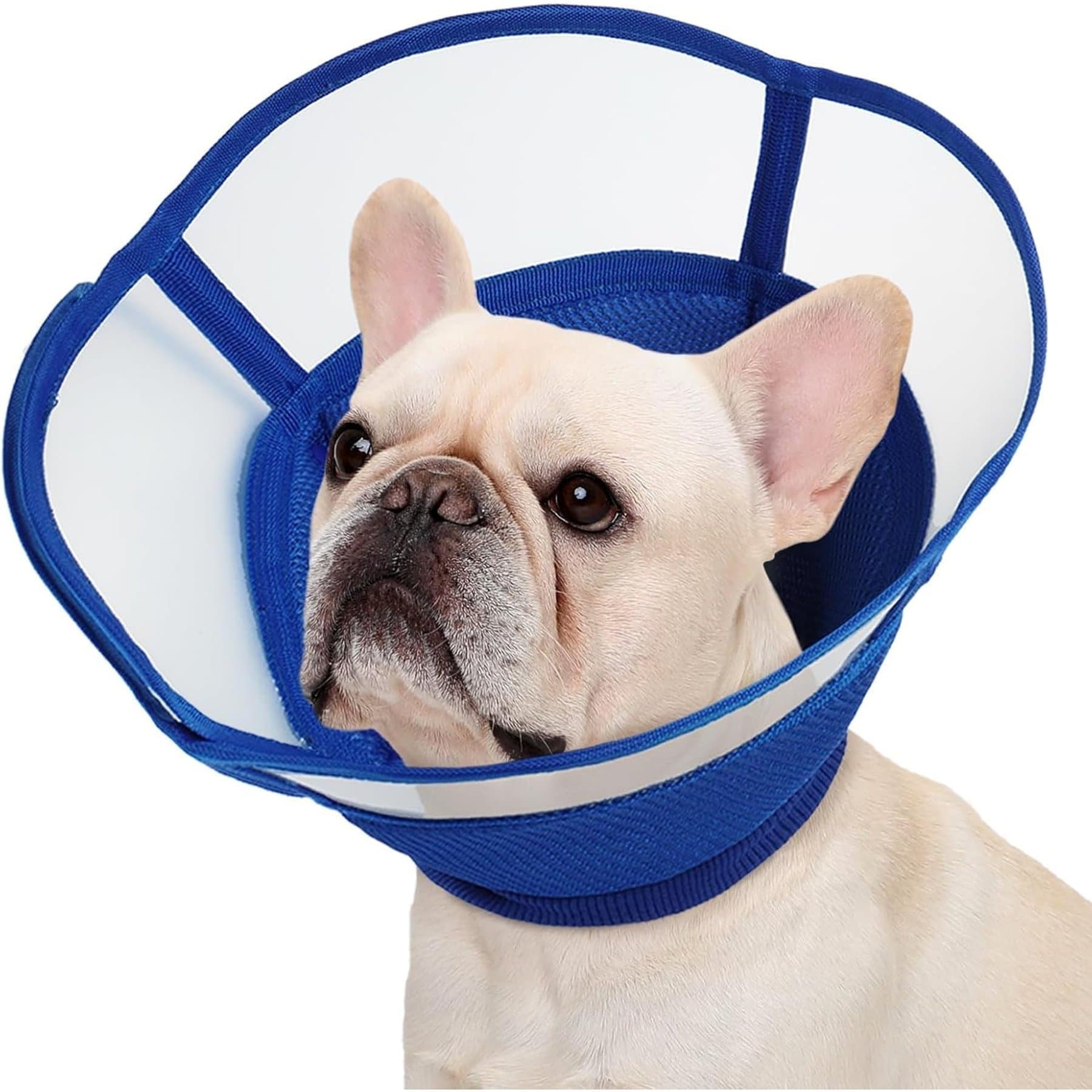
A soft, adjustable cone with a clear upper layer that blocks licking without blocking your dog's view.
Webvet may earn a commission when you click through to Chewy, at no extra cost to you.
While a cone protects the skin, the details around the licking point toward the cause:
- Licking that lingers after peeing, or comes back between bathroom trips, suggests a bladder infection or stones.
- Yellow-green discharge at the tip of the sheath suggests balanoposthitis.
- Bloody discharge with a swollen, firm vulva in an unspayed female fits heat.
- Mucus or pus from the vulva suggests vaginitis, or pyometra in an unspayed female who seems unwell.
- Pustules, red bumps, or an abnormal odor on the skin suggest a bacterial or yeast skin infection.
- Scooting and a strong smell from the rear point to the anal glands rather than the genitals.

Licking becomes a concern when it is frequent or sustained, which VCA says may indicate a medical problem in the urinary and genital area. VCA lists these companion signs to report to your vet:
- A swollen or red penis, vulva, or anus
- Pustules (pimples) or red bumps on the skin
- Black or rust-colored discoloration of the skin
- Straining to urinate, or urinating more often
- Scooting or rubbing the rear on the ground
- A foul odor between bathroom trips
- Discharge from the penis or vulva
With none of those signs, keeping the area clean and watching for changes is a reasonable start. The Merck Veterinary Manual notes that even vaginitis with minimal signs may need nothing more than keeping the area clean.
Covering the area is the other barrier VCA lists, using a sock or bandage over a sore spot. For the belly and groin, a soft recovery suit applies the same covering idea. Owners weighing a suit against a cone can compare the cone alternatives after spay or neuter.
 Sponsored
Have a health question about your dog?
Talk to a licensed vet at Dutch over video or message, including nights and weekends.
Use code Pets60
Plans start at $12/month · covers up to 5 pets
- Licensed vets in most states
- Rx for 150+ conditions
- 4.7 on Trustpilot
Male dog licking his private area: sheath, penis, and testicle causes
When a male dog keeps licking his private area well past a quick clean, the places to consider are the sheath (prepuce), the penis, the testicles, the prostate, and the urinary tract.
What does it mean when a male dog keeps licking his privates?
It means something beyond grooming is going on. In a male dog, the likely explanations are inflammation of the sheath and penis (balanoposthitis), a bladder infection or stones, sore testicles, an enlarged prostate in an older unneutered dog, or itchy skin from allergy or infection. Discharge, swelling, or trouble peeing helps narrow it down.
Balanoposthitis is inflammation of the lining of the penis and sheath. The Merck Veterinary Manual names yellow-green discharge at the tip of the penis or sheath as its most common sign, and excessive licking of the sheath may also be seen.
Merck's professional edition adds that the discharge can be heavy enough to collect on the hind legs and often comes with signs of pain. Merck lists these causes of more severe balanoposthitis:
- Allergies
- Trauma
- Foreign objects
- Bacterial infection
- Cancer
- Urinary tract stones
- Phimosis, where the sheath cannot be drawn back to expose the penis
A dog licking his balls (testicles) more than usual may be sore there. Merck notes that short-term inflammation of the testis or epididymis can follow injury, infection, or twisting (testicular torsion), and the signs are pain and swelling of the testes or scrotum. Itchy scrotal skin from allergy or skin infection is another reason.
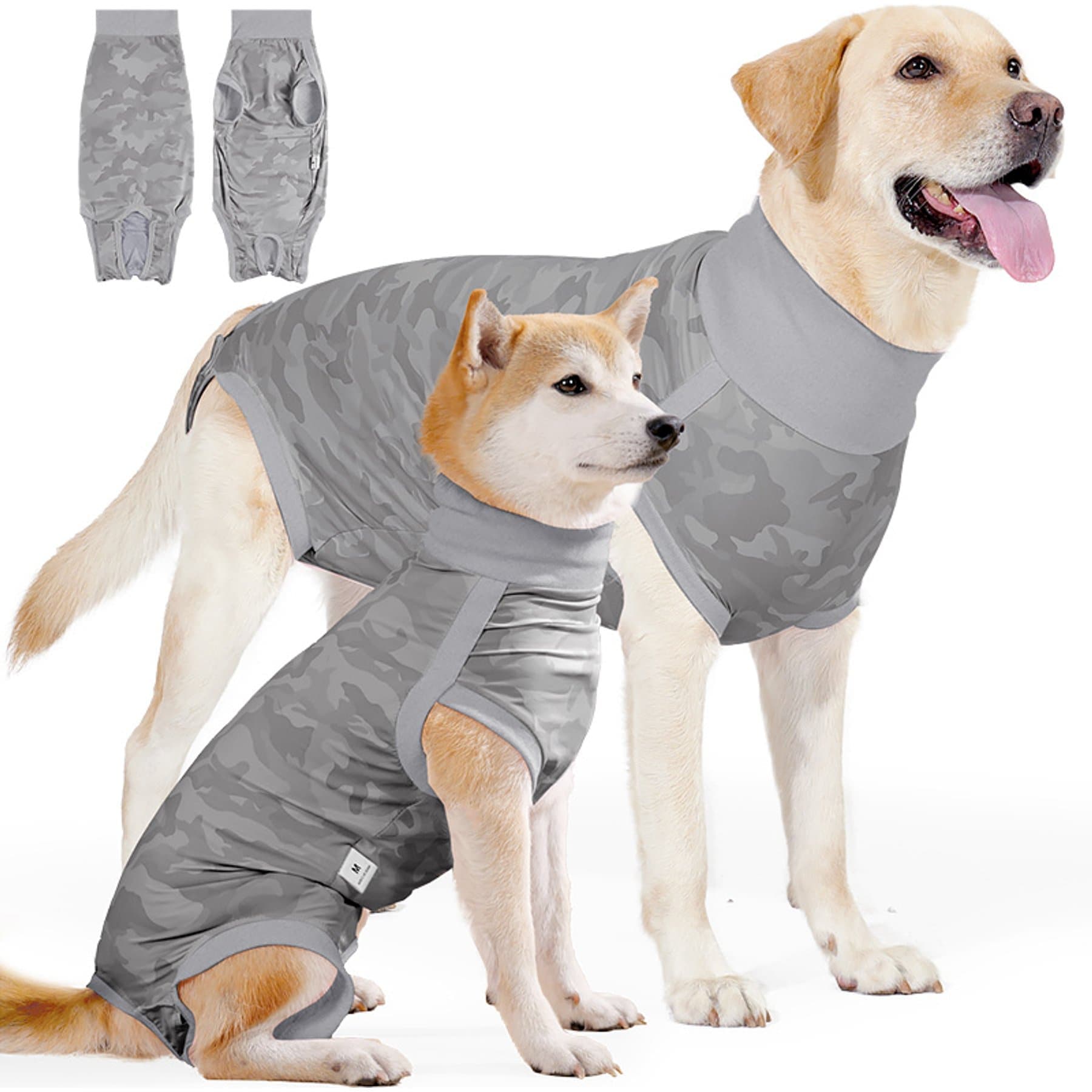
A soft, breathable recovery suit with an adjustable Velcro fit, sold as a cone alternative that covers sensitive areas.
Webvet may earn a commission when you click through to Chewy, at no extra cost to you.
In unneutered males, the prostate is also a suspect. Merck says prostate enlargement is found in almost all unneutered dogs over 6 years old. It may cause no signs at all, or it may cause straining to defecate, blood in the urine, or preputial discharge.
If he licks his paws as well as his private area, tell your vet about both. VCA notes that environmental and food allergies can cause itching in the genital area, and its allergy advice includes wiping the feet and belly after time outside.
Why is my male dog constantly licking himself at night?
Veterinary sources do not treat night-time licking as its own condition. The causes behind daytime licking, including urinary discomfort, sheath inflammation, skin infection, and allergy, carry on after dark, and a quiet house is when owners tend to notice it.
VCA notes that dogs with a bladder infection or stones may lick the penis for an extended period after urinating or between eliminations, which includes the hours he spends in bed. Check his sheath for discharge, and watch his next few trips outside for straining or frequent peeing.
 Sponsored
Vet care that's always there
Unlimited video calls and messaging with licensed vets for less than a typical vet visit. One membership covers up to five pets.
Use code Pets60
Plans start at $12/month · covers up to 5 pets
- Licensed vets in most states
- Rx for 150+ conditions
- 4.7 on Trustpilot
Female dog licking her private area: heat, vulva folds, and vaginitis
When a female dog keeps licking her private area, start with where she is in her cycle. The Merck Veterinary Manual describes proestrus, the start of heat, as a time of bloody vaginal discharge while the vulva enlarges and becomes firm. A dog licking her vulva during heat fits that stage.
Sources differ a little on timing. Merck gives proestrus as about 9 days on average, with a range of 2 days to 3 weeks. Cornell University College of Veterinary Medicine gives an average of six to eleven days for proestrus and says the bloody discharge usually lasts 14 to 21 days.
Pus rather than blood, or discharge after a heat has ended, is a different matter. VCA Animal Hospitals describes pyometra as a serious, life-threatening uterine infection that develops after a heat cycle and must be treated quickly and aggressively.

Vaginitis is inflammation of the vagina or vestibule, the area between the vulva and the vagina. VCA Animal Hospitals says it can appear in any female dog, spayed or intact, at any age. Its most common signs are:
- Urinating more often
- Licking the vaginal area
- Discharge of mucus, pus, or (rarely) blood
- Scooting or rubbing the vaginal area
- A red, swollen appearance
VCA names several causes of vaginitis:
- An immature (prepubertal) vagina
- Urinary tract infections
- Vaginal trauma, including mating
- Foreign bodies
- Urine or fecal contamination of the vulva
Puppies under a year old can be affected for unknown reasons, and VCA says puppy vaginitis often resolves after the first heat. If your spayed dog keeps licking her private area, vaginitis and urinary infection are still possible, and ACVS names early neutering (a juvenile vulva) as one cause of vulvar skin folds.
If she is pregnant and keeps licking her private area, call the vet managing the pregnancy about any new discharge or constant licking. When she licks her paws as well, allergies belong on the list of suspects, since VCA notes they can cause genital itching.
Vulvar fold dermatitis develops when excess skin around the vulva traps urine and vaginal secretions. The American College of Veterinary Surgeons (ACVS) links those folds to obesity, breed conformation, or early neutering, and says the moist, dark pocket lets bacteria and yeast thrive. ACVS lists these signs:
- Licking at the vulva
- Scooting
- Foul odor, vaginal discharge, or both
- Frequent or bloody urination
- Red, irritated skin around the vulva
ACVS adds that these folds can lead to recurrent urinary tract infections, vaginal infections, and incontinence. For day-to-day care, VCA notes that skin folds often benefit from medicated wipes and that keeping them dry matters most, though ACVS says medical care alone is often unrewarding and most vulvar fold cases need surgery.
Urinary tract infections, skin infection, and allergies behind private-area licking
Some causes of private-area licking have nothing to do with sex. Urinary tract infections, skin infections, and allergies can affect any dog.
Do dogs lick when they have a UTI?
They can. VCA notes that dogs with a bladder infection or stone or crystal material may lick the penis or vulva for an extended period after urinating, or between eliminations, and may urinate more often and strain. The Merck Veterinary Manual lists these bladder infection signs:
- Frequent urination
- Painful urination
- Accidents in the house
- Sometimes, bloody urine
Some dogs show no signs at all, especially those with diabetes, kidney disease, or excess steroid hormone production. Merck also notes that female dogs are more likely than male dogs to get urinary infections.
When infections keep returning, vets use a formal definition. The Merck Veterinary Manual's professional edition classes bacterial cystitis as recurrent after three or more episodes in 12 months, two or more in six months, or one within three months of the last.

Skin infection is the other shared cause. VCA explains that bacteria and yeast normally live on the skin, but an overgrowth, an unhealthy skin barrier, or a weakened immune system lets an itchy infection take hold, with pustules, red bumps, or an abnormal odor. Compare what you see with dog yeast infection skin pictures.
VCA lists the groin among the places where skin fold pyoderma develops, since skin against skin makes a warm, humid spot for bacteria; pyoderma in dogs pictures shows what that infection can look like. A rash spreading from the groin across the stomach overlaps with dog rash on belly.
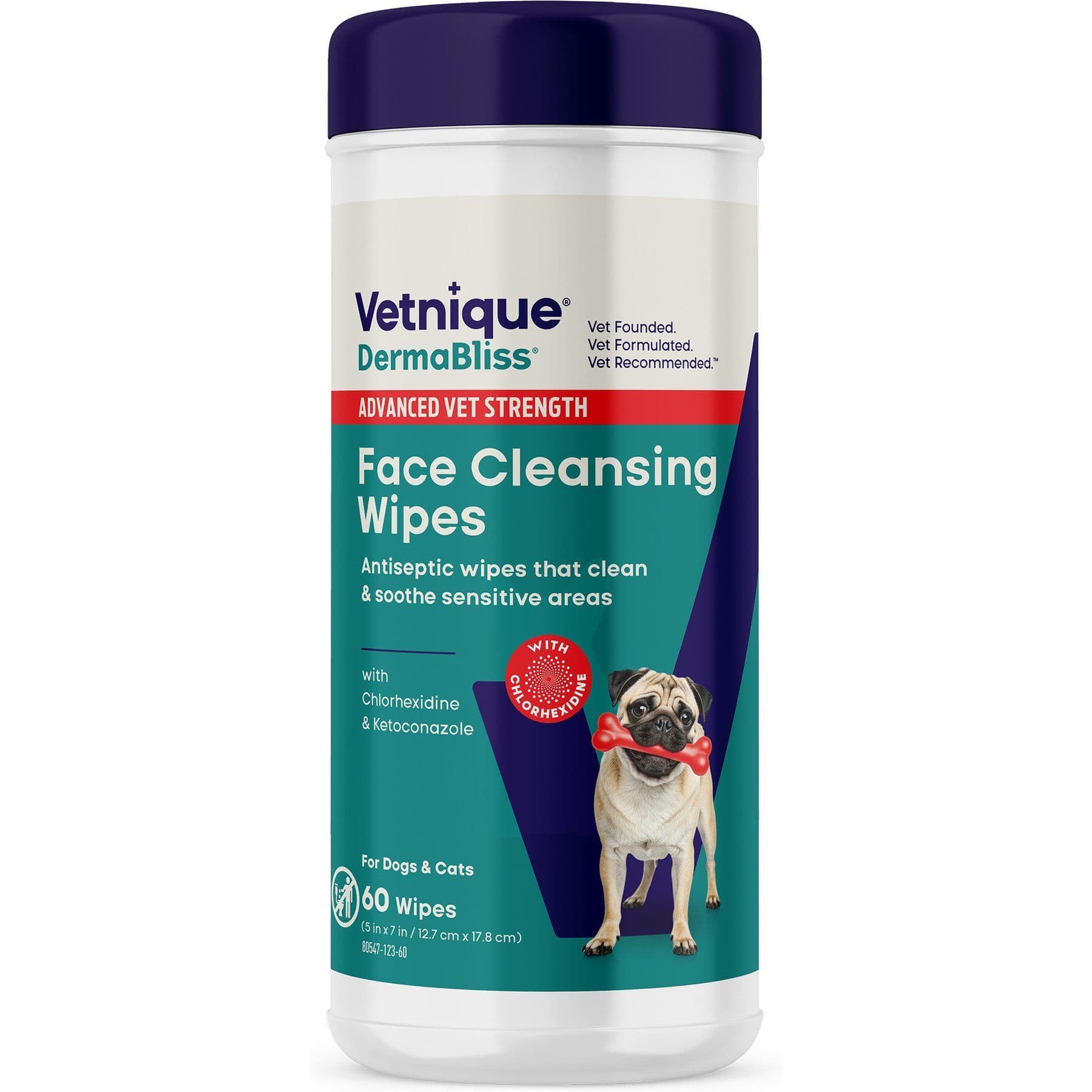
Chlorhexidine and ketoconazole wipes made for skin folds, where yeast and bacteria tend to build up.
Webvet may earn a commission when you click through to Chewy, at no extra cost to you.
Allergies drive genital itch too. VCA separates two patterns:
- Food allergy: itching all year long
- Environmental allergy: generally seasonal, depending on what is pollinating, unless the allergen is indoors
Avoiding the allergen decreases licking, VCA notes. Its practical tip for environmental allergies is to clean the feet, belly, and other areas that touch the ground with a damp towel or baby wipe after going outside, which removes some of the pollen from the hair. For the wider picture, see dog skin allergies.
If your dog keeps licking his or her private area after grooming, the groom itself may have irritated the skin. VCA notes that bacterial skin infection occurs when the skin's surface has been broken, so watch for redness, bumps, or a smell that would signal more than passing irritation.
A smell helps locate the problem. VCA links abnormal odor to skin infection, ACVS lists foul odor among the signs of vulvar fold dermatitis, and VCA notes that impacted anal glands give off a noxious odor that can set off licking of the rectal region and scooting, the problem covered in dog licking butt.
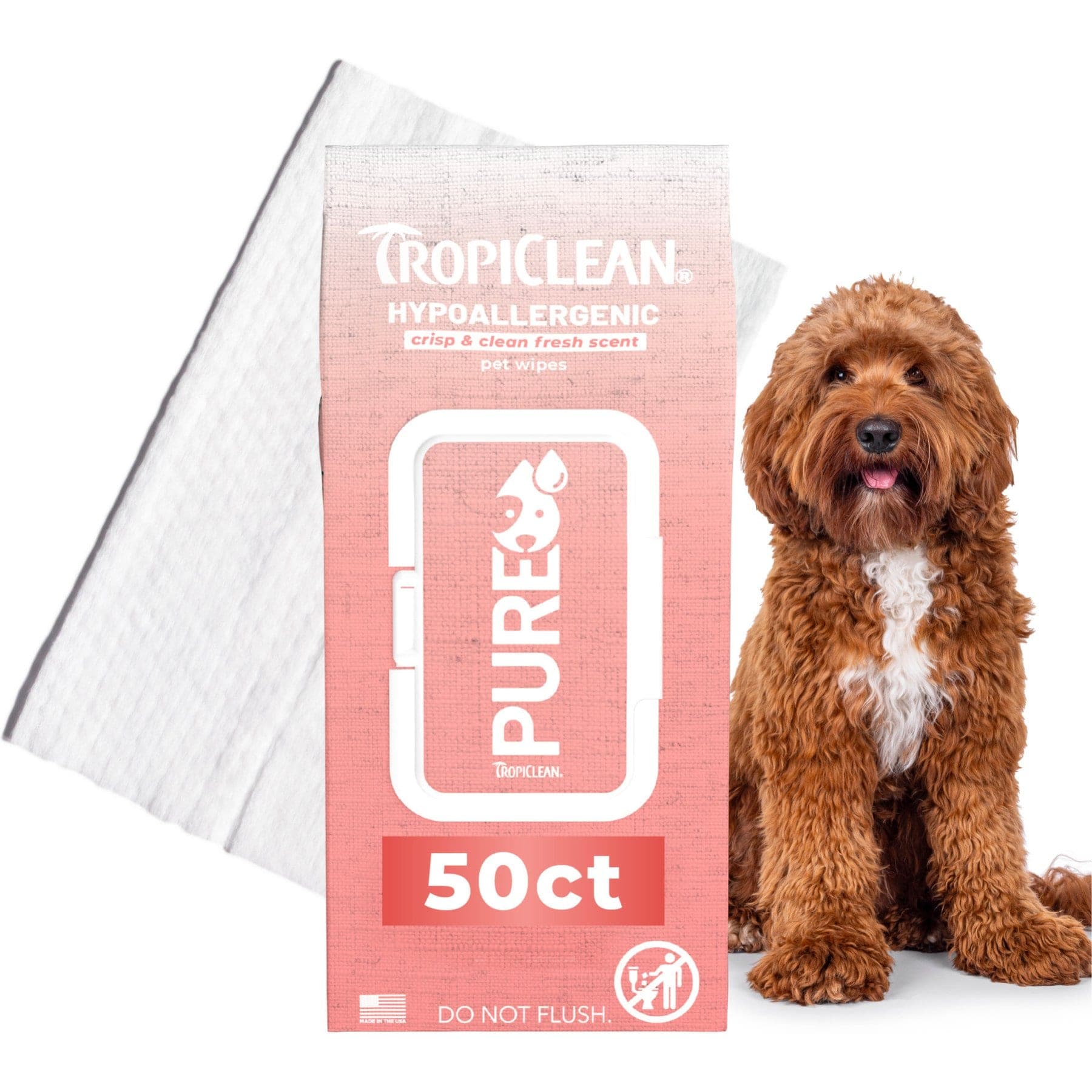
Hypoallergenic grooming wipes for quick cleanups between baths, such as wiping pollen off the belly after a walk.
Webvet may earn a commission when you click through to Chewy, at no extra cost to you.
When private-area licking needs a vet visit
Sorting by sex and by the sign that comes with the licking narrows the likely cause and sets the vet urgency. Discharge, smell, straining to pee, and redness each point somewhere different, and a few signs mean the visit cannot wait.
| Sign with the licking | Dog | Likely cause | Vet urgency | First test |
|---|---|---|---|---|
| Quick lick right after peeing, nothing else | Male or female | Normal grooming | No visit needed | None needed |
| Slight mucus-like discharge at the sheath tip, no extra licking | Mature male | Normal preputial secretions | No visit needed | None needed |
| Yellow-green discharge from the sheath, constant licking, pain | Male | Balanoposthitis | Book a visit soon | Exam of the penis and sheath, lab tests |
| Swollen, painful testicles or scrotum | Male | Testicle or epididymis inflammation, injury, or torsion | Prompt visit | Physical exam |
| Penis stuck outside the sheath and swelling | Male | Paraphimosis | Emergency now | Emergency exam |
| Licking after peeing, peeing often, straining, blood in urine | Male or female, more often female | Bladder infection or stones | Book a visit soon | Urinalysis, urine culture, bladder palpation |
| Straining with little or no urine, vomiting, dullness | Male or female | Urethral blockage | Emergency now | Emergency exam |
| Bloody discharge and a swollen, firm vulva, otherwise well | Unspayed female | Heat (proestrus) | No visit needed if she is well | None needed |
| Mucus or pus discharge, red swollen vulva, scooting | Female, spayed or not | Vaginitis | Book a visit soon | Urinalysis, vaginal exam, discharge check and culture |
| Pus from the vulva, or swollen belly, lethargy, thirst, vomiting after a heat | Unspayed female | Pyometra | Emergency now | Emergency exam |
| Foul odor and red skin in the folds around the vulva | Female | Vulvar fold dermatitis | Book a visit soon | Skin scrape, cytology, or culture |
| Pustules, red bumps, or odor on groin skin | Male or female | Bacterial or yeast skin infection | Book a visit soon | Skin cytology or culture |
Most licking problems call for a prompt appointment, not an emergency trip, but they should not drift. Merck says any dog with urinary infection signs should be treated by a vet, because untreated infections can spread to the kidneys, causing fever, vomiting, poor appetite, more thirst, and pain near the kidneys, or help form stones.
A few signs cannot wait for an appointment:
- Straining with little or no urine. The Merck Veterinary Manual says a blocked urethra causes frequent, strained, or bloody urination that owners sometimes mistake for constipation. With complete blockage, vomiting, dehydration, low body temperature, and severe depression develop rapidly.
- A penis that stays outside the sheath (paraphimosis). Merck calls this a medical emergency because the exposed penis quickly becomes swollen, dry, and painful. Caught early, it is easily treated.
- Pus from the vulva, or an unspayed female who is lethargic, thirsty, vomiting, or off her food after a heat. VCA describes pyometra as life-threatening, and the Merck Veterinary Manual lists those signs. With a closed cervix there is no discharge, the belly swells, and dogs become severely ill very quickly.
How your dog behaves while licking adds information. A dog that keeps whining, crying, or panting while licking her or his private area is uncomfortable, and pain is part of both balanoposthitis and cystitis in the Merck and VCA descriptions.
Aggressive licking and biting that leaves the area red or raw is self-trauma in progress. VCA warns that a hot spot can grow from a pinpoint of redness noticed before work to a raw lesion the size of a pancake by the time the owner gets home.
A male or female dog constantly licking the private area, day or night, has moved past what VCA treats as grooming. Licking aimed at one patch on a leg instead is a different pattern, covered in lick granuloma in dogs.
How a vet finds the cause: urine tests, skin checks, and a genital exam
Expect a physical exam of the genital area, then tests chosen by the signs. The checks vets use for private-area licking include:
- Urinalysis. VCA Animal Hospitals lists urinalysis, urine culture, and bladder palpation as the first tests when there is blood in the urine, straining, or frequent urination. Merck says a urinalysis with a urine sediment exam is the minimum for diagnosing bacterial cystitis; culture is recommended but not needed in every one-off case.
- A female workup. For vaginitis, Merck recommends urinalysis on urine collected straight from the bladder (cystocentesis), a vaginal exam, a microscope check of the discharge, and culture of vaginal and urine samples.
- A male workup. For suspected balanoposthitis, Merck advises examining the penis and sheath thoroughly, all the way to the fornix at the back of the sheath, for underlying causes. Sedation or anesthesia may be needed.
- Skin checks. VCA describes skin cytology or culture to look for excess bacteria or yeast, and ACVS adds a skin scrape, cytology, or culture of the skin around the vulva for fold dermatitis.

The urine sample does more than confirm an infection: Merck includes it in the vaginitis workup to rule out a problem in the bladder, since the same licking can come from either place. Ask the clinic for an estimate before the workup, because the tests your dog needs depend on the signs.
Treatment and home care: what the vet does and how to stop the licking
Dog licking private area treatment follows the cause the vet finds:
- Bladder infection. Merck says bladder infections are treated with antibiotics, which your vet prescribes, and the urine may be retested afterward. Merck's professional edition notes that 3 to 5 day courses are currently recommended for sporadic bacterial cystitis. Once discomfort eases, VCA notes that more water or a moist diet dilutes the urine and helps flush out bacteria and debris.
- Balanoposthitis. Merck describes correcting any predisposing factor, clipping long hair at the sheath opening, flushing the sheath with a mild dilute antiseptic or sterile saline, an antimicrobial ointment or systemic antimicrobials when bacterial infection is suspected, short-term anti-inflammatory drugs (NSAIDs), and an Elizabethan collar. Castration may lessen genital secretions but will not eliminate them.
- Vaginitis. With minimal signs, Merck says no treatment may be needed beyond keeping the area clean. VCA advises cleaning around the vulva with a gentle cleanser and says vaginal douches are generally not recommended. Most cases respond well, and many dogs are back to normal within two to three weeks of starting treatment.
- Vulvar fold dermatitis. ACVS says medical management with antibiotics, cleansing, drying agents, or lotions may succeed but is often unrewarding, and surgery is warranted in the majority of cases.
- Skin infection (pyoderma). VCA describes antibiotics for at least three to four weeks, and 8 to 12 weeks with a culture-guided choice in chronic or recurrent cases.
Antibiotics, antifungals, and anti-inflammatory drugs for these conditions are prescription medicines. They come from your vet or, with a veterinary prescription, from a pharmacy such as Chewy's.

Should you stop your dog from licking her or his private area? Leave the quick clean after peeing alone. If your dog will not stop licking, interrupt it, because the lick-itch cycle keeps sore skin from healing. Interrupting is not a treatment, though: a dog that won't stop licking still needs the cause found.
Safe ways to stop the licking while treatment does its work:
- A cone. The Kuoser Soft Cone Adjustable Recovery Dog Elizabethan Collar/E-Collar, Blue, Medium, listed at $20.99 on Chewy when we checked in October 2026, has a soft cotton inner layer and a clear upper layer that does not block vision.
- A covering. For a dog that will not settle in a cone, the Barpor Dog Recovery Suit, Gray, Medium, listed at $21.99 on Chewy when we checked in October 2026, is sold as a cone alternative with an adjustable Velcro fit. Measure your dog before buying either.
- A clean, dry area. Clean around the vulva with a gentle cleanser, as VCA advises for vaginitis, and keep skin folds dry, which VCA calls the most important part of fold care.
- Less pollen on the coat. After walks, wipe the belly and feet with a damp towel or a gentle wipe such as TropiClean Pure Hypoallergenic Dog & Cat Grooming Wipes, 50ct, listed at $9.99 on Chewy when we checked in October 2026.
Topical products have a place when the vet's plan calls for them:
- If your vet diagnoses a bacterial or fungal skin infection, Douxo S3 PYO Antiseptic Antifungal Chlorhexidine Dog Mousse, 5.1-oz bottle contains 3% chlorhexidine, according to its maker, and is for dogs only. It is listed at $28.99 on Chewy when we checked in October 2026.
- For allergic itch, Douxo S3 CALM Soothing Itchy, Hydrated Skin Dog & Cat Shampoo, 6.7-fl oz bottle is made with ophytrium to soothe itchy, irritated skin, per its listing. It is listed at $24.99 on Chewy when we checked in October 2026.
What can I give my dog to stop licking herself?
Nothing by mouth until the vet knows the cause, because the right fix differs: antibiotics for a bladder infection, a cleaning plan for mild vaginitis, surgery for many fold problems. VCA says over-the-counter antihistamines have variable effectiveness in dogs and should be used only on your vet's advice, checking that none contain cold or flu medications.
VCA does not point owners to a home remedy for genital licking; it sends them to the vet when licking goes beyond normal grooming.
Benadryl (diphenhydramine) use in dogs is off label, so the dose and the decision belong to your vet, and VCA advises caution in dogs with glaucoma, prostate enlargement, or bladder obstruction. The WebVet guide to dog excessive licking covers both questions in more depth.
How to stop a female dog from licking her private area?
Find the cause first, then protect the area. For a female, that means a gentle cleanser around the vulva, never a douche, plus a cone or covering while the skin heals. If your female dog is licking her privates more than usual once treatment is under way, tell your vet, since vulvar folds often need surgery.
Dog licking private area questions
Frequently Asked Questions
Is it normal for dogs to lick their private parts?
Yes, within limits. Dogs of both sexes lick the genital area after urination, and VCA describes a moderate amount of licking as part of normal grooming behavior. The normal version is short and linked to peeing. Licking that lasts, returns between bathroom trips, or comes with a smell or discharge has gone beyond grooming.
Why does my dog lick her private area during heat?
During heat, an unspayed female has a bloody discharge and a swollen vulva, and licking keeps the area clean. Cornell notes the bloody discharge usually lasts 14 to 21 days. Discharge that turns to pus, or that appears after the heat has ended, can signal pyometra and needs a vet promptly.
Should I stop my dog from licking his private area?
Not if it is the normal quick clean after peeing. If the licking is constant, interrupt it, because licking an irritated spot sets off more itching and more licking. A cone stops the habit but not the irritation underneath, so persistent licking still needs a vet to find the cause.
Why does my dog lick her private area after grooming?
When the licking starts right after a groom, irritation of skin that was clipped, washed, or handled is a reasonable first suspicion, so mention any close clipper work to your groomer.
There is no published timeline for how long it should last. Bacterial infection takes hold where the skin's surface has been broken, according to VCA, so red bumps, pustules, or licking that keeps going are reasons for a vet check.
Why does my dog's private area smell when she licks it?
A lingering odor means more than grooming is going on. VCA lists a foul odor between eliminations as a sign to report and links abnormal odor to bacterial or yeast skin infection. In a female with excess folds around the vulva, ACVS lists foul odor among the signs of vulvar fold dermatitis.

Editor
The Webvet Editorial Team is the in-house group of pet-care editors and writers behind Webvet, operated by Smart Pet Collective. The team researches, writes, and maintains Webvet's pet health, behavior, and medication content. Every article follows a defined editorial process: research from reputable veterinary and scientific sources, careful drafting, mandatory review of medical content by a credentialed veterinarian, and dated publication. Health and medication articles are medically reviewed by a licensed veterinary professional before they go live and are kept current over time.
Veterinarian · BVMS MRCVS
Dr. Pippa Elliott, BVMS, MRCVS, is a veterinarian with nearly 30 years of experience in companion animal practice. Dr. Elliott earned her Bachelor of Veterinary Medicine and Surgery from the University of Glasgow. She was also designated a Member of the Royal College of Veterinary Surgeons. Married with 2 grown-up kids, Dr. Elliott has a naughty Puggle named Poggle, 3 cats and a bearded dragon.
Related reading

Perineal Hernia in Dogs: Signs, Surgery, and Recovery

Perianal Adenoma in Dogs: Signs, Surgery, and Outlook

Perianal Fistula in Dogs: Symptoms, Treatment, and Long-Term Outlook
