Perianal Adenoma in Dogs: Signs, Surgery, and Outlook
A perianal adenoma is a slow-growing, usually benign lump in the hormone-sensitive glands around a dog's anus, most often in older intact males. This guide covers the signs, the vet workup, neutering and surgery, recovery, and the outlook.

BVMS MRCVS
Medically reviewed by Dr. Pippa Elliott, BVMS MRCVS · Last reviewed

This article contains affiliate links. Webvet may earn a commission when you buy through them, at no extra cost to you.
What a perianal adenoma in dogs is: the slow-growing lump beside the anus and how soon to see the vet
A perianal adenoma in dogs is a common, usually benign tumor of the hormone-sensitive glands that ring the anus. It shows up mostly in older intact male dogs, and the usual treatment is neutering plus removal of the lump. Every perianal lump still needs a vet check, because the malignant form can grow in exactly the same place.
Most cases of perianal adenoma in dogs grow slowly, according to VCA Animal Hospitals, so a single small lump on a dog that is otherwise well fits a regular vet appointment. Perianal adenoma symptoms that call for a prompt visit are a lump that is bleeding, growing quickly, or making your dog strain to pass stool.
- 1A perianal adenoma is a common, usually benign tumor beside the anus, and neutering plus removal is the usual treatment.
- 2Where perianal glands sit around the anus: in the skin circling the anus, and adenomas can also grow on the prepuce, the scrotum, and under the tail.
- 3Why older intact males get them most: testosterone fuels these glands, and the tumors are most common in senior dogs.
- 4Every perianal lump needs a vet check, and one that bleeds, grows fast, or causes straining needs a prompt one.
The glands involved are hepatoid glands, also called perianal or circumanal glands. VCA describes them as modified sebaceous glands in the skin around the anus that occur only in dogs. Their tumor cells resemble liver cells, hence the name, and a perianal gland adenoma is the benign form of that growth.
The Merck Veterinary Manual calls these tumors common, and VCA sorts each perianal gland tumor into one of three types: benign adenomas, malignant adenocarcinomas, and borderline epitheliomas. Adenomas make up 58 to 96 percent of tumors here, while a 2025 study in Frontiers in Veterinary Science puts adenocarcinoma at 3 to 21 percent.


 Sponsored
Have a health question about your dog?
Talk to a licensed vet at Dutch over video or message, including nights and weekends.
Use code Pets60
Plans start at $12/month · covers up to 5 pets
- Licensed vets in most states
- Rx for 150+ conditions
- 4.7 on Trustpilot
Perianal adenoma signs: where the lumps grow and what owners notice first
A dog that keeps licking under its tail can be the first clue. VCA notes that adenomas can ulcerate and become infected, leaving them irritated and painful, and owners may notice frequent licking of the area before they see the lump itself.
That licking matters again after treatment, because VCA's aftercare guidance calls for an Elizabethan collar or recovery suit to keep a dog away from fresh stitches.
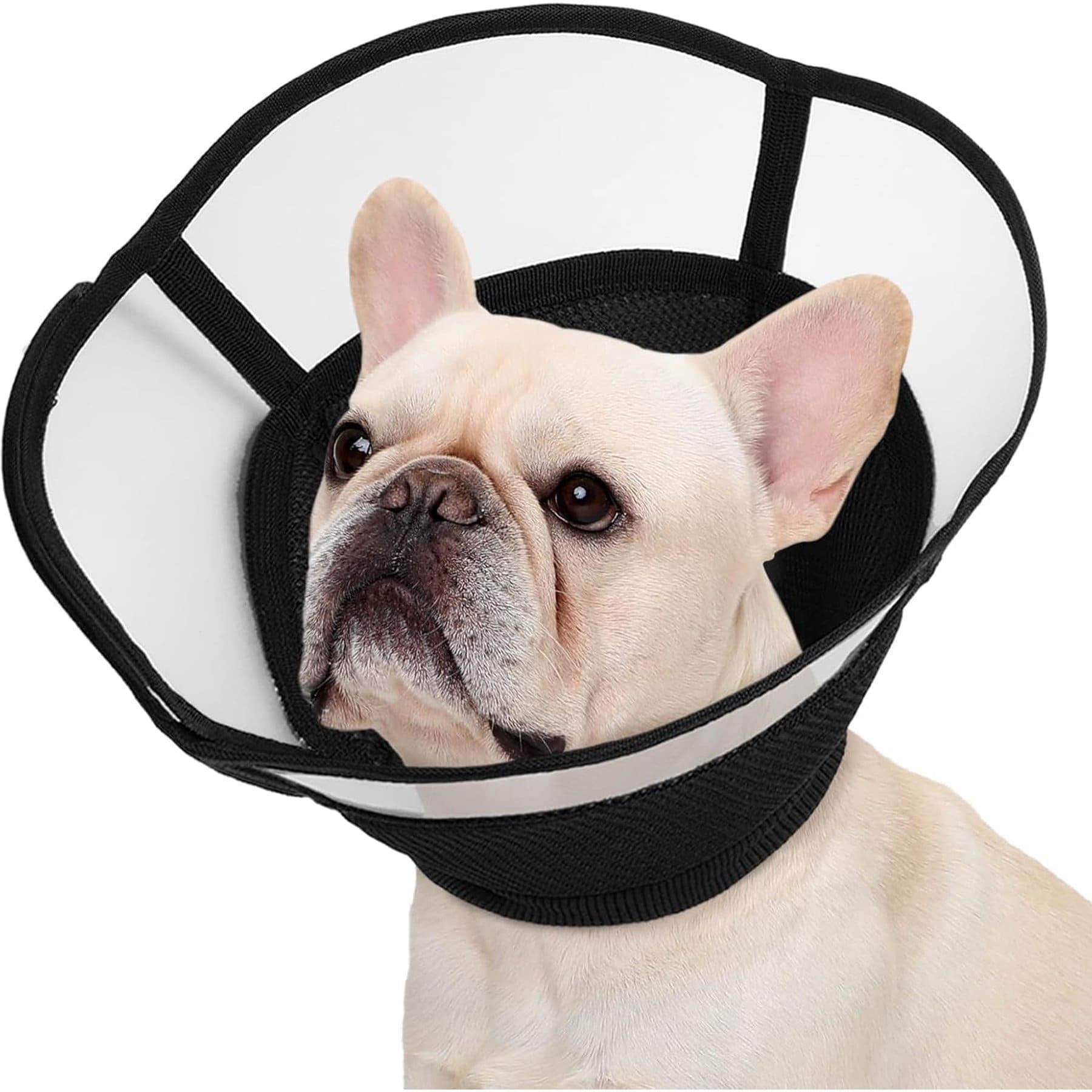
Soft, adjustable recovery cone with a clear upper layer that helps block licking, biting, and scratching at a wound.
Webvet may earn a commission when you click through to Chewy, at no extra cost to you.
VCA describes benign adenomas as one or more small, round, pink, hairless nodules that grow slowly and usually stay under about 1 inch (2.5 cm). Merck says they are more often multiple, 0.5 to 10 cm across, and the 2025 study of 76 dogs found most were well circumscribed, with an average diameter of 0.5 to 3 cm.
Where the lumps grow, according to VCA and Merck:
- The skin around the anus, where Merck places 90 percent of hepatoid gland adenomas
- The prepuce and scrotum in male dogs
- The underside of the tail
Larger adenomas commonly ulcerate, and Merck notes they can release bloody, protein-rich material when pressed. A large enough lump can also press on the anal canal and make passing stool difficult. Other tail-area skin changes have different causes; WebVet's guide to stud tail in dogs covers one of them.
Not every swelling here is a perianal gland tumor. Veterinary Partner explains that the anal sacs are a separate structure just inside the anus, so a lump in this area may be an anal sac problem instead. WebVet's guides to dog anal glands, dog scooting, and a dog licking its butt cover those problems.
Fiber supplements sold for anal gland support, such as Native Pet WonderGland Anal Gland Pumpkin Fiber & Digestive Supplement for Dogs, 8-oz, use a fiber blend meant to firm stools and support natural emptying of the glands. They are digestive and anal sac support only, and no veterinary source suggests fiber shrinks a perianal adenoma.

Two-ingredient psyllium husk and beet root fiber powder for occasional digestive upset and anal gland support.
Webvet may earn a commission when you click through to Chewy, at no extra cost to you.
Why perianal adenomas grow: testosterone, intact males, and spayed females
VCA explains that testosterone promotes perianal gland tumors, which makes them much more common in intact male dogs than in females and rare in neutered males; adenomas rank as the third most common tumor in intact males. Merck adds that they are most common in senior dogs, which explains why older intact males get them most.

Sources put different numbers on that risk:
- Merck's professional manual: three times as frequent in sexually intact males as in females, because androgens stimulate the glands
- The Merck Veterinary Manual pet owner version: 3 to 10 times more likely in unneutered males than in females, depending on tumor type
- The 2025 Frontiers study: 5.6 times more likely in intact males over 10 years old than in neutered males and spayed females
A perianal adenoma in a female dog is less common but does happen. VCA notes that estrogen holds these tumors back, so they show up more often in spayed females than in unspayed ones. For a perianal adenoma in a spayed female, VCA and Merck both point to surgical removal as the treatment.
A perianal gland tumor in a neutered dog deserves a closer look. VCA calls these tumors rare in neutered males, and the 2025 study states that local regrowth after surgery in a neutered male suggests malignancy, so the biopsy result guides the plan for a perianal adenoma in a neutered dog.
The hormone link reaches other glands too:
- A 1979 study in the Journal of the American Veterinary Medical Association found testicular tumors in 1 in 3 dogs with perianal gland tumors
- In the 2025 study, 40 percent of dogs had a concurrent testicular tumor
- VCA also links these tumors with adrenal gland tumors
Breed lists differ by source:
- VCA: Siberian husky, cocker spaniel, Pekingese, shih tzu, Afghan hound, Lhasa apso, German shepherd, and Samoyed
- Merck: Siberian husky, Samoyed, Pekingese, and cocker spaniel
How a vet diagnoses a perianal adenoma and rules out adenocarcinoma
A vet may suspect a hepatoid gland tumor from its typical look or by feeling a mass or enlarged lymph nodes on a rectal exam, VCA notes, and some perianal adenocarcinomas are found this way with no outward signs.
Looks cannot settle the question, because adenomas and adenocarcinomas look alike. Confirming a benign perianal tumor in a dog takes a microscope, and VCA says the sample most often comes from:
- Fine-needle aspiration, which draws cells from the lump with a needle and syringe for a pathologist
- A biopsy of a small piece of tissue
- Full excision of the lump

Perianal adenoma cytology, the lab read of a needle sample, is the usual starting point, and the cells of these tumors resemble liver cells. Veterinary Partner adds that suspicious needle results on an anal-region mass lead to surgical removal and lab confirmation.
Cytology separates benign from malignant only up to a point. VCA cautions that needle results can be unclear, and a biopsy may then be needed, since histopathology shows how a tumor is likely to behave. Merck notes ongoing debate over telling low-grade malignant tumors from adenomas.
How an adenoma and an adenocarcinoma differ, per VCA and Merck:
- Growth: adenocarcinomas typically grow faster (VCA)
- Size: adenocarcinomas can reach 4 inches (10 cm), while VCA puts most adenomas under about 1 inch and Merck's adenoma range runs to 10 cm
- Number: VCA says multiple adenocarcinomas are more likely, while Merck says adenomas are more often multiple
- Spread: adenocarcinomas often reach the regional lymph nodes (Merck)
- Hormones: adenocarcinomas generally do not respond to castration (Merck)
A perianal gland epithelioma is borderline malignant. When results point to adenocarcinoma, VCA highly recommends staging with bloodwork, urinalysis, chest X-rays, and possibly an abdominal ultrasound.
Vets call the list of other possible causes the differentials. For a perianal mass in a dog, they include:
- Apocrine gland tumors of the anal sac, which Merck describes as deep, firm nodules near the sac with no sex predilection
- Other anal sac problems, such as an anal gland abscess in dogs
- Perianal fistula, since Veterinary Partner lists perianal adenoma among the look-alikes for perianal fistula in dogs
Lumps elsewhere on the body have their own WebVet guides:
 Sponsored
Vet care that's always there
Unlimited video calls and messaging with licensed vets for less than a typical vet visit. One membership covers up to five pets.
Use code Pets60
Plans start at $12/month · covers up to 5 pets
- Licensed vets in most states
- Rx for 150+ conditions
- 4.7 on Trustpilot
Perianal adenoma treatment: neutering, surgical removal, and recovery at home
Perianal adenoma treatment depends mostly on the dog's sex and neuter status. For most adenomas in intact males, VCA names castration plus tumor removal as the treatment of choice, and small tumors often shrink or stop growing after neutering. Merck's pet owner manual adds that neutering makes most benign perianal tumors resolve, while malignant ones need surgery.
Neutering with surgical removal is the core plan, adjusted to each dog:
- Intact male with one or a few small lumps: castration plus marginal excision, which the 2025 study calls the standard of care; VCA adds that lumps that are not ulcerated may not need removal once the dog is neutered
- Intact male with many, large, or widespread tumors, or tumors near the anal sphincter: neutering first and removal several months later, because the tumors shrink without testosterone and removal becomes safer and easier (VCA)
- Female dogs and neutered males: surgical removal, which Merck says may need repeating in females because recurrence is common

Home care after perianal surgery follows standard incision care, because veterinary sources describe no special routine for this area, so the surgeon's discharge sheet comes first. VCA Animal Hospitals also rules out baths and swimming while activity is restricted.
Between baths, a gentle, alcohol-free wipe can tidy soiled fur on the hindquarters, kept well away from the stitches. That keeps the coat cleaner without putting anything on the incision itself.

Alcohol-free, pH-balanced grooming wipes with aloe and vitamin E for freshening the coat between baths.
Webvet may earn a commission when you click through to Chewy, at no extra cost to you.
Incision rules from VCA and Veterinary Partner for the healing weeks:
- Keep the dog from licking or scratching the incision
- Never clean it with hydrogen peroxide or alcohol, per VCA's incision care guidance
- Put no cream, ointment, or disinfectant on it unless the vet directs it
- Restrict activity for at least one to two weeks or until stitches are removed, though another passage on the same VCA page gives 7 to 10 days for most procedures; most skin stitches come out 7 to 14 days after surgery
- Watch the site closely, since Veterinary Partner notes that surgery near the anus carries an infection risk because of the route feces take out of the body
VCA warns that licking can undo stitches and that a few seconds of chewing is enough to remove them. It recommends an Elizabethan collar or recovery suit and says keeping the collar on constantly works better than taking it on and off. WebVet's guide to choosing a dog cone compares the main styles.
Soft fabric cones trade rigid plastic for padding. The NANAKI Soft Cone Recovery Elizabethan Collar/E-Collar for Dogs, Blue, Medium uses breathable mesh cloth with sponge-cotton padding and washes by hand, while the Kuoser Soft Cone Adjustable Recovery Dog Elizabethan Collar/E-Collar, Black, Medium pairs a cotton inner layer with a clear, waterproof upper layer and a drawstring stopper.
VCA notes that a recovery garment over the incision can replace the collar in some locations. Inflatable collars are another style: the ZenPet ZenCollar Inflatable Recovery Dog & Cat Collar, Medium is a pillow-like ring that its listing says allows 180 degrees of vision. In any style, check that your dog cannot reach the incision.
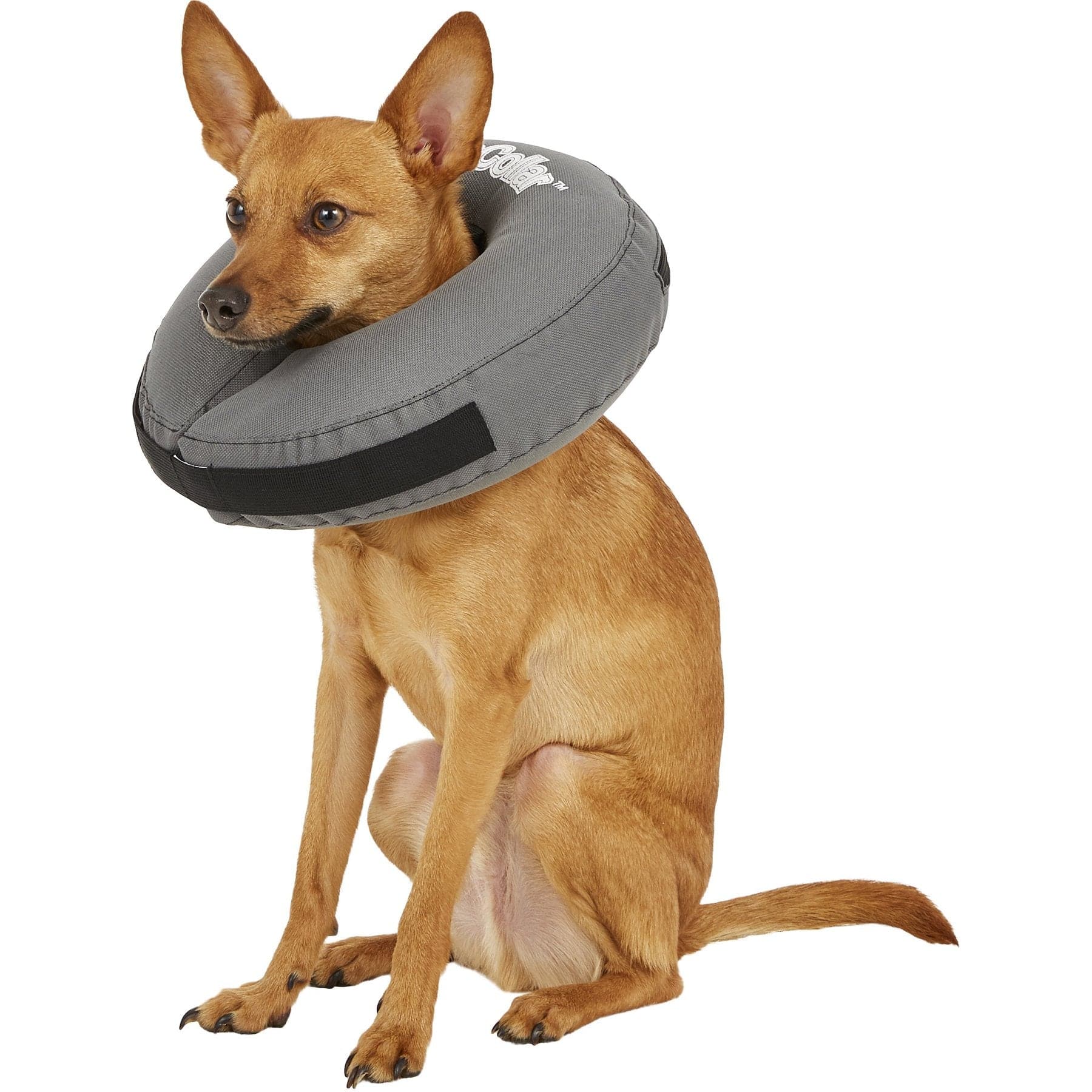
Inflatable, bite-resistant recovery collar that leaves vision clear while helping keep a dog from reaching a wound.
Webvet may earn a commission when you click through to Chewy, at no extra cost to you.
For the tumor itself, no holistic or at-home treatment appears in veterinary sources. The other options are all veterinary:
- Cryotherapy or laser ablation for adenomas smaller than 1 to 2 inches (2.5 to 5 cm), per VCA, though Merck warns that cryosurgery and electroporation risk fecal incontinence and should be kept for tumors surgery cannot address
- Radiation, which Merck credits with a 2-year cure rate of 69 percent for benign tumors
- Chemotherapy and, occasionally, hormone therapy, which VCA also lists
- More aggressive surgery for adenocarcinoma, with a margin of at least 1 to 2 cm per the 2025 study, although surgeons rarely take wide margins near the anal sphincter, to preserve fecal continence
Not every male responds to castration. Merck reports that up to 95 percent of male dogs respond completely; one that does not should have its pituitary-adrenal axis evaluated and be rechecked for a low-grade adenocarcinoma.
Drug treatments have a mixed record:
- Diethylstilbestrol, a past alternative to castration, carries severe adverse effects, including aplastic anemia and cystic prostatic hyperplasia, and Merck says to use it with extreme caution, if at all
- Tamoxifen and cyproterone acetate brought complete regression of benign tumors and partial regression of malignant ones in a study of 41 male dogs, Pharmacological Treatment of Perianal Gland Tumors in Male Dogs, but that remains research rather than standard care
What an owner finds shapes the likely plan. A single slow lump on an older intact male usually points toward neutering plus removal, while a lump on a neutered male draws a closer look because the tumor is rare there.
| Perianal lump finding | Vet visit decision | Likely tests | Likely treatment |
|---|---|---|---|
| One small, slow-growing pink lump on an older intact male | Regular appointment | Exam, rectal palpation, fine-needle aspiration | Neutering plus removal; small lumps often shrink after neutering |
| Many or large lumps, or lumps near the anal sphincter, on an intact male | Prompt appointment | Fine-needle aspiration or biopsy | Neutering first, removal months later once the tumors shrink |
| A lump on a spayed female | Regular appointment | Fine-needle aspiration, biopsy | Surgical removal, which may need repeating |
| A lump on a neutered male | Prompt appointment | Fine-needle aspiration, biopsy | Surgical removal guided by the biopsy |
| A fast-growing, bleeding, or ulcerated mass, or straining to pass stool | Prompt visit | Biopsy, bloodwork, urinalysis, chest X-rays, possibly abdominal ultrasound | Wider-margin surgery if malignant, plus other options the vet advises |
| A lump that returns after neutering and removal | Prompt recheck | Second biopsy, testing for hyperadrenocorticism | Based on the biopsy result |
When a perianal lump needs a vet quickly: bleeding, rapid growth, or straining
Most perianal adenomas grow slowly, but some changes call for a prompt vet visit rather than waiting for a routine appointment. VCA and Merck tie these signs to adenocarcinoma, to complications of a large or ulcerated adenoma, or to the high blood calcium that adenocarcinoma can cause.
Signs that need a prompt vet visit:
- Bleeding or oozing from the lump, or bleeding around the anus, which Veterinary Partner also lists among signs of anal sac tumors
- Rapid growth, since VCA says adenocarcinomas typically grow faster than adenomas
- Straining, constipation, or trouble passing stool, because VCA notes adenocarcinomas can compress the rectum and Merck says large adenomas can compress the anal canal
- A lump that looks ulcerated, infected, or painful
- Increased drinking and urination, loss of appetite, weight loss, lethargy, weakness, or vomiting, which VCA lists as signs of hypercalcemia, a high blood calcium level that occurs in about 30 to 50 percent of dogs with adenocarcinoma
Other conditions in this region need their own workup:
- Rectal tumors, which Merck's pet owner manual links with straining, painful defecation, blood in the feces, or diarrhea
- Anal sac adenocarcinoma, which Cornell University's Riney Canine Health Center links with lethargy, straining, constipation, decreased appetite, vomiting, and increased thirst and urination
- A perineal hernia in dogs, covered in its own WebVet guide
After surgery, a little blood can seep from a fresh incision for up to 24 hours, especially in an active dog, VCA notes. VCA lists these reasons to contact the hospital immediately:
- Seepage of blood that lasts more than 24 hours
- Continuous or excessive bleeding
- Excessive swelling or redness
- An unpleasant odor or discharge
Outlook after treatment: recurrence, life expectancy, and follow-up checks
The perianal adenoma in dogs prognosis is good. VCA reports that with neutering and tumor removal, adenomas recur in fewer than 10 percent of dogs, while without neutering they commonly regrow and new tumors develop. The 2025 Frontiers study calls castration with marginal excision curative for benign tumors, with a very low local recurrence rate.
Castration alone can be enough for some dogs. The 1979 JAVMA study found that castration without removing the tumor brought regression without recurrence in these hormone-dependent adenomas. In female dogs, which cannot be treated this way, Merck notes that recurrence after surgery is common.

Veterinary sources give no single life-expectancy figure for a dog with a benign adenoma, only a good prognosis after treatment. Perianal tumor life expectancy in dogs is a harder question with adenocarcinoma: VCA calls that prognosis fair to guarded, and Merck's pet owner manual calls it unknown. Survival figures cited in the 2025 study:
- Stage 1 and 2 malignant tumors: a 2-year disease-free interval, with 1-year survival of 75 percent for T1 tumors and 60 percent for T2 tumors, from data published in 1990
- Stage 3 and 4 malignant tumors: median survival of 6 to 12.5 months
- Tumors larger than 5 cm: an 11-fold higher risk of death
- Spread: rare, and mostly to the sublumbar lymph nodes, at 15 percent
Tumor grade matters as well. In the study's own group of 76 dogs whose single tumor was removed surgically, a mix of adenomas, epitheliomas, and adenocarcinomas, low-grade tumors had a median overall survival of 1,762 days (about 4.8 years), against 498 days (about 16 months) for high-grade tumors.
Follow-up checks aim to catch regrowth early:
- If an adenoma comes back after neutering and removal, VCA strongly recommends a second biopsy to rule out adenocarcinoma, plus testing for hyperadrenocorticism, an adrenal hormone disorder
- For dogs that had high blood calcium, VCA advises monitoring calcium, since a rise can signal recurrence or spread
- Cornell recommends routine checkups with a rectal exam at least once a year, and twice a year for older dogs
Perianal adenoma in dogs questions
Frequently Asked Questions
Is a perianal adenoma cancer?
No. A perianal adenoma is benign, so it does not invade surrounding tissue or spread the way a cancer can. The worry is its malignant relative, perianal adenocarcinoma, which grows in the same glands and can look identical from the outside.
That is why a vet sends cells or tissue to a lab before calling any perianal lump harmless, and why the borderline epithelioma has to be ruled out too.
Can a female dog get a perianal adenoma?
Yes, although it happens less often than in intact males. The hormone estrogen holds these tumors back, so VCA reports them more often in spayed females than in females that are not spayed.
A female cannot be neutered out of the problem the way a male can, so surgery is the standard treatment, and Merck notes it sometimes has to be repeated.
Will neutering shrink a perianal adenoma?
Usually. Castration takes away the testosterone that feeds the tumor, and VCA says small tumors often shrink or stop progressing afterward. With large or numerous tumors, vets sometimes neuter first and wait several months so the lumps shrink before removal.
A lump that does not respond, or that regrows, needs a fresh check for adenocarcinoma, which generally does not respond to castration.
How long can a dog live with a perianal tumor?
It depends on the tumor type. A benign adenoma treated with neutering and removal carries a good prognosis, and veterinary sources describe that combination as curative rather than giving a survival time.
With adenocarcinoma, the outlook depends on size, grade, and stage. Reported medians run from about 4.8 years for low-grade tumors in one surgical study to 6 to 12.5 months for stage 3 and 4 cancers, because the malignant form can spread to lymph nodes, abdominal organs, and lungs.
Can a perianal adenoma be treated at home?
No. The tumor needs veterinary treatment, usually neutering, surgery, or both, and no veterinary source describes a home or holistic remedy that shrinks it.
Home care comes after surgery: keeping a cone or recovery suit on so the dog cannot lick the stitches, skipping baths until they are out, and putting nothing on the incision unless the vet prescribes it.

Editor
The Webvet Editorial Team is the in-house group of pet-care editors and writers behind Webvet, operated by Smart Pet Collective. The team researches, writes, and maintains Webvet's pet health, behavior, and medication content. Every article follows a defined editorial process: research from reputable veterinary and scientific sources, careful drafting, mandatory review of medical content by a credentialed veterinarian, and dated publication. Health and medication articles are medically reviewed by a licensed veterinary professional before they go live and are kept current over time.
Veterinarian · BVMS MRCVS
Dr. Pippa Elliott, BVMS, MRCVS, is a veterinarian with nearly 30 years of experience in companion animal practice. Dr. Elliott earned her Bachelor of Veterinary Medicine and Surgery from the University of Glasgow. She was also designated a Member of the Royal College of Veterinary Surgeons. Married with 2 grown-up kids, Dr. Elliott has a naughty Puggle named Poggle, 3 cats and a bearded dragon.
Related reading

Perineal Hernia in Dogs: Signs, Surgery, and Recovery

Perianal Fistula in Dogs: Symptoms, Treatment, and Long-Term Outlook

Anal Gland Abscess in Dogs: Signs, Rupture, Treatment, and Recovery
