Bumps on Dog Skin: What Small Lumps, Cysts, and Rashes Mean
Most small bumps on a dog's skin come from flea bites, allergies, or infected hair follicles, while firm bumps under the fur are often cysts or warts. This guide sorts bumps by their signs and flags the ones that need a vet today.

BVMS MRCVS
Medically reviewed by Dr. Pippa Elliott, BVMS MRCVS · Last reviewed

This article contains affiliate links. Webvet may earn a commission when you buy through them, at no extra cost to you.
Bumps on dog skin: what you are probably seeing and whether today is a vet day
Small, itchy bumps on dogs skin usually trace back to flea bites, allergies, or infected hair follicles. That fits the Merck Veterinary Manual, which names parasites, allergies, and infections as the most common causes of itching in dogs.
Firm bumps under the fur are a different group that includes benign cysts and warts, but Merck notes that telling a tumor from an inflamed spot can be difficult. A bump that grows fast, bleeds, or comes with fever or lethargy needs a vet soon, and swelling of the face or throat is an emergency.
- 1Knowing what small skin bumps usually are takes the guesswork out: the most common causes are flea bites and other parasites, allergies, and infected hair follicles.
- 2Itchy bumps from fleas or allergies cluster on the back half of the body, the belly, the paws, and the face, and they need the cause treated, not just the bump.
- 3Firm bumps under the fur include benign cysts and warts, but only a fine needle aspirate or biopsy can confirm what a lump is.
- 4Call a vet promptly about a bump that grows fast, bleeds, or drains pus, and go now for face swelling or trouble breathing.

Why do dogs get small bumps on skin?
Dogs get small bumps when something irritates or infects the skin or its hair follicles. Merck explains that most pyoderma, meaning pus in the skin, is a superficial bacterial infection that sits on top of another problem such as allergies or parasites. Mites, ringworm, and allergic reactions raise bumps too, and some bumps are growths.
What the bump looks and feels like usually points to its group:
- Itchy red or pink bumps, often in a crop: flea bites, flea allergy, environmental or food allergy, or hives.
- Pimple-like bumps with a white center, crusts, or rings of scale: infected hair follicles (folliculitis), chin acne, or Demodex mites.
- Small, solid bumps that spread to other pets or people: sarcoptic mange.
- Bald, scaly patches with bumps: ringworm or mites.
- A firm, smooth bump under the fur: a cyst, a sebaceous gland growth, or a tumor that needs testing.
- A hard bump with a cauliflower-like surface: a wart, also called a papilloma.
Small dry, crusty bumps can be more than dry skin. Merck describes superficial pyoderma as bald patches, welts around hairs, and scabbing. For that surface infection, VCA Animal Hospitals lists medicated shampoos and sprays containing benzoyl peroxide, sulfur with salicylic acid, or chlorhexidine.
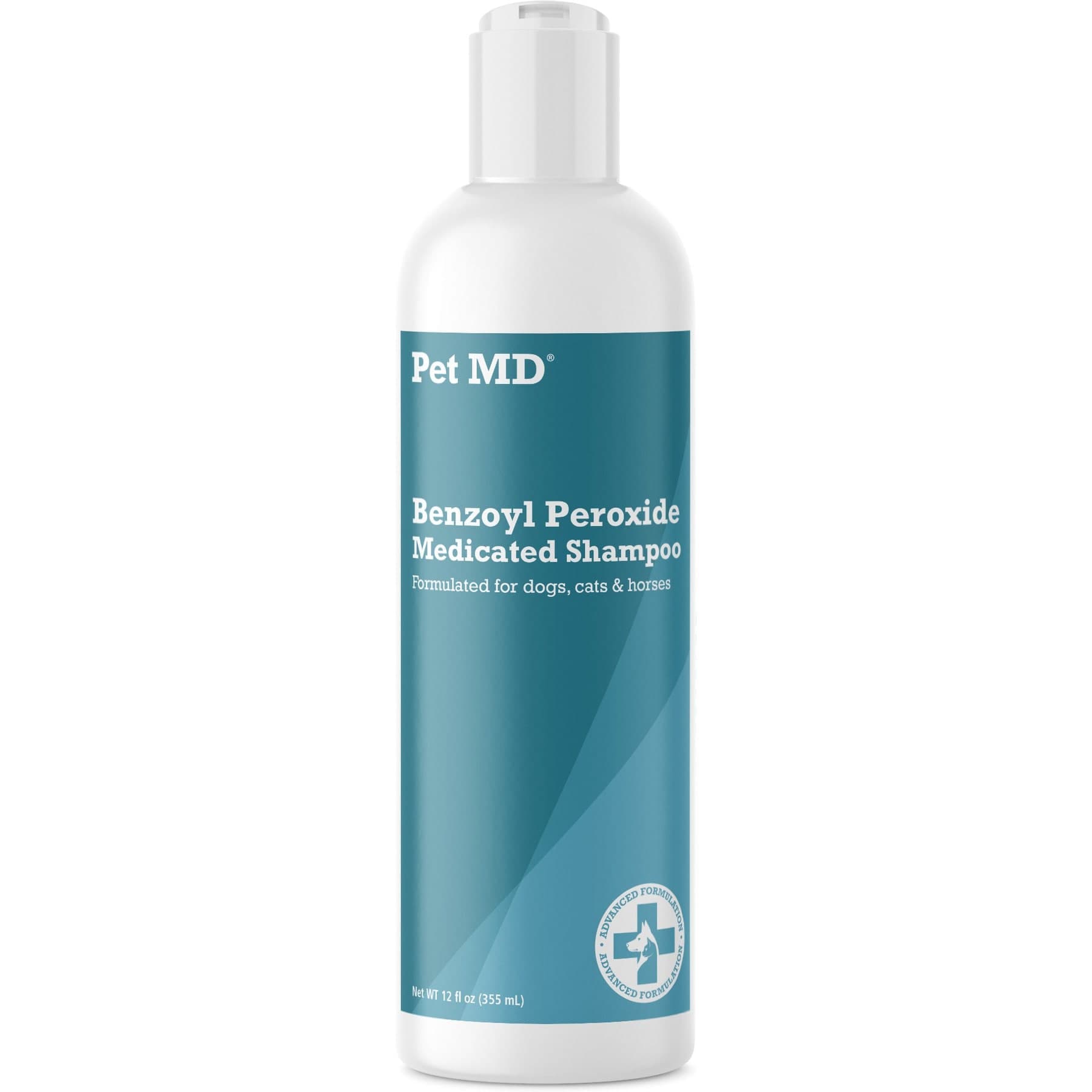
Soap-free benzoyl peroxide and salicylic acid shampoo listed for scaling and itching tied to follicle-related skin infections.
Webvet may earn a commission when you click through to Chewy, at no extra cost to you.
Where the bumps sit adds clues. Allergy itch tends to hit the face, feet, and belly, while flea bumps gather between the middle of the back and the tail. Bumps that appear right after a bath can be a reaction to the shampoo, since Merck lists shampoos among the most frequent causes of hives.
A sudden crop of welts that comes and goes also fits hives, though Merck calls hives relatively uncommon in dogs. In shorthaired breeds, infected follicles can raise welts that look just like hives. Merck's tell is that the hairs over infected welts pull out easily.

 Sponsored
Want a vet's take on your dog's skin or coat?
Talk to a licensed vet at Dutch over video, often the same day. They can recommend treatment and prescribe it when it's appropriate.
Use code Pets60
Plans start at $12/month · covers up to 5 pets
- Licensed vets in most states
- Rx for 150+ conditions
- 4.7 on Trustpilot
Small itchy bumps and rashes: fleas, allergies, and mites
Fleas are a sensible first suspect for red or pink itchy bumps, and VCA calls flea allergy dermatitis in dogs a common cause of itching. Merck says many dogs are allergic to flea saliva, and even non-allergic dogs scratch at flea bites. VCA adds that in an allergic dog, one bite can itch for several days.
Signs VCA links to flea allergy include:
- Itching and hair loss from the middle of the back to the tail base and down the rear legs, the area known as the flea triangle
- Scabs, sores, or skin infection from scratching
- Ear infections
Scratching is how itchy bumps turn into pus spots: VCA explains that pyoderma often follows allergic skin disease and develops in the scrapes scratching leaves behind. Chlorhexidine shampoo is one of the topical treatments VCA lists, and some are labeled for bacterial or yeast skin infections, a separate problem covered in yeast infection in dogs.
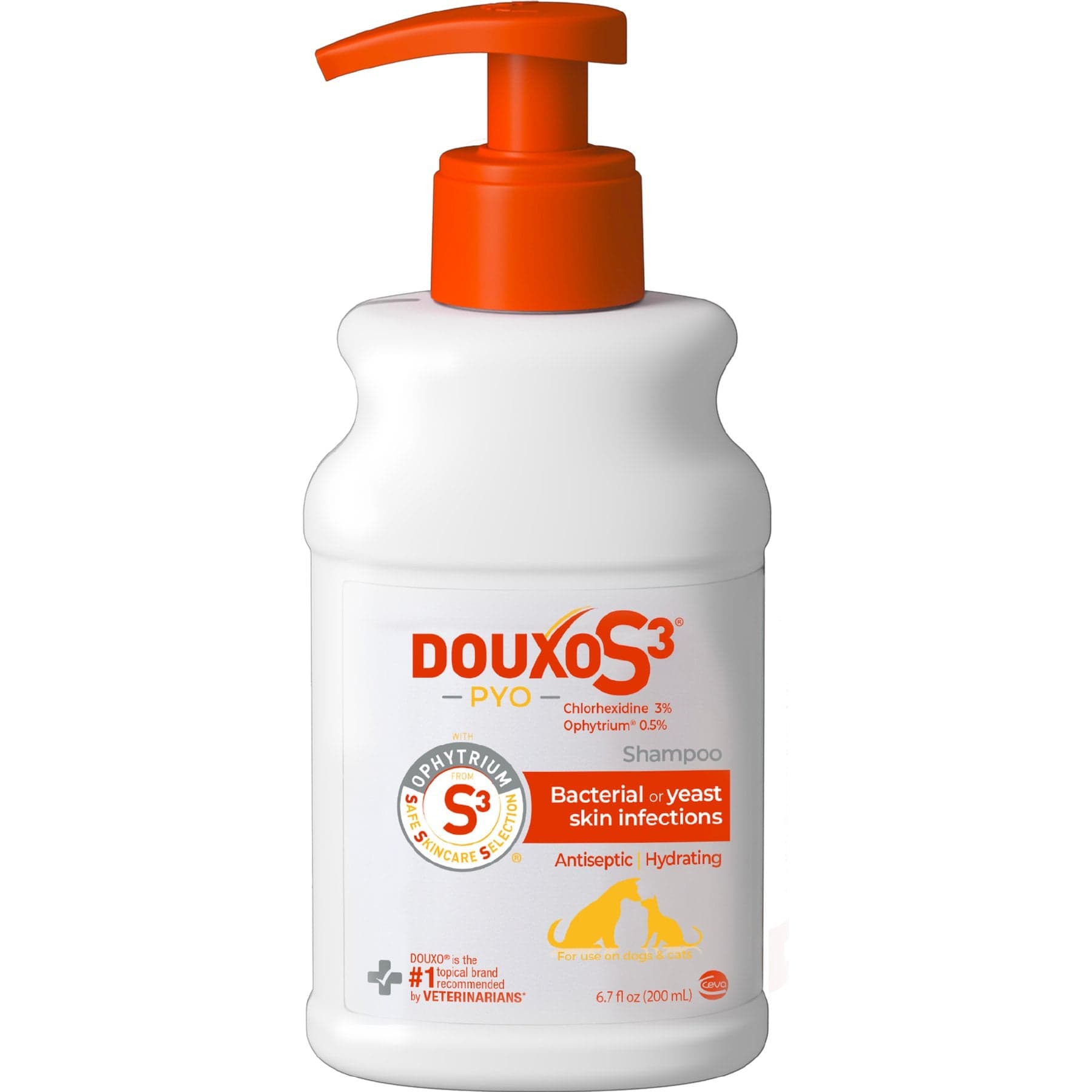
Chlorhexidine shampoo with antibacterial and antifungal ingredients, listed for pets with skin infections or inflammatory skin disease.
Webvet may earn a commission when you click through to Chewy, at no extra cost to you.
Allergies are the other big source of itchy bumps, and the guide to dog skin allergies covers how vets manage them. Merck says airborne (atopic) allergy usually starts between 6 months and 3 years of age, with itching most often on the feet, face, ears, front legs, and belly. Food allergy can look the same.
Large red welts that rise suddenly can be hives: red, swollen, usually itchy patches that Merck says develop and disappear quickly, most often after insect bites or stings, shampoos, or medications. VCA notes a bee sting can cause dramatic swelling of the face and lips. Mites and fungus raise bumps of their own:
- Sarcoptic mange (scabies): Merck says infested skin first erupts with small, solid bumps. Mange is very highly contagious, can spread to people, and every animal in contact needs treatment.
- Demodex mites: Merck says localized demodicosis is usually seen in dogs under 1 year old, as 1 to 5 small hairless, red, scaly areas. VCA puts the main age range at under 12 to 18 months and notes adult cases usually involve a weakened immune system.
- Treating Demodex: VCA says isoxazolines and other antiparasitic drugs are used off label, meaning they are not approved for demodicosis but are accepted as safe and effective. The FDA notes isoxazolines have been associated with neurologic reactions, including tremors and seizures, in some dogs.
- Ringworm: Merck describes bald, scaly patches with broken hairs, sometimes with acne-like bumps.
Bumps that are not itchy still matter. Itching from localized Demodex is mild or absent, and VCA says demodectic mange causes patchy hair loss, often without severe itching. Merck adds that itching is a sign, not a diagnosis, so a quiet, non-itchy patch of small bumps deserves the same look as an itchy one.
 Sponsored
Vet care that's always there
Unlimited video calls and messaging with licensed vets for less than a typical vet visit. One membership covers up to five pets.
Use code Pets60
Plans start at $12/month · covers up to 5 pets
- Licensed vets in most states
- Rx for 150+ conditions
- 4.7 on Trustpilot
Pimple-like bumps and pus spots: folliculitis, puppy acne, and chin acne
Bumps that look like human pimples point to pyoderma, a bacterial skin infection whose most common signs, VCA says, are red, raised papules or pustules with a white, pus-filled center. Infection in the hair follicles is called folliculitis, which the ISCAID antimicrobial guidelines for canine pyoderma call the most common type of superficial pyoderma in dogs.
Typical signs of superficial bacterial folliculitis in the ISCAID guidelines:
- Small raised bumps at the hair follicles (follicular papules)
- Pus-filled bumps (pustules), the white pimple-like spots owners notice
- Rings of scale at the edge of older spots (epidermal collarettes)
- Scattered patches of hair loss, often with itching

Most of these infections are secondary, according to Merck, with fleas, allergies, hypothyroidism, and Cushing disease among the underlying causes a vet looks for. In short-coated breeds, ISCAID notes these follicle bumps can mimic hives, so a crop of bumps on the neck or back that looks allergic may actually be infection.
On the chin and muzzle, red pimple-like bumps are the classic picture of canine acne. VCA says mild acne shows as red bumps or pustules, while severe cases can bring swelling of the lips and muzzle, bleeding wounds, or scabs. Left untreated, severe acne can scar permanently.
For a puppy with pimples, mites are part of the picture: VCA says a vet working up acne checks for food or environmental allergies and runs an exam or lab tests to rule out Demodex mites, which mainly affect young dogs. Signs that a pimple-like bump has become a deeper infection, per Merck:
- Pain, crusting, odor, and oozing blood and pus
- Redness, swelling, ulcers, scabs, or blisters
- Location on the bridge of the muzzle, chin, elbows, hocks, knees, or between the toes
- Darkened skin with raised, acne-like lumps and hair loss, which can signal generalized Demodex
To compare what bacterial skin infection looks like, including the resistant staph infections owners ask about as MRSA, see the photo guide to pyoderma in dogs pictures.
For surface infections, ISCAID calls topical antimicrobial therapy alone the treatment of choice and says cytology should be performed before any antimicrobial is used. VCA names topical benzoyl peroxide as the most common acne treatment.
When a vet does prescribe antibiotics, Merck says the course runs at least 3 weeks and preferably 4, and deep or recurrent cases typically need 8 to 12 weeks or longer. ISCAID adds that proactive antiseptic care on the skin may help prevent these infections from coming back.
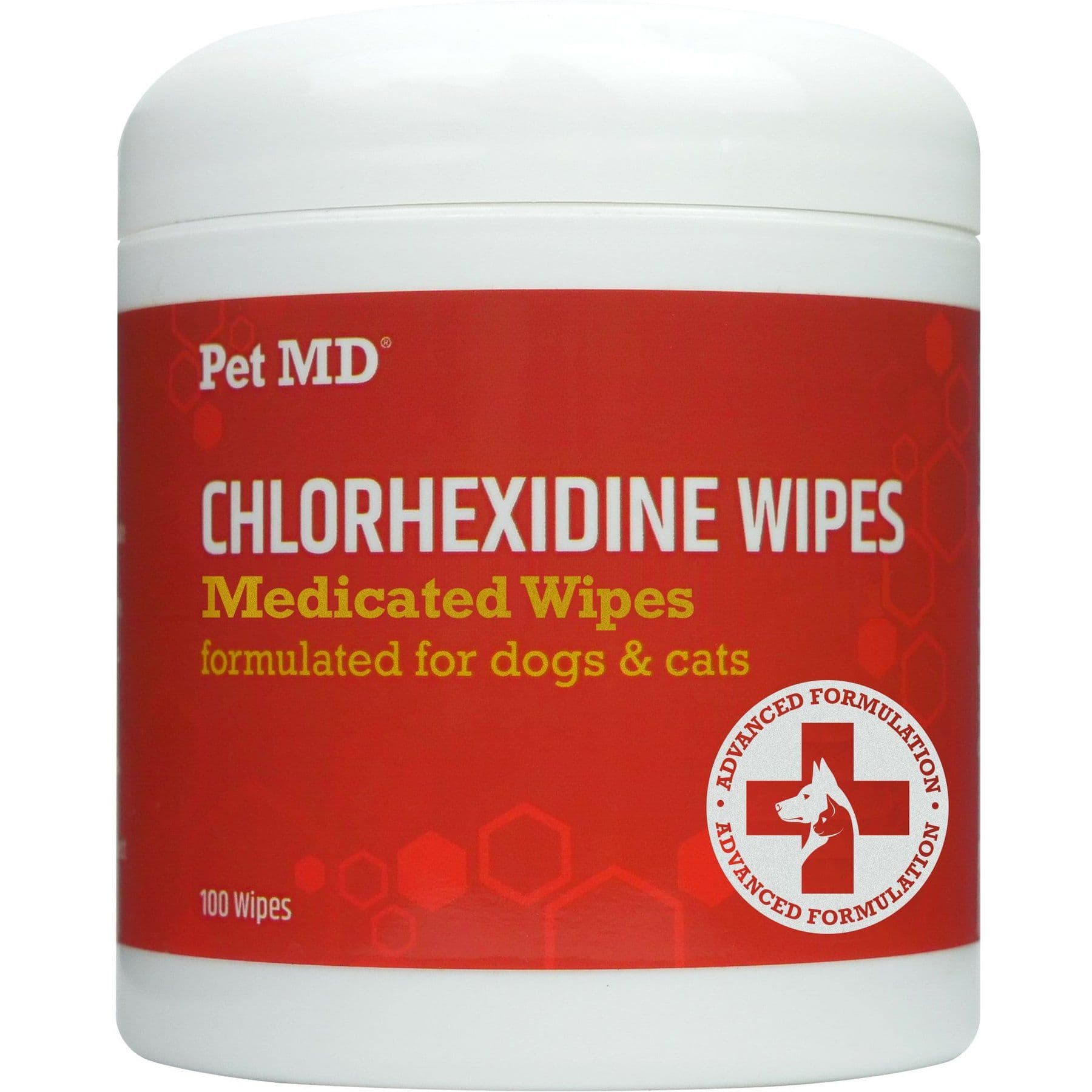
Chlorhexidine wipes listed for cleansing irritated or itchy skin between baths, including skin folds and around the face.
Webvet may earn a commission when you click through to Chewy, at no extra cost to you.
Bumps under the fur: cysts, warts, and other small growths
Run a hand along your dog and you may find bumps the coat hides: crusty bumps on the surface, or firm, smooth, raised lumps in or under the skin that may be a cyst, a wart, or a tumor. Merck says identifying skin tumors should be left to a veterinarian.
Owners often call a firm, round bump under the skin a sebaceous cyst. The cysts Merck describes in dogs are filled with keratin, a skin protein, with a hard or solid core, and they are benign. Merck says surgical removal is the best treatment, and squeezing can spread the contents into surrounding tissue.

Other growths Merck describes, plus lumps tied to one spot:
- Sebaceous gland adenomas: common in older dogs, most likely in Coonhounds, English Cocker Spaniels, Cocker Spaniels, Huskies, Samoyeds, and Alaskan Malamutes. They resemble sebaceous gland overgrowth but tend to be larger, typically over 0.4 inch (1 cm) wide.
- Warts (papillomas): hardened, cauliflower-like bumps, generally multiple in younger dogs and single in older ones. Warts eventually go away on their own, though rarely a viral wart progresses to squamous cell carcinoma.
- Histiocytomas: normally benign tumors, most of which resolve without treatment within 2 to 3 months.
- Skin tags: distinctive, benign lumps of older dogs. The guide to dog skin tags covers what a tag looks like and when a tag-like growth needs testing.
- Hemangiomas: red to black lumps that can look like a blood blister; benign but prone to ulcers, so Merck advises removal.
- Lumps tied to one spot: a swelling over the elbow is covered in hygroma in dogs, and bumps on top of the tail near its base in stud tail in dogs.
What is the difference between a dog cyst and a tumor?
A cyst is a sac: Merck's keratin cysts are filled with skin protein, have a hard core, and are benign. A tumor is a growth of cells, either benign (it stays put and is easy to remove) or malignant (it can spread and harm the dog). Touch cannot tell them apart; that takes a fine needle aspiration or biopsy.
Tiny bumps on the back under the fur that are crusty, itchy, and gathered between mid-back and tail fit fleas more than a growth. VCA calls strict flea control essential for flea allergy dermatitis, and monthly prescription preventives are filled through Chewy's pharmacy with a veterinary prescription.
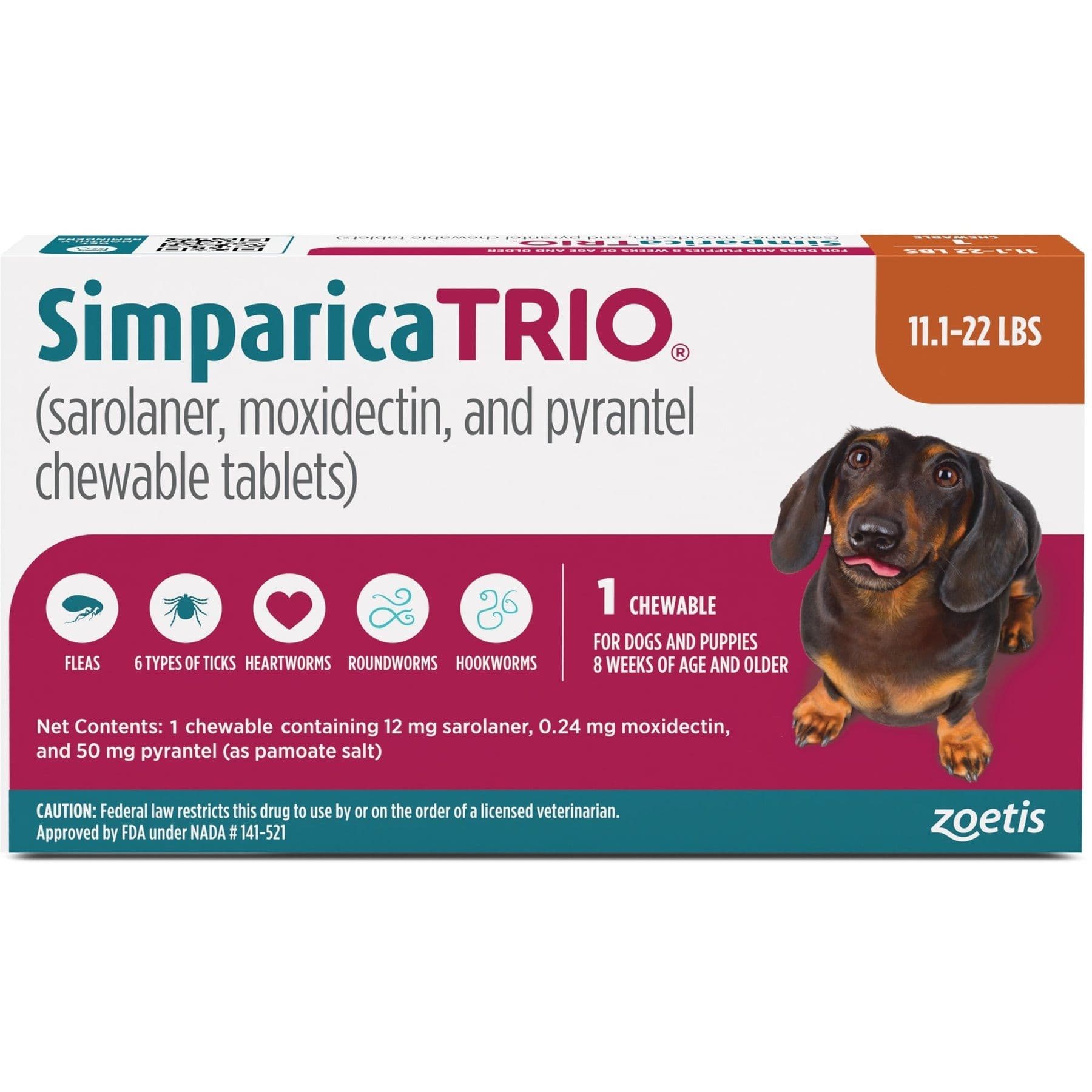
Monthly prescription chew FDA-approved to kill adult fleas and treat and prevent flea infestations; filled with a vet's prescription.
Webvet may earn a commission when you click through to Chewy, at no extra cost to you.
Merck notes that mast cell tumors, explained in mast cell tumor in dogs, can mimic lipomas, so looks alone cannot establish a diagnosis, even on an older dog. Once a growth is confirmed benign, Merck says it may need no treatment if it is not ulcerated and does not bother the dog.
When a bump on your dog needs a vet visit
VCA advises having any skin change checked by a veterinarian, because mast cell tumors can resemble an insect bite, a wart, or an allergic reaction. The real question is how soon. Use this bump-by-sign triage: match each bump type to its likely cause and vet urgency, then note the first test a vet usually runs.
| What you see or feel | Likely cause | Vet urgency | First test a vet runs |
|---|---|---|---|
| Face or throat swelling, or trouble breathing | Allergic reaction or sting | Emergency: go now | Exam and emergency care |
| Hives after a vaccine or medication | Vaccine or drug reaction | Call the vet immediately | Exam |
| Sudden painful swelling, pus, or fever | Abscess | Call the vet today | Exam |
| Many bumps with fever, lethargy, or swollen lymph nodes | Generalized Demodex or body-wide illness | Call the vet today | Skin scrapings, blood tests |
| New, fast-growing, or bleeding lump | Tumor, including mast cell tumor | Book promptly | Fine needle aspirate |
| Small solid bumps, other pets or people itchy | Sarcoptic mange | Book soon | Skin scrapings |
| Red pimples with white centers or crusts | Folliculitis (pyoderma) | Book a visit | Cytology |
| Itchy red bumps on the back half, flea dirt | Fleas or flea allergy dermatitis | Book a visit; start flea control | Coat check for fleas |
| Firm, smooth bump under the fur, unchanged | Cyst, sebaceous growth, or tumor | Book a visit | Fine needle aspirate |
| Cauliflower-like bump in a young dog | Wart (papilloma) | Mention at a routine visit | Exam; biopsy if unclear |
Signs that make a bump a vet day:
- Go now: face or throat swelling, or labored breathing; VCA warns hives that reach the throat can become anaphylaxis.
- Call today: a sudden, painful swelling. VCA says an abscess often brings fever, and delayed treatment can leave draining tracts.
- Call today: lots of bumps that appear suddenly with lethargy, fever, or enlarged lymph nodes, signs Merck links to generalized demodicosis.
- Book promptly: a new or fast-growing lump, since Merck says fast-growing mast cell tumors are more likely to spread.
A sudden cluster of many small bumps points more toward hives, fleas, mites, or follicle infection than separate growths. Multiple growths still happen: VCA notes about 85 percent of dogs with mast cell tumors develop only one, so a minority develop more.
Merck notes the skin can be the first place a body-wide illness shows, so mention any change in thirst, urination, appetite, energy, or panting.
A fast-growing lump on the neck, or anywhere else, belongs in the book-promptly group; the guide to a lump on dog walks through that decision. Cancerous bumps vary too much to judge by eye, as the mast cell tumor pictures guide shows.
My dog has a lump that is bleeding. Should I be worried?
A bleeding lump needs a prompt vet visit, but bleeding alone does not mean cancer. Merck says benign hemangiomas tend to ulcerate, and larger perianal gland tumors commonly ulcerate and bleed (see perianal adenoma in dogs). Mast cell tumors can also look red and ulcerated, per VCA. No home rule makes a bleeding lump safe to watch.
How a vet diagnoses bumps on dog skin
A vet starts with a detailed history and a physical exam, which Merck says a precise skin diagnosis requires. Skip the bath beforehand, since Merck notes recent bathing can hide or change skin problems.

What the vet checks first, and the tests that often follow:
- Coat check: parting the hair for flea dirt or fleas, which Merck says is usually how flea allergy is diagnosed.
- Cytology: cells from a pustule or crust under the microscope, which ISCAID calls for in every pyoderma case.
- Skin scrapings and hair plucks: to find Sarcoptes or Demodex mites and fungal elements.
- Fungal culture: the most accurate ringworm test, per Merck.
- Fine needle aspirate (FNA): VCA describes a small needle drawing cells from a lump onto a slide for a veterinary pathologist.
- Biopsy: a small piece of tissue removed when a lump needs a definitive answer.
- Blood and urine tests: to look for underlying causes such as hypothyroidism or Cushing disease.
An aspirate is quick but not always final. A review of canine mast cell tumors cites fine-needle cytology reaching the correct diagnosis in 92 to 96 percent of cases, yet a pilot study on canine skin masses reports negative predictive values of 63.63 and 68.7 percent, so a clean aspirate cannot fully rule out cancer.
Allergy is diagnosed by ruling things out: Merck says no test positively identifies airborne allergy, and food allergy needs an elimination diet trial because blood and skin tests are unreliable.
Treating bumps on dog skin: what the vet does and what you do at home
Treatment follows the cause: the same red bump can need flea control in one dog and antibiotics in another, and bumps under the fur may need only testing. Merck lists untreated underlying causes among the most common reasons skin infections return.
What a vet may prescribe depends on the bump:
- Surface infection: topical therapy first, per ISCAID, with antibiotics only on a vet's prescription and for the full course.
- Fleas and flea allergy: strict flea control, which Merck says typically takes 6 weeks to 3 months. VCA lists oclacitinib (Apoquel) and lokivetmab (Cytopoint) as alternatives to steroids for the itch; Chewy's pharmacy fills Apoquel only with a veterinary prescription.
- Allergy itch: Merck lists glucocorticoids, cyclosporine, oclacitinib, and essential fatty acids among common prescriptions and says research does not support antihistamines for itch in dogs.

At home, follow the bathing plan exactly. VCA describes medicated baths once or twice a week for three to four weeks, while Merck suggests 2 to 3 a week for the first 2 weeks, then 1 to 2 a week. Your vet sets the schedule; Merck says improvement may take 14 to 21 days.
Contact time matters too: Merck says medicated shampoos usually need 10 minutes on the coat, ISCAID gives 10 to 15 for chlorhexidine, and the DailyMed label for Douxo S3 PYO Antiseptic Antifungal Chlorhexidine Dog & Cat Shampoo, 6.7-oz bottle directs 5 to 10. Rinse fully afterward; Merck calls shampoo residue a common cause of irritation.
For dry, itchy skin without infected bumps, TropiClean OxyMed Medicated Anti-Itch Dog Shampoo, 20-fl oz bottle, listed at $18.99 on Chewy when we checked in October 2026, pairs oatmeal with alpha and beta hydroxy acids to soothe, not to treat infection. Other home habits:
- Keep flea control on schedule: Simparica Trio Chewable Tablet for Dogs, 11.1-22.0 lbs, 1 Chewable Tablet (1-mo. supply) is an FDA-approved monthly chew for dogs 8 weeks and older weighing at least 2.8 pounds, sold through Chewy's pharmacy with a veterinary prescription.
- Give fatty acids time: Merck says they rarely control itch alone but may help long term. StrellaLab Omega 3 Fish Oil Skin & Coat Salmon Flavored Soft Chews for Dogs with Salmon Oil, 180 count supplies omega-3, 6, and 9 fatty acids, including EPA and DHA, for skin barrier and coat support.
- Keep a bump log: note when each bump appeared and whether it changes, so the history is ready for the exam.
- Skip unproven fixes: the guide to home remedies for dog itchy skin separates what helps from what does not.
Bumps on dog skin questions
Frequently Asked Questions
Can fleas cause bumps on a dog's skin?
Yes. Flea bites itch even in dogs without an allergy, and in dogs with flea allergy dermatitis the reaction to flea saliva brings itching, hair loss, scabs, and sores. To check, slowly part the hair over the lower back and look for flea dirt, the dark flea excrement Merck describes, or moving fleas.
Why does my dog have bumps after a bath?
Two causes stand out. Merck lists shampoos among the most frequent hive triggers and calls shampoo residue a common cause of irritation. Rinse until no lather remains and follow the label. Hives can vanish as fast as they appear, but swelling of the face or throat is an emergency.
Are bumps on an older dog's skin more worrying?
They deserve attention, not panic. Merck says sebaceous gland adenomas are common in older dogs and single warts more frequent with age, but VCA puts the average age of dogs with mast cell tumors at 8 to 9 years. Touch cannot separate them, so ask your vet to aspirate any new lump.
Why does my dog have bumps on the chin?
Red pimples on the chin and lips fit chin acne, which VCA defines as an inflammatory disorder of the lips and muzzle. Many cases are thought to start with trauma that breaks hairs near the surface and inflames the hair follicles; a ruptured follicle then spills its contents and spreads the inflammation.
Why are the bumps on my dog's skin causing hair loss?
Many bump problems start inside the hair follicle. In folliculitis the infection sits in the follicle, and Merck notes superficial pyoderma leaves small bald patches. Demodectic mange causes patchy hair loss, often without severe itching, per VCA, and Merck describes ringworm as bald, scaly patches with broken hairs. Scrapings, hair plucks, or a fungal culture tell them apart.

Editor
The Webvet Editorial Team is the in-house group of pet-care editors and writers behind Webvet, operated by Smart Pet Collective. The team researches, writes, and maintains Webvet's pet health, behavior, and medication content. Every article follows a defined editorial process: research from reputable veterinary and scientific sources, careful drafting, mandatory review of medical content by a credentialed veterinarian, and dated publication. Health and medication articles are medically reviewed by a licensed veterinary professional before they go live and are kept current over time.
Veterinarian · BVMS MRCVS
Dr. Pippa Elliott, BVMS, MRCVS, is a veterinarian with nearly 30 years of experience in companion animal practice. Dr. Elliott earned her Bachelor of Veterinary Medicine and Surgery from the University of Glasgow. She was also designated a Member of the Royal College of Veterinary Surgeons. Married with 2 grown-up kids, Dr. Elliott has a naughty Puggle named Poggle, 3 cats and a bearded dragon.
Related reading

Stud Tail in Cats: Causes, Treatment, and Grooming That Helps

Eosinophilic Granuloma Complex in Cats: Rodent Ulcers, Plaques, and Treatment

Miliary Dermatitis in Cats: Causes, Treatment, and Flea Control
