Yeast Infection in Dogs: How to Get Rid of It and Stop It Coming Back
Skin yeast in dogs is almost always a sign of something underneath, usually allergies. Learn where it shows up, how vets confirm it, what the medicated baths and prescriptions do, and how to keep it from coming back.

BVMS MRCVS
Medically reviewed by Dr. Pippa Elliott, BVMS MRCVS · Last reviewed

This article contains affiliate links. Webvet may earn a commission when you buy through them, at no extra cost to you.
Yeast infection in dogs: what it is and what you are noticing
A yeast infection in dogs is an overgrowth of Malassezia pachydermatis, a fungal yeast that normally lives on dog skin, according to VCA Animal Hospitals. Vets call it yeast dermatitis. It causes a musty odor with greasy, red, itchy skin on the paws, skin folds, and belly, and it usually follows an allergy.
A yeast infection in dogs is not usually an emergency, and the Canadian Veterinary Journal review says it carries a good prognosis. It still needs a vet visit: a vet confirms yeast with skin cytology before starting medicated baths or antifungals, then looks for the trigger that let it multiply.
- 1Watch for the musty odor with greasy itchy skin, often with redness, flaking, and darkening over time.
- 2Paws, skin folds, armpits, and the belly are where yeast overgrowth usually starts.
- 3A vet confirms yeast with skin cytology, an in-clinic microscope check of a skin sample.
- 4Treatment is medicated bathing and spot products, with prescription oral antifungals for widespread or stubborn cases.
- 5Yeast keeps coming back until the allergy or other trigger underneath is controlled.

To tell whether your dog has a yeast infection, check for these signs and symptoms described by VCA, Veterinary Partner, and the University of Illinois College of Veterinary Medicine:
- A musty or unpleasant odor that comes with the itch
- Itching that is often severe, so the dog licks, chews, or scratches the same spots
- Red skin with scales, crusts, or flakes
- A greasy rash or greasy film on the skin and coat
- Skin that thickens over time into what Veterinary Partner calls an elephant or tree bark texture
- Darkened skin, which vets call hyperpigmentation
Skin that has turned dark or nearly black under greasy patches points to a long-running case, since Illinois notes thickening and hyperpigmentation in chronic cases. The skin around the anus can be affected too: the Canadian Veterinary Journal lists perianal skin as a common site.
The best thing for a yeast infection in dogs is treatment matched to how much skin is involved, usually an antifungal shampoo containing chlorhexidine, miconazole, or ketoconazole, per VCA. Curing it for good also means treating the trigger, because Veterinary Partner says yeast recurs when the underlying problem is not controlled.
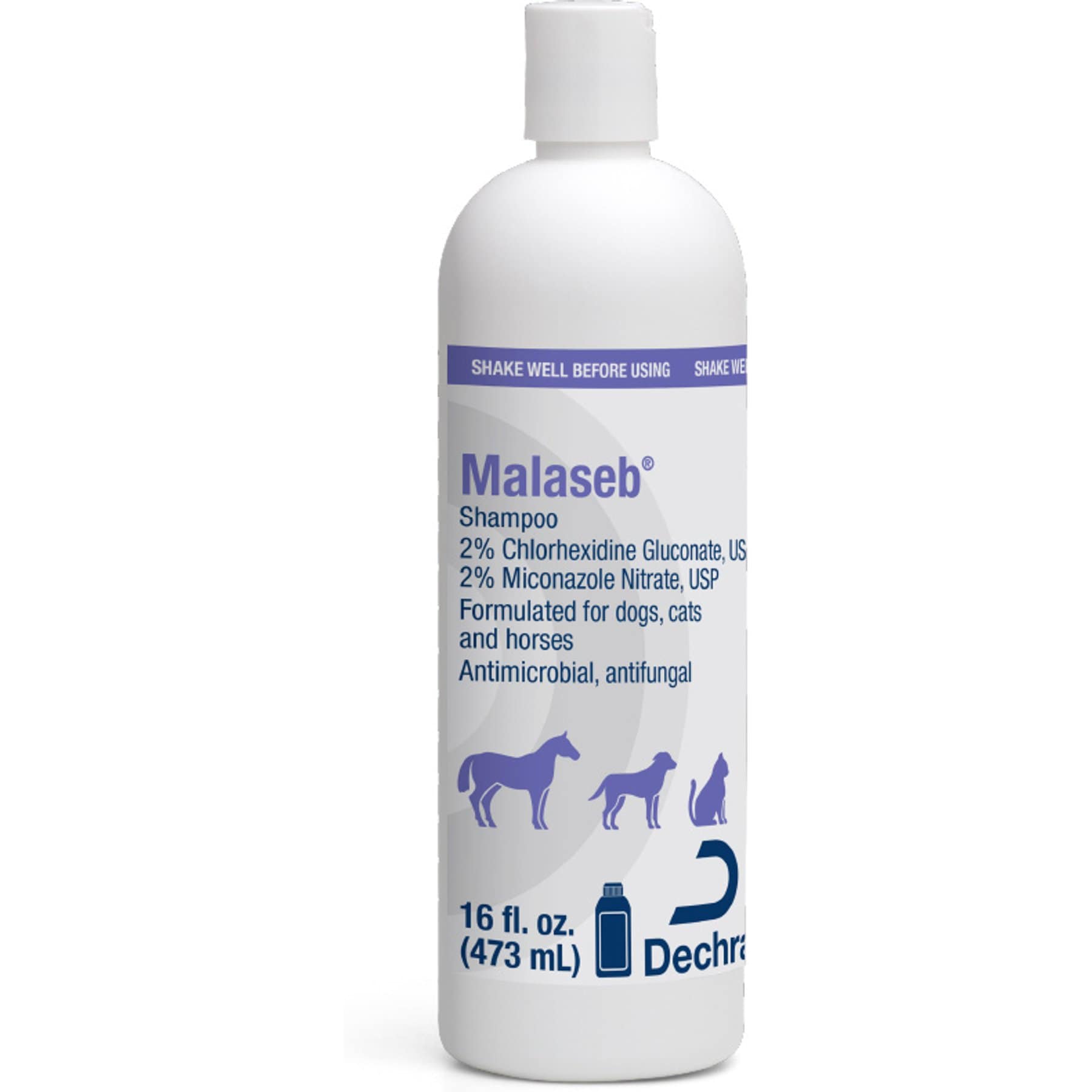
Prescription chlorhexidine and miconazole shampoo for bacterial and fungal skin infections, filled with a vet's prescription.
Webvet may earn a commission when you click through to Chewy, at no extra cost to you.
Some breeds are predisposed, and the published lists overlap but differ:
- VCA: West Highland White Terrier, Basset Hound, Cocker Spaniel, Silky Terrier, Australian Terrier, Maltese, Chihuahua, Poodle, Shetland Sheepdog, Lhasa Apso, Boxer, Shih Tzu, and Dachshund
- A Frontiers in Cellular and Infection Microbiology review: the same core breeds, plus English Setters

 Sponsored
Want a vet's take on your dog's skin or coat?
Talk to a licensed vet at Dutch over video, often the same day. They can recommend treatment and prescribe it when it's appropriate.
Use code Pets60
Plans start at $12/month · covers up to 5 pets
- Licensed vets in most states
- Rx for 150+ conditions
- 4.7 on Trustpilot
Where yeast infections show up: paws, skin folds, belly, and armpits
Yeast overgrowth usually starts where skin stays warm, humid, or oily. The Frontiers review explains that skin folds cut air movement, raise skin temperature and humidity, trap secretions, and add friction, so folds commonly favor yeast and bacterial overgrowth.
The areas the Merck Veterinary Manual says atopic dermatitis hits most, from the paws and face to the armpits and abdomen, closely match where a skin yeast infection in dogs appears. Together, the Canadian Veterinary Journal review, Merck, and Illinois point to these common sites:
- Paws and feet, including the skin between the toes and the folds around the nails
- Armpits, groin, and the belly or stomach skin between them
- Lip margins and facial folds, including the skin around the mouth and the folds near the eyes (anything on the eye itself needs a vet)
- The underside of the neck and the tail folds
- Ear canals, which need their own approach, explained in dog ear yeast infection
- The skin around the anus and vulva

On the paws, look for constant licking, red skin between the toes, a greasy feel, and the brown staining of claws and toe hair that Illinois describes. Licking has other causes too, covered in dog licking paws: here's what it could mean, and dog yeast infection skin pictures shows the typical look.
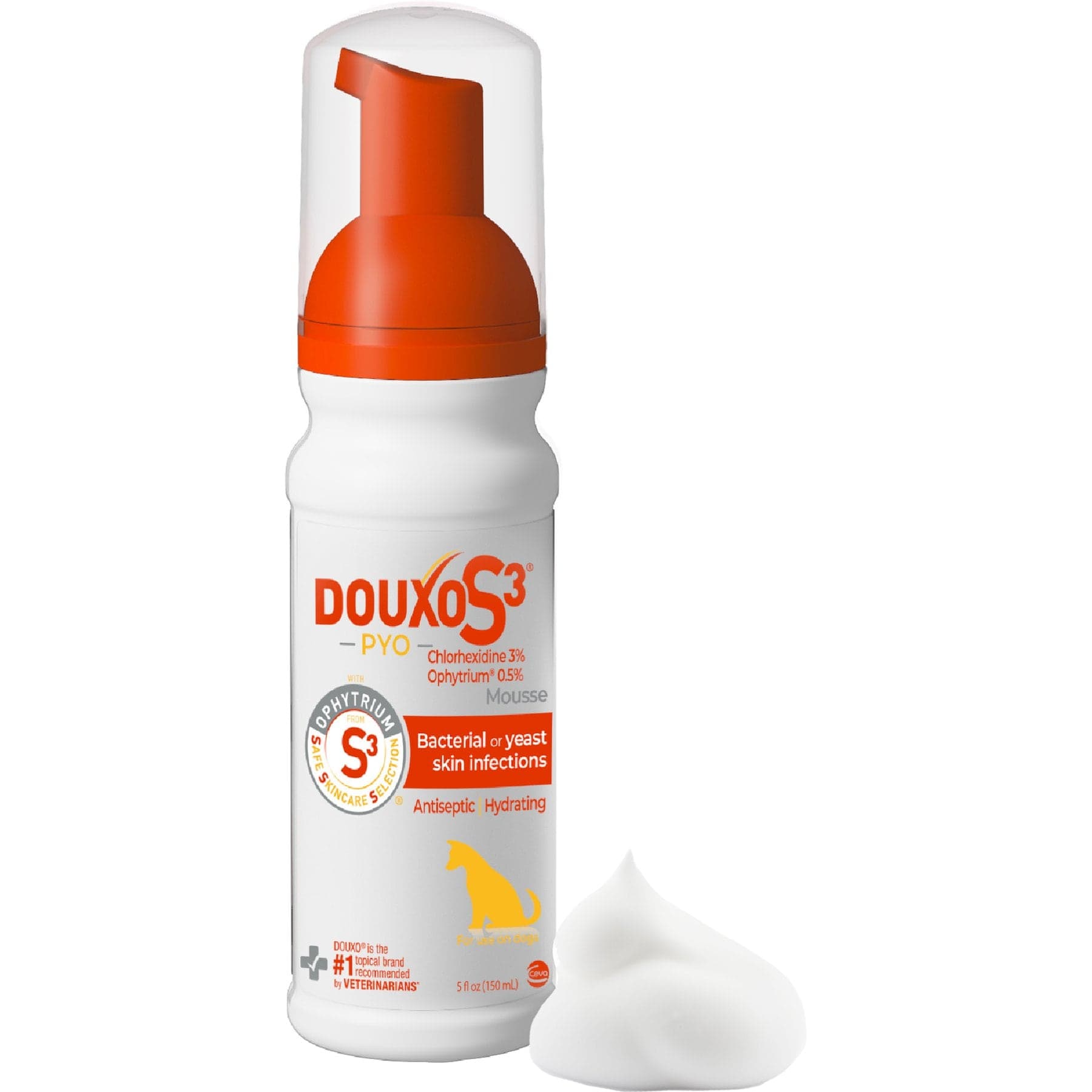
Chlorhexidine mousse with antibacterial and antifungal ingredients, in an easy-to-use form for spot care between baths.
Webvet may earn a commission when you click through to Chewy, at no extra cost to you.
Can yeast infections cause hair loss in dogs?
Yes. Illinois reports that the itch often leads to traumatic hair loss and scratch wounds, and the Frontiers review lists traumatic hair loss among the usual companions of canine Malassezia dermatitis. The Canadian Veterinary Journal also describes regional or generalized hair loss with red skin. No veterinary source gives a regrowth timeline.
What causes yeast overgrowth: the allergy or trigger underneath
Dogs do not catch yeast from another animal. They get yeast infections when their own resident yeast overgrows, and Veterinary Partner stresses that this happens in response to a primary problem, be it allergy, seborrhea, or something else, most often extra skin oil during an allergic flare-up.
What is yeast overgrowth?
Yeast overgrowth means Malassezia, normally present on healthy skin, multiplies beyond its usual numbers. VCA explains that the immune system usually keeps it in check, but changed skin conditions or a suppressed immune system let it multiply. Veterinary Partner adds that too many yeasts cause inflammation, itching, and odor.
An underlying allergy drives most cases. The Canadian Veterinary Journal review says canine Malassezia dermatitis is usually secondary to another disease, with allergy first on its list, and Merck names Malassezia as a flare factor in atopic dermatitis. More on that side is in dog skin allergies.
The causes of yeast infection in dogs that vets look for:
- Allergies: environmental allergy (atopic dermatitis), adverse food reactions, and flea bite hypersensitivity, as Illinois lists them
- Hormone disease, especially hypothyroidism
- Seborrhea and other oily-skin conditions, since VCA calls extra skin oil a common factor
- Recurrent bacterial pyoderma, skin folds, humidity, and altered skin pH
- Previous antibiotics and prolonged corticosteroid (steroid) therapy
- An allergy to the yeast itself, which VCA says causes intense reactions to only a few organisms and quick relapses
Fleas can set it off indirectly: Merck says self-trauma plus allergic inflammation in flea allergy dermatitis can lead to Malassezia dermatitis. No veterinary source names chicken, or any other single food, as a cause, though a true food allergy can be the trigger underneath.
The same allergy pattern explains what causes yeast infection in dog paws, since Merck lists the paws first among the areas atopic dermatitis affects. Hair loss is a result of the itch rather than a cause.
 Sponsored
Vet care that's always there
Unlimited video calls and messaging with licensed vets for less than a typical vet visit. One membership covers up to five pets.
Use code Pets60
Plans start at $12/month · covers up to 5 pets
- Licensed vets in most states
- Rx for 150+ conditions
- 4.7 on Trustpilot
How a vet diagnoses a yeast infection and tells it from bacteria
Illinois says diagnosis rests on fitting signs plus skin cytology. The vet presses a slide onto greasy skin, rolls a swab, or uses clear tape on drier patches, folds, and the skin between the toes. Under the microscope Malassezia has a footprint shape, and VCA says most samples are read in the clinic.
No single yeast count proves infection. The Canadian Veterinary Journal review notes that normal numbers vary by body site and breed, so healthy and affected dogs overlap, and that odor and lesion pattern should not be relied on without cytology. Illinois adds that yeast seen on cytology from suggestive lesions should be treated.

Smell will not settle it either, since VCA notes that bacterial pyoderma can also smell musty between the toes and in folds. Looks alone cannot separate a Malassezia yeast infection from mange, ringworm, or the itch of allergies, so if mites or ringworm are possible, the vet adds the test for them.
Yeast and bacterial infection often happen together. VCA says many dogs with yeast dermatitis also have pyoderma, and the Merck Veterinary Manual notes that cytology picks up Malassezia as a common coinfection. Numerous round bacteria (cocci) with inflammatory cells point to pyoderma; compare pyoderma in dogs pictures.
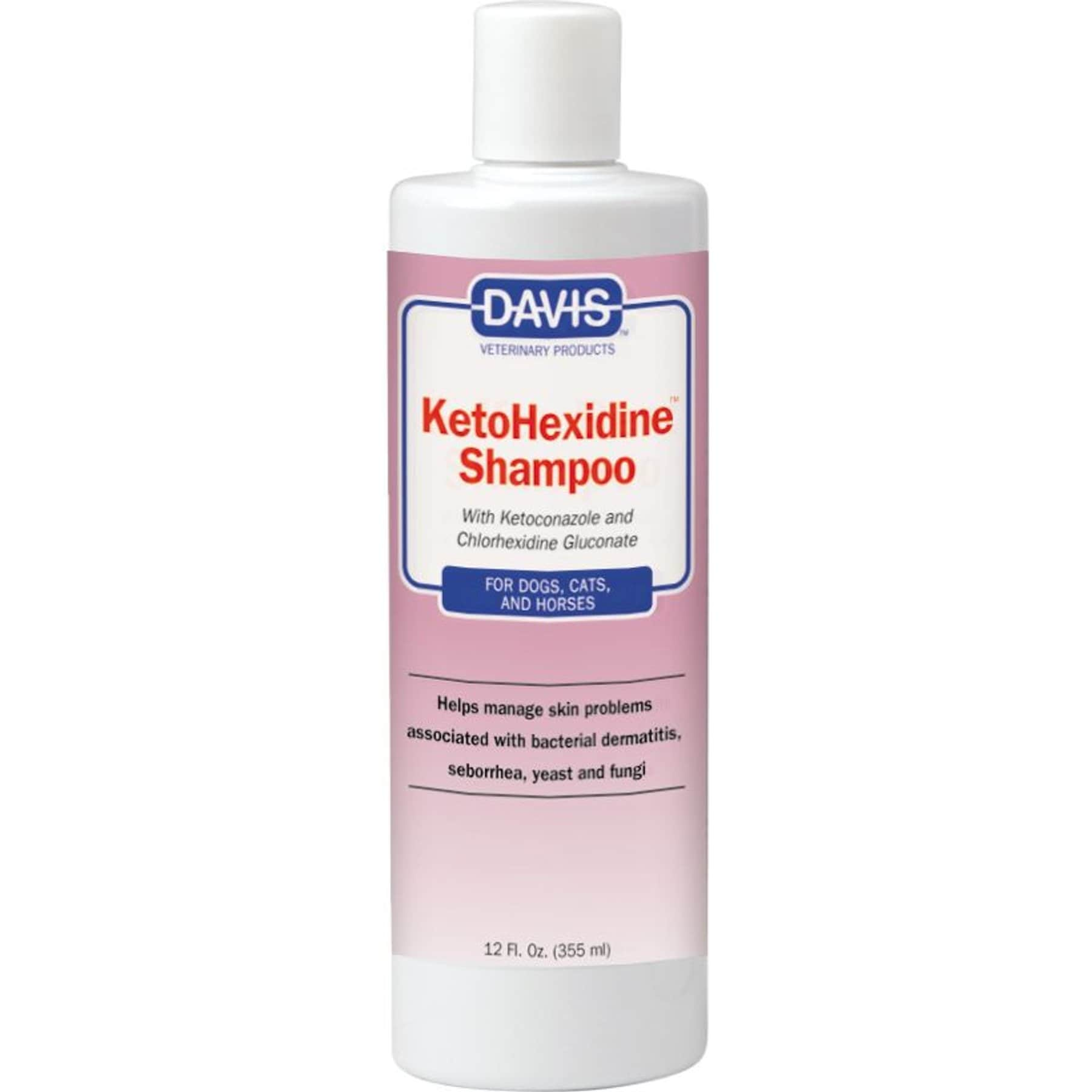
Ketoconazole and chlorhexidine shampoo formulated to help combat bacteria and yeast, with colloidal oatmeal to soothe skin.
Webvet may earn a commission when you click through to Chewy, at no extra cost to you.
If a dog seems allergic to the yeast itself, VCA says your vet or a dermatologist may recommend blood or skin tests to confirm it.
When a dog yeast infection needs a vet visit
Skin yeast on its own usually calls for a regular appointment, not an emergency visit, and no veterinary source gives a yeast-specific emergency checklist. These signs point to something deeper, or to a reaction, and need prompt care:
- Pain, crusting, odor, and oozing blood or pus, which Merck calls the hallmarks of deep pyoderma
- A swelling that may be an abscess, which Veterinary Partner says should be seen as soon as possible and within 24 hours
- Discharge that stays bloody, green, or yellow for several days in a row, per VCA
- A lump that changes size fast, bleeds, or oozes, which VCA says to have checked promptly (see bumps on dog skin)
- Facial swelling, a rash, fever, or irregular breathing after a topical antifungal: VCA says to stop the miconazole and call your vet immediately
- Appetite loss lasting more than 24 hours, or worsening general health
A severe or untreated yeast infection means more skin and tougher skin: generalized lesions, elephant-skin thickening, and extreme itch. Raise any worry about a systemic or internal yeast infection with your vet, especially for dogs on steroids, which VCA says may develop chronic yeast infection.
Yeast dermatitis is not contagious, VCA states, so a bad case reflects that dog's own trigger rather than exposure to another pet.
What do you do if a dog has a yeast infection?
Book a vet visit to confirm the yeast with cytology and treat any bacterial infection alongside it. Follow the prescribed bathing and spot-treatment routine, return for the recheck about 3 to 4 weeks in, and work on the trigger. If it returns after clearing, VCA says the dog should be re-evaluated.
Yeast infection treatment: medicated baths, wipes, and prescription antifungals
Treatment for yeast infection in dogs may be topical, oral, or both, based on severity and location, VCA explains. Topical care means medicated baths plus daily wipes, sprays, or mousse, per Veterinary Partner. Antibiotics do not treat yeast; VCA says they are added when a bacterial infection is confirmed.
Sources differ on emphasis. Veterinary Partner calls topical therapy the first choice, and Illinois says it can work alone and is preferred for paws. VCA says severe, chronic, or persistent cases often need oral antifungals, and the Canadian Veterinary Journal review prefers combining both for fast, complete remission.
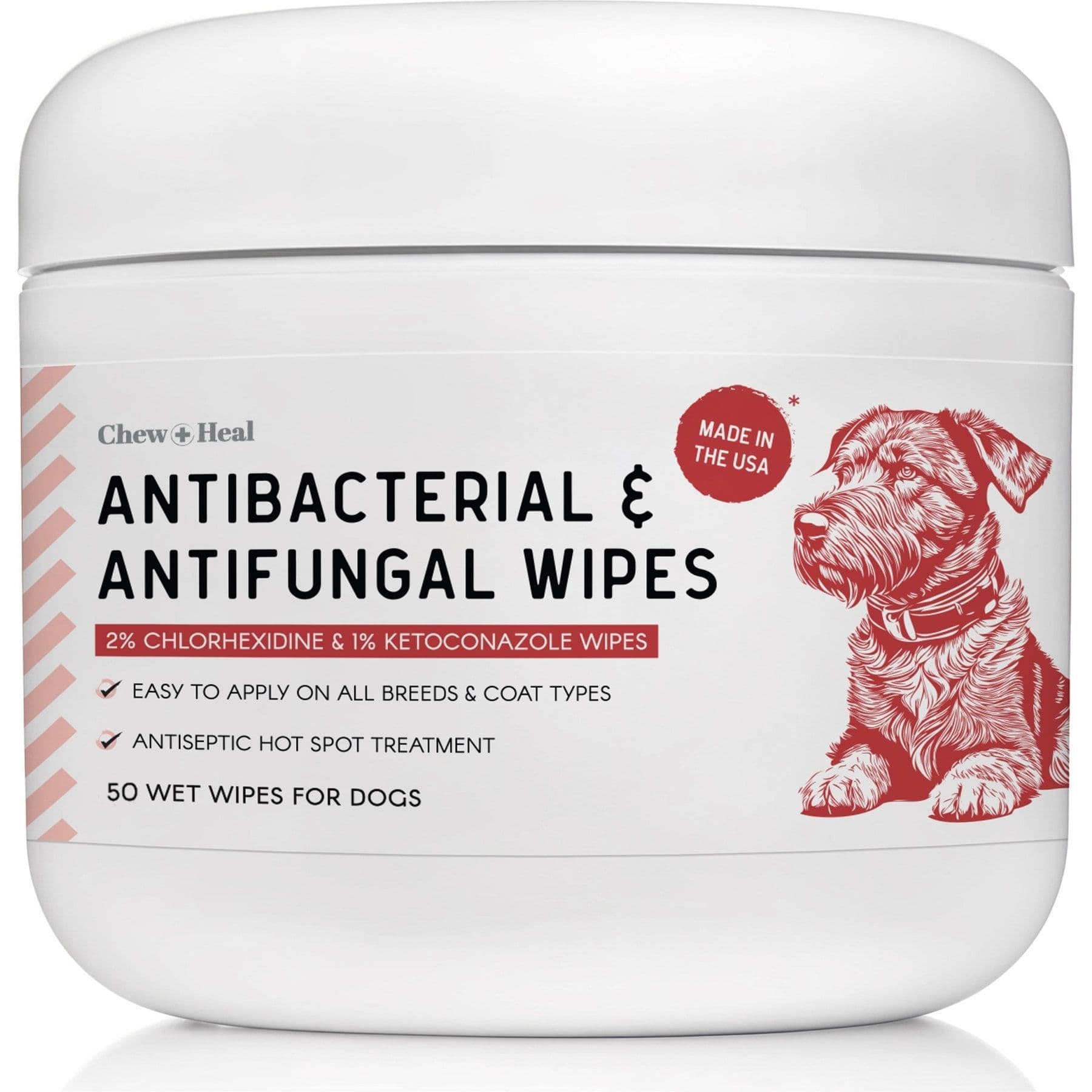
Pre-moistened wipes with 2% chlorhexidine and 1% ketoconazole that target yeast overgrowth, meant for use under vet guidance.
Webvet may earn a commission when you click through to Chewy, at no extra cost to you.
Medicated bathing with prescription antifungals also treats the yeast smell, since Veterinary Partner ties odor to yeast numbers. The routine:
- Degrease oily coats first with a selenium sulfide or benzoyl peroxide shampoo, as VCA describes
- Follow with a chlorhexidine plus miconazole or ketoconazole shampoo; the Frontiers review reports strong evidence for 2% miconazole with 2% chlorhexidine used twice weekly
- Leave the lather on for at least 10 minutes before rinsing
- Apply sprays, creams, lotions, or wipes every 12 to 24 hours between baths (Illinois)
- Prevent licking or grooming of a treated spot for at least 30 minutes, as VCA advises for miconazole
For spot areas, Malaseb Chlorhexidine & Miconazole Dogs, Cats & Horses Spray, 8-fl oz bottle is a leave-on spray its listing says to use two to three times daily or as your vet directs; it was listed at $26.63 on Chewy when we checked in October 2026. Compare formulas in medicated dog shampoo.
Oral antifungal medication, given as tablets or pills, is for widespread, chronic, or persistent cases. VCA lists ketoconazole, terbinafine, itraconazole, and fluconazole, all prescription drugs that Chewy's pharmacy fills only with a veterinary prescription. VCA notes they often run for several months, can affect the liver, and may call for routine blood tests.

Steroids such as prednisone are not a yeast treatment, since VCA links corticosteroids to chronic yeast. Prescription anti-itch drugs such as Apoquel, dispensed by Chewy's pharmacy only with a prescription, can help manage the allergy but are not antifungals.
The best medicine depends on how much skin is involved: one paw or fold often gets topical-only care, several areas get bathing plus wipes, and widespread greasy skin may add oral antifungals. The bathing schedule and recheck timing shift at each step, and over-the-counter products make sense only once cytology confirms the yeast.
| How much skin is involved | Typical vet treatment | Home bathing schedule | Recheck |
|---|---|---|---|
| One paw, one fold, or a single patch | Topical antifungal only: wipes, spray, mousse, or cream | Spot product every 12 to 24 hours; shampoo only if the vet adds it | About 3 to 4 weeks in, with repeat cytology |
| Several areas, such as all four paws plus armpits or belly | Chlorhexidine with miconazole or ketoconazole shampoo, plus daily spot products | Shampoo twice weekly, 10 minutes of contact, plus daily wipes or spray | 3 to 4 weeks, then treat 7 to 10 days past clinical cure |
| Widespread greasy, smelly skin, or topical care keeps failing | Degreasing then antifungal shampoo, plus a prescription oral antifungal | Degreasing then antifungal shampoo on the vet's schedule | 3 to 4 weeks, with blood tests on long oral courses |
| Clears, then keeps coming back | Re-evaluation, a workup for allergy, hypothyroidism, or skin folds, and immunotherapy if the dog is allergic to the yeast | Maintenance medicated baths once controlled | A recheck each time it returns |
Can I rub Monistat on my dog?
Not without your vet's go-ahead. Monistat is a miconazole product made for people, and VCA cautions against confusing it with miconazole products prepared for pets. No veterinary source endorses Monistat on dogs, so ask your vet which animal-labeled antifungal cream, spray, or shampoo fits instead.
Home remedies, diet, and stopping yeast from coming back
At home, the treatment that works is the medicated routine your vet prescribes, done on schedule. Natural remedies and diet changes have far less support. For broader itch relief, see home remedies for dog itchy skin.
What can I give my dog naturally to get rid of yeast?
Nothing natural is proven to clear skin yeast. Veterinary Partner says vinegar and water mixtures can be used, but the dog ends up smelling of vinegar, and it gives no evidence on how well they work. No veterinary source supports apple cider or white vinegar as a cure or a substitute for antifungal care.
Where other popular home remedies stand:
- Coconut oil: no veterinary evidence supports it for skin yeast
- Yogurt and probiotics: no veterinary evidence shows they clear skin yeast
- Epsom salt paw soaks and DIY sprays: no veterinary evidence; the soaks vets use are medicated products
- Homeopathic and holistic yeast products: no veterinary evidence supports them
What foods help fight yeast in dogs?
No food has been shown to fight skin yeast. Veterinary sources do not name a food, sugar, or carbohydrate that causes or cures it. Diet matters when a food allergy is the trigger, and VCA says the most accurate test is an 8 to 12 week elimination trial on a hypoallergenic diet.
So there is no best food, best dry dog food, or worst dog food for yeast, and homemade diets have no proven edge. What to feed is the trial diet your vet picks, fed strictly, and hypoallergenic dog food covers hypoallergenic diet options.

Prevention once the trigger is controlled is a steady routine:
- Treat the cause: the Canadian Veterinary Journal review says to identify allergies, endocrine disease, tumors, or skin folds to help prevent recurrence
- Keep flea control current, since Merck lists fleas as a flare factor in atopic dogs
- Keep skin folds clean and dry, clipped if needed, with medicated wipes as VCA advises, such as Chew + Heal Antibacterial & Antifungal Chlorhexidine & Ketoconazole Dog & Cat Grooming Wipes, 50 count
- Keep up maintenance baths, which Veterinary Partner calls a good long-term choice once the infection is controlled, for example Davis KetoHexidine Dog & Cat Shampoo, 12-fl oz bottle, listed at $12.62 on Chewy when we checked in October 2026
- Ask about immunotherapy for repeated relapses, which Illinois says may reduce recurrences in allergic dogs
Relapses are common in allergic dogs: VCA says those with severe skin allergies can get secondary yeast or bacterial infections two or three times a year. With the trigger managed and a recheck after each flare, the outlook stays good.
Yeast infection in dogs questions
Frequently Asked Questions
Is a yeast infection in dogs contagious to people or other pets?
VCA states that yeast dermatitis is not contagious, and Malassezia pachydermatis is already part of normal skin on dogs. For people, Merck's zoonotic fungal disease table lists exposure to clinically affected animals as the route, with normal skin levels not thought to be an important risk.
The Frontiers review still urges careful handwashing, especially around anyone with a weakened immune system.
Why does my dog smell musty even after a bath?
An ordinary bath cleans the coat but leaves the cause in place. The odor comes from yeast or bacteria thriving in oily skin, often on the paws and in folds, and the Merck Veterinary Manual notes that very oily dogs with profound odor often carry a secondary Malassezia or bacterial infection.
How long does it take to clear a skin yeast infection in a dog?
Itching usually eases within a week of starting therapy, VCA says, but clearing the infection takes weeks. The Canadian Veterinary Journal review advises a recheck at 3 to 4 weeks, because improvement alone does not confirm success. Oral courses vary: Veterinary Partner describes several weeks, VCA often several months.
Do probiotics help a dog with yeast infections?
Current evidence does not show that a probiotic clears skin yeast in dogs. One randomized trial gave itchy dogs a multi-ingredient probiotic blend for 10 weeks and saw faster improvement in itch and redness, but it measured itch, not yeast numbers.
Can antibiotics cause a yeast infection in dogs?
They can contribute. The Canadian Veterinary Journal review lists previous antibiotic therapy as a predisposing factor, and a Malassezia infections review names long-term antibiotics combined with steroids.
In a 29-dog ear study, yeast appeared after treatment in all 14 ears given piperacillin-tazobactam, versus 1 of 14 before, and the authors say potent antibacterial therapy needs monitoring for yeast overgrowth. That was topical ear treatment; no comparable figure exists for oral antibiotics and skin yeast.

Editor
The Webvet Editorial Team is the in-house group of pet-care editors and writers behind Webvet, operated by Smart Pet Collective. The team researches, writes, and maintains Webvet's pet health, behavior, and medication content. Every article follows a defined editorial process: research from reputable veterinary and scientific sources, careful drafting, mandatory review of medical content by a credentialed veterinarian, and dated publication. Health and medication articles are medically reviewed by a licensed veterinary professional before they go live and are kept current over time.
Veterinarian · BVMS MRCVS
Dr. Pippa Elliott, BVMS, MRCVS, is a veterinarian with nearly 30 years of experience in companion animal practice. Dr. Elliott earned her Bachelor of Veterinary Medicine and Surgery from the University of Glasgow. She was also designated a Member of the Royal College of Veterinary Surgeons. Married with 2 grown-up kids, Dr. Elliott has a naughty Puggle named Poggle, 3 cats and a bearded dragon.
Related reading

Stud Tail in Cats: Causes, Treatment, and Grooming That Helps

Eosinophilic Granuloma Complex in Cats: Rodent Ulcers, Plaques, and Treatment

Miliary Dermatitis in Cats: Causes, Treatment, and Flea Control
