Dog Ear Yeast Infection: Pictures, Treatment and Causes
Understand dog ear yeast infection with real clinical photographs, clear diagnosis limits, antifungal and cleaning guidance, and practical questions about home care, food, and recurring symptoms.

BVMS MRCVS
Medically reviewed by Dr. Pippa Elliott, BVMS MRCVS · Last reviewed

This article contains affiliate links. Webvet may earn a commission when you buy through them, at no extra cost to you.
A dog ear yeast infection happens when yeast overgrows in an inflamed ear. It can cause itching, odor, redness, and discharge, but those signs also occur with bacteria, parasites, and other problems. An ear examination and cytology, a microscope check of an ear sample, help confirm what needs treatment. Appearance cannot confirm yeast.
If your veterinarian has already diagnosed yeast, the priorities are giving the selected medicine correctly, following its cleaning instructions, and keeping the recheck. If the diagnosis is only a guess from a smell or photograph, arrange an examination before choosing an antifungal product. The clinical photographs below show why one familiar-looking discharge is not the whole story.
- 1Appearance cannot confirm yeast; bacteria and mixed infections can produce similar signs.
- 2Yeast normally lives on skin, but overgrowth can accompany inflammation or another underlying problem.
- 3Treatment and cleaning instructions must fit the diagnosed ear and the chosen medicine.
- 4A symptom improving is not the same as a confirmed cure; keep the planned recheck.
 Sponsored
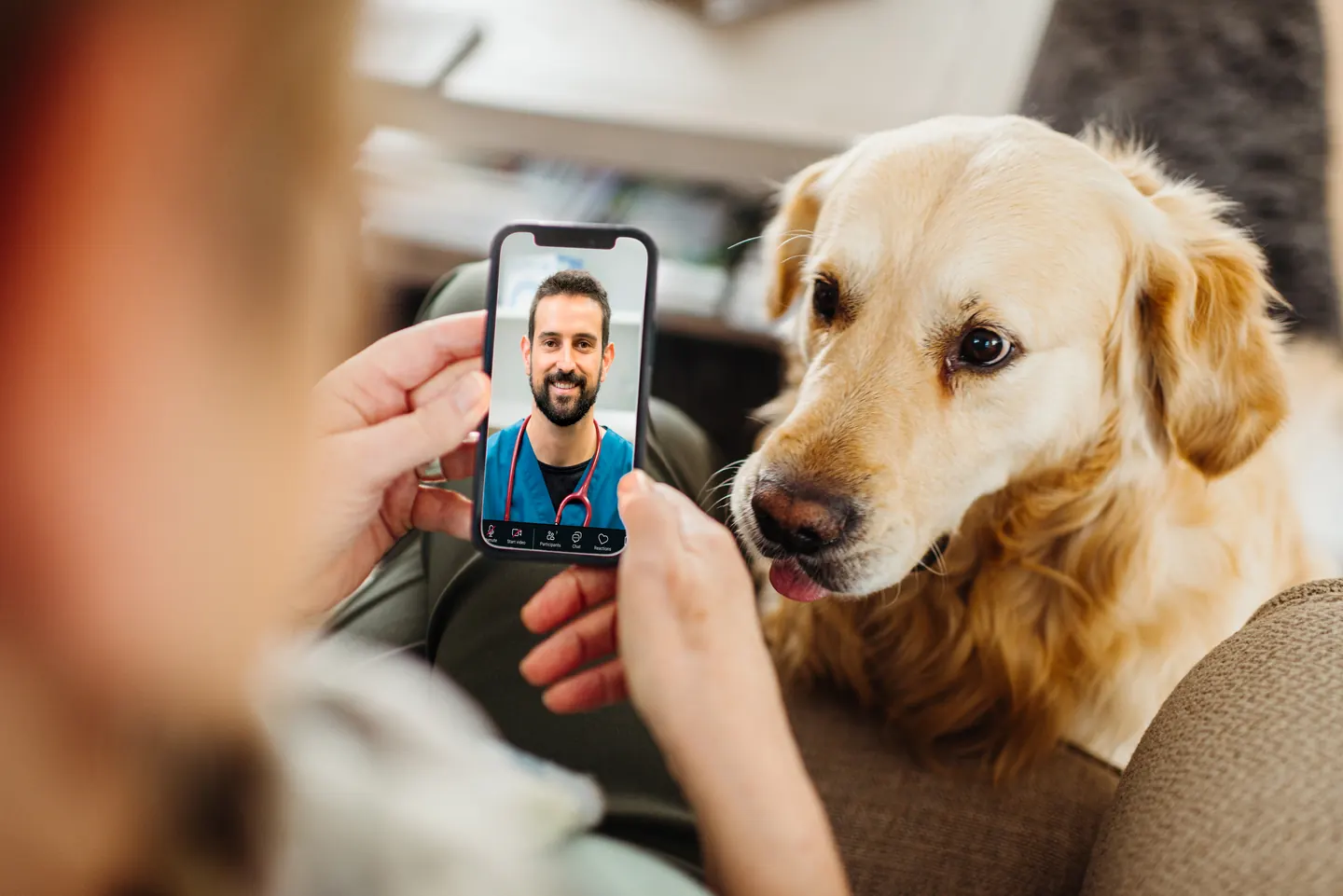
Have a health question about your dog?
Talk to a licensed vet at Dutch over video or message, including nights and weekends.
Use code Pets30
Plans start at $11/month · covers up to 5 pets
- Licensed vets in most states
- Rx for 150+ conditions
- 4.7 on Trustpilot
What causes a dog ear yeast infection?
Malassezia pachydermatis is a yeast associated with canine skin and ear disease.
Yeast otitis means inflammation of the ear associated with yeast. Yeast normally lives on skin without causing a problem. Changes in the ear environment and inflammation can allow troublesome overgrowth, so finding yeast is only part of understanding why the episode happened. A dog can have both yeast and bacteria in the same ear.
Allergic inflammation, moisture, ear anatomy, and other underlying problems may contribute. A veterinarian considers the pattern across the dog, not just the material inside one ear. Mention itchy paws, skin redness, seasonal flares, bathing or swimming, and previous episodes. Those details may help connect a recurring ear problem with a broader skin condition. If the paws, belly or skin folds look greasy or stained as well, our dog skin yeast infection pictures show how yeast looks on the skin.
- A first episode needs examination rather than an assumption based on breed or smell.
- Repeated episodes need the underlying trigger considered as well as the current yeast overgrowth.
- A one-sided problem deserves attention to local causes such as foreign material or a growth.
- A change after a new product should be reported, including when that product was last used.
VCA’s yeast-disease guidance explains that changes in skin conditions can let normally present yeast overgrow and that allergic skin disease may contribute. A yeast diagnosis does not mean your dog is dirty. Increasing cleaning without knowing why the ear is inflamed can add irritation while leaving the underlying problem unresolved.
Is a dog ear yeast infection contagious?
Ordinary Malassezia overgrowth is not usually managed as a contagious infection passed between household pets. That differs from ear mites, which can spread through animal contact. If several pets are scratching, tell the veterinarian rather than assuming all of them have yeast. Each animal may need assessment, and parasite treatment decisions depend on the actual diagnosis.
Dog ear yeast infection pictures and appearance
A yeast-affected ear may look red, waxy, greasy, scaly, or crusty, with brown material at the entrance or on the flap.
It can also look different. These clinical photographs show waxy ear changes documented in dogs sampled in a Malassezia study. They are not a before-and-after sequence, and they do not establish an “early stage” that every infection passes through.

The Olabode and colleagues paper describes different clinical forms and laboratory findings. Its laboratory experiment is not a home-treatment recommendation. The figure is reproduced without changes under Creative Commons Attribution 4.0. For your own dog, the photograph is a reference for visible change, not a substitute for sampling the ear.
A strong smell or a photograph of heavy ear wax does not measure severity or tell you which organism is present. A severely infected ear can have modest visible discharge, so pain and examination findings matter more than a color comparison. Brown discharge can be associated with several ear problems. Likewise, a relatively normal-looking flap does not exclude pain deeper in the canal. Avoid lifting, stretching, or wiping a sore ear repeatedly to make it match a photograph; discomfort itself is useful information for the clinic.
Yeast, bacteria, or mites: how the diagnosis is made
An ear exam combines what the veterinarian can see with appropriate testing.
You cannot reliably tell whether an ear infection is bacterial or yeast from color, smell, or a phone photograph. Cytology, not color, helps identify yeast, bacteria, and inflammatory cells. A veterinarian also examines the canal and eardrum when possible. In a very painful or blocked ear, sedation may be needed to make the examination safe and useful.
The next photograph comes from a small case series of confirmed Malassezia otitis. This dog had dark watery discharge, a different appearance from the waxy examples above. The authors used clinical examination and cytology to characterize the cases. The image demonstrates variation; it does not show how common this presentation is or prove that another dog with watery discharge has yeast.

Read the Rodrigues and Vandenabeele case series for the original clinical context. Figure 1 is reproduced unchanged under CC BY 4.0. These are documented patient photographs, but neither this article nor a photograph can interpret your dog’s own sample.
What the microscope adds
Under the microscope, the clinician evaluates the sample for yeast and other findings in the context of the ear examination. Seeing organisms is different from guessing from a brown cotton ball. The number and type of organisms, inflammatory cells, prior treatment, and clinical signs all matter. A follow-up sample can help assess response when the outer ear already looks better.
Before a diagnostic appointment, ask whether the clinic wants the ear left uncleaned. Merck’s veterinary guidance recommends collecting samples before cleaning. Tell the team what was last applied and when, rather than scrubbing away the evidence to make the ear look better. If treatment has already begun, ask about preparation for the visit instead of stopping prescribed care on your own.
Ear mites versus yeast
Dark debris and intense itching can occur with ear mites in dogs, but debris alone does not confirm mites either. Your veterinarian looks for the parasites and considers exposure and the other animals in the home. An antifungal does not replace mite treatment, and a parasite product is not automatically the right treatment for a yeast problem.
 Sponsored
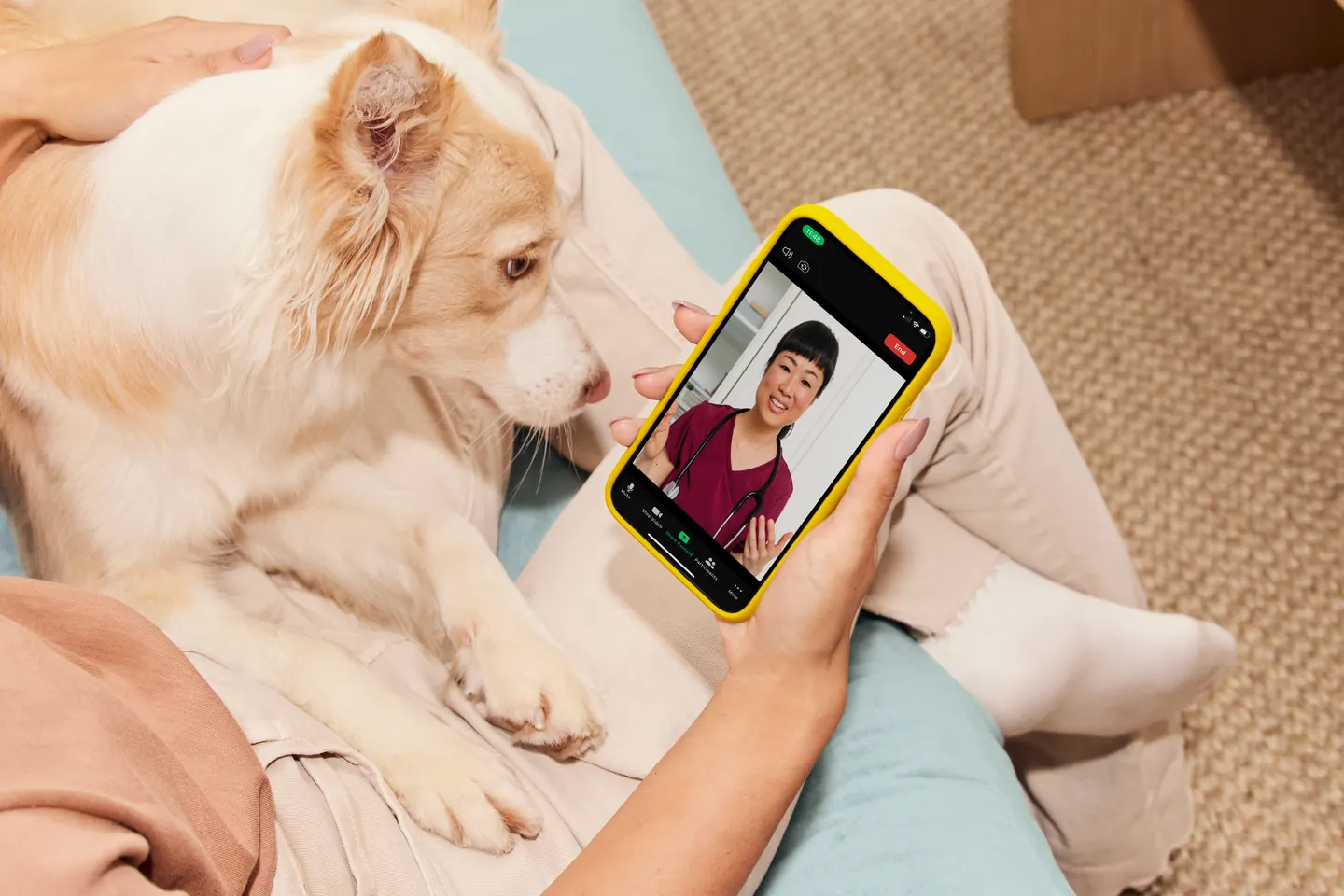
Vet care that's always there
Unlimited video calls and messaging with licensed vets for less than a typical vet visit. One membership covers up to five pets.
Use code Pets30
Plans start at $11/month · covers up to 5 pets
- Licensed vets in most states
- Rx for 150+ conditions
- 4.7 on Trustpilot
How vets treat a confirmed ear yeast infection
The aim is to control yeast overgrowth and restore a comfortable ear.
Treatment generally targets yeast with an appropriate antifungal medicine while addressing inflammation, discomfort, and the reason the problem developed. Many veterinary ear medicines combine more than one active ingredient because an ear may have inflammation or mixed infection. An antibiotic treats susceptible bacteria; it is not, by itself, a yeast treatment. Ask what each part of your dog’s plan is intended to do.
| Part of the plan | Purpose | Question for the clinic |
|---|---|---|
| Antifungal medicine | Target the diagnosed yeast problem | Which ear, which product, and what schedule? |
| Anti-inflammatory or pain treatment | Reduce discomfort or swelling when indicated | What changes should prompt a call? |
| Cleaning instructions | Remove debris when compatible with the medicine | Is cleaning allowed now, and when relative to medicine? |
| Recheck | Assess response and whether infection remains | When should the ear be examined or sampled again? |
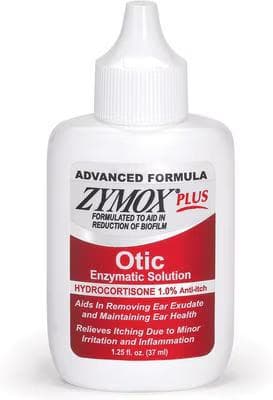
A treatment label is not a diagnosis. Zymox Plus Advanced Formula is an over-the-counter ear option that should be discussed with the veterinarian who examined the ear. The manufacturer gives product-specific directions about using other preparations with its enzyme-based ear solutions. Adding a cleaner or another ear product on your own may conflict with those directions.
Webvet may earn a commission when you click through to Chewy, at no extra cost to you.
Prescription products may contain antifungals such as miconazole, clotrimazole, or other agents in veterinary formulations. A familiar ingredient name on a human cream does not make that cream an appropriate ear product. The vehicle, other ingredients, eardrum status, and method of administration matter. Do not substitute a vaginal or skin preparation for the prescribed veterinary formulation.
Clinic treatments and daily drops have different rules
Some products are given in the clinic, while others are administered at home. For example, the FDA-approved DuOtic treatment is for susceptible yeast-associated otitis and contains terbinafine with betamethasone, without an antibiotic. The FDA describes two clinic doses seven days apart and no ear-canal cleaning for 45 days after the first dose.
That example explains why “clean before every treatment” is not a universal instruction. It does not establish that DuOtic is right for your dog or that other clinic products use the same schedule. Ask the clinic to write down the exact product name, whether another appointment is required, and when normal ear care can resume.
Cleaning a yeast-prone ear safely
Cleaning instructions depend on the medicine, the amount of debris, pain, and what the veterinarian can see of the eardrum. A cleaner can support selected plans, but it should not be chosen simply because the discharge looks yeasty. The dog ear cleaner for yeast infection guide explains the cleaner-selection questions separately from diagnosing or treating the infection.
TrizULTRA + Keto Flush contains ketoconazole and Tris-EDTA and has specific cleansing or pretreatment uses. Its role depends on the prescribed plan. Confirm whether it is intended for this episode, which ear to clean, and what interval to leave before another topical medicine. Do not combine it with a clinic gel or an enzyme-based product without checking compatibility.
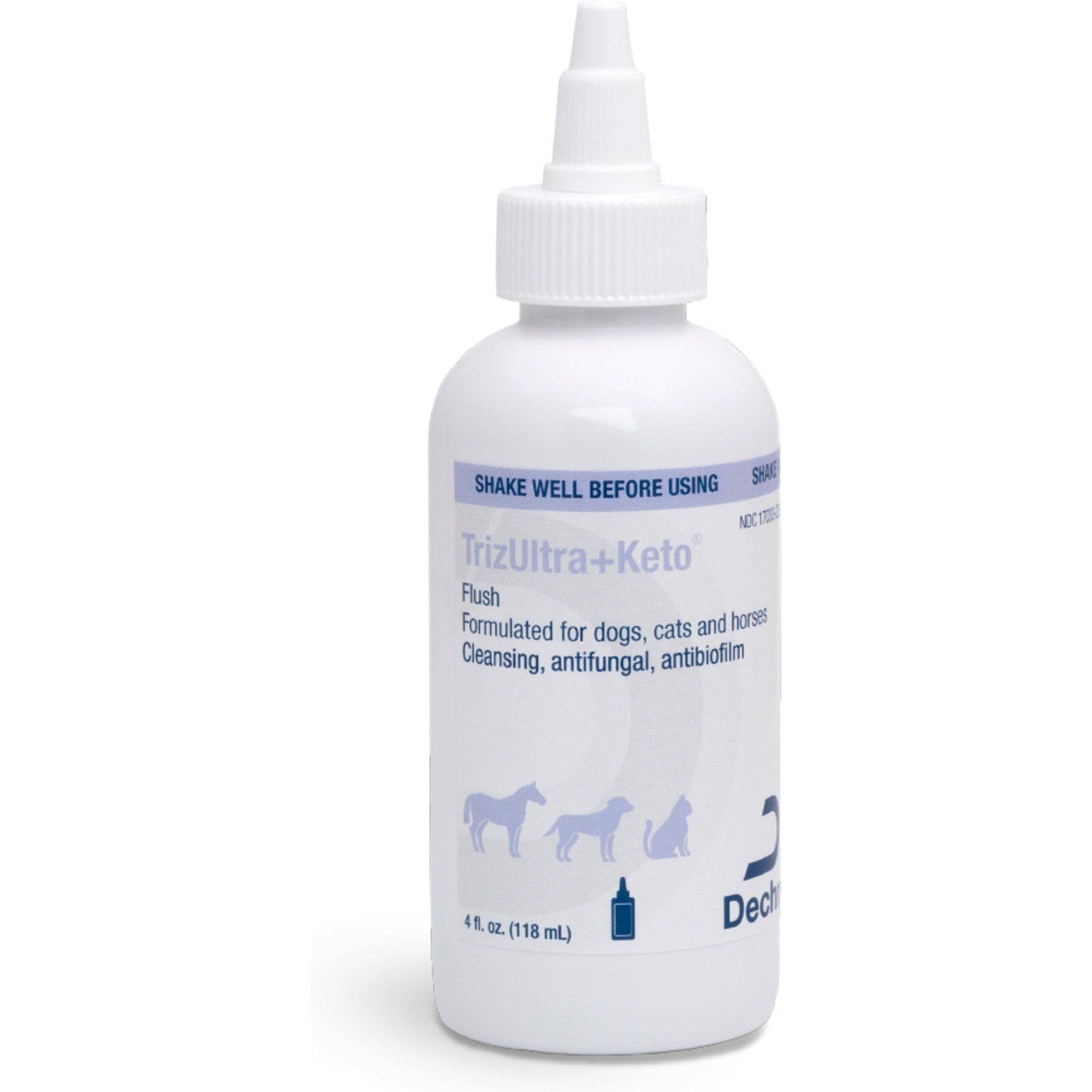
A ketoconazole-containing ear flush to discuss with your veterinarian when routine cleaning is not enough. Use only as directed for your dog.
Webvet may earn a commission when you click through to Chewy, at no extra cost to you.
- 1Confirm which ear receives each product.
- 2Ask whether cleaning is allowed during this treatment course.
- 3Get the exact order and interval if more than one product is prescribed.
- 4Stop and contact the clinic if handling or application becomes painful.

For a future routine rather than an active painful episode, a product such as Zymox Enzymatic Ear Cleanser may be a separate maintenance option. The manufacturer’s FAQ distinguishes ear solutions from the cleanser and warns against using other preparations before or during an ear-solution course. More products are not automatically better care.
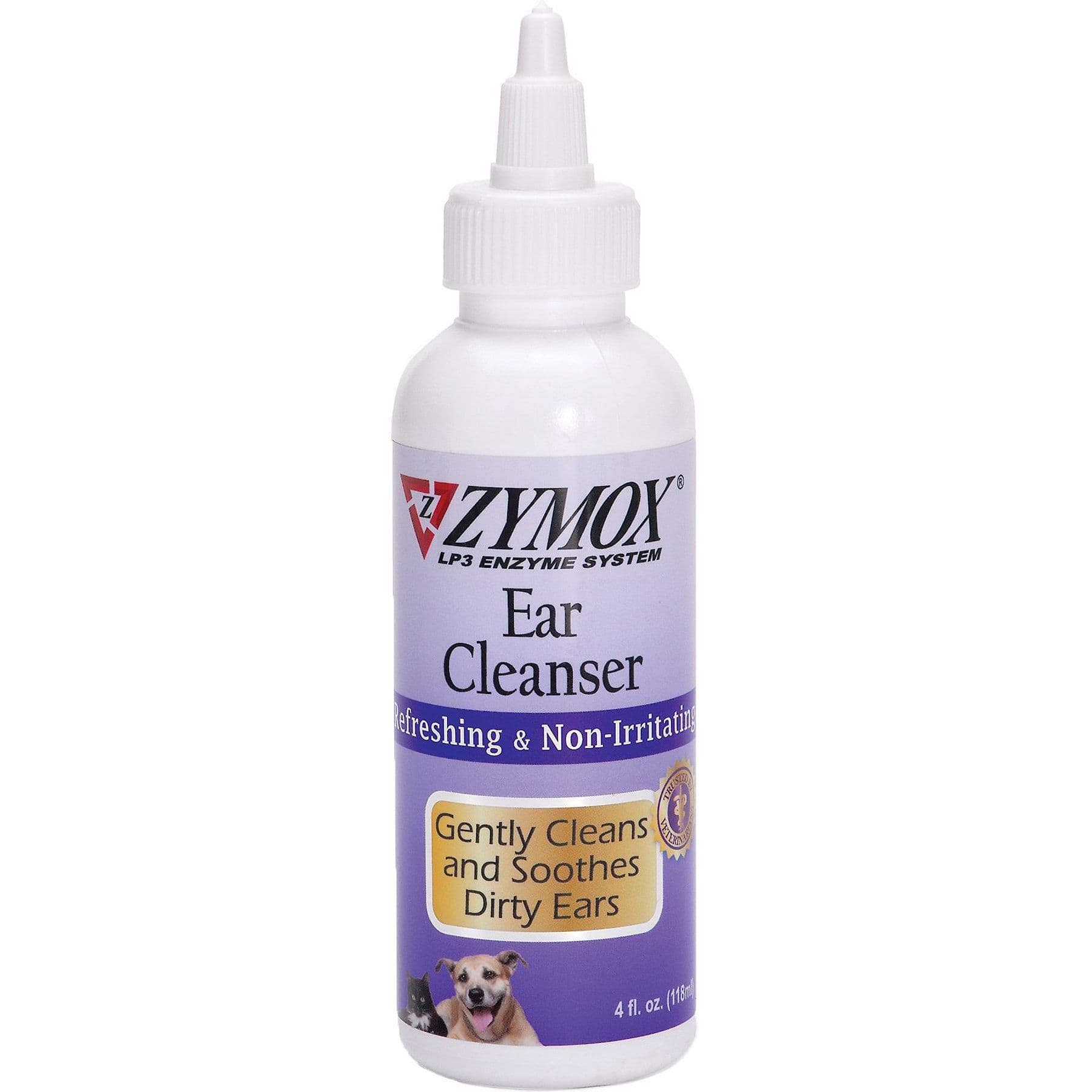
An ear cleanser for routine maintenance of non-infected ears. This is the cleanser, not the Zymox hydrocortisone treatment.
Webvet may earn a commission when you click through to Chewy, at no extra cost to you.
Home care, natural remedies, and products to avoid
At home, the reliable approach is to follow the diagnosed treatment plan and report problems with it.
Household ingredients are not proven substitutes for appropriate ear treatment. Do not put vinegar, hydrogen peroxide, essential oils, or an improvised mixture into an inflamed ear to “kill the yeast.” Something used on healthy skin may be irritating or unsuitable in a painful canal.
- Keep the ear dry unless the clinic’s directions specifically call for an approved cleaning step.
- Give prescribed products as directed; do not add a second remedy to speed things up.
- Tell the clinic if drops cannot be given safely or seem painful.
- Keep the recheck even if the smell or scratching improves.
Apple cider vinegar and white vinegar are not interchangeable with a veterinary ear formulation. Coconut oil, olive oil, and other oils do not establish a diagnosis or reliably replace an antifungal. Human products such as Monistat or Canesten should not be put into a dog’s ear without explicit veterinary instructions. An antifungal ingredient alone does not make the whole preparation safe for that use.
Household ear remedies beyond yeast
If the ear has not been sampled, the broader dog ear infection home remedies guide explains ingredient risks and safe care before an appointment. A dog can have bacterial, yeast, parasite, or mixed disease, and a blocked or damaged ear changes product safety. Temporary reduction in smell after a home remedy does not show that the cause has been treated.
Does changing food help a yeast ear infection?
No food is an ear antifungal. Changing food does not directly replace treatment of an established yeast infection.
Food can matter if a veterinarian suspects a food allergy contributing to recurring inflammation, but that is a separate diagnostic question. A bag advertised for yeast, sensitive skin, or grain-free feeding does not establish that it addresses your dog’s cause.
The AAHA allergic-skin-disease guidelines include structured assessment for food allergy. If the clinic recommends a diet trial, ask which food, treats, chews, supplements, and flavored medicines are permitted. A trial only answers its intended question when the agreed diet is followed consistently; frequent unplanned switches make interpretation harder.
Do not remove whole food groups, add yogurt, or buy a probiotic on the assumption that this will clear the ears. Bring the current diet and supplement list to the appointment. If a change is recommended, keep a record and make one change at a time as directed. That helps the veterinarian interpret changes in itching without confusing a food change with the effect of ear medicine.
Recovery, rechecks, and yeast that keeps returning
- 1Record the product, treated ear, and first dose date.
- 2Note whether pain, scratching, or discharge is improving, stable, or worsening.
- 3Report missed doses or cleaning that was not in the plan.
- 4Bring the record to the recheck so apparent improvement can be compared with the ear examination.
How long recovery takes depends on the severity, the ear canal’s condition, the chosen treatment, and the underlying problem. The Merck Veterinary Manual describes repeat assessments over roughly two to four weeks for many bacterial or yeast infections, with chronic cases sometimes taking months. That is context, not a treatment deadline for every dog.
Keep the recheck before stopping or changing the plan. A less smelly ear or reduced scratching is encouraging but does not prove cytology is clear. Conversely, persistent pain, worsening discharge, or difficulty giving medicine warrants a call before the scheduled visit. Ask what improvement the clinic expects and which changes should prompt earlier reassessment.
At the recheck, ask whether the sample still shows overgrowth and whether swelling is resolving. Continuing inflammation after organisms are controlled may require attention to the underlying cause or a reaction to a product, rather than simply more antifungal medicine. Failure despite appropriate treatment and correct administration may also prompt assessment for middle-ear disease. These are different decisions, which is why repeating an old prescription without another examination can miss the next useful step.
What happens if you don't treat a dog's ear yeast infection?
Leaving a dog’s ear yeast infection untreated means discomfort and inflammation may continue, and chronic changes can make future care harder. Repeatedly treating a suspected yeast episode without checking it may miss bacteria, a foreign object, a deeper problem, or an underlying allergy. Recurrent does not automatically mean drug resistance; the vet needs the history and new findings to understand why signs returned.
Planning for the next episode
Once the active problem is controlled, an approved maintenance cleanser such as Virbac Epi-Otic Advanced may be part of an individualized routine. Confirm the frequency and stop signs instead of cleaning more whenever the ear seems waxy. Report a new smell, redness, or pain rather than assuming maintenance cleaning will prevent every recurrence.
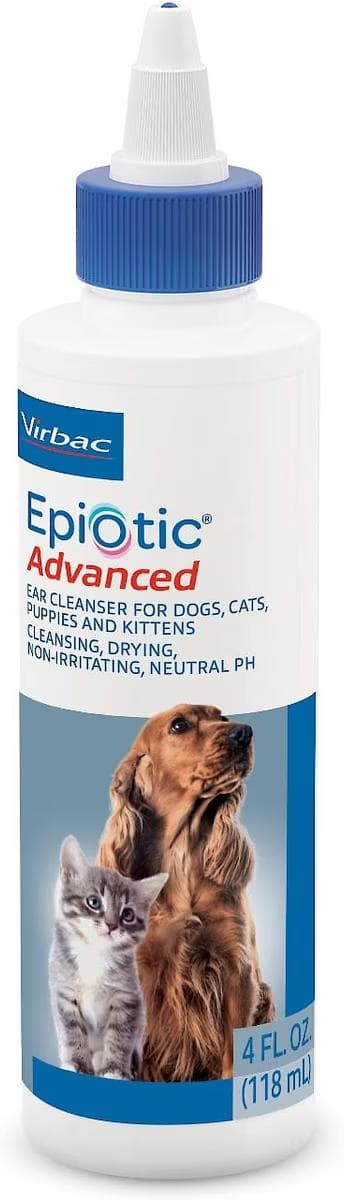
Webvet may earn a commission when you click through to Chewy, at no extra cost to you.
If the diagnosis is not confirmed or cost is a barrier
For the relationship between current ear infection and underlying causes, see the dog ear infection overview. Bring earlier records when possible, especially product names and what happened during each course. The goal of that history is to help the clinic choose the next step, not to prove that the latest episode must be the same as the last one.
More questions about ear yeast
Frequently Asked Questions
What not to give a dog with a yeast infection?
Do not add a human antifungal cream, leftover ear drops, or a supplement that was not discussed with the prescribing clinic. Also ask before adding a cleaner to an active ear-medication course. The concern is the specific formulation, route, interactions, and condition of the ear, not simply whether an ingredient can affect yeast in a laboratory. Bring the exact product name or photograph when asking for advice.
What can be mistaken for an ear infection in dogs?
A foreign object, allergic inflammation, parasites, and some growths can cause ear signs that overlap with infection. Bacteria and yeast can also occur together, so the distinction is not always either-or. An ear examination and appropriate sampling help separate these possibilities. Mention sudden onset, a one-sided problem, and any skin or balance changes; do not rely on discharge color to decide which explanation fits.

Editor
The Webvet Editorial Team is the in-house group of pet-care editors and writers behind Webvet, operated by Smart Pet Collective. The team researches, writes, and maintains Webvet's pet health, behavior, and medication content. Every article follows a defined editorial process: research from reputable veterinary and scientific sources, careful drafting, mandatory review of medical content by a credentialed veterinarian, and dated publication. Health and medication articles are medically reviewed by a licensed veterinary professional before they go live and are kept current over time.
Veterinarian · BVMS MRCVS
Dr. Pippa Elliott, BVMS, MRCVS, is a veterinarian with nearly 30 years of experience in companion animal practice. Dr. Elliott earned her Bachelor of Veterinary Medicine and Surgery from the University of Glasgow. She was also designated a Member of the Royal College of Veterinary Surgeons. Married with 2 grown-up kids, Dr. Elliott has a naughty Puggle named Poggle, 3 cats and a bearded dragon.
Related reading

Best Dog Boots for Traction, Weather, and Paw Protection

Vestibular Disease in Dogs: Symptoms, Diagnosis, and Recovery Timeline

In Home Pet Euthanasia: Cost, What Happens, and How to Choose a Provider
